Dr. Kari Kostiainen is a Lecturer at the Department of Computer Science, ETH Zürich. His affiliation includes the Institute for Information Security (Institut f. Informationssicherheit) and he is associated with the Security of Wireless Networks course in the Autumn Semester 2025. His research focuses on cybersecurity, blockchain technology, privacy-preserving systems, and trusted execution environments. Kari's work addresses challenges in phishing detection, cryptocurrency regulation, and secure communication protocols. Key research interests include: Phishing prevention and organizational cybersecurity Blockchain scalability and privacy in digital currencies Trusted execution environments (TEEs) and enclave security Privacy-preserving technologies for decentralized systems Secure access control mechanisms and user-friendly security setups His recent publications emphasize advancements in CBDC design, censorship-resistant payment systems, and lightweight blockchain client privacy. Notable contributions include Platypus (privacy-preserving CBDC framework) and Tee-based mining pool optimizations. Dr. Kari Kostiainen can be contacted at kari.kostiainen@inf.ethz.ch . His office is located at CNB F 103.2, ETH Zürich.
Dr. Mengshuo Jia is a Senior Scientist and Principal Investigator at ETH Zürich, affiliated with the Power Systems Laboratory (PSL) within the Department of Electrical Engineering. He holds a Ph.D. from Tsinghua University (2016–2021) and a B.Eng. from North China Electric Power University (2012–2016). His roles include Guest Lecturer for 'Optimization in Energy Systems' and Associate Editor for IEEE Systems Journal and IET Renewable Power Generation. Education: Ph.D. in Electrical Engineering, Tsinghua University (2016–2021) B.Eng. in Electrical Engineering, North China Electric Power University (2012–2016) Research focuses on AI4Science , Uncertainty Modeling , Probabilistic Analysis , Stochastic Optimization , and Data-Driven Power Systems . Notable contributions include the RePower LLM-driven research platform and the DALINE toolbox for power flow linearization. His work bridges AI advancements with energy system challenges, enhancing autonomous research and grid optimization. Recent publications emphasize LLM applications in energy systems, small modular reactor integration, and hydrogen supply chain optimization. Over 10 peer-reviewed articles since 2022 highlight interdisciplinary innovation. Awards: 2023 ESI Hot Paper (top 0.1%) and Highly Cited Paper (top 1%) 2023 China First Prize of High-influence Papers 2022 Springer Thesis Award Advising and grants include leadership in Swiss National Science Foundation projects and editorial roles in top-tier journals. Collaborations emphasize data-driven methodologies and privacy-preserving distributed algorithms. Labs: Active in the Power Systems Laboratory (PSL) at ETH Zurich, advancing research in energy system optimization and AI integration.
Romain Jacob is a Lecturer at the Department of Information Technology and Electrical Engineering at ETH Zürich, where he also holds a postdoctoral researcher position in Prof. Laurent Vanbever's group. His research focuses on computer networks, real-time systems, and sustainable networking, with an emphasis on reproducible experimental design and open science advocacy. He completed his PhD under Prof. Lothar Thiele at ETH Zürich in 2019, followed by a visiting scholar position at UC Berkeley in 2014. His academic background includes a Master of Science in Engineering of Complex Systems from École Normale Supérieure de Cachan (now ENS Paris-Saclay). Key research interests include: Time-triggered wireless architectures for cyber-physical systems Energy-efficient networking and sustainability Reproducibility frameworks like TriScale Real-time communication protocols Notable contributions include the Best Paper Award at HotCarbon'24 for work on router energy optimization. He actively promotes open science through initiatives like the ORCID Researcher Advisory Council and serves as Editor-in-Chief for JSys. His teaching includes a master's lecture on Sustainable Networking, emphasizing practical applications and open educational resources. He collaborates with the Swiss Reproducibility Network (SwissRN) to advance rigorous research practices.
Dr. Blazhe Gjorgiev is a Lecturer at the Department of Mechanical and Process Engineering at ETH Zürich. His research focuses on power systems reliability, energy transition modeling, and grid risk engineering. He leads the Reliability and Risk Engineering group, addressing challenges in grid resilience, renewable integration, and cascading failure mitigation. His work bridges machine learning applications with physical grid systems, emphasizing data-driven approaches for infrastructure optimization. Key research interests include: Power grid reliability and vulnerability analysis Renewable energy integration and policy implications Data-driven modeling of transmission and distribution systems Machine learning for fault detection and grid operation Recent publications highlight advancements in anomaly detection for power line inspection, European energy transition policies, and graph-based power grid benchmarking. His work often intersects with socio-technical issues, such as energy inequities and infrastructure resilience in aging systems. Dr. Gjorgiev collaborates on projects like the Nexus-e platform for energy-economic assessments and the Cascades-Risk model for expansion planning. His research has practical implications for grid modernization, policy design, and sustainable energy systems.
Dr. Fabio Zünd is a Lecturer at the Department of Computer Science, ETH Zurich, affiliated with the Game Technology Center (GTC). He is based in Zurich, Switzerland, and can be reached at fabio.zund@inf.ethz.ch . His work focuses on innovative applications of Augmented Reality (AR), Game Technology, and Human-Computer Interaction (HCI), with notable contributions to medical AR integration, facial image anonymization, and interactive storytelling systems. Research interests include AR-driven medical education, personalized clinical imaging tools, and the development of immersive technologies that bridge real and virtual worlds. His projects often address challenges in user-centered design, such as scent-based gaming interfaces and emotion-aware interaction techniques. Recent work highlights include the VerA system for clinical facial image anonymization, scent prediction in video games, and latent diffusion models for art generation. He explores interdisciplinary applications in healthcare, education, and entertainment through collaborations with institutions like the ETH Library and industry partners. No scientific awards are explicitly mentioned in the provided information. His advising record remains unspecified, though he contributes to ETH’s educational programs through courses like the Seminar on Game Technology . Ongoing projects involve the Game Technology Center’s exploration of tangible interaction systems and wearable input devices such as the DigiGlo glove technology.
Dr. Evren Mert Turan is a Lecturer at ETH Zürich's Department of Energy and Process Systems Technology. His academic background includes a Bachelor's and Master's in Chemical Engineering from the University of Cape Town, followed by a PhD in Process Systems Engineering at the Norwegian University of Science and Technology. His research focuses on integrating machine learning and optimization techniques to address decision-making challenges under uncertainty in energy systems and process engineering. Evren's expertise spans model predictive control, real-time optimization, and data-driven approaches for complex systems. He has contributed to advancements in semi-infinite programming, feedback control policies, and steady-state detection algorithms. His work emphasizes practical applications in sustainable energy systems and industrial process optimization. Key research trends include the development of neural network-based control strategies, convex optimization methods for reduced computational complexity, and experimental validation of novel algorithms. His publications highlight interdisciplinary approaches blending machine learning with traditional engineering methodologies. Evren currently teaches the course 'Introduction to Modeling and Optimization of Sustainable Energy Systems' and actively engages in collaborative research at ETH Zürich. His contributions to scientific machine learning aim to enhance robustness and reliability in dynamic systems analysis.
Prof. Martin Baumann is a Full Professor of Religious Studies at the University of Lucerne’s Faculty of Humanities and Social Sciences, serving as Head of the Department for the Study of Religions. He holds a PhD from the University of Hannover (1993) and a habilitation from Leipzig University (1999). His research focuses on migration, religious communities, social integration, diaspora studies, and Hindu/Buddhist traditions in Western societies. He previously held roles as Dean (2007–2009) and Vice-Chancellor for Research (2010–2018) at the University of Lucerne. His research explores the interplay between migration and religion, particularly analyzing how religious practices adapt in diaspora contexts. Notable areas include Tamil Hindu communities in Germany, Buddhist communities in Europe, and the role of religious institutions in Swiss civil society. He has contributed to debates on religious pluralism, interfaith dialogue, and the social functions of religious buildings in multicultural societies. Prof. Baumann’s work bridges theoretical religious studies with empirical fieldwork, often collaborating on interdisciplinary projects. His publications span academic monographs, edited volumes, and peer-reviewed articles addressing both historical and contemporary religious phenomena. He actively engages in policy discussions about the legal status of non-recognized religious groups in Switzerland and their societal integration. His recent projects include studies on the adaptation of Eastern religions in Europe, the sociology of religious youth identity formation, and the role of religious organizations in post-migrant societies. He has also contributed to digital humanities initiatives, such as heiMAP (a collaborative spatio-temporal research platform) and scientific data infrastructure projects like heiARCHIVE. Prof. Baumann advises doctoral candidates in religious studies and migration sociology. His work frequently intersects with questions of cultural preservation, religious policy, and the societal impacts of globalization.
Prof. Andrew Gloster is a Full Professor of Clinical Psychology at the University of Lucerne, serving as Vice Dean of the Faculty of Behavioural Sciences and Psychology and Director of Clinical Training for the post-graduate Process-based Psychotherapy program. Previously, he held SNSF-Professor roles at the University of Basel and senior research positions at the Technical University of Dresden. His education includes a Ph.D. and clinical training from Eastern Michigan University and the University of Texas, with an undergraduate degree from Boston University. His research focuses on psychotherapy processes, treatment outcomes, mental health interventions, digital tools in therapy, and prosocial behavior. He is a leader in contextual behavioral science, serving as President and Fellow of the Association for Contextual Behavioral Science (ACBS). Key projects include developing the Psy-Flex measure for psychological flexibility and studying pandemic-related mental health dynamics. Gloster's work emphasizes bridging clinical and social psychology to improve therapeutic practices and public health responses.
Percia David Dimitri is an Associate Professor at HES-SO Valais-Wallis, specializing in Data Science, Applied Machine Learning, Large Language Models, Technology Mining, and Information Economics. He is actively involved in cutting-edge research at the intersection of artificial intelligence, cybersecurity, and business applications, with a particular focus on developing quantitative methods for technology assessment, monitoring, and forecasting. His research interests span multiple critical areas in modern technology and business. He develops novel methodologies for assessing emerging technologies, particularly focusing on Large Language Models and their applications in cybersecurity contexts. His work includes creating frameworks like PromptSight for forecasting emerging technologies through iterative self-prompting in LLMs, and TechRank for technology assessment in cybersecurity investments. He also investigates the robustness of LLMs against misuse in cyber-defense landscapes and develops methods for LLM-resilient bibliometrics to maintain research integrity in the age of generative AI. An analysis of his recent publications reveals a strong trend toward developing practical methodologies that bridge theoretical AI research with real-world cybersecurity applications. His work consistently focuses on creating quantifiable metrics and frameworks for technology assessment, with particular emphasis on the rapidly evolving field of Large Language Models. The research demonstrates increasing sophistication in handling the challenges posed by AI-generated content in academic contexts while simultaneously leveraging AI capabilities for technology monitoring and forecasting. As principal investigator, Dr. Dimitri has secured significant research funding from Swiss organizations including the Swiss State Secretariat for Education, Research, and Innovation (SERI), Cyber-Defence Campus, and Innosuisse. His current projects include the SwissCyber Initiative (CHF 1 million), Characterizing and Mitigating Attacks on Large Language Models (CHF 138,871), and Quantitative Technology Assessment for Cyber-Defense (CHF 148,002). These projects involve collaborations with key Swiss institutions including SATW, armasuisse Science and Technology (CYD Campus), and various research partners across the Swiss academic and defense landscape. Dr. Dimitri is closely associated with the GenLearning Center at HES-SO Valais-Wallis and maintains strong connections with the Swiss Cyber Defense ecosystem. His research teams typically include collaborators such as Kucharavy Andrei, Sternfeld Alexander, and Vallez Cyril, forming a core group focused on the intersection of AI, cybersecurity, and business applications. His work has significant implications for Swiss cybersecurity policy, defense capabilities, and the broader technology monitoring landscape in Switzerland.
Romain Sandoz is an academic Researcher affiliated with the Department of Communication and Media Engineering (COMEM) at the Haute école d'Ingénierie et de Gestion du Canton de Vaud (HES-SO Valais/Wallis). He specializes in interdisciplinary research at the intersection of geospatial technologies, user experience design, and education innovation. His work focuses on applying gamification to enhance learning experiences in technical fields, developing pedestrian mobility solutions for accessibility, and advancing audiovisual production methodologies. Education: BSc in Computer Science and Communication Systems from HES-SO Valais/Wallis. He has contributed to projects like the CrowDPLOS initiative (2017–2018), which addressed disabled pedestrian routing through crowdsourced data, and collaborated on a gamified SQL learning tool (GeoSQL Journey) for geospatial education. Key research interests include: Pedestrian-centric urban mobility systems Accessibility solutions for disabled populations Interactive educational technologies Audiovisual content strategy Recent publications highlight his work on citizen-participatory frameworks for improving walkability (2021), crowdsourced navigation tools for accessibility (2019), and gamified geospatial education (2018). He has collaborated with teams across multiple institutions including the VS - Institut Informatique and Fondation FONSART. Grant participation includes a Hasler Foundation-funded project (CHF 49,300) and a DIVERS-funded media interface development initiative (CHF 50,860).
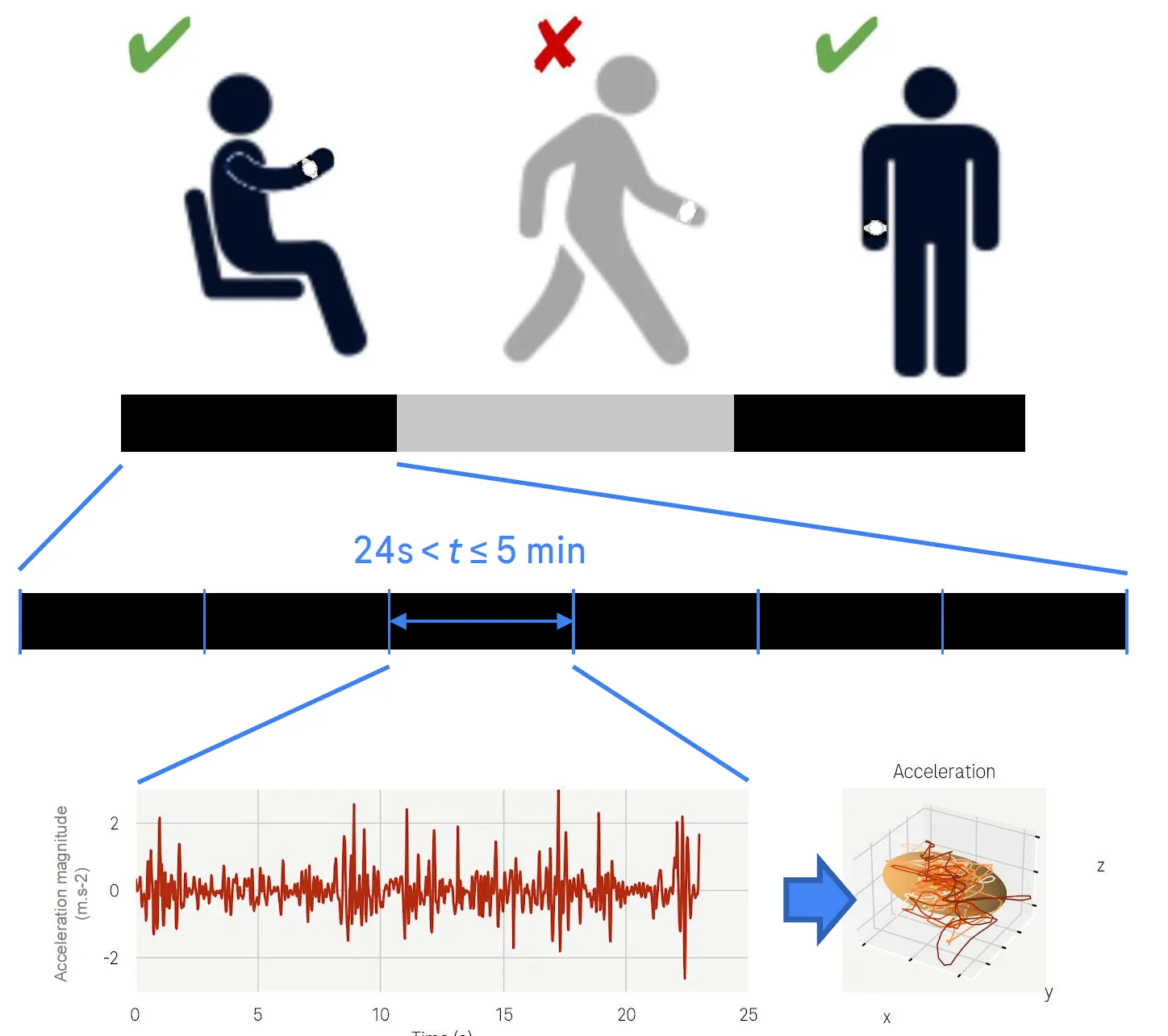
Lidia Alecci is a Ph.D. student at the Faculty of Informatics, Università della Svizzera italiana (USI) since October 2021. She holds a double Master’s degree in Informatics from USI and the University of Milano-Bicocca (2021), with a thesis focused on robust sleep behavior recognition using wearable sensors. Her research combines wearable computing, affective computing, and machine learning to address interpersonal variability in physiological and behavioral patterns. Education: Master in Informatics - Double Degree (2019-2021), USI and UniMiB Bachelor in Computer Science (2015-2018), University of Padova Research Interests: Wearable Computing Affective Computing Machine Learning for Healthcare Data Science Awards: Italian finals of international championships in mathematical games (2014, 2015) Experience: Roche Internship (2022-2022): Developed ML pipelines for Huntington's disease symptom prediction Wintech Internship (2018): Built web applications for contact management and campaign analysis Labs/Teams: Silvia Santini’s research group at USI
Dr. Xiang-Zhao Kong is a Lecturer at the Institute of Geophysics, ETH Zurich, within the Department of Earth and Planetary Sciences (D-EAPS). He holds a PhD in Environmental Engineering from ETH Zurich (2010), where he was awarded the ETH Medal for his dissertation. His career includes postdoctoral research at the University of Minnesota and a Research Fellowship at the University of Queensland before returning to ETH Zurich in 2015. His research focuses on geothermal energy, flow and transport processes in porous media, reactive transport modeling, and subsurface engineering. Key areas include fractured formations, geothermal reservoir optimization, and CO₂ sequestration. He employs advanced computational methods like lattice-Boltzmann solvers and machine learning for subsurface flow modeling and reservoir characterization. Dr. Kong’s work bridges experimental and theoretical approaches, with notable contributions to mineral precipitation dynamics, fluid-rock interactions, and phase transition fracturing. His publications span geothermal systems, carbon capture, and subsurface energy storage. Recent efforts emphasize de-risking CO₂-Plume Geothermal (CPG) technologies and advancing fracture modeling via neural networks. Awards: ETH Medal for PhD Dissertation (2011) Teaching: Leads the 'Groundwater' course (Autumn Semester 2025).
Federica Lanza is a Lecturer at the Department of Earth and Planetary Sciences at ETH Zurich, affiliated with the Schweiz. Erdbebendienst (SED), the Swiss Seismological Service. Her work focuses on seismology, geophysics, and geothermal systems, with expertise in induced seismicity, fault dynamics, and advanced monitoring technologies like Distributed Acoustic Sensing (DAS). She teaches courses such as Seismic Waves II in the Autumn Semester 2025. Her research integrates field experiments, computational modeling, and machine learning to address challenges in seismic hazard assessment, geothermal energy development, and tectonic processes. Key areas include forecasting induced earthquakes at geothermal sites, analyzing fault interactions in fold-and-thrust belts, and developing innovative sensor systems for subsurface monitoring. Dr. Lanza collaborates on large-scale projects like the Utah FORGE initiative, advancing techniques for real-time seismic monitoring and fracture network characterization. Her contributions bridge fundamental geophysical research with practical applications in energy systems and risk mitigation.
Prof. Gunnar Rätsch is a Full Professor in the Department of Computer Science at ETH Zürich and Deputy Head of the Institute for Machine Learning. His research focuses on developing machine learning methods for biomedical applications, including genomics, medical imaging, and clinical decision support systems. He specializes in integrating multi-omics data, spatial transcriptomics, and time-series analysis to address challenges in precision medicine and critical care. His work emphasizes ethical AI frameworks, algorithmic fairness, and robust clinical prediction models. Key research areas include: Deep learning for medical imaging and histopathology Single-cell analysis and tumor profiling Reinforcement learning for treatment optimization in ICUs Multimodal data integration for clinical applications Recent work highlights advancements in: Standardizing single-cell cytometry readouts for clinical use Developing foundation models for critical care time-series analysis Creating interpretable survival models for ICU patients His contributions span foundational machine learning theory and applied healthcare technologies, with a focus on translational research to improve clinical outcomes. Current projects include the Tumor Profiler Study for multi-omic tumor analysis and ethical frameworks for clinical AI systems.
Andreas Vitalis is a Senior Scientist in the Department of Biochemistry at the University of Zurich, where he leads the development of molecular simulation software (CAMPARI) and research platforms. He holds a Ph.D. in Molecular Biophysics from Washington University (St. Louis) and conducted postdoctoral research at UC San Diego and Zurich. His expertise spans protein aggregation mechanisms, computational biophysics, and high-performance computing. Education: Ph.D. in Molecular Biophysics, Washington University in St. Louis (2003-2009) Research Scholar, University of California San Diego (2001-2002) Diploma in Biochemistry, Ruhr-Universität Bochum (1998-2001) Research Interests: Protein aggregation (Alzheimer's, Huntington's diseases) Molecular simulation methods (enhanced sampling, FAIR data) Drug discovery platforms and computational tools Neuroscience applications of biophysical modeling His work bridges computational methods with experimental biology, emphasizing scalable solutions for complex systems. Key contributions include CAMPARI software and FAIR-compliant data management frameworks.