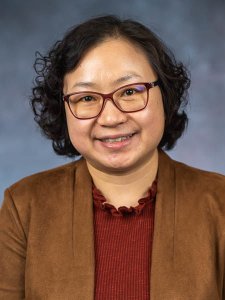
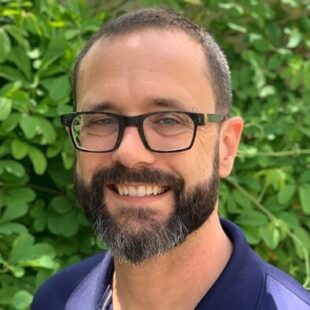
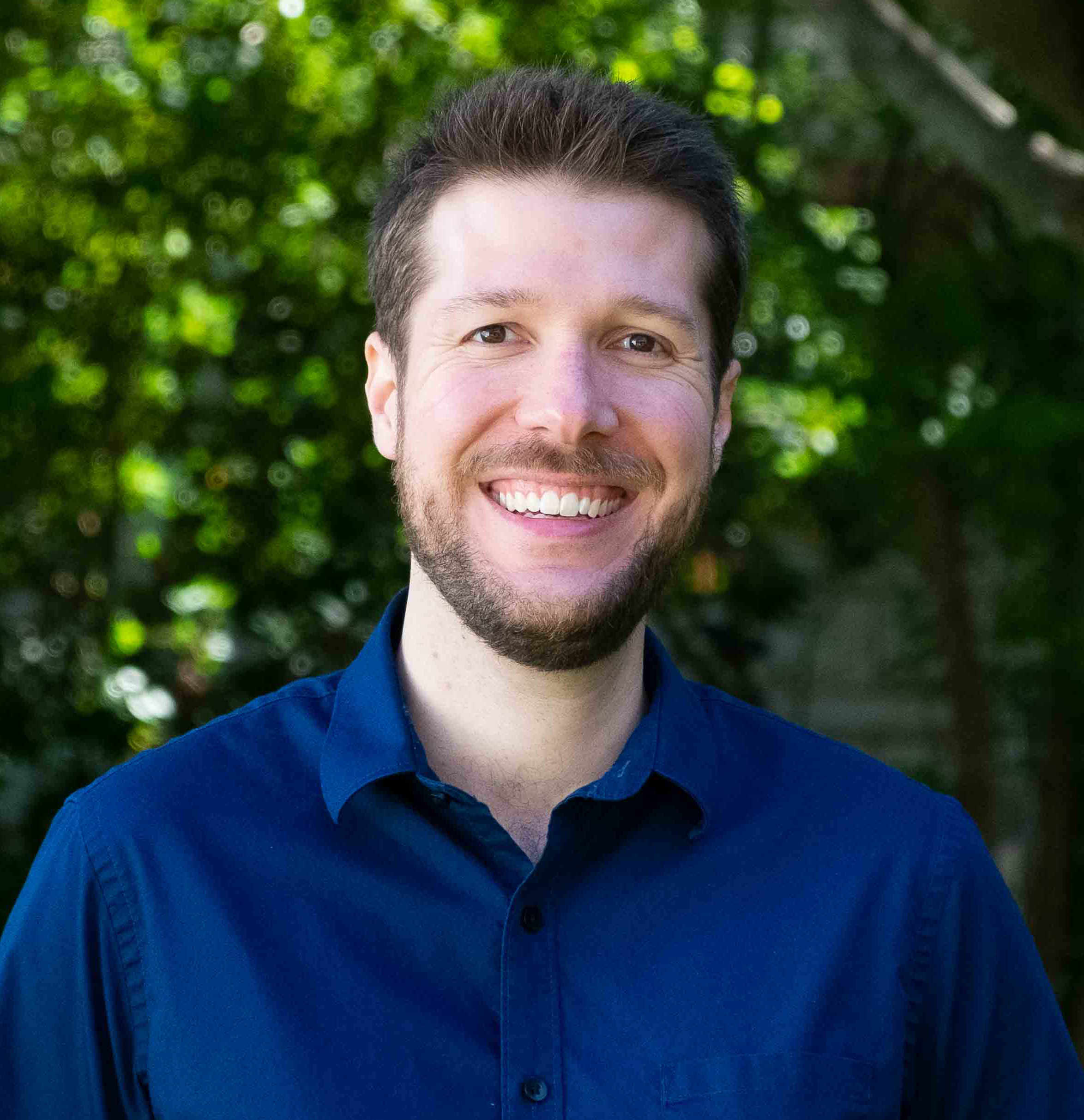
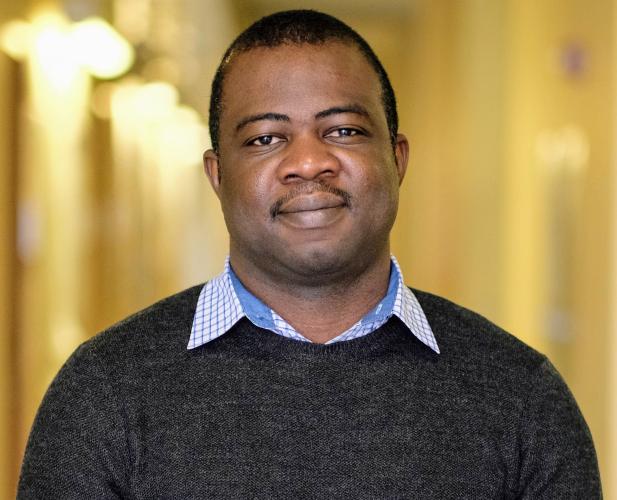
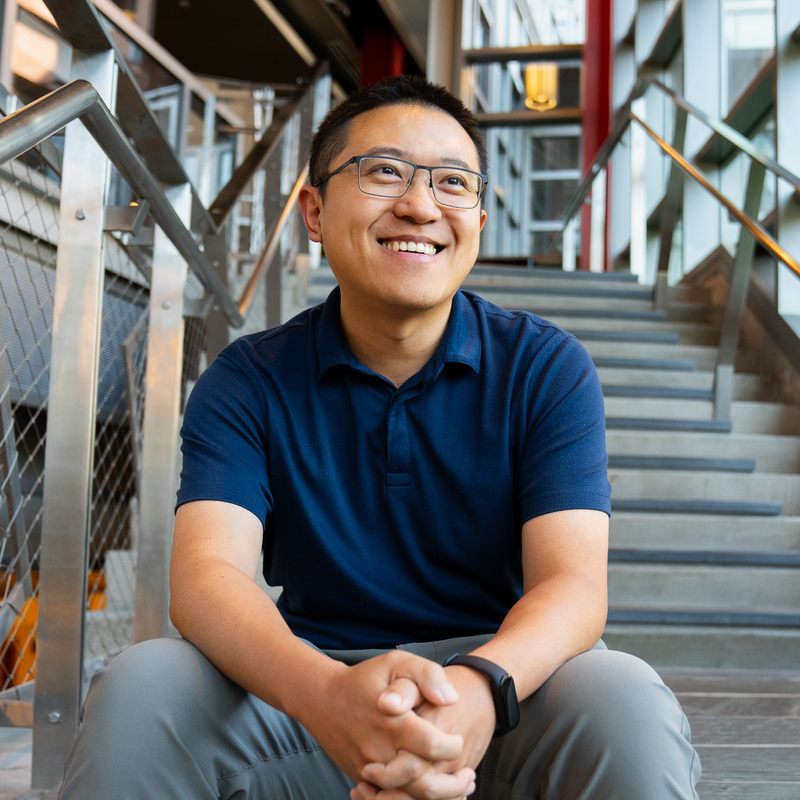
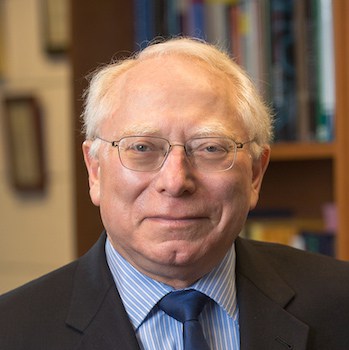
Jie Zhao is an Assistant Professor of Computer Science & Software Engineering at the School of Engineering, Pennsylvania State University. His research bridges artificial intelligence, big data analytics, and energy systems, with a focus on computer vision, machine learning, and sustainable energy solutions. Research Interests include: Computer Vision and AI applications Wind power ramp forecasting and renewable energy analytics Machine learning for perovskite solar cells and edge-AI platforms Community solar credit-sharing frameworks Code plagiarism detection and educational data mining Recent Publications highlight interdisciplinary work in wind energy prediction, object detection algorithms, and developer satisfaction studies, reflecting a blend of computer science and energy systems research. Awards & Grants : 2024: IEE Seed Grant for interdisciplinary energy projects Collaborative Projects include integrating conductive atomic force microscopy (c-AFM) with machine learning to analyze perovskite solar cell instability, and co-organizing workshops on enterprise modeling and FAIR data management.
Cynthia D'Angelo is an Associate Professor in the Department of Educational Psychology at the University of Illinois, Urbana-Champaign. Her research focuses on science education , technology-enhanced learning environments (including simulations, games, and augmented/virtual reality), and collaborative learning . She leverages multimodal data from online technologies to understand STEM concept acquisition and improve instructional practices. NSF-funded PI for $1.5M project on speech analytics in collaborative learning Division Chair of Curriculum, Instruction, and Teacher Education (CSTL) Active in NGSS-aligned curricular development and assessment Her publications demonstrate expertise in learning analytics for both traditional and immersive environments, with key contributions to collaborative problem-solving models and multimodal educational technologies . While known for science education research, her 2022 hybrid law degree program evaluation extended methodological insights to professional graduate education. Current teaching includes EPSY 555 (Advanced Educational Technologies) and CI 542 (Science Education & Philosophy of Science), emphasizing technology integration and data-driven pedagogy . Her work bridges cognitive science and educational design, creating tools that translate classroom dialogue into actionable insights.
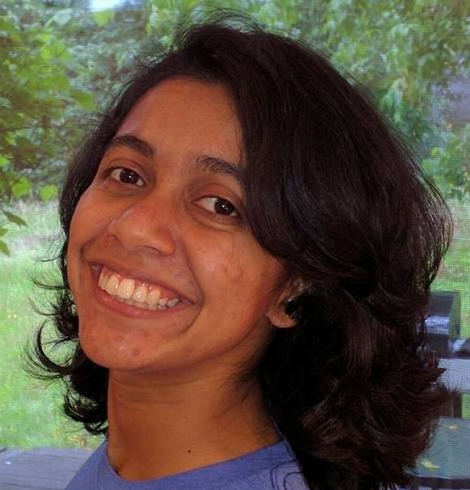
Chandrakana Nandi is the Director of US R&D at Certora and an affiliate assistant professor at the University of Washington, Seattle . Her work bridges formal verification, computational fabrication, and programming language design. Education : PhD in Computer Science from University of Washington (2021), MS in Computer Science (2014), BS in Computer Science (2012). Research Interests focus on: Automated formal verification of DeFi applications and smart contracts. Equality saturation for program synthesis, verification, and compiler optimizations. Programming languages and compilers for computational fabrication and 3D modeling. Publication Trends highlight her contributions to: Formal verification tools for real-world programs (WASM, G-code). Equality saturation applications in synthesis, optimization, and rule inference. Domain-specific languages like LambdaCAD, Taxon, and Carpentry Compiler. Scientific Awards : Distinguished Paper Award (OOPSLA 2021). Distinguished Paper Award and Sigplan Research Highlight (POPL 2021). Contact : chandra@certora.com . Her CV is available here .
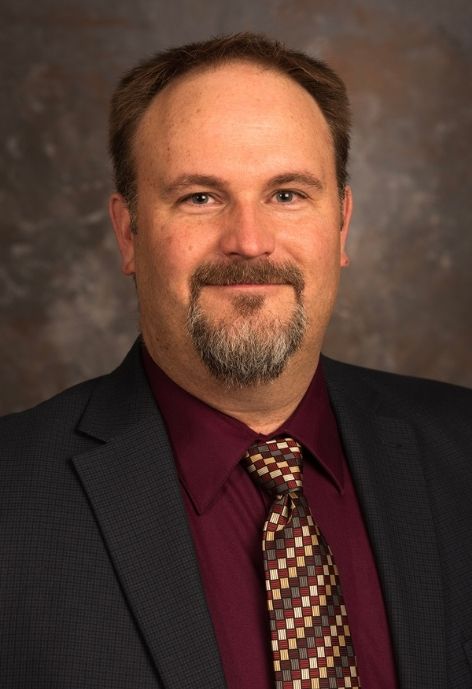
Vikranth Rao Bejjanki is an Associate Professor of Psychology at Hamilton College. His research focuses on the neural and computational mechanisms underlying human learning, employing methods such as psychophysics, computational modeling, and functional neuroimaging. He is affiliated with the Princeton Neuroscience Institute as a former postdoctoral researcher and maintains memberships in the Society for Neuroscience, Vision Sciences Society, Sigma Xi Scientific Honor Society, and the American Association for the Advancement of Science. Ph.D. in Brain and Cognitive Sciences, University of Rochester M.A. in Brain and Cognitive Sciences, University of Rochester B.A. in Cognitive Science, State University of New York at Buffalo B.S. in Computer Engineering, State University of New York at Buffalo Bejjanki’s research explores how humans learn from experiences through probabilistic inference, cue integration, and neural plasticity. His work bridges experimental psychology with computational models to understand visual perception, spatial localization, and the impact of video game training on cognitive adaptability. He has contributed to journals like Nature Neuroscience , Proceedings of the National Academy of Sciences , and PLoS Computational Biology , often integrating neuroimaging and behavioral analysis to decode learning mechanisms. His publications highlight interdisciplinary themes, merging neuroscience with artificial intelligence, cognitive modeling, and sensory processing. Key trends include the role of noise correlations in brain pattern classification, the development of perceptual templates through video games, and the application of Bayesian inference to spatial tasks. Scientific Awards & Affiliations: Sigma Xi Scientific Honor Society Society for Neuroscience Vision Sciences Society American Association for the Advancement of Science Bejjanki has taught courses such as Fundamentals of Human Neuroscience and Psychology and Neuroscience of Learning , reflecting his expertise in cognitive systems and neural mechanisms of learning. While his student advising record is not explicitly detailed, his collaborative research with institutions like Princeton underscores his commitment to advancing neuroscience through both theoretical and empirical approaches.
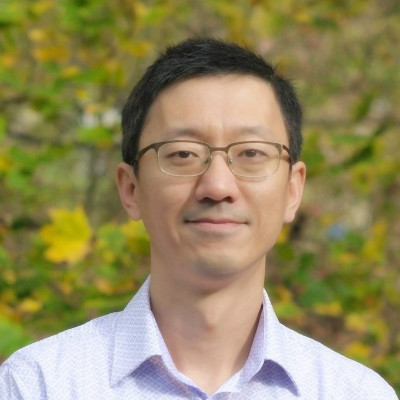
Jake Ryland Williams is an Associate Professor in the Department of Information Science at Drexel University's College of Computing and Informatics. With a background in mathematical sciences and physics, he joined Drexel in fall 2016 after serving as a postdoctoral researcher and faculty instructor at UC Berkeley. His academic journey spans multiple disciplines, bridging theoretical mathematics with practical data science applications. Education: PhD in Mathematical Science, University of Vermont (2015) MS in Applied Mathematics, University of Vermont (2011) BA in Physics, University of Vermont (2007) Williams' research spans data science, computational social science, natural language processing, and machine learning. His foundational work includes developing a scalable framework for extracting generalized lexical units that opened the field of phrase-based text analysis and challenging established statistical theories of language production. His work increasingly focuses on leveraging quantitative linguistics to improve foundation models while addressing societal impacts of generative AI and information warfare. Current research examines the intersection of social media, political events, and collective action through computational methods. His publication record demonstrates consistent contributions across natural language processing, social media analysis, and machine learning. The articles reveal a trajectory from foundational linguistic research toward increasingly applied work addressing societal challenges through computational methods, particularly focusing on social media analysis, language model optimization, and health informatics applications. His recent work reflects growing concerns about AI ethics and the societal impacts of information technologies. Teaching and Mentorship: Williams teaches across Drexel's data science curriculum, including doctoral course Foundations of Data Science (INFO 825), graduate courses Data Acquisition and Pre-Processing (DSCI 511), Data Analysis and Interpretation (DSCI 521), and Natural Language Processing with Deep Learning (DSCI 691), plus undergraduate Introduction to Data Science (INFO 103). His teaching philosophy emphasizes establishing core curricula while developing specialized electives focused on social computing applications and bias in data. Research Groups: Williams leads the CODED Lab, which focuses on social information and language processing with the perspective that technological systems facilitating public communication can be designed with open data for meta-purposes benefiting participants and organizations. He also founded the Text Processing Working Group (TPWG), which provides interactive demos, projects, and tutorials about text processing for students starting in Natural Language Processing.
Dr. Ray Fertig is the Department Head and Professor of Mechanical Engineering at the University of Wyoming, where he has held academic roles since 2011. He received his Ph.D. (2010) and M.S. (2005) in Materials Science from Cornell University, and M.S. (2003) and B.S. (2001) in Mechanical Engineering and Mathematics from the University of Wyoming. Department Head, 2024–present Professor, 2023–present Faculty, Materials Science and Engineering Program His research focuses on physics-based multiscale modeling of composite fatigue and failure, with specific interests in dislocation dynamics simulations , bio-inspired composite design , and microcracking in porous ceramics . He investigates how microstructural randomness affects composite reliability and develops stochastic models for failure prediction. Key publication trends include multiscale fracture mechanics , stochastic microstructure modeling , and applications of bio-inspired algorithms to composite optimization. His work spans material characterization, computational modeling, and integration into commercial finite element codes. Dr. Fertig advises graduate students in the Fertig Research Group , which combines virtual experiments , in-situ observations , and macroscale testing to validate failure models. Current projects link composite processing variations to microstructural and property distributions.
Xin Zhang is a Research Staff Member and Manager at IBM T. J. Watson Research Center and an Adjunct Professor in the Department of Electrical Engineering at Columbia University since 2021. His work bridges AI hardware, power electronics, and algorithm design, focusing on energy-efficient systems for machine learning and computing. Affiliation: IBM T. J. Watson Research Center (Research Staff Member/Manager) Affiliation: Columbia University (Adjunct Professor, School of Engineering) His research interests include analog circuits, power management circuits, DC-DC converters, machine learning hardware accelerators, computer system architecture, and AI/ML-assisted EDA tools. He has pioneered AI-driven approaches for circuit topology synthesis and thermal management in hardware. Recent publications highlight innovations in chip placement optimization, secure in-memory computing for AI, and high-efficiency converters for AI SoCs. His work integrates machine learning with power electronics to address challenges in energy efficiency, security, and real-time performance. He has received prestigious recognition as an IBM Master Inventor (2023) and is an IEEE Senior Member. His editorial roles include Guest Editor for IEEE Journal on Emerging and Selected Topics in Circuits and Systems and Associate Editor for IEEE Solid State Circuits Letters. Active in academic and industry leadership, he serves on Technical Program Committees for conferences like APEC, ISSCC, and DAC, and is on the Organizing Committee for the IBM IEEE CAS/EDS AI Compute Symposium since 2019.
Boaz Barak is a Professor of Computer Science at Harvard University's John A. Paulson School of Engineering and Applied Sciences. He is also a member of the technical staff at OpenAI , focusing on AI safety and alignment . Barak's career includes tenure at Princeton University and research roles at Microsoft Research New England . He is a co-director of undergraduate studies (DUS) in Harvard's Computer Science department, alongside Stephen Chong, and is involved in non-profits like AddisCoder and Jam Coders for coding education in Ethiopia and Jamaica. Education : Ph.D. from the Weizmann Institute of Science , postdoctoral fellowship at the Institute for Advanced Study in Princeton. Barak's research interests span theoretical computer science , machine learning foundations , cryptography , and quantum computing . His recent work emphasizes AI safety , deep learning mechanisms , and computational complexity . He co-organized the Harvard Machine Learning Foundations seminar and serves on advisory boards for Quanta Magazine and the Simons Institute . The articles highlight Barak's interdisciplinary work. Recent publications focus on AI safety (e.g., watermarking, alignment), deep learning theory (double descent, SGD dynamics), and computational complexity (planted clique, unique games). These reflect his dual emphasis on theoretical rigor and applied machine learning . Scientific Awards : ACM Dissertation Award Packard and Sloan Fellowships Foreign Policy's 100 Leading Global Thinkers (2014) Simons Investigator Fellow of the ACM FOCS Test of Time Award Barak advises current students like Gustaf Ahdritz and Natalie Abreu , with former advisees including Preetum Nakkiran and David Xiao . He is supported by grants from the Simons Investigator Fellowship , Kempner Institute , NSF , DARPA , and DOE , among others.
Yufei Ding is an Associate Professor in the Computer Science & Engineering Department at the University of California, San Diego (UCSD), and founder of the PICASSO Lab. She earned a Ph.D. in Computer Science from North Carolina State University and a B.S. in Physics from the University of Science and Technology of China. Research Interests: Quantum Computing Machine Learning Domain-Specific Languages Compiler Optimization Hardware Acceleration High-Performance Computing Her recent publications focus on quantum compilation, error correction, and machine learning systems, with a particular emphasis on hardware-aware optimizations. She has received multiple prestigious awards, including the NSF CAREER Award (2020) and the IEEE TCHPC Early Career Researchers Award (2019). Scientific Awards: NSF CAREER Award (2020) IEEE Computer Society TCHPC Early Career Researchers Award (2019) Yufei actively advises Ph.D. students and postdoctoral researchers in quantum computing and machine learning systems. Her lab offers openings for both quantum computing and machine learning research.
Dr. Daniel Ritchie is an Associate Professor of Computer Science at Brown University , where he co-leads the Brown Visual Computing group. His research integrates Computer Graphics , Artificial Intelligence , and Machine Learning to develop neurosymbolic methods that combine procedural models and deep neural networks for 3D shape and scene creation.
Rongkun Shen is an Associate Professor in the Department of Biology at The College at Brockport, State University of New York. His research focuses on bioinformatics and computational biology, with an emphasis on genome-wide regulatory networks in development, disease, and environmental responses. Dr. Shen’s work integrates next-generation sequencing data (RNA-Seq, ChIP-Seq) with machine learning to explore microRNA target prediction, CREB binding mechanisms, and integrative genomic data mining. His publications span 2021 to 2010, reflecting sustained contributions to adipogenesis, neurogenetics, and circadian epigenetics. Key research themes include: Computational modeling of gene regulation MicroRNA networks in motor neuron fate Epigenetic switches in circadian clocks Machine learning for genomic data analysis
Yi Sun is a Professor at the David Geffen School of Medicine, University of California, Los Angeles, with affiliations in the Department of Psychiatry & Biobehavioral Sciences and Department of Molecular & Medical Pharmacology. His research bridges neuroscience, computational biology, and machine learning, focusing on neurogenesis, epigenetics, and high-level synthesis optimization. Neuroscience & Epigenetics (1997-2011): Investigated BDNF signaling, Jak-STAT pathway regulation of astrogliogenesis, and DNA methylation mechanisms. Modern Computational Focus (2023-2025): Explores neural network pruning, graph neural networks, causal inference, and LLM applications in biomedical and hardware domains. Recent work includes VISTA for spatial transcriptomics, Brainode for brain signal analysis, and multi-agent dynamical system modeling. Publications span journals like Nature Neuroscience, Science, and Neuron.
Owolabi Legunsen is an Assistant Professor of Computer Science at Cornell University, specializing in software engineering with a focus on software testing and runtime verification. He is part of Cornell's Software Engineering Group and has made significant contributions to automated testing frameworks and tools. Ph.D. in Computer Science, University of Illinois at Urbana-Champaign Master's in Computer Science, University of Texas at Dallas B.Sc. in Computer Engineering, Obafemi Awolowo University His research explores software testing for cloud systems, probabilistic programming, and regression test selection. He develops tools like TraceMOP and pytest-inline to enhance testing precision and automation. NSF CAREER Award recipient Intel Rising Star Faculty Award Three ACM SIGSOFT Distinguished Paper Awards Legunsen actively mentors graduate students and collaborates on projects addressing runtime verification overheads, cloud configuration testing, and test flakiness detection. He leads grants focused on improving software reliability through evolution-aware techniques.
Gang Wang is an Associate Professor in the Department of Computer Science at the Siebel School of Computing and Data Science at the University of Illinois Urbana-Champaign (UIUC) . He serves as the Associate Director of the Capital One Illinois Center for Generative AI Safety and holds courtesy affiliations with the Department of Electrical and Computer Engineering , Security and Privacy Research at Illinois (SPRAI) , and the Coordinated Science Laboratory (CSL) . His research focuses on developing explainable and robust machine learning systems to enhance internet security and privacy. Key areas include adversarial machine learning , deepfake detection , phishing prevention , and security of social computing platforms . He actively contributes to major conferences like USENIX Security , CCS , NDSS , and ICML . Recent publications highlight his work on LLM benchmark contamination , VLM jailbreaks , and deepfake profile detection . His research team has produced award-winning papers at CHI and IEEE SP , with grants from NSF , Amazon , and Google . Notable students include Qingying Hao and Limin Yang , who co-authored multiple high-impact papers.
Tamas I. Gombosi is the Konstantin I. Gringauz Distinguished University Professor of Space Science and the Rollin M. Gerstacker Professor of Engineering at the University of Michigan. He is a Professor in both the Climate and Space Sciences and Engineering department and the Aerospace Engineering department within the College of Engineering. Gombosi founded and directed the Center for Space Environment Modeling (CSEM) from 2001 to 2023. His educational background includes: D.Sc. in Physics from the Hungarian Academy of Sciences Ph.D. in Physics from Lóránd Eötvös University, Budapest, Hungary M.Sc. in Physics from Lóránd Eötvös University, Budapest, Hungary Gombosi is a leading space plasma physicist specializing in numerical modeling of space environments. His research focuses on developing physics-based predictive global space weather simulation frameworks extending from the solar photosphere to Earth's atmosphere. He investigates the space environments of planets and comets, plasma transport in the heliosphere, kinetic theory of gases and plasmas, and high-performance 3D MHD simulations. His work combines theoretical physics with computational approaches to model complex space phenomena. Gombosi has made numerous significant contributions to space physics, including being part of the group that first measured the directional anisotropy of ~10^14 eV galactic cosmic rays. He and his Russian colleagues were the first to establish that during solar minimum conditions, energetic electrons from the solar wind maintain Venus' nighttime ionosphere. He pioneered modern cometary plasma physics development and created the first time-dependent model of the terrestrial polar wind. Currently, he leads computational teams developing high-performance 3D MHD codes using solution adaptive grids. His recent publications show a clear trend toward integrating machine learning with physics-based space weather modeling, particularly in projects like SOLSTICE and CLEAR. These efforts focus on improving solar energetic particle forecasting and developing 'all-clear' alerts for space missions. His work demonstrates increasing collaboration across disciplines and institutions, reflecting the growing complexity of space weather prediction systems that require expertise in solar physics, plasma physics, computational science, and data science. Gombosi has received numerous prestigious awards including: John Adam Fleming Medal (AGU's highest recognition in space science) Kristian Birkeland Medal for outstanding scientific results in Space Weather Van Allen Lecturer honor from AGU AGU's inaugural Space Weather Prize Elected Lifetime Member of the International Academy of Astronautics Fellow of the American Geophysical Union Stephen S. Attwood Award (highest award of the College of Engineering) Throughout his career, Gombosi has secured substantial research funding from NASA, NSF, and AFOSR to support large interdisciplinary research efforts. He has served as Principal Investigator for multiple projects, including a joint NASA/NSF/AFOSR initiative to develop flexible modeling tools for space weather applications. His leadership extends to directing the Center for Space Environment Modeling for over two decades, fostering collaboration among faculty, students, and staff in developing next-generation space weather prediction systems. Gombosi has been deeply involved with multiple space missions as Interdisciplinary Scientist or Co-Investigator, including Cassini/Huygens to Saturn, Rosetta to comet Churyumov-Gerasimenko, STEREO to explore solar storms, and the Magnetospheric Multiscale mission. He founded and directed the Center for Space Environment Modeling (CSEM) from 2001-2023, which has been instrumental in advancing space weather modeling capabilities. His current leadership includes directing the Space Weather Operational Readiness Development (SWORD) Center of Excellence and the CLEAR Space Weather Center of Excellence.