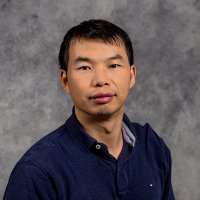
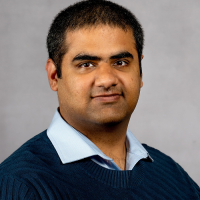
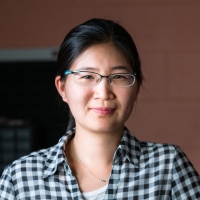
Ryo Ikeshiro is an Assistant Professor at the School of Creative Media, City University of Hong Kong, and co-director of the spatial audio art/research unit SoundLab. His work bridges sound art, computational creativity, and cultural studies through immersive installations, algorithmic audio-visual systems, and sonification techniques. PhD in Creative Practice (Goldsmiths, University of London) MPhil in Music (University of Cambridge) BMus (King's College London) Ikeshiro's research interrogates the materiality of sound through: Multichannel Ambisonics and directional audio Neural network-driven temporal dislocation Sonification of climate data and historical soundscapes Machine learning for artistic interpretation Interplay of identity and technology East Asian ideophonic traditions His 2010-2024 publications and installations reveal cross-disciplinary engagement with: Fractal mathematics in audiovisual art Algorithmic composition systems Interactive installation technologies Sonic cartography Historical memory in sound Collaborative research frameworks SoundLab, which he co-directs, develops spatial audio research at the intersection of: Technical innovation Cultural representation Experimental pedagogy Public engagement International artistic exchange Practice-based research
Sushil Prasad is a Professor of Computer Science at the University of Texas at San Antonio (UTSA), affiliated with the College of Sciences. His research focuses on data-intensive computing, energy-efficient deep learning models, parallel algorithms, and high-performance software systems. He holds a Ph.D. from the University of Central Florida, an M.S. from Washington State University, and a B.Tech. from the Indian Institute of Technology, Kharagpur. His work emphasizes integrating parallel and distributed computing into early computer science curricula. Key research interests include geospatial data analysis using ICESat-2 and Sentinel-2 imagery, edge device-optimized neural networks, and scalable polygon processing algorithms. He has contributed to frameworks like MPI-GIS and Crayons for high-performance geospatial computing. His educational initiatives include NSF-funded curriculum modernization efforts in parallel computing education. Recent work trends show a focus on climate science applications (e.g., polar sea ice classification), energy-efficient AI, and GPU/OpenMP parallelization. He has organized workshops like EduHPC and EduPar to advance HPC education strategies. Notable recognition includes the TCPP Outstanding Service Award (2012). His projects span cloud-based GIS systems, distributed ML training, and big spatial data processing. Collaborations include NSF-funded research on colocation mining, trajectory analysis, and curriculum development for undergraduate HPC education.
Professor Maria Kolokotroni is a full academic staff member at Brunel University's Department of Mechanical and Aerospace Engineering, within the College of Engineering, Design and Physical Sciences. She holds a Professorial rank and has extensive experience in urban environmental engineering and building energy systems. Her academic career began at UCL (MSc 1992, PhD 1995), followed by postdoctoral research on environmental design guidance and moisture management. She joined Brunel University in 1998 and contributed to the Building Research Establishment's indoor environment division prior to her academic appointment. Education MSc in Environmental Design and Engineering, Bartlett School, UCL (1992) PhD in Thermal Performance of Housing, UCL (1995) Postdoctoral Research: Environmental Design Guidance (UCL, 1996-1998) EPSRC-funded Postdoc: Moisture in Residential Buildings (University of Westminster, 1998) Research Interests Her work focuses on urban heat island mitigation, energy-efficient building technologies, ventilative cooling systems, and urban microclimate analysis. She actively collaborates on EU-funded projects like the IEA’s Annex 80 (Resilient Cooling) and Annex 62 (Ventilative Cooling), emphasizing practical applications of sustainable energy strategies. Key themes include: Urban albedo computation and reflective materials Thermal performance of residential and non-residential buildings Integration of renewable energy systems (photovoltaics, hydrogen) Building energy demand modeling Grants & Projects Recent projects include: PRELUDE: Real-time building energy optimization (EU, 2020-2024) PVadapt: Smart building-integrated photovoltaic systems (EU, 2018-2022) ReCO2ST: Near-zero energy retrofit platform (EU, 2018-2021) Urban albedo studies in high-latitude cities (EPSRC, 2017-2020) Advising & Collaborations Professor Kolokotroni leads interdisciplinary teams and collaborates with experts in mechanical engineering, environmental science, and urban planning. Her work bridges academic research with industry applications through projects like COOL ROOFS EU initiative and the IEA’s energy efficiency annexes. Labs/Teams Active in the International Energy Agency’s EBC Annex 80 (Resilient Cooling) and part of Brunel’s Institute for the Environment (IEF). Her research group focuses on building sustainability and climate resilience through advanced simulation tools and experimental validation.
Larry A. Fahnestock is a Professor in the Department of Civil and Environmental Engineering at the University of Illinois Urbana-Champaign and serves as Associate Dean for Facilities and Capital Planning in The Grainger College of Engineering . He holds a BS in Civil Engineering (1996), MS in Civil Engineering (1998), and PhD in Civil Engineering (2006) from Lehigh and Drexel Universities. His career at Illinois includes roles as Chair of the Structures Group (2018-2021), Director of the Newmark Structural Engineering Laboratory (2022-2025), and Siess Faculty Scholar (2022-present).
Ramez M. Hajj is an Assistant Professor in the Department of Civil and Environmental Engineering at the University of Illinois at Urbana-Champaign (UIUC). He holds affiliations with the Grainger College of Engineering and has served in multiple academic and professional roles, including editorial board memberships and leadership in organizations like the Transportation Research Board. His research focuses on asphalt materials and flexible pavements, spanning molecular-level investigations to large-scale infrastructure applications, with particular emphasis on viscoelasticity, composites, and machine learning. Education: Bachelor of Science in Civil Engineering with a minor in Engineering Science and Mechanics, Virginia Tech (2014) Master of Science in Civil Engineering, University of Texas at Austin (2016) Doctor of Philosophy in Civil Engineering, University of Texas at Austin (2019) Research Interests: Asphalt binder rheology and chemistry Computational modeling of infrastructure materials Pavement design, maintenance, and recycling Application of AI and machine learning in materials engineering Self-healing asphalt technologies Sustainable infrastructure solutions Publications: His work spans over 50 peer-reviewed articles, emphasizing innovations in asphalt material science and infrastructure resilience. Recent research highlights include AI-driven predictive models for asphalt properties and novel methods for evaluating pavement performance using ultrasonic techniques. Awards and Honors: Outstanding Reviewer awards from leading journals (2021–2022) Teaching excellence recognitions from the Center for Innovation in Teaching and Learning Illinois-Indiana Sea Grant Faculty Fellowship Grants and Funding: Research is supported by agencies such as IDOT, USDA, MnDOT, and industry partners. Projects include developing self-healing asphalt capsules and optimizing pavement design algorithms. Labs and Teams: Leads research initiatives in advanced material characterization and AI-driven infrastructure solutions within UIUC’s Civil and Environmental Engineering department.
Thomas Kjeldsen is a Professor in the Department of Architecture & Civil Engineering at the University of Bath. He leads multiple research projects funded by organizations such as The British Council, Royal Academy of Engineering, and The Leverhulme Trust. His research focuses on extreme events, machine learning, hydrological modeling, and nature-based solutions. He is affiliated with centers including the Water Innovation and Research Centre (WIRC), EPSRC Centre for Doctoral Training in Statistical Applied Mathematics (SAMBa), and the Institute for Mathematical Innovation (IMI). Research Interests: Extreme events, machine learning applications in hydrology, flood risk management, and civil engineering resilience. Key Projects: Development of rainfall frequency models for infrastructure design, flood reconstruction using historical data, and capacity-building for South African flood studies. His work contributes to UN Sustainable Development Goals related to climate action and clean water. Recent studies emphasize non-stationary hydrological analysis, urban flood modeling using machine learning, and interdisciplinary approaches to water resource management. Activities include advising doctoral students, organizing academic events (e.g., British Hydrological Society Symposium), and serving on external committees like Affinity Water. His research has been widely cited and featured in policy discussions and international media.
Prof. Suzanne J.M.H. Hulscher is a Full Professor in Water Systems at the University of Twente, specializing in fluvial and coastal morphodynamics. Her research focuses on flood risk management, sediment dynamics, and climate adaptation. She has contributed to over 845 publications and supervised 55 research projects, including Vera van Bergeijk's PhD work on overtopping flows. Key achievements include the Simon Stevin Meester award (2016) and multiple best paper awards. Her work addresses UN Sustainable Development Goals through studies on saltwater intrusion, dike breach modeling, and nature-based solutions. Research highlights include hydraulic model calibration, estuarine sand wave dynamics, and vegetation effects on hydrodynamics. She actively contributes to editorial roles (CivilEng Journal) and policy advisory bodies (Wetenschappelijke Raad). Her interdisciplinary efforts bridge engineering, ecology, and climate science. Research areas: Coastal morphology, river dynamics, environmental hydraulics Key collaborations: 4TU.Centre for Research Data, IAHR, Netherlands Academy of Engineering Grants: Not explicitly listed, but extensive publications imply significant funding Her lab focuses on combining field data with numerical modeling for real-world applications like flood dashboard development and machine learning-based prediction systems. Current projects explore climate change impacts on engineered estuaries and distributive justice in climate policy.
Dr. Dilum Dissanayake is an Associate Professor in Human Geography and Transportation Planning at the University of Birmingham's School of Geography, Earth and Environmental Sciences. She holds a PhD from Nagoya University, Japan, and has expertise in transport planning, data analysis, and behavioral change to mitigate climate change. Her research integrates computing, data mining, and behavioral sciences with a focus on sustainable mobility, smart infrastructure, and innovative transport solutions. Education: PhD (Transport Planning), Nagoya University, Japan MEng (Infrastructure Planning and Management), Asian Institute of Technology, Thailand BSc (Hons) (Civil Engineering), University of Moratuwa, Sri Lanka Diploma in Programming Research Interests: Travel demand modeling, electric/autonomous vehicles, behavioral change for sustainability, transport policy analysis (e.g., congestion pricing, telecommuting), and developing country transport challenges. She applies methods like discrete choice models, machine learning, and NLP. Awards & Grants: Co-Investigator in CLEETS (UK-Japan £10m project), Principal Investigator in Capitalisation and eHUBS (€392k/€412k EU projects). Notable awards include the 2022 Remarkable Women in Transport Award and Duo-India Fellowship. Advising & Grants: Supervises 6 current PhD students and has guided 10 completed PhDs. Leads Transport Demand Management in CLEETS and Transport Modelling in Capitalisation. Teaches modules like Sustainable Cities and One-Planet Thinking. Labs/Teams: Part of Birmingham's Sustainable Cities research group, leading projects on micro-mobility, EV adoption, and post-pandemic transport trends. Engages in international collaborations via CLEETS and eHUBS.
Zheng Li is an Assistant Professor in the Department of Agricultural and Resource Economics at North Carolina State University. His research focuses on econometric methodologies with applications in agricultural economics, resource management, and policy analysis. He holds expertise in nonparametric estimation, quantile regression, and structural econometric modeling. Key research interests include analyzing agricultural production risks, evaluating policy impacts on housing markets, and developing advanced statistical techniques for mixed data types. His work bridges econometric theory with practical applications in environmental, urban, and transportation sectors. Recent publications explore topics such as lung cancer detection via biomedical sensing technologies, ridesharing platform incentives, and pandemic effects on real estate markets. Methodologically, his contributions span kernel-based specification tests, bootstrap methods for heavy-tailed data, and monotonicity-constrained estimation techniques. No scientific awards or formal advisees are listed. His research often intersects with interdisciplinary challenges, reflecting a commitment to innovative solutions in applied economics and data science.
Dr. Masum Billah is a Senior Lecturer at Staffordshire University, affiliated with the Digital, Tech, Innovation & Business School. He joined the university in 2022 after teaching full-time at other universities since 2019. His academic journey includes a B.Sc. in Engineering from Bangladesh, an M.Sc. in Computer & Network Engineering from the University of Greenwich (UK), and a PhD in Electrical and Electronic Engineering from Staffordshire University. He also holds postgraduate certificates in Higher Education and Research Methods. As a course leader for the B.Sc. Embedded Electronic Systems Design and Development Engineer program, he teaches both undergraduate and postgraduate courses such as IoT Devices, Artificial Intelligence, and Communications. His research focuses on data analytics, telecommunications, IoT security, and healthcare research, with a particular interest in wireless sensor networks and machine learning applications. He actively promotes STEM education as a STEM Ambassador and contributes to initiatives like university competitions and school outreach. Masum’s professional memberships include Fellow of The Higher Education Academy (FHEA), IEEE, and roles in academic leadership. His work integrates flipped learning methodologies and spans engineering consultancy, short courses, and enterprise-focused projects. Recent recognitions include Whatuni Student Choice Awards 2023 for Facilities and Social Inclusion, reflecting his commitment to educational excellence.
Hankui Zhang is an Associate Professor in the Department of Geography and Geospatial Sciences at South Dakota State University (SDSU), and a Research Scientist at the Geospatial Sciences Center of Excellence. He holds a Ph.D. from the Chinese University of Hong Kong (2013), specializing in satellite image fusion. His research focuses on developing algorithms for medium-resolution satellite data processing (e.g., Landsat and Sentinel-2), including cloud masking, BRDF correction, and compositing. He also explores AI applications in remote sensing for land cover mapping and environmental monitoring. As a Landsat Science Team member, he contributes to global remote sensing initiatives. Education: B.S. in Geographic Information Systems, Zhejiang University (2007) M.S. in Remote Sensing, Zhejiang University (2010) Ph.D. in Geography and Resource Management, Chinese University of Hong Kong (2013) Research Interests: Deep learning applications in remote sensing, land cover dynamics, analysis-ready data development, and geospatial data harmonization. His work emphasizes operationalizing satellite data for environmental decision-making. Grants & Awards: Over $2.5M in grants as PI/co-PI, including USDA and NASA-funded projects. Notable awards include the SDSU Wadsworth Research Award (2020-2021) and the Global Scholarship for Research Excellence from CUHK (2011-2012). Professional Roles: Editorial board member for Remote Sensing of Environment and Remote Sensing ; guest editor for special issues on deep learning in remote sensing. Top 20 reviewer for Remote Sensing of Environment (2020, 2022-2024). Key Contributions: Published over 70 SCI papers, developed cloud detection algorithms (e.g., LANA), and pioneered analysis-ready data workflows for global monitoring. His work bridges satellite data science with practical environmental applications.
Sushant Mehan is an Assistant Professor and SDSU Extension Water Resource Engineer Specialist at South Dakota State University (SDSU). He holds a B.Tech. and M.Tech. in Agricultural Engineering from Punjab Agricultural University, India (2011, 2014), and a Ph.D. in Agricultural and Biological Engineering from Purdue University (2018). His academic journey includes roles as a graduate research assistant at Purdue and SDSU, followed by postdoctoral positions at Ohio State University, University of Wisconsin-Madison, and Colorado State University before joining SDSU in 2023. His research focuses on water resources engineering, hydro-informatics, and digital water solutions. Key areas include advancing hydrologic models for precision agriculture, integrating machine learning and geospatial techniques to optimize water use, and addressing climate-land management interactions on water quantity/quality. He emphasizes community engagement in water science and sustainable agricultural practices. Mehan has received notable awards such as the 2023 Trailblazers in Engineering Fellow and ASABE Outstanding Reviewer, reflecting his impactful contributions to peer review and innovation. His work on the Indiana Soybean Innovation Competition (2017) resulted in a patent-pending filtration system using soy-based materials. He is actively involved in professional organizations including the American Society of Agricultural and Biological Engineers (ASABE), American Geophysical Union (AGU), and the South Dakota Association of Agricultural Extension Professionals (SDAAEP). His interdisciplinary approach bridges engineering, environmental science, and agricultural sustainability to address real-world challenges.
Vivienne Sze is a Professor at MIT's Department of Electrical Engineering and Computer Science (EECS), part of the School of Engineering. Her research focuses on energy-efficient computing systems for machine learning, computer vision, and video compression, with applications in autonomous systems, healthcare, and IoT. She leads projects integrating algorithmic innovations with hardware design to achieve low-power solutions for embedded and mobile devices. Her work has been recognized through prestigious awards, including the Primetime Engineering Emmy Award for co-developing the HEVC video compression standard and multiple faculty awards from tech giants like Google and Qualcomm. She co-authored the book *Efficient Processing of Deep Neural Networks*, emphasizing practical hardware-software co-design strategies. Research Interests: Energy-Efficient Machine Learning Accelerators Video Coding and Compression Standards Embedded Systems and Mobile Computing Processing-in-Memory (PIM) Architectures AI for Health Monitoring and Digital Health Sustainability in AI Infrastructure Publications highlight trends in: Optimizing DNNs for edge devices Innovations in entropy coding and CABAC Memory-efficient Gaussian-based algorithms Energy-aware design for photonic computing Awards include IEEE conference best paper awards and industry recognitions for her contributions to video coding and hardware acceleration. Her lab's collaborative efforts span academia and industry, aiming to bridge theoretical research with real-world deployable systems.
Dr. Shuvo Bakar is a Senior Lecturer in the Sydney School of Public Health at the University of Sydney, within the Faculty of Medicine and Health. He holds a PhD in Statistics from the University of Southampton, UK, and has prior experience as an Assistant Professor at Yale University, Lecturer at the Australian National University, and Scientist at Data61 (CSIRO). His research focuses on statistical methods applied to public health challenges, including Bayesian hierarchical modeling, machine learning, spatio-temporal analysis, and their applications in epidemiology, clinical trials, and environmental health. Dr. Bakar's research interests span statistical methodologies such as Bayesian adaptive designs, small area estimation, and spatial risk modeling, alongside applications in child health, infectious diseases, and extreme weather impacts on health. He is an active member of academic communities, including the Royal Statistical Society (RSS Fellow), Statistical Society of Australia, and the Australian Trials Methodology Research Network. His work also involves collaborations on grants totaling millions in funding, addressing topics like climate change impacts on health inequity and cardiovascular disease prevention in remote regions. Education: PhD in Statistics (University of Southampton, UK) Key Research Themes: Obesity, Diabetes, Cardiovascular Disease; Reproductive, Maternal & Child Health Grants/Projects: Includes NHMRC-funded trials on respiratory infections in First Nations children and MRFF grants for cardiovascular risk reduction in regional Australia. Dr. Bakar's contributions extend to editorial roles for Nature Scientific Reports and Discover Public Health , and his research has been published in journals like PloS One , Climatic Change , and Journal of the Royal Statistical Society .
Sonja Wogrin is a University Professor (Univ.-Prof.) at Graz University of Technology (TU Graz), where she has been heading the Institute for Electricity Economics and Energy Innovation since August 2021. She holds a Dipl.-Ing. in Technical Mathematics from TU Graz (2008), a Master of Science in Computation for Design and Optimization from MIT (2008), and a doctorate in Electricity Systems from Universidad Pontificia Comillas (2013). Her educational background includes: Doctorate in Electricity Systems, Universidad Pontificia de Comillas (June 2013) Dipl.-Ing. in Technical Mathematics, Graz University of Technology (October 2008) Master of Science in Computation for Design and Optimization, MIT (June 2008) Professor Wogrin's research focuses on decision support systems in the energy sector, optimization methodologies, and particularly the problem of generation capacity expansion. Her work spans several key areas including bilevel programming, capacity expansion planning, energy storage systems, and time series aggregation for energy system optimization. She has made significant contributions to understanding how to integrate renewable energy sources into power systems while maintaining economic efficiency and grid stability. Her research often addresses the challenges of decarbonizing electricity systems through advanced mathematical modeling and optimization techniques. Her recent publications demonstrate a strong focus on improving the computational efficiency of energy system models while maintaining accuracy, with particular attention to the integration of renewable energy sources, energy storage systems, and the development of resilient energy communities. She has pioneered work on time series aggregation methods that balance computational tractability with model accuracy, which is crucial for long-term energy planning under uncertainty. Professor Wogrin has received several prestigious awards and fellowships including: 4th EASE Student Award for "Co-Optimisation of energy storage technologies in tactical and strategic planning models" (2019) Beca de movilidad para investigadores "NILS Ciencia y Sostenibilidad" (2015) Beca Erasmus "Personal Docente/Investigador" de formación (2016) Beca Iberdrola de ayuda a la investigación en energía y medio ambiente (2020) She leads multiple significant research projects including EU - NetZero-Opt, RINGs, iKlimET, V2G-QUESTS, and CIDEAL, which focus on optimizing energy systems for net-zero emissions, resilient energy networks, climate and energy system modeling, vehicle-to-grid integration, and industrial decarbonization. Her work has substantial practical implications for energy policy and grid operations in Austria and beyond. Professor Wogrin collaborates extensively with industry partners including Austrian Power Grid AG, KELAG, and Netz Niederösterreich, ensuring her research addresses real-world energy challenges. Professor Wogrin leads the research group at the Institute for Electricity Economics and Energy Innovation, which develops advanced optimization models for energy systems. Her team has created the LEGO (Low-carbon Expansion Generation Optimization) model, an open-source tool for energy system optimization that has gained international recognition. The group's work spans from fundamental optimization methods to practical applications in energy system planning and operation, with a strong emphasis on computational efficiency and model accuracy.