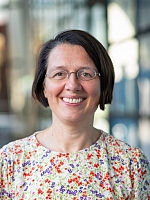
Nadia Yousfi Steiner is a researcher at the Université de Franche-Comté, affiliated with the FEMTO-ST Institute. She works in the Energy Department as part of the SHARPAC team within the Faculty of Science, Technology and Management of Engineering (UFR STGI). Her research focuses on hydrogen energy technologies, particularly proton exchange membrane fuel cells (PEMFC) and electrolyzers. Her primary research interests include: Advanced diagnostic and prognostic methods for electrochemical systems Degradation modeling and lifetime prediction of fuel cells Accelerated stress testing protocols Fault-tolerant control strategies Digital twin applications for system health management Reinforcement learning for maintenance optimization Her recent publications demonstrate strong focus on improving fuel cell durability and performance through advanced data-driven approaches, with emphasis on applications in transportation and energy storage. Research trends show increasing work on machine learning integration, degradation root-cause analysis, and proton exchange membrane water electrolysis. Scientific Awards: CNRS Bronze Medal (2019) for research contributions to fuel cell technology She leads research within the SHARPAC team, supervising PhD students and collaborating on multiple international projects focused on hydrogen energy systems resilience and commercialization.
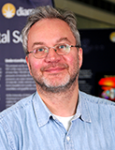
Georg Held serves as Principal Beamline Scientist for the versatile soft x-ray (VERSOX) beamline (B07) at Diamond Light Source and holds a joint Professorship at the University of Reading. His work bridges synchrotron facility operations with academic research in surface science. His research centers on heterogeneous catalysis and surface characterization , with key emphases on: Precise surface geometry determination via diffraction techniques (LEED, SXRD) Chemical analysis of model catalysts using XPS and NEXAFS spectroscopy Adsorption behavior of bio-relevant molecules (e.g., amino acids) and solvents on metal/oxide surfaces Electronic structures of surface alloys and thin oxide films Held's 2025 publications reveal interdisciplinary innovation across nanomaterials, computational beamline modeling, metal-organic frameworks, and machine learning applications, consistently leveraging synchrotron radiation to solve surface reactivity challenges in energy and environmental contexts. He secures major funding from EPSRC and the European Commission, including Marie Curie network grants "MONET" and "SMALL", enabling international collaborations and beamtime access at synchrotron facilities across the UK, Europe, and US. As VERSOX beamline leader, Held directs instrumentation development (notably the CLEED program for LEED analysis) and cultivates partnerships with academic and industrial researchers in catalysis and surface science.
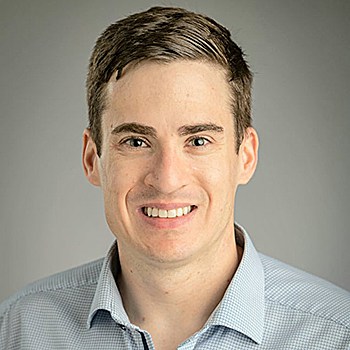
Chris Bartel is an Assistant Professor in the Department of Chemical Engineering and Materials Science at the University of Minnesota's College of Science and Engineering. He leads the Design of Materials on Computers (DMC) Lab, focusing on computational approaches to materials discovery for sustainable energy applications. His research spans computational materials science, quantum chemistry, and machine learning, with specific interest in solid-state materials for batteries, photovoltaics, catalysts, and ceramics. Bartel's group integrates electronic structure theory, thermodynamics, and data science to develop predictive models for material properties and degradation mechanisms. Analysis of his recent publications (2024-2025) reveals a strong focus on generative materials discovery, solid-state reaction mechanisms, battery materials design, and the application of machine learning to materials science problems. His work frequently appears in high-impact journals including Nature, Science Advances, and ACS Energy Letters, often in collaboration with leading researchers like Gerbrand Ceder. Prof. Bartel actively mentors a diverse research group including postdoctoral researchers and undergraduate students. His lab philosophy emphasizes teamwork and mentorship, with a specific commitment to enabling careers in science and engineering for those from historically excluded backgrounds. The DMC Lab's mission centers on two goals: making a difference in mitigating climate change effects and multiplying impact by helping all group members realize their potential. The Design of Materials on Computers Lab represents a vibrant research environment at the forefront of computational materials discovery, combining theoretical approaches with practical applications to address critical energy challenges.
Xiaoyan Ji is a Professor in the Department of Engineering Sciences and Mathematics at Luleå University of Technology, specializing in Energy Engineering within the Energy Science division. Her research focuses on thermodynamic properties of chemical systems with applications in sustainable energy technologies. With fourteen years of research experience, she has established herself as a specialist in phase equilibria and ionic liquid applications. Professor Ji's academic journey includes a Ph.D. from Nanjing University of Technology, China (1994-2000), followed by international postdoctoral positions at KTH Royal Institute of Technology in Sweden, Kaiserslautern University in Germany (as an Alexander von Humboldt fellow), and the University of Wyoming in the USA. This global research experience has shaped her interdisciplinary approach to energy engineering challenges. Her research interests center on thermodynamic properties of organics and inorganics, phase equilibria for systems with electrolyte solutions, and chemical reactions. She has particular expertise in ionic liquids and their applications for CO2 separation and absorption, combining experimental studies with advanced modeling techniques. Her work bridges fundamental thermodynamics with practical applications for environmental sustainability. Professor Ji's recent publication record demonstrates strong activity in energy engineering, with multiple high-impact publications in 2025-2026 focusing on ionic liquids, CO2 separation technologies, and sustainable chemical processes. Her research shows a trend toward integrating machine learning with physical modeling to improve predictive capabilities in complex chemical systems. Notable recognition includes the prestigious Alexander von Humboldt research fellowship, highlighting her international standing in the field of chemical and energy engineering. Professor Ji maintains an active research program with recent funding from multiple sources including the National Natural Science Foundation of China, Major Science and Technology Projects of Jiangsu Province, and Horizon-EIC Pathfinder Challenges, indicating a well-supported research group working on cutting-edge energy technologies.
Dr. Binoy Kumar Saikia is a Scientist and Assistant Professor at the Coal Chemistry Division of CSIR-North East Institute of Science & Technology (CSIR-NEIST) in Jorhat, Assam, India. A Fellow of the Institution of Chemists (India), he has been with CSIR-NEIST since 2011 and is also affiliated with the Academy of Scientific and Innovative Research (AcSIR). With a Ph.D. in Coal Chemistry from Dibrugarh University (2008), his research bridges traditional coal science with cutting-edge nanomaterials development. Dr. Saikia's research program focuses on transforming coal and coal waste materials into high-value carbon nanomaterials including graphene, carbon quantum dots, and nanodiamonds. His work spans multiple applications in energy storage (particularly supercapacitors and hybrid capacitors), environmental remediation, and sensing technologies. Recent publications demonstrate his innovative approach to upcycling coal waste, atmospheric particulate matter, and other byproducts into functional materials with commercial potential. His publication record is substantial with approximately 107 works, showing increasing productivity in recent years with numerous high-impact publications in journals like ACS Omega, Energy & Fuels, and Environmental Science: Nano. His research demonstrates a clear trajectory from fundamental coal chemistry toward applied materials science with practical environmental and energy applications. Young Scientist Award from International Union for Crystallography (2009) Rajiv Gandhi Excellence Award (2012) As an active member of the scientific community, Dr. Saikia serves on the editorial board of the International Journal of Geology, Earth and Environmental Sciences and has completed over 40 peer reviews for major scientific journals, particularly in the energy and environmental fields. His research program represents an innovative approach to sustainable resource utilization, transforming traditionally problematic coal waste streams into valuable advanced materials.
Bryan R. Goldsmith is an Associate Professor of Chemical Engineering at the University of Michigan, Ann Arbor, where he also serves as Associate Chair for Graduate Education. He joined the Department in 2017 and was promoted to Associate Professor with tenure effective September 1, 2023. His academic journey includes a BS in Chemical Engineering from the University of California Riverside (2010) and a PhD in Chemical Engineering from the University of California Santa Barbara (2015), followed by a Humboldt Postdoctoral Fellowship at the Fritz Haber Institute of the Max Planck Society in Berlin, Germany. Prof. Goldsmith's research focuses on applying electronic-structure theory, molecular simulation, and data science tools to understand and design catalysts and materials for sustainable chemical conversion, pollution reduction, and energy generation/storage. His lab combines quantum mechanical modeling, molecular simulation, and machine learning to address major societal challenges in energy and the environment. His research spans four primary thrusts: (i) Thermo- and electro-catalysis for CO 2 and water pollution remediation; (ii) Machine learning to accelerate catalyst design and discovery; (iii) Catalysis and materials for renewable energy generation, storage, and use; and (iv) Electrocatalytic conversion of bio-oils for sustainable fuel production. These research areas directly address critical sustainability challenges through computational approaches. Prof. Goldsmith has received numerous prestigious awards including the NSF CAREER Award (2023), the 1938E Award from the College of Engineering (2023), and the ACS OpenEye Outstanding Junior Faculty Award in Computational Chemistry (2022). His research is supported by multiple federal agencies including the National Science Foundation, Department of Energy, Army Research Laboratory, and Office of Naval Research, as well as private corporations and foundations. NSF CAREER Award (2023): Supporting research on electrocatalytic nitrate reduction to ammonia 1938E Award (2023): Recognizing exceptional mentorship, teaching, and departmental contribution ACS OpenEye Award (2022): Honoring outstanding contributions to computational chemistry AIChE 35 under 35 Award (2020): In the Energy and Environment category Dow Corning Assistant Professorship (2020) Prof. Goldsmith has mentored an impressive number of students, including two post-doctoral researchers, nine PhD candidates, four master's students, and 19 undergraduate students. His teaching philosophy centers around project-based learning, active lecturing, and inclusive teaching methods. He has developed graduate and undergraduate data science and machine learning courses specifically for engineering students. The Goldsmith Lab is also committed to K-12 outreach and science communication, hosting educational events and contributing to various STEM initiatives.
Bill Tumas serves as Associate Lab Director for Materials/Chem Science & Technology at the National Renewable Energy Laboratory (NREL), where he provides overall leadership, management, technical direction, and workforce development for materials, chemical, and computational science capabilities. With over 30 years of experience in national laboratories and industry, Dr. Tumas joined NREL in December 2009 as director of the Chemical and Materials Science Center after spending 17 years at Los Alamos National Laboratory. Dr. Tumas earned his Bachelor's degree in Chemistry from Ithaca College and his PhD in Chemistry from Stanford University. His educational background in chemistry forms the foundation for his extensive work in renewable energy research and development. His research interests span a broad spectrum of renewable energy technologies, with particular focus on photovoltaics and solar energy conversion, electrochemistry, hydrogen production, materials discovery, and energy storage. Dr. Tumas oversees NREL's solar, hydrogen and fuel cells, basic energy sciences, advanced computing, and ARPA-E programs, driving innovation across multiple energy technology domains. Analysis of his 24 research publications from 2001-2024 reveals a consistent focus on advancing materials science for renewable energy applications, with recent work emphasizing photovoltaics scaling, carbon cycle management, renewable hydrogen, and high-throughput materials discovery. His publications appear in high-impact journals including Nature Reviews Chemistry, Science, and Nature Materials, demonstrating the significance of his contributions to the field. Fellow of the American Association for the Advancement of Science Leader of two Energy Frontier Research Centers: Center for Next Generation of Materials Design and Center for Inverse Design Significant research impact with multiple highly cited publications As NREL's laboratory point of contact for the Office of Science's Basic Energy Sciences program, Dr. Tumas manages critical sponsor relationships and program execution. His leadership extends to creating numerous multi-institution and international collaborations that advance renewable energy research globally. Dr. Tumas's work bridges fundamental science with practical applications, addressing some of the most pressing energy challenges of our time. He leads the Materials, Chemical, and Computational Science division at NREL, which serves as a hub for innovative research in renewable energy materials and technologies. Under his direction, the division pursues cutting-edge research that spans from basic science to applied technology development, creating pathways for commercial implementation of advanced energy solutions.
Prof. Dr. Janina Kneipp is a Professor (W3) of Physical Chemistry at Humboldt-Universität zu Berlin, where she has led an active research group since 2012. She previously held positions as Assistant Professor at HU Berlin/BAM (2008-2012), Junior Researcher at BAM (2005-2008), and research appointments at Harvard Medical School, Princeton University, and Erasmus Universiteit Rotterdam. Education: Dr. rer. nat. (summa cum laude), Freie Universität Berlin (2002) Undergraduate/Graduate Studies in Biology & Physics, Freie Universität Berlin (1992-1998) Research Focus: Her interdisciplinary work bridges physical chemistry and biospectroscopy, with particular emphasis on: Surface-enhanced Raman scattering (SERS) for complex sample analysis Plasmonic catalysis and hot electron chemistry Multiphoton-excited vibrational spectroscopy Nanoscale biochemical mapping in plant and animal systems Development of advanced plasmonic substrates Publication Trends: Recent work demonstrates strong focus on multimodal spectroscopy applications, with studies combining SERS, hyper-Raman, IR, and synchrotron techniques to address questions in catalysis, nanoparticle-cell interactions, plant biochemistry, and biosensing. Publications frequently incorporate advanced nanomaterials, electrochemical methods, and machine learning-assisted spectral analysis. Scientific Awards: Fellow, European Academy of Sciences (2020) Caroline von Humboldt Professorship (2019) Wilhelm Ostwald Fellow, BAM (2012) Bunsen-Kirchhoff Award, GDCh (2010) ERC Starting Grant (2010) Academic Leadership: Currently advises 5 PhD students and leads multiple collaborative initiatives. Serves as Board Member of Einstein Center Catalysis (since 2019), Head of Chemistry Department (2014-2016), and Speaker of Graduate School SALSA (since 2012). Secured funding through DFG, EU networks, and ERC grants supporting spectroscopy infrastructure development. Lab & Team: Leads the KneippLab research group with 2 postdoctoral researchers, 5 graduate students, and technical staff. Research focuses on developing spectroscopic methods for interrogating biological and chemical processes at nanoscale resolution using plasmonic enhancement strategies.
Prof. Dr. Beatriz Roldan Cuenya is a Professor and Group Leader at the Fritz Haber Institute of the Max Planck Society, where she directs the Department of Interface Science. She holds a European Research Council Consolidator Grant and is a Fellow of the Max Planck Society. Her research integrates surface science, catalysis, and nanomaterials, with a focus on understanding dynamic surface transformations during chemical reactions using advanced operando techniques. Her work spans electrocatalysis (CO₂ reduction), thermal catalysis (CO₂ hydrogenation), and nanoparticle design. Key themes include: Correlating nanoscale structure with catalytic activity/selectivity Developing size/shape-controlled catalysts Probing reaction mechanisms via real-time microscopy/spectroscopy Her recent publications (2021-2025) predominantly explore CO₂ conversion strategies, bimetallic catalysts, and operando characterization methods. Trends show emphasis on sustainable chemistry and energy applications. Notable scientific awards: AVS Fellow of the Society Award (2021) ISE-Elsevier Prize for Experimental Electrochemistry (2021) Academia Europaea Membership (2020) ERC Consolidator Award (2016) Max Planck Society Fellowship (2016) She leads a well-equipped research group investigating catalyst design and reaction dynamics. The lab leverages synchrotron facilities and in-house instrumentation for fundamental studies.
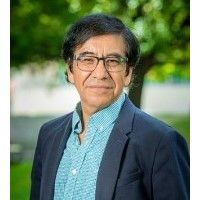
Antonio Flores-Tlacuahuac is a Professor in the Chemical Engineering Department at Tecnológico de Monterrey's Campus Monterrey, affiliated with the Institute of Advanced Materials for Sustainable Manufacturing. His research spans sustainable process systems engineering with emphasis on optimization, machine learning applications, and resource nexus modeling. Chemical Engineering Degree, Universidad Autónoma de Puebla Ph.D. in Philosophy, University of London His research interests focus on developing advanced computational frameworks for sustainable engineering systems. Key areas include Bayesian optimization for chemical processes, machine learning applications in polymerization and separation systems, and integrated modeling of water-energy-carbon systems. His work bridges fundamental process engineering with sustainability challenges, particularly in renewable energy integration and CO 2 capture technologies. Analysis of his 2024-2025 publications reveals a strong trend toward hybrid AI-optimization methodologies, with 60% of recent work incorporating Bayesian approaches. The research spans from molecular-scale catalyst design to community-scale energy systems, demonstrating exceptional breadth while maintaining technical depth in process systems engineering. Mexican Researcher Certification - Level 3 Flores-Tlacuahuac mentors doctoral students through courses including Automation and Control of Chemical Processes and Doctoral Research series. His research portfolio includes significant contributions to the Centro Mexicano de captura, uso y almacenamiento de CO 2 , with funding evidenced by extensive publication output in high-impact journals. Current projects focus on quantum-classical hybrid algorithms for bioprocess optimization and machine learning frameworks for pandemic surveillance. He leads research within the Institute of Advanced Materials for Sustainable Manufacturing, with strong emphasis on UN Sustainable Development Goals including Affordable and Clean Energy, Climate Action, and Sustainable Cities. His work integrates multiple stakeholder perspectives in sustainable system design, particularly for rural energy solutions and circular economy implementations.
Jonas R. Kunst is Professor of Communication at BI Norwegian Business School (Department of Communication and Culture) and Professor II of Cultural and Community Psychology at the University of Oslo. His academic journey includes a PhD in Social Psychology from the University of Oslo (2016), postdoctoral fellowships at Yale University, and a Fulbright Visiting Scholar position at Harvard University. He rapidly advanced from Associate Professor (2019) to Full Professor of Psychology at the University of Oslo (2020). His research spans acculturation dynamics , misinformation , violent extremism , and environmental psychology , with growing emphasis on artificial intelligence implications. Kunst examines how majority-group members relate to immigrant cultures, the psychological roots of extremism, and organizational strategies for combating misinformation. His work features innovative methodologies including machine learning analyses of 34,000+ extremism articles. As Editor-in-Chief of advances.in/psychology and Consulting Editor for the Journal of Personality and Social Psychology , Kunst significantly shapes academic discourse. He serves on editorial boards of Personality and Social Psychology Review , Personality and Social Psychology Bulletin , and the International Journal of Intercultural Relations . Rising Star Designation (Association for Psychological Science) Janet Taylor Spence Award for Transformative Early Career Contributions Early Career Award (International Academy of Intercultural Research) Fellowships in Society of Experimental Social Psychology and Association of Psychological Science Kunst's leadership extends to major collaborative projects including the Cambridge Handbook of the Psychology of Violent Extremism and cross-cultural studies across 32 countries examining pandemic responses. His research demonstrates consistent methodological rigor with frequent use of multi-national datasets and longitudinal designs.
Dr. Naoto Tanibata is an Assistant Professor at Nagoya Institute of Technology, affiliated with the Department of Life and Applied Chemistry in the Graduate School of Engineering. He also holds a concurrent position at Kyoto University's Catalyst & Battery Elemental Strategy Unit. His research focuses on developing advanced materials for next-generation energy storage systems, particularly solid-state batteries. Dr. Tanibata received his academic training at Osaka Prefecture University: PhD in Engineering (2014-2017) Master of Engineering in Material & Chemical Engineering (2012-2014) Bachelor of Engineering in Applied Chemistry (2008-2012) Dr. Tanibata's research centers on advanced battery materials , with particular expertise in all-solid-state batteries using chloride and other novel electrolytes. His work combines computational materials science with experimental electrochemistry to develop high-energy-density storage solutions. Recent projects have focused on: Design principles for high-voltage chloride-based electrodes using HSAB theory Amorphization strategies for enhancing anion redox reactions Machine learning approaches for battery material discovery and optimization Deformability properties of solid electrolytes to prevent lithium dendrite formation His publication record demonstrates a strong focus on overcoming key challenges in solid-state battery technology, particularly addressing issues of ionic conductivity, interfacial stability, and high-voltage operation. Recent work has increasingly incorporated advanced simulation techniques and machine learning to accelerate materials discovery. Dr. Tanibata has received numerous awards for his contributions to battery research: Battery Technology Committee Award (2024) for 'Redox-level tuning for high-potential chloride electrodes' Best Oral Presentation Award (2024) from the Ceramic Society of Japan ECS Japan Branch Young Researcher Special Award (2024) Multiple Young Research Innovator Encouragement Awards Dr. Tanibata leads multiple research projects funded by prestigious organizations including the Japan Society for the Promotion of Science (JSPS), Fujikura Foundation, and Naito Science and Technology Promotion Foundation. His current research focuses on: Redox-level design for high-energy-density chloride electrodes (JSPS Grant 24K17755, 2024-2029) Establishing design guidelines for high-deformability materials for all-solid-state batteries Verification of amorphization-based anion redox utilization for microgrid applications At Nagoya Institute of Technology, Dr. Tanibata leads research within the Department of Life and Applied Chemistry, focusing on the rational design of solid-state battery materials based on solid-state chemistry principles. His work bridges fundamental materials science with practical battery applications for electric vehicles and grid-scale storage.
Raghavan B. Sunoj serves as Professor and Class of 1998 Chair in Quantum Computing at the Department of Chemistry, Indian Institute of Technology Bombay, while also holding the position of convener for supercomputing. His academic journey includes: Early education in Kerala, India Ph.D. from Indian Institute of Science (IISc) Bangalore under Professor J. Chandrasekhar Postdoctoral research at Ohio State University with Professor Christopher Hadad Professor Sunoj's research bridges computational and experimental organic chemistry with emphasis on homogeneous catalysis. Key focus areas include: Reaction mechanism elucidation Weak noncovalent interactions in asymmetric catalysis In silico catalyst design through computational chemistry and machine intelligence His collaborative work with experimental groups has successfully validated computational predictions and rationalized experimental observations. His distinguished recognition includes: Charles Coulson Lecture (2017) at University of Georgia, Athens IIT Bombay Excellence in Teaching Award Shanti Swarup Bhatnagar Prize in Chemical Science (2019) While specific student advising details are not provided, his research program demonstrates significant collaborative impact through experimental validation of computational models. As convener for supercomputing, he leads high-performance computing initiatives supporting quantum computing and catalyst design research at IIT Bombay.
Alexander Mitsos is a Professor at Forschungszentrum Jülich in Germany, where he leads research at the intersection of process systems engineering, chemical engineering, and computational methods. His work spans optimization theory, machine learning applications, and energy systems, with a focus on developing novel methodologies for complex engineering problems across multiple domains. Dr. Mitsos's research interests center on the application of advanced optimization techniques to chemical engineering problems. His primary areas of focus include: Process systems engineering and optimization Machine learning applications in chemical engineering Energy systems and hydrogen technologies Bioprocess engineering and control systems Ammonia energy storage and carbon capture His recent publications reveal a strong trend toward integrating machine learning with traditional chemical engineering approaches. He has pioneered work on graph neural networks for molecular property prediction, reinforcement learning for control systems, and bilevel optimization for energy systems. His research demonstrates a consistent focus on developing computationally efficient methods that bridge theoretical advances with practical engineering applications, particularly in sustainability-focused domains like hydrogen technologies and carbon emission reduction. The analysis of his 15 most recent publications shows a balanced portfolio between theoretical method development (e.g., optimization algorithms) and practical applications (e.g., cement production, hydrogen compression). Dr. Mitsos has mentored numerous graduate students and postdoctoral researchers, as evidenced by his extensive publication record with junior authors. His research has been supported by various grants focused on energy transition, process optimization, and sustainable chemical engineering solutions, with significant collaborations across European institutions. The funding landscape for his work appears to emphasize sustainability transitions and industrial decarbonization, particularly in energy-intensive sectors. His work appears to be conducted within a research group focused on process systems engineering, with strong connections to both computational mathematics and practical chemical engineering applications. The group maintains laboratories for experimental validation of computational models, particularly in bioprocess engineering and hydrogen technologies, while maintaining strong theoretical foundations in optimization and control theory.
Jan Halborg Jensen is a Professor in the Department of Chemistry at the University of Copenhagen, with a distinguished research career in computational chemistry and molecular modeling. His work spans quantum chemistry, cheminformatics, and machine learning applications in chemical research, with significant contributions to drug design, catalyst discovery, and chemical reaction prediction. His primary research interests focus on Computational Chemistry , Molecular Modeling , and Quantum Chemistry , with particular expertise in applying machine learning techniques to chemical problems. Jensen's research integrates computational methods with practical chemical applications, including retrosynthesis planning, catalyst design, and drug discovery. His work bridges theoretical chemistry with practical applications in organic synthesis and pharmaceutical development. Analysis of Jensen's recent publications (2023-2025) reveals a strong focus on machine learning applications in chemistry, particularly for predicting chemical reactivity, designing catalysts, and advancing drug discovery. His work demonstrates increasing integration of artificial intelligence with traditional computational chemistry methods, with significant contributions to cheminformatics, transition metal chemistry, and biomolecular simulation standards. The research spans theoretical developments and practical applications across organic chemistry, biochemistry, and materials science. Jensen maintains an active research program with extensive publication output, including 88 research contributions comprising journal articles, book chapters, and books. His work shows strong collaborative networks across computational chemistry and related fields. He has presented on educational technology topics, including a lecture titled "Make a difference - teach and learn with technology" in April 2018, demonstrating engagement with pedagogical developments alongside research activities. His online presence includes a professional blog (molecularmodelingbasics.blogspot.com) and comprehensive CV documentation.