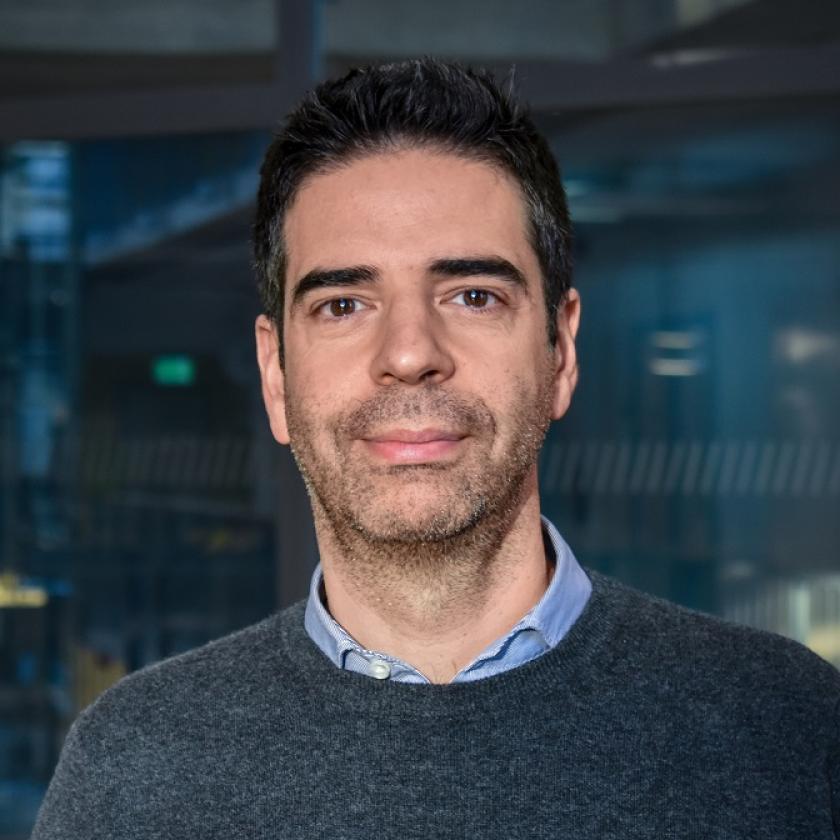
Hamid Nawab is a Professor in the Department of Electrical and Computer Engineering at Boston University, with an affiliated appointment in the Department of Biomedical Engineering. He holds a PhD from MIT (1982) and has been recognized for exceptional teaching, including the College of Engineering inaugural Teaching Excellence in the Core Curriculum Award (2025) and multiple ECE Department Excellence in Teaching Awards. His research focuses on computational signal processing, applied artificial intelligence, and biomedical signal analysis, particularly in EMG and patient activity monitoring. He has taught courses such as Signals and Systems, Digital Signal Processing, and graduate teaching seminars. His work integrates signal processing with biomedical applications, including Parkinson’s disease monitoring via wearable sensors and EMG signal decomposition. He has authored influential texts like Signals and Systems and contributed to over 50 peer-reviewed publications. Awards include Fellow of the American Institute for Medical and Biological Engineering (2006) and the Metcalf Award for Excellence in Teaching (1993). His advising and grants emphasize interdisciplinary engineering education and biomedical signal processing. Collaborations span clinical and academic institutions, focusing on translational research in healthcare technology.
Ghyslain Gagnon is a Professor in the Department of Electrical Engineering at École de technologie supérieure (ÉTS) in Montreal, Canada. He leads research activities within the LACIME – Communications and Microelectronic Integration Laboratory, focusing on cutting-edge developments in microelectronics, sensors, and communication systems. His work bridges theoretical research and practical applications across multiple domains including health technologies, wireless communications, and quantum engineering. Education: B.Ing. from École de technologie supérieure M.Ing. from École de technologie supérieure Ph.D. from Université de Carleton Professor Gagnon's research spans several interconnected domains with emphasis on Radiofrequency circuits and antennas, Microelectronics, Wireless communications, Sensors and monitoring systems, Machine learning applications, Health technologies, and Quantum engineering. His work demonstrates a strong commitment to translating theoretical concepts into practical solutions with real-world impact, particularly in the areas of health monitoring systems and advanced communication technologies. His recent publications reveal a clear trajectory toward increasingly interdisciplinary research, combining traditional electrical engineering with machine learning, health monitoring, and quantum technologies. The trend shows growing emphasis on practical applications in automotive safety systems, wireless communications for next-generation networks, and health monitoring technologies that leverage flexible electronics and novel sensor designs. Professor Gagnon has successfully supervised numerous graduate students through their doctoral and master's research, with recent theses focusing on smart hearing protection devices, machine learning applications, energy monitoring systems, and flexible sensor technologies. His supervision record demonstrates consistent productivity and relevance to contemporary engineering challenges. He is an active member of the LACIME research laboratory, which focuses on six key areas: Functional materials, Micro- and nanofabrication processes, Conception and design of integrated circuits, Design and fabrication of hybrid components, Photonic and electronic microsystems, and Signal processing and communication. This environment provides students with access to cutting-edge tools and fosters innovation through interdisciplinary collaboration.
Gaang Lee is an Assistant Professor in the Department of Civil and Environmental Engineering at the University of Alberta's Faculty of Engineering, where he joined in 2022 after earning his Ph.D. from the University of Michigan. His research pioneers 'sympathetic' built environments that enhance safety, health, productivity, and comfort for workers and users through integration of wearable biosensors, AI, extended reality, and robotics with psychophysiological theories. Education: Ph.D in Civil and Environmental Engineering, University of Michigan, Ann Arbor (2022) - Emphasis: Construction Engineering and Management; Graduate Certificate in Computational Discovery and Engineering Graduate Certificate in Computational Discovery and Engineering, University of Michigan, Ann Arbor (2022) M.S. in Architectural Engineering, Yonsei University, South Korea (2012) - Emphasis: Construction Engineering and Management B.S. in Architectural Engineering, Yonsei University, South Korea (2010) Dr. Lee combats technological exclusion for marginalized groups (construction workers, older adults) by developing empathetic technologies for workplaces, buildings, and urban spaces. His work applies human sensing, AI, and digital twins to create environments that adapt to diverse human needs, with key projects spanning psychophysiological safety monitoring, human-robot collaboration, and inclusive urban design. He integrates psychophysiological and socio-cognitive theories to address real-world gaps in construction engineering and computer science. His recent publications (2023-2025) reveal strong trends in AI-driven safety hazard identification, biosensor-based stress/fatigue monitoring, and virtual reality for construction team dynamics. A critical emerging focus is equity-centered technology design, with increasing publications addressing inclusive built environments and technological access for vulnerable populations through graph-based algorithms, domain adaptation, and interpretable AI models. Scientific Awards: No awards mentioned in the provided text. Dr. Lee actively recruits students for his 'Empathetics' research group starting in 2026, prioritizing candidates with empathy, research motivation, and commitment to diversity and inclusion. While specific grants are not detailed, his research program receives institutional support from the University of Alberta and likely external funding given its interdisciplinary scope and industry relevance. He leads the 'Empathetics' research group (part of Attentive Hub) which emphasizes diversity as fundamental to innovation. Current projects include psychophysiological monitoring for occupational safety, trustable human-robot collaboration systems, and extended reality frameworks for empathetic built environments. The group collaborates with IHT LAB (https://www.iht-lab.com/) and focuses on deploying technologies that make daily surroundings safe, healthy, and truly inclusive for all individuals.
Madhav Erraguntla is a Teaching Professor of Industrial & Systems Engineering at Texas A&M University , affiliated with the TEES Center for Remote Health Technologies and Systems . He holds the Mike and Sugar Barnes APT Faculty Fellow title. His research focuses on applying machine learning and AI to healthcare and supply chain management, particularly in diabetes, wearable sensor technologies, and predictive modeling. With over 25 years of industry experience, Dr. Erraguntla has contributed to analytics at AT&T (smart home technologies) and i2 Technologies (retail CRM systems). He leads projects funded by DoD, HHS, and NASA, including national blood inventory surveillance systems. He is a Professional Engineer in Texas and a member of the Institute of Industrial and Systems Engineers (IISE). Education : Ph.D., Industrial Engineering, Texas A&M University (1996); M.Tech., Industrial Engineering, NITIE, India (1989) Key Projects : SBIR grants, mosquito population modeling, diabetes management algorithms, and wearable sensor development His work bridges healthcare innovation and engineering, emphasizing real-world applications in diabetes, emergency hospital management, and public health surveillance. Recent research highlights include AI-driven glucose forecasting, hypoglycemia detection systems, and environmental impacts on disease vectors like Zika virus transmission.
Navarun Gupta is a Professor and Chair of the Department of Electrical Engineering within the School of Engineering at the University of Bridgeport's College of Engineering, Business & Education. He holds a Ph.D. in Electrical Engineering from Florida International University (2003), complemented by an M.S. in Physics from Georgia State University (1992) and an M.S. in Electrical Engineering from Mercer University (1998). His educational credentials include: Ph.D., Electrical Engineering, Florida International University, 2003 M.S., Physics, Georgia State University, 1992 M.S., Electrical Engineering, Mercer University, 1998 Dr. Gupta's research centers on signal processing with specialized applications in audio and bio signals . His work spans: Digital Signal Processing for mobile and biomedical applications Pattern Recognition in biosignals (e.g., meditation impact on brain activity) Audio Spatialization and 3D sound modeling using anthropometric data Millimeter-wave propagation for 5G networks Biomedical case studies on electrical burns and respiratory flow dynamics Neuroscience applications in problem-solving and concentration His publication trends (2018-2020) emphasize biomedical signal classification, cloud security protocols, and wireless propagation modeling, demonstrating cross-disciplinary impact in healthcare and communications. Earlier works (2000-2016) established foundational contributions in audio spatialization, brain signal analysis, and biomedical engineering case reports. No scientific awards are documented in his current profile. Dr. Gupta has secured significant research funding including: National Science Foundation grant ($192,347, 2014) as Co-PI for teacher fellowship programs in urban schools United Illuminating Company grant ($11,020, 2018) as Co-PI for energy loss analysis Department of Education grant (2014) as Co-PI for aerospace/hydrospace curriculum development ENGAGE mini-grant ($2,000, 2013) as PI for engineering education initiatives As Department Chair, he leads interdisciplinary collaborations in biomedical signal processing and wireless communications, with research directly impacting healthcare monitoring systems, audio engineering, and electrical safety standards through industry partnerships.
Dr. Dawn MacIsaac is an Associate Professor in the Department of Computer Science at the University of New Brunswick’s Faculty of Computer Science, where she has served for over 14 years. She holds a PhD and Master of Science in Engineering from the same institution. Her research focuses on Biomedical Engineering, Software Engineering, Knowledge Engineering, and Signal Processing, particularly in the context of myoelectric control systems and biomedical signal analysis. Dr. MacIsaac has authored 49 peer-reviewed publications and supervised 25 graduate students. Her work emphasizes improving the performance and robustness of myoelectric prosthetics through advanced machine learning techniques, signal processing algorithms, and adaptive control strategies. Notable contributions include developing the Myosim 2.0 EMG simulation tool and pioneering self-supervised learning approaches for pattern recognition in unclear-label environments. She currently serves on the Editorial Board of the Journal of Electromyography and Kinesiology and is a Professional Engineer (PEng) registered with the Association of Professional Engineers and Geologists of New Brunswick (APEGNB). Her research bridges engineering and healthcare, addressing challenges in signal quality assessment, fatigue monitoring, and human-machine interface design. Key themes in her publications include enhancing EMG signal analysis for medical applications, optimizing control systems for prosthetic devices, and advancing methodologies for automated biosignal evaluation. Her interdisciplinary work impacts rehabilitation technology, clinical diagnostics, and biomedical instrumentation.
Alice Haynes is a Digital Futures Postdoctoral Fellow at KTH Royal Institute of Technology, working on the Felt Connections project under the Division of Media Technology and Interaction Design . She collaborates with Prof. Kristina Höök and Associate Prof. Iolanda Leite to create shape-changing textile interfaces that foster meaningful bodily interactions for children and adults. Education PhD in Engineering Mathematics, University of Bristol (2022) Specialization in Soft Robotics and Haptic Interfaces Her research blends soft robotics, e-textiles, and soma design to develop tactile technologies that prioritize bodily engagement over traditional visual/auditory interfaces. Current work explores: first-person design for scoliosis, symmetry-asymmetry dynamics in bodily interactions, and soma-driven methods that emphasize felt experiences. Key article trends include shape-changing textiles (SMA-actuated smocking, machine embroidery), emotional/therapeutic applications (anxiety relief, social touch), and multisensory integration (audio-tactile mappings, biosignal interaction). Scientific Contributions Recipient of Digital Futures Postdoctoral Fellowship Co-design methodologies for child-centered technology Material-driven evaluation frameworks for e-textiles Embodied interaction paradigms through haptic cushions Alice teaches Human-Computer Interaction Research Seminars (DH2632) and Media Technology and Interaction Design (DM2601) , while actively seeking Master's students for collaborative thesis work.
Mujdat Cetin is a Professor of Electrical and Computer Engineering at the University of Rochester, serving as the Robin and Tim Wentworth Director of the Goergen Institute for Data Science and Director of the New York State Center of Excellence in Data Science. Previously, he held faculty positions at Sabanci University, Istanbul, Turkey, and MIT. He earned his BS from Bogazici University (1993), MS from the University of Salford (1995), and PhD from Boston University (2001). His research focuses on computational imaging, signal processing, and machine learning applications in biomedical imaging, radar systems, and neuroscience. Key areas include uncertainty quantification in imaging, probabilistic methods for image analysis, and brain-computer interfaces. His work bridges electrical engineering, computer science, and biomedical applications. Notable awards include the IEEE Signal Processing Society Best Paper Award and the Turkish Academy of Sciences Distinguished Young Scientist Award. He is an IEEE Fellow and has held editorial roles for journals like IEEE Transactions on Computational Imaging and SIAM Journal on Imaging Sciences. His contributions span conference leadership, including Technical Program Co-chair roles for major signal processing and fusion events. Cetin’s research group has advanced computational sensing, medical imaging algorithms, and EEG-based emotion/motor imagery classification. Ongoing work emphasizes integrating physics-based models with deep learning for robust imaging and signal analysis.
Miguel Ortiz is a Lecturer at Queen's University Belfast's School of Arts, English and Languages. His research focuses on digital instrument design, technology-mediated composition, and the intersection of music technology with physiological sensors and communities of practice. He actively supervises PhD students in these areas. Ortiz's work explores iterative instrument design processes, ecological frameworks for instrument evaluation, and the impact of timbre on musical learning. His publications span acoustic modeling, biosignal-driven art, and Latin American perspectives in new musical interfaces (NIME). Recent research highlights include studies on spring reverb tank mechanics, real-time bowing parameter sensing, and the establishment of Latin American NIME networks. He collaborates internationally and organizes workshops like the International Synth Design Hackathon. Ortiz has contributed datasets for expressive musical gesture analysis and participated in peer review for cultural funding initiatives. His research bridges technical innovation with human-centered design principles.
Dominique Durand is a Professor of Biomedical Engineering at Case Western Reserve University and Director of the Neural Engineering Center. His research focuses on neural engineering, computational neuroscience, and neuromodulation, particularly for epilepsy treatment and neural interface development. Professor, Biomedical Engineering Director, Neural Engineering Center Research interests include: Neural interfacing and prostheses Non-linear dynamics of neural systems Control of epilepsy via electrical stimulation Carbon nanotube (CNT) yarn electrodes for chronic neural recording Computational modeling of neural activity Ephaptic coupling mechanisms in seizure propagation Recent work examines: Transcranial direct current stimulation (tDCS) effects on seizures Low-frequency stimulation for seizure suppression Neural activity in tumors for cancer-state determination Advanced electrode designs for peripheral nerve interfaces Autonomic nervous system modulation in disease Laboratory affiliations include the Neural Engineering Center, which develops technologies for neural system analysis and therapeutic interventions.
Federico Visi (he/they) serves as Guest Faculty in the Sound Studies and Sonic Arts Master's program at Berlin University of the Arts. Based in Berlin, Germany, Visi is a researcher, composer, and performer whose work bridges technology and artistic expression through innovative musical interfaces and performance systems. Visi completed doctoral research on instrumental music and body movement at the Interdisciplinary Centre for Computer Music Research (ICCMR), University of Plymouth, UK. They have held postdoctoral positions at Luleå University of Technology (Sweden) and Goldsmiths, University of London (UK), establishing a foundation for their interdisciplinary approach to music technology. Visi's research focuses on gesture in music, motion-sensing technologies, interactive machine learning, and embodied interaction. Their work explores how body movement and physiological signals can be harnessed in electronic music creation through both theoretical frameworks and practical implementations. They have developed novel instruments like the Sophtar and biosignal-based performance systems that translate physiological data into sound. Recent scholarly output reveals a trajectory toward increasingly sophisticated integration of machine learning in musical contexts, with significant contributions spanning computer music, psychology, and human-computer interaction domains. Visi's publications demonstrate how algorithmic processes can be embedded in musical instruments to create new forms of musical expression and co-creativity between humans and machines. As an active member of the research community, Visi co-edited a thematic issue of Organised Sound on 'Embedding Algorithms in Music and Sound Art' and organized the Embedding Algorithms Workshop at Berlin University of the Arts. They contribute to the Wilding AI collective that explores creative applications of AI in spatial audio environments. Visi releases music under the moniker AQAXA, combining conventional electronic music production with machine learning exploration of personal sonic memories. Their work has been supported by the European Research Council, Swedish Research Council, Boström Fund, and Helge Ax:son Johnsons foundation.
Luis Velez Quintero is an Assistant Professor at Stockholm University within the Department of Computer and Systems Sciences (DSV) . He is affiliated with the Data Science Research Group and the Stockholm Technology & Interaction Research (STIR) group, focusing on Human–Computer Interaction. His research spans adaptive immersive systems, affective computing, and physiological signal analysis in extended reality (XR) environments. Education & Background : Holds a PhD in Computer and Systems Sciences from Stockholm University (2023), MSc in Health Informatics from Karolinska Institutet (2019), and BSc in Electronics Engineering from the National University of Colombia (2015). He has led the startup PortalSense since 2018, developing VR solutions for real estate visualization. Research Interests : Combines data science and ML with XR technologies to create context-aware systems for healthcare, education, and professional training. Key themes include: Adaptive VR/AR systems using real-time physiological and behavioral signals Biosignal integration for personalized user experiences Immersive technologies for cognitive assessment and skill development Publications : Over 20 peer-reviewed articles, including work on affective databases (AVDOS-VR), biosignal frameworks (Excite-O-Meter), and XR applications in cybersecurity education. Recent efforts explore third-person locomotion in VR and early-stage Alzheimer’s detection via spatial navigation tasks. Awards & Grants : Wallenberg Foundation Grant (2023-2025): Analyzing non-verbal communication in psychotherapy Swedish Institute Scholarship (2017-2019): Fully funded Master’s and PhD studies Seed funding for PortalSense from Fondo Emprender SENA Colombia (2022-2023) Advising & Projects : Lead researcher in projects like AVDOS-VR and CS:NO . Co-designed the Excite-O-Meter open-source plugin for real-time physiological analysis in VR. Active in industry collaborations for scalable health interventions and immersive training systems. Labs & Teams : Collaborates with multidisciplinary teams at STIR and DSV, advancing human-centered AI and adaptive XR technologies.
Corrado Loglisci is an Assistant Professor at the Department of Computer Science, University of Bari Aldo Moro, Italy. His research focuses on Temporal Data Mining , Machine Learning , and Quantum Computing , with applications in bioinformatics, medical informatics, and cybersecurity. He earned his Ph.D. in Computer Science with a thesis on temporal projection in longitudinal data. Research Highlights : Temporal Learning, Textual Data Mining, Quantum-Classical Hybrid Systems Collaborations : IRSTEA Research Institute (France), Aristotle University of Thessaloniki (Greece) His publications address dynamic network analysis , emotion detection in social media , and quantum-enhanced classification . He contributes to program committees and journal editorial work, including a special issue on Mining Complex Patterns in the Journal of Intelligent Information Systems . Notable contributions include the jKarma framework for change detection and studies on concept drift robustness in intrusion detection systems. His work spans European/National research projects, leveraging machine learning for tasks like mobile crowd sensing trustworthiness prediction (2020) and investor behavior analysis (2023-2025).
Nuno N. Correia is an Associate Professor in Digital Transformation at Tallinn University , with over two decades of experience in media art and interaction design. He holds a PhD in Art and Design in New Media from Aalto University (Finland) and is a visiting lecturer at Aalto University and an associated researcher at the Interactive Technologies Institute (U. Lisbon, Portugal) . Previously, he worked at design consultancy Fjord (now Accenture Song). Education: PhD in Art and Design in New Media, Aalto University His research spans human-computer interaction , sound and music computing , and multisensory user experience . Recent projects focus on ethical AI in music, interactive dance technologies, and VR environments for performance arts. His work bridges machine learning, embodiment, and audiovisual systems. Key trends in his publications include: AVUI (Audio-Visual User Interfaces) design Biosignal integration in dance Screen scores and performance ecologies Browser-based interactive installations Scientific contributions include a Marie Curie fellowship and Creative Europe projects . He has published extensively in top conferences like CHI, DIS, TEI, NIME, and ISEA.
Chang-Hee Won is a Professor in the Department of Electrical and Computer Engineering at the College of Engineering, Temple University. He leads the Control, Sensor, Network, and Perception (CSNAP) Laboratory and is actively engaged in research funded by the National Science Foundation, Pennsylvania Department of Health, and the Department of Defense. His research interests span tactile sensing , optimal control theory , spectral imaging , and dynamic sensing systems . His work integrates sensor technologies with machine learning for biomedical applications, particularly in cancer detection and tissue characterization. He has published over 120 peer-reviewed articles and secured multi-million dollar grants as principal investigator. The recent publications highlight a strong trend in applying tactile and imaging sensors with deep learning for medical diagnostics , especially in breast cancer and malignant melanoma classification. His research bridges control theory, sensor design, and AI-driven health technologies. He serves as a frequent reviewer for the National Science Foundation and sits on the National Institute of Health Biomedical Imaging Study Section. Reviewer, National Science Foundation panels Member, NIH Biomedical Imaging Study Section He has advised multiple graduate students including N. Rahman, V. Oleksyuk, and H. Ahn, who have co-authored recent journal publications. His research is supported by significant grants from federal and state agencies, as well as industry partnerships. He directs the Control, Sensor, Network, and Perception (CSNAP) Laboratory , which focuses on developing advanced sensor systems, control algorithms, and perception technologies for biomedical and engineering applications.