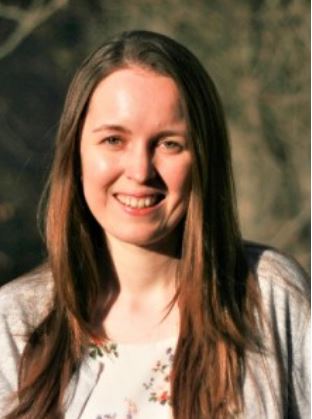
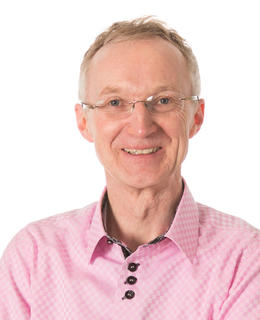
Alina Roitberg is a Junior Professor (Assistant Professor) at the University of Stuttgart , affiliated with the Faculty of Computer Science, Electrical Engineering and Information Technology . Her research focuses on advancing computer vision, machine learning, and robotics applications, particularly in human activity recognition, domain adaptation, and synthetic data generation. She explores challenges in action understanding, cross-domain generalization, and real-world deployment of AI systems in fields like healthcare, autonomous vehicles, and industrial automation. Her work emphasizes robust learning under noisy conditions, multimodal data fusion, and ethical AI applications. Recent projects include foundational studies on large language models in construction (AEC), video-based muscle group estimation, and improving driver activity recognition for autonomous vehicles. She also investigates circular factory design through uncertainty-aware process optimization and human-robot interaction. Dr. Roitberg's contributions span academic publications and industrial collaborations, addressing both theoretical advancements and practical implementations. Her research bridges computer vision techniques with real-world problems, emphasizing scalability and ethical considerations in AI deployment.
Danielle Li is the David Sarnoff Professor of Management of Technology and a Professor at the MIT Sloan School of Management, specializing in the Technological Innovation, Entrepreneurship, and Strategic Management academic group. She is also a Faculty Research Fellow at the National Bureau of Economic Research (NBER). Her academic journey includes an AB in mathematics and the history of science from Harvard College and a PhD in economics from MIT. Prior to joining MIT, she taught at Harvard Business School and the Kellogg School of Management. AB in Mathematics and History of Science, Harvard College PhD in Economics, MIT Professor Li's research focuses on the economics of innovation and labor economics, with particular emphasis on how organizations evaluate ideas, projects, and people. She investigates the intersection of technology and workplace dynamics, especially how AI impacts worker productivity, the nature of work, and career trajectories in AI-intensive environments. Her work examines how businesses implement AI tools and the resulting effects on workforce composition and skill requirements. Her publication portfolio reveals a consistent focus on innovation economics, labor market dynamics, and the organizational implications of technology. Recent work increasingly centers on AI's workplace impact, with her 2025 Quarterly Journal of Economics paper 'Generative AI at Work' demonstrating how AI assistance increases worker productivity by 15% on average, with differential effects across experience levels. Her research combines rigorous economic analysis with practical business implications, spanning pharmaceutical innovation, hiring practices, promotion decisions, and gender gaps in the workplace. Best Paper Prize: 2017 FIRCG Conference Best Paper Prize: 2018 CEPR Management, Organizations, and Entrepreneurship Conference Best Paper Prize: 2017 Red Rock Conference Best Paper Prize: 2018 LBS Summer Finance Symposium Best Paper Prize: 2019 American Economic Journal: Applied Economics Professor Li's research has been supported by significant grants and has influenced both academic discourse and business practice. Her work on AI in the workplace has informed executive education programs at MIT Sloan, including 'Making AI Work: Machine Intelligence for Business and Society' and 'Artificial Intelligence' courses. She actively engages with media and business leaders to translate research findings into practical insights, frequently appearing in the New York Times, Wall Street Journal, and Economist. Her research on gender promotion gaps and hiring practices has particular relevance for organizational human resource policies. Professor Li is deeply embedded in MIT's AI research ecosystem, collaborating with colleagues across Sloan and CSAIL. She contributes to MIT's AI Expert Spotlight series, focusing on how businesses should implement AI responsibly and effectively. Her work bridges economic theory with practical business applications, particularly in understanding how AI transforms work processes and organizational structures.
Will Fithian is an Associate Professor in the Department of Statistics at the University of California, Berkeley. He holds a position in the College of Letters & Science, specializing in theoretical and applied statistics. His research focuses on post-selection inference, scalable algorithms for big data, high-dimensional data analysis, and ecological statistics. Fithian has taught courses such as Theoretical Statistics (Stat 210A), Forecasting, and industry-relevant statistical methods. His work bridges statistical theory with applications in fields like genomics, ecology, and machine learning. Education and Career: While specific educational details are not explicitly provided, his academic rank and research focus suggest advanced training in statistics. He previously taught at Stanford University and has held roles such as Assistant Professor before his current position at Berkeley. Research Interests: His interests include developing robust statistical methods for handling modern data challenges, including false discovery rate control, selective inference, and computational efficiency in high-dimensional settings. He collaborates across disciplines, applying statistical tools to ecological and biomedical problems. Awards: Fithian received the Teaching Award from the Berkeley Statistics Department in 2012 and the Centennial Teaching Award (University-wide) in 2015, reflecting his dedication to pedagogy. His research contributions have been recognized through publications in top journals and conferences. Teaching and Service: He leads advanced courses like Stat 210A, a core PhD-level theoretical statistics course. His teaching emphasizes foundational concepts while addressing contemporary challenges. He also contributes to Berkeley’s Industry Alliance Program, fostering academic-industry partnerships.
Professor Danilo Mandic is a leading academic in Machine Intelligence and Signal Processing at Imperial College London's Department of Electrical and Electronic Engineering. He holds roles including President of the International Neural Network Society and Distinguished Lecturer for IEEE Computational Intelligence and Signal Processing Societies. His research spans Statistical Learning, Wearable Sensing (Hearables), Financial Signal Processing, and Tensor Networks for Big Data. Key contributions include pioneering in-ear physiological sensing and developing quaternion-based adaptive filters. He has authored over 600 publications, including seminal monographs on neural networks and complex-valued signal processing. Education: PhD in Nonlinear Adaptive Signal Processing from Imperial College (1999). Professional accolades include the 2019 Dennis Gabor Award and multiple IEEE Best Paper Awards. His labs include the Financial Signal Processing & Machine Learning Lab and collaborations with the Centre for Neurotechnology. He advises numerous students and leads projects on AI ethics, graph signal processing, and biomedical applications. His work emphasizes translating research into educational curricula via participatory sensor-based learning.
Sarah Masud Preum is an Assistant Professor of Computer Science at Dartmouth College, with adjunct roles in the Department of Biomedical Data Science at Geisel School of Medicine and as Faculty Affiliate at the Center for Technology and Behavioral Health (CTBH). She also serves as Technical Associate Director of the Dartmouth Center for Precision Health and Artificial Intelligence. Her work focuses on machine learning for computational health, including natural language processing, temporal modeling, and human-AI interaction to develop personalized decision support systems in healthcare. Education includes a B.Sc. from Bangladesh University of Engineering and Technology, followed by M.Sc. and Ph.D. degrees from the University of Virginia. Previously, she was a postdoctoral research scholar at Carnegie Mellon University's School of Computer Science, recognized as a Rising Stars in EECS (2020) for her academic excellence and contributions to equity in STEM. Her research interests span Human-AI Interaction, Natural Language Processing, Mobile Health, and Cyber-Physical Systems. Over 2020–2023, her publications emphasize AI-driven solutions for healthcare challenges like conflict detection in health information and cognitive assistants for emergency response. Earlier work includes behavioral prediction models (MAPer) and spatial database optimizations (Maximum Visibility Queries). Awards: Rising Stars in EECS (2020) In teaching, she offers courses like Transforming Healthcare through Machine Learning and Machine Learning and Statistical Data Analysis. Her affiliations with multidisciplinary centers reflect her commitment to bridging technology and healthcare.
Prof. Dr. Florian Knoll is a full professor in Computational Imaging at the Department of Artificial Intelligence in Biomedical Engineering (AIBE) at Friedrich-Alexander-Universität Erlangen-Nürnberg. He leads the Computational Imaging Lab, focusing on machine learning applications in medical imaging, particularly accelerating MRI through innovative reconstruction algorithms and translating them into clinical practice. His research emphasizes improving MRI speed, artifact robustness, and accessibility, alongside developing quantitative biomarkers for disease processes. Knoll's work is funded by NIH grants, including projects on machine learning for musculoskeletal imaging, MR fingerprinting, and deep learning frameworks for MRI reconstruction. He is a key figure in open science initiatives, co-creating the fastMRI dataset with Facebook AI, providing public access to over 1300 knee and 7000 brain MRI scans. He currently serves as deputy editor of Magnetic Resonance in Medicine and chairs the ISMRM Reproducible Research Study Group. His contributions extend to reproducible research, maintaining GitHub repositories with code for image reconstruction techniques (e.g., AGILE, gpuNUFFT) and educational materials. He teaches medical imaging fundamentals at FAU, integrating theoretical and practical insights for students and researchers. Grants: NIH R01EB024532, R21EB027241, P41EB017183, R01EB029957 Labs/Teams: Computational Imaging Lab, fastMRI initiative Software: GitHub repositories for MRI reconstruction (e.g., github.com/FlorianKnoll )
Elliot Hui, Ph.D., is an Associate Professor in the Department of Biomedical Engineering at the University of California, Irvine (UCI), within the Samueli School of Engineering. His research focuses on biological microtechnology, including spatial cell biology, microscale tissue engineering, global health diagnostics, and microfluidic computing. He leads the Hui Lab, which develops tools for automating biochemical reactions, controlling cellular organization, and understanding tissue development dynamics. Key achievements include pioneering microfluidic logic systems for autonomous laboratory automation and creating novel cell culture platforms to study intercellular communication in tissues. His work bridges engineering and biology, addressing challenges in diagnostics and regenerative medicine. Notable contributions include the development of a programmable finite state machine for microfluidic control and a SLAS Fellowship awarded to his student Erik. Research Interests: Microfluidic devices, cell-cell interaction modeling, tissue engineering, and lab-on-a-chip systems. Labs/Teams: Hui Lab at UCI, specializing in microscale biological systems and automation. Publications span topics such as microfluidic computing architectures, tissue dissociation devices, and Bayesian experimental design. His work emphasizes applications in global health diagnostics and mechanistic studies of cellular processes.
Daniela Calvetti is the James Wood Williamson Professor in the Department of Mathematics, Applied Mathematics, and Statistics at Case Western Reserve University. Her research focuses on large-scale scientific computing, computational inverse problems, uncertainty quantification, and predictive modeling in neuroscience, metabolism, and cellular physiology. She holds a PhD from the University of North Carolina-Chapel Hill. Her work integrates advanced mathematical techniques with biomedical applications, including brain energy metabolism modeling, MEG/EEG source reconstruction, and computational methods for medical imaging. Notable contributions include Bayesian hierarchical algorithms for inverse problems and interdisciplinary collaborations bridging mathematics with neuroscience and physiology. Recent research highlights include developing sparsity-promoting Bayesian models for tomography, computational frameworks for neuromuscular control variability, and predictive models of disease dynamics like post-pandemic COVID-19 recurrence. Her methodologies emphasize statistically inspired preconditioning and adaptive meshing techniques to enhance computational efficiency in solving complex inverse problems. Dr. Calvetti has published extensively across computational science, inverse problems, and biomedical applications. She leads a research group advancing interdisciplinary computational methods with applications in neuroscience, virology, and metabolic systems.
Satya S. Sahoo, PhD, is a Professor in the Department of Population & Quantitative Health Sciences at Case Western Reserve University's School of Medicine. He also holds Associate Professor roles in Neurology, Computer and Systems Engineering, and Electrical Engineering across multiple schools. His research focuses on AI-driven analysis of biomedical data, ontology engineering, and reproducibility frameworks like ProvCaRe. He leads the Biomedical & Health Informatics PhD Program and is affiliated with the Cleveland Institute for Computational Biology. Education: PhD in Computer Science and Engineering from Wright State University (2010) Key Research: Integrates knowledge representation and machine learning for brain network dynamics, EHR analysis, and semantic provenance. Major Awards: AMIA Fellow (2020) IEEE Senior Member (2020) Best Paper Awards (IMIA 2015, AMIA 2017) Advising: Mentored 14 Master’s, 11 PhD students, and 1 postdoc. Notable alumni include faculty at University of Texas Health Sciences Center and industry roles at Johnson & Johnson.
Emily Whiting is an Associate Professor of Computer Science at Boston University and Director of the Shape Design & Computation Lab. She also serves as Director of PhD Admissions and Co-Director of the BU Computer Graphics Lab. Her research focuses on computational fabrication, architectural geometry, and computer-aided design, bridging digital geometry processing, engineering mechanics, and rapid prototyping. She holds a PhD from MIT (2012), an SM in Design & Computation from MIT (2006), and a BASc in Engineering Science from the University of Toronto (2004). Previously, she was faculty at Dartmouth and a Marie Curie Postdoctoral Fellow at ETH Zurich. Her research interests include 3D printing optimization, structural design for fabrication, and tools for functionally-valid object creation. Notable projects include work on elastic garments, climbing experience replication, and print-wind instrument design. Her work has been featured on TEDx and PBS NOVA, and she has received awards such as the NSF CAREER Award and Sloan Research Fellowship. Education: PhD (MIT), SM (MIT), BASc (University of Toronto) Labs: Shape Design & Computation Lab, BU Computer Graphics Lab Key Projects: Knitting 4D garments, Environment-Scale Fabrication, Thermal-comfort casts Recent professional activities include program committee roles at SIGGRAPH 2025 and UIST 2024, and serving as Program Co-Chair for Pacific Graphics 2024. She advises a team of PhD and MS students, with alumni now in academia and tech industries.
Dr. Xuhui Fan is a Lecturer in Artificial Intelligence at the School of Computing, Macquarie University. He holds a PhD in Computer Science from the University of Technology Sydney (Australia) and a bachelor's degree in Mathematical Statistics from China. Prior to his current role, he worked as a project engineer at Data61 (formerly NICTA), a postdoc fellow at the University of New South Wales, and a lecturer at the University of Newcastle. His research focuses on Bayesian methods, federated learning, temporal point processes, and neural network architectures. He is affiliated with the Data Horizons Research Centre and the Frontier AI Research Centre at Macquarie University. Key research interests include developing interpretable AI models, advancing federated learning for privacy-sensitive applications, and applying Bayesian techniques to complex data analysis. His work bridges theoretical advancements in machine learning with practical applications in areas such as anomaly detection, generative models, and spatio-temporal data analysis. Dr. Fan’s publications span top-tier conferences like NeurIPS, ICML, and IJCAI, covering topics such as diffusion models, nonstationary processes, and scalable relational models. He has contributed to surveys on Bayesian federated learning and developed novel frameworks for dynamic customer segmentation and network sustainability. His research collaborations span institutions in Australia and internationally, reflecting his expertise in interdisciplinary AI applications. Current projects emphasize ethical AI practices, efficient uncertainty quantification, and scalable inference techniques for large-scale datasets.
Hans Jonas Fossum Moen is an Associate Professor with a 20% appointment at the Department of Technology Systems, University of Oslo (UiO), and holds a 100% position as a researcher at the Norwegian Defence Research Establishment (FFI). His primary affiliation is with the Section for Autonomous Systems and Sensor Technologies. He is based at the Kjeller campus, with a visiting address at Gunnar Randers Road 19 and a postal address at Postboks 70. His research focuses on advancing autonomous systems and sensor technologies, particularly in the domains of swarm robotics, multi-agent coordination, and optimization algorithms. Key areas include UAV navigation, distributed localization in IoT networks, radar detection enhancement, and adaptive control systems for multi-functional swarms. He emphasizes the integration of biological principles into robotic systems, as evidenced by his participation in the ICRA 2018 Workshop on Swarms. His publications consistently highlight contributions to swarm intelligence, with a focus on improving data quality and efficiency in robotics applications. He has collaborated extensively with colleagues such as Kyrre Glette, Oleg Yakimenko, and Jan Dyre Bjerknes, exploring topics ranging from task allocation in multi-agent systems to evolutionary algorithms for filter optimization. His work bridges theoretical computer science with practical engineering challenges in autonomous systems. No scientific awards have been explicitly mentioned in the provided texts. Moen’s advising and grants narrative indicates no listed advisees or active grant projects, though his 20% UiO position suggests potential involvement in academic supervision. His primary research activities are embedded within FFI and the Autonomous Systems section at UiO, contributing to interdisciplinary efforts in sensor technologies and robotic systems.
Dr Caroline Roney is a UKRI Future Leaders Fellow and Lecturer in Computational Medicine at Queen Mary University of London's School of Engineering and Materials Science. Her research focuses on developing engineering methodologies to personalize treatment for cardiac arrhythmias, combining signal processing, machine learning, and computational modeling to predict optimal patient-specific therapies. She holds a MMath from the University of Oxford, MRes and PhD from Imperial College London, and has held fellowships at Liryc Institute and King's College London. Her work integrates clinical imaging and electrophysiological data to advance atrial fibrillation treatment strategies. Education: MMath in Mathematics, University of Oxford MRes in Biomedical Research, Imperial College London PhD in Cardiac Signal Processing, Imperial College London Research Interests: Development of patient-specific digital twins for atrial fibrillation, computational modeling of fibrosis, and integration of machine learning with clinical data. Awards: UKRI Future Leaders Fellowship, Fondation Lefoulon Delalande Fellowship (2015–2017), MRC Research Fellowship (2017–2021). Affiliations: Digital Environment Research Institute (DERI), Visiting Lecturer at King's College London. Her research group has secured £9.3M in grants, including EPSRC and MRC funding, to advance virtual atrial modeling and AI-driven healthcare tools. Key collaborations include industry partners like Acutus Medical and RHYTHM AI, focusing on clinical translation of computational models.
Surl-Hee Ahn is an Assistant Professor in the Department of Chemical Engineering at the University of California, Davis. Her research focuses on using molecular dynamics (MD) simulations and enhanced sampling methods like the weighted ensemble (WE) to study biological systems, including proteins, nanocrystals, and drug discovery for tuberculosis and other diseases. She leads the Ahn Lab, which develops cutting-edge computational tools, such as ParGaMD and DeepWEST, to advance kinetic and thermodynamic sampling in simulations. Education: Ph.D. in Chemistry (Chemical Physics), Stanford University M.S. in Chemistry, University of Pennsylvania M.A. in Mathematics, University of Pennsylvania B.A. in Biochemistry and Mathematics, University of Pennsylvania (Magna Cum Laude, Vagelos Scholar) Research Interests: Molecular dynamics simulations, enhanced sampling methods, computational drug discovery, vaccine design, protein interactions, and nanomaterial dynamics. Her work bridges computational biology, materials science, and pharmacology, with applications to infectious diseases and neurodegenerative disorders. Awards and Recognition: 2020 ACM Gordon Bell Prize Winner (SC20) for SARS-CoV-2 spike dynamics simulations 2021 Chancellor’s Outstanding Postdoctoral Scholar Award Finalist MIT Rising Stars in Mechanical Engineering (2018) ACS PHYS Division Young Investigator Award (2021) Grants & Collaborations: Her research is supported by grants from SC20/SC21 and leverages high-performance computing for multiscale modeling. She collaborates on projects like #COVIDisAirborne, combining AI with computational microscopy. Labs & Teams: The Ahn Lab at UC Davis emphasizes interdisciplinary training in computational methods and their application to real-world biomedical challenges.
Christian Jacob is a Professor in the Department of Computer Science within the Faculty of Science at the University of Calgary . He holds a B.S. in Computer Science and a Doctor of Engineering Science from Erlangen University . His research focuses on nature-inspired algorithms, biocomputing, and agent-based simulations applied to biological systems and education. Key initiatives include the LINDSAY Virtual Human Project , which uses immersive virtual reality to explore human anatomy and physiology. He contributes to the university's strategic priorities in Digital Worlds and Health and Life initiatives. His work integrates evolutionary algorithms, cellular automata, and swarm intelligence into creative and medical applications. Notable achievements include the ASTech Award (2015) from Alberta Science and Technology. His projects emphasize interactive education through tools like LeukemiaSIM , Eukaryo , and the Giant Walkthrough Gut . Jacob also explores visualization techniques, such as evoVision3D and LifeBrush , to enhance scientific understanding. His research bridges computational methods with real-world applications in healthcare, architecture, and game design. Collaborative efforts include developing agent-based models for immune systems, nervous responses, and crowd behavior. Jacob's work spans interdisciplinary fields, blending computer science with biology, engineering, and the arts.






/hjmoen/j.png)