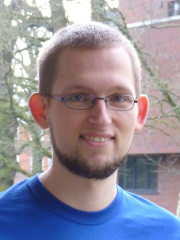
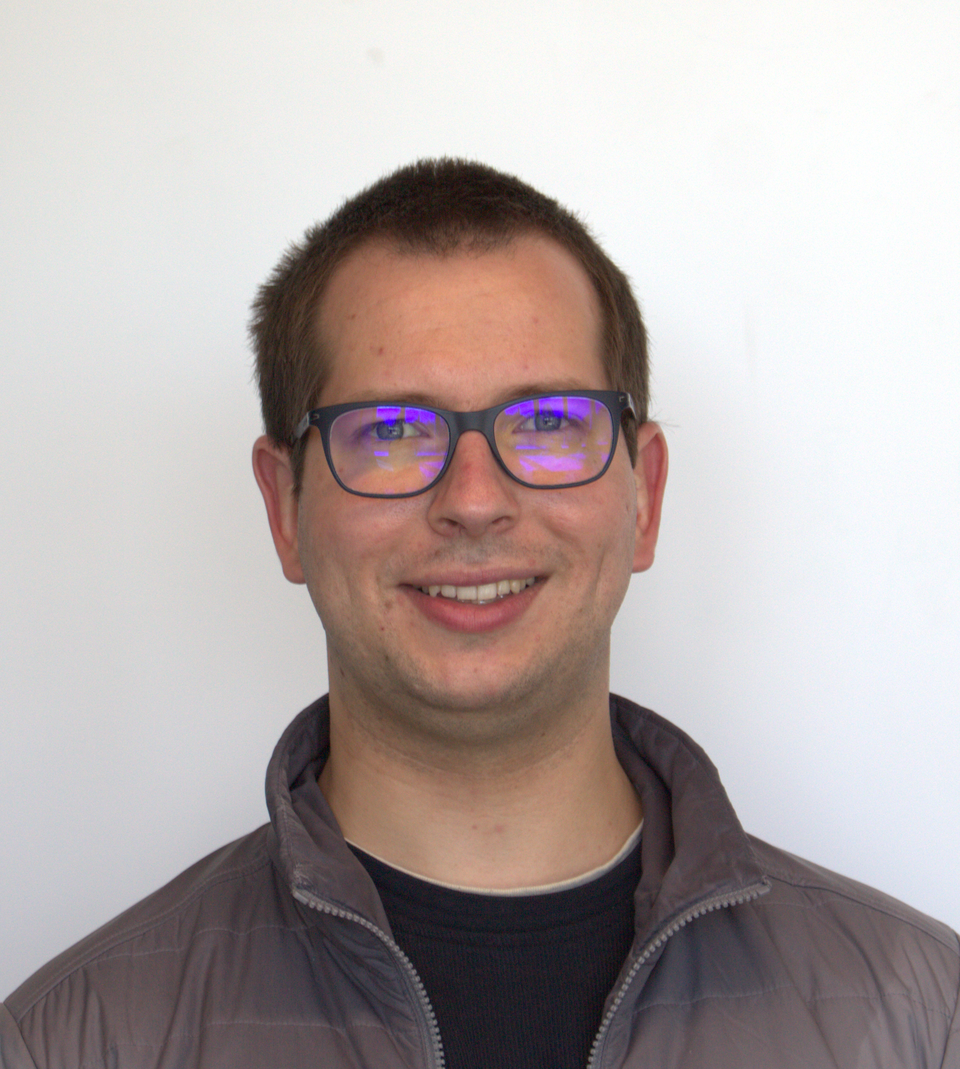
Reinhold Häb-Umbach is a distinguished Professor in the Communications Engineering Department at the University of Paderborn, leading the Heinz Nixdorf Institute's Speech and Communications group. His work spans statistical signal processing and machine learning for speech and audio applications , with a focus on robustness and real-world deployment. His research integrates probabilistic models with deep learning , addressing challenges in speech separation , noise suppression , and acoustic distance estimation . Recent projects include WestAI , SAIL , and TRR 318 , emphasizing AI-driven solutions for sociotechnical systems. 2020: IEEE Fellow 2015: ISCA Fellow 2021-2023: ISCA Distinguished Lecturer Over 300 peer-reviewed publications He has received multiple best student paper awards at venues like IWAENC , Interspeech , and ASRU , and has contributed to 15 competitive DFG grants . His leadership roles include Technical Program Committee Chair for Interspeech 2024 and editorial roles in IEEE journals.
Daniele Bernardini is a researcher at the School of Engineering and Design, Technical University of Munich (TUM), contributing to Healthcare and Rehabilitation Robotics under Prof. Cristina Piazza. He co-founded and leads Cognivix, a startup focused on industrial automation for high-variability/low-volume production. Education : M.Sc. in Theoretical Physics, University of Florence (1997) Ph.D. candidate in Computation, Information and Technology, TUM (since 2022) Research Focus : Robotic perception for manipulation tasks Deep learning in grasping systems 6D pose estimation techniques Photovoltaic energy management frameworks Recent Publication Trends : His 2022-2024 work spans robotics (6D pose estimation, bionic hands), machine learning (deep reinforcement learning), and energy systems (photovoltaic optimization), reflecting interdisciplinary efforts between AI and industrial applications.
Christian Wilms is a Researcher at the University of Hamburg's Department of Informatics within the Faculty of Mathematics, Informatics and Natural Sciences, where he contributes to the Computer Vision Research Group's cutting-edge work in visual recognition systems. His research focuses on: Object recognition techniques including proposal generation, instance segmentation, and detection Foundation models for segmentation and superpixel-based algorithms Applications in agricultural monitoring, medical imaging, and industrial inspection Multi-modal signal processing for audio-visual perception Analysis of his recent publications reveals a strong emphasis on solving small object detection challenges through semi-supervised learning and attention mechanisms, particularly evident in orchard monitoring applications. His work consistently bridges theoretical advances in segmentation topology with practical implementations in drone-based systems and industrial anomaly detection. As part of the Computer Vision Research Group led by Prof. Simone Frintrop, Wilms contributes to major projects including InteGreatDrones, Crossmodal Learning, and NEUROBOTICS, which explore active perception, object pose estimation, and simultaneous localization in complex environments.
André Kelm is a PhD candidate in the Computer Vision group at the Department of Informatics , University of Hamburg, affiliated with the Faculty of Mathematics, Informatics and Natural Sciences . His research spans deep learning for industrial innovation, domain adaptation, and synthetic data applications, with interdisciplinary interests in physics, audio, medical, and biological domains. His work focuses on efficient adaptive inference , interpretability in deep learning , and bottom-up/top-down attention mechanisms . Recent publications highlight applications in drone-based port monitoring , dynamic neural network optimization , and multimodal knowledge distillation . Projects he contributes to include InteGreatDrones , Crossmodal Learning (CML) , and NEUROBOTICS . For collaboration, contact him at andre.kelm@uni-hamburg.de.
Dr. Mikko Lauri is a Postdoctoral Researcher at the Department of Informatics, University of Hamburg, working in the Computer Vision Research Group. His research focuses on decision-making under uncertainty, active perception, and computer vision, with particular emphasis on multi-agent systems for cooperative tasks in robotics applications. His research interests include: Multi-agent decision-making under uncertainty Active perception and information gathering Computer vision for mobile robots Partially Observable Markov Decision Processes (POMDPs) Object pose estimation and visual object search Deep learning applications in robotics Lauri's recent work has focused on advancing theoretical frameworks for teams of agents to act cooperatively. His survey paper on POMDPs in robotics provides a comprehensive overview of decision-making under uncertainty in robotic systems. His research has practical applications in autonomous robots, including exploration, object pose estimation, and visual object search, with techniques that balance theoretical rigor with real-world implementation. Scientific contributions: Developed novel approaches for multi-agent active perception with prediction rewards Created methods for multi-sensor next-best-view planning using submodular optimization Advanced techniques for 6D object pose estimation using point clouds and deep learning Contributed to audio-visual signal processing for sound source separation Lauri collaborates extensively with researchers in the Computer Vision Research Group at the University of Hamburg and has worked with international collaborators from institutions including Aalto University (Finland) and the National University of Singapore. His work bridges theoretical foundations in decision-making under uncertainty with practical robotics applications.
Jeanine Liebold is a Researcher and PhD student at the Center for Bioinformatics (ZBH) within the Faculty of Mathematics, Informatics and Natural Sciences at the University of Hamburg. She has been pursuing her PhD since April 2022 at the Computational Systems Biology group (CoSy.Bio) and the Chair of Genome Informatics under Prof. Stefan Kurtz. Her educational background: Master of Science in Intelligent Adaptive Systems, University of Hamburg (thesis: feature recognition in audio and video data using deep learning) Bachelor of Science in Electrical and Information Engineering, HAW Hamburg Jeanine's research interests lie at the intersection of machine learning and deep learning with bioinformatics. She specializes in applying deep learning techniques to solve bioinformatics challenges, with a particular emphasis on predicting protein-protein interactions in the context of alternative splicing. Her work bridges computational methods and biological discovery, aiming to advance understanding of complex molecular interactions. She is an active member of the Computational Systems Biology research group and contributes to the Genome Informatics chair at the University of Hamburg.
Reinhard Schütte is a Professor holding the Chair for Business Informatics and Integrated Information Systems at the University of Duisburg-Essen since October 2015. His academic career spans multiple prestigious institutions including Zeppelin University Friedrichshafen, the University of Essen (before its merger), University of Koblenz-Landau, and Westfälische Wilhelms-Universität Münster. He has developed a distinguished career bridging theoretical academic work with practical business applications, particularly in retail and enterprise information systems. Professor Schütte's research interests focus on Enterprise Systems, IS architectures, Digitization of institutions, Information modeling, and scientific-theoretical problems of business informatics. His work demonstrates a consistent pattern of exploring the intersection between business administration and information technology, with particular emphasis on practical applications in retail environments. His approach combines theoretical insights with practical experience, emphasizing interdisciplinary thinking in business informatics. His recent publications reveal a strong trend toward examining digital transformation in various sectors including retail, construction, and healthcare. A significant portion of his work investigates how AI and advanced technologies can solve industry-specific challenges, from retail pricing algorithms to enterprise resource planning systems in the cloud era. His research often employs innovative methodologies including neuroimaging, multimethod approaches, and real-world case studies. Best Paper Award for Scene Responsiveness for Visuotactile Illusions in Mixed Reality Best Paper Award for SoundsRide: Affordance-Synchronized Music Mixing for In-Car Audio Augmented Reality Professor Schütte's work has significant practical implications for businesses navigating digital transformation. His research on retail information systems, ERP evolution, and digital marketplaces provides valuable insights for organizations seeking to optimize their technology investments. He has contributed extensively to understanding the business value of IT systems and the paradoxes that arise in their implementation. His teaching covers Enterprise Systems, Enterprise Transformation, Impact and cost-effectiveness of IT systems, Retail Enterprise Systems, and Management of Large Enterprise Systems.
Jonas Kantic is a Ph.D. student and Researcher at the Chair of Integrated Systems within the Faculty of Electrical Engineering and Information Technology at Technical University of Munich . Holding a Master of Science in Technical Informatics from Leibniz University Hannover, his work focuses on AI acceleration architectures and embedded systems design. Education Master's in Technical Informatics (2017-2020), Leibniz University Hannover Chinese Language Studies (2018-2019), Beijing Foreign Studies University Bachelor's in Technical Informatics (2013-2017), Leibniz University Hannover Research Focus Specializes in reservoir computing architectures Expertise in FPGA-based AI acceleration Investigates temporal/spatial compression techniques Develops efficient edge AI inference systems Applies machine learning to motorcycle control systems Works on hyperdimensional computing models Supervision Mentored 5+ students in RNN accelerators, CNN optimization, and stochastic computing Collaborates with industry partners (BMW Motorrad, NXP Semiconductors) Publications 2024 - Complex & Intelligent Systems: Cellular Automata for Reservoir Computing 2024 - IEEE NorCAS: FPGA Implementation for High-Speed Reservoir Models 2021 - Current Directions in Biomedical Engineering: Hearing Aid CNN Optimization
Prof. Dr. Sven-Hendrik Voß is a Professor at the Berlin University of Applied Sciences (BHT Berlin) since 2011. His academic role includes mentoring first-year students, representing practical phase programs, and leading the Digital Laboratory (Department VI). He has extensive experience in high-speed hardware architectures, FPGA design, and optical communication systems. Doctorate in Electrical Engineering (Microelectronics) from TU Berlin Diploma in Electrical Engineering (Communications) from TU Berlin Research Interests span digital signal/image processing, FPGA-accelerated data processing, high-speed communication systems, embedded vision systems, and methods for image synthesis. He has contributed to light field imaging, real-time processing, and optical interconnects for maskless lithography. Publications focus on FPGA-based solutions for high-speed data processing, optical communication systems, and hardware implementations in fields like 3D media and industrial applications. His work often combines digital circuit design with optical technologies. Teaching includes digital systems design, computer architecture, machine-oriented programming, and image processing. He offers thesis topics involving FPGA development for audio/video applications and communication systems. Professional Background includes leadership roles at Fraunhofer HHI, where he headed the High-Speed Hardware Architectures department (2010-2014) and led hardware groups in earlier roles. He has industry experience in VHDL implementation and PCB design.
Shigehiko Schamoni is a Lecturer and Compute Lab Manager at Heidelberg University's Institute of Computer Engineering (ZITI), where he oversees scientific computing infrastructure and teaches computer science courses. He is completing his PhD under Prof. Stefan Riezler in the Statistical NLP group. His dual roles bridge technical management and academic instruction, with teaching responsibilities spanning undergraduate and graduate courses since 2011. Research Focus: Schamoni's work intersects clinical AI and natural language processing, with emphasis on: Machine learning for medical applications (sepsis prediction, clinical validity) Speech translation and automatic speech recognition Cross-lingual information retrieval Data augmentation techniques Multimodal machine learning His 15 most recent publications (2016-2024) demonstrate strong thematic clustering: 47% focus on medical AI (primarily sepsis prediction and clinical data validation), while 53% address NLP challenges (speech translation, ASR, and multimodal systems). This bifurcation reflects consistent collaboration with medical researchers alongside core NLP innovation. Teaching Experience includes instruction across 10+ courses since 2011, such as: Graduate courses: "Tools – Werkzeuge für effizientes wissenschaftliches Arbeiten" (2023-2024) Undergraduate courses: "Einführung in die Nutzung computerlinguistischer Ressourcen" (2021-2022) Programming courses: "Advanced Programming" and "Parallel Programming Paradigms" (2012-2015) He maintains affiliations with both the ZITI infrastructure team and Statistical NLP research group.
Jakob Abeßer is a tenure-track professor for Computational Humanities at the University of Bamberg (since 2025) and a Senior Scientist at Fraunhofer IDMT. He focuses on audio processing applications in digital humanities, particularly Music Information Retrieval , Soundscape Analysis , DCASE , Bioacoustics , and Ecoacoustics . His research integrates machine learning and deep learning with audio signal processing , targeting sound event detection, polyphony estimation, and acoustic scene classification. Research Trends : His recent work (2025) explores Large Language Audio Models for scene understanding and CNN-to-Reservoir Computing transitions in classification tasks. Earlier studies (2023-2022) address domain adaptation for robust embeddings, urban sound monitoring , and piano multipitch datasets . Applications span bioacoustic research , urban ecology , and music transcription . Scientific Awards : Best Paper Award at CMMR 2021
M.Sc. Moritz Weißbrich is a Researcher at the Chair for Chip Design for Embedded Computing , part of the Institute of Theoretical Computer Science at Technische Universität Braunschweig. Holding an M.Sc. in Electrical Engineering and Information Technology from Leibniz Universität Hannover, his academic focus spans high-performance/low-power processor architectures , approximating arithmetic circuits , and stochastic computation techniques for fault-tolerant systems. His research portfolio includes 20+ peer-reviewed publications since 2017, with recent work on Nano-scale controllers for FPGA systems Biomedical sensor design in 22nm FDSOI Energy-aware VLIW processor optimization Stochastic timing analysis frameworks He has been developing ultra-low-power embedded solutions since 2021, following prior research assistant roles at Leibniz Universität Hannover's Institute of Microelectronic Systems (2017-2021). Key technical contributions appear in venues like Springer LNCS , IEEE RFIC Symposium , and Journal of Systems Architecture , focusing on processor customization , energy harvesting systems , and radiation-hardened circuit design . His work addresses challenges in autonomous computing, harsh environment electronics, and precision agriculture applications.
Farinaz Koushanfar is a Professor at the University of California, San Diego (UCSD), with a former affiliation at the University of California, Berkeley. Her research focuses on advancing security, machine learning, and hardware design through interdisciplinary approaches. Key areas include adversarial defense mechanisms, cryptographic systems, federated learning, and zero-knowledge proofs. She has collaborated extensively with institutions and researchers globally, contributing to over 360 publications. Her work emphasizes practical security solutions, such as watermarking for intellectual property protection and methods to counteract adversarial attacks in neural networks. Recent trends in her publications highlight innovations in cache compression, robust watermarking for large language models, and securing wireless communication systems against modality-agnostic attacks. Collaborations with industry and academia underscore her commitment to real-world applications of theoretical advancements. Awards and grants are not explicitly listed here, but her prolific publication record and leadership in high-impact projects indicate significant recognition in her field. Advising and mentoring students and junior researchers are central to her academic contributions, though specific student names are not detailed in the provided text. Her lab’s work often intersects with emerging technologies like blockchain, edge computing, and privacy-preserving machine learning.
Wei Xue is an active academic researcher affiliated with Tsinghua University's Department of Computer Science and Technology. Their work spans multiple disciplines, including Machine Learning , Signal Processing , Medical Imaging , and Natural Language Processing . Key research areas include adversarial robustness in DNNs for remote sensing, hierarchical speaker representation learning for speech extraction, and multi-view fuzzy classification for brain network analysis. Recent publications focus on imbalanced data classification, spectrum sensing in cognitive radio, and innovative applications in soft robotics and medical diagnostics. Collaborations include institutions like Tsinghua University, Jiangnan University, and Hong Kong Baptist University, with frequent contributions to journals such as IEEE Transactions on Geoscience and Remote Sensing and Neural Networks .
Zikai Alex Wen is an Assistant Professor in the Department of Computer Science and Engineering at the Hong Kong University of Science and Technology. Previously, he earned his PhD from Cornell University in 2021 with a dissertation on educational video games and intelligent tutoring systems. His research bridges multiple domains including privacy-preserving technologies, educational technology, cybersecurity, and accessibility. Wen's primary research interests focus on differential privacy, educational technology for students with learning disabilities, phishing detection and prevention, and game design for accessibility. His work uniquely combines theoretical privacy foundations with practical applications in education and security. He has made significant contributions to understanding how privacy mechanisms can be effectively explained to users and how to design systems that protect sensitive data while maintaining utility. His publication record demonstrates consistent output in top venues including IEEE S&P, CHI, ASSETS, and VLDB. Recent work shows increasing focus on generative AI applications for household safety, enhanced differential privacy mechanisms, and continued innovation in educational technology for diverse learners. His research often involves interdisciplinary collaboration across computer security, human-computer interaction, and educational psychology. Wen has received recognition through publications in prestigious venues but specific awards aren't documented in the available records. His work has been supported by research grants focused on privacy technologies and educational accessibility, though specific grant details aren't provided in the source material. He maintains active collaborations with researchers worldwide, particularly with Changyu Dong, Wei Cai, and Shiri Azenkot. His research group focuses on developing practical privacy-preserving systems and accessible educational technologies, with ongoing projects exploring the intersection of AI, security, and inclusive design.