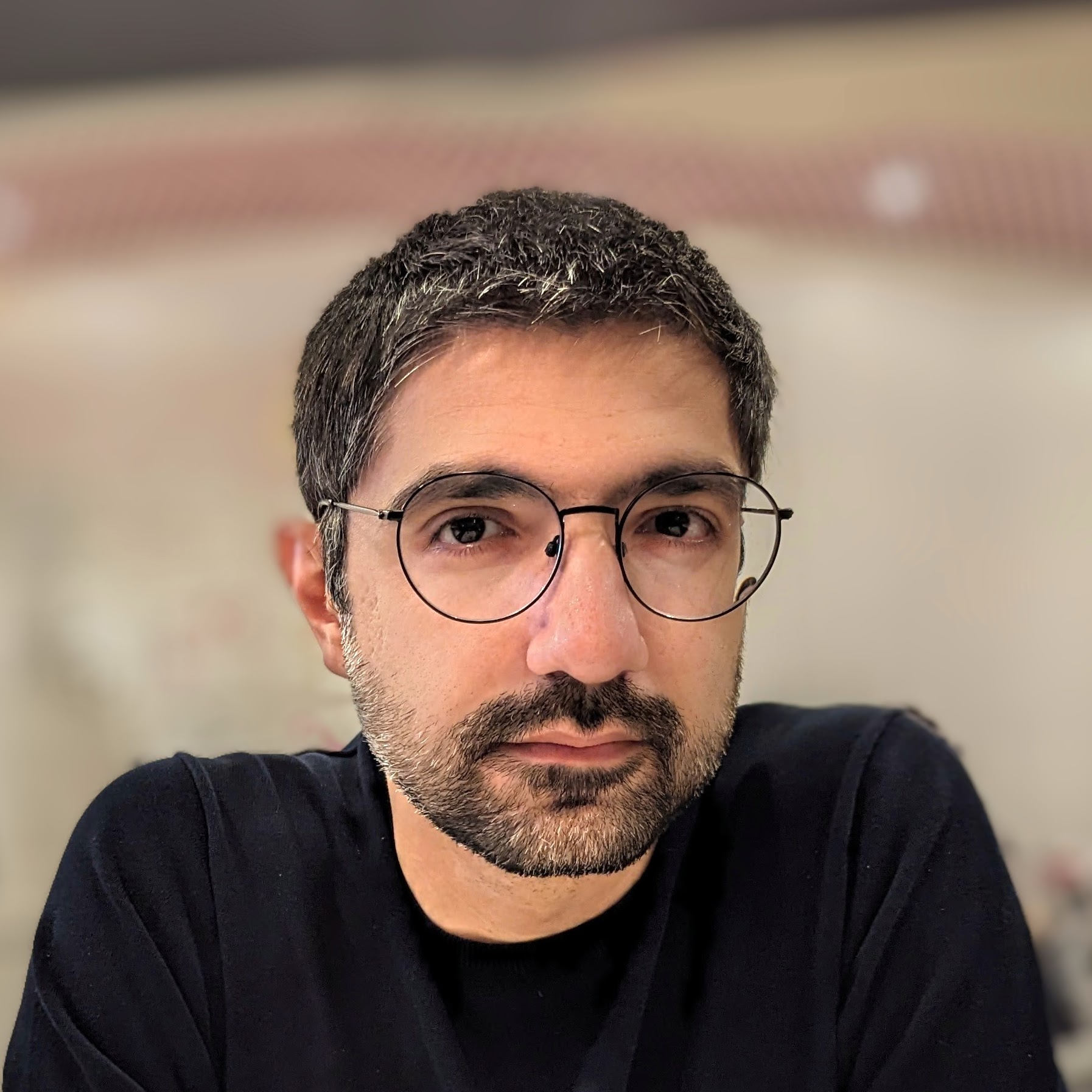
Vito Veneziano is a researcher at the University of Hertfordshire , affiliated with the Department of Computer Science under the School of Physics, Engineering & Computer Science . His work spans multiple domains within computing, focusing on practical applications and theoretical analysis. Research Interests : Requirements Engineering and stakeholder dynamics Speech emotion recognition and deep learning Cloud computing algorithm optimization Usability analysis in software and ERP systems Interdisciplinary approaches to political context in engineering Human-computer interaction in gamified environments Recent Projects include AI-powered conversation trees for debt collection, metabolic disorder prediction using machine learning, and speech emotion recognition systems. Collaborations involve Manor Pharmacy Group, University of Hertfordshire colleagues, and industry partners.
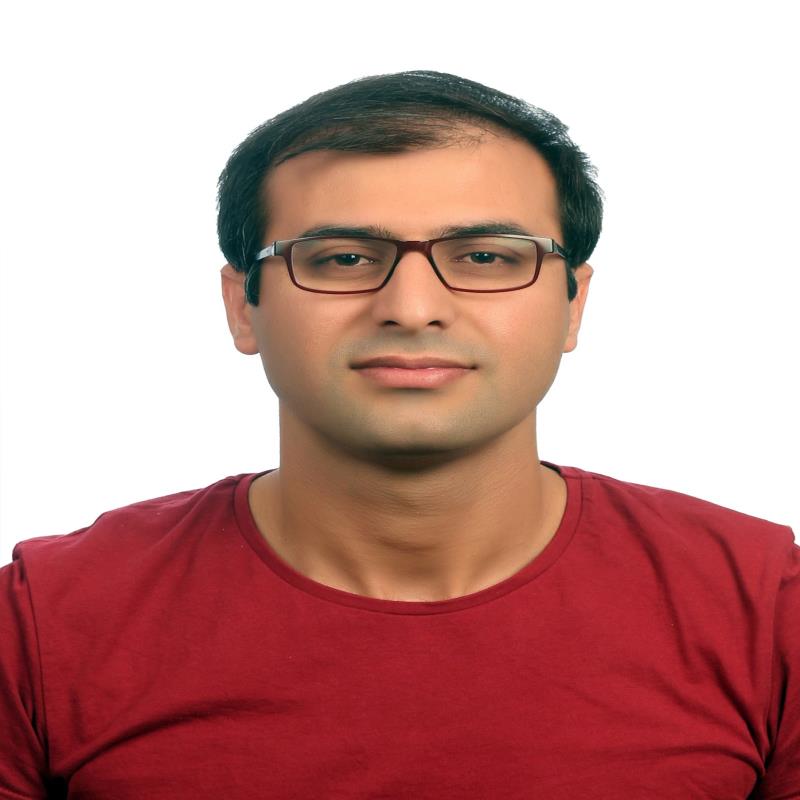
Bardia Doosti is a Researcher at Google AR/VR . He holds a PhD in Computer Science from Indiana University Bloomington (2021), where he worked under Prof. David Crandall at the IU Computer Vision Lab. His research focuses on applying Deep Learning to Computer Vision and Audio Signal Processing , with emphasis on 3D Reconstruction , Hand and Object Pose Estimation , and Graph Neural Networks . His publications span topics like Egocentric Vision , Material Design Analysis , and Sound Localization . Key contributions include the HOPE-Net and Spectral Graphormer models. He has collaborated with researchers at Google AI, Facebook Reality Labs, and Indiana University. His work leverages large datasets like Rico for UI pattern analysis and web design evolution studies using Hidden Markov Models and GANs.
Roland Badeau is a Full Professor in the Signal, Statistics and Learning (S2A) team within the Image, Data, Signal (IDS) Department at Télécom Paris, Institut Polytechnique de Paris. His primary affiliation is with the Information Processing and Communication Laboratory (LTCI). Research Interests: Badeau specializes in statistical modeling of non-stationary signals, with core expertise in adaptive high-resolution spectral analysis and Bayesian extensions to Non-negative Matrix Factorization (NMF). His work spans room acoustics (stochastic reverberation models), data representation (dimensionality reduction, time-frequency analysis), probabilistic latent variable modeling, and algorithm development (Bayesian estimation, optimization methods, fast adaptive algorithms). Applications focus on audio/music processing including source separation, denoising, dereverberation, multipitch estimation, and automatic music transcription, with extensions to biomedical data analysis and digital communications. Key Trends in Publications: Recent work centers on Statistical Wave Field Theory, establishing mathematical frameworks for reverberation modeling using energy-stress tensor formalism and Riemannian geometry. His publications demonstrate a progression from foundational signal processing algorithms (e.g., YAST, ESPRIT) to physics-informed approaches for polyhedral rooms and frequency-dependent attenuation, with strong emphasis on Bayesian and alpha-stable distribution methods for robust audio separation. Academic Leadership: Badeau supervises doctoral and master’s theses while leading teaching units at Télécom Paris. He serves as the TSIA study track supervisor (Signal Processing for Artificial Intelligence) and Master ATIAM correspondent. His team (S2A) develops tools like DESAM for joint source separation and multi-track coding.
Prof. Dr. Rifat EDİZKAN is a distinguished Professor at Eskisehir Osmangazi University's Faculty of Engineering-Architecture, Department of Electrical and Electronics Engineering. He currently serves as the Head of Department since 2023 and previously held the position of Vice Rector from 2019-2022. With a career spanning over three decades at the university, he has progressed from Research Assistant to his current professorship. His educational background includes: Bachelor's Degree: Anadolu University (1987) Master's Degree: Anadolu University (1990) PhD: Eskisehir Osmangazi University (2000) Prof. EDİZKAN's research focuses on cutting-edge areas in artificial intelligence and signal processing. His work primarily centers around Artificial Intelligence, Computer Learning and Pattern Recognition, with specific expertise in Audio and Image Processing, Pattern Classification, and Digital System Design. His research has evolved from traditional pattern recognition techniques to modern deep learning applications across diverse domains including medical imaging, agricultural technology, and robotics. An analysis of his recent publications reveals a strong trend toward practical AI applications, particularly in healthcare technology (fall detection systems, medical imaging), agricultural monitoring (plant disease detection), and industrial automation. His work demonstrates a consistent evolution from theoretical pattern recognition to applied machine learning solutions addressing real-world problems. Prof. EDİZKAN has served as Principal Investigator on numerous research projects, including several TUBITAK-funded initiatives. His leadership extends beyond research to academic administration, having served as Department Head twice and as Vice Rector. He has also been actively involved in peer review activities for journals and conferences, and has served on academic promotion committees. His laboratory work appears to focus on practical implementations of AI systems, with recent projects involving elderly care robots, plant disease detection systems, and industrial monitoring solutions. His research group seems to maintain strong industry connections, particularly in the automotive and healthcare sectors.
Assoc. Prof. Emrah Irmak serves as Associate Professor and Deputy Head of Department (2020-2023) at the Department of Electrical and Electronic Engineering, Rafet Kayış Faculty of Engineering, Alanya Alaaddin Keykubat University, where he currently holds board membership (2024). Previously, he was Doctor Lecturer and Research Assistant at Karabük University's Department of Biomedical Engineering (2012-2019). His academic credentials include: Doctorate in Electrical-Electronic Engineering, Karabük University (2018) Master's in Electrical and Electronics Engineering, Gaziantep University (2014) Bachelor's degree, Opole University of Technology (2011) Dr. Irmak's research pioneers biomedical image processing with applications in brain tumor progression analysis, cancer diagnosis, and Alzheimer's disease detection. His work integrates deep learning with traditional image processing techniques for medical applications, while extending to tribocorrosion analysis of orthopedic implants and IoT systems for healthcare and mining safety. Key innovations include 3D medical image registration frameworks and novel convolutional neural network architectures for automated pathology detection. His publication trajectory demonstrates consistent advancement in applying AI to critical healthcare challenges, with recent focus on multi-modal diagnostic systems for cancer and neurological disorders through integration of image processing, signal analysis, and deep learning. His scientific recognitions include: Distinction in Scholarship in Physiological Genomics (2020) TÜBİTAK Publication Incentive Award (2021) The World's Most Influential Scientists (Stanford University, 2023 & 2024) Dr. Irmak has supervised Master's students Mustafa Burak Turköz (3D medical image registration for brain tumors) and Ergun Ercelebi (medical image registration for tumor growth analysis), and served as main jury for five graduate thesis defenses at Karabük and Gaziantep Universities. His research projects include: National project on Tribocorrosion Properties of Titanium Implants (2021-2022) National project on 3D Medical Image Registration for Brain Tumor Evolution (2017-2018) He actively contributes to scientific advancement as reviewer for Current Medical Imaging, Health Informatics Journal, Plos One, and Turkish Journal of Electrical Engineering and Computer Sciences, while maintaining international collaboration through Erasmus exchange programs.
Nancy Zlatintsi is a Postdoctoral Research Associate at the National Technical University of Athens (NTUA) in the Computational Vision and Signal Processing (CVSP) group at the School of Electrical and Computer Engineering. She earned her Diploma in Media Engineering from KTH Royal Institute of Technology (2006) and a Ph.D. in Audio and Multimedia Processing from NTUA (2013). Her research focuses on Music Information Retrieval (MIR) , audio signal processing , and multimodal interaction , with applications in human-robot interaction and movie summarization . Her work has been funded by the European Social Fund (Heracleitus II program) and she has contributed to European projects like iMuSciCA and e-Prevention . Her research spans multimodal saliency detection , audio event recognition , and computational models for emotion tracking . Key scientific contributions include publications in top venues such as IEEE ICASSP , CVPR , and EURASIP Journal on Image and Video Processing . She is also involved in assistive robotics and gerontechnology applications. Email: nzlat@cs.ntua.gr Office: 2.2.19, NTUA
David Naso is a Full Professor at the Department of Electrical and Information Engineering (DEI) of the Polytechnic University of Bari, Italy. He teaches courses in feedback control, optimization, and system identification, and serves as the head of the DEI Robotics Laboratory and coordinator of the Master's Degree in Automation Engineering. PhD in Automatic Control from Polytechnic University of Bari (1998) Guest researcher at Technical University of Aachen (1997) Visiting professor at Saarland University (2013) His research focuses on robust control of aeronautical engines, control of high-speed electrical machines, mechatronic devices based on smart materials, distributed automation, and fault prevention with sensor networks. He has coauthored over 250 publications cited more than 3,000 times (h-index 29). Recent publications highlight expertise in control systems for dielectric elastomer actuators, energy management in hybrid-electric aircraft, and fault-tolerant microgrids. His work spans aerospace, robotics, and renewable energy systems. He leads the "Control Systems Team" at Energy Factory Bari (a GE Avio-Polytechnic partnership), and collaborates with AROL S.p.A for food industry robotics and Casillo Group for windmill monitoring systems. He sits on multiple Politecnico subsidiary committees. He has coordinated research projects with €2M+ funding and consulting contracts worth €400k. Currently serves as technical editor for IEEE/ASME Transactions on Mechatronics.
David Cardinal is a Lecturer at Stanford University where he co-teaches Psychology 221 (Image Systems Engineering) and Psychology 204A (Human Neuroimaging Methods). He also works as a researcher, currently improving simulation tools for computational photography applications and mentoring students in the lab. Cardinal is a co-contributor to Stanford's ISET imaging toolbox, leading efforts to extend it into machine learning and computational photography areas. His research interests span computational photography, image systems engineering, human neuroimaging methods, machine learning applications in imaging, and digital imaging technologies. Cardinal brings extensive industry experience to his academic role, having held development and management positions at Sun Microsystems where he directed AI and digital imaging efforts, and serving as founding CEO and CTO of First Floor Software (later Calico Commerce). As a professional photographer with two decades of experience in digital travel and nature photography, Cardinal has received significant recognition including First Place in the National Wildlife Federation contest and being a Finalist in the BBC/NHM Wildlife Photographer of the Year competition. His technical expertise is reflected in his co-authorship of one of the first image management solutions for digital photographers - DigitalPro for Windows. First Place in the National Wildlife Federation contest Finalist in the BBC / NHM Wildlife Photographer of the Year competition Cardinal maintains an active presence in the photography technology community through his writing, with articles appearing in numerous publications including PCMag, Dr. Dobbs, Photoshop User, and Outdoor Photographer. His blog covers the latest developments in photography technology, software, and techniques, with recent posts focusing on AI-powered image editing tools, mobile photography workflows, and emerging imaging technologies for both professional and enthusiast photographers.
Sándor Szénási is a Professor at the Department of Informatics within the Faculty of Economics and Informatics at J. Selye University, where he serves as the person responsible for the Applied Informatics study program. With over two decades of academic experience, he has established himself as a leading researcher in parallel programming, GPU programming, and image processing, with recent expansion into machine learning applications. Eötvös Loránd University, Faculty of Science and Informatics (2001-2004): Information technology teacher Budapest Polytechnic, John von Neumann Faculty of Information Technology (1997-2001): B. Engineer in Information Technology Óbuda University (2010-2013): PhD in Applied Informatics Habilitation at Óbuda University (2019): Information Science and Technology Professor inauguration at Óbuda University (2022) Szénási's research spans computational methods with practical applications across multiple domains. His early work focused on parallel and GPU programming for image segmentation and heat transfer simulation. More recently, he has integrated machine learning techniques with traditional computational approaches, particularly in metaheuristic optimization, speech processing, and inverse problem solving. His interdisciplinary research bridges computer science with transportation safety, manufacturing, and medical applications. His recent publications reveal a clear evolution toward hybrid computational approaches that combine machine learning with traditional algorithms. There is a strong emphasis on optimization techniques, particularly metaheuristics enhanced with machine learning components. His work spans diverse application areas including speech emotion recognition, autonomous vehicle control, additive manufacturing, and heat transfer simulation, while maintaining a core focus on computational efficiency and parallel processing. Szénási has been actively involved in multiple EFOP-funded research projects including 'Improvement of higher education institutes for better teaching quality and accessibility,' 'Dynamics and control of autonomous vehicles,' and 'Solving the Inverse Heat Conduction Problem with Machine Learning.' His collaborative work with researchers like Gábor Kertész, Zoltán Vámossy, and Imre Felde demonstrates his commitment to interdisciplinary research.
Christopher Ringhofer serves as a Researcher and PhD candidate at the Intelligent Embedded Systems department within the Faculty of Engineering and Computer Science at the University of Duisburg-Essen since April 2020. His work focuses on developing energy-efficient AI solutions for embedded platforms with current projects funded by the German Federal Ministry of Education and Research. He earned his BSc in Applied Informatics (2017) and MSc in Distributed Dependable Systems (2020) from the same institution, following three years of industry experience in IoT development at ithinx GmbH. His doctoral research centers on automated neural architecture search for signal processing on constrained devices. Ringhofer's research explores evolutionary algorithms for constructing latency-optimized neural networks targeting microcontrollers and embedded FPGAs, with primary applications in digital audio processing for studio/live environments. His work bridges hardware constraints with deep learning requirements through techniques like precomputed convolutional layers and hardware-aware NAS. He actively contributes to academic instruction through the Bachelor's course 'Embedded Systems' and specialized student projects on 'AI-based Neurosignal Processing', maintaining consistent teaching involvement since Winter Semester 2020/21. Current research projects include 'TransfAIr: Transfer Approaches for Artificial Intelligence in Industry' (since May 2024) and previous work on 'LUTNet' and 'KI-LiveS' initiatives. His technical contributions focus on the IoT Garage infrastructure and Elastic AI ecosystem development for pervasive computing environments.
Rosa Maria Alsina Pagès is a Full Professor at the La Salle School of Engineering , specializing in Environmental Acoustics through the Department of Engineering Human-Environment Research . Her work integrates sensor networks, machine learning, and interdisciplinary approaches to address urban noise, animal welfare, and sustainable development goals. Active in 2025 projects like Implementing AI Algorithms in IoT Sensors for Poultry Farming and EcoSentinel: Ecological Sentinel . Key research areas: Sound Event Detection , Environmental Noise , Animal Vocalization Analysis , and Urban Biodiversity Integration . Recent publications (2024–2025) focus on acoustic comfort prediction , deep learning for noise classification , and bioacoustic monitoring . She leads initiatives like Sons al Balcó for citizen science-based soundscape mapping and Deuteronoise for Mediterranean maritime noise studies.
Stefan Balke is a Researcher at the AudioLabs Erlangen, Friedrich-Alexander-Universität Erlangen-Nürnberg (FAU), focusing on wind music research and Music Information Retrieval (MIR). Previously, he held a PostDoc position at the Institute of Computational Perception, JKU Linz (2018–2019) and later worked as a Data Scientist and Team Lead in industry. He temporarily served as a professor at Hochschule Weserbergland in 2023/24. Education: PhD (Dr.-Ing.) in MIR from FAU (2018), Electrical Engineering studies at Leibniz Universität Hannover (2008–2013). Research Interests: Music Information Retrieval, Deep Learning, Jazz and Wind Music Analysis, Dataset Development. His work includes creating datasets like ChoraleBricks (wind music) and JSD (jazz structure analysis), and tools like trackswitch.js for audio visualization. Grants & Projects: Secured 35k€ funding for his orchestra through the 'Engagiertes Land' program (2024). Collaborated on exhibits such as 'The Listening Machine' (Ars Electronica) and 'Con Espressione!' (mathematics of music exhibition). Contributions: Active on GitHub with repositories for datasets (choralebricks, jsd) and tools. Co-developed web-based audio tools and contributed to open-source projects like Sonic Visualiser and librosa.
Theodora Chaspari is an Associate Professor in Computer Science and the Institute of Cognitive Science at the University of Colorado Boulder, serving as Co-Associate Chair for Graduate Education. Previously, she was an Assistant Professor at Texas A&M University. She holds a B.S. in Electrical & Computer Engineering (2010) from National Technical University of Athens, Greece, and M.S./Ph.D. (2012/2017) in Electrical Engineering from the University of Southern California. Her research focuses on affective computing , human-centered machine learning , and health analytics , with notable work in AI ethics, multimodal signal processing, and team dynamics analysis. Her funded projects involve federal agencies (NSF, NIH, NASA) and private entities like General Motors. Key awards include the NSF CAREER Award (2021) and TAMU Montague Teaching Award (2021). She serves as Editor for Elsevier’s Computer Speech & Language and Guest Editor for IEEE’s Transactions on Affective Computing . Her work addresses challenges in: Unobtrusive mental health monitoring AI-driven veteran interview training Team performance assessment in space and surgical environments Demographic bias mitigation in ML models Current initiatives include developing privacy-preserving multimodal systems and AI ethics curricula.
Dr. Bassam Shaer is a Professor in the Department of Electrical and Computer Engineering at the University of West Florida (UWF), affiliated with the Hal Marcus College of Science and Engineering. He has over 20 years of experience in academia, with a focus on embedded systems, VLSI design, and distance learning methodologies. Shaer earned his Ph.D. and M.S. in Electrical Engineering from the University of South Florida and a B.S. from the University of Florida. Educational Background: Ph.D. in Electrical Engineering, University of South Florida (Tampa, FL) M.S. in Electrical Engineering, University of South Florida (Tampa, FL) B.S. in Electrical Engineering, University of Florida (Gainesville, FL) Research Interests: Dr. Shaer's work spans embedded system design , VLSI testing and partitioning , analog/digital electronics , and distance-learning laboratory development . His innovations include energy conservation systems, robotic ball collection mechanisms, and intelligent tracking telescopes. He emphasizes practical applications of microcontrollers and FPGA-based solutions. Teaching: Shaer teaches courses such as Electronic Circuits , VLSI , Digital Computer Architecture , and Microprocessor Applications , integrating hands-on lab experiences. He has developed interactive distance-learning systems to enhance accessibility in engineering education. Professional Contributions: He has reviewed over 10 academic journals and contributed to projects like solar array positioning systems and LabVIEW-based plotter controls. His research often bridges theoretical engineering principles with real-world applications in robotics, renewable energy, and automated systems. Labs/Teams: He collaborates with initiatives like the Science Olympiad and Science Showcase , promoting interdisciplinary engineering education and innovation.
Pedro Pablo Lucas Bravo is a Doctoral Research Fellow at the University of Oslo's Department of Informatics (IFI), affiliated with the RITMO Centre for Interdisciplinary Studies in Rhythm, Time and Motion within the Faculty of Mathematics and Natural Sciences. His research focuses on developing interactive music systems using autonomous agents and swarm intelligence, with applications in Extended Reality (XR), Spatial Audio, and robotics. His Ph.D. project explores automatic tempo synchronization in human-machine systems through swarms of autonomous agents, aiming to create emergent musical behaviors in virtual, physical-virtual, and physical platforms. Key technologies include XR, spatial audio synthesis, motion capture, and robotic platforms. Bravo has contributed to projects like the XR Human-Swarm Interactive Music System and the MusicLab Copenhagen Dataset. His work bridges computer science, music technology, and artificial intelligence, with publications in venues such as IEEE ACSOS, NIME, and SMC. He holds a focus on interdisciplinary collaboration, leveraging swarmalator systems for self-organizing compositions and exploring cross-disciplinary applications of embodied oscillators in music performance.