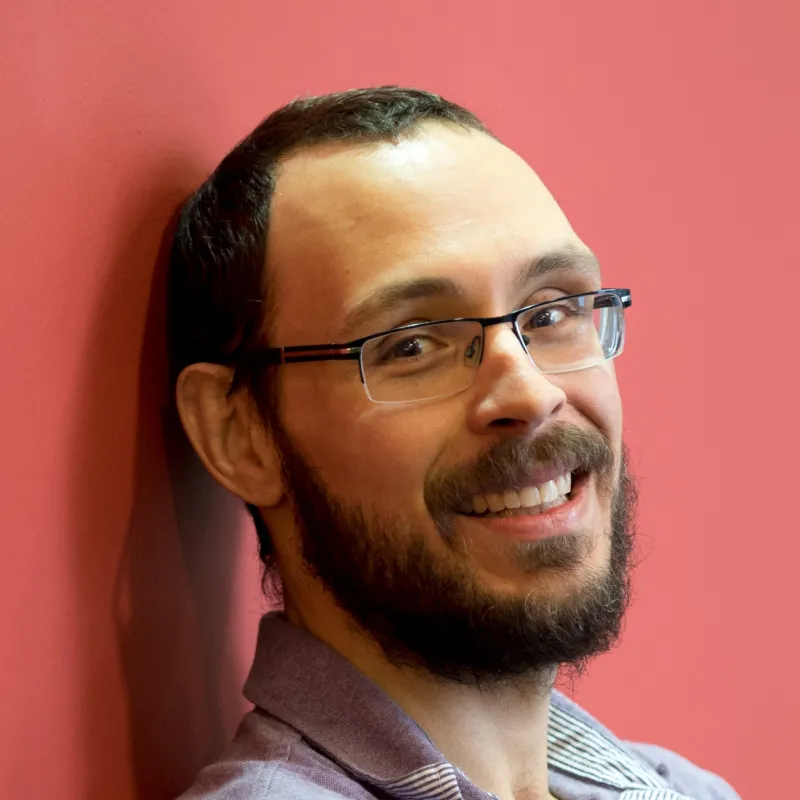
Lorenz Linhardt is a Researcher and PhD candidate at the Machine Learning Group of Technical University of Berlin, affiliated with the Berlin Institute for the Foundations of Learning and Data (BIFOLD). His research focuses on robustness of deep neural networks, spurious correlations, and representation learning, with applications in explainable AI and medical domains. Educational Background: M.Sc. in Computer Science, 2019 – ETH Zürich B.Sc. in Computer Science, 2016 – University of Vienna Research Interests: Robust Machine Learning : Addressing vulnerabilities in neural networks caused by spurious correlations and adversarial examples. Human Alignment : Bridging gaps between AI outputs and human judgments via representation learning and similarity metrics. Medical Applications : Leveraging machine learning for counterfactual inference in healthcare and dose-response modeling. Article Trends: Recent work emphasizes alignment between human judgments and AI systems, with studies on latent diffusion models, adversarial robustness, and forensic analysis of malware classifiers. Earlier contributions span astronomy surveys and decision tree optimization. Labs/Teams: Active in BIFOLD and the TU Berlin Machine Learning Group, focusing on foundational AI research.
Mirco Marchetti is an Associate Professor at the University of Modena and Reggio Emilia, affiliated with the Department of Engineering 'Enzo Ferrari'. He specializes in cybersecurity, network security, and automotive systems. His teaching responsibilities include courses on cybersecurity fundamentals, computer networks, operating systems, and automotive cyber defense. Research interests focus on intrusion detection systems (IDS), vehicular networks (VANETs), machine learning applications in cybersecurity, and automotive cybersecurity. He has contributed to projects like HackCar (automotive attack/defense testbed) and RealCAN (real-time CAN bus analysis tools). His work also explores adversarial attacks on ML-based systems and secure communication protocols for industrial and vehicular systems. Recent publications emphasize automotive cybersecurity (e.g., Mercedes-Benz infotainment system analysis, CAN bus anomaly detection), ML robustness against adversarial attacks, and zero-trust architectures. He collaborates with the SECloud research group (secloud.ing.unimore.it) and uses experimental platforms like Software-Defined Radios for security evaluations. Teaching responsibilities span multiple academic programs including Master's degrees in Computer Engineering and Artificial Intelligence Engineering. Courses emphasize practical skills in Linux/Unix administration, network configuration, and embedded system security.
Dr. Lydia Bouzar-Benlabiod is an Assistant Professor at the Jodrey School of Computer Science, Acadia University, Nova Scotia, Canada. Her research focuses on hardware-based machine learning, privacy-preserving techniques, and explainable AI. She holds a Ph.D. in Computer Science from Université d’Artois, France, and an M.Eng from Ecole nationale Supérieure d’Information (ESI), Algiers, Algeria. Her work bridges theoretical advancements with practical applications in cybersecurity, medical imaging, and intelligent systems. Research interests include adversarial machine learning, neural architecture search, and AI-driven healthcare solutions. Her lab explores cost-effective hardware implementations for medical diagnostics and anomaly detection systems. Key projects involve NeuroMem® chip integration for breast cancer detection and RNN-VED models to reduce false positives in cybersecurity. Dr. Bouzar-Benlabiod’s publications span 2013–2024, emphasizing data-driven modeling, case-based reasoning, and AI ethics. She contributes to special issues on heuristic data science and reuse in intelligent systems. Her work is accessible via CILS Lab and personal page .
Pedro Nardelli is a Full Professor (tenured) of IoT in Energy Systems at the LUT School of Energy Systems, Lappeenranta University of Technology (Finland). He holds a double doctoral degree in electrical engineering from the University of Campinas (Brazil) and communications engineering from the University of Oulu (Finland). As a Docent in Information Processing and Communications Strategies for Energy Systems, he leads research in cyber-physical systems, smart grids, and 6G-enabled energy networks. Research Interests : His work focuses on integrating IoT, AI, and communication technologies into energy systems. Key areas include cyber-physical systems, UAV-enabled networks, sustainable energy management, and cybersecurity in critical infrastructure. He emphasizes interdisciplinary approaches to address challenges in the green-digital transition. Projects & Leadership : He is Principal Investigator for projects such as 'Energy-Conscious Operation: Network Efficiency for Wireless Sustainability' (2024–2026) and coordinates the Finnish-Brazilian AI and 5G training program. Past roles include leadership in the 'Hydrogen and Carbon Value Chains in Green Electrification' initiative (2021–2024). Publications : Recent work explores topics like hybrid optimal power flow models, UAV-IRS NOMA systems, and energy-centric analysis. His research bridges theoretical frameworks with practical applications, emphasizing sustainability and resilience in energy networks. Labs & Teams : Leads the IoT Solutions group within LUT's MORE SIM research platform, focusing on simulation-driven innovation for energy systems.
Liang Hu is a Professor at De Montfort University's School of Computer Science and Informatics, with extensive research in machine learning, feature selection, and Internet of Things applications. His work bridges theoretical advancements in multi-label learning with practical implementations in IoT security and edge computing. PhD from Jilin University (1999) Active researcher with 178 publications (2005-2025) Key collaborator with Hongtu Li, Feng Wang, and Wanfu Gao His research focuses on multi-label feature selection , graph neural networks , and IoT security , developing novel frameworks for heterogeneous information networks, privacy-preserving federated learning, and threat detection in smart environments. His recent work integrates large language models with trigger-action programming systems. Analysis of his 15 most recent publications reveals strong emphasis on multi-view learning (40% of papers), IoT security applications (33%), and graph-based representation learning (27%), demonstrating consistent innovation in handling complex label correlations and heterogeneous data structures. His scientific contributions include novel feature selection methodologies that balance personalized and shared features while minimizing redundancy across multiple views and labels. Liang Hu leads research in edge intelligence and secure IoT programming, with recent projects developing conflict detection frameworks (CCDF-TAP) and privacy-preserving federated graph learning for smart home ecosystems. His work bridges theoretical machine learning with practical cybersecurity implementations.
Karim Boutiba is a Research Fellow at EURECOM's Communication Systems department, specializing in 5G/6G networks and advanced wireless technologies. His work focuses on optimizing network performance through machine learning, resource management, and network slicing. He contributes to both theoretical advancements and practical implementations, such as the 5G INSTRUCT forge pipeline and the GoSimRIS framework for 6G networks. His research interests span dynamic radio resource allocation, energy-efficient communication, and the integration of artificial intelligence in next-generation networks. Notable projects include leveraging deep reinforcement learning (DRL) for optimizing TDD patterns, O-RAN architectures, and edge computing solutions to enhance video streaming and latency-critical applications. Boutiba's publications emphasize the practical deployment of theoretical models, such as network slicing in Radio Access Networks (RAN) and anomaly detection using machine learning. His work bridges gaps between academic research and industry-ready solutions, with active participation in initiatives like the 6G-BRICKS architecture project.
Jorge Bernal Bernabe is an Associate Professor at the University of Murcia , affiliated with the Faculty of Informatics and the Department of Information and Communication Engineering . He holds a PhD in Computer Science from the University of Murcia (2015), focusing on 'Authorization and Trust Management in Distributed Systems Based on the Semantic Web.' His research group, Intelligent Systems and Telematics , explores cutting-edge cybersecurity solutions for IoT, 5G/6G networks, and privacy-preserving technologies. He is a key contributor to frameworks like OLYMPUS (privacy-aware identity management) and ARIES (European identity ecosystem). Education : PhD in Computer Science, University of Murcia (2015) Research Interests : His work centers on securing next-generation networks (e.g., 5G/6G), IoT privacy, federated learning applications for intrusion detection, blockchain-based identity systems, and policy-driven security enforcement. He emphasizes privacy-by-design principles and explores challenges in digital sovereignty and decentralized governance. Notable Projects : OLYMPUS: Oblivious identity management system ARIES: Pan-European identity framework ANASTACIA: Security agents for CPS/IoT INSPIRE-5Gplus: Cognitive security for 5G networks Labs/Teams : Active in the Intelligent Systems and Telematics Group , collaborating with industry partners on secure IoT deployments and 5G cybersecurity solutions.
Dragi Kimovski is a Habilitated Assistant Professor in Distributed Systems at Klagenfurt University, Austria, focusing on Edge Computing and AI. He previously held roles at the University of Innsbruck and the University of Information Science and Technology in Macedonia. His research spans Edge/Fog/Cloud computing, multi-objective optimization, and high-performance computing. He has coordinated major projects like 6GContinuum and KärtnerFog, and led initiatives such as DataCloud and ASPIDE. His teaching includes courses on Distributed Computing, Cloud Computing, and IoT. He is the co-creator of the Carinthian Computing Continuum and maintains a blog on Edge AI World. His work emphasizes sustainable and efficient computing solutions for emerging technologies. Education: Not explicitly listed in the provided text. Research Interests: Edge Computing, Fog Computing, Cloud Computing, Multi-objective Optimization, High-Performance Computing, AI in Distributed Systems. His work addresses challenges in resource management, latency reduction, and scalability across heterogeneous environments, with applications in healthcare, IoT, and 6G networks. Projects: 6GContinuum (Coordinator): Focuses on AI services over 6G networks. KärtnerFog (Scientific Coordinator): Develops adaptive Fog infrastructures over 5G. DataCloud (WP5 Leader): Manages Big Data pipelines on the Computing Continuum. ASPIDE (Scientific Coordinator): Advances exascale programming models for data processing. Teaching: Klagenfurt University: Courses include Distributed Computing, IoT, Cloud Computing, and Advanced Programming. University of Innsbruck: Taught Advanced Parallel and Distributed Systems. University of Information Science and Technology: Courses in High-Performance Computing and Network Architectures. Labs/Teams: Co-created the Carinthian Computing Continuum, an automated SDN testbed for Edge computing research. Active in interdisciplinary teams addressing extreme data processing and sustainable computing.
Jimmy McGibney is a Lecturer in the Department of Computing and Mathematics at Waterford Institute of Technology (WIT), now part of South Eastern Technological University (SETU). He holds a Master of Engineering from Dublin City University (1995) and a Bachelor of Engineering (Electronic) from University College Dublin (1992). His research focuses on network security, AI-driven cybersecurity solutions, trustworthiness in service compositions, and resource-constrained environments. External roles include serving as a Researcher at the Telecommunications Software and Systems Group (2000), a Research Assistant at Dublin City University (1996–1997), and a Systems Engineer at Aldiscon (1994–1996). His work emphasizes applied research in intrusion detection systems, network forensics, and trust management frameworks. Key research interests include AI applications in cybersecurity, trust metrics for service compositions, and securing edge computing environments. He has organized workshops on digital forensics and incident response, and his recent work explores AI methodologies for resource-limited systems. McGibney’s publications span over 38 works, including peer-reviewed chapters and conference contributions. Notable areas include network forensic readiness frameworks, deep learning-based intrusion detection, and trust overlays for spam protection. He has contributed to projects funded by industry and academic collaborations, focusing on practical cybersecurity solutions.
Shahid Hussain is an Associate Professor at King Abdullah University of Science and Technology (KAUST) in the Computer, Electrical and Mathematical Sciences and Engineering Division. His research spans multiple domains including electric vehicle infrastructure, blockchain technology, and intelligent systems for IoT applications, with a focus on practical implementations of computational intelligence techniques. Dr. Hussain's research interests include: Electric Vehicles and Smart Grid Integration Fuzzy Logic and Intelligent Decision Systems Blockchain Applications for Security and Privacy Machine Learning for IoT and Healthcare Applications Energy Management Systems Smart City Infrastructure Development His recent publications demonstrate a strong focus on applying hybrid computational approaches to solve complex engineering problems, particularly in transportation systems and healthcare applications. Dr. Hussain has published extensively in IEEE journals, with particular emphasis on innovative approaches to electric vehicle charging infrastructure, secure IoT systems, and blockchain-enabled solutions for real-world challenges. Dr. Hussain maintains active collaborations with researchers globally, particularly with Reyazur Rashid Irshad, Young-Chon Kim, and Subhasis Thakur. His work bridges theoretical advancements with practical implementations, as evidenced by his research on fuzzy integer linear programming for EV charging stations and blockchain-enabled security frameworks for medical IoT systems.
Simon Parkinson is a Professor at the University of Huddersfield specializing in cybersecurity and machine learning applications in security systems. His research focuses on empirical analysis of access-control systems, threat prediction, and defensive AI strategies. Parkinson's work combines data mining, behavioral analysis, and computational methods to address real-world security challenges. Recent publications demonstrate strong emphasis on biometric security, IoT protection, and forensic investigation techniques. His 2023-2025 research explores LLM-based event log analysis, wearable biometric cryptosystems, and zero-day DDoS detection in IoT networks. Collaborative projects include international case studies in Bahrain and innovative applications of computer vision in security diagnostics. Parkinson contributes to cybersecurity education initiatives and stakeholder engagement for security standardization.
Vladimir V. Terzija is a prominent researcher specializing in power systems engineering with a focus on smart grid technologies, synchronized measurement systems, and power system protection. His extensive publication record spans over two decades, demonstrating continuous contributions to the field of electrical power engineering across numerous IEEE journals and conferences. Terzija's research primarily centers on advanced power system monitoring, protection, and control methodologies. His work has significantly contributed to the development of synchronized measurement technology applications, fault analysis algorithms, and state estimation techniques for modern power systems. He has pioneered approaches for wide-area monitoring systems, transmission line fault analysis, and integrating renewable energy resources into power grids while maintaining stability and reliability. His research spans from fundamental power system theory to practical implementations addressing contemporary challenges in grid operation. Analysis of his recent publications reveals a strong focus on integrating artificial intelligence and machine learning techniques into power system applications, particularly for condition monitoring, anomaly detection, and predictive maintenance. His work increasingly addresses challenges posed by the energy transition, including grid stability with high renewable penetration, multi-energy system integration, and advanced control strategies for low-inertia power systems. The interdisciplinary nature of his research connects power engineering with data science, optimization theory, and cybersecurity. Throughout his career, Terzija has collaborated extensively with researchers across Europe and internationally, as evidenced by his numerous co-authored publications with institutions worldwide. His work appears consistently in top-tier IEEE publications, indicating recognition by the power engineering community. While specific awards aren't documented in the available publication records, his sustained research productivity and influence in the field suggest significant professional recognition. Terzija has supervised numerous research projects focused on power system monitoring and control, with particular emphasis on practical implementations that bridge theoretical developments with real-world grid applications. His work on WAMS (Wide Area Monitoring Systems), fault location algorithms, and state estimation techniques has contributed to advancing grid operational capabilities. The research trajectory shows increasing focus on addressing challenges associated with renewable energy integration, grid digitalization, and maintaining stability in modern power systems. His research group appears to focus on developing advanced monitoring and control systems for power networks, with particular expertise in synchrophasor technology applications. The collaborative nature of his work suggests involvement in international research consortia addressing contemporary power system challenges, particularly those related to grid stability in systems with high renewable penetration and the development of intelligent monitoring solutions for power infrastructure.
Dr. Khoa Phan is a Senior Lecturer in the Department of Computer Science and Information Technology at La Trobe University, Australia. He holds an ARC DECRA Senior Research Fellowship (2020-2023) and has held prior positions at UCLA, Monash University, and others. His academic background includes a B.Eng. (UNSW), two M.Sc. degrees (University of Alberta and Caltech), and a Ph.D. in Electrical Engineering from McGill University. Dr. Phan's research focuses on optimizing next-generation communication networks, particularly in wireless communications, IoT, satellite systems, and machine learning applications. He has secured significant grants, including ARC Discovery Projects and industry partnerships. His work emphasizes secure cyber-physical systems, federated learning, and edge computing. He has received prestigious awards such as the ARC DECRA and Atwood Fellowship. His research spans over 100 publications, with contributions to areas like OTFS modulation, secure satellite communications, and graph-based anomaly detection. He actively supervises PhD students and collaborates internationally, including initiatives to strengthen ties between La Trobe University and Vietnamese institutions. Grants include ARC Discovery Projects (totaling $1.3M+), CRC SmartSAT, and industry scholarships. His work addresses energy efficiency, secure resource allocation, and AI-driven solutions for 5G/6G networks and the metaverse.
Mahdi Abolghasemi is a Senior Lecturer in Statistical Data Science at Queensland University of Technology (QUT), within the School of Mathematical Sciences, Faculty of Science. He previously held academic positions at Monash University and The University of Queensland. He serves on the editorial board of the International Journal of Forecasting and reviews for journals like Scientific Reports , International Journal of Production Research , and Applied Energy . Education: PhD in Statistics (University of Newcastle). Research Interests: Time series forecasting, decision optimization, and machine learning applications in retail and energy sectors. His work focuses on hierarchical structures, systematic events, and volatility in time series data, with funded projects exceeding $900k. Notable areas include demand forecasting in supply chains, renewable energy forecasting, and decision-focused predictive analytics. His research has been recognized by awards from the International Institute of Forecasters, Australian Mathematical Society, and IEEE Computational Intelligence Society. Awards: International Institute of Forecasters Award Australian Mathematical Society Award IEEE Computational Intelligence Society Award Australian Mathematical Sciences Institute Recognition Teaching: A Fellow of the Higher Education Academy (FHEA), he emphasizes bridging theory with industry-relevant projects. Courses taught include data science, business analytics, time series forecasting, and statistical machine learning. Received the Faculty of Science Highly Regarded Early Career Teaching Excellence Award at The University of Queensland. Grants & Funding: Over $900k from national/international organizations supporting his research in forecasting and optimization. Supervision: Currently accepting research students in areas such as hierarchical forecasting, Bayesian-focused learning, inventory optimization, and energy supply chain decision-making. Research Centres: Energy Transition Centre and Centre for Data Science at QUT. Collaborations with industry partners like Sanitarium, Coles, Woolworths, Australian Energy Market Operator (AEMO), and Australian Renewable Energy Agency (ARENA).
Dr. Ahmed Taiye Mohammed holds a Postdoctoral research fellowship at Linnaeus University's Department of Cultural Sciences, Faculty of Arts and Humanities in Växjö, Sweden. He earned his Master's and PhD from Northern University of Malaysia (UUM) with a thesis on text anomaly detection. His research focuses on Digital Humanities (DH), AI applications in education, and computational thinking for non-engineers. He teaches courses like Digital Humanities Research Methods, Programming for DH, and AI in Healthcare. Key research projects include InKuiS (innovative cultural entrepreneurship) and AI for ISP (supporting academic writing via ChatGPT). He collaborates with Linnaeus University Centre for Data Intensive Sciences (DISA) on e-health initiatives. Recent publications explore AI in K-12 education, automated library classification, and text mining for archaeology. His work spans AI ethics, DH methodologies, and interdisciplinary applications of computational tools. Teaching responsibilities include over 10 courses at undergraduate/master's levels, emphasizing practical skills in DH technologies. Active in developing AI-based educational tools like CHAT4ISP-AI and exploring generative AI for academic writing support. Research also involves social media ecosystems, data mining practices, and satellite image classification using SVM techniques.