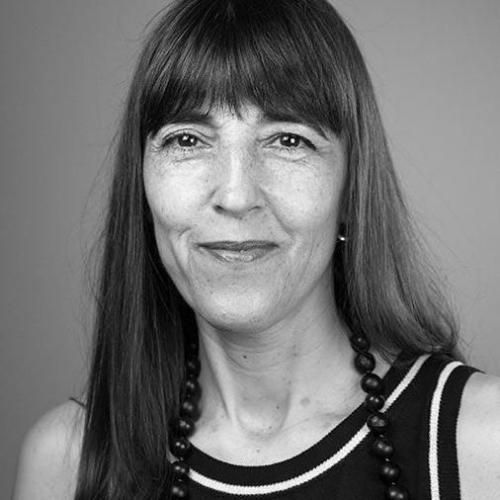
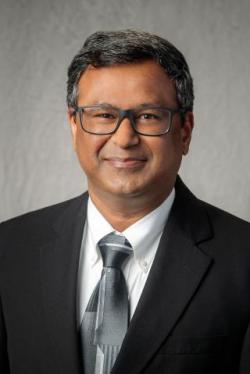
Johannes Kruisselbrink is a Researcher at Biometris , a department within Wageningen University & Research , specializing in food safety and cumulative risk assessment. His work focuses on pesticide residues, dietary exposure, and computational modeling for regulatory compliance. Key Collaborations: European Food Safety Authority, EFSA Projects: Active in pesticide exposure analysis (2024-2028), cumulative risk assessment tools (2019-2023), and regulatory frameworks (2018-2019). His research integrates data modeling and statistical software to enhance risk assessment methodologies. Recent projects emphasize interoperability and accessibility of platforms like MCRA and PARC. Scientific Contributions: Developed AMIGA Power Analysis tool for equivalence testing Authored reports on pesticide risk surveillance in fruits and vegetables Advancing EFSA standards for acute reference dose calculations
Diana Gratiela Berbecaru is an External Collaborator and External Lecturer at the Department of Control and Computer Science (DAUIN), Politecnico di Torino, where she contributes to teaching and research in cybersecurity and digital identity. She is affiliated with the TORSEC Security Group and actively participates in EU-funded research projects such as Q-FENCE, focusing on quantum-resistant cryptography. She teaches core courses including Security and Privacy for Digital Identity Frameworks and Information Systems Security , and has been recognized with the Italian national scientific habilitation as Associate Professor in 2025, affirming her academic standing. Full Name: Diana Gratiela Berbecaru University: Politecnico di Torino Department: Department of Control and Computer Science (DAUIN) Academic Rank: Associate Professor (habilitated) Teaching Status: Part-time External Lecturer Email: diana.berbecaru@polito.it Her research focuses on cybersecurity, identity management, and trusted computing, with specific interests in authentication, authorization, data privacy, network security, and trusted computing in distributed and IoT environments. She investigates practical implementations of digital identity systems using the eIDAS infrastructure, certificate validation, TLS security, and post-quantum cryptography. Her work bridges theoretical security models with real-world deployment challenges. Her recent publications (2022–2025) reflect a strong focus on TLS security, X.509 certificate analysis, anomaly detection using AI, remote attestation for IoT, and post-quantum migration strategies. These works are published in high-impact venues such as IEEE Access, IEEE ISCC, and ARES, indicating active and influential contributions to the cybersecurity research community. The research trend shows a consistent emphasis on practical tools and frameworks for enhancing trust and security in digital systems. Scientific Awards and Recognition: Italian National Scientific Habilitation as Associate Professor (Abilitazione Scientifica Nazionale, II fascia), 2025 She serves as an Associate Editor for IEEE Transactions on Network and Service Management and IEEE Access , and as a Guest Editor for Electronics and Computer Networks . She chairs and co-chairs international workshops such as TrustAICyberSec and IMTrustSec, and is a frequent member of program committees for major conferences including ARES, IDC, and ISCC. These roles demonstrate her active engagement in academic leadership and knowledge dissemination. Labs and Research Groups: TORSEC - Security Group (DAUIN): Core research group focusing on cybersecurity, trusted systems, and digital identity.
Falko Dressler is a Full Professor and Chair for Telecommunication Networks at the School of Electrical Engineering and Computer Science, Technische Universität Berlin. He holds a Ph.D. and M.Sc. in Computer Science from Friedrich-Alexander University of Erlangen-Nuremberg (1998-2003). His research focuses on next-generation wireless systems , distributed machine learning , edge computing , and applications in Internet of Things (IoT) , cyber-physical systems , and internet of bio-nano-things . Editorial roles: IEEE Trans. on Mobile Computing, Elsevier Computer Communications, IEEE/ACM Trans. on Networking Conference leadership: IEEE INFOCOM, ACM MobiSys, IEEE VNC Textbooks: Self-Organization in Sensor and Actor Networks (Wiley), Vehicular Networking (Cambridge) Recent publications highlight trends in Edge Computing Resilience and 6G Network Architecture , with a strong emphasis on Molecular Communication , Terahertz Band Synchronization , and Federated Learning in vehicular environments. Scientific contributions include multiple IEEE Fellow , ACM Fellow , and VDE ITG Prize 2023 recognitions. Advisory and professional activities include membership in the German National Academy of Science and Engineering (acatech), IEEE COMSOC Conference Council, and ACM SIGMOBILE Executive Committee. His work spans cooperative driving, ultra-low power sensor networks, and security in nano-communication systems.
Arnab Nandi is a Professor of Computer Science and Engineering at The Ohio State University, with a courtesy appointment in Biomedical Informatics. He holds leadership roles including Steering Committee Member for the Human-in-the-Loop Data Analytics (HILDA) Workshop and has served as Workshops co-chair for SIGMOD 2025-26 and Demonstrations co-chair for SIGMOD 2024. His research focuses on bridging human interaction and data infrastructure, spanning database systems, human-in-the-loop data analytics, and next-generation query interfaces. Nandi's work emphasizes interactive data exploration through projects like DICE (Distributed Interactive Cube Exploration), GestureDB (Querying Beyond Keyboards), and Omni (Multimodal Data Exploration). His recent research explores integrating LLMs into database education, augmented reality interfaces for data analytics, and multimodal approaches to video querying. Nandi has received numerous honors including the NSF CAREER Award, Google Faculty Research Award, IEEE TCDE Early Career Award, and the University's Alumni Award for Distinguished Teaching. He was also named to Columbus Business First's '40 under 40' and became an ACM Distinguished Member in 2024. As an educator, he teaches courses including CSE 3241 (Introduction to Database Systems), CSE 5242 (Advanced Database Systems), and CSE 5251 (Introduction to Software Startups). His educational innovations include DBTutor, which integrates LLMs into database systems education. At Ohio State, Nandi co-founded the OHI/O Program, which fosters tech culture through hackathons, and The STEAM Factory, an interdisciplinary research collaboration network. Prior to academia, he was founder and CEO of Mobikit, a connected vehicles data analytics startup acquired by Azuga Inc. (a Bridgestone company). His research has been supported by the NSF and industry partnerships, with applications spanning precision agriculture (CropFusion), clinical data pipelines (ICARUS), and interactive visualization systems (Perceptvis).
Mercedes Herrero de la Fuente is a Professor at Antonio de Nebrija University's School of Communication and Arts in Madrid, specializing in Journalism and Media Innovation. Holding a PhD in Information Sciences from Complutense University of Madrid, she coordinates the doctoral program in Innovation in Digital Communication and Media while leading research through the INNOMEDIA Research Group. Her academic affiliations include active participation in multiple national research projects funded by Spain's Ministry of Science and Innovation. Her research focuses on the intersection of digital technologies and communication, with particular emphasis on data journalism, transmedia narratives, disinformation combat strategies, and gender representation in media. Recent work explores augmented reality applications in journalism, accessibility for people with disabilities in the audiovisual sector, and women's leadership in media production. She has conducted research fellowships at Cornell University, Radboud Universiteit, Salford University, and Charles University. Herrero de la Fuente has published extensively in high-impact journals, with her most recent work examining AI applications against electoral misinformation, women creators in streaming platforms, and immersive journalism technologies. Her research demonstrates consistent focus on emerging media technologies and their societal implications, particularly regarding inclusion and verification practices. As an educator, she previously directed Nebrija University's Master's in Digital and Data Journalism (2016-2021) and Master's in Television Journalism (2015-2020), while currently teaching in both undergraduate and graduate programs. Her professional background includes eight years as a producer for TELEMADRID News, providing practical industry experience that informs her academic work.
Paolo Prandoni is a Lecturer at École Polytechnique Fédérale de Lausanne (EPFL) in the School of Computer and Communication Sciences (IC). He serves as a Scientist in the Audiovisual Communications Laboratory (LCAV) and teaches in the SSC-ENS and SIN-ENS units, focusing on signal processing theory and practical applications in audiovisual communications. He earned his PhD from EPFL after completing all prior education there, driven by childhood fascination with long-distance telephony. His doctoral work established foundations in communication systems that continue to inform his research. Prandoni's research spans audio/image processing, machine learning for media analysis, and DSP education. Key areas include computational photography (e.g., spectral imaging, stained glass rendering), speech quality assessment via transfer learning, music information retrieval (e.g., fingering prediction), and audience analytics through his company Quividi. His work consistently bridges theoretical signal processing with real-world implementation. Recent publications reveal a strategic shift toward machine learning integration in signal processing tasks, particularly non-intrusive speech assessment and lensless imaging reconstruction. Simultaneously, he advances DSP pedagogy through MOOC development and hands-on teaching tools using off-the-shelf hardware, emphasizing accessibility and practical skill development. No scientific awards are documented in the provided materials. He has advised PhD student Thanikachalam Niranjan (thesis: Image Based Relighting of Cultural Artifacts , 2016) and teaches Communication Systems and Computer Science courses. His educational impact extends through the open-access textbook Signal Processing for Communications (2008) and tools like MultiPub for maintainable online classes. Industry engagement includes Quividi co-founding (2006) and ongoing CSO role in attention analytics. As a core LCAV laboratory member, he collaborates on interdisciplinary projects including cultural heritage digitization, embedded signal processing systems, and real-time audience measurement, leveraging EPFL's infrastructure for both academic and commercial applications.
Roberto Garello is a Tenured Associate Professor at the Department of Electronics and Telecommunications (DET) of Politecnico di Torino . He specializes in Communication Systems , Satellite Networks , and Channel Coding , with a focus on 5G/6G Technologies and Non-Terrestrial Networks . His work aligns with the School of Master’s Programmes and Lifelong Learning . Research Interests: Satellite communications systems, Direct-to-Satellite IoT constellations, Mega-constellation services in space, and physical layer advancements for 5G/6G. Teaching: Offers courses like Information Theory for Data Science , Communication and Network Systems , and Space Exploration and Resources , while supervising Applied Signal Processing Laboratory . Projects: Leads initiatives such as DitDSSS (satellite localization), RESTART (future telecommunications), and TESL@ (ICT energy efficiency). Scientific Awards: Received Best Paper Awards at CTRQ 2010 and COCORA 2013. Students: Supervises PhD candidates including Alessandro Compagnoni, Agbotiname Lucky Imoize, and Riccardo Tuninato, focusing on topics like Wireless Communication, Machine Learning, and Non-Terrestrial Networks. Publications: His recent work explores OTFS vs. OFDM, spectrum sensing algorithms, MIMO with cylindrical arrays, and 5G NTN synchronization, reflecting trends in satellite IoT and machine learning integration.
Lisa Grant Ludwig is a Professor in the Department of Population Health and Disease Prevention at the University of California, Irvine (UCI). She is a nationally recognized expert in earthquake science, focusing on translating geophysical research into policy for disaster risk reduction. Her work bridges seismology, public health, and policy implementation. PhD in Geology with Geophysics minor (Caltech) MS in Environmental Engineering Science (Caltech) BS in Applied Environmental Earth Science (Stanford) Dr. Ludwig's research centers on earthquake dynamics, particularly along the San Andreas Fault, advancing disaster resilience through innovative nowcasting techniques using AI and machine learning. Her publications demonstrate expertise in seismic hazard modeling, geodetic imaging, and community preparedness studies. Recent publications highlight AI-enhanced earthquake prediction (QuakeGPT), temporal-spatial nowcasting models, and applications of geodetic data for crustal deformation analysis. These works integrate machine learning with traditional seismological methods to improve hazard forecasting. President of Seismological Society of America NASA 2012 Software of the Year Medal Featured on Science magazine cover Congressional Testimony provider Active Federal Advisory Committee member Her interdisciplinary approach combines geophysics, public health policy, and computational science. Current projects focus on earthquake nowcasting, fault zone analysis, and developing accessible geospatial tools like GeoGateway for disaster response.
Dr. Abdullahi Tasiu Abubakar is a Senior Lecturer and Director of the PhD Programme in the Department of Journalism at City St George's, University of London. He holds a PhD in Journalism and Mass Communications from the University of Westminster, awarded with no corrections. His professional background includes roles as a producer at BBC World Service (London) and Bureau Editor in Nigeria, alongside reporting for major Nigerian newspapers covering conflicts across West Africa. Research Focus: Dr. Abubakar specializes in media audiences, strategic communications, conflict reporting, and journalism ethics. His work critically examines how global media interacts with African audiences, the ethics of crisis journalism, and the communication strategies of insurgent groups like Boko Haram. Publication Trends: His scholarly output (2011-2024) demonstrates consistent focus on media in conflict zones, digital audience engagement, and African media landscapes. Recent works explore colonial legacies in broadcasting and mobile technology's impact on media consumption. A 2021 computational study represents an interdisciplinary divergence. Awards & Honors: Nigeria’s Best Newspaper Reporter of the Year NUJ Certificate for Professional Excellence Fellow, Higher Education Academy (AdvanceHE, UK) Professional Activities: He supervises PhD, MA, and undergraduate dissertations, has secured multiple research grants, and advises governmental/NGO bodies. As External Examiner at King's College London, he contributes to academic quality assurance. He regularly presents at major conferences (e.g., IAMCR, ICA) on extremism reporting and decolonization of media.
Surendranath Suman is an Assistant Dean of Research and Professor in the Department of Animal and Food Sciences at the University of Kentucky's College of Agriculture, Food and Environment. He also holds secondary appointments with the Center for Muscle Biology and the Division of Nutritional Sciences. With over 15 years of academic service at the university, he has progressed from Assistant Professor (2006-2012) to Associate Professor (2012-2017) and currently serves as Professor (2017-present). Dr. Suman earned his B.V.Sc. & A.H. from Kerala Agricultural University (1999), M.V.Sc. from Indian Veterinary Research Institute (2001), and Ph.D. from University of Connecticut (2006). He is also a Diplomate of the American College of Animal Sciences (2010). His research focuses on meat science with particular expertise in proteomics of meat quality, myoglobin chemistry and meat color stability, and novel strategies to improve meat quality. Dr. Suman has made significant contributions to understanding the biochemical mechanisms behind fresh meat color, particularly in beef and pork. His work integrates traditional meat science methodologies with high-throughput proteomic and metabolomic approaches to unravel complex biochemical pathways. Analysis of Dr. Suman's recent publications reveals a strong focus on meat color stability mechanisms, particularly through proteomic approaches. His research spans multiple species including beef cattle, pork, bison, and poultry, with particular attention to mitochondrial functionality, myoglobin chemistry, and post-translational modifications that influence meat quality attributes. Recent work has expanded into metabolomics applications in meat science. Scientific Awards and Recognition Distinguished Research Award, American Meat Science Association (2022) University Research Professor, University of Kentucky (2021) International Lectureship Award, American Meat Science Association (2019) Distinguished Alumni Award, University of Connecticut (2019) Meats Research Award, American Society of Animal Science (2018) Thomas Poe Cooper Distinguished Research Award, University of Kentucky (2017) Bobby Pass Excellence in Grantsmanship Award, University of Kentucky (2016) Special Visiting Researcher Fellowship, Government of Brazil (2014-2017) Early Career Achievement Award, American Society of Animal Science (2013) Dr. Suman has served as an invited speaker internationally across six continents and is an active editorial board member for numerous prestigious journals including Meat and Muscle Biology (Associate Editor), Journal of Animal Science, and Meat Science. His extensive editorial service reflects his standing as a leading authority in meat science research. He has successfully secured multiple research grants, as evidenced by the Bobby Pass Excellence in Grantsmanship Award he received in 2016. As Assistant Dean of Research, Dr. Suman plays a leadership role in advancing research initiatives within the College of Agriculture, Food and Environment. His collaborative research involves multiple laboratories both domestically and internationally, particularly with institutions in Brazil, given his Special Visiting Researcher Fellowship from the Brazilian government. His work bridges fundamental biochemistry with practical applications in meat production and quality assessment.
Ridhi Kashyap is a Professor of Demography and Computational Social Science at the University of Oxford, where she contributes significantly to demographic research through innovative computational approaches. She is affiliated with the Leverhulme Centre for Demographic Science, where she co-leads the Digital and Computational Science strand. Her work bridges traditional demographic methods with cutting-edge computational techniques to address pressing social issues related to population dynamics and inequalities. Dr. Kashyap's research spans multiple areas of demography, with particular focus on: Mortality and population health, including pandemic impacts on life expectancy Gender inequality, especially son preference and digital gender gaps Marriage and family dynamics in relation to educational expansion and gender norms Migration and ethnicity patterns using digital data sources Sustainable development goals related to digital access and gender equality Her methodological expertise lies at the intersection of demography and computational social science. She leverages agent-based models, microsimulation, and machine learning techniques applied to novel data streams such as digital trace data from social media platforms. A notable example of her work is the digitalgendergaps.org platform, which nowcasts global digital gender inequalities in internet and mobile access - a key sustainable development goal indicator where official data is lacking. Her research demonstrates how computational approaches can fill critical data gaps and provide timely insights for policy decision-making. Analysis of Dr. Kashyap's recent publications reveals a strong focus on digital demography and computational approaches to understanding population dynamics. Her work frequently examines gender inequalities through digital lenses, including analyses of LinkedIn data to understand professional gender gaps and social media data to track digital access disparities. She has made significant contributions to understanding pandemic mortality patterns, particularly in India and the US, and has pioneered methods for using social media data to nowcast demographic phenomena. Her research consistently bridges theoretical demographic concepts with practical computational methodologies. Dr. Kashyap has been actively involved in several significant research initiatives, including leading the development of the Digital Gender Gaps dashboard and contributing to the creation of the World Cybercrime Index. Her work with the Leverhulme Centre for Demographic Science has positioned her at the forefront of computational demographic research. Within her academic role, Dr. Kashyap supervises graduate students and collaborates with interdisciplinary teams across demography, computer science, and public health. She has secured funding for projects that leverage digital data to address demographic research questions, particularly those related to gender inequality and sustainable development goals. Her work with social media data platforms demonstrates innovative approaches to overcoming traditional data limitations in demographic research. Dr. Kashyap co-leads the Digital and Computational Science strand at the Leverhulme Centre for Demographic Science, where she oversees a team of researchers working at the intersection of demography and computational methods. Her team develops innovative approaches to using digital trace data for demographic research, with particular focus on gender inequality metrics and pandemic impact assessment. The Digital Gender Gaps project represents one of her team's flagship initiatives, providing near-real-time monitoring of a key sustainable development indicator.
Anna Johansson is an Assistant Professor at the Karolinska Institutet , leading research in cancer epidemiology and biostatistics at the Department of Medical Epidemiology and Biostatistics . She serves as a Docent and group leader, with affiliations at Karolinska University Hospital, Capio St Göran Hospital, and Uppsala University Hospital. Research Interests: Her work spans Cancer epidemiology with focus on breast cancer Reproductive factors and cancer risk Socioeconomic inequalities in healthcare Applied biostatistics and register-based methods Nordic cross-country collaborations Recent Article Trends show emphases on Nordic cancer survival comparisons Pregnancy-associated cancer outcomes Stage-specific mortality analysis Impact of healthcare disruptions Statistical methods for registry data Fertility preservation in oncology Scientific Awards Senior Investigator Award, Swedish Cancer Society Teaching & Mentorship includes survival analysis, epidemiological designs, and data management workshops within the Karolinska Doctoral Programme. She supervises PhD students in cancer and reproductive epidemiology. Collaborative Networks extend to the Nordic Cancer Union, Cancer Registry of Norway, and clinical research teams across Sweden and the Nordic region.
Franziska Klügl is a Professor in Computer Science at Örebro University's Faculty of Business, Science and Engineering, affiliated with the Center for Applied Autonomous Sensor Systems (AASS). She currently leads the KKS-funded TeamRob project on Human-Robot Teamwork and serves as Deputy Dean of the faculty since January 2023, chairing the academic appointment committee. Previously, she headed the Computer Science department (2020-2022) and served on the faculty board (2019-2022). Her research focuses on: Multi-agent systems : Development of languages, processes, and tools for agent-based simulation Interdisciplinary applications : Transportation, economics, epidemics, production, and mining simulations Simulation engineering : Integrating AI, machine learning, and formal methods to create accessible modeling tools for domain experts She created SeSAm , a visual programming tool for agent-based simulation that enables rapid prototyping of complex models. Analysis of her recent publications reveals three dominant themes: Human-robot collaboration frameworks and intention recognition systems Economic impacts of automation on labor markets and engineering services Advanced simulation methodologies using affordance theory and reinforcement learning She teaches software engineering, multi-agent systems, and agent-based modeling across multiple programs, including the WASP AI&ML PhD course. She leads research groups at the Machine Perception and Interaction Lab and oversees the TeamRob human-robot teamwork project.
Tracy Hall is Professor in Software Engineering at Lancaster University's School of Computing and Communications, where she holds a Chair in Software Engineering Research and serves as Director of Post Graduate Teaching. Previously, she was Professor and Head of Computer Science at Brunel University London, and has held visiting positions at University College London and adjunct roles at the University of Oslo. With over 20 years of empirical software engineering research experience, she maintains extensive industrial collaborations. Her research focuses on: Software defect prediction and automatic repair Code analysis methodologies Software testing frameworks Human factors in software development Empirical studies of developer behavior Tool development for software engineers She leads research in automated defect repair techniques and vulnerability prediction, with recent work exploring AI-driven approaches to software quality improvement. Her publication portfolio (100+ papers) shows consistent focus on software quality enhancement, with recent emphasis on explainable AI for vulnerability prediction (2025), developer-centric testing tools (2024), and human factors in bug resolution (2022). Research frequently involves large-scale empirical studies and industry partnerships. Awards include multiple best paper awards for her contributions to software engineering research. As Principal Investigator, she secured significant funding including: EPSRC Fixie project: £400,000 for defect prediction/repair (2018-2020) EPSRC Fault Analysis grant: £128,578 (2016-2019) Current PhD supervisees include Gaz Bennett, Jesse Phillips, and Miles Walker working on software engineering challenges. She contributes to the Cyber Security Research Centre , Security Lancaster , and DSI-Foundations research groups. Teaches courses on IT Architecture and Software Studio.
Henrikki Tenkanen is an Assistant Professor in the Department of Built Environment at Aalto University, specializing in Geoinformatics. His research focuses on geospatial analysis, urban planning, transportation accessibility, and open data applications for sustainable development. His primary research interests include Geospatial Analysis , Urban Planning , Transportation Accessibility , and Population Dynamics . Tenkanen's work integrates mobile phone data, social media, and open geospatial sources to understand urban environments, accessibility patterns, and carbon emissions. His research contributes significantly to UN Sustainable Development Goals related to sustainable cities and communities. Tenkanen's recent publications demonstrate strong trends in high-resolution spatial analysis of urban environments, with particular emphasis on transport equity , carbon emissions mapping , and rural population representation . His work combines advanced geocomputing techniques with practical urban planning applications, often developing open-source tools to enhance reproducibility and accessibility of geospatial research. As an active member of the academic community, Tenkanen serves as a peer reviewer for journals including Big Data & Society and Environment and Planning B, and participates in conference committees such as the International Conference on Location Based Services. His research has garnered significant attention, with multiple publications featured in news outlets and academic platforms. Tenkanen leads several major research projects including Geo-R2LLM (developing geographic large language models), Geoportti (open geospatial infrastructure), MAPICO (mapping commute-related carbon emissions), and LIH: Location Innovation Hub. His work bridges academic research with practical applications for urban planning and sustainable mobility.