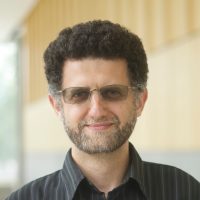
Dr. Manos Papagelis is an Associate Professor in the Department of Electrical Engineering & Computer Science at York University's Lassonde School of Engineering. He serves as the Graduate Program Director for the MSc and MScAI programs. His research focuses on data science and machine learning, particularly in data mining, graph mining, big data analytics, mobility analytics, and knowledge discovery. Education: PhD in Computer Science (University of Toronto), MSc and BSc in Computer Science (University of Crete, Greece). Prior to York, he held postdoctoral and research roles at UC Berkeley, Yahoo! Labs Barcelona, and FORTH, Greece. Research emphasizes trajectory analysis, emotion recognition, and scalable systems. Recent work includes TrajLearn (2025) and Disease Outbreak Detection (2025), highlighting contributions to mobility and health informatics. He has filed three U.S. patents and designed systems like Confious (conference management) and Green2.0 (socio-technical building analysis). Honors include the Lassonde Educator of the Year (2021) and IEEE MDM Best Paper Awards (2020, 2018). His advising spans interdisciplinary teams in AI and data science, with active involvement in grants related to mobility analytics and healthcare technologies. Labs/Teams: Director of the Data Mining Lab, collaborating on projects like trajectory prediction and emotion-aware systems.
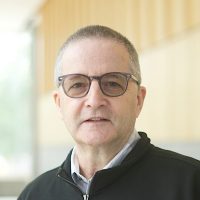
Natalija Vlajic is an Associate Professor in the Department of Electrical Engineering and Computer Science at York University's Lassonde School of Engineering. She holds a PhD in Electrical Engineering from the University of Ottawa and an M.Sc. in Electrical and Computer Engineering from the University of Manitoba. Dr. Vlajic is a highly accomplished researcher with over 80 publications in international conferences and journals, specializing in cybersecurity with a focus on industrial control systems. Her primary research interests include network and information security, communication systems and network protocols, cybersecurity of industrial systems, machine learning applications in security, and system performance evaluation. She has made significant contributions to the understanding of security risk management, bot and DDoS attacks, user privacy, IoT security, and sensor networks. Her work bridges theoretical security concepts with practical applications in critical infrastructure protection. Dr. Vlajic's recent publications demonstrate a strong focus on Industrial Control Systems security, particularly addressing vulnerabilities through innovative approaches like risk-based cryptoperiod optimization, attack tree modeling using MITRE ATT&CK framework, and advanced bot detection techniques. Her research combines traditional security methodologies with machine learning and data analytics to develop more robust protection mechanisms for critical infrastructure. NSERC University Faculty Award Faculty-Wide Excellence in Teaching Award Departmental Mildred Baptist Teaching Award Best Poster Award at ACM/IEEE ICCPS (2023) Best Paper Award at HoTSoS (2018) Dr. Vlajic actively mentors graduate students including Gabriele Cianfarani, Melina Najimi, Stefan Petrovic, Shadi Sadeghpour, Daniel Brown, and Jazdeep Sarai. Her research group has received significant recognition, with students presenting at major conferences like GradCon hosted by Waterloo's Cybersecurity and Privacy Institute. She serves as a co-editor for the IEEE Communications Magazine special issue on Security of Communication Protocols in Industrial Control Systems. Her research is conducted through the Security Research at York (SecRAY) initiative, focusing on practical security solutions for industrial systems, web applications, and IoT environments. The group maintains strong industry connections and collaborates on real-world security challenges, particularly in the domain of critical infrastructure protection.
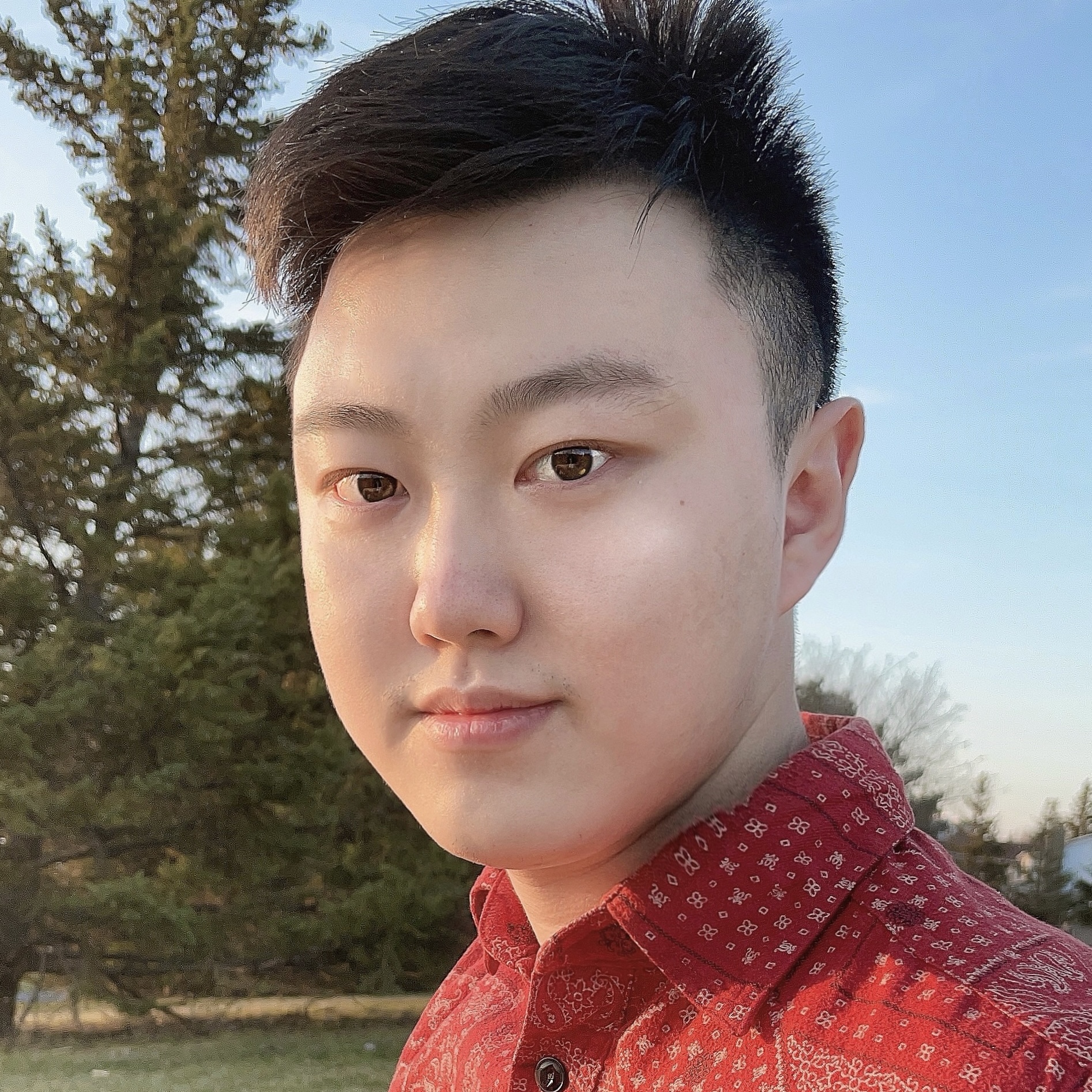
Song Wang is an Associate Professor in the Department of Electrical Engineering and Computer Science at York University's Lassonde School of Engineering. He joined York University as an Assistant Professor in July 2019 and was promoted to Associate Professor in May 2024. He serves as an Associate Editor of ACM Transactions on Software Engineering and Methodology (TOSEM) and has established himself as a prominent researcher at the intersection of Software Engineering and Artificial Intelligence. Dr. Wang earned his Ph.D. in Computer Engineering from the University of Waterloo in December 2018 under Prof. Lin Tan. He received his MS degree from the Chinese Academy of Sciences in June 2014 under the supervision of Prof. Ye Yang, Prof. Wen Zhang, and Prof. Qing Wang. His undergraduate education includes a BE in Software Engineering and a BHRM in Human Resource Management from Sichuan University in June 2011. Prior to academia, he gained industry experience through internships at Microsoft Research, Morgan Stanley Capital International, Yahoo, and Baidu, and co-founded a startup named QualDivine. Dr. Wang's research focuses on two main directions: (1) leveraging AI technologies to address software reliability challenges (AI for SE), and (2) developing software reliability assurance techniques for AI systems (SE for AI). His recent work has particularly focused on how Large Language Models can optimize and reshape software testing practices. His research has practical impact, with tools and techniques that have detected hundreds of true bugs in real-world software systems. His work spans multiple application areas including mobile testing, fuzz testing, and functional testing. His recent publications (2024-2025) demonstrate a strong focus on the intersection of AI and software engineering, with significant contributions in automated vulnerability detection, API recommendation, bias analysis in generated code, and mobile application testing. His research combines empirical studies with innovative technical approaches, often involving benchmarking and systematic literature reviews to establish foundations for future work. He has published over 60 papers in prestigious IEEE/ACM Software Engineering journals and flagship conferences, with over 2,600 citations. Dr. Wang has received four best paper awards: a Distinguished Paper Award at APSEC'23, an ACM Distinguished Paper Award at ICPC'22, an ACM Distinguished Paper Award at ICSE'20, and a Best Paper Award at PROMISE'19. He was recognized as one of the top-10 most impactful early-career researchers in Software Engineering by the Journal of Systems and Software in 2020 and received the TOSEM Distinguished Reviewer Award in 2023. Dr. Wang currently supervises multiple PhD and Master's students including Mohammad Abdollahi, Haoran Xue, Jiho Shin, Nima Shiri Harzevili, and Moshi Wei. He has successfully guided several students to complete their theses, including Reem Al Eithan (Master's thesis defense in April 2025), Moshi Wei (PhD thesis defense in April 2025), and Nima Shiri Harzevili (PhD thesis defense in February 2025). His research group has received funding from various sources to support their work on software engineering and AI. Dr. Wang leads an active research group focused on AI and software engineering at York University. His team includes PhD students, Master's students, and research assistants working on various projects related to software testing, reliability, and AI applications in software engineering. The group has developed tools that have detected hundreds of true bugs in real-world software systems, with some findings documented in Jira issues and GitHub repositories across numerous open-source projects.
Madhur Anand is a Professor at the University of Guelph's School of Environmental Sciences, where she leads research on global ecological change and sustainability. Her work integrates empirical studies of forest ecosystems with advanced computational modeling to address biodiversity loss, climate impacts, and human-environment interactions. She holds a Canada Research Chair in Global Ecological Change (2006–2011) and collaborates globally with institutions in Brazil, China, India, and beyond. Her research focuses on: Global Ecological Change : Assessing climate impacts on biodiversity using multi-scale models. Socio-Ecological Systems : Analyzing feedback between human behavior and environmental tipping points. Machine Learning Applications : Developing predictive tools for ecological crises (e.g., droughts, disease outbreaks). Recent publications (2022–2025) emphasize coupled human-environment dynamics, with trends in machine learning integration ( e.g., deep learning for bifurcation detection ) and interdisciplinary approaches to climate mitigation. Awards include the Premier’s Research Excellence Award (2002–2007), 'Top 40 Under 40' (Guelph Mercury, 2009), and recognition from the Indo-Canada Chamber of Commerce (2012). Her lab is funded by NSERC, CFI, and international grants, focusing on field sites in Canadian forests and tropical ecosystems. Current projects examine forest resilience, agroecosystem sustainability, and socio-climate modeling to inform conservation policy.
Sajjad Dadkhah is an Assistant Professor at the University of New Brunswick (UNB), holding the Canada Mastercard IoT Research Chair and leading the Cybersecurity Team at the Canadian Institute of Cybersecurity (CIC) within the Faculty of Computer Science. He specializes in cybersecurity, IoT security, and machine learning applications in security. His work focuses on developing robust security frameworks, intrusion detection systems, and datasets for emerging technologies like IoT and IoV. He has earned Bronze and Gold medals in international invention competitions and holds a fellowship from Kyushu Institute of Technology. Dadkhah serves as a Board Member and Managing Editor for the Applied Soft Computing (ASOC) Elsevier journal since 2016. His research includes pioneering datasets such as CICIoMT2024 and TruthSeeker, addressing critical challenges in medical IoT security, fake news detection, and vehicular network protection. His academic contributions span over 40 publications, emphasizing practical solutions for real-world cybersecurity threats. He actively collaborates with organizations like Kyushu University and IRIS Smart Technology Complex, bridging academic research with industrial applications.
Arunita Jaekel is a Professor in the School of Computer Science at the University of Windsor. She directs the Vehicular Communication Laboratory and maintains professional affiliations with IEEE. Her research focuses on vehicular ad hoc networks (VANETs), secure V2V communications, wireless sensor networks, and mobile network optimization. Key themes include developing machine learning approaches for intrusion detection, congestion control algorithms using reinforcement learning, and privacy-preserving strategies for connected vehicles. Recent publications emphasize deep learning-based anomaly detection, position forgery countermeasures, and adaptive transmission protocols for safety-critical vehicular systems. Her work shows consistent application of AI techniques to enhance security and efficiency in intelligent transportation networks.
Dr. Kalyani Selvarajah is an Assistant Professor at the University of Windsor's School of Computer Science. She received her Ph.D. in Computer Science from the University of Windsor in 2020. Research interests: Focuses on machine learning applications for social network analysis, team formation algorithms, recommender systems, and dynamic network modeling. Her work combines graph-based learning with evolutionary computation.
Dennis K. Peters is a Professor in Electrical and Computer Engineering at Memorial University, currently serving as Interim Associate Vice-president (Academic). His research spans software verification, high-performance computing, and marine simulation. With a PhD from McMaster University, he focuses on real-time systems and parallel processing applications in marine environments. Recent work includes unsupervised clustering for geological data and ship-iceberg discrimination using convolutional neural networks. His publications demonstrate consistent innovation in applying parallel computing to maritime challenges. Awards include the ECEDHA CHECE Leadership Award and IEEE J. J. Archambault Merit Award. As an active professional volunteer, he has chaired PEGNL and IEEE Newfoundland and Labrador Section. He teaches courses in software design and concurrent programming.
Masoud Mahdianpari is a Cross-appointed Professor between Memorial University's Department of Electrical and Computer Engineering and C-CORE, where he serves as Remote Sensing Technical Lead. He holds a PhD in Electrical Engineering from Memorial University, complemented by graduate degrees from the University of Tehran. His research specializes in advanced remote sensing techniques, including PolSAR data processing, multi-sensor fusion, and deep learning applications for environmental monitoring. Primary research domains encompass wetland ecosystem mapping, agricultural surveillance, and Arctic landscape analysis using satellite data and geo big data platforms. Mahdianpari's publications demonstrate a consistent focus on machine learning applications in earth observation, with recent work emphasizing wetland biomass quantification, methane emission tracking, and wildfire prediction using convolutional neural networks and transformer architectures. T. David Collett Best Industry Paper Award (2020) ESRI Map Award for 'Big Data for Big Country' (2020) Microsoft AI for Earth Grant (2018-2019) Outstanding Reviewer Award for Remote Sensing of Environment (2018) RDC Ocean Industries Student Research Award (2016-2019) PhD Comprehensive Examination Pass with Distinction (2017) He coordinates research initiatives at C-CORE's remote sensing division and mentors graduate students in the GeoBigData Laboratory. Current projects include developing novel CNN-Transformer hybrid models for wetland classification and satellite-based methane monitoring systems.
Dr. Sheela Ramanna is a Professor and Chair of the ACS Graduate Program in the Department of Applied Computer Science at the University of Winnipeg, and an Adjunct Professor at the University of Manitoba. She holds a Ph.D. in Computer Science from Kansas State University, and completed her earlier education at Osmania University, India. Her research focuses on AI, machine learning, and soft computing with applications in natural language processing, multimodal information processing, and topological data analysis. She has been recognized with numerous awards, including multiple UW Merit Awards and Senior Member status in the International Rough Set Society. Dr. Ramanna leads projects funded by NSERC and MITACS, including work on precipitation forecasting, microplastics analysis, and cannabinoid medicine studies. She supervises over 20 graduate students and has authored/co-authored over 150 publications in top journals/conferences. Key roles include editorial positions for EAAI and KES journals, and program chairs for major conferences like IJCRS and RSCTC. Education: B.S. Electrical Engineering (Osmania University), M.S. Computer Science (Osmania University), Ph.D. Computer Science (Kansas State University) Research Interests: Machine Learning, Natural Language Processing, Multimodal Deep Learning, Computational Topology, Rough Set Theory, Social Network Analysis Grants & Projects: NSERC Alliance/Engage Grants, MITACS Accelerate Projects, WeatherLogics collaborations on precipitation forecasting and road condition mapping
Professor Kristen Schell is an Associate Professor in the Department of Mechanical and Aerospace Engineering at Carleton University, joining in July 2020. She holds dual PhDs in Engineering from Carnegie Mellon University and the University of Porto, alongside degrees from Johns Hopkins and Carnegie Mellon. Her research focuses on renewable energy integration, including wind power modeling, electricity market dynamics, and policy design for sustainable energy systems. B.S. Chemical Engineering - Carnegie Mellon University M.S.E. Environmental Engineering - Johns Hopkins University Dual Ph.D. Engineering - Carnegie Mellon University & University of Porto Her work combines machine learning and optimization to address energy transition challenges, leveraging empirical datasets from utilities and climate models. She previously held roles at Rensselaer Polytechnic Institute (RPI) and Polytechnique Montréal, contributing to a US DOE ARPA-E grant. Currently leads the APEX lab, offering a PhD position in Physics-informed Deep Learning for Wind Power. No individual scientific awards listed, though part of team-awarded DOE funding. Active in federal-to-community energy policy advising.
Zinovi Rabinovich is an Assistant Professor in the School of Computer Science at Carleton University, Ottawa. He previously held positions at Nanyang Technological University (Singapore), Mobileye Vision Technologies, Bar-Ilan University (Postdoctoral Researcher), and the University of Southampton (Research Fellow). He earned his Ph.D. in Computer Science from the Hebrew University of Jerusalem in 2008. Education: Ph.D. in Computer Science, Hebrew University of Jerusalem, 2008 Research Interests: Focuses on manipulating decision behavior and perceptual control in AI systems, particularly in adversarial scenarios. Current work addresses Behavior Cultivation (Backdoor attacks/Environment Poisoning) against Reinforcement Learning, leveraging deep learning, game theory, and evolutionary methods. Key themes include scalability, stealth, and applicability of attacks across learning frameworks. Projects include Choice Manipulation and Security Games and Mixed Initiative DCOPs under grants from the Ministry of Education (Singapore). Awards: None explicitly listed. Advising & Grants: Advises PhD students: Hang Xu, Rundong Wang, Ridhima Bector Recipient of AcRF Tier-1 grant for Mixed Initiative DCOPs research Labs/Teams: Leads The Lab of Z , focusing on ethically grounded AI and its societal implications.
Michel Barbeau is a Professor and Director at the School of Computer Science, Carleton University. He holds a Ph.D. in Computer Science from Université de Montréal (1991) and has held academic roles at Université de Sherbrooke (1991–1999) and a visiting position at the University of Aizu, Japan. His research focuses on non-classical wireless networks, including underwater acoustic communication systems, quantum networks, and resilience assessment of cyber-physical systems. He leads projects involving acoustic signal processing, underwater node communication, and challenges like multipath propagation in aquatic environments. His team tested prototypes in Ottawa’s Rideau Canal. His work spans underwater communication protocols, quantum encryption, and AI-driven network optimization. He is active on YouTube and Twitter, and his ORCID profile highlights interdisciplinary contributions. His research emphasizes practical applications in environmental monitoring, coastal navigation, and secure quantum communication frameworks. Education: Ph.D. Computer Science, Université de Montréal (1991) M.Sc. Computer Science, Université de Montréal (1987) B.Sc. Computer Science, Université de Sherbrooke (1985) Research Interests: Underwater Acoustic Networks Quantum Communications and Cryptography Cyber-Physical Systems Resilience Ad Hoc and Mobile Networks Machine Learning for Network Optimization His current projects address challenges such as signal interference in underwater environments and developing quantum-safe cryptographic algorithms. Collaborations involve interdisciplinary teams of students and researchers. Advancement and Grants: Lead projects on underwater surveillance systems Explores quantum encryption protocols for post-quantum security Investigates AI-driven solutions for UAV and MIMO networks Labs and Teams: His research group focuses on experimental prototyping, including underwater acoustic networks and quantum communication frameworks. Collaborations span academia and industry for real-world applications.
Abbas Akkasi is a Research Fellow at the School of Computer Science, Carleton University. His research focuses on advancing artificial intelligence, machine learning, natural language processing (NLP), and accessibility technologies. He has contributed to projects like TactileNet, which uses AI to create tactile graphics for visually impaired individuals, and has explored biomedical informatics applications in clinical text analysis and symptom recognition. His work bridges multiple disciplines, including multimodal learning, semantic analysis, and generative AI. Notable contributions include developing methods for job description parsing, reference-free summarization evaluation, and improving chemical named entity recognition through undersampling techniques. He has also engaged with interdisciplinary efforts in telecommunications (e.g., LTE-D2D for connected cars) and grid computing optimization. Key research themes include leveraging large language models (LLMs) for biomedical NLP tasks, improving accessibility through assistive technologies, and enhancing machine learning algorithms for imbalanced datasets. His publications reflect a commitment to both theoretical advancements and practical applications of AI across healthcare, education, and industry. Abbas has collaborated with institutions such as the TakeLab (as indicated in his SemEval-2018 participation) and has authored over 20 peer-reviewed articles since 2015. His work emphasizes innovation in NLP, computer vision, and interdisciplinary problem-solving.
Lizhi Liao is an Assistant Professor in the Department of Computer Science at Memorial University of Newfoundland (MUN). He received his Ph.D. in Electrical and Computer Engineering from the University of Waterloo under Dr. Weiyi Shang. His research focuses on software performance engineering, DevOps practices, and AI system quality, particularly addressing performance regression detection and optimization in fast-paced development environments. Education: Ph.D., Electrical and Computer Engineering, University of Waterloo (supervisor: Dr. Weiyi Shang). Previous roles include Research Intern at ERA Environmental Management Solutions (2019–2024) and Software Developer Intern at Nakisa (2019). Research interests include software performance engineering, web GUI testing, and AI-driven performance analysis. His work emphasizes bridging architectural models with performance data to improve testing efficiency. Recent awards include the ACM SIGSOFT Distinguished Paper Award (2025) and multiple doctoral awards from the University of Waterloo. Teaching includes AI-related courses at MUN and guest lectures on software architecture and testing at the University of Waterloo. He has served as a program committee member for conferences like ICSE, FSE, and ESEC, and co-chaired workshops such as LTB 2025. He is actively involved in the Standard Performance Evaluation Corporation (SPEC) Research Group, focusing on DevOps performance standards. Liao collaborates with industry partners to apply performance analytics in real-world systems, such as database-centric applications and serverless architectures. His presentations span global venues including ICSE, FSE, and the Consortium for Software Engineering Research.