Andreas Wicenec is a Professor and Senior Principal Research Fellow at the University of Western Australia (UWA), leading the Data Intensive Astronomy Program (DIA) at the International Centre for Radio Astronomy Research (ICRAR). He specializes in data-intensive astronomy, high-performance computing, and large-scale data management systems. His work supports the Square Kilometre Array (SKA) and other major observatories. Education: PhD in Astronomy from the University of Tübingen (1994), Physics Diploma (1989). Professional roles include Archive Scientist at the European Southern Observatory (ESO) and leadership in the International Virtual Observatory Alliance (IVOA). Research focuses on petascale data flows, reproducible science workflows, and next-generation archive systems like NGAS. Current projects include the DALiuGE engine, SKA data handling, and gravitational wave detection pipelines using deep learning. Key Projects: SKA Science Data Processing (7M AUD contract), Data Activated Flow Graph Engine (DALiuGE), and NGAS archive system Awards: ACM Gordon Bell Prize 2020 finalist Grants: Includes SKA Bridging Design (2019–2021), ICRAR IV (2025–2030) Labs/Teams: Active in ICRAR's Data Intensive Astronomy group, collaborating internationally on large-scale astronomy initiatives.
Professor David Taubman is a distinguished academic serving as Professor and Deputy Head of School (Research) at the School of Electrical Engineering and Telecommunications (EE&T) at the University of New South Wales (UNSW) in Sydney, Australia. He is also co-director of Kakadu Software Pty. Ltd. and its affiliates Kakadu R&D and Kakadu GPU. With a career spanning over three decades, Professor Taubman has made significant contributions to the field of image and video compression, most notably as the author of the EBCOT coding algorithm adopted in the JPEG2000 international standard. Professor Taubman earned his B.Sc. in Mathematics and Computer Science (1986) and B.E. (Medal) in Electrical Engineering (1988) from the University of Sydney, followed by an M.Sc. (1992) and Ph.D. (1994) in Electrical Engineering from the University of California at Berkeley. His professional journey includes engineering work at the Electricity Commission of N.S.W. (1988-1990), research positions at Hewlett-Packard Laboratories in Palo Alto (1994-1998), and an academic career at UNSW where he progressed from Senior Lecturer (1998-2003) to Associate Professor (2004-2009) and finally to Professor (2009-present). He has held various leadership roles including Head of the EE&T Telecommunications Research Group (2003-2014), Head of the EE&T Signal Processing Research Group (2014-present), Director of Research for the School of EE&T (2011-2016), and Deputy Head of School (Research) since 2017. Professor Taubman's research interests center on image and video compression, with particular expertise in JPEG2000 standards and implementations. His work spans signal processing, wavelet transforms, scalable video coding, motion modeling, and multimedia systems. He has pioneered numerous compression algorithms and frameworks, including the EBCOT coding algorithm that became central to the JPEG2000 standard. His recent research focuses on efficient motion modeling with cuboidal partitioning, learned lifting-based transform structures, and high-throughput implementations of JPEG2000 for video applications. His work bridges theoretical foundations with practical implementations, as evidenced by the commercially successful Kakadu Software tools that have garnered around 500 commercial licensees. Analysis of Professor Taubman's recent publications reveals a consistent focus on advancing compression technologies with particular emphasis on scalability, efficiency, and adaptability. His work spans traditional image compression (JPEG2000 extensions), video coding (cuboid-based partitioning for UHD/360-degree video), and emerging applications (nanopore sequencing data compression). A notable trend is the integration of machine learning techniques with traditional compression frameworks, as seen in his work on learned lifting-based transform structures. His research maintains strong connections to real-world applications across diverse domains including medical imaging, astronomical data processing, and genomic sequencing. IEEE Fellow Engineers Australia Fellow (by invitation) Professor Taubman has served as Associate Editor for the IEEE Transactions on Image Processing for two four-year appointments (2003-2005 and 2010-2013). He has been actively involved in numerous research grants focused on image and video compression technologies, particularly those related to the JPEG2000 standard and its extensions. His work has received significant industry support, reflected in his consultancy with various U.S., Japanese, and Australian corporations. He has also contributed to international standards development as a member of Standards Australia Technical Committee MS-065 (mirroring ISO TC42 on Digital Photography) and as a constitutional member of Standards Australia Technical Committee IT-029 (Coded Representation of Picture, Audio and Multimedia/Hypermedia Information). Professor Taubman co-directs Kakadu Software Pty. Ltd. and its research affiliates Kakadu R&D and Kakadu GPU, which have developed the commercially successful Kakadu Software tools for JPEG2000. His research group at UNSW focuses on advanced image and video compression techniques, with particular expertise in wavelet-based methods, scalable coding, and motion modeling. The group maintains strong industry connections and has contributed significantly to the development and standardization of image compression technologies worldwide.
Associate Professor Chengguo Zhang is a researcher at the University of New South Wales (UNSW Sydney) specializing in Mining Engineering and Geomechanics . His work focuses on improving mining safety and sustainability through fundamental and applied research on dynamic rock mass failures , groundwater-mining interactions , and data-driven visualization technologies . He currently serves as the Postgraduate Research Coordinator for the School of Mining Engineering. PhD in Mining Engineering from UNSW Sydney (2015) Coordinates postgraduate research programs Recipient of multiple teaching and research awards Research Interests: Zhang's work addresses critical mining industry challenges through: Quantification of energy sources and dissipation in rock masses for rockburst management Integration of AI data analytics and 3D visualization for geotechnical risk assessment Mine subsidence and coupled hydro-mechanical behavior of rock discontinuities Development of digital ground control management systems Article Trends: His recent publications demonstrate expertise in: Numerical modeling of rock fracturing mechanisms Nonlinear fluid flow analysis in fractured rock masses Shotcrete and ground support system evaluation Hydro-mechanical coupling during shear processes Energy-based coal burst risk classification Scientific Awards: Tim Shaw Award for Innovation in Teaching (2024) International Outstanding Young Scholar Award (2023) UNSW Education Excellence Award (2021) UNSW Research Excellence Award (2018) Research Supervision: Supervises 12 active PhD students (9 as primary/joint supervisor) and has guided 11 PhD completions (7 as primary/joint supervisor), including 3 Dean's Award recipients. Focuses on numerical modeling, data visualization, and machine learning applications in mining geomechanics.
Dr Vu Minh Hieu Phan is a Research Fellow at the Australian Institute for Machine Learning , University of Adelaide. His work focuses on foundational models, multimodal learning, and medical image analysis, leveraging deep learning and large language models. Research Interests : Medical Image Analysis, Vision-Language Models, Generative AI, Semantic Segmentation, Continual Learning, Knowledge Distillation. Key Venues : CVPR, ACL, EMNLP, IJCAI, MICCAI, NeurIPS, TPAMI, and IJCV. Notable Contributions include advancements in multimodal learning for medical imaging, explainable AI frameworks, and efficient knowledge distillation techniques. He serves as a reviewer for top-tier journals and conferences. Email : vu.minhhieu.phan@adelaide.edu.au
A/Pr Steven Goh is an Associate Professor in Mechanical and Mechatronic Engineering at the University of Southern Queensland (USQ), affiliated with the School of Engineering. He holds advanced degrees including a DEng from USQ and is a Fellow of Engineers Australia. His research focuses on engineering education, practice, management, and biomedical engineering. He has received notable awards such as the 2015 Australian Government OLT Citation for Outstanding Contribution to Student Learning and multiple USQ accolades. Education: BEng(Hons) in Manufacturing & Materials (UQ), MBA (Deakin), MProfAcc (USQ), DEng (USQ), and a Diploma in Company Directorship (AICD). Research Interests: Engineering education innovation, sustainable energy systems, and biomedical applications. He actively contributes to professional bodies like the Australasian Association of Engineering Education and serves as Editor (Strategic) for the Australian Journal of Mechanical Engineering. Awards: Multiple teaching excellence awards from USQ (2008-2010) and the 2015 national OLT Citation. Advising/Grants: Not explicitly detailed in text; his roles include supervising students and leading research projects on engineering education and asset management. Labs/Teams: Associated with the Centre for Future Materials and Centre for Health Research at USQ.
Dr. Andy Nguyen is a Senior Lecturer in the School of Engineering at the University of Southern Queensland. He holds a PhD from Queensland University of Technology (QUT), an MEng from the National University of Civil Engineering (NUCE), and a BEng from NUCE. His research focuses on structural health monitoring, integrating machine learning and deep learning techniques to assess infrastructure integrity. Key areas include damage detection in bridges, pavements, and buildings, as well as sustainable construction materials like bamboo. Nguyen leads projects such as the 'Next Generation Living Laboratory for Engineering Education and Engagement,' emphasizing real-world applications of technology in civil infrastructure. His work spans crack detection algorithms, finite element model updating, and vibration-based structural analysis. He collaborates on AI-driven solutions for autonomous vehicle object detection and smart maintenance planning. Nguyen’s contributions include over 50 peer-reviewed publications and active supervision of postgraduate research in composite materials and transport infrastructure. His research outputs highlight advancements in computational mechanics, sensor technologies, and data-driven methods for infrastructure resilience. Nguyen’s expertise bridges civil engineering challenges with cutting-edge machine learning, advancing both theoretical and applied solutions for sustainable and safe structures.
Michael Bode is a Professor in the School of Mathematical Sciences at Queensland University of Technology (QUT). His research focuses on applying mathematical and computational methods to ecological and conservation challenges, particularly in marine ecosystems and coral reef management. He holds a PhD in Applied Mathematics from the University of Queensland. Research Interests: Professor Bode specializes in larval dispersal modeling, conservation prioritization, and the application of ecosystem models to real-world management scenarios. His work integrates disciplines like applied mathematics, statistics, and ecology to address issues such as coral reef resilience, invasive species control, and climate change impacts. Grants & Projects: Securing Antarctica's Environmental Future (2020) Conserving Coral Reef Fish and Sustaining Fisheries in the Anthropocene (2019) Tackling Pests Using Game Theory (2019) New Methods for Conserving Dispersing Species on Coral Reefs (2017) Awards: 2020 Fenner Medal (Australian Academy of Science) Eureka Prize finalist (2020) Australian Research Council Future Fellowship (2017) Labs & Teams: He leads the QUT Applied Mathematical Ecology Group (QUTAMEG), which develops quantitative tools for ecological and conservation problems. His work is published in journals like Conservation Biology , Nature Sustainability , and PLoS Biology .
Dr. Michael Stevens is a Senior Lecturer at University of New South Wales (UNSW) Canberra , where he focuses on advanced manufacturing and biomedical device control systems . His work bridges digital manufacturing for SMEs with smart artificial heart technologies , emphasizing industry collaboration and translational research. Specializes in physiological control systems for rotary blood pumps Develops unobtrusive fall detection systems for dementia patients Leads international projects on total artificial heart development Education : B.Eng (Medical - First Class Honours), Queensland University of Technology (2010) PhD in Physiological Control for Biventricular Assist Devices, University of Queensland (2014) Research Trends show consistent focus on: Machine learning for biomedical diagnostics (2018–2025) mmWave radar and thermal sensors in patient monitoring (2021–2024) Computational fluid dynamics in artificial heart modeling (2016–2024) Physiological control algorithms for rotary blood pumps (2011–2025) Scientific Awards : UNSW Scientia Education Award (2021) for contextual teaching Heart Foundation Runner-up for "Smart Artificial Hearts" pitch (2021) ARC PGC Supervisor Award (2017) for mentoring Grants & Supervision : Holds over $6 million in competitive funding including MRFF and ARC grants. Currently supervises 4 PhD students while maintaining industry partnerships with VitalCare and BiVACOR. Labs & Facilities : Works across UNSW Engineering labs and Graduate School of Biomedical Engineering platforms, including mock circulation loops and high-performance computing clusters for CFD simulations.
Dr. Ben Swift is a Senior Lecturer at the School of Cybernetics, ANU, specializing in AI, computational art, and cybernetics. He leads the Cybernetic Studio, an interdisciplinary collective exploring cybernetic systems through hardware/software/people collaborations. As a livecoding artist, he performs globally and co-founded the ANU Laptop Ensemble. His research spans generative AI, open-source tools like Extempore, and UX design. Education: PhD in Computer Science (ANU) Projects: Australia's Digital Economy (2022), The Augmented Web (2019) Research focuses on AI creativity, biofeedback interfaces, and computational music. His work bridges technical innovation with artistic expression, evident in projects like TSPNet and adversarial camera systems. Key contributions include Extempore’s development and studies in live coding disruption. Awards unspecified but recognized internationally for interdisciplinary impact.
Kok Sheik Wong is a Professor and Deputy Head (Research) at the School of Information Technology, Monash University Malaysia. He holds a Doctor of Engineering from Shinshu University, Japan, and Master’s and Bachelor’s degrees in Computer Science and Mathematics from Utah State University, USA. His academic leadership and research excellence are central to his role at Monash. B.S. Computational Mathematics, Utah State University (2002) M.S. Computer Science, Utah State University (2006) M.S. Mathematics, Utah State University (2004) Doctor of Engineering, Shinshu University, Japan (2009) His research focuses on multimedia signal processing and cybersecurity , particularly in data hiding , reversible data hiding , coverless steganography , and multimedia encryption . He is also expanding into digital health , applying AI to mental health in workplace environments. His work aligns with UN SDGs, particularly in health and education. The recent publication trends show a strong emphasis on reversible data hiding , image watermarking , and AI-driven health applications . His interdisciplinary work spans computer science, engineering, and public health, with increasing focus on real-world impact through EU and national grants. He has received several honors, including: Academic of Science Malaysia - Young Scientist Network (2020) Best Paper Award, IWDW 2019 ITEX 2021 Gold Medal for BAITRADAR School of IT Excellence in Research Award (2022) Dr. Wong actively supervises PhD students and leads major research projects, including the EU-funded WAge project. He has served as an associate editor for IEEE Signal Processing Letters and the Journal of Information Security and Applications, and is a member of IEEE IFS and APSIPA technical committees. His grants reflect strong external collaboration and funding in cybersecurity and digital health. He is involved in key research labs and teams through Monash University and international consortia, particularly in the areas of multimedia security and digital health innovation. His leadership in the WAge project connects him with European and Asia-Pacific research networks, enhancing global impact.
Dr. Huadong Mo is a Senior Lecturer at the School of Systems and Computing, University of New South Wales (UNSW) Canberra, Australia. He holds a B.E. degree in automation from the University of Science and Technology of China (2012) and a Ph.D. in systems engineering and engineering management from the City University of Hong Kong (2016). Prior to his current position, he was a research associate at ETH Zurich's Reliability and Risk Engineering Lab (2016-2019) and a Lecturer at UNSW Canberra (2019-2021). Dr. Mo's educational background includes a strong foundation in systems engineering with international experience across China, Switzerland, and Australia. His career trajectory demonstrates a progression from academic research to faculty positions with increasing responsibilities in teaching and research leadership. His research focuses on enhancing the resilience, performance, and security of complex systems using learning-based algorithms, primarily in power and energy systems, cyber-physical systems, and manufacturing systems. He applies data analytics to understand system evolution under uncertainties, with particular emphasis on prognostics and health management, sustainable transportation, robust operation of power systems under extreme events, and reinforcement learning-based asset management. His work bridges theoretical advances with practical applications in critical infrastructure. Analysis of Dr. Mo's recent publications reveals a strong focus on energy systems, particularly in the integration of machine learning with power grid management, battery storage systems, and resilience against cyber threats. His research shows a clear trajectory toward increasingly complex system integration, with growing emphasis on multi-vector energy communities, cross-domain prediction, and uncertainty-aware energy management. The interdisciplinary nature of his work spans electrical engineering, computer science, and operations research. 2024 IEEE SMC Early Career Award 2023 Visiting Research Fellowship (Jean d'Alembert Pour Fellowship) Gold Medal in 2024 China International College Student Innovation Competition (as supervisor) Arc PGC Supervisor Award (2021) IEEE SMC Outstanding Chapter Award (2021) Alumni Achievement Award from City University of Hong Kong (2019) Dr. Mo actively supervises numerous HDR students working on cutting-edge research topics including battery health monitoring, quantum control, reinforcement learning for power systems, and explainable AI for energy management. He leads multiple significant research grants totaling over 3 million AUD, including projects funded by ARC, Energy Innovation Fund, and international collaborations with institutions like ETH Zurich, Cambridge, and Tsinghua University. His research group maintains strong international connections, facilitating student exchanges and collaborative research. As Postgraduate Course Coordinator of Systems Engineering and Chair of IEEE SMC ACT Chapter, Dr. Mo plays a significant role in academic leadership and professional community building. His research team collaborates with industry partners on practical implementations of their theoretical work, particularly in the energy sector.
Dr. Siqi Ma is a Senior Lecturer at the UNSW Institute for Cyber Security (IFCYBER) within the School of Systems & Computing at the University of New South Wales (UNSW). He previously served as a Lecturer at the University of Queensland's School of Information Technology and Electrical Engineering (ITEE). He holds a Ph.D. in Information Systems from Singapore Management University (2018) and was a Postdoctoral Research Fellow at Data61, CSIRO. He also visited Carnegie Mellon University (CMU) in 2015. Current Role: Senior Lecturer, UNSW Institute for Cyber Security Former Role: Lecturer, University of Queensland Education: Ph.D. (Singapore Management University), Postdoc (Data61, CSIRO) His research spans automated vulnerability detection, mobile security, IoT security, network authentication, and graph-based adversarial robustness. Recent work focuses on drone configuration bugs, Android malware analysis via GNNs, federated learning privacy, and credential leakage in open-source projects. Key trends in his 2024-2025 publications include automated security analysis for embedded systems, deepfake detection in multimedia, and privacy-preserving mechanisms for distributed networks. He collaborates with institutions like Purdue University, Singapore Management University, and CSIRO Data61.
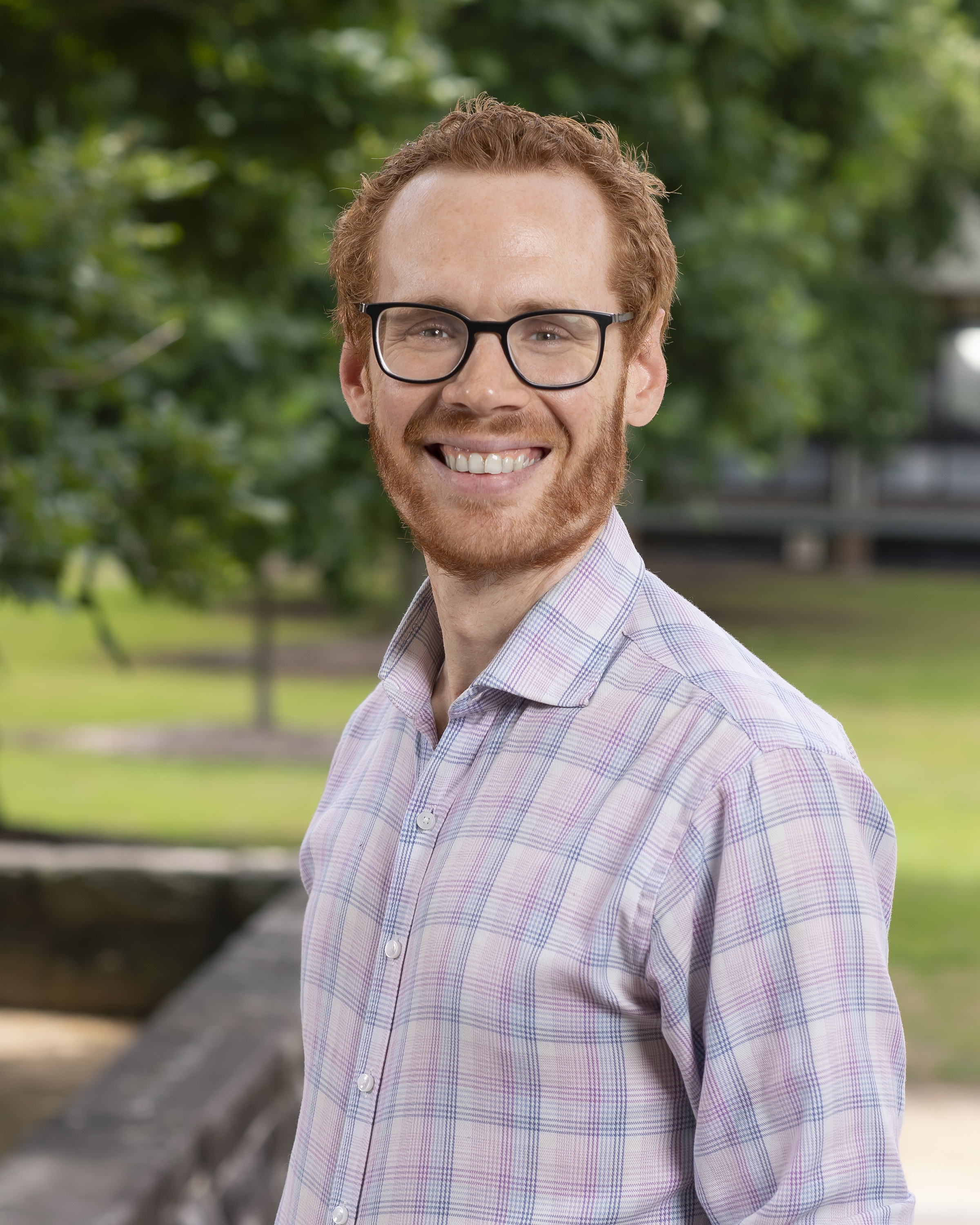
Prof. Andrew Zhang is a Professor at the School of Electrical and Data Engineering, University of Technology Sydney (UTS). He leads the UTS Radio Sensing and Pattern Analysis (RaSPA) Lab and serves as Technical Director of the UTS-TPG Network Sensing Lab. His research focuses on integrated sensing and communications (ISAC), wireless signal processing, and autonomous vehicular networks. He holds a PhD from the Australian National University and has over 15 years of industry experience, including roles at CSIRO and ZTE Corp. Education: B.S. (Xi’an Jiaotong University), M.Sc. (Nanjing University of Posts and Telecommunications), Ph.D. (Australian National University). Research Interests: ISAC, radio sensing, machine learning for communications, and 6G waveform design. Key projects include developing perceptive mobile networks and flood/storm sensing via ISAC. Publications: Over 290 papers, 5 patents, and notable works on ISAC frameworks, joint communication-sensing systems, and mmWave technologies. Recent trends emphasize ISAC, 6G waveforms, and IoT integration with federated learning. Awards: CSIRO Chairman’s Medal, Australian Engineering Innovation Award, and multiple best paper awards. Active in IEEE leadership roles, including Editor-in-Chief of ISAC-Focus. Grants: ~$8M in research funding. Advises on ISAC-ETI initiatives and collaborates with industry partners like TPG Telecom. Labs: RaSPA Lab (radio sensing analytics) and UTS-TPG Lab (ISAC industrial solutions).
Prof. Jian Zhang is a Professor in the School of Electrical and Data Engineering at the University of Technology Sydney (UTS), specializing in computer vision, pattern recognition, and multimedia signal processing. He leads the Multimedia Data Analytics Lab at the Global Big Data Technologies Centre, focusing on agri-food sector applications such as livestock monitoring and AI-driven solutions for agricultural efficiency. Education : PhD, School of Information Technology and Electrical Engineering, University of New South Wales, 1999 MSc, The Flinders University of South Australia, 1994 BSc, East China Normal University, 1982 Research Interests : His work spans 2D/3D computer vision, large-scale image/video analytics, and cross-disciplinary projects in agriculture and remote sensing. He has pioneered AI systems for livestock counting, poultry welfare monitoring, and fish quality assessment, funded by organizations like Meat & Livestock Australia and Australian Eggs. Grants & Projects : Current projects include AI-based hen health monitoring ($5M+ funding since 2011) Collaborations with industry partners like Sydney Fish Market and Fremantle Port Students & Academic Leadership : Supervised 19 PhD graduates and 5 research fellows Recruiting new PhD candidates in computer vision and data analytics Labs & Teams : Director of the Multimedia Data Analytics Lab, collaborating with global experts through UTS's Distinguished Visiting Scholars program.
Dr. Zhi Chen is a Lecturer in Computing at the School of Mathematics, Physics and Computing, University of Southern Queensland, specializing in Artificial Intelligence and Machine Learning with applications spanning digital agriculture and healthcare systems. Education: Master of Information Technology (MIT), University of Queensland, 2018 PhD, University of Queensland, 2023 Research Focus: His work centers on zero-shot learning, domain adaptation, and multimodal systems, addressing core challenges in computer vision and deep learning. Current projects integrate AI with agricultural risk modeling and medical diagnostics, emphasizing real-world deployment of robust algorithms under data-scarce conditions. Publication Trends: Recent output (2022-2025) shows concentrated expertise in source-free domain adaptation and generalized zero-shot learning, with significant contributions to plant disease recognition (via mobile multimodal systems) and diabetes subgroup analysis. His work consistently appears in premier venues including AAAI, CVPR, and ACM MM, demonstrating methodological innovation applied to critical domains like climate-resilient agriculture and precision medicine. Supervision: Currently serves as Associate Supervisor for a doctoral candidate developing parametric insurance models for oyster farms to mitigate climate-related risks from king tides and extreme weather events. Awards: No scientific awards were documented in the provided materials.