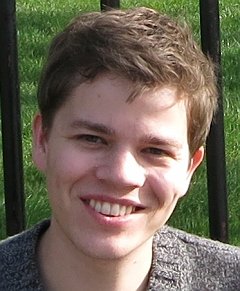
Philipp Haindl is a lecturer at the Department of Computer Science and Security at St. Poelten University of Applied Sciences. His work focuses on software engineering, cybersecurity, and AI integration in education and manufacturing. Software Engineering Cybersecurity Artificial Intelligence DevOps Quality Assurance Research Interests: Dr. Haindl explores software metrics, inter-service security in microservices, and AI tools like ChatGPT in programming education. He investigates quality models and non-functional requirements in DevOps environments. Publications: Recent work includes studies on ChatGPT's impact in software engineering education, systematic reviews of microservice security, and frameworks for human-AI teaming in manufacturing.
Benjamin Lubin is a Clinical Associate Professor in the Information Systems Department at Boston University's Questrom School of Business. He holds office 621A in the Rafik B. Hariri Building at 595 Commonwealth Avenue, Boston, MA 02215. His academic journey began with a Bachelor's degree in Computer Science from Harvard University in 1999, followed by six years working at BBN Technologies, where he contributed to advanced multi-agent modeling, scheduling, and logistics systems. He later returned to Harvard to complete his Ph.D. at the intersection of computer science, game theory, and economics. Dr. Lubin's research spans three primary areas: (1) mechanism design, particularly combinatorial auctions and exchanges that support efficient reallocation of goods with complex participant preferences; (2) application of spectral graph theory to advance social network analysis; and (3) leveraging network science and machine learning to improve healthcare delivery systems. His work demonstrates a consistent pattern of bridging theoretical computer science with practical economic applications, with recent publications showing increasing focus on healthcare applications while maintaining strong contributions to auction theory and network analysis. His research has been supported by significant funding from NIHCM and the Veterans Administration, and he has received prestigious recognition including the Siebel Fellowship and Yahoo Key Technical Challenge award. Dr. Lubin has mentored numerous graduate students including PhD candidates Vatche Ishakian, Marisabel Guevara, and Sarah Zheng, as well as Master's students Benedikt Buenz and Michael Weiss. Siebel Fellowship Yahoo Key Technical Challenge award As an educator, Dr. Lubin teaches several courses including IS 710 (Core MBA Class on Information Systems), IS 716 (Accelerated Part-Time Evening MBA), IS 717 and IS 756 (MSMBA Intensives), and QD601x (Business Experimentation on edX). His teaching materials include innovative approaches like using adventure games to teach web development and creating practical exercises for understanding analytics in business contexts. He has developed several software tools including JOpt for MIP programming, the Iterative Combinatorial Exchange market software, InvEigen for inverse eigenvector problems, SpectralGOF for network model goodness-of-fit testing, and SATS for spectrum auction instance generation.
Matthew Collinson is a Senior Lecturer in Computing Science at the University of Aberdeen, where he also serves as Head of Computing Science and Academic Line Manager. He holds an affiliation with the Scottish Informatics and Computer Science Alliance (SICSA) and leads the EPSRC-funded project SSPEDI (Supporting Security Policy with Effective Digital Intervention). Education: BSc Mathematics, University of Edinburgh (1997) MSc Mathematical Logic, University of Manchester (1998) PhD Computer Science, University of Manchester (2003) Research Interests: His research spans theoretical computer science and cybersecurity , focusing on non-classical logics (intuitionistic, modal, substructural), semantics of computation , concurrency theory , and type theory . He applies these foundations to information security , particularly in modelling security policies, access control, and the economics of cybersecurity decisions. His work integrates formal verification , simulation tools (e.g., Gnosis), and game-theoretic models . Publications Trends: Recent publications (2016–2022) emphasize human-centred security , exploring how persuasion and behavioural interventions can reduce cybersecurity vulnerabilities. Earlier works (2008–2015) concentrate on mathematical systems modelling , layered graph logics , and trust domains , bridging high-level policy and low-level system configurations. Projects & Grants: SSPEDI (2017–2020, EPSRC): Human dimensions of cybersecurity policy compliance. ALPUIS (EPSRC consortium): Algebra and logic for security policy and utility. Trust Domains (RCUK/TSB, 2011–2014): Framework for modelling secure information sharing. Seconomics (EU FP7, 2012–2015): Socio-economic impacts of cybersecurity regulation. PhD Supervision: He has successfully supervised PhD students including Kevin McDonald (2014), Barry Taylor (2015), and Robert (Bob) Duncan (2016), whose theses addressed logic-based security architectures, vulnerability analysis, and cloud stewardship respectively. Labs & Teams: His research is conducted within the Computing Science section of the School of Natural and Computing Sciences, leveraging collaborations with National Grid, HP Labs, and other academic partners.
Stefan Decker is a full University Professor (Universitätsprofessor) at RWTH Aachen University, Germany, where he heads the Chair of Information Systems and Databases (Informatik 5) within the Faculty of Mathematics, Computer Science and Natural Sciences. He is actively involved in teaching, research, and the supervision of numerous ongoing and completed doctoral, master’s, and bachelor theses. Education & Academic Background Doctorate (Dr. rer. pol.) – field of Information Systems or related (exact institution/year not stated in text). Appointed as University Professor and Chair of Information Systems and Databases at RWTH Aachen University. Research Interests Prof. Decker’s work lies at the intersection of databases, knowledge graphs, semantic web technologies, data science, and cybersecurity . He investigates architectures and algorithms for large-scale, privacy-preserving, decentralized data analytics , develops ontology-driven information systems , and explores the use of large language models (LLMs) for educational technology, anomaly detection, and incident-response playbooks. Additional focal areas include smart energy systems, mixed-reality learning environments, FAIR data principles, and federated machine learning . Scientific Contributions & Trends His recent publications (2022-2025) demonstrate a clear trend toward explainable AI, LLM-enhanced systems, secure data spaces, and semantic interoperability . Key contributions include novel anomaly-detection frameworks for encrypted power-grid communications, knowledge-graph-driven chatbots for higher-education support, and methodological advances in decentralized analytics and FAIR data sharing. These works are disseminated in top-tier venues such as AAAI, IEEE ISGT Europe, ESWC, IDEAL, and various Springer LNCS and IEEE Transactions. Supervision & Grants Doctoral Theses Advised: A. T. Neumann – “Chatbots as professional companions in large-scale community information systems” (2024) S. M. Welten – “Methods for practical data sharing and decentralized analytics” (2025) Master’s Theses Co-Advised: A. R. Küsters – “Object-centric process constraints using variable bindings” (2025) Additionally supervising more than 30 ongoing bachelor, master, and doctoral projects covering topics such as LLM-driven cybersecurity playbooks, knowledge-graph construction for German law, privacy-preserving analytics in smart grids, and mixed-reality learning agents. Principal investigator or senior researcher in large collaborative projects including NFDI4DS, WestAI, champI4.0ns and several EU/national initiatives on sovereign data spaces and AI services. Labs & Teams Prof. Decker leads the Information Systems & Databases (DBIS) Research Group . The group operates well-equipped laboratories for knowledge-graph engineering, mixed-reality applications, privacy-enhancing technologies, and secure distributed analytics . Current team size exceeds 30 researchers including PhD candidates, postdocs, and scientific programmers, supported by national and EU funding streams.
Sebastián Uchitel is a Professor at the Department of Computing, Imperial College London, UK. His research focuses on foundational aspects of Software Engineering, particularly in modeling and analysis for automated reasoning, verification of probabilistic systems, controller synthesis, and adaptive systems. He has led major research projects, including the ERC-funded IDEAS StG project on Partial Behaviour Modelling and the European FP6 SENSORIA project. Research Interests: Model-Based Software Engineering, Controller Synthesis, Probabilistic Systems, Adaptive Systems, Requirements Engineering External Roles: General Chair, International Conference on Software Engineering (2017); Associate Editor, Elsevier Science of Computer Programming; Steering Committee, International Conference on Software Engineering His recent work explores intersections between Software Engineering and AI, including assured adaptive systems and logic-based learning. A Senior Member of IEEE and Distinguished Scientist of ACM , he has received awards like the Houssay Prize (2015) and Philip Leverhulme Prize (2005). Collaborators include institutions in Argentina, Canada, and the UK. Selected Publications: 150+ peer-reviewed works spanning controller synthesis, requirements engineering, and formal methods Students: Supervised 12 PhD students since 2003 Grants: Principal Investigator for 3 major grants (2005-2016) totaling over $3.7M USD, including: 2013-2016: Technology Platform in Software Engineering (ANPCYT, $1.6M) 2009-2014: ERC IDEAS StG on Partial Behaviour Modelling (€1.4M) 2005-2008: FP6 SENSORIA Project (€0.7M)
Sanjay Modgil is a Professor of Artificial Intelligence at King's College London's School of Informatics, specializing in argumentation theory, non-monotonic logic, and AI applications in medicine. He contributes to ethical AI research aligned with UN Sustainable Development Goals. Research Interests Argumentation Theory Non-monotonic Logic Normative Reasoning Agent Reasoning AI in Healthcare Human-AI Collaboration His recent publications focus on depth-bounded reasoning, ethical debates, and large language models. He leads EPSRC-funded projects like CONSULT and RESPECT, emphasizing responsible AI technologies and multimorbidity management systems.
Elizabeth M. Belding is a Professor in the Department of Computer Science at the University of California, Santa Barbara (UCSB) and Associate Director of the Center for Information Technology and Society. She holds a Ph.D. (2000) and M.S. (1997) in Electrical and Computer Engineering from UCSB. Co-developer of AODV routing protocol (basis for IEEE 802.11s and Zigbee) Director of the Mobility Management and Networking (MOMENT) Laboratory Associate Dean and Faculty Equity Advisor, College of Engineering Her research focuses on mobile and wireless communication networks , including network performance analysis , digital equity , and information and communication technologies for development (ICTD) . She specializes in improving internet access for marginalized communities including Native American reservations, refugee camps, and rural areas in Zambia, South Africa, and Mongolia. Recent research trends include: Accurate broadband measurement in the U.S. using crowdsourced data Development of wireless solutions for underserved regions Analysis of 5G performance variability and GEO satellite latency Mapping cellular network evolution and infrastructure criticality Evaluating federal broadband funding programs (CAF, BEAD, NSF) Quantifying video streaming quality of experience (QoE) Scientific honors include: ACM Fellow (2018) IEEE Fellow (2014) AAAS Fellow ACM SIGMOBILE Test of Time Award (2018) NCWIT Harrold and Notkin Award (2015) UCSB Outstanding Graduate Mentor Award (2012) IRTF Applied Networking Research Prize (2024) She has advised 22 Ph.D. graduates from the MOMENT Lab, including Jiamo Liu (2024) and Udit Paul (2023). Current research receives funding from NSF, Bill & Melinda Gates Foundation, and industry partners like ViaSat, with emphasis on broadband deployment analysis and network solutions for challenged environments.
Michael Bronstein is a Professor at Università della Svizzera italiana (USI Lugano) in Switzerland and Imperial College London in the UK, where he holds the Chair in Machine Learning and Pattern Recognition. He serves as Head of Graph Learning Research at Twitter following the acquisition of his startup Fabula AI, and maintains a principal engineer position at Intel Perceptual Computing. His research focuses on the interplay between geometry, machine learning, and computer vision, with particular emphasis on non-Euclidean structured data. Professor Bronstein received his Ph.D. with distinction in Computer Science from the Technion in 2007. He has held visiting appointments at Stanford University, MIT, Harvard University (as a Radcliffe Fellow), and Tel Aviv University, and has been affiliated with multiple Institutes for Advanced Study including TUM-IAS where he was a Rudolf Diesel Industry Fellow (2017). He is a Fellow of IAPR, Senior Member of the IEEE, and a member of the Young Academy of Europe. His research program centers on theoretical and computational methods in spectral and metric geometry applied to computer vision, pattern recognition, and machine learning. He pioneered the field of geometric deep learning, developing novel neural network architectures that process non-Euclidean data structures like graphs and manifolds. His work spans from theoretical foundations to practical applications, with over 100 publications in top scientific journals and conferences, and has been featured in international media including CNN. Analysis of his recent publications reveals a strong trajectory in geometric deep learning with applications spanning computer vision, 3D shape analysis, social network analysis, and bioinformatics. His research consistently bridges theoretical innovation with real-world applications, developing novel neural architectures for processing complex data structures. The work demonstrates increasing interdisciplinary reach, connecting machine learning with fields from particle physics to molecular biology. Dalle Molle Prize (2018) Royal Society Wolfson Research Merit Award (2018) ERC Proof of Concept Grant (2018) Amazon AWS Machine Learning Research Award (2018) Fellow, International Association for Pattern Recognition (IAPR) Google Faculty Research Award (2017) Radcliffe fellowship, Harvard University (2017) Rudolf Diesel industrial fellowship, TU Munich (2017) ERC Consolidator Grant (2016) World Economic Forum Young Scientist (2014) Professor Bronstein has secured multiple ERC grants (Starting Grant 2012, Proof of Concept Grants 2016 and 2018, Consolidator Grant 2016) and has mentored numerous students who have contributed to over 30 granted patents. He has chaired more than a dozen conferences and workshops in his field and served as area chair at major computer vision conferences including ECCV 2016 and ICCV 2017. His research group at USI Lugano collaborates extensively with industry partners including Intel and Twitter. As a serial entrepreneur, Professor Bronstein co-founded Novafora (2005-2009) developing large-scale video analysis, Invision (2009-2012) which created low-cost 3D sensors and was acquired by Intel, and Fabula AI (2018-2019) focused on fake news detection which was acquired by Twitter. His work bridges theoretical research with commercial applications, with his technology contributing to Intel RealSense and Twitter's graph learning infrastructure.
Jia Di serves as Professor and Department Head of the Department of Electrical Engineering and Computer Science at the University of Arkansas, holding the Rodger S. Kline Endowed Leadership Chair. He has been with the institution since 2004, progressing from Assistant Professor to his current leadership position within the College of Engineering. Education: B.S. in Automatic Control, Tsinghua University (1997) M.S. in Automatic Control, Tsinghua University (2000) Ph.D. in Electrical and Computer Engineering, University of Central Florida (2004) Research Focus: Dr. Di's work centers on asynchronous integrated circuit design and hardware security , with emphasis on Multi-threshold Null Convention Logic (MTNCL) for ultra-low-power secure systems. His research spans hardware Trojan detection, polymorphic logic gates, extreme environment electronics, and security solutions for IoT infrastructure. His Trustable Logic Circuit Design Lab has pioneered techniques for side-channel attack mitigation and cold boot attack prevention through self-destructive memory mechanisms. Publication Trends: Recent publications reveal a strategic shift toward hardware security applications for renewable energy systems and IoT edge devices, while maintaining core expertise in asynchronous circuit design. His work increasingly integrates machine learning (e.g., graph neural networks for hardware Trojan detection) and cross-platform verification frameworks, demonstrating evolution from pure circuit design to holistic cybersecurity solutions for critical infrastructure. Scientific Recognition: Senior Member of IEEE Eminent Member of Tau Beta Pi Elected Member of the National Academy of Inventors Research Leadership: Dr. Di has secured over $23 million in research funding for his Trustable Logic Circuit Design Lab, supporting development of 6 U.S. patents and two authoritative books. His lab collaborates with federal agencies and industry partners on hardware security challenges, with recent grants focusing on photovoltaic system protection and extreme-environment electronics. While specific student names aren't documented here, his extensive publication record indicates significant graduate mentorship in hardware security and asynchronous design. Lab Infrastructure: The Trustable Logic Circuit Design Lab maintains specialized capabilities for testing circuits in extreme environments (high temperature/radiation) and developing polymorphic security mechanisms. Current projects include RF aperture security, hardware-based IoT verification systems, and digital twin implementations for power electronics with integrated trust verification.
Heather Miller is a tenure-track Assistant Professor in the Software and Societal Systems Department within Carnegie Mellon University's School of Computer Science. Her academic journey includes prior roles as an Assistant Clinical Professor at Northeastern University's College of Computer and Information Science and as Executive Director of the Scala Center at EPFL. Miller's research centers on distributed and concurrent computation through the lens of programming languages, with particular emphasis on data-centric systems, big data processing, and edge computing. A defining theme throughout her work is composability - enabling construction of complex distributed systems through composition of components that are correct by construction. Her projects span distributable closures, flexible serialization techniques, futures and promises for asynchronous programming, and deterministic concurrent dataflow models. Her recent publications demonstrate strong trends in applying programming language theory to practical distributed systems challenges, with increasing focus on WebAssembly instrumentation, microservice resilience, and language model pipelines. This evolution reflects her commitment to bridging theoretical foundations with real-world system requirements. Dahl-Nygaard Junior Prize (2023) Mentorship forms a significant component of Miller's academic work. She actively supervises multiple PhD, MS, and undergraduate researchers at CMU, including Christopher Meiklejohn, Matthew Weidner, Huairui Qui, Ria Pradeep, and Luke Dramko. Her service contributions span numerous top-tier conferences including PLDI, SPLASH, ECOOP, and ICSE where she has served as committee member, chair, and keynote speaker. Miller co-founded the Curry On conference to foster industry-academia dialogue, hosting successful editions in Prague, Rome, Barcelona, Amsterdam, and London. She leads research groups focused on distributed programming models and maintains strong industry connections through Two Sigma, where she holds an affiliation. Her work consistently emphasizes practical open-source implementations, primarily within the Scala ecosystem where she's been a core contributor since 2011.
Dr. Mohammad Saidur Rahman is a Lecturer in Computing Technologies at RMIT University's School of Computing Technologies. His research focuses on Data Security and Privacy, Blockchain, IoT, and Machine Learning. He joined RMIT as a Lecturer in July 2023 and previously held a Postdoctoral Research Fellow position from January 2020 to August 2022. His academic work includes supervising projects such as Advanced Automotive Intrusion Detection and Prevention Systems and Privacy-Preserving Models in Edge-Cloud Interplay for Smart Systems . He teaches courses like Introduction to Cyber Security (INTE2625) and Computer and Internet Forensics (COSC 2301). His research emphasizes secure IoT integration, blockchain applications in supply chain and healthcare, and privacy-preserving machine learning frameworks. Rahman has published extensively on blockchain-based systems for smart cities, edge computing, and industrial IoT security. His contributions span technical innovations in consensus protocols, federated learning frameworks, and data integrity models. He is open to supervising Masters and PhD students in Cyber Security, IoT, and Blockchain domains.
Mauro Barni serves as a Full Professor in the Department of Information Engineering and Mathematical Sciences at the University of Siena, where he teaches Cybersecurity, Information Theory, and Mathematical Statistics. His office hours are held Fridays from 3:00 PM to 5:00 PM via online appointment, reflecting his active engagement with students. Professor Barni's research spans multimedia security and digital forensics, with emphasis on deep learning applications for digital watermarking, deepfake detection, and synthetic image attribution. His work addresses critical challenges in adversarial machine learning, steganography, and image manipulation detection, contributing significantly to cybersecurity and intellectual property protection frameworks. Analysis of his 2021-2025 publications reveals dominant trends in neural network watermarking robustness, synthetic media detection, and defenses against backdoor attacks. His research consistently bridges theoretical foundations with practical implementations, focusing on real-world applications like printer source attribution and physical-domain adversarial scenarios. He leads the VIPP (Vision, Image Processing, and Pattern Recognition) research group, which maintains dedicated virtual classrooms for collaborative projects in computer vision and multimedia security. The group actively develops methodologies for image forensics, synthetic media analysis, and security countermeasures against emerging threats.
Benjamin Lucien Kaminski is a Professor at Saarland University and a Lecturer at University College London . He specializes in quantitative aspects of formal program verification , with a focus on probabilistic and quantum programs , incorrectness logic , and non-classical computation models . His research includes semantics , probabilistic program verification , expected runtimes , and explainable verification . He leads the Examination Board for B.Sc. Computer Science (English) and actively mentors PhD, Master’s, and Bachelor’s students in logic and verification. 2025 : A Taxonomy of Hoare-Like Logics (POPL), Partial Incorrectness Logic (TPSA) 2024 : Quantitative Weakest Hyper Pre (OOPSLA), Caesar: A Verifier for Probabilistic Programs (Dafny), Hoare-Like Triples (Incorrectness-track) 2023 : A Deductive Verification Infrastructure (OOPSLA), Lower Bounds (OOPSLA), A Calculus for Amortized Expected Runtimes (POPL) He has received notable awards including the Ackermann Award (2020), Best Paper at LOPSTR 2020 , and EATCS Best Paper Award at ETAPS 2016 . He has also served on program committees for leading conferences like CAV , POPL , and LICS , and reviewed for prestigious journals such as Journal of the ACM and TOCL .
Dr. Thangavel Thevar is a Senior Lecturer in the School of Engineering at the University of Aberdeen, where he has been teaching since 2005. He completed both his undergraduate degree (First Class Honours in Electrical Engineering) and PhD (in Laser Engineering) at the University of Aberdeen in 1989 and 1993 respectively. Prior to his academic career, he accumulated approximately 10 years of industrial R&D experience in the USA, working on solid-state laser development and holographic applications. Dr. Thevar's research focuses on several key areas: Digital holography for imaging of marine plankton and micro-particles Laser Induced Breakdown Spectroscopy (LIBS) for subsea applications Laser-based instrumentation development Development of solid-state lasers for scientific, industrial, and medical applications Engineering applications of holography His most notable recent achievement is leading a team that developed the weeHoloCam, a state-of-the-art ultracompact underwater holographic camera for imaging microorganisms. Weighing just 3.5 kg, this system is the lightest and most compact of its kind, capable of imaging 240 ml/s and continuously recording up to 200,000 holograms. The system incorporates a rapid hologram processor and an AI-based image classifier. This technology has significant applications in marine studies including spatial and temporal monitoring of plankton species, monitoring harmful plankton & micro-jellyfish, study of vertical transport of floc, and monitoring microplastic pollution in the ocean. Dr. Thevar has secured numerous research grants as Principal Investigator, including projects funded by Sustainable Aquaculture Innovation Centre (SAIC), BBSRC, DEFRA, and Defence & Security Accelerator (DSTL). His current research portfolio demonstrates strong interdisciplinary connections between optical engineering, marine science, and environmental monitoring. His scientific contributions include: Royal Academy of Engineering Visiting Teaching Fellow Award (2010-2013) US patent 8,494,012 B2 for Raman converters Development of alexandrite lasers and ruby holographic lasers during his industrial R&D period Work on US government contracts for non-destructive inspection methods for military aircraft and the space shuttle Sabbatical work at NASA Langley Research Centre developing diode pumped Thulium YALO lasers As an educator, Dr. Thevar has served as Coordinator of MSc Oil & Gas Engineering (2007-2020), Undergraduate Level 1 Coordinator, and has contributed to various committees including Quality Assurance and Students' Progression. He currently teaches courses including Principles of Electronics, Electrical & Mechanical Systems, Control Systems, and supervises individual projects at both undergraduate and postgraduate levels. He is accepting PhD students interested in Engineering research. Dr. Thevar is actively involved in professional organizations, serving as Technical Programme Chair for IEEE/OES Oceans Conference 2007, on organizing committees for various conferences, as a committee member of the Instrument Science and Technology Group (Institute of Physics), and as a member of both IET and IEEE. He also serves as a reviewer for optics-based journals.
Kanad Basu is an Associate Professor in the Department of Electrical, Computer, and Systems Engineering at The University of Texas at Dallas, Jonsson School of Engineering and Computer Science. He leads the Trustworthy and Intelligent Embedded Systems (TIES) lab, focusing on hardware security, reliability, and emerging computing paradigms. His research spans AI hardware, quantum computing, functional safety, and hardware-based security validation. Research Interests: His work emphasizes improving the trustworthiness of modern hardware systems. Key areas include hardware security (e.g., side-channel analysis, hardware trojans), functional safety in AI accelerators, quantum computing security and verification, and post-silicon validation techniques. He combines formal methods, machine learning, and hardware design to address vulnerabilities in SoCs, DNN accelerators, and quantum systems. Publication Trends: Recent publications (2023–2025) show a strong focus on interdisciplinary research, integrating AI/ML with hardware security, quantum computing, and functional safety. There is a growing emphasis on using large language models for assertion generation, symbolic execution for hardware fuzzing, and graph neural networks for quantum circuit analysis. His work frequently appears in top venues like DAC, DATE, HOST, ISVLSI, and IEEE journals. Scientific Awards: NSF CAREER Award, 2025 IEEE Top Picks in Test and Reliability, 2024 and 2023 Multiple Hack@DAC Prizes (2nd and 3rd) Best Paper Award at VLSI Design 2011 Assistant Professor Award at UTD Jonsson School, 2024 Nominated for Blavatnik Awards for Young Scientists, 2019 Advising and Grants: Dr. Basu has mentored numerous PhD, MS, and undergraduate students, many of whom have published in top-tier venues. He leads the TIES lab, which has received significant recognition, including the NSF CAREER Award. He actively collaborates across disciplines, advising students on topics ranging from quantum computing to AI hardware and functional safety. His lab produces high-impact research with real-world applications in automotive, cloud, and embedded systems. Labs and Teams: He leads the Trustworthy and Intelligent Embedded Systems (TIES) lab at UT Dallas, which fosters innovation in hardware security and reliability. The lab has produced award-winning work, including second prize at HACK@DAC 2025. He also serves on technical committees for IEEE DATE and HOST, and acts as Hardware Hacking Chair for IEEE HOST, indicating strong leadership in the hardware security community.