Sami Repo is a Professor in Electrical Engineering, focusing on power distribution systems and smart energy technologies. His work spans distribution network automation, flexibility services, and integration of distributed energy resources. Doctor of Science (Technology) in Electrical Engineering (2001) Master of Science (Technology) in Electrical Engineering (1996) His research interests include smart grids, congestion management, and cyber-physical energy systems. Recent publications address challenges in electric vehicle charging, green hydrogen regulation, and photovoltaic revenue optimization. He serves as an examiner and doctoral dissertation opponent, contributing to academic evaluation in electrical engineering programs. Key subtopics include EV charging control, EU energy policy, and renewable energy integration. Examiner for Wenlong Liao (2023): Modelling and optimization of active distribution networks Opponent for Etherden Nicholas (2012): Distributed energy resource hosting capacity
Gary Grewal is an Associate Professor at the School of Computer Science , University of Guelph. His research focuses on developing intelligent Computer-Aided Design (CAD) tools for Field Programmable Gate Arrays (FPGAs) , integrating classical optimization techniques with machine learning and deep learning to address challenges in placement and routing for heterogeneous devices. He has received the Michal Servit Award (2017, 2018) for outstanding FPGA research and the University of Guelph Faculty Association Distinguished Professor Award for Excellence in Teaching (2017) . Grewal has held NSERC Discovery Grants annually from 1999 to 2023. Co-founder of the Guelph FPGA CAD Group Key collaborator with institutions like Ryerson University , University of Toronto , and University of British Columbia His work extends to health technology through the IronTracker mobile app , developed with Andrew Hamilton-Wright and students (A. D'Angelo, J. Carter, F. Liu, R. Pattison) to manage Hereditary Hemochromatosis (HHC) . The app, available in four languages and adopted in 100+ countries, was recognized at Parliament Hill and the Ontario Legislature. Scientific Awards : Michal Servit Award (2018) Michal Servit Award (2017) Distinguished Professor Award for Teaching (2017) NSERC Discovery Grants (1999-2023) His recent publications highlight trends in machine learning for FPGA CAD , including reinforcement learning for partitioning, deep learning for congestion estimation, and adaptive algorithms for placement. Grewal remains active in teaching courses like Discrete Optimization (CIS*6070) and Digital Systems I (CIS*3120).
Sean Robson is a Professor of Policy Analysis at the RAND School of Public Policy and a Senior Behavioral/Social Scientist at the RAND Corporation. He serves as Associate Director of the Workforce, Development, and Health Program within RAND Project AIR FORCE, where he leads research on manpower, personnel, training, and readiness issues for the U.S. military. Robson holds a Ph.D. in industrial-organizational psychology from the University of Tulsa and a B.S. from James Madison University. His research expertise lies in the scientific validation of assessment and selection systems, physical and psychological fitness standards, and workforce development in military contexts. His research interests span military education and training, operational readiness, gender integration in the military, workforce diversity, enlisted personnel management, leadership, and competency modeling. He has led numerous projects to establish evidence-based physical fitness tests for Air Force Special Warfare and combat specialties in the Army, and has contributed to reforms in recruiting, classification, and resilience programs. Recent publications highlight a strong trend in applying data science, machine learning, and policy analysis to improve human resource management in the Air Force and Department of Defense. His work increasingly integrates artificial intelligence and optimization models to modernize workforce systems, while maintaining a core focus on human performance, resilience, and readiness. Assessment and selection for special operations Physical and behavioral fitness standards Military workforce development Machine learning in HR STEM talent in defense Robson has made significant contributions through RAND’s research portfolio, with over 37 research publications and multiple expert insights. His scientific work informs high-level defense policy and operational practices, particularly in the U.S. Air Force and Army. He has also advised on diversity initiatives, abuse prevention in training, and energy-sector workforce development. He is actively involved in current defense research, with recent and forthcoming publications in 2024 and 2025, indicating ongoing leadership and scholarly impact. He is based at RAND and can be contacted at Sean_Robson@rand.org.
Professor Timothy Walsh serves as Chair of Critical Care at the University of Edinburgh's Usher Institute within the College of Medicine and Veterinary Medicine. He concurrently holds the position of Director of Innovation for NHS Lothian and Health Innovation South East Scotland, bridging academic research with clinical implementation. His dual roles position him at the forefront of critical care research and healthcare innovation in the UK. Walsh's research spans critical and perioperative care, with a programmatic approach building complex multi-center trials. His work integrates epidemiology, systematic reviews, cohort studies, and stakeholder engagement to develop pragmatic trials. Recent focus includes AI algorithm validation, sedation protocols, transfusion medicine, and sepsis management. His fingerprint reveals deep expertise in Intensive Care Medicine (100%), Intensive Care Unit operations (74%), and Critical Illness (70%), with notable contributions to sedation research (35%) and sepsis (26%). His 221 research outputs include high-impact publications in NEJM, JAMA, and The Lancet. Current projects like the SHORTER antibiotic trial and aerosolized virus quantification study demonstrate ongoing leadership in trial methodology. As Director of Innovation for NHS Lothian (2018-2024), he established data-driven innovation frameworks connecting academic and industry partners to address NHS challenges. Walsh has secured £9 million as Chief Investigator and £34 million as co-applicant from NIHR, MRC, Wellcome, and industry sources. His leadership extends to founding the NIHR critical care specialty group (2007-15) and UK critical care research group (2007-16), which remain foundational to UK critical care research infrastructure. Trustee at Chest Heart & Stroke Scotland (2021-present) Director of Research & Development for NHS Lothian (2017-2021) Chair of 19 trial steering/data safety monitoring committees Leadership in 13 ECTU trials, 9 UK trials, and multiple international studies
Ibrahim Demir serves as an Adjunct Associate Professor in the Department of Civil and Environmental Engineering at the University of Iowa's College of Engineering, while also holding an Associate Faculty Research Engineer position at IIHR—Hydroscience and Engineering. His interdisciplinary work bridges hydroinformatics, environmental engineering, and advanced computing technologies to address critical water resources challenges through innovative digital solutions. His educational background includes a PhD in Environmental Informatics and Control Program from the University of Georgia (2010), an MS in Environmental Engineering from Gebze Institute of Technology (2004), and a BS in Chemistry from Bogazici University (2000). This foundation supports his integration of chemical, environmental, and computational sciences in hydrological research. Dr. Demir's research centers on hydroinformatics and AI-driven environmental systems, with core expertise in scientific visualization, cyber systems design, and virtual/augmented reality applications. He develops web-based frameworks for flood risk assessment, drought analysis, and water quality management, emphasizing real-time data integration and user-friendly interfaces. Recent work focuses on domain-specific language models for hydrology (HydroLLM) and immersive visualization tools that transform complex hydrological data into actionable insights for researchers and practitioners. Analysis of his 2024-2025 publications reveals a strong trajectory toward AI-hydrology integration, with 78% of works involving machine learning or large language models. Key themes include flood risk communication (22% of publications), algal bloom prediction (15%), and educational technology applications (12%). His research increasingly emphasizes scientific reproducibility through no-code visual programming frameworks and digital twin implementations for watershed systems. Dr. Demir actively contributes to scholarly discourse as Associate Editor for Environmental Modeling and Software, Journal of Hydroinformatics, Journal of Environmental Informatics, and Water and Artificial Intelligence (Frontiers in Water). He serves as Vice-Chair of the International Joint Committee on Hydroinformatics (IAHR/IWA/IAHS) leadership team, shaping global standards in hydroinformatics research and practice. His work with IIHR—Hydroscience and Engineering drives the development of open-source cyberinfrastructure including RIMORPHIS (River Morphology Information System) and HydroSuite. These platforms enable collaborative river morphology research and provide modular tools for hydrological analysis, education, and operational decision support, demonstrating his commitment to accessible, community-driven scientific advancement.
Dr. Jia Rao is an Associate Professor in the Department of Computer Science and Engineering at the University of Texas at Arlington, College of Engineering. He previously served as an Assistant Professor at the University of Colorado, Colorado Springs from 2012 to 2016. His research spans operating systems, distributed and parallel computing, cloud computing, virtualization, and machine learning. Education: Ph.D., Computer Engineering, Wayne State University, 2011 M.S., Computer Science, Wuhan University, 2006 B.S., Computer Science, Wuhan University, 2004 Dr. Rao's research focuses on building adaptive, scalable, and efficient computer systems for cloud and data center environments. His interests include resource management, performance modeling, adaptive scheduling, and quality-of-service (QoS) guarantees in virtualized and containerized systems. He combines machine learning and feedback control techniques with low-level system design to improve efficiency, fairness, and predictability in heterogeneous and multi-tenant environments. An analysis of his recent publications reveals a strong trend toward memory and resource management innovations in cloud-native systems. His work explores tiered memory architectures, secure container deployment, preemptive multitasking for deep learning, and efficient packet processing in container networks. These efforts reflect a consistent focus on optimizing system-level performance, security, and scalability in modern data centers. Scientific Awards: NSF CAREER Award (2019) Best Paper Award, APSys (2016) Best Paper Award, ICAC (2013) Best Paper Nomination, HPCA (2013) Best Paper Nomination, HPDC (2013) Best Paper Award, Middleware (2021) Researcher of the Year, UCCS (2014) Dr. Rao actively advises students and serves on dissertation and thesis committees for numerous Ph.D. and Master’s candidates. He leads federally funded research projects supported by the National Science Foundation, including a major CAREER grant on virtualized architectures and collaborative big data initiatives. His research has been sponsored by NSF, IEEE, and Intel Corporation, reflecting strong industry and academic collaboration. He leads and contributes to major research labs and teams focused on cloud systems, operating systems, and performance optimization. His team has produced high-impact work in top-tier venues such as OSDI, SOSP, ATC, EuroSys, and ICDCS. Current and future work includes next-generation memory architectures using CXL, intelligent resource provisioning, and resilient container networking.
Juan Wachs is the James H. and Barbara H. Greene Professor at the Edwardson School of Industrial Engineering, Purdue University. He holds a courtesy appointment in Biomedical Engineering and is an Adjunct Professor of Surgery at the IU School of Medicine. His research focuses on the intersection of robotics, human-AI interaction, and healthcare systems, with a particular emphasis on surgical robotics, assistive technologies, and telemedicine. Education: PhD in Industrial Engineering (Intelligent Systems), Ben-Gurion University of the Negev MSc in Industrial Engineering (Information Systems), Ben-Gurion University of the Negev BEdTech in Electrical Education, ORT Academic College in Jerusalem Research interests include surgical telementoring via augmented reality, gesture-based interfaces for sterile environments, and semi-autonomous robotic systems for healthcare. His ISAT Lab develops solutions like the STAR telementoring system and robotic assistants like Gesturenurse and FIST-D for explosive ordnance disposal. Recent work emphasizes AI-driven medical decision support (Trauma THOMPSON), burn wound characterization, and robotic ultrasound automation. Key contributions include over 100 publications in robotics, medical AI, and human factors. Scientific Awards: James H. and Barbara H. Greene Professorship Purdue University Faculty Scholar Advising & Labs: Guides over 10 PhD/Master’s students in robotics and healthcare tech ISAT Lab fosters interdisciplinary projects in surgical robotics, human-robot interaction, and accessibility
Junjie Qin is an Assistant Professor of Electrical and Computer Engineering at Purdue University’s Elmore Family School of Electrical and Computer Engineering. His research focuses on control systems, optimization, market design, and data analytics applied to power systems and the energy-transportation nexus. He explores challenges in distributed energy resource management, smart grid technologies, and the integration of renewable energy sources. His work addresses issues such as scheduling under limited observability, neural risk-limiting dispatch, and joint optimization of transportation-energy systems through electric vehicle charging strategies. Key research areas include power system stability, inverter-dominated grid dynamics, and machine learning applications in energy systems. He investigates topics like real-time charging control for electric roadways, loss function selection in learning-based optimal power flow, and pricing mechanisms for workplace EV charging. His contributions span theoretical frameworks and practical algorithms, emphasizing data-driven solutions and system-level optimization. While no awards or grants are explicitly listed, his publications reflect a strong focus on advancing smart grid technologies and sustainable energy systems. His advising activities are not detailed here, but his research group likely engages in cutting-edge projects at the intersection of control theory and energy infrastructure.
Dr. Shulin (Stanley) Chen is a Lecturer at the University of Technology Sydney (UTS), specializing in antennas and applied electromagnetics. He holds a PhD from UTS (2019) and has held postdoctoral and visiting scholar positions at UTS and City University of Hong Kong. His research focuses on metasurfaces, reconfigurable antennas, and machine learning-driven design, supported by prestigious awards like the DECRA (2025) and IEEE AP-S Fellowship (2022). He serves as an Associate Editor for IEEE Transactions on Circuits and Systems II and has authored over 75 publications. His work spans advanced beam-forming antennas for 6G, frequency-controlled polarization systems, and intelligent metasurface design. Education: B.S. in Electrical Engineering, Fuzhou University (2012) M.S. in Electromagnetic Field & Microwave Technology, Xiamen University (2015) PhD in Electrical Engineering, UTS (2019) Research Interests: Metasurfaces for electromagnetic wave manipulation Reconfigurable antennas for 6G networks Machine learning in antenna design Joint communication and sensing systems Awards & Grants: DECRA (2025), TICRA-EurAAP Travel Grant (2022) Lead projects on intelligent redirecting surfaces and flood sensing (funded by Telstra, NSW Department of Planning, etc.) Labs & Teams: Active in UTS's Global Big Data Technologies Centre and collaborates with industry partners like XPOWER AI and TPG Telecom.
Ben Collier is an Assistant Teaching Professor of Business Analytics at the Tepper School of Business , Carnegie Mellon University. He holds a PhD in Information Systems and Organizational Behavior from Carnegie Mellon and has extensive experience in data science leadership roles in industry. PhD, Information Systems and Organizational Behavior (2012), Carnegie Mellon University MS, Information Systems and Organizational Behavior (2009), Carnegie Mellon University MBA, Information Systems (2007), University of Wisconsin-Madison BBA, Management Computer Systems and Mathematics (2004), University of Wisconsin-Whitewater His research focuses on data mining for business , data visualization , and large-scale experimental design , with applications in healthcare analytics, online community dynamics, and gender equity in technology. His recent work includes monetization data science for Duolingo's $6.5 billion IPO and developing UPMC's CognitiveRx analytics engine. Ben's publications span topics including gender gaps in Wikipedia , leadership in open collaboration communities , and conflict resolution in crowdsourced platforms . He has served on CMU committees for curriculum review and summer summit planning, and actively advises MSBA capstone projects.
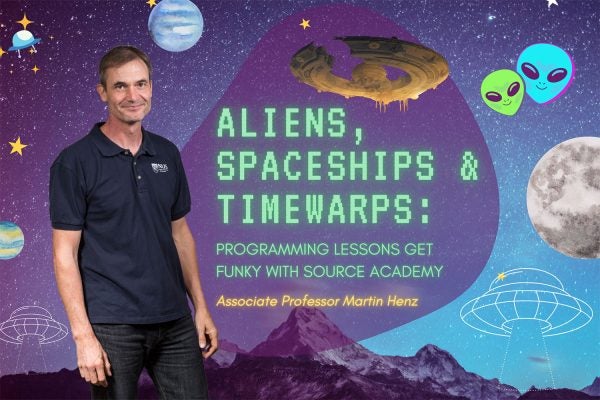
Martin Henz is an Associate Professor at the National University of Singapore , affiliated with the School of Computing and its Department of Computer Science . His academic journey includes an M.Sc. in Computer Science from Stony Brook University (1993) and a Dr.rer.nat. in Computer Science from Saarland University (1997). He has also worked as a Research Scientist at the German Research Centre for Artificial Intelligence. Research Focus : Scalable Experiential Learning, Systems for Teaching/Learning, AI in Education, Programming Languages, Algorithms, and Constraint Programming. Key Projects : Source Academy (immersive programming environment), Deep Teaching (LMS enhancements), and NUS Seafarers (maritime experiential learning). Publications span education technology, programming languages, and sustainable engineering, with recent works focusing on JavaScript-based pedagogy, automated question generation, and electric vehicle conversions. He supervised Rahul Singhal 's PhD, leading to the educational startup Cerebry, and co-founded Workforce Optimizer Pte Ltd with Alan Sevugan. Awards : NUS Annual Digital Education Award (2021) NUS Annual Teaching Excellence Award (2016/17) Fulbright Scholarship (1990) Startup @ Singapore Champion (2001)
Alexandru G. Bardas is an Associate Professor at the University of Kansas in the Department of Electrical Engineering & Computer Science (EECS) and the Institute for Information Sciences (I2S) . He received his PhD from Kansas State University under advisors Xinming (Simon) Ou and Scott A. DeLoach. His research focuses on cybersecurity from a systems perspective , including moving target defenses, security operations center (SOC) metrics, DevOps security, power grid cybersecurity, and defensive technologies for political activists. He explores UDP-based DDoS detection, DNS traffic analysis, and the intersection of AI with cybersecurity, emphasizing foundational knowledge over tool-specific training. Key research areas: Cybersecurity, Systems Security, Moving Target Defenses, SOC Metrics, DevOps Security Recent publications in ACSAC 2024 , USENIX Security 2024/2023 , and IEEE Security & Privacy 2022 Dr. Bardas has received significant recognition including: NSF CAREER Award (2022) for SOC automation Bellows Scholar (2021) at KU NSA SoS Honorable Mention (2023) He actively advises students across disciplines, with graduates now at Sandia National Laboratories , Blue Cross Blue Shield , and Pacific Northwest National Laboratory . Dr. Bardas participates in NSF grant reviews , serves on program committees for SOUPS and MILCOM , and leads outreach initiatives like the GenCyber Summer Camp .
Dr. Indratmo is an Associate Professor and Chair of the Department of Computer Science at MacEwan University. He holds a PhD from the University of Saskatchewan, an M.Sc. from the University of Manitoba, and a B.Eng. from Petra Christian University. His research focuses on information visualization, human-computer interaction, and social computing, with a particular emphasis on developing tools for analyzing social media data. He has contributed to projects like a visual analytical tool for sentiment analysis in Edmonton's traffic-related social media data and studies on multimedia content effectiveness in communication strategies. Indratmo teaches a range of computer science courses, emphasizing student engagement through transparent pedagogical practices. His work bridges technical innovation with social impact, aiming to enhance communication strategies for organizations through data-driven insights. He has published extensively in journals like Big Data Research and Visual Informatics , and his research spans topics from educational visualization tools to smart mirror applications and geospatial heritage systems. Outside academia, he enjoys outdoor activities in the Canadian Rockies. Notable collaborations include work on stacked bar chart efficacy, web-based course registration models, and exploratory browsing frameworks. His research portfolio demonstrates a commitment to both theoretical advancement and practical applications in computing.
Miguel F. Anjos is Professor and Chair of Operational Research at the School of Mathematics, University of Edinburgh , and holds the NSERC-Hydro-Québec-Schneider Electric Industrial Research Chair on Optimization for Smart Grids at Polytechnique Montréal. He received his B.Sc. (1992), M.S. (1994), and Ph.D. (2001) from McGill, Stanford, and Waterloo respectively. Research Theme Head of Data and Decisions at Edinburgh Founding Director of Trottier Institute for Energy Editor-in-Chief of Optimization and Engineering Research Interests: His work bridges mathematical optimization with smart grid applications , focusing on conic optimization, optimal power flow, demand response, and facility layout. He applies these techniques to energy storage, electric transportation, and industrial systems. Scientific Awards: Méritas Teaching Award (2012) Humboldt Research Fellowship (2009) Queen Elizabeth II Diamond Jubilee Medal (2013) Elected Fellow of EUROPT and Canadian Academy of Engineering Academic Service: Served on Mathematical Optimization Society Council, SIAM Activity Group on Optimization, INFORMS Optimization Society Vice-Chair, and Mitacs Research Review Committee. Hosts benchmark datasets: QAPLIB, FLPLIB, Jones Benchmark.
Taylor Johnson is an Associate Professor of Computer Science and Electrical and Computer Engineering at Vanderbilt University's School of Engineering. He directs the Verification and Validation for Intelligent and Trustworthy Autonomy Laboratory (VeriVITAL) and serves as a Senior Research Scientist in the Institute for Software Integrated Systems. Previously, he was an Assistant Professor at the University of Texas at Arlington from 2013 to 2016. His research focuses on formal verification techniques for cyber-physical systems (CPS), emphasizing safety, reliability, and security through hybrid systems, formal methods, and control theory. He has published extensively on neural network verification, earning best paper awards and recognition from IEEE, IFIP, and ACM. Education: Ph.D., Electrical and Computer Engineering (University of Illinois at Urbana-Champaign, 2013) M.Sc., Electrical and Computer Engineering (University of Illinois at Urbana-Champaign, 2010) B.S.E.E., Electrical and Computer Engineering (Rice University, 2008) Research Interests: Formal verification of neural networks and CPS, safety-critical systems, autonomous systems, and AI/ML security. His work bridges theoretical foundations (e.g., hybrid systems) with practical applications in aerospace, energy systems, and robotics. Key Contributions: Developed the NNV tool for neural network verification, led the Verification of Neural Networks Competition (VNN-COMP), and pioneered techniques for robust federated learning and malware detection. Awards: AFOSR YIP Award (2016), NSF CRII Award (2015), and multiple best paper honors. His research is funded by AFRL, NSF, Intel, NVIDIA, and industry partners. Labs & Collaborations: VeriVITAL Lab (Vanderbilt), collaborations with United Technologies Research Center, Boeing, and Toyota.