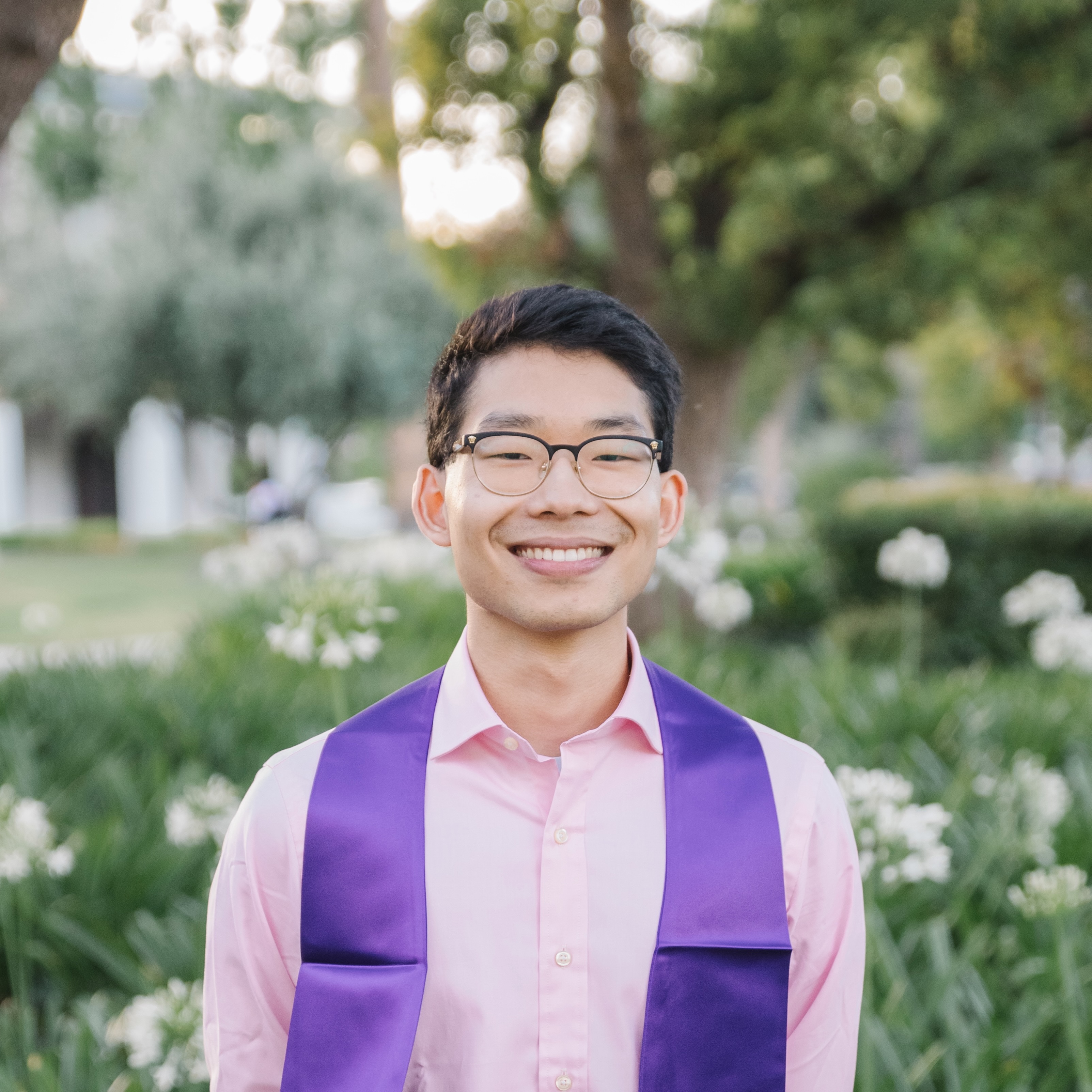
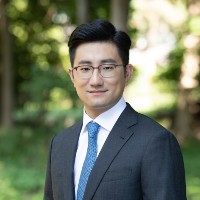
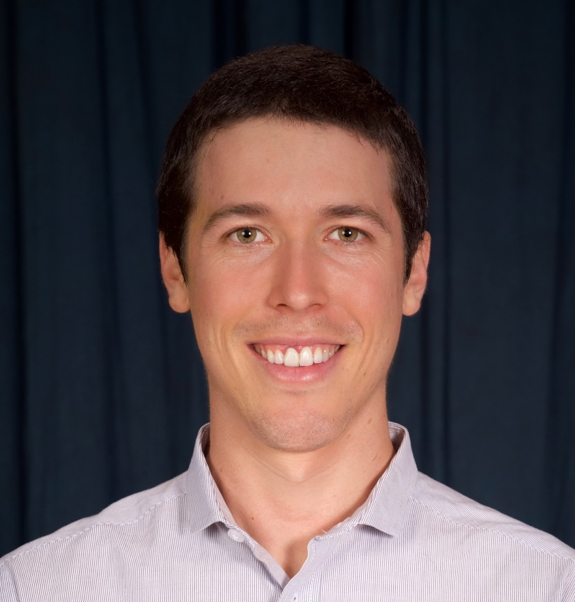
Alexander Pan is a third-year Computer Science PhD student at the University of California, Berkeley, advised by Jacob Steinhardt . His research focuses on developing safe machine learning systems, particularly sequential decision-making agents. He holds a dual bachelor's degree in Mathematics and Computer Science from Caltech, where he worked with Anima Anandkumar and Yuanyuan Shi . His recent work explores AI safety through topics like unlearning , LLM transparency , and reward hacking , with publications at premier conferences including ICML and ICLR. He has received recognition such as the FLI PhD fellowship and hackathon awards for projects like SimSquare and homES ReInvented . Scientific Awards: FLI PhD fellowship Best Social Network Hack - Stanford Hackathon 2021 Best Use of ESRI Technology - Caltech Hackathon 2020 ICML 2023 Oral Presentation
Aleksandr (Sasha) Aravkin is Associate Professor in the Department of Applied Mathematics and Adjunct Associate Professor of Health Metrics Sciences, Mathematics, and Statistics at the University of Washington. He serves as Director of Mathematical Sciences at the Institute for Health Metrics and Evaluation (IHME), where he leads the Mathematical Sciences and Computational Algorithms team and contributes to strategic direction for applying mathematical sciences to analytic challenges. Dr. Aravkin earned his PhD in Mathematics (Optimization) and MS in Statistics from the University of Washington in 2010, following a BSc in Mathematics and Computer Science in 2004. His educational background forms the foundation for his interdisciplinary research approach. His research expertise spans large scale optimization, machine learning, data science, convex and variational analysis, algorithm design, robust statistics, inverse problems, and uncertainty quantification . These methodologies are applied across diverse domains including health metrics, computational medicine, tracking and navigation, seismic imaging, computational finance, and neuroscience. Dr. Aravkin has pioneered approaches for fusing physics-based and data-driven models, enabling innovative solutions to complex problems. Dr. Aravkin's publication record demonstrates a strong focus on health metrics and Global Burden of Disease studies, with recent work emphasizing meta-analytic approaches for risk-outcome relationships. His research spans epidemiological modeling, health effects of various exposures, and forecasting disease burden across populations. The publications reveal a consistent pattern of high-impact work in top journals including The Lancet and Nature Medicine, often addressing critical public health questions through rigorous statistical and mathematical frameworks. At IHME, Dr. Aravkin has led significant projects including the Burden of Proof Studies (2019-2024) which analyzed 153 risk-outcome pairs, and COVID-19 Modeling (2020-2023) where his team developed forecasting models and excess mortality estimation methods. He has also been instrumental in developing the Evidence Score model, requiring novel algorithmic approaches. His work bridges theoretical mathematical sciences with practical applications to improve global health policy and practice.
Asuman Ozdaglar is the MathWorks Professor of Electrical Engineering and Computer Science and Department Head of EECS at MIT. She also serves as Deputy Dean of Academics for the MIT Stephen A. Schwarzman College of Computing. Her research focuses on large-scale networked systems, including optimization, game theory, social networks, and distributed algorithms. Education: BS in Electrical and Electronics Engineering from Middle East Technical University (1996), SM (1998) and PhD (2003) in Electrical Engineering and Computer Science from MIT. Research emphasizes nonlinear optimization, machine learning, and network economics. She leads work on robust algorithms, misinformation dynamics, and networked systems. Affiliated with the Laboratory for Information and Decision Systems (LIDS) and the Operations Research Center (ORC). Her contributions span theoretical and applied domains, including distributed optimization methods, social network analysis, and privacy-preserving data mechanisms. Active in shaping academic policy through her roles in the College of Computing.
Melissa C. Smith is a Professor of Electrical and Computer Engineering and Associate Dean for Graduate Studies at Clemson University. She holds a Ph.D. from the University of Tennessee and degrees from Florida State University. Her research focuses on machine learning, reconfigurable computing, and high-performance systems, with applications in embedded systems and interdisciplinary scientific advancements. Before joining Clemson in 2006, she was a research associate at Oak Ridge National Laboratory (ORNL), contributing to projects like the Spallation Neutron Source and PHENIX experiments. Education: Ph.D., Electrical and Computer Engineering, University of Tennessee M.S., Electrical Engineering, Florida State University B.S., Electrical Engineering, Florida State University Research Interests: Machine Learning and AI High-Performance and Reconfigurable Computing System Performance Modeling Embedded Systems Articles Summary: Her recent work spans machine learning applications, GPU/FPGA architectures, speech enhancement, and medical systems. Key themes include optimizing heterogeneous computing for real-time and scientific workloads, and advancing interdisciplinary solutions through architecture-application co-design. Lab & Collaborations: Leads the Future Computing Technologies Lab and collaborates with ORNL and national labs on projects like GEMmaker and HPC-enabled medical systems.
Sabine Süsstrunk is a Full Professor and Director of the Images and Visual Representation Laboratory (IVRL) at EPFL's School of Computer and Communication Sciences. She holds a BS in Scientific Photography from ETH Zürich, MS from Rochester Institute of Technology, and PhD from University of East Anglia. Her career includes positions at Hewlett-Packard Labs and Corbis Corporation. Her research explores computational imaging, computational photography, color processing, computer vision, and image quality. Key interests include near-infrared applications, multispectral imaging, and computational aesthetics. Her work bridges hardware and software solutions for imaging challenges. Publications demonstrate consistent focus on advancing generative models (diffusion models, neural cellular automata), 3D reconstruction (NeRF variants), and media integrity (DeepFake detection). Recent trends show increased emphasis on 3D vision, robustness in generative AI, and video analysis. Awards & Honors: IS&T/SPIE Electronic Imaging Scientist of the Year (2013) Raymond C. Bowman Teaching Award (2018) EPFL AGEPoly IC Polysphere Award (2020) 8 Best Paper/Demo Awards Fellowships: IEEE, IS&T, ELLIS, AIIA She leads the IVRL lab and advises PhD candidates while serving as President of the Swiss Science Council. Research is supported through competitive grants and industry collaborations.
Dr. Karthika Mohan is an Assistant Professor of Computer Science in the College of Engineering at Oregon State University, affiliated with the School of Electrical Engineering and Computer Science. Her research bridges artificial intelligence and causal inference, focusing on graphical models, missing data, and non-IID data challenges. Her work has been recognized with the Google Outstanding Graduate Research Award. She serves as an associate editor for the Journal of Causal Inference and has secured NSF funding for research on incomplete data. Dr. Mohan mentors students in causal inference methods and maintains collaborations with institutions like UC Berkeley and UCLA. Her laboratory develops innovative approaches for causal reasoning in AI systems.
Shaowu Pan is an Assistant Professor of Aerospace Engineering at Rensselaer Polytechnic Institute (RPI), affiliated with the Future of Computing Institute (FOCI) and the Scientific Computation Research Center (SCOREC). He holds a Ph.D. in Aerospace Engineering and Scientific Computing from the University of Michigan and completed a postdoctoral fellowship at the University of Washington’s AI Institute in Dynamic Systems. Education: Ph.D., University of Michigan, 2021 M.S., University of Michigan, 2015 B.E. & B.S., Beihang University, 2013 Research Interests: His work focuses on the intersection of computational fluid dynamics, data-driven modeling, and scientific machine learning. Key areas include operator-theoretic modeling of fluid flows, generative AI for physical systems, and physics-informed neural networks. He develops novel algorithms for reduced-order modeling and stability-preserving surrogate models, with applications in turbulence, plasma physics, and aerodynamics. Key Contributions: Developed PyKoopman , an open-source Python package for Koopman operator approximation. Pioneered mesh-agnostic representation methods like Neural Implicit Flow for spatio-temporal data. Advanced physics-informed neural networks for solving Grad-Shafranov equations and plasma equilibrium problems. Awards & Recognition: John Tichy Junior Faculty Travel Grant (2024) Chinese Outstanding Student Abroad Award (2021) Richard and Eleanor Towner Prize Nominee (2019) Teaching & Mentorship: He teaches courses like MANE 2110: Numerical Methods and Programming for Engineers and mentors multiple Ph.D., master’s, and undergraduate students. His doctoral committee involvement spans interdisciplinary projects in fluid dynamics and AI. Grants & Software: Lead PI for NSF-funded projects on neural representation learning for turbulent flows. Developed software tools like spKDMD and Warp-DG for dynamics analysis and CFD simulations. Labs & Collaborations: Collaborates with institutions like Los Alamos National Laboratory and actively participates in conferences (e.g., AIAA SciTech, SIAM). His research bridges computational science, machine learning, and fluid dynamics to address complex nonlinear systems.
Lei Wu is a Professor and Anson Wood Burchard Chair Professor in the Department of Electrical and Computer Engineering at Stevens Institute of Technology. He holds a B.S. (2001) and M.S. (2004) in Electrical Engineering from Xi'an Jiaotong University, and a Ph.D. (2008) in Electrical Engineering from Illinois Institute of Technology. His research focuses on power system optimization, renewable energy integration, microgrid control, and cyber-physical systems resilience. Education: B.S. Electrical Engineering, Xi'an Jiaotong University (2001) M.S. Systems Engineering, Xi'an Jiaotong University (2004) Ph.D. Electrical Engineering, Illinois Institute of Technology (2008) Research Interests: Dr. Wu's work addresses challenges in power system operations, including optimization of renewable energy integration, electricity market design, and resilient microgrid control. He develops advanced algorithms for unit commitment, stochastic modeling of renewable resources, and cyber-physical security. His research emphasizes practical applications in grid resilience, demand response, and multi-energy system coordination. Awards: Fellow of IEEE (2022) NSF CAREER Award (2013) IBM Smarter Planet Faculty Innovation Award (2011) Grants & Professional Service: He leads grants on smart grid optimization, including projects from NSF, DOE, and industry partners. He serves as Editor for IEEE Transactions on Smart Grid and other journals, and has advised numerous students on energy-related research. His work on microgrid control and cyber-physical security has been widely recognized in industry and academia. Labs & Teams: Leads the Stevens Energy Systems Lab, focusing on advanced grid technologies and interdisciplinary collaborations between power systems, AI, and cybersecurity.
Jeffrey Heinz is a Professor at Stony Brook University, with a joint appointment in the Department of Linguistics and the Institute for Advanced Computational Science. He holds a Ph.D. from UCLA (2007) and previously served on the faculty at the University of Delaware from 2007–2017. His research bridges theoretical linguistics, computational learning theory, and formal language models, focusing on phonology, linguistic typology, and grammatical inference. He has contributed to influential works on computational phonology and edited volumes on topics like phonological stress and learning theory. Key academic achievements include the 2017 Linguistic Society of America Early Career Award for contributions to computational inference in language. His work emphasizes the intersection of formal models and empirical linguistics, with applications to reduplication, phonological processes, and machine learning benchmarks like MLRegTest. Heinz has co-authored a book on grammatical inference and guest-edited special issues in Machine Learning and Phonology . His research also extends to interdisciplinary applications, such as modeling human-robot interaction and pediatric motor rehabilitation through grammatical inference techniques.
Sung Hoon Choi is an Assistant Professor in the Department of Economics at the University of Connecticut, part of the College of Liberal Arts and Sciences. His research focuses on developing econometric tools for analyzing big data, machine learning applications, and forecasting using high-dimensional panel datasets. He holds a Ph.D. in Economics from Rutgers University (2021), an M.A. in Applied Statistics from Yonsei University (2016), and a B.A. in Statistics from the University of California, Berkeley (2013). His research interests include econometric theory, financial econometrics, and high-frequency data analysis. Notable areas of concentration are large panel data and factor models, high-dimensional data techniques, and volatility matrix analysis. He teaches courses such as Econometrics I and III for Ph.D. students, and Python programming for economists at undergraduate and master's levels. Recent publications focus on volatility modeling using factor structures, high-frequency financial data, and panel data econometrics. His work addresses challenges in structural information analysis, standard errors for clustered panels, and feasible generalized least squares methods. He collaborates with researchers like Donggyu Kim and Jushan Bai, contributing to leading journals like the Journal of Econometrics and Econometric Theory .
Dr. Alvin J. K. Chua is an Assistant Professor at the National University of Singapore (NUS) under the NUS Presidential Young Professorship. He holds a joint appointment in the Department of Mathematics and a courtesy appointment in the Department of Statistics and Data Science. His research focuses on gravitational-wave astronomy , particularly extreme mass ratio inspirals (EMRIs) as key sources for the LISA mission. He develops computational and statistical methods for modeling GW sources and analyzing detector data, with recent work on machine learning and Bayesian inference techniques. His selected publications highlight advancements in modeling beyond-vacuum-GR effects in EMRIs non-local parameter degeneracies rapid relativistic waveform generation neural networks for GW inference statistical sampling on manifolds These works span gravitational-wave astrophysics , computational relativity , and applied statistics . Scientific recognition includes the NUS Presidential Young Professorship. He collaborates with the LISA Consortium and the North American Nanohertz Observatory for Gravitational Waves (NANOGrav).
Christina Lee Yu is an Assistant Professor at Cornell University in the School of Operations Research and Information Engineering (ORIE). She holds a PhD and MS in Electrical Engineering and Computer Science from MIT (2017, 2013) and a BS in Computer Science from Caltech (2011). Her research focuses on algorithm design, high-dimensional statistics, causal inference in networks, and reinforcement learning. She is also an Amazon Scholar and has received prestigious awards, including the NSF CAREER Award and Intel Rising Stars Award. Her work is supported by grants from the NSF and Air Force Office of Scientific Research. Education: PhD in EECS, MIT (2017) MS in EECS, MIT (2013) BS in Computer Science, Caltech (2011) Research Interests: Algorithm design and analysis Inference over networks and causal inference Sequential decision making under uncertainty Online learning and reinforcement learning High-dimensional statistics Awards and Honors: NSF CAREER Award (2024) ACM SIGMETRICS Rising Stars Award (2024) Intel® Rising Stars Award (2021) JPMorgan Faculty Research Award (2021) Simons Institute Research Fellow (2020) INFORMS Dantzig Dissertation Award Honorable Mention (2018) Grants and Funding: National Science Foundation (NSF) CAREER Grant Air Force Office of Scientific Research Grant Advising: PhD Students: Sean Sinclair, Tyler Sam, Xumei Xi Collaborators: Mayleen Cortez, Matthew Eichhorn Labs and Collaborations: Member of ORIE, Statistics, CAM, and CS graduate fields at Cornell Amazon Visiting Academic in Fulfillment Optimization (2025)
Eshed Ohn-Bar is an Assistant Professor in the Department of Electrical & Computer Engineering at Boston University. He leads the Human-to-Everything (H2X) Lab, focused on developing intelligent systems for assistive and autonomous technologies. His research bridges machine perception, learning, and human-computer interaction, with applications in autonomous driving and accessibility for visually impaired individuals. Educated at UCLA (BS in Mathematics, 2010; MEd, 2011) and UCSD (PhD in Electrical Engineering, 2017), he holds a Humboldt Fellowship and has received the IEEE ITS Society Best PhD Dissertation Award (2017) and the 2025 BU Early Career Excellence in Research Award. His work emphasizes robust autonomy, real-time assistance, and inclusive design, collaborating with industry partners like Motional and receiving NSF grants (e.g., IIS-2152077). Research interests include autonomous systems, computer vision, and assistive technologies. Recent trends in publications highlight advancements in decision-making frameworks, neural volumetric models, and scalable learning for navigation. His lab’s projects address challenges in accessibility, such as blind motion generation and inclusive autonomous vehicle design. Awards: Humboldt Fellowship, IEEE ITS Best Dissertation, BU Early Career Award Grants: NSF IIS-2152077 Labs/Teams: H2X Lab, collaborating on projects with industry and academic partners
Hamid Krim is a Professor in the Department of Electrical and Computer Engineering at North Carolina State University. He leads the Vision, Information and Statistical Signal Theories and Applications (VISSTA) group, focusing on statistical signal/image analysis, data science, and machine learning. His prior roles include Research Scientist at MIT’s Laboratory for Information and Decision Systems and Member of Technical Staff at AT&T Bell Labs. He holds a Ph.D. in Electrical Engineering from Northeastern University, and degrees from the University of Washington and University of Southern California. Education: Ph.D., Electrical Engineering, Northeastern University (MA), 1990s Master's, Electrical Engineering, University of Washington Bachelor's, Electrical Engineering, University of Southern California and University of Washington Research Interests: Machine Learning, AI, Signal Processing, Communications, and Control Systems . His work bridges formal mathematical frameworks with applied problems, emphasizing generative AI, adversarial robustness, and subspace-driven data analysis. Recent innovations include Volterra neural networks and expansive synthesis techniques for data generation. Awards & Recognition: 2000 NSF CAREER Award 2008 IEEE Fellow 2019 IEEE SPS Sustained Impact Paper Award Multiple extended research invitations at top institutions globally Grants & Advising: Leads the VISSTA Lab, collaborating on projects like medical algorithm development (e.g., lung wheeze analysis) and hurricane activity prediction. His work spans interdisciplinary applications in healthcare, robotics, and defense systems. Labs & Teams: Director of the VISSTA Lab, fostering research in signal theory and machine intelligence. Collaborates with academia and industry on cutting-edge AI and sensor fusion technologies.
Prof Raphaël Phan is a Professor and Deputy Head of the School of IT at Monash University Malaysia. His expertise spans security, cryptography, malicious AI, emotion recognition, motion analysis, and generative AI. He has published over 220 papers and led significant projects including privacy-preserving data mining funded by UK MoD and Malaysian government grants exceeding RM4 million. He co-designed the BLAKE hash function (SHA-3 finalist) and has an h-index of 50. Education: PhD in Cryptography (Multimedia University, 2005), MEngSci (2001), BEng (Hons) Computer Engineering (1999). Research focuses on adversarial AI, brain networks, and secure systems. Current projects include Æmbience: emotion-aware virtual assistants using motion magnification. Supervised 15 PhD graduates and 19 current students. Professional affiliations: Chartered Engineer (IET, UK), HEA Fellow, Board of Engineers Malaysia. Recent work emphasizes causal bias detection in micro-expressions, brain tumor detection via advanced YOLOv8, and generative adversarial networks for medical imaging. His work bridges cybersecurity with neuroscience applications.