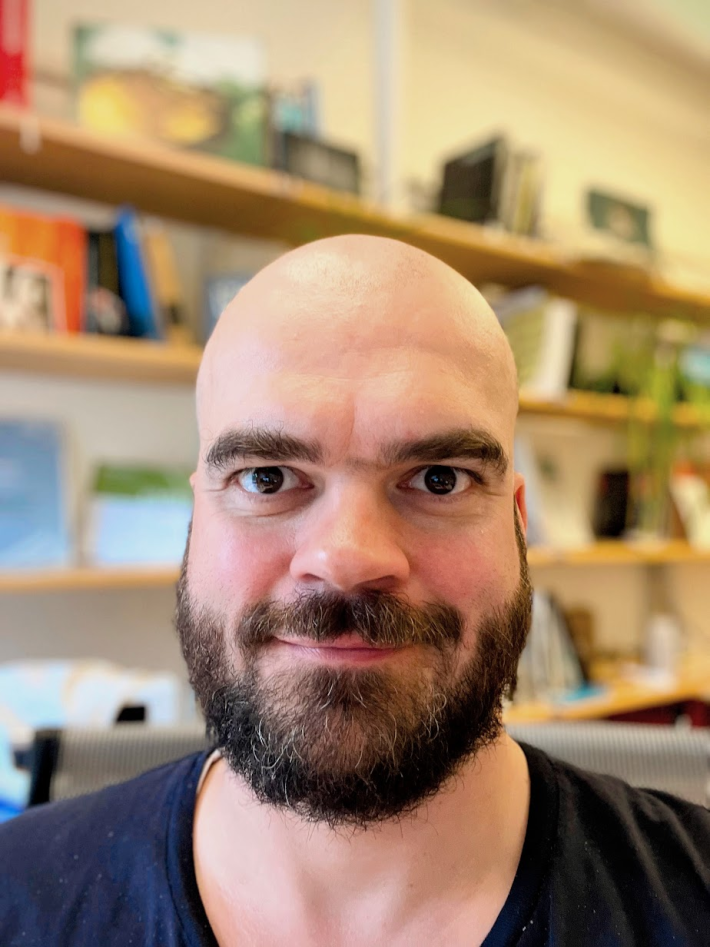
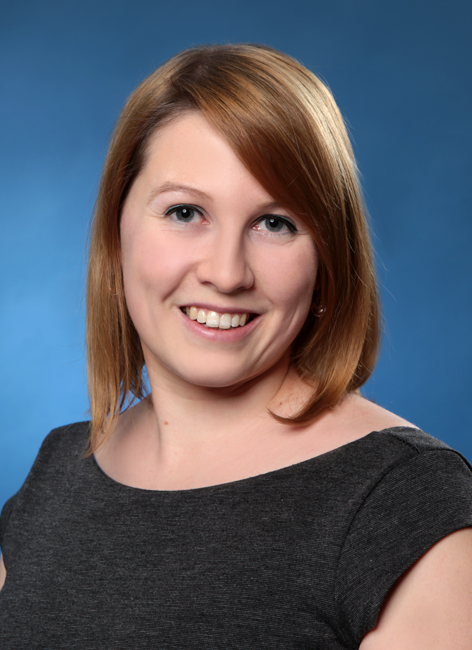
Sophia Burger is a PhD student at Johannes Gutenberg-University Mainz, Germany, conducting research under the supervision of Prof. Jürgen Gauss. She recently visited the Hylleraas Centre at the University of Oslo (UiO) from October 27, 2024, to November 26, 2024, as a visiting research collaborator. Her work focuses on enhancing quantum mechanical accuracy in computational methods for large-scale simulations by integrating neural network-based machine learning interaction potentials with wavefunction approaches, diverging from conventional Density Functional Theory. This collaboration is part of the ongoing partnership between the Gauss group and the Hylleraas Centre, supported by the DFG Collaborative Research Centre TRR-146, specifically Project B5 (grant n. 233630050). Her research bridges quantum chemistry, machine learning, and multiscale modeling of soft matter systems.
Mihir Vinay Kulkarni is a Researcher at the Department of Technical Cybernetics, Norwegian University of Science and Technology (NTNU), specializing in autonomous aerial systems for complex environments. His work bridges simulation frameworks and real-world deployment in industrial and hazardous settings. His research focuses on: Developing vision-based navigation for cluttered environments Creating parallel simulation tools (Aerial Gym) for accelerated robotics development Implementing deep reinforcement learning for collision avoidance Deploying aerial robots in ship ballast tanks and subterranean spaces Publications since 2022 demonstrate consistent output in top robotics venues, with recent work emphasizing semantic path planning and neural safety frameworks. His research trajectory shows strong alignment with NTNU's field robotics initiatives and international collaborations, particularly with ETH Zurich. As a recent PhD graduate (2025), Kulkarni represents an emerging researcher with significant potential in aerial robotics. Prospective students should note his focus on practical applications and simulation-to-reality transfer, though supervision capacity may be limited during this early career phase.
Hans Peter Heinrich Arp serves as a Professor at the Norwegian University of Science and Technology (NTNU), maintaining dual affiliation with the Norwegian Geotechnical Institute (NGI). His research bridges fundamental environmental chemistry with applied policy development, focusing on pollutant behavior in ecosystems and solutions for zero-pollution societies. Current leadership roles include the NFR-funded SLUDGEFFECT project addressing hazardous substances in sewage sludge/e-waste plastics, and the EU Horizon 2020 ZeroPM consortium tackling persistent mobile pollutants across 16 European institutes. Research interests center on environmental pollutants including microplastics, PFAS, PAHs, POPs, and metals, examining their environmental behavior through interdisciplinary lenses. His work integrates chemical fate studies with circular economy frameworks and policy mechanisms like REACH. Recent publications reveal strong emphasis on soil-water systems , emerging contaminant monitoring , and remediation technologies using advanced materials like biochar. Key trends show increasing focus on climate-contaminant interactions (e.g., permafrost thaw releasing pollutants) and machine learning applications for risk prioritization. Arp actively contributes to regulatory science through policy reviews and frameworks for PMT/vPvM substances. His collaborative network spans European institutions (ZeroPM consortium), Norwegian research centers (NGI), and global partners in waste management and chemical safety. Current projects demonstrate significant grant capture from major European and national funding bodies, with emphasis on translating scientific findings into actionable pollution prevention strategies. Laboratory work focuses on soil/sediment contaminant dynamics and advanced sorption technologies, while outreach includes policy advisory roles and public communication through platforms like Twitter and LinkedIn.
Daniel Machado is an Associate Professor of Computational Biology at the Department of Biotechnology and Food Science, Norwegian University of Science and Technology (NTNU). He joined NTNU in September 2020 and leads the Machado Lab, which focuses on computational approaches to understanding microbial communities. His work is affiliated with several important research initiatives including SFI - Industrial Biotechnology, a research-based innovation center aiming to boost the competitiveness of the Norwegian biotech industry, and ELIXIR Norway, the national node of the pan-European infrastructure for biological information. Daniel Machado completed his Bsc/Msc in Mathematics and Computer Science at the University of Minho, Portugal, followed by a PhD in Bioengineering and Biotechnology through the MIT-Portugal Program. His academic journey reflects a strong foundation in both computational methods and biological applications. His research primarily focuses on unlocking the potential of microbes to address multiple societal challenges. The Machado Lab uses computational models to understand how microbes work together in their natural habitats, particularly examining microbial communities that play important roles in human health and environmental sustainability. They follow an interdisciplinary approach, combining computational models and biological data to design synthetic communities for biotechnological applications and create more sustainable industries. Key research areas include exploring the functional potential of microbes across diverse ecosystems, understanding metabolic interactions in complex microbial communities, predicting metabolic regulation responses to perturbations, and designing synthetic microbial consortia for sustainable applications. The Machado Lab's work has resulted in significant contributions to the field of computational biology, particularly in genome-scale metabolic modeling. Their research shows that synthetic microbial consortia can run fermentation processes more efficiently than traditional single-organism models through beneficial division of labor. They have also pioneered approaches using more sustainable substrates like lignocellulosic waste rather than sugar, with applications in biofuels, industrial products, and medicines. Daniel Machado actively supervises numerous students at various levels, including PhD candidates Miguel Alves Magalhaes Teixeira, Idun Maria Tokvam Burgos, and Elisa Márquez-Zavala, as well as multiple Master's students. He teaches courses such as BT8120 - Prokaryote Molecular Biology and Synthetic Biology, BT2100 - Computational Biotechnology, TBT4508 - Bioinformatics and Biopolymeric Materials, and TBT4507 - Bioinformatics and Experimental design and data analysis. The Machado Lab maintains strong connections with the broader scientific community through projects like Cell4Chem, which focuses on engineering microbial communities for the conversion of lignocellulose into medium-chain carboxylates. They have developed important computational tools including CarveMe (for genome-scale metabolic model reconstruction), SMETANA (for analyzing interactions in microbial communities), and ReFramed (a metabolic modeling package), which have been widely adopted in the field.
Sigbjørn Løland Bore is a Researcher in the Department of Chemistry at the University of Oslo , affiliated with the Hylleraas Center for Quantum Molecular Sciences . His work bridges artificial intelligence and quantum mechanics to develop machine learning potentials for advanced molecular dynamics simulations. Focus areas: first-principles simulations , ionic conductivity in nanoporous materials, and exotic chemical physics . Current projects include adversarial learning for potential optimization and investigating water's phase behavior. Publications trend toward computational chemistry , quantum simulations , and machine learning applications in molecular modeling. Collaborations span institutions like the University of California and Italian research groups.
Erik Gunnar Jönsson is a researcher at the Psychosis Research Centre , University of Oslo, with a focus on schizophrenia, bipolar disorder, and neuroimaging. His work integrates genetics , structural and functional MRI , and electrophysiology to explore brain abnormalities in mental disorders. University: University of Oslo Department: Psychiatry and Medical Psychology Research Group: Translational Electrophysiology His research interests span: Neuroimaging of psychiatric disorders Polygenic risk scores and brain structure Cortical and subcortical morphology Neurophysiological biomarkers (e.g., MMN, VEP) Antipsychotic drug effects Sex and age in brain variability Recent trends in his publications include collaborations with the ENIGMA consortium, machine learning in imaging genetics, and cortical plasticity studies. Key journals: Nature Genetics , Molecular Psychiatry , Schizophrenia Research .
Henrique Musseli Cezar is a Researcher at the Hylleraas Centre for Quantum Molecular Sciences within the Department of Chemistry at the University of Oslo. His research focuses on developing molecular simulation methods, particularly applying machine learning potentials to study phenomena such as ionic conductivity in metal-organic frameworks. He holds a Ph.D. in Physics from the University of São Paulo, with postdoctoral experience at both the University of Oslo and the University of São Paulo, where he investigated computational nanofluidics and Monte Carlo methods. Research Interests : His work spans Computational physics and theoretical chemistry, Machine learning-enhanced molecular dynamics, Nanostructured materials and their applications in environmental science, Monte Carlo and Metainference methods, Phase behavior and adsorption properties in nanomaterials. Awards : He has received notable recognition including the Best PhD thesis in Atomic/Molecular Physics (Brazilian Physical Society), Top Downloaded Paper awards, and multiple poster/flash talk accolades for his contributions to molecular simulation and computational methods. Grants & Fellowships : His postdoctoral research was supported by FAPESP (Brazil) for nanofluidics studies, CAPES and CNPq fellowships for his Ph.D. and Master’s research, Current affiliation with the Hylleraas Centre funded by Norwegian research grants. Labs & Collaborations : Active in the Hylleraas Centre, he collaborates internationally on projects blending computational and experimental approaches, such as the H2O-MOF initiative and studies on surfactant structures and greenhouse gas adsorption.
Sondre Hilmar Hopen Eliasson is a Researcher (Postdoctoral Fellow) at the University of Oslo's Department of Chemistry, affiliated with the Hylleraas Centre for Quantum Molecular Sciences. His academic journey includes a Bachelor’s in Nanotechnology (2011), Master’s in Nanoscience/Atomic Physics (2014), and a PhD in Theoretical Chemistry (2020). He has also served as a Researcher in CO2 conversion (2021) and taught courses such as KJEM220 (Molecular Modeling) and KJEM221 (Quantum Chemistry) at the University of Bergen. His research focuses on computational methods for investigating chemical reactions, with expertise in Density Functional Theory (DFT), machine learning in molecular dynamics, and catalyst design. Key topics include lithium halide cluster behavior, olefin metathesis catalysis, and sustainable chemical processes. His work bridges theoretical chemistry with practical applications in materials science and green chemistry. Recent publications highlight advancements in understanding lithium halide morphologies in solvents, automated catalyst design, and fatty acid deoxygenation mechanisms. He actively contributes to interdisciplinary projects, such as interactive visualization tools for molecular design. No scientific awards are listed, but his research has been published in high-impact journals like Journal of the American Chemical Society and Chemical Science . His affiliation with the Hylleraas Centre underscores his involvement in cutting-edge quantum molecular sciences.
Odile Eisenstein is a prominent computational chemist at the Department of Chemistry , University of Oslo , with over 40 years of impactful contributions to organometallic chemistry and reaction mechanisms . Her work bridges homogeneous catalysis , NMR spectroscopy , and quantum chemistry to uncover fundamental chemical principles. Research Focus : Computational modeling of organometallic reactions, electronic structure analysis, solvent effects, catalysis, and chemical shift interpretation Key Collaborators : Michele Cascella, Christopher P. Gordon, Christophe Raynaud, and others in interdisciplinary projects Publications : Over 200 peer-reviewed articles in top journals including Chemical Science , JACS , and Angewandte Chemie Methodological Innovations : Developing machine learning potentials for molecular dynamics Quantitative approaches to energy profiles and reaction mechanisms Decoding chemical shifts for electronic structure insights Impactful Studies include Grignard reaction mechanisms, metal-carbon bonding, and catalyst design principles. She actively contributes to Hylleraas Centre for Quantum Molecular Sciences , advancing theoretical chemistry frameworks.
Christin Schülke is a PhD Research Fellow in Biomedical Engineering at the Department of Physics, Faculty of Mathematics and Natural Sciences, University of Oslo (UiO) since April 2017. Her work is part of the EU-Project Training4CRM within the Horizon 2020 program and Marie Sklodowska-Curie Innovative Training Networks, focusing on bridging gaps in Cell-based Regenerative Medicine for neurodegenerative disorders including Parkinson's, Huntington's, and Epilepsy. Her academic background includes a Master of Science in Biochemistry from Leipzig University, Germany (2014-2016), with thesis work on neuronal differentiation potential of hiPS cells, and a Bachelor of Science in Biochemistry from the same institution (2011-2014). She also completed an Erasmus Exchange semester in Molecular Biology at Aarhus University, Denmark. Christin's research interests span Bioimpedance, Stem cells, Regenerative medicine, Neurobiology, Biosensors, Biochemistry, Biomedical instrumentation, and Biomedical physics. She specializes in developing electrode systems for non-invasive monitoring of vital cell parameters and neurotransmitter release, combining micro and nanoengineering with biotechnology. Her publication record shows a clear trajectory in bioimpedance applications, evolving from stem cell characterization to advanced brain implant technologies. The research demonstrates interdisciplinary integration of physics, engineering, and neuroscience to address challenges in regenerative medicine. She collaborates extensively with international partners including Oslo University Hospital, Center for Biotechnology and Biomedicine at Universität Leipzig, Technical University of Denmark, Universidad Autónoma de Madrid, Lund University, Verigraft AB, and Sciospec Scientific Instruments GmbH. Christin is an active member of the Oslo Bioimpedance group and the Martinsen Research Group, contributing to cutting-edge developments in biomedical instrumentation and neurotechnology through both theoretical and applied research approaches.
Agnieszka Patrycja Seremak is a Doctoral Research Fellow at the Department of Chemistry, University of Oslo. She is affiliated with the Faculty of Mathematics and Natural Sciences and participates in the CompSci Doctoral Programme. Her research focuses on nano-porous materials, heterogeneous catalysis, and computational chemistry, particularly studying zeolite materials' structural behavior under guest molecule interactions using ab initio methods and molecular dynamics. Education: PhD Candidate (2022–Present), University of Oslo MSc in Science and Technology (2019–2021), Aix-Marseille University/Wroclaw University of Science and Technology/University of Rome MSc in Technical Sciences (2018–2019), Wroclaw University of Science and Technology BSc in Technical Sciences (2014–2018), Wroclaw University of Science and Technology Research explores entropy and diffusion in zeolite catalysts, incorporating machine learning potentials in computational workflows. Recent work includes designing a Ni-based MOF for Li/Na/Mg storage, published in Molecules (2022). She is part of the Catalysis and Organic Chemistry research groups and completed a secondment at The Center for Molecular Modeling (2024).
Dr. Bastian Fromm is a Researcher and group leader at the Arctic University Museum of Norway, part of The Arctic University of Norway (UiT). His research focuses on microRNA (miRNA) roles in animal evolution, parasitology, and paleotranscriptomics. He leads the MIRevolution project, using cutting-edge sequencing and single-cell experiments to study microRNA functions in biodiversity and evolution, particularly in parasites. His group developed the MirGeneDB database to standardize miRNA research. They also pioneer paleotranscriptomics, enabling gene expression studies in ancient biological samples using museum collections. Key collaborations include work on limb regeneration in newts, microRNA biomarkers in parasitic infections, and evolutionary insights from hagfish genomes. Research Interests Dr. Fromm’s work addresses fundamental questions in evolutionary biology and parasitology through microRNA analysis. His group explores how microRNAs regulate developmental processes, drive evolutionary adaptations, and serve as taxonomic markers. By integrating genomic, computational, and paleogenomic approaches, his research bridges modern and ancient systems to understand organismal complexity. Publications His recent work highlights advancements in miRNA databases (MirGeneDB 3.0), evolutionary insights from hagfish genomes, and applications of paleotranscriptomics to extinct species like the Tasmanian tiger. The lab’s focus on parasitic systems, such as Strongylus vulgaris in horses, underscores the translational potential of microRNA research in veterinary medicine and ecology. Grants & Projects Funded by the Tromsø Research Foundation for biosystematics and paleotranscriptomics. MIRevolution project integrates Arctic biodiversity with advanced sequencing techniques. Collaborations with institutions like the Museum of Natural History for paleotranscriptomic studies. Labs & Teams The Fromm Lab operates within the Arctic University Museum, leveraging its unique collections and facilities. They are part of research networks including NEAT and ArcEcoGen, focusing on Arctic ecosystem genomics and collection-based taxonomy.
Rebekah Alice Oomen is a marine evolutionary ecologist at the University of Agder , affiliated with the Centre for Coastal Research and Centre for Artificial Intelligence Research . She also holds a position at the Centre for Ecological and Evolutionary Synthesis at the University of Oslo. Her research integrates genomic , experimental , and eco-evolutionary approaches to study how species adapt to environmental change across spatial and temporal scales. Specializes in environmental adaptation , plastic responses , and genomic forecasting Expert in machine learning , network analyses , and adaptive modeling for complex systems Co-leads the TORSKETROMMING (COD DRUMMING) project combining science and art Founding member of the European Reference Genome Atlas (ERGA) and adviser for Earth Biogenome Project Norway Her recent publications focus on genomic reaction norms , environmental plasticity , and interdisciplinary conservation genomics . She has received scientific recognition as a James S. McDonnell Foundation Fellow and serves on the Editorial Board of Scientific Data . Her work bridges natural sciences with artistic and social scientific practices, including sound installations and educational outreach programs.
Ahmed Khalid Kadhim Kadhim serves as a PhD Research Fellow at the Department of Information and Communication Technology, University of Agder (UiA), Norway. Based in office A2121 at Jon Lilletuns vei 9, 4879 Grimstad, he maintains active research contributions while pursuing doctoral studies under UiA's structured PhD program. His research centers on cutting-edge artificial intelligence methodologies, specifically investigating hyperdimensional computing applications within Tsetlin Machines. This work bridges theoretical computer science and practical machine learning, focusing on developing resource-efficient, interpretable AI systems through novel vector representations and Boolean logic frameworks. His approach emphasizes computational efficiency while maintaining model transparency—a critical advantage over traditional neural networks in constrained environments. Funded through UiA's competitive PhD Research Fellow position, his work contributes to the university's strategic research priorities in computational intelligence. Current projects explore how hyperdimensional vectors can optimize Tsetlin Machine performance in pattern recognition tasks, with potential applications in edge computing and IoT systems where processing power is limited.
Varun Ravi Varma is a PhD Research Fellow in the Department of Information and Communication Technology at the University of Agder, Norway, with contact details including email varun.ravi.varma@uia.no and office A2122 in Grimstad. His research expertise spans: Reinforcement Learning (decision-making through trial-and-error systems) Explainable Artificial Intelligence (transparent AI decision processes) Algorithmics (efficient computational method design) Varun's work centers on analytical frameworks for small and incomplete datasets, exemplified by his 2023 SaNDA publication in Information Sciences. This research addresses critical gaps in data science where traditional methods fail with limited or imperfect data, contributing to more resilient AI applications across domains requiring robust analysis under constraints. His single verified publication demonstrates focused output in high-impact venues, while international co-authorship confirms cross-border research engagement. As a doctoral candidate, he operates within the university's research infrastructure without independent supervision capacity. Varun's position as a Research Fellow indicates institutional funding for his doctoral work, though specific grants aren't detailed. He contributes to the Department of Information and Communication Technology's research ecosystem in artificial intelligence and data science, with potential for expanding his methodological contributions to real-world data challenges.

.jpg)



.jpg)