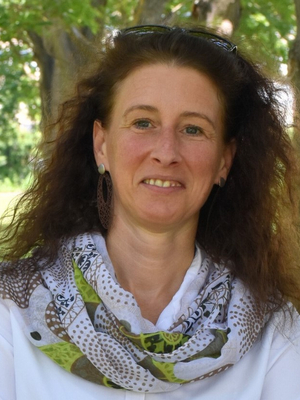
Shenghui Wang is an Assistant Professor in Human Media Interaction with a focus on hybrid human-AI systems. Affiliated with OCLC Research Europe since 2012, his work bridges artificial intelligence, virtual reality, and cultural heritage digitization. Research Interests: Ontology modeling, eye-tracking integration, multimodal conversational agents, and FAIR metadata principles for cultural data Key Activities: Organized HHAI 2025 and ISWC 2025 conferences; presented at ICT Open 2024 and Hybrid Intelligence Consortium meetings Current Work: Developing social VR frameworks for collaborative art exploration and evaluating RAG-based chatbots in healthcare contexts His recent publications emphasize Human-Computer Interaction in educational and cultural settings, with specific attention to: Personalized learning systems Virtual heritage applications Ontology-driven VR environments Author disambiguation algorithms Wang's research contributes to UN Sustainable Development Goals through innovative applications in education, cultural preservation, and accessible AI systems.
Professor Ute Schmid is a Full Professor of Cognitive Systems at the University of Bamberg, where she has been a faculty member since September 2004. She leads the Cognitive Systems Group within the Bamberg Center of AI (BaCAI), focusing on creating AI systems that generate human-like explanations and reasoning processes. Her research bridges cognitive science and artificial intelligence to develop methods for explanation generation, inductive programming, and interactive machine learning. Professor Schmid's work emphasizes practical applications of explainable AI across diverse domains including image classification, medical diagnosis, and educational technologies. Her research on contrastive explanations, near misses, and human-AI alignment has significantly advanced the field of XAI. She has also pioneered research on AI literacy, recognizing the growing importance of basic AI understanding for responsible tool usage by non-experts. Her publication record demonstrates exceptional productivity and impact, with numerous articles in top-tier venues including Nature Machine Intelligence, IEEE Transactions on Visualization and Computer Graphics, and the Journal of Web Semantics. Her 2025 paper 'Aligning generalization between humans and machines' represents a significant theoretical contribution to understanding human-machine cognitive alignment. Professor Schmid actively contributes to gender diversity research in computer science through studies examining why women pursue PhDs in the field. She has also made important contributions to computing education, investigating how students acquire programming skills and how AI tools like code generators are integrated into learning processes. As an educator and researcher, Professor Schmid maintains strong international collaborations, with co-authors spanning multiple countries and institutions. Her interdisciplinary approach is evident in her diverse publication venues and collaborative work that bridges computer science, cognitive science, education, and application domains.
Borim Song is a Professor of Art Education at East Carolina University's School of Art & Design. She earned her Ed.D. and Ed.M. from Teachers College, Columbia University, bringing extensive expertise in art education methodologies to her current position. Her academic journey reflects a commitment to innovative approaches in teaching and learning within the visual arts. Dr. Song's research interests span several critical areas in contemporary art education: New technologies for art education, particularly virtual reality and AI applications Online education practices and assessment frameworks for virtual art instruction Arts integration and STEAM education approaches Culturally responsive teaching methodologies Contemporary art applications in K-12 curriculum development Exploration of cultural identity within digital art practices Her scholarly work reveals a strong focus on the intersection of technology, cultural identity, and art education. Recent publications demonstrate her leadership in exploring how emerging technologies like AI and virtual reality can transform art education practices while maintaining attention to cultural relevance and student engagement. Dr. Song's research trajectory shows increasing emphasis on addressing identity issues, particularly related to Asian-American experiences in educational contexts, with multiple publications on anti-Asian racism and cultural belonging in art classrooms. Dr. Song has established herself as a collaborative researcher, frequently partnering with colleagues across institutions to explore complex questions in art education. Her work often addresses timely challenges such as the transition to online learning during the pandemic and the integration of contemporary art practices into traditional educational settings. She has developed specialized frameworks for online art education assessment and has contributed significantly to understanding student experiences in virtual art classrooms. As an educator, Dr. Song teaches a comprehensive range of courses from undergraduate methods classes to graduate-level research seminars. Her teaching portfolio includes specialized courses on computer applications in art education and supervision in art education, reflecting her dual expertise in both traditional and technology-enhanced pedagogical approaches. She has also exhibited her own artwork at venues including Macy Gallery in New York City and J. Y. Joyner Gallery in Greenville, NC, bringing practical artistic experience to her academic work.
Petra Heißenberger is a Professor and currently serves as Vice Rector for Teaching and School Development Consulting at the University College of Teacher Education Lower Austria (Pädagogische Hochschule Niederösterreich). She has been with the institution since 2007 and previously worked at the Pedagogical Academy in Baden from 2005-2007. Her academic career includes leadership roles such as Head of the Department of Leadership Culture (2022-2024) and Director of the Leadership Center since 2013. Professor Heißenberger's research focuses on educational leadership, particularly examining leadership personalities including the 'Dark Triad' (narcissism, Machiavellianism, and psychopathy) in school leadership contexts. Her work spans school management, educational innovation, school autonomy, and future literacy in the Anthropocene. She has led significant research projects including NÖbegabt 5-7 (2013-2018) on identifying talents in young children, INNOVITAS (since 2017) on school autonomy across Europe, TEDCA (since 2017) on teacher career development, and the Culture Nature Literacy project (since 2022). Her recent publications demonstrate a strong focus on the intersection of leadership, school development, and educational innovation. The 15 most recent articles show particular emphasis on future literacy, diversity education, AI in education, and sustainable school development. Her work often takes the form of edited journal issues for R&E-SOURCE and #schule verantworten, where she serves as editor-in-chief, ensuring these platforms address current challenges in educational leadership. 2024 Book: 'Lehrkräfte führen, fördern und fordern. Leitfaden für Schulleitungen zum Performance-Management des Kollegiums' (Guiding, Promoting, and Challenging Teachers: A Guide for School Leaders on Performance Management) 2024 Articles on AI in education and its implications for educational equity 2023-2025 Series of publications on leadership, school culture, and innovation Professor Heißenberger actively supervises students in the Master's program in School Management and has been instrumental in developing continuing education programs for school leaders. Her practical experience as a former primary school teacher (1994-2005) informs her research and teaching approach, bridging theory and practice in educational leadership. She is recognized for her ability to translate complex leadership theories into practical applications for school administrators. She leads the Leadership Center at the University College of Teacher Education Lower Austria, which serves as a hub for research, professional development, and innovation in educational leadership. The center focuses on developing leadership competencies for current and future school leaders through evidence-based approaches and practical application, with particular attention to the challenges of leading in increasingly complex educational environments.
Dr. Kyle Martin is a Lecturer in the School of Computing, Engineering & Technology at Robert Gordon University (RGU), where he works in the Artificial Intelligence & Reasoning Research Group. He completed his PhD in 2021, after having been hired as a full-time lecturer and researcher in 2019. His academic focus centers on making AI systems more transparent and explainable, with applications across multiple sectors including digital health (with partners Jiva and Walk With Path), fintech (Sticklr), and horizon scanning (Citizen Advice Scotland). Dr. Martin's primary research interests include: Case-Based Reasoning Deep Metric Learning Explainability in AI systems Applied Machine Learning across various domains His recent publications (2023-2025) demonstrate a strong focus on explainable AI, particularly in developing case-based reasoning approaches to enhance the transparency of machine learning systems. He has published extensively on counterfactual explanations, legal question-answering systems, and automated essay grading, with 48 research outputs spanning multiple publication types. His work often bridges theoretical AI concepts with practical applications in real-world domains where understanding AI decision-making is critical. Dr. Martin is actively involved in research funding and supervision: Co-investigator on the iSee project (European consortium) focused on personalized explanation experiences Available for PhD supervision in Case-Based Reasoning, Deep Learning, Explainability, and Applied Machine Learning Program committee member for ICCBR and SGAI conferences Organizer of international workshops on Case-Based Reasoning and Deep Learning As a member of the Artificial Intelligence & Reasoning Research Group at RGU, Dr. Martin contributes to advancing reasoning capabilities in AI systems and developing practical applications of these technologies. His research has resulted in multiple publications in prestigious venues including ECAI, ICCBR, and Knowledge-Based Systems, demonstrating his growing impact in the AI research community.
Dmitry Alekseevich Ilvovsky is an Associate Professor at the Department of Data Analysis and Artificial Intelligence within the Faculty of Computer Science at the National Research University Higher School of Economics (HSE University) in Moscow. He also serves as a Research Fellow at the International Laboratory of Intelligent Systems and Structural Analysis. Having joined HSE in 2011, he has accumulated over 10 years of scientific and teaching experience in the field of computational linguistics and artificial intelligence. Dr. Ilvovsky holds a Candidate of Technical Sciences degree (2017) and a Specialist degree in Applied Mathematics and Computer Science from the Moscow Aviation Institute (2010). His professional interests focus on natural language processing, formal concept analysis, and discourse-based approaches to text analysis. He has made significant contributions to developing methods for detecting disinformation, propaganda, and unreliable information in text data. His recent research demonstrates a clear trend toward integrating discourse structure with deep learning approaches for various NLP tasks. His work spans fact-checking systems, dialogue management, propaganda detection, and text complexity assessment. He has pioneered approaches using discourse trees and structural linguistic information to enhance the performance of language models, particularly in identifying manipulative content and verifying claims against trusted sources like Wikipedia. Gratitude from HSE University (January 2024) Letter of gratitude from the Vice-Rector of HSE (August 2021) Letter of Gratitude from the Faculty of Computer Science at HSE (August 2017) Rector's personal allowance (2016-2017) Academic Work Allowance (2020-2021) Bonus for publication in journal from List A (2023-2026) Bonus for publication in international peer-reviewed journal (2017-2023) Dr. Ilvovsky actively supervises PhD research, notably guiding A. Chernyavskiy's work on models for automatic detection and verification of unreliable information. His teaching portfolio includes courses such as Automatic Text Processing for Bachelor's students and Mentor's Seminar for Master's students. He has also contributed to the development of the International Laboratory of Intelligent Systems and Structural Analysis, where he has worked since 2012, organizing international conferences including the Concept Lattices and Their Applications conference in 2016—the first time it was held in Russia.
Charles Kankelborg is an Associate Professor in the Department of Physics at Montana State University's College of Letters & Science. He earned his Ph.D. from Stanford University in 1996 and joined the MSU faculty in 2001 after working as a postdoc on the TRACE satellite program. His primary research focuses on solar physics, particularly the solar corona, transition region, and chromosphere. His educational background includes a B.S. from University of Puget Sound (1989) and a Ph.D. from Stanford University (1996). His work has established him as a significant contributor to the field of solar physics and space instrumentation. Dr. Kankelborg's research interests span solar corona dynamics, transition region physics, coronal heating mechanisms, force-free magnetic fields, ultraviolet optics, and space instrumentation development. He has made substantial contributions to the field through his work on the MOSES (Multi-Order Solar EUV Spectrograph) rocket payload, fluxon modeling of magnetic fields, 3D tomography of the solar corona using STEREO data, and techniques for coregistering images with optical distortion. His work bridges theoretical physics, computational methods, and practical instrumentation. His recent publications (2020-2023) demonstrate a consistent focus on solar physics instrumentation and analysis techniques, particularly in EUV spectroscopy, tomographic reconstruction methods, and solar magnetic field modeling. His work often involves collaboration with NASA and other research institutions on space-based solar observation projects. Fellow of the American Scientific Affiliation (2024) Outstanding Graduate Level Instructor (George Tuthill Award) (2022) RHG Exceptional Achievement for Science from NASA (2016) Outstanding Undergraduate Level Instructor (2015) Outstanding Faculty Colleague Award from MSU Physics (2012) Dr. Kankelborg has successfully secured multiple research grants including ESIS-II from NASA, IRIS-MSU extended mission (2023-2027) from Lockheed Martin Corporation, and various MUSE Phase C/D projects. His teaching portfolio includes Physics 261 (Laboratory Electronics I), Physics 567 (Mathematical Physics II), and specialized seminars in heliophysics. He has been instrumental in involving undergraduate students in research through projects like the MOSES rocket mission, as documented in the film 'Rocket Scientists.'