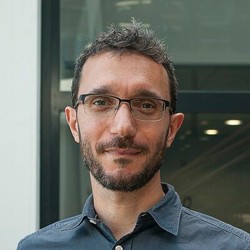
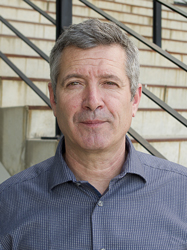
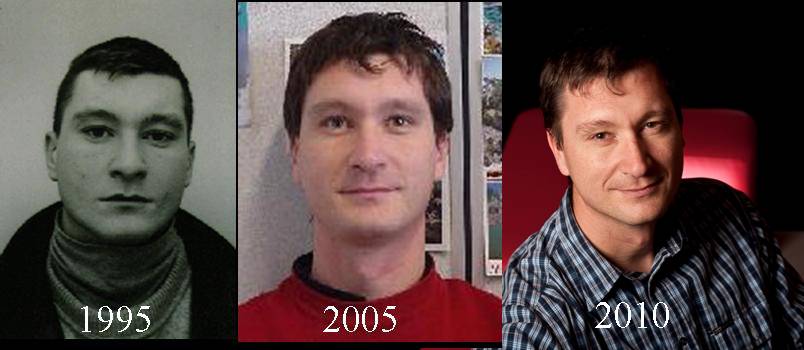
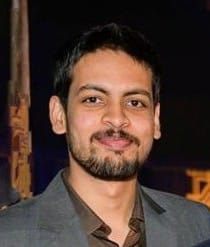
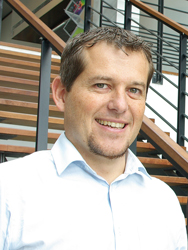
Paolo Papotti is an Associate Professor of Computer Science at EURECOM (France) since 2017, affiliated with the Data Science department. Previously, he was a senior scientist at QCRI (Qatar) and an assistant professor at Arizona State University (USA). He earned his PhD in Computer Science from the University of Roma Tre (Italy) in 2007, following an MEng in Computer Engineering from the same institution in 2003. His research focuses on scalable data management, data integration, data cleaning, and computational fact-checking. Notable contributions include work on knowledge graph rule discovery (Rudik), fact-checking frameworks (Scrutinizer), and data quality systems. His research has been supported by awards such as the 2020 Google Faculty Research Fellowship. Key publications include advancements in table representation learning, LLM-based data querying, and crowdsourced fact-checking validation. His work spans theoretical foundations and practical tools for improving data quality and information trustworthiness.
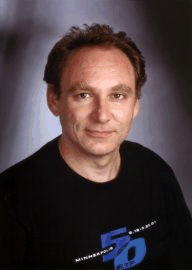
Gianni Franchi is an assistant professor at ENSTA Paris , affiliated with the Computer Science and Systems Engineering Unit (U2IS) . His work focuses on theoretical deep learning , with a strong emphasis on uncertainty quantification, robustness, and explainability in machine learning models. Current affiliation: ENSTA Paris (U2IS) Academic rank: Assistant Professor Key collaborators: David Filliat, Emanuel Aldea, Andrei Bursuc, Antoine Manzanera His research spans uncertainty quantification , explainable AI , and reliable machine learning . He investigates methods like Bayesian neural networks, ensemble approaches, and deterministic uncertainty models. His work also addresses domain adaptation , self-supervised learning , and autonomous systems , particularly in trajectory forecasting and semantic segmentation for autonomous driving. Recent publications analyze probabilistic modeling for robustness, symmetry-aware Bayesian methods , and multi-modal datasets like InfraParis. He develops frameworks like Torch-Uncertainty and benchmarks such as MUAD for uncertainty types in autonomous driving. Key themes: Uncertainty Quantification Deep Learning Theory Autonomous Systems Explainable AI Dataset Creation Bayesian Methods
Jon Crowcroft is the Marconi Professor of Communications Systems in the Department of Computer Science and Technology at the University of Cambridge, and serves as the Chair of the Programme Committee at the Alan Turing Institute. He is also a Fellow of Wolfson College, Cambridge, and a visiting professor at the Department of Computing at Imperial College London. With a career spanning over three decades in computer networking research, Professor Crowcroft has made seminal contributions to the development of the Internet and continues to be highly active in cutting-edge research areas. His educational background includes: BA in Physics from Trinity College, University of Cambridge (1979) MSc in Computing from University College London (1981) PhD from University College London (1993) Professor Crowcroft's research spans multiple domains in computer networking and distributed systems. He has worked in Internet support for multimedia communications for over 30 years, with three main focus areas: scalable multicast routing, practical approaches to traffic management, and the design of deployable end-to-end protocols. His current research focuses on opportunistic communications, social networks, and techniques to scale infrastructure-free mobile systems. He is particularly known for his 'build and learn' paradigm for research and has recently been exploring decentralized digital identification systems, smart cities, and edge computing. His work often bridges theoretical foundations with practical implementations, emphasizing privacy-preserving approaches and sustainable network architectures. Professor Crowcroft has received numerous prestigious awards recognizing his contributions to the field, including: Election as Fellow of the Royal Society (2013) ACM SIGCOMM Award (2009) ACM Fellow (2002) Fellow of the Royal Academy of Engineering IEEE Fellow (2004) Chartered Fellow of the British Computer Society Throughout his career, Professor Crowcroft has advised numerous PhD students, including Mark Handley and Pan Hui, who have themselves become influential researchers in the networking community. He has authored several influential books that have been adopted internationally in academic courses, such as 'TCP/IP & Linux Protocol Implementation,' 'Internetworking Multimedia,' and 'Open Distributed Systems.' His research has been supported by various grants and collaborations with both academic institutions and industry partners, contributing to successful startup projects and influencing Internet standards. Professor Crowcroft is actively involved in several research initiatives, including serving on the Scientific Council of IMDEA Networks Institute since 2007 and the advisory board of the Max Planck Institute for Software Systems. He is also a director of the Matrix Foundation, which develops open network protocols. His current research group focuses on privacy-preserving analytics, decentralized systems, and the future of Internet architecture.
Marc Plantevit is a Full Professor at EPITA, member of the Laboratoire LRDE (LRDE). Previously, he served as an Associate Professor at University Claude Bernard Lyon 1 (2010–2021), leading the Data Mining & Machine Learning group at LIRIS lab. He holds a PhD in Computer Science from the University of Montpellier (2008), supervised by Maguelonne Teisseire and Anne Laurent at LIRMM Lab. His research focuses on foundational data mining, graph mining, subgroup discovery, and explainable AI. He is an editorial board member of Data Mining and Knowledge Discovery Journal and has held roles such as CAPES NSI jury member and former head of the Data Mining & Machine Learning group at LIRIS. Research Interests : Data Mining, Machine Learning, Explainable AI, Graph Mining, Subgroup Discovery, Exceptional Model Mining, Constraint-based Pattern Mining, and applications in neuroscience and energy systems. His work explores interpretable AI, GNN explainability, and interdisciplinary applications like odor perception modeling and electricity price forecasting. Key Contributions : Best Paper Award at EGC'22 for work on GNN representations. Active in program committees for ECMLPKDD, IJCAI, and IEEE ICDM . Supervised PhD students working on GNN explainability, electricity forecasting, and machine learning in exposome studies. Labs & Teams : LRDE (EPITA), previously involved with LIRIS (UMR CNRS 5205) and collaborative projects with institutions like INSA Lyon and ISGlobal (Barcelona).
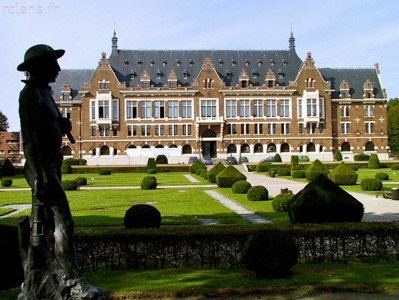
Pierre Marquis is a distinguished Professor of Computer Science at Université d'Artois , affiliated with the Centre de Recherche en Informatique de Lens (CRIL-CNRS, UMR 8188) . Since December 2024, he has served as the vice-president for research and doctoral studies at Université d'Artois. His research focuses on Artificial Intelligence , particularly knowledge representation , automated reasoning , inconsistency handling , and knowledge compilation , with recent emphasis on Explainable AI (XAI) . Research Interests: Marquis's work spans foundational AI topics including abduction , induction , belief revision , and preference modeling . He has pioneered knowledge compilation techniques to optimize AI tasks and developed frameworks for reasoning under inconsistency through paraconsistent logics and argumentation. His EXPEKTATION chair (2020-2026) under France's national AI program drives his current focus on interpretable machine learning models. Scientific Awards: 2025: CNRS Silver Medal 2022: AAIA Fellow 2017: Senior Member of Institut Universitaire de France (IUF) 2009: EurAI (ECCAI) Fellow Doctoral Students: Mentoring Clément Lens (critical patient monitoring systems) and Mehdi Sabiri (data-knowledge integration for AI explanations). Collaborating with students like Louenas Bounia (formal XAI models) and Romain Wallon (pseudo-Boolean constraints). Grants & Projects: Leads the EXPEKTATION research chair (2020-2026) and participates in ANR PING/ACK (2019-2023), ANR THEMIS (2021-2025), CNRS IRP MAKC (2020-2024), and H2020 TAILOR (2020-2024). Previously led PIA4 MAIA (2023-2032) and Pint (2022-2023). Labs & Teams: Active in CRIL-CNRS, contributing to PyXAI (Python XAI library) and d4 (model counting), while mentoring teams on consensus belief merging and dynamic constraint processing .
Vassilis Christophides is a Professor of Computer Science at the University of Crete and holds an advanced research position at Inria Paris, where he leads work in the MiMove team. His research spans databases, web information systems, big data processing, and IoT analytics, with a strong emphasis on entity resolution, data integration, and scalable data mining. He has supervised numerous research projects funded by the European Union and the Greek State, and has published over 130 articles in top-tier conferences and journals. Research Interests: His primary research areas include Databases, Web Information Systems, Big Data Processing and Analytics, and Information Systems for the Internet of Things. He also focuses on entity resolution, knowledge graphs, streaming data, and explainable AI, particularly in the context of anomaly detection and fairness-aware data systems. His recent work explores hybrid attention models for entity alignment and causal analysis in time series classification. Recent Research Trends: Analysis of his recent publications (2021–2025) reveals a strong focus on entity resolution with fairness constraints, explainable anomaly detection, and adaptive scheduling in IoT edge analytics. He also investigates deepfake detection, crop type mapping using satellite data, and structural bias in knowledge graphs, demonstrating a broad and impactful research portfolio at the intersection of data management and machine learning. Scientific Awards: 2004 SIGMOD Test of Time Award Best Paper Award, ISWC 2003 Best Paper Award, ISWC 2007 Advising and Grants: While specific student names are not listed in the provided texts, Christophides has co-authored numerous papers with researchers such as Vasilis Efthymiou, Ioannis Tsamardinos, and Nikolaos Myrtakis, suggesting active mentorship. He has been the scientific coordinator of multiple EU and national research projects, indicating substantial grant leadership and project management experience. Labs and Teams: He is affiliated with the MiMove team at Inria Paris, a research group focused on mobility and data-intensive systems. His work bridges academic and applied research, leveraging Inria’s infrastructure for large-scale data experimentation and innovation in IoT and edge computing environments.
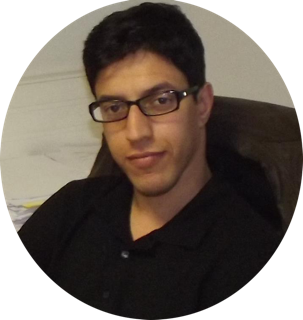
Amin Mesmoudi serves as Associate Professor in Data Engineering at the University of Poitiers' IUT (Institut Universitaire de Technologie), with dual laboratory affiliations at LIAS-ENSIP (Poitiers campus) and LIAS-ISAE-ENSMA (Chasseneuil campus). His research bridges theoretical database systems with practical large-scale data engineering challenges, particularly in semantic web technologies and machine learning applications. The laboratory maintains physical presences at both ENSIP's Bâtiment B25 in Poitiers and ISAE-ENSMA's Téléport 2 facility in Chasseneuil, facilitating cross-institutional collaboration. Mesmoudi's research program centers on scalable data management systems, with three interconnected pillars: (1) RDF and graph-based query optimization techniques for billion-triple datasets, (2) machine learning integration for spatial query performance and anomaly detection, and (3) explainability frameworks for complex black-box models. His work demonstrates consistent evolution from foundational database systems (2011-2016) toward contemporary AI-driven data engineering, particularly evident in his 2023-2025 publications on temporal dependency preservation and co-selection explainability. The Data Engineering team within LIAS laboratory provides the primary research context for these investigations. Publication analysis reveals strong methodological continuity in addressing scalability bottlenecks across database paradigms. Early work focused on SQL-on-MapReduce benchmarking for astronomy databases (2015-2016), transitioning to specialized RDF processing frameworks (2019-2021), and culminating in current hybrid approaches combining temporal modeling with machine learning (2023-2025). Key technical themes include fragmentation strategies for distributed data, optimizer feedback mechanisms, and graph-based query acceleration - all targeting real-world performance constraints in big data environments. As a core member of LIAS laboratory's Data Engineering team, Mesmoudi contributes to France's national research infrastructure in computer science and automation systems. The laboratory's dual-university structure enables unique cross-pollination between University of Poitiers' academic programs and ISAE-ENSMA's engineering specialization, with Mesmoudi's work exemplifying this synergy through applications spanning astronomy databases to wireless sensor networks.
Adeel AHMAD is an active Associate Professor (Maître de Conférences) conducting cutting-edge research at the intersection of artificial intelligence, industrial applications, and business process management. His academic work demonstrates strong interdisciplinary connections between computer science, industrial engineering, and business informatics. Dr. AHMAD's research interests span Explainable Artificial Intelligence (XAI), Industrial Machine Learning, Business Process Management, Ontology-Based Reasoning, and Logistics Optimization. His work focuses on developing practical AI solutions for industrial contexts, particularly in Industry 4.0 environments where human-AI collaboration is essential. He has made significant contributions to meta-learning approaches for automated algorithm selection and configuration, with particular emphasis on making these systems transparent and interpretable for domain experts. His publication record shows a clear trajectory toward integrating explainability into industrial AI systems, with recent work focusing on conversational recommendation systems for cyber-physical environments. The research demonstrates consistent evolution from foundational work in business process analysis toward sophisticated AI applications in industrial settings. Active research leadership in Explainable AI for industrial applications Significant contributions to meta-learning frameworks for automated machine learning Interdisciplinary approach bridging computer science, industrial engineering, and business processes Strong publication record in top-tier conferences and journals Dr. AHMAD demonstrates strong collaborative research patterns, frequently working with colleagues including Mourad Bouneffa, Moncef Garouani, and other researchers in the French academic community. His work shows particular relevance to manufacturing, logistics, and cyber-physical systems where AI must work alongside human domain experts.
Guillaume COQUERET is a Professor of Finance and Data Science at emlyon business school since 2018 and Director of the AIM Institute, which coordinates research and teaching in artificial intelligence applied to management. His academic qualifications include an HDR (2022) from Université Lumière Lyon 2 and a PhD in Business Administration from ESSEC Business School (2012). His research focuses on quantitative finance, machine learning in capital markets, sustainable finance, and heterogeneous agent models. He previously served as a Quantitative Researcher at EDHEC-Risk Institute (2013–2015). Education : 2022: HDR, Université Lumière Lyon 2 2012: PhD in Business Administration, ESSEC Business School 2008: Master in Probability and Finance, Université Pierre et Marie Curie (Paris 6) 2007: Master in Management, ESSEC Business School Research Interests : Machine learning applications in finance, factor investing, climate risk modeling, ESG integration, and algorithmic portfolio strategies. Publications : Over 30 peer-reviewed articles in journals such as The Journal of Portfolio Management , European Journal of Operational Research , and Quantitative Finance . Notable works include studies on climate betas, biodiversity premiums, and supervised learning in equity investing. Books : Machine Learning for Factor Investing: Python Version (2023) Perspectives in Sustainable Equity Investing (2022) Awards : None explicitly mentioned, but recognized for contributions to quantitative finance and AI in management. Labs/Teams : Leads the AIM Institute, fostering AI-driven research in management and finance.
Jean-Marc Jezequel is a Professor of Software Engineering at University of Rennes , affiliated with CNRS , Inria , IRISA , and Institut Universitaire de France (IUF) . His research focuses on Model-Driven Engineering , Software Product Lines , Dynamic Adaptation , and Executable Meta-languages . Key Contributions : Pioneering work in aspect-oriented and model-driven approaches for software evolution Foundational research on model transformations (e.g., UMLAUT framework) Advances in testing and validation of distributed systems Research Trends from his recent publications include: Intelligent modeling assistance integrating machine learning Contextual variability modeling for complex systems Runtime model execution for self-adaptive systems Formal methods and constraint resolution for UML validation Collaborations include researchers from Luxembourg, Montreal, Colorado State University, and INRIA.
Professor Jean-Luc Dugelay is a faculty member at EURECOM's Digital Security Department, specializing in facial image processing, image forensics, and biometrics. He holds a PhD in Image Processing from the University of Rennes (1992) and is a Fellow of IEEE (2012) and IAPR (2018). His research focuses on security applications like deepfake detection, privacy protection, and multi-spectral imaging. He leads projects on UAV surveillance, cross-spectrum face recognition, and deepfake countermeasures. Education: PhD in Image Processing (1992, University of Rennes), HDR (2013, University of Nice). Notable projects include HEIMDALL (deepfake detection), CONVERGE (transport security), and ImVerif (image forensics). His work on biometric systems and digital watermarking has been recognized with awards like the SEE Blondel Medal (2010). Research interests span facial analysis, video surveillance, and thermal imaging. He has advised students on topics like age estimation via GANs and cross-spectrum face recognition. Key publications include work on deepfake detection (IPAS 2025), thermal-to-visible face conversion, and event-based vision systems.
François Brémond is a Research Director (DR1) at INRIA Sophia Antipolis, where he leads the STARS research team, which he founded on January 1, 2012. He was previously head of the PULSAR team starting September 2009. He is also a co-founder of the CoBTeK team at Nice University in collaboration with Nice Hospital, focusing on behavioral disorders in elderly patients with dementia. His research is centered on dynamic scene interpretation using video and sensor data, with applications in surveillance, healthcare, transportation, and ambient intelligence. Research Interests: Computer Vision: video processing, object detection and tracking, motion analysis, pattern recognition Cognitive Vision: video understanding, scene understanding, event recognition, behavior analysis, multi-sensor fusion, multimedia interpretation Machine Learning: deep learning architectures, self-attention, knowledge distillation, contrastive learning, self-learning, lifelong learning, knowledge-based systems, spatio-temporal reasoning Autonomous Systems: real-time systems, system evaluation, parameter tuning, system design, 3D visualization His work bridges low-level pixel data with high-level semantic behavior modeling, enabling systems to detect and interpret complex human and vehicle activities in real-world environments. Applications include crowd monitoring, fraud detection, airport operations, homecare for the elderly, and biological monitoring. He has authored or co-authored over 200 scientific papers and has (co-)supervised 18 PhD theses. He has participated in 12 European projects (e.g., FP6, FP7), 12 French national projects (ANR, DGE), and numerous industrial collaborations with companies such as Thales, SNCF, RATP, STMicroelectronics, and Alstom. He also serves as an expert reviewer for ANR and the European Commission. Scientific Leadership and Technology Transfer: Co-founder of Keeneo (acquired by Digital Barriers), Ekinnox, and Neosensys — startups in intelligent video monitoring and business intelligence Reviewer for top-tier journals (PAMI, CVIU, AIJ) and conferences (CVPR, ICCV, AVSS) Contributor to the ARDA workshops on video event ontology He has taught numerical classification at Nice University and video understanding at a Master’s level engineering school. His research program emphasizes generic, scalable systems for behavior modeling and long-term activity mining. Research Projects: Stress ID dataset (ECG and video for stress detection) Toyota Smarthome (Activities of Daily Living) SafEE2 (Homecare for elderly with autonomy loss) Praxis dataset (RGB-D upper-body gestures) GER'HOME, CARETAKER, RATP Project, ETISEO, AVITRACK, CASSIOPEE, ADVISOR, PASSWORDS
Jayneel Parekh is a Postdoctoral Researcher in the MLIA (Machine Learning and Artificial Intelligence) team at ISIR (Institut des Sciences et Industries du Réel), Faculty of Science, Sorbonne University, working with Prof. Matthieu Cord. His research focuses on understanding and enhancing large multimodal models, with applications across audio, visual, and multimodal domains. Parekh completed his PhD at LTCI, Telecom Paris under Prof. Florence d'Alche and Prof. Pavlo Mozharovskyi, researching neural network interpretability applied to image and audio data. He earned his undergraduate degree in Electrical Engineering from IIT Bombay, where he worked with Prof. Preeti Rao and Prof. Yi-Hsuan Yang on Speech-to-Singing conversion. His research spans neural network interpretability, audio processing, computer vision, and multimodal models, with emphasis on explainable AI. His work demonstrates a consistent trajectory from foundational audio/image interpretability methods to cutting-edge large multimodal model analysis, showing increasing complexity and impact across NeurIPS, ICML, and ICCV publications. L2I paper awarded 2nd prize for STIC Best Scientific Contribution 2023 Top Reviewer at NeurIPS 2023 Parekh actively contributes to the academic community through workshop organization (ICCV on Explainable Computer Vision, ELLIS Unconference on Robustness/Fairness/Explainability) and presentations at institutions including IIT Jodhpur, Deezer Research, and IBM Research. His collaborative network spans MPI Informatics, TU Darmstadt, TU Munich, and Télécom Paris.
Ammar Mian is an Associate Professor at Université Savoie Mont Blanc, affiliated with the LISTIC lab and Polytech Annecy-Chambéry. He holds a PhD from CentraleSupélec (2016-2019) and conducted postdoctoral research at Aalto University (2019-2020). His research focuses on statistical signal processing, machine learning, and Riemannian geometry with applications in remote sensing and frugal computations. He leads the Qanat project, an experiment tracking tool for reproducible research. Research interests include covariance-based methods for SAR image analysis, robust detection algorithms for sonar and GPR systems, and optimization on Riemannian manifolds. His work emphasizes reproducibility in ML and efficient computational techniques for resource-constrained environments. Key contributions include real-time SAR time-series change detection, robust classification using second-order deep learning models, and novel methods for handling missing data in EEG signals. His recent articles (2023-2025) explore reproducibility frameworks, GPR-based object classification, and Riemannian geometry applications. No awards listed, but maintains active collaborations through LISTIC and industry partnerships. Advises students via internship programs (e.g., Federated ML energy cost analysis). Lab work involves developing open-source tools like Qanat for experiment management and reproducibility.
Raphaël Troncy is an Assistant Professor at EURECOM's Data Science Department, specializing in Semantic Web technologies, Knowledge Graphs, and Natural Language Understanding. He teaches courses like 'Human-computer interaction for the Web' and 'Semantic Web technologies.' His research focuses on semantic data integration, knowledge graph applications, and recommender systems. Notable projects include DOREMUS (musical work graph), entity2rec (knowledge graph-based recommendations), and 3cixty (city exploration knowledge bases). He actively contributes to semantic web challenges and conferences, winning multiple awards including the 2018 Best Poster Award at ESWC and 2015 First Prize in the Semantic Web Challenge. Troncy's work spans cultural heritage digitization (e.g., Odeuropa olfactory data modeling), cybersecurity anomaly detection (NORIA-O ontology), and interdisciplinary projects like SILKNOW's silk textile knowledge graph. He leads development of tools like DAGOBAH for semantic table interpretation and KG Explorer for knowledge graph exploration. Education: Not explicitly stated in text Labs/Teams: Active in EURECOM's Data Science group, collaborating on projects involving knowledge graphs, AI, and semantic technologies