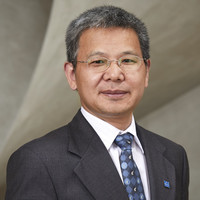
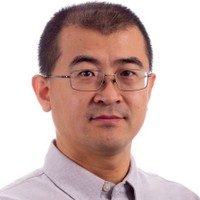
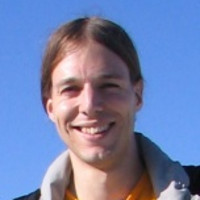
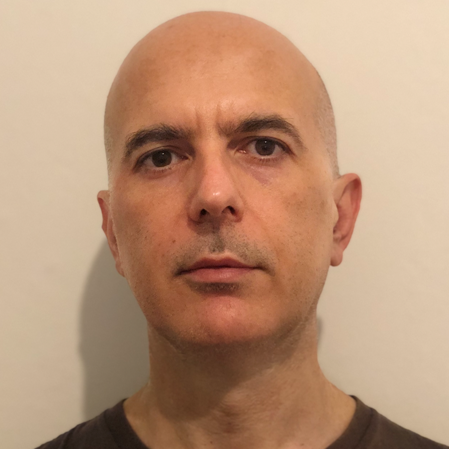
Mariano Scazzariello is a Lecturer at KTH Royal Institute of Technology, Sweden, affiliated with the School of Electrical Engineering and Computer Science and the Department of Network and Systems Engineering. He teaches the course 'Network Systems with Edge or Cloud Datacenters (IK2227)'. His research focuses on advanced networking topics including machine learning in networks, high-speed packet processing, network emulation, and software-defined networking innovations. His work spans contributions to network emulation tools like Kathará and Megalos, stateful packet processing at terabit scales, and leveraging large language models (LLMs) for network configuration and vulnerability detection. Recent research emphasizes low-latency protocols (e.g., SRv6/DetNet integration) and GPU-centric networking on commodity hardware. Mariano’s publications (2020–2025) highlight expertise in network function virtualization, ASIC-based switching, and optimizing network configurations through AI-driven approaches. He has pioneered frameworks for evaluating routing protocols and virtualizing large network scenarios at scale.
Zhonghai Lu is a Professor of Electronic Systems Design (specializing in Dependable and Autonomous Systems) at KTH Royal Institute of Technology, part of the Department of Electrical Engineering in the School of Electrical Engineering and Computer Science (EECS). He serves as Program Director for KTH's Embedded Systems master's program and Director of Studies at the Division of Electronics and Embedded Systems. His research focuses on Network-on-Chip (NoC), computer architecture, embedded systems, and Prognostics and Health Management (PHM) of power electronics. He leads a research group exploring in-network processing and embedded intelligence, transforming passive networks into active computational frameworks. Lu holds a BSc from Beijing Normal University (1989), MSc and PhD from KTH (2002, 2007), and an MBA in Innovation and Growth from the University of Turku (2012). He has authored over 240 scientific papers, including journal articles and peer-reviewed conferences, with notable recognitions such as Best Paper Awards at NOCS’2015 and EU HiPEAC, and a Featured Paper in IEEE Transactions on Computers (2020). He serves as Associate Editor for ACM Transactions on Architecture and Code Optimization (TACO) and has chaired major conferences like HiPEAC’2017 and NOCS’2018. His research group’s recent work includes integrating AI into hardware acceleration, fault-tolerant neural networks, and RUL estimation for power electronics using recurrent neural networks. Lu has secured grants from the Swedish Research Council and Intel Corporation and developed courses like IL2230 (Hardware Architectures for Deep Learning) and IL2233 (Embedded Intelligence), pioneering embedded AI education at KTH. Education: BSc (Beijing Normal University), MSc/PhD (KTH), MBA (University of Turku) Awards: Best Paper Awards (NOCS, EU HiPEAC), Swedish Research Council Grants, Intel Research Gifts Labs/Teams: Research Group on In-Network Processing and Embedded Intelligence
Mats Danielsson is a Professor at KTH Royal Institute of Technology, leading the Medical Imaging research group within the Department of Particle Astrophysics and Medical Imaging. He has coordinated major projects like the ERC Advanced Grant for the Si3 project (starting 2024) and the EIC Pathfinder's 1MICRON project (starting 2025). His work focuses on advancing photon-counting detectors, X-ray technologies, and medical imaging systems. Notable recognitions include the 2024 KTH Innovation Award and the 2022 Hans Wigzell Science Prize. Danielsson has co-founded companies such as Sectra Mamea AB and C-RAD AB, and holds 135 patents with over 150 scientific publications. Education: MSc (1990) and PhD (1996) from KTH, followed by postdoctoral research at Lawrence Berkeley National Lab (1996–1998). He joined KTH in 1999, where he has held his current professorship since then. His research spans medical imaging, detector innovation, and radiation physics applications in healthcare. Research Interests: Development of high-resolution CT detectors, photon-counting technologies, compact X-ray sources, and AI-driven image processing. His recent work emphasizes minimizing radiation exposure while enhancing diagnostic precision through novel detector designs and machine learning algorithms. Key Projects: ERC Si3 project (3D detector for nuclear medicine), EIC 1MICRON (micrometer-scale imaging), and MedTechLabs collaboration with Karolinska Institutet. He has pioneered innovations such as MicroDose mammography and advanced photon-counting spectral CT systems. Awards: KTH Innovation Award (2024), Hans Wigzell Prize (2022), IVA membership (2017), Polhem finalist (2014), and INGVAR Award (2004). Advising & Grants: Over 150 scientific publications, 135 patents, and leadership in multi-institutional projects. Teaches courses on medical imaging and modern physics at KTH. Labs/Teams: Director of the Medical Imaging Group at KTH, co-founder of MedTechLabs, and collaborator across academia and industry in medical imaging innovation.
Zhibo Pang is an Adjunct Professor at KTH Royal Institute of Technology's Department of Intelligent Systems (EECS) and Senior Principal Scientist at ABB Corporate Research Sweden. His work focuses on digital transformation in industry and healthcare, spanning robotics, AI, control systems, and wireless communication. He leads projects in embodied intelligence, Industry 4.0, and Healthcare 4.0, with 23 granted patents and over 120 journal papers. Education: PhD in Electronic and Computer Systems (KTH, 2013), MBA in Innovation & Growth (University of Turku, 2012). Key Roles: IEEE Technical Committee Chair, Editor of 6 IEEE journals, ABB Inventor of the Year (2016, 2018, 2021). Research Interests: Robotics safety, wireless automation, federated learning, digital twins, and IoT security. Recent Projects: Cloud-fog automation frameworks, robot skin systems for healthcare, and latency-aware industrial control. His work bridges academia and industry through cross-functional collaborations.
Cyrille Artho is an Associate Professor in the Division of Theoretical Computer Science at KTH Royal Institute of Technology, actively contributing to research in formal methods, software testing, and cybersecurity. His work spans model checking, smart contract security, and concurrent systems verification, with significant contributions to tools like Java Pathfinder and Modbat. PhD from ETH Zurich (2005) with dissertation on multi-threading fault detection Teaches Software Safety and Security, Software Engineering Fundamentals, and supervises degree projects His research focuses on developing formal techniques for safety-critical systems, particularly in blockchain security and distributed applications. Recent work emphasizes smart contract verification, anomaly detection in microservices, and trusted execution environments for secure cloud analytics. The 15 most recent publications reveal a strong trend toward blockchain security (6 articles), formal verification of distributed systems (5), and novel testing methodologies (4), with increasing integration of machine learning for vulnerability detection. As chair of the FTSCS workshop series and contributor to major conferences like ASE and ICST, Artho has significantly shaped the formal methods community. His leadership in organizing workshops demonstrates commitment to advancing safety-critical systems research. Principal investigator for C3.ai DTI Cyber Safety Cage for Networks project Develops Modbat framework for model-based API testing Active in Digital Futures research initiative at KTH
Marianna Ivashina is a Professor and Head of the Antenna Systems Research Group at Chalmers University of Technology's Department of Electrical Engineering . Her work focuses on array antennas , antenna integration with electronics , optimal beamforming , and over-the-air measurement methods . The group has achieved international recognition for innovations in ultra-wideband (UWB) feeds , Gap waveguide antennas , and Doherty-power-amplifier-integrated antennas for 5G/6G and radio telescope applications. Key projects include the SSF Sweden-Taiwan collaboration , EU Horizon 2020 MyWave , and VINNOVA ENERGETIC initiatives. Her recent publications emphasize millimeter-wave (mmWave) communication and reconfigurable intelligent surfaces (RIS) , with applications in 5G/6G networks , satellite communication (SatCom) , and advanced antenna testing chambers . She explores beamforming optimization , self-interference mitigation , and hybrid OTA environments to enhance wireless system performance. The group's work bridges theoretical advancements with practical implementations, including RFSoC testbeds and high-efficiency antenna arrays . Marianna leads major research programs funded by Ericsson , VINNOVA , and EUREKA EURIPIDES2 , addressing challenges in beamforming , antenna-IC integration , and automated design for 5G/6G . These projects highlight her role in advancing millimeter-wave communication and sensor integration technologies.
Stefano Markidis is a Professor of Computer Science at KTH Royal Institute of Technology, affiliated with the School of Electrical Engineering and Computer Science and the Digital Futures Faculty. He holds a Ph.D. from the University of Illinois at Urbana-Champaign and an MS from Politecnico di Torino. His research focuses on high-performance computing systems, including supercomputers and quantum computers, with expertise in plasma simulations, quantum algorithms, and scalable computational frameworks. Markidis leads the development of the Neko framework for high-fidelity computational fluid dynamics and the iPIC3D particle-in-cell code for plasma physics. He teaches courses such as Quantum Computing for Computer Scientists, High-Performance Computing, and Applied GPU Programming. His work addresses exascale computing challenges, including optimizing algorithms for GPUs, quantum systems, and distributed architectures. Key research interests include: Parallel Programming Models and HPC Frameworks Quantum Computing Applications in Scientific Simulations Physics-Informed Machine Learning Exascale System Optimization Turbulence Modeling and Plasma Dynamics His publications span over 100 articles in journals like Journal of Computational Physics and Scientific Reports , focusing on topics such as scalable CFD, quantum neural networks, and plasma simulation techniques. He has advised numerous students in these areas. Markidis collaborates with institutions like Los Alamos National Laboratory and RISE Research Institutes of Sweden through the Digital Futures initiative, aiming to solve societal challenges via digital technologies.
Carl-Mikael Zetterling is a Professor and Head of Department at Kungliga Tekniska Högskolan (KTH) in Stockholm, Sweden, affiliated with the School of Electrical Engineering and Computer Science (ICT) and the Electronics and Embedded Systems department. His research focuses on process technology and device design for high-temperature, high-power silicon carbide (SiC) electronics, expanding into SiC-based analog and integrated circuits. He has authored over 300 publications, including books on SiC process technology and plagiarism prevention. Dr. Zetterling has held leadership roles such as Vice Dean of the School of ICT (2013–2017) and teacher representative on KTH's faculty board. He has collaborated internationally at Stanford University, Kyoto University, and Kyoto Institute of Technology. His work addresses applications in extreme environments, including Venus exploration and fusion reactor monitoring, with a focus on radiation tolerance and thermal resilience. The 15 most recent publications highlight trends in wide bandgap semiconductors, gamma irradiation effects on SiC devices, and high-temperature integrated circuits. His articles span structural health monitoring with machine learning, novel SiC diode designs, and radiation-hardened electronics. Key contributions include advancements in self-aligned contacts, trench MOSFETs, and compact modeling for extreme conditions. While no formal awards are listed, his roles in technical program committees (TMS Electronic Materials Conference, IEEE SISC Conference) and editorial work demonstrate significant academic service. He teaches courses ranging from digital design to high-temperature electronics, overseeing degree projects in embedded systems, communication, and nanotechnology.
Martin Brisfors is a part-time researcher at KTH Royal Institute of Technology since 2019 and a PhD student in the Department of Electrical Engineering and Computer Science (EECS) since 2022. He is affiliated with the Division of Electronics and Embedded Systems and works in Kista. His research focuses on hardware security and side-channel attacks, with a particular emphasis on cryptographic implementations and countermeasure design. His work spans topics such as post-quantum cryptography (e.g., CRYSTALS-Kyber), AES vulnerability analysis, and the application of deep learning in side-channel attacks. He has contributed to evaluating the efficacy of countermeasures like clock randomization and duplication, uncovering fundamental flaws in their implementation. Brisfors has collaborated on courses such as Hardware Security (IL1333) and Hardware Security (FIL3030) , demonstrating his involvement in both research and education. His publications (2019–2024) reflect a consistent focus on advancing hardware security through empirical analysis and novel attack methodologies.
Professor Ahmed Hemani is a faculty member at the Division of Electronics and Embedded Systems, KTH Royal Institute of Technology, affiliated with the Digital Futures Faculty. He holds the role of PI for the project 'New Chip Architectures for Industrial Vision' and leads research in reconfigurable computing, memristor-based systems, and hardware acceleration for AI and edge computing. His work bridges theoretical computer science with practical VLSI design and embedded systems development. He actively contributes to cross-disciplinary initiatives at Digital Futures, a joint center with Stockholm University and RISE Research Institutes of Sweden focused on digital innovation. His research emphasizes scalable FPGA/HPC architectures, low-power neuromorphic systems, and optimization techniques for custom silicon solutions. Current projects include a Lego-inspired edge AI framework and memristor-driven MIMO acceleration. Teaching responsibilities span advanced courses in SOC design, digital system verification, and embedded systems. He supervises advanced-level degree projects across computer engineering and ICT innovation specializations, emphasizing hands-on hardware-software co-design methodologies. Recent publications highlight innovations in memristor applications, FPGA-based acceleration, and reconfigurable architectures for neural networks and bioinformatics. His work addresses challenges in dark silicon utilization, energy-efficient computation, and high-performance embedded systems.
Zebo Peng is a Professor and Deputy Head of Department at Linköping University's Department of Computer and Information Science (IDA), leading the Software and Systems (SAS) division. His research focuses on embedded systems design, electronic design automation, SoC testing, and real-time systems with emphasis on fault tolerance and hardware/software co-design. He has contributed to projects like the ASTECC initiative, funded by the Swedish Foundation for Strategic Research, addressing adaptive software in edge-cloud continuum systems. Key research interests include cyber-physical systems security, time-sensitive networking (TSN), and optimization techniques using genetic algorithms. Recent work explores thermal-aware design for reliability, security-aware scheduling, and stability guarantees in control systems. His publications span journals like IEEE TPDS and ACM TECS, alongside conference contributions on topics like resource management and fault detection in distributed systems. Prof. Peng collaborates extensively within the SAS division, which bridges academic and industrial research in software engineering and computer systems. His team's projects address challenges in real-time systems, embedded security, and parallel computing architectures.
Mahdi Fazeli is an Associate Professor at the School of Information Technology, Halmstad University, Sweden, specializing in hardware security and trust, energy-efficient computing, and embedded and cyber-physical systems. His academic journey began with a Ph.D. in Computer Engineering from Sharif University of Technology, Iran, in 2011. His career progression includes positions as Associate Professor at Bogazici University (2019-2021) and Iran University of Science and Technology (2016-2019), and Assistant Professor at the same institution (2011-2016). His research interests focus on hardware security and trust, reliable VLSI circuits and systems, energy-efficient computing, and dependable embedded systems. His work bridges the gap between theoretical security concepts and practical implementations in real-world systems, particularly in IoT and embedded environments. He has established himself as a leading researcher in Physical Unclonable Functions (PUFs), hardware trojans detection, and energy-efficient security solutions for resource-constrained devices. His publication record shows a clear progression and deepening expertise in hardware security, with recent work focusing on cutting-edge applications in edge computing, vehicular networks, and IoT security. His 2023-2025 publications demonstrate significant contributions to magnetic memory-based security primitives, anomaly detection systems, and energy-efficient security mechanisms. Throughout his career, Fazeli has led multiple research initiatives including the Dependable Systems and Architecture Lab (DSA) and the Networked and Embedded Systems Lab at Iran University of Science and Technology. His leadership extends to heading the Hardware Group and serving as Vice Chair for Educational Affairs, demonstrating his commitment to both research excellence and academic administration.
Andreas J. Kassler is a Full Professor of Computer Science at Karlstad University, Sweden, where he has been since 2005. He co-chairs the Distributed Systems and Communication (DISCO) group and focuses on networking, cloud computing, and wireless networks. His research includes software-defined networking, future internet architectures, and network optimization. He has authored/co-authored over 130 peer-reviewed publications, holds 6 patents, and serves on editorial boards of journals like Journal of Internet Engineering . Education : Ph.D. in Computer Science, Universität Ulm (2002) Docent (Habilitation), Karlstad University (2007) M.Sc. in Mathematics/Computer Science, Universität Augsburg (1995) Research Interests : Software Defined Networking (SDN) Programmable Dataplanes Wireless Mesh Networks Time-Sensitive Networking (TSN) Edge Computing Machine Learning for Network Optimization Recent Directions : His work spans TSN scheduling, hybrid P4 solutions for 5G, and explainable AI in energy communities. He explores network resilience, latency optimization, and multi-objective control in microgrids. Service Contributions : Track co-chair for VTC 2015 General chair for Wired/Wireless Internet Communications (WWIC) 2013 Editor-in-Chief of IARIA Journal on Advances in Internet Technology Labs/Teams : Leads DISCO group at Karlstad University. Collaborates with global teams on projects like mmWave backhaul networks and SDN-enabled industrial control systems.
Fredrik Sandin is a Professor in the Department of Computer Science, Electrical and Space Engineering at Luleå University of Technology, where he leads the Machine Learning research group with approximately thirty members. His work focuses on neuromorphic technologies and the intersection of machine learning with computational physics to solve challenging real-world interaction problems. He coordinates the 'Teknisk fysik och elektroteknik' program at LTU and has been instrumental in establishing neuromorphic research activities at the university. Luleå University of Technology, Department of Computer Science, Electrical and Space Engineering Member of WASP (Wallenberg AI, Autonomous Systems and Software Program) and ELLIS (European Laboratory for Learning and Intelligent Systems) Coordinator of Neuromorphic Innovation Platform Sweden with KTH, Lund University, Uppsala University, FOI, ABB, Ericsson, and SAAB Fredrik earned his PhD in Physics from Luleå University of Technology in 2007, with thesis work focusing on dense states of matter in neutron stars. His academic journey began with an MSc diploma work in ATLAS at CERN in 2001, followed by postdoctoral research in computational physics at IFPA in Belgium (2008-2009) and brain-like computing at EISLAB with Prof. Jerker Delsing (2010-2011). Professor Sandin's research interests center around neuromorphic technologies, particularly neuromorphic computing and spiking neural networks. He investigates sensor/detector and intelligent systems co-design where constraints like energy, power, latency, and dynamic range challenge conventional digital approaches. His work spans mixed-signal neuromorphic circuits, algorithms, and systems, as well as machine learning projects involving industrial data and collaboration. He has been a key figure in establishing neuromorphic research at LTU, supported by The Kempe Foundations, particularly through the 2014 Gunnar Öquist Fellowship. His recent publications demonstrate a strong interdisciplinary focus spanning quantum phase transitions, particle physics detector optimization, renewable energy materials, and the integration of large language models into control systems. This diverse portfolio reflects his approach connecting machine learning with fundamental physics and practical engineering applications, particularly in neuromorphic computing and intelligent systems design, with emphasis on solving real-world problems through co-design of hardware and algorithms. Gunnar Öquist Fellowship Award and 3 MSEK grant from The Kempe Foundations ISSP award for an Original Work in Theoretical Physics (signed by Prof. 't Hooft and Prof. Zichichi) New-Talents award for original work in theoretical physics at the International School of Subnuclear Physics in Erice Professor Sandin has supervised numerous PhD students working on topics ranging from neuromorphic TinyML to materials for neuromorphic computing, privacy-preserving machine learning at the edge, and intelligent fault diagnosis. He has secured substantial research funding from various sources including Vinnova, ÅForsk, Kempe Foundations, WASP-WISE, and EU programs like ECSEL JU Arrowhead Tools and ITEA3 AutoDC. His current major projects include the Neuromorphic Innovation Platform Sweden and several initiatives focused on neuromorphic condition monitoring and computing, with total funding exceeding 30 MSEK in the past five years. He leads the Machine Learning group at LTU, which collaborates extensively with industry partners including ABB, Ericsson, SAAB, SKF, and RISE. The group is active in developing neuromorphic technologies for wireless sensor networks, condition monitoring systems, and next-generation intelligent systems that address energy, power, and latency constraints that challenge conventional digital approaches.
Summary Pawel Andrzej Herman is an Associate Professor at the Division of Computational Science and Technology within the School of Computer Science and Communication (CSC) at KTH Royal Institute of Technology. His research focuses on computational neuroscience, brain-inspired AI, and machine learning applications in healthcare and cognitive science. He teaches multiple courses including Artificial Neural Networks and Deep Architectures , supervises degree projects across computer engineering and electrical engineering disciplines, and actively contributes to interdisciplinary research initiatives. His work bridges theoretical neuroscience with practical AI solutions, emphasizing synaptic plasticity models, neuromorphic computing, and medical diagnostic systems. Key areas include olfactory perception modeling, working memory mechanisms, and FPGA-accelerated neural networks. He collaborates internationally on projects such as AI-driven medical imaging and cognitive neuroscience studies. Dr. Herman’s research has been published in high-impact journals and conferences, with recent contributions to understanding neural mechanisms of odor naming deficits, beta/alpha oscillations in working memory, and spiking neural network architectures. His technical leadership spans HPC frameworks like StreamBrain and interdisciplinary tools for scientific data storage (NoaSci).