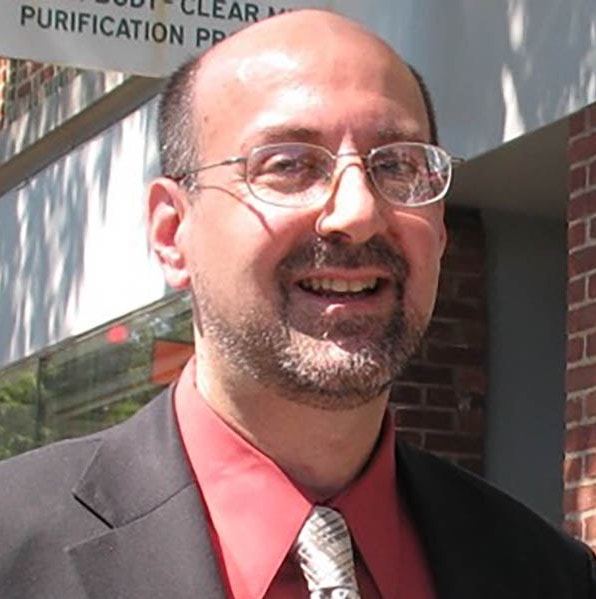
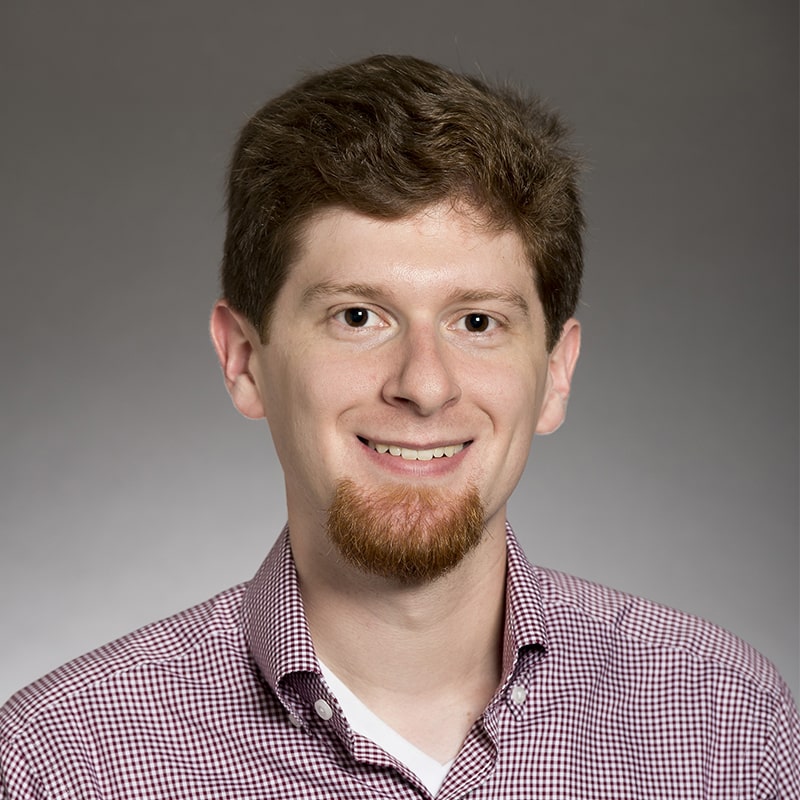
Reid Simmons is a Research Professor at the Robotics Institute , part of the School of Computer Science at Carnegie Mellon University . His work focuses on creating reliable, highly autonomous systems that operate in uncertain environments, particularly mobile robots. He leads the Reliable Autonomous Systems Lab and serves as Director of the Artificial Intelligence Major at CMU. Research Interests: Autonomy, AI reasoning, human-robot interaction, multi-robot coordination, probabilistic planning Projects: SUCCESS (proficiency metrics), Social Robot (personality-driven interaction), Data Analysts (AI for data science) Recent Publications: 15 articles (2017-2023) on topics like human-robot teaming, machine teaching, and affective computing His research emphasizes model-based reasoning , error recovery , and socially acceptable robot behavior , including projects like the Tank and Victor robots for interactive tasks. Students and affiliates span PhD/Master's programs, with past advisees now leading in robotics (e.g., Heather Knight, Christopher Urmson).
Daniel Anderson serves as an Assistant Teaching Professor within the Computer Science Department at Carnegie Mellon University, based in office 4124 of the Gates and Hillman Centers. His academic role focuses on curriculum delivery and student instruction across multiple advanced computing courses. His research and pedagogical expertise centers on core computer science disciplines, with particular emphasis on: Algorithms: Specializing in design, optimization, and complexity analysis of computational methods Machine Learning: Focusing on practical implementation frameworks and educational approaches to model training Programming Education: Developing innovative techniques for teaching foundational and advanced coding concepts Professor Anderson maintains an active teaching schedule spanning Spring 2024 through Fall 2025, consistently instructing flagship courses including 15-451 (Algorithm Design and Analysis), 15-651 (Machine Learning), and 15-110 (Principles of Computing) across both undergraduate and graduate levels. Administrative support for his position is provided by Marcella Baker.
Khaled Harras serves as Senior Associate Dean of Faculty and Director of the HBJ Center for CS Education at Carnegie Mellon University in Qatar, where he also holds the position of Teaching Professor in the Computer Science Department. His professional focus centers on computer science education and academic leadership. As Director of the HBJ Center for CS Education, he oversees initiatives related to computer science pedagogy, curriculum development, and educational innovation at CMU Qatar. The Computer Science program he helps lead offers a Bachelor of Science degree with comprehensive training in theoretical foundations, programming, computer systems, and algorithms, while providing flexibility for students to pursue minors or concentrations in specialized areas. Professor Harras plays a key administrative role in faculty governance as Senior Associate Dean, contributing to strategic planning and academic oversight for the institution. His leadership supports a program that prepares graduates for diverse technology careers including software engineering, AI development, machine learning specialization, data science, and cybersecurity. Under his directorship, the HBJ Center for CS Education advances computer science teaching methodologies and supports the development of future technology professionals in Qatar and beyond.
Maryam Saeedi is an Associate Professor of Economics at the Tepper School of Business , Carnegie Mellon University , with prior appointments at Ohio State University and New York University. Her research bridges Industrial Organization , Game Theory , and Market Design , focusing on reputation systems, information asymmetry, and dynamic incentives in digital economies. PhD in Economics (University of Minnesota, 2012) MA in Economics (University of British Columbia, 2005) BS in Mechanical Engineering (Sharif University, 2004) Her work combines theoretical and empirical approaches to analyze how information structures affect market outcomes, including optimal rating systems, certification thresholds, and dynamic auction mechanisms. Key themes include: Reputation dynamics in two-sided markets Strategic information disclosure Collusion and search behavior in transparent markets Notable awards include the EQT Foundation & Scott Institute Seed Grant (2020) and the Best Paper Award (2017). She has taught courses like Designing the Digital Economy and Game Theory across multiple institutions, while serving on committees focused on curriculum development and PhD recruitment.
Lee Branstetter is the James M. Walton Professor of Economics and Public Policy at Carnegie Mellon University’s Heinz College, where he has been a faculty member since 2006. He leads the Center for the Future of Work at the Block Center for Technology and Society, exploring technology’s impact on work and inequality. His research focuses on innovation economics, technology diffusion, and public policy, with interdisciplinary collaborations across computer science and policy domains. Branstetter previously served on President Obama’s Council of Economic Advisers (2011–2012) as senior economist for international trade and investment. Education: Ph.D. in Economics from Harvard University. Prior roles include Director of Columbia Business School’s International Business Program and Director of UC Davis’ East Asian Studies Program. Research Interests: Economics of innovation, technology’s societal impact, and policy responses to technological disruption. Recent work emphasizes global R&D networks, China’s industrial policies, and the future of work in the digital economy. Key Contributions: Analysis of U.S.-China trade dynamics, ridesharing’s socioeconomic effects, and the role of AI in education and workforce development. His policy briefs inform debates on productivity, intellectual property, and technology-driven inequality. Advisory & Grants: Leads major interdisciplinary projects at CMU, including the Future of Work Initiative. Engages with policymakers via the National Bureau of Economic Research and regional economic revitalization efforts in Southwestern Pennsylvania. Labs/Teams: Oversees the Center for the Future of Work, a hub for CMU’s cross-disciplinary research on technology and labor markets.
Reeja Jayan is a Professor in Mechanical Engineering at Carnegie Mellon University (CMU), with courtesy appointments in Materials Science & Engineering, Chemical Engineering, and Electrical & Computer Engineering. She leads the Far-from-Equilibrium Materials Laboratory (J-Lab), focusing on electromagnetic field-driven material synthesis and energy-efficient manufacturing. Her research spans ceramics, polymers, and energy storage systems, with breakthroughs in low-temperature material processing and data-driven discovery. Jayan holds prestigious awards including the ARO and AFOSR Young Investigator Awards, and is a CMU Engineering Dean’s Early Career Fellow. She pioneered game-based learning using Minecraft to teach materials science. J-Lab’s work includes additive manufacturing of ceramics, field-assisted synthesis, and autonomous robotic platforms for materials engineering. Jayan advises a dynamic team of graduate and undergraduate students, with notable alumni in academia and industry. Education: M.S. in Electrical Engineering, The University of Texas at Austin Ph.D. in Materials Science and Engineering, The University of Texas at Austin Postdoctoral Associate in Chemical Engineering, MIT Research Interests: Materials synthesized under electromagnetic fields, far-from-equilibrium processing, additive manufacturing of ceramics, energy storage systems, and data-driven autonomous synthesis. J-Lab’s work merges experiments with computational models to explore novel material behaviors and sustainable manufacturing techniques. Key thrusts include low-temperature ceramic synthesis, field-induced phase transitions, and machine learning-guided robotics for materials discovery. Publications: Over 50 peer-reviewed articles in top journals like Advanced Materials and Journal of the American Ceramic Society , focusing on electromagnetic field applications, battery interfaces, and ceramic processing innovations. Grants & Awards: NSF CAREER Award (2018) CMU Scott Institute Seed Grant (2020) Air Force Research Lab (AFRL) Center of Excellence funding Labs & Teams: J-Lab collaborates with industry and national labs, including the AFRL and NIST. Projects include developing closed-loop robotic systems for materials synthesis and low-emission ceramic manufacturing processes.
David Touretzky is a Research Professor at Carnegie Mellon University's Department of Computer Science. His research focuses on robotics education, computational neuroscience, and developing accessible programming frameworks like Tekkotsu for undergraduate robotics instruction. He creates affordable mobile manipulators for classroom use and designs K-12 curricula teaching computational thinking through AI idioms and state machines. Research interests include: Robotics software frameworks for education K-12 programming pedagogy Affordable educational robotics platforms Neural network education for youth Computer vision and manipulation systems His publications demonstrate a consistent focus on AI and robotics education, particularly knowledge transfer from university to K-12 settings. Recent work explores co-design approaches with teachers and game-based learning to make AI concepts accessible to younger students.
Josue Orellana is a Research Professor in the Department of Statistics & Data Science at Carnegie Mellon University (CMU) and serves as Managing Editor of the Computational Neuroscience Navigator initiative. He holds a PhD in Machine Learning and Neural Computation from CMU (2019) and a B.S. in Electrical Engineering from Washington State University. Previously, he worked as a Research Scientist at the National University of Singapore and Johns Hopkins University. His research integrates Statistics , Machine Learning , and Computational Neuroscience to model brain network interactions during cognitive tasks. He also investigates statistics education methodologies through the CMU Teach Stat research group. His work emphasizes graphical network analysis, phase coupling in neural circuits, and educational cognitive science. Publications span neuroscience, machine learning, and statistics education, with recent articles exploring neural oscillations, educational assessment tools, and multivariate phase coupling. His scholarly output demonstrates consistent focus on statistical methodology in neural systems and innovations in STEM pedagogy . Awards & Grants: CMU Simon Seed Grant (2020) GuSH cross-walk statistics education grant (2019) CMU Presidential Fellowship (2016-2018) President’s Honor Roll, WSU (2008-2012) He leads the Computational Neuroscience Navigator project at CMU’s Open Learning Initiative, developing concept-driven video resources. No advising relationships or lab affiliations are detailed beyond his educational research group.
Robert Kass is the Maurice Falk University Professor of Statistics and Computational Neuroscience at Carnegie Mellon University, with affiliations in the Department of Statistics & Data Science, Machine Learning Department, and Neuroscience Institute. He has served as Department Head of Statistics for 9 years and held leadership roles in academic societies. Ph.D. in Statistics (University of Chicago, 1980) B.A. in Mathematics (Antioch College) Postdoctoral training at Princeton University His research bridges statistics and neuroscience, focusing on: Statistical methods for neural data analysis Bayesian inference and graphical models Point process modeling of spike trains High-dimensional and time-series analysis Computational neuroscience education Recent publications span computational neuroscience, emphasizing phase coupling analysis, latent variable modeling, and cross-population dynamics, with methodological innovations in neural data interpretation. As founding Editor-in-Chief of Bayesian Analysis and Executive Editor of Statistical Science , he shaped academic discourse in statistics. Key scientific recognitions: Outstanding Statistical Application Award (ASA) Distinguished Achievement Award (COPSS) National Academy of Sciences member (2023) He co-authored the influential textbook Analysis of Neural Data and developed international workshops like Statistical Analysis of Neuronal Data (2002-2017), advancing neuroscience methodology globally.
Peter Freeman is an Associate Teaching Professor and Director of the Undergraduate Program in the Department of Statistics & Data Science at Carnegie Mellon University's Dietrich College of Humanities and Social Sciences. He holds a B.A. in Physics (1989, University of California) and a Ph.D. in Astronomy and Astrophysics (1997, University of Chicago). Before joining CMU in 2004, he worked as a scientific programmer for the Chandra X-ray Telescope mission, specializing in data analysis methodologies. His research focuses on astrostatistics, developing advanced statistical techniques for analyzing complex astronomical datasets. Key areas include source detection algorithms, cosmic microwave background mapping, photometric redshift estimation, and galaxy morphology analysis. He has collaborated with faculty and students from CMU and the University of Pittsburgh on interdisciplinary projects, integrating machine learning and computational methods into astrophysical research. Freeman is actively involved in educational initiatives such as the STAMPS (Statistical Pedagogy & Educational Research) group and the Carnegie Mellon Sports Analytics Camp (CMSAC). His work emphasizes authentic, community-engaged learning experiences, particularly in undergraduate laboratory courses and data science curricula. His recent publications span astrostatistics, ecological studies (e.g., Coqui frog acoustic analysis), and pedagogical innovations in STEM education. He has contributed to major projects like the Rubin Observatory Legacy Survey of Space and Time (LSST) and the CANDELS galaxy structure classification effort.
Alex Reinhart is an Associate Teaching Professor in the Department of Statistics & Data Science at Carnegie Mellon University, affiliated with the Dietrich College of Humanities and Social Sciences. He holds a Ph.D. from CMU and a BS in Physics from the University of Texas at Austin. His research focuses on statistical pedagogy, natural language processing, and applications of spatio-temporal data analysis to crime prediction and radiation detection. Reinhart’s work emphasizes improving statistical education through innovative methods like writing in the age of AI and psychology case studies. He also explores the intersection of large language models and human-like text generation. His contributions include the book Statistics Done Wrong , which critiques common statistical errors in scientific research. His recent publications address pandemic-related challenges, such as vaccine hesitancy and real-time data analysis through surveys like the US COVID-19 Trends and Impact Survey. His research spans statistical software development (e.g., the pseudobibeR package) and interdisciplinary applications in public health, biomechanics, and education.
Ying Jin is an Assistant Professor in the Department of Statistics and Data Science at the Wharton School, University of Pennsylvania. She received her PhD in Statistics from Stanford University in 2024, advised by Emmanuel Candès and Dominik Rothenhäusler, and holds a B.S. in Mathematics and B.A. in Economics from Tsinghua University. Current faculty at UPenn Wharton Former postdoctoral fellow at Harvard Data Science Initiative Her research focuses on Uncertainty Quantification and Generalizability in AI models, particularly through conformal prediction , causal inference , and multiple testing . Recent work explores distribution shifts in large-scale replication studies and methods for trustworthy AI in drug discovery and medical applications. Key article trends show expertise in: Conformal prediction methods Causal inference under distribution shifts LLM-driven scientific discovery Replicability analysis AI uncertainty quantification High-stakes AI validation Scientific awards include: 2025 IMS Lawrence D. Brown PhD Student Award 2024 Jack Youden Prize for best expository paper in Technometrics She organizes the Online Causal Inference Seminar and contributes to open science through the awesome-replicability-data GitHub repository containing curated replication datasets.
Dr. Richard Randall is an Associate Professor of Music Theory at Carnegie Mellon University's School of Music and holds a faculty appointment at the Center for the Neural Basis of Cognition and the Neuroscience Institute. His research focuses on the cultural, technological, and psychological foundations of musical experiences, with particular emphasis on auditory perception, cognitive processes, and the intersection of music with social and political contexts. He directs the Music Experience Lab (MEL), which explores interdisciplinary questions about music's role in human life, including projects centered on Romani musicians in the Balkans and the ethical dimensions of music technology. Randall co-founded the Listening Spaces Project, examining how technology shapes contemporary musical practices, and led initiatives like the Pittonkatonk festival, advocating for music as a public good. His work bridges neuroscience, media studies, and ethnomusicology, supported by grants such as the Rothberg Research Award and NIH funding. Affiliations: School of Music, Center for the Neural Basis of Cognition, Neuroscience Institute Key Projects: MEL, Listening Spaces Project, Romani Drummers Project, Pittonkatonk Education: (Not explicitly stated in provided text) Randall's research spans neuroimaging studies of auditory perception (e.g., auditory scene analysis) to cultural critiques of digital music distribution. His lab emphasizes collaborations with artists, activists, and technologists to address systemic issues like cultural representation and labor rights in music. He co-edited 21st Century Perspectives on Music, Technology, and Culture and developed educational programs such as the Young Musicians Collaborative, fostering community engagement through music. His recent publications explore topics like predictive coding models of musicality perception and the impact of low-level auditory features on grouping strength. Awards include the NIH grant T32-MH19983. Randall also leads the experimental ensemble Bombici, merging Balkan folk traditions with electronic improvisation. Grants: Rothberg Research Award, NIH grant T32-MH19983, Fine Foundation, Sprout Fund Labs/Teams: Music Experience Lab (MEL), Listening Spaces Project, Bombici collective
Michael Skirpan is an Assistant Professor at Carnegie Mellon University's School of Computer Science, Software and Societal Systems Department, with additional roles as executive director of Community Forge and co-founder of Probable Models . His work bridges technology, ethics, and education through innovative pedagogy and public engagement. PhD in Computer Science (socio-technical narratives) – University of Colorado Boulder His research focuses on ethics in computing , particularly in AI and machine learning, with interests spanning: Ethics of AI and data systems Design fiction for technology speculation Risk analysis frameworks Immersive education techniques Public engagement with algorithms Equity in classroom technology The 15 most recent publications reveal trends in machine learning ethics , design fiction , and public technology education , with a strong emphasis on contextualizing fairness in algorithms, participatory approaches to AI, and using creative methods like immersive theater for ethical discussions. Notable scientific achievement: Produced award-winning immersive play Project Amelia (2019-present), which explores AI ethics through interactive theater He advises initiatives around public use of algorithms and provides training to private/public sector entities. His community work includes rehabilitating an abandoned elementary school into a community center focused on education, arts, and local economy development.
Jonathan Cagan is the George Tallman and Florence Barrett Ladd Professor in Engineering at Carnegie Mellon University's College of Engineering. His work bridges AI, machine learning, and cognitive science to enhance engineering design and decision-making. He co-founded CMU's Integrated Innovation Institute and held leadership roles including Associate Dean and Interim Dean. Research focuses on computational modeling of designer processes, biomechanical systems, and human-AI collaboration. Collaborations span psychology, neuroscience, computer science, and architecture. Recent publications highlight AI integration in design automation, additive manufacturing, and mixed reality systems. His work explores trust dynamics, confidence modeling, and optimization algorithms in human-AI teams. Scientific awards include the Robert A. Doherty Award for Excellence in Education and the ASME Design Theory and Methodology Award. He is a Fellow of ASME.