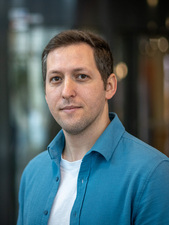
Dr. İlhan Mutlu is a postdoctoral researcher at the Helmholtz Centre for Environmental Research - UFZ in the Department of Computational Biology and Chemistry since 2023. Previously, he worked at TU Dresden (2021-2023) and IAV GmbH (2017-2021). He holds a PhD in Control and Automation Engineering (Istanbul Technical University, 2017) and focuses on data integration , graph databases , and machine learning models for toxicology prediction . His research bridges environmental data analysis with automated systems , particularly in freshwater toxicity assessment and optimal control techniques . Recent projects include ChEOS (toxicity prediction in European waters) and SafePol (pollinator protection). His technical expertise spans Neo4j , CleanGeoStreamR , and ecoKI platform development. Publications emphasize data curation for environmental monitoring, graph-based toxicity tools , and ML-driven chemical risk assessment . His work also involves automated driving systems , including model-free trajectory planning and robust control algorithms . Though no scientific awards are listed, his contributions span interdisciplinary domains combining environmental science with computational engineering .
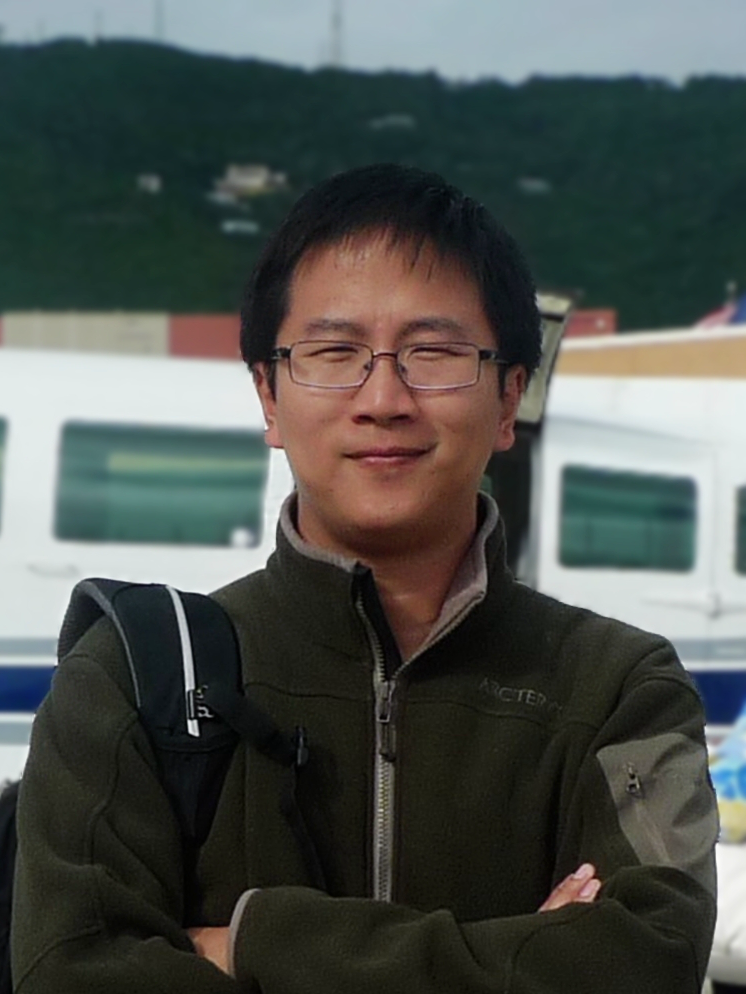
Yanliang Zhang is a Professor and the Advanced Materials and Manufacturing Collegiate Chair in the Department of Aerospace and Mechanical Engineering at the University of Notre Dame's College of Engineering. He directs the Advanced Manufacturing for Energy and Health (AMEH) Lab, where he leads cutting-edge research at the intersection of advanced manufacturing, energy conversion, and healthcare sensing technologies. His educational background includes: Ph.D. in Mechanical Engineering from Rensselaer Polytechnic University (2011) M.S. in Mechanical Engineering from Southeast University, China (2008) B.S. in Mechanical Engineering from Southeast University, China (2005) Professor Zhang's research spans multiple domains with a focus on thermal science and energy conversion . His work centers on developing innovative manufacturing techniques for functional materials and devices, particularly in the areas of thermoelectrics, flexible electronics, and advanced sensing systems. The lab employs an "Atomic to System Engineering" approach to bridge fundamental research with practical applications. Key research thrusts include: Additive manufacturing and scalable nanomanufacturing of functional materials Thermal and thermoelectric energy conversion, harvesting, and storage Advanced sensors for extreme environments and healthcare monitoring Autonomous materials discovery through high-throughput combinatorial methods Analysis of Professor Zhang's recent publications (2024-2025) reveals a strong emphasis on aerosol jet printing , thermoelectric devices , and machine learning-assisted manufacturing . His work demonstrates a progression from fundamental materials research toward integrated systems for energy conversion and healthcare applications. A notable trend is the increasing integration of AI/ML techniques with advanced manufacturing processes to optimize device performance and enable autonomous fabrication. Professor Zhang has received significant recognition for his work, including: International Thermoelectric Society 2020 Young Investigator Award His research program is supported by prestigious funding from the U.S. Department of Energy, National Science Foundation, and industry partners. Professor Zhang actively mentors the next generation of engineers through his laboratory, which includes postdoctoral researchers, PhD students, and undergraduate researchers working on diverse projects spanning from fundamental materials science to applied device engineering. The Advanced Manufacturing for Energy and Health Lab maintains strong collaborative ties with industry and national laboratories, facilitating the translation of research discoveries into practical applications. Current research directions include bioprinting, autonomous manufacturing systems, and next-generation thermoelectric technologies for energy harvesting and cooling applications.
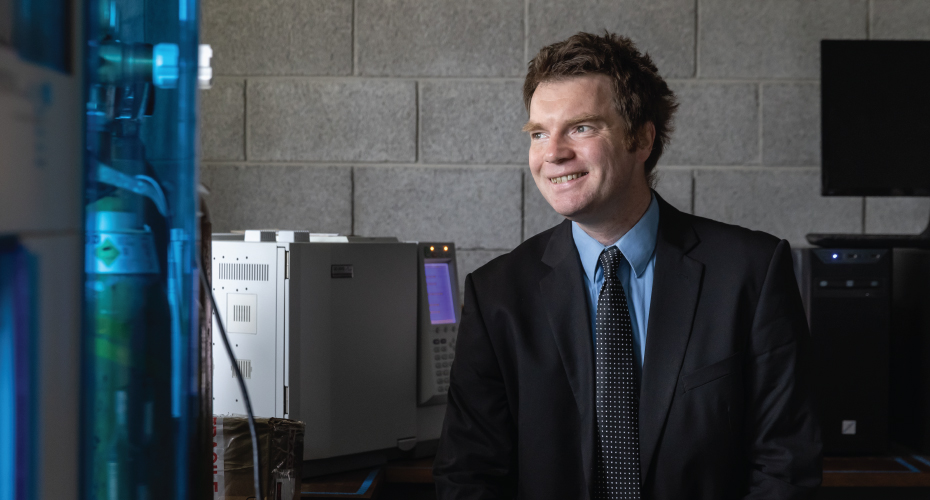
Professor Niall English is a leading academic at University College Dublin's College of Engineering & Architecture, specifically within the School of Chemical & Bioprocess Engineering. With over 20 years of dedicated research in gas hydrate systems, his work bridges fundamental science and industrial applications, particularly in climate change mitigation and wastewater treatment innovation. His research focuses on gas hydrate kinetics, methane emissions, and microbial regulation of hydrate stability , with groundbreaking contributions to understanding the relationship between Earth's magnetic field reversals and historical mass extinction events (the 'Belfast hypothesis'). Key interests include: Nanobubble engineering for industrial wastewater treatment Electromagnetic field effects on chemical processes Microbial-peptide regulation of gas hydrates Climate change implications of Arctic hydrate destabilization Professor English's recent publications (2024-2025) reveal a strong trend toward environmentally sustainable applications , particularly electric-field nanobubble technologies for wastewater treatment, biogas upgrading, and carbon capture. His work demonstrates significant cross-disciplinary integration of computational chemistry, environmental engineering, and geophysics. He received the Leverhulme Trust Research Project Award (2021-2023) for 'Exploring the potential for biocatalytic gas-hydrate formation (BioGHF)', reflecting the international recognition of his work. His commercialization efforts include two spin-out companies: Aqua-B (CEO) for nanobubble wastewater treatment and BioSimulytics for pharmaceutical crystal-structure prediction software. Professor English actively collaborates with Queen's University Belfast microbiologist Professor Chris Allen, filing joint patents for regulating gas hydrate growth using proteins and peptide sequences. Their research targets the $1 trillion wastewater treatment industry, aiming to solve challenges in processing heavily polluted water through hydrate-based separation techniques.
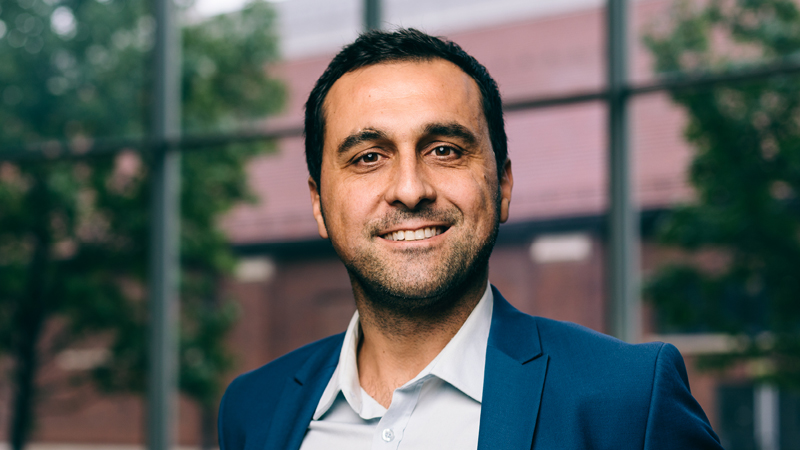
Dr Anthony J H Simons is a Senior Lecturer in the Department of Computer Science at the University of Sheffield, where he serves as Deputy Director of UG Admissions. He is a member of the Testing research group and has been affiliated with the university since completing his PhD there. His academic journey spans several decades, moving from speech recognition systems to object-oriented programming languages and currently focusing on model-based testing and cloud computing applications. Dr Simons holds an MA in Modern Languages from the University of Cambridge and a PhD in Computer Science from the University of Sheffield. His educational background in both humanities and technical fields has informed his interdisciplinary approach to software engineering research. His primary research interests center around turning formal verification results into practical software engineering benefits. Currently, he investigates Model-Based Testing and Model-Driven Engineering with applications to Cloud Computing. Earlier in his career, he made significant contributions to object-oriented software engineering, including type theory and software development methods. He is the inventor of the JWalk automatic software testing tool for Java and the JAST library for processing XML in Java, and co-author of the OPEN Toolbox of Techniques. His work bridges theoretical computer science with practical software development needs. Analysis of his recent publications reveals a clear trajectory from foundational work in object-oriented type theory to applied research in cloud computing and model-based testing. His scholarship demonstrates consistent focus on formal methods applied to practical software engineering challenges, with increasing emphasis on cloud infrastructure testing and verification in recent years. Dr Simons has secured significant research funding as Principal Investigator, including the Broker@Cloud project (EC-FP7, £323,688, 2012-2015), Future Engineering System (InnovateUK, £199,874, 2016-2019), and Ferromone Trails Concept (Department for Transport, £24,635, 2017). He has supervised numerous undergraduate and masters' projects throughout his career and continues to mentor students despite being semi-retired. He leads the Testing research group at Sheffield and has developed several research projects including CatWalk (a software testing tool for Java), ReMoDeL (a conceptual modeling language), and tools for verifying specifications and generating tests for software services in the cloud. His research has practical applications in cloud service brokerage and quality assurance.
Bo Luo is a Professor in the Department of Electrical Engineering and Computer Science at the University of Kansas . He serves as Director of the High Assurance and Secure Systems (HASS) Research Center within the Institute for Information Sciences (I2S) , a National Center of Academic Excellence in Cyber Defense and Research by the National Security Agency. Education: Ph.D. in Information Sciences and Technology, Pennsylvania State University (2008) M.Phil. in Information Engineering, Chinese University of Hong Kong (2003) B.E. in Electronic and Information Engineering, University of Science and Technology of China (2001) His research focuses on security and privacy at the intersection of data science, AI/ML, IoT/CPS, and network security . Current projects include adversarial machine learning, privacy compliance in smart devices, and hardware-enabled security solutions. He leads the InfoSec Research Group , mentoring students in areas like IoT security, deep learning vulnerabilities, and cryptographic systems. Recent article trends highlight IoT device vulnerabilities (2025), privacy compliance in automotive apps (2024), adversarial AI-art detection (2024), and secure computation frameworks (2024). His work appears in top venues like ACM CCS , USENIX Security , and IEEE TDSC . Scientific Recognition: ACSAC 2021 Distinguished Paper Award ACSAC 2017 Best Paper Award CCS 2022 Best Paper Honorable Mention ICPC 2024 Distinguished Paper As Principal Investigator for the Jayhawk SFS CyberCorps Scholarship , he trains future cybersecurity professionals. His lab collaborates on cyber-physical security and AI safety , with alumni placed at institutions like Beloit College, Apple, and Amazon.
Alexander Hepp serves as a Lecturer at the Chair of Security in Information Technology, Technical University of Munich (TUM), where he contributes to both teaching and cutting-edge hardware security research. His current teaching responsibilities include C++ Lab, Embedded Systems and Security, and Strategic Management for Engineers, where he acts as primary lecturer for the latter course. His research centers on hardware trojan design/identification and netlist reverse engineering within the chair's broader security initiatives. His research portfolio demonstrates deep specialization in hardware security vulnerabilities, with emphasis on hardware trojan insertion/detection methodologies and reverse engineering countermeasures. Recent work explores neuro engineering applications and RISC-V-based security implementations, often leveraging open-source hardware frameworks. His publications reveal consistent innovation in hardware obfuscation techniques and netlist analysis tools, addressing critical gaps in pre-silicon security validation. His 12 publications from 2021-2024 show strong focus on hardware security conferences like DATE and DDECS, with recurring themes in trojan detection, reverse engineering challenges, and cryptographic hardware validation. The research trajectory indicates growing emphasis on practical countermeasures against physical attacks and standardized vulnerability assessment frameworks. Scientific Awards: Best Paper Award at DDECS 2022 for 'Hardware Obfuscation of Digital FIR Filters' No verifiable information exists regarding student advising or grant funding in available sources. He operates within Prof. Sigl's research ecosystem which actively pursues projects in fault attacks, IoT security, physical unclonable functions, and post-quantum cryptography implementations, with recent work emphasizing hardware reverse engineering challenges in advanced semiconductor designs.
Iulia Popescu is a Postdoctoral Research Fellow at the National Institute for Health Research (NIHR) Oxford Biomedical Research Centre (Oxford BRC) and the Radcliffe Department of Medicine (RDMOxford), University of Oxford. Her work focuses on biomedical image analysis, particularly cardiac T1 mapping standardization across global multi-centre studies. She specializes in deep learning , AI , data visualization , and automated quality control in medical imaging. She earned her DPhil in digital health at the University of Oxford, developing personalized models for cardiac wall motion abnormality and scar quantification using multimodal imaging. Her research spans cardiac magnetic resonance (CMR) , quantitative tissue characterization , and clinical translation of imaging protocols. She has contributed to tools like the Total Mapping Toolbox (TOMATO) and patented methods for medical image enhancement and quality validation . She collaborates with clinical and industrial partners, working on multi-centre clinical trials and executive-level multidisciplinary teams . Her recent publications address T1-mapping standardization , automated segmentation reliability , and multi-vendor imaging consistency , with applications in hypertrophic cardiomyopathy and scar quantification . She is funded by the NIHR Oxford BRC and associated with the Piechnik Group and Ferreira Group at Oxford.
Valentino Razza serves as a Fixed-term Assistant Professor in the Department of Management and Production Engineering (DIGEP) at Politecnico di Torino, where he is also a member of the Interdepartmental Center J-Tech@PoliTO. His academic appointments span multiple colleges including the College of Management and Production Engineering (primary affiliation), College of Computer, Film, and Mechatronics Engineering, and College of Mechanical, Aerospace, and Automotive Engineering as an invited member. His research focuses on Manufacturing Technologies and Systems with specialization in Automatic Identification Systems and Control Systems. Key research areas include laser welding processes, thermographic material inspection, production system optimization, and digital control architectures. His work intersects with Sustainable Development Goals 9 (Industry, Innovation, Infrastructure) and 12 (Responsible Consumption and Production) through advanced manufacturing solutions. Razza's publication portfolio demonstrates strong emphasis on laser-based manufacturing technologies and non-destructive testing methods . His recent work combines computational modeling with experimental validation in welding processes, thermoplastic joining, and quality control systems. The research consistently applies control engineering principles to solve production technology challenges. He holds a national/international patent for Methodology for the Non-Destructive Testing of Welded Joints Using Active Thermography (co-invented with Manuela De Maddis and Luca Santoro), demonstrating practical applications of his research. In teaching, Razza serves as Course Collaborator across multiple degree programs including Management and Production Engineering, Computer Engineering, and Automotive Engineering. His instructional focus includes Digital Control Technologies, Analysis and Management of Production Systems, and emerging topics like Machine Learning in Manufacturing Applications for PhD students.
Zeynel B. Celik is an Assistant Professor of Computer Science at Purdue University's Department of Computer Science, part of the College of Science. He joined the department in Fall 2019. His research focuses on Information Security and Assurance, Networking and Operating Systems, and advancements in Artificial Intelligence, Machine Learning, and Natural Language Processing. Education: Ph.D. in Computer Science and Engineering from Pennsylvania State University (2019). He maintains an active research profile, with his work spanning cybersecurity, network systems optimization, and AI-driven language processing. His office is located in LWSN 1203, and he can be reached via email at zcelik@purdue.edu. Celik's professional web presence includes a personal homepage and a Google Scholar profile .
Dr. Sepehr Alizadehsalehi is an adjunct lecturer and researcher at Northwestern University's Robert R. McCormick School of Engineering and Applied Science, where he teaches in the Master of Project Management program. Concurrently, he works as an industry professional in land development and real estate in California's Bay Area. His global experience spans major construction projects across the Middle East, Europe, and North America. His educational background includes: Ph.D. in Civil Engineering with a specialization in Construction Management M.S. in Project Management M.S. in Civil Engineering B.S. in Civil Engineering Dr. Alizadehsalehi's research centers on transformative construction technologies including Building Information Modeling (BIM), Extended Reality (XR), Artificial Intelligence (AI), the Metaverse, Cognitive Digital Twins, Reality Capture Technologies, and Lean Construction methodologies. His investigations focus on practical implementation challenges and innovative applications in industrial workflows. His scholarly contributions demonstrate consistent focus on digital transformation in construction, with recent works exploring the integration of AI with extended reality, metaverse applications in AEC, and cognitive digital twins. The publications reveal strong emphasis on practical implementation challenges, sustainability considerations, and human-centric approaches to technological adoption. Dr. Alizadehsalehi actively contributes to academic discourse as an editor and reviewer for leading journals including Automation in Construction (Elsevier), ASCE Journal of Construction Engineering and Management , and Advanced Engineering Informatics .
Janise McNair is a Professor in the Department of Electrical & Computer Engineering at the University of Florida. Her research focuses on wireless and mobile networking, next-generation wireless systems, and medium access control protocols. She holds the Nelms Faculty Fellowship and has been recognized with awards such as the IEEE Best Paper Session and IET Featured Article honors. Her work emphasizes cybersecurity in smart grids and software-defined networks (SDN), alongside innovations in edge computing and IoT integration. Education: PhD in Electrical & Computer Engineering from Georgia Institute of Technology (2000), MS (1993) and BSEE (1991) from University of Texas at Austin. Research Interests: Dr. McNair’s expertise spans cyber-physical security, resilient smart grid architectures, and machine learning applications in network defense. She has pioneered frameworks for detecting zero-day attacks in LEO constellation networks and enhancing SDN-based security in UAV relay systems. Her contributions to multi-criteria handover in multi-RAT networks and blockchain-enabled edge computing have advanced next-generation communication systems. Publications (Highlighted Trends): Recent work emphasizes cybersecurity in smart grids and SDN, with a focus on hybrid frameworks combining data fusion and physics-based models. Her research bridges theoretical contributions (e.g., graph-based attack detection) with practical implementations, such as IoT mesh networks for refrigeration monitoring. Over 150 publications span topics from 5G edge computing to satellite networking resilience. Scientific Awards: Includes Nelms Faculty Fellow (2022), IEEE INFOCOM Distinguished Membership (2019–2021), and multiple best paper awards. Advising & Grants: A recipient of the UF Doctoral Mentoring Award (2014), she advises students on cutting-edge network security and communications. Her grants fund projects in SDN resilience, IoT integration, and tactical mobile networks. Collaborations include the Warren B. Nelms Institute for the Connected World. Labs/Teams: Active in UF’s Connected World initiatives, focusing on secure IoT and smart infrastructure systems. Her research group develops prototypes for real-world applications in construction jobsites and rural connectivity solutions.
Maire O'Neill is a Professor at the School of Electronics, Electrical Engineering and Computer Science at Queen's University Belfast, affiliated with the Secure Digital Systems (SDS) group and the Institute of Electronics, Communications & Information Technology (ECIT). Her research focuses on hardware security, cryptography, and secure embedded systems. She has held significant leadership roles and pioneered work in FPGA security, approximate computing, and post-quantum cryptography. Dr. O'Neill's academic journey includes over 20 years of contributions to secure digital systems, with a particular emphasis on cryptographic hardware, side-channel analysis, and IoT security. She has led major research projects such as the EU-funded 'TruDetect' initiative for hardware Trojan detection and the 'Secure IoT Processor Platform' project. Her work bridges theoretical research with practical applications, emphasizing real-world security challenges in electronics and computing. Education: Background in electrical engineering and computer science (details not explicitly stated in the text) Research Interests: Her work spans hardware security primitives, FPGA-based cryptographic solutions, and energy-efficient computing. She explores vulnerabilities like Rowhammer attacks and side-channel leaks while developing defenses through approximate computing and machine learning techniques. Her research addresses emerging threats in IoT, 5G networks, and post-quantum cryptography. Publications Trends: Recent work emphasizes machine learning applications in security (e.g., ML-KEM accelerator designs), hardware Trojan detection, and energy-efficient approximate computing. She frequently publishes in top-tier venues like IEEE Transactions and ACM conferences, with a focus on practical implementations and FPGA demonstrators. Awards: 2007: BFIIN ITEC Platinum Award, British Female Inventor of the Year, European Union Women Innovators 2015: Fellow of the Irish Academy of Engineering 2015: INVENT Award for collaborative innovation Advising & Grants: Supervised 8 PhD students (explicitly stated). Active in securing research grants (18 projects listed), including EU and industry collaborations. Engages in academic service roles like IEEE Distinguished Lecturer and international conference organization. Labs/Teams: Leads the Secure Digital Systems (SDS) group, collaborating with global partners on hardware security and IoT initiatives. Maintains strong ties with industry through projects like NIO New Deal Cyber Bid and TruDetect.
Dr. Ioscani Jimenez Del Val is an Assistant Professor and School Head of Teaching & Learning at the School of Chemical and Bioprocess Engineering, University College Dublin. He leads the Animal Cell Technology Group (ACTG), focusing on optimizing biopharmaceutical production through computational and experimental strategies. His research combines synthetic biology, metabolic engineering, and multi-scale modeling to enhance antibody and viral vector quality. Education : BSc (UNAM, 2006), MSc and PhD (Imperial College London, 2008–2013) Professional Roles : Postdoctoral Researcher at Imperial College London (2012–2014), Assistant Professor at UCD (2014–present). Currently serves on teaching and EDI committees. Research Interests: Glycosylation control, bioprocess modeling, Quality by Design (QbD), and metabolic engineering of CHO cells. Key focus areas include antibody glycosylation optimization and hybrid computational/experimental frameworks. Notable Grants: GalMAX (2022–2025), Dial-A-Sugar (2021–2025), and BioPharmPSE (2018–2020). Awards : Best Poster Prize (2019), PSE Model-Based Innovation Prize (2016), Dudley Newitt Prize (2013) Labs/Teams: Leads the ACTG, collaborating on projects like CHOmpact metabolic models and glycosylation control systems.
Diangelakis Nikolaos is an Assistant Professor at the School of Chemical and Environmental Engineering, Technical University of Crete. His research focuses on advanced control strategies, optimization, and their integration within process systems engineering, particularly in pharmaceutical manufacturing and energy systems. He specializes in model predictive control (MPC), multi-parametric programming, and the unification of process design, scheduling, and control. Academic Role: Assistant Professor Department: Chemical and Environmental Engineering Institution: Technical University of Crete His work emphasizes data-driven methods and robust optimization, with applications in pharmaceutical processes, evaporation systems, and combined heat and power (CHP) systems. He has developed frameworks like PAROC for integrated optimization and control, bridging theoretical advancements with industrial applications. Key research themes include explicit model predictive control algorithms, multi-scale energy systems engineering, and the integration of design, scheduling, and control through multiparametric programming. His publications highlight contributions to MPC strategies for rotary tablet presses, robust optimization techniques, and the design of operable process intensification systems. Diangelakis collaborates on frameworks such as PAROC, which unifies process optimization and control. His research also addresses process operability and resilience, with applications to batch reactors and CHP systems. He advocates for the 'Grand Unification' of process design, scheduling, and control to enhance industrial efficiency and sustainability.
Dr. Sandip Dutta is a Lecturer in the Department of Mechanical Engineering at Clemson University. He holds a Ph.D. from Texas A&M University, an MS from Louisiana State University, and a BS from the Indian Institute of Technology, Kharagpur. He is certified in ASQ Software Quality and Six Sigma Green Belt. His research focuses on Thermal Systems, Turbulence modeling, Software Quality Assurance, Image Processing and Cognition, and Business Analytics. He has contributed to 33 international patents in Gas Turbine Technology, 3D Metal Printing, and Thermal Systems engineering. His work bridges mechanical engineering with healthcare technology through innovations in medical imaging analysis using deep learning. Notable contributions include automated medical image alignment, CT image segmentation, and low-dose calcium scoring techniques. Dr. Dutta’s research also extends to fusion energy physics through studies on the ADITYA-U tokamak and additive manufacturing applications in turbine components. His publications highlight advancements in domain adaptation for medical imaging, hybrid 3D-2D localization systems, and artifact detection in CT scans. While no specific grants or advising roles are listed, his patents and collaborations indicate active engagement in industry-research partnerships.