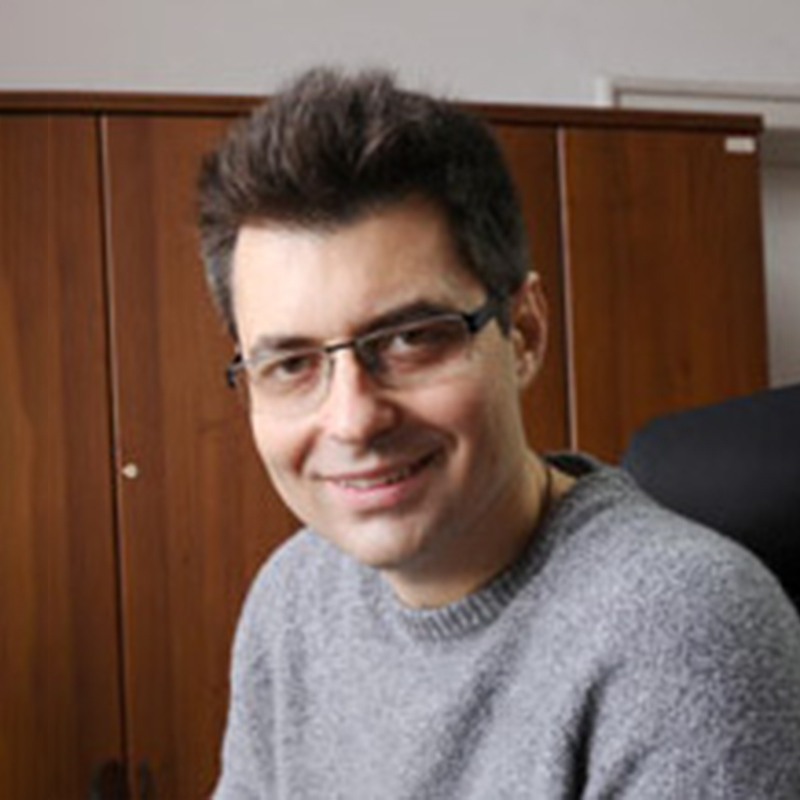
Prof. Dr. Saša Adamović is a faculty member at Singidunum University in Belgrade, Serbia, affiliated with the Faculty of Informatics and Computer Science . His academic career spans over 15 years with a focus on Cryptography, Biometrics, and IoT Security . Born October 15, 1985, in Drvar, Bosnia and Herzegovina PhD in Advanced Security Systems (2013), Master’s in Contemporary Information Technologies (2008), and Bachelor’s in Business Informatics (all from Singidunum University) His research interests include: Biometric Cryptography Blockchain for IoT Security Catalan Number Applications in Cryptography Machine Learning in Security Systems Virtualization and Energy Efficiency Steganography and Forensics Recent publications highlight trends in: IoT Healthcare Security (2022) Biometric Authentication (2021) Combinatorial Cryptography (2021) Machine Learning for Diabetes Prediction (2021) Distance Learning Security (2023) He served as one of five Serbian representatives in the Open World program (USA) for expert exchange in technology development.
Marko T. Milojkovic is a full professor at the Faculty of Electronics, University of Nis, leading the Department of Automation since 2022. He holds a PhD in Systems Management (2012), Master's in Automation (2008), and a Bachelor's in Computer Engineering & Informatics (2003), all from the same institution. His research focuses on adaptive control systems, neural networks, and dynamical systems modeling, with 27 papers in impact-factor journals. He currently heads the Laboratory for Modeling, Simulation and Systems Management and participates in 2 national and 2 international projects. Education: PhD: Systems Management (2012) MSc: Automation (2008) BSc: Computer Engineering & Informatics (2003) Research interests include neuro-fuzzy systems, MIMO system optimization, and endocrine neural networks applied to adaptive control. His publications demonstrate expertise in quasi-orthogonal filters, sliding mode control, and time-series forecasting. No scientific awards are explicitly mentioned, but his extensive project participation highlights active collaboration in control systems and automation. Prof. Milojkovic's work bridges theoretical modeling and practical applications, with recent emphasis on intelligent control systems and nonlinear dynamics. His laboratory facilitates interdisciplinary projects addressing complex system management challenges.
Mirjana Perišić is an Associate Professor at Singidunum University and a Senior Research Associate at the Institute of Physics, University of Belgrade. She holds a PhD in Experimental Physics (2016) from the University of Belgrade. Her expertise spans environmental physics and chemistry, with a focus on atmospheric science, air pollution monitoring, and AI-driven environmental data analysis. She has contributed to projects like Horizon 2020 and COST Actions, addressing air quality, climate change, and environmental health. Her research employs statistical modeling, machine learning, and receptor modeling techniques. Education: High School in Čačak (Natural Sciences), BSc in General Physics (University of Belgrade, 1998–2007), PhD in Atomic Physics (University of Belgrade, 2007–2016). Research Interests: Her work emphasizes AI applications in environmental fate analysis, particulate matter (PM) dynamics, polycyclic aromatic hydrocarbons (PAHs), and volatile organic compounds (VOCs). She explores the impact of environmental settings on indoor/outdoor pollution and leverages explainable machine learning (e.g., XGBoost, SHAP) for predictive modeling. Publications: Over 10 peer-reviewed articles since 2014, focusing on air pollution sources, climate change implications, and AI-based frameworks for environmental monitoring. Recent work addresses toluene behavior, PAHs distribution, and post-pandemic pollution trends. Awards: None explicitly mentioned in the text. Advising/Grants: No advising students listed. Grants and policy contributions include air quality management plans and collaborative projects with international partners. Labs/Teams: Active in the Institute of Physics, University of Belgrade, and interdisciplinary teams at Singidunum University focusing on environmental data science.
Vuk Gajić is an Assistant Professor at the Faculty of Applied Ecology, Singidunum University, where he has held academic roles since 2016. His career progression includes positions as a teaching associate (2016), assistant (2019), and current role (2023). He earned a Ph.D. in Environment and Sustainable Development from Singidunum University (2019–2022), following prior studies in environmental protection and risk management at the same institution. Research interests span environmental science, sustainable development, GIS applications, and radiation technology for waste and food treatment. He has contributed to interdisciplinary studies, including soil contamination analysis in Libya, microbial decontamination via ionizing radiation, and machine learning applications for software defect prediction and agricultural weed detection. His work bridges environmental engineering with technological innovation, emphasizing sustainability and ecological conservation. Publications reflect a focus on environmental monitoring, pollution assessment, and eco-technologies. Key themes include GIS-based environmental databases, forest fire prevention through sensor networks, and agricultural waste reuse. His research often integrates quantitative methods with geospatial tools, addressing both local and global environmental challenges. Teaching responsibilities include courses on geodiversity, sustainable development, and natural hazards. He actively participates in academic conferences, contributing to peer-reviewed journals and presenting at events like Sinteza and SETI. Current projects likely explore emerging technologies in environmental management and sustainable practices.
Jelena Gajic is a Professor at the University of Singidunum in Belgrade, Serbia, where she serves in the Faculty of Business within the Department of Marketing. With a comprehensive academic background and extensive publication record, she has established herself as a leading scholar in marketing, advertising, and consumer behavior fields. Doctoral studies at Singidunum University, Belgrade (2008-2011) Master's studies in International Marketing at Faculty of Economics, University of Belgrade (2001-2004) Basic studies in Marketing at Faculty of Economics, University of Belgrade (1992-1997) Cultural and Linguistic studies at XIII Belgrade High School (1988-1992) Professor Gajic's research spans multiple marketing domains with particular emphasis on digital transformation in marketing practices. Her work bridges traditional marketing theories with contemporary digital applications, examining how technologies like AI and neuromarketing are reshaping marketing strategies. She has made significant contributions to understanding social media marketing effectiveness, advertising in digital environments, consumer behavior in tourism contexts, and marketing challenges in higher education institutions. Her research methodology often combines theoretical frameworks with empirical testing, including A/B testing and advanced analytical approaches. Her recent publications demonstrate a clear trajectory toward technology-integrated marketing research. There's a strong emphasis on digital marketing channels, particularly social media platforms like Instagram, and their effectiveness across various contexts including higher education, tourism, and creative industries. Her work increasingly incorporates advanced analytical methods, including AI applications and neuromarketing research, to understand consumer responses. The pandemic's impact on travel behavior and digital communication strategies has also been a significant focus of her recent research, reflecting her ability to address contemporary challenges in marketing. While specific awards aren't documented in the available information, her substantial publication record in reputable journals such as The European Journal of Applied Economics, TEME - Journal of Social Sciences, and others indicates professional recognition within her academic community. Though specific advisees aren't listed in the available information, Professor Gajic's extensive publication record, particularly her work on student perspectives in higher education, suggests active involvement in mentoring and supervising student research. Her leadership in organizing conferences like Sinteza and FINIZ indicates significant contributions to academic community building. Her research on digital marketing, tourism, and consumer behavior has likely been supported by various institutional grants, though specific funding sources aren't detailed in the available information.
Luis Barba is a Research Fellow in the Machine Learning and Optimization group at École Polytechnique Fédérale de Lausanne (EPFL), Switzerland, working under Professor Martin Jaggi. He completed his PhD through a cotutelle program between Carleton University, Ottawa and Université Libre de Bruxelles, Brussels, supervised by Professors Stefan Langerman, Jit Bose, Pat Morin and Vida Dujmović. Prior to that, he earned his master's degree at Universidad Nacional Autónoma de México (UNAM) under Professor Jorge Urrutia. Dr. Barba's research spans computational geometry, algorithms, graph theory, and more recently, machine learning and optimization. His work addresses fundamental problems in geometric data structures, Voronoi diagrams, graph coloring, and distributed learning. He has made significant contributions to understanding time-space trade-offs in geometric algorithms and developing efficient methods for problems like geodesic Voronoi diagrams and dynamic graph coloring. Dr. Barba's publication record demonstrates a clear evolution from theoretical computational geometry to practical applications in machine learning. Early in his career, he focused on fundamental geometric problems including linear-time algorithms for geodesic Voronoi diagrams and efficient convex hull computation in polygonal domains with obstacles. More recently, his work has shifted toward machine learning, where he has developed novel optimization techniques for distributed and federated learning settings, including implicit gradient alignment methods and multilayer lookahead approaches. Dr. Barba has published extensively in top-tier conferences and journals including Symposium on Computational Geometry (SoCG), Canadian Conference on Computational Geometry (CCCG), Algorithmica, and Discrete and Computational Geometry. His collaborative work demonstrates strong connections across the computational geometry and algorithms communities, with frequent co-authorship with leading researchers in these fields. Throughout his career, Dr. Barba has maintained a consistent focus on algorithmic efficiency and computational complexity, whether addressing theoretical geometric problems or practical machine learning challenges. His work exemplifies how deep theoretical insights can inform practical computational approaches across different domains of computer science.
Tamara Papić is an Assistant Professor at Singidunum University in Belgrade, specializing in Innovation Management and Entrepreneurship. She holds a Ph.D. in Sensor Technologies from Jožef Stefan International Postgraduate School (Slovenia) and a Master's in Quality Management from Fakultet organizacionih nauka. Her research focuses on sensor technologies, dyslexia detection through eye-tracking, and the application of AI in education and marketing. Key academic contributions include developing sensor-based systems for analyzing reading patterns in children with dyslexia, leveraging machine learning models like VGG16 and autoencoders. She co-founded BabyFM, a startup creating smart thermoregulation devices for infants using sensors and mobile apps. Her work has been supported by grants from Innovation Forum Cambridge, Star Tech, and Serbia’s Innovation Fund. Professionally, she produced RTV Serbia’s entrepreneurial series 'My Hero' and 'Golden Idea,' and organized national startup competitions. She chairs strategic conferences like Smart City SEE and Belgrade Strategic Dialogue, promoting innovation ecosystems. Her cross-disciplinary projects bridge engineering, education, and business strategy.
Marko Djordjevic is an Associate Professor at the Faculty of Biology, University of Belgrade. His research spans computational biology of infectious diseases, bacterial immune systems (CRISPR/Cas and restriction-modification systems), and quantitative understanding of infection progression with applications to SARS-CoV-2 and computational physics of quark-gluon plasma. Diploma in Physics, Faculty of Physics, University of Belgrade, Serbia. PhD in Biophysics and Bioinformatics, Department of Physics, Columbia University, USA. Postdoctoral training at the Mathematical Biosciences Institute, Ohio State University, USA. Djordjevic's research focuses on nonlinear regulatory dynamics of bacterial immune systems, their role in horizontal gene transfer, and modeling infection progression under social mitigation measures. His secondary interest in computational physics examines quark-gluon plasma dynamics via high-p⊥ observables and tomography. His recent publications address CRISPR/Cas regulation, restriction-modification systems, and SARS-CoV-2 transmissibility drivers. Grants from the Serbian Ministry of Science, Science Fund of Serbia, EU Marie Curie IRG, and Swiss National Science Foundation support his work.
Olga Ristić is an Associate Professor at the Department of Information Technologies, Faculty of Technical Sciences Čačak, University of Kragujevac, Serbia. Her office is located at Svetog Save 65, Čačak (Office No. 237), and she can be contacted via phone (+381 32 302-714) or email. She holds a Diploma in Technics and Informatics (1997), a Master's in Technical Sciences (2006), and a PhD in Information Technologies and Systems (2016), all from the University of Kragujevac. Her research focuses on: Software testing methodologies and quality assurance Modeling and simulation of complex systems Optimization algorithms for industrial applications Educational technology and IT pedagogy Mobile applications and information systems reliability Her recent publications emphasize interdisciplinary approaches, with strong trends in machine learning applications for cybersecurity, optimization in Industry 4.0 systems, educational technology innovations, and sustainable energy management. She frequently employs simulation techniques and algorithm development across diverse domains. She has led or contributed to eight Ministry of Science-funded projects: Curriculum development for IT education programs Software quality assurance frameworks Industrial system reliability modeling Food supply chain optimization Deregulated energy distribution systems At the Faculty of Technical Sciences, she coordinates courses across all academic levels, including Data Structures, Software Testing, Mobile Applications, and Quality of Software. She also conducts professional development seminars on database design and ISTQB certification.
Marina Marjanovic is a faculty member at Singidunum University in Belgrade, Serbia, affiliated with the Faculty of Informatics and Computing. She maintains an active research profile with numerous publications spanning machine learning, computer vision, and signal processing applications. Her work demonstrates strong interdisciplinary connections between theoretical AI development and practical implementations in healthcare, security, and digital government services. Dr. Marjanovic earned her Doctoral degree in Signals and Systems from Universidad Politecnica de Madrid in 2007, following a Master's degree in the same field from the same institution in 2005. Her foundational education includes basic studies in Telecommunications at the Faculty of Electrical Engineering in Belgrade, and secondary education at the third Belgrade high school with a focus on natural sciences. This strong technical background has enabled her transition from traditional signal processing to contemporary AI research. Her research interests center around machine learning and computer vision, with significant contributions to emotion recognition, sign language processing, and explainable AI. She has demonstrated particular expertise in developing robust AI models that address real-world challenges such as demographic bias in age estimation systems, vulnerability to adversarial attacks in deep learning models, and accurate medical diagnostics through imaging analysis. Her recent work shows increasing focus on healthcare applications, security implications of AI systems, and making AI more transparent and interpretable. Analysis of her publication trajectory reveals a clear evolution from signal processing foundations toward contemporary AI applications. Her recent work (2022-2024) shows strong emphasis on healthcare AI, security applications, and explainability, often combining traditional machine learning approaches with novel optimization techniques. She frequently collaborates with international researchers across multiple institutions, demonstrating the global reach of her work. Dr. Marjanovic has established herself as a productive researcher with consistent publication output across reputable journals and conferences including IEEE transactions, Springer publications, and specialized AI conferences. Her collaborative approach is evident through her extensive co-authorship network spanning multiple Serbian and international institutions. She actively contributes to the academic community through conference organization (including Sinteza conferences) and participation in research projects at Singidunum University's research institutes. Her work bridges theoretical advancements with practical implementations across multiple domains, demonstrating versatility and impact across the AI research landscape.
Marko Šarac is a Professor at Singidunum University in the Faculty of Informatics and Computer Science . He holds a Master's degree in Contemporary Information Technologies (2008) and a PhD in Advanced Protection Systems (2013) from the same institution. His research spans Cybersecurity, Artificial Intelligence, Blockchain, Internet of Things (IoT), Machine Learning, and Data Privacy . Education: Master: Contemporary Information Technologies, Singidunum University, 2008 PhD: Advanced Protection Systems, Singidunum University, 2013 Research Focus: SSL Traffic Security, Virtual Datacenters, Biometric Cryptography, and IoT Healthcare Systems Developed frameworks for Explainable AI in Metaverse Security , Blockchain-based IoT Security Gateways , and Machine Learning for Medical Diagnostics Notable Publications: 2025: CNN-enhanced attack detection for IoT-based Metaverse 2024: Modified Firefly Algorithm for medical dataset classification 2023: Space weather prediction using metaheuristics Projects: Co-author on 9+ books including Internet Marketing (2020) and Computer Network Security (2014) Contributed to 50+ peer-reviewed journals and conference papers on cybersecurity and AI Grants & Collaborations: Active in IEEE , ZINC , and Sinteza conference series Collaborated with researchers across Europe and Asia on IoT, Blockchain, and Cloud Security Contact: msarac@singidunum.ac.rs
Zlatko Baracskai is a Bosnian-Hungarian experimental musician, sound programmer, and academic. He currently serves as a Senior Lecturer at the University of West of England in the Faculty of Computer Science and Creative Technologies, while also holding a Visiting Professor position at the Faculty of Music in Belgrade's Music Direction Study Program since 2020. His academic journey includes a sonology degree from the Institute of Sonology in Den Haag and a PhD in contemporary composition from the University of Birmingham (2011). Research interests span Electronic music composition Algorithmic sound processing Experimental audio technologies Neural network applications in music Asymmetrical rhythm development His publications demonstrate technical expertise in audio algorithm design and neural networks for sound manipulation, with conference papers presented at AES, ICMC, and IEEE SpliTech. Notable projects include Coca-Cola Beatbox Pavilion (2012) and De-Fuse Interactive Installation (2005).
Miloš Mravik is an academic affiliated with Singidunum University's Faculty of Informatics and Computing, specializing in research involving artificial intelligence, cybersecurity, and data science. He holds a doctoral degree in 'Advanced Protection Systems' from Singidunum University (2020–2023), preceded by a Master’s in 'Contemporary Information Technologies' (2018–2019) and a Bachelor’s in 'Informatics and Computing' (2014–2018). His work emphasizes applying machine learning techniques to real-world challenges like healthcare diagnostics, cybersecurity frameworks, and pandemic-era education systems. Research Interests: AI-driven cybersecurity solutions for IoT and blockchain Machine learning applications in health informatics Optimization of predictive algorithms using metaheuristics E-learning strategies during crises Recent articles focus on explainable AI for metaverse security, sentiment analysis using BERT models, and blockchain node detection via XGBoost. His work bridges theoretical computer science with practical applications in emergency education and pandemic response. No scientific awards listed. Advised no formally registered students. Active in conference organizing and software prototyping, as seen in projects like a scheduling web application and network management systems.
Petar Biševac is a Lecturer at the Faculty of Informatics and Computing within Singidunum University , Belgrade. His academic work focuses on applied artificial intelligence and machine learning. Education : Not explicitly detailed in available texts. Research Interests : Spanning Artificial Intelligence , Neural Networks , Image Processing , and Metaheuristic Optimization , his research emphasizes hybrid AI systems for biomedical signal processing, cryptocurrency forecasting, and image analysis. Publications : Recent works include anomaly detection in ECG/EEG signals, vehicle damage recognition, and Ethereum price forecasting using LSTM and metaheuristic algorithms. Collaborations : Frequently works with researchers like Nebojsa Bacanin, Milan Zivkovic, and Predrag Spalević. Contact : Email pbisevac@singidunum.ac.rs
Aneta P. Prijic is a Full Professor at the Faculty of Electronics in Niš, University of Niš, Serbia, affiliated with the Department of Microelectronics and Microsystems. She completed her academic training at the same institution, earning her PhD in 2007 in Microelectronics and Microsystems. Her research focuses on energy harvesting, microelectronics, and sensor systems. Research Interests: Her work centers on energy harvesting technologies—particularly thermal and photovoltaic—for wireless sensor nodes. She investigates reliability in power semiconductor devices, designs PCB-based sensors, and develops low-power systems for industrial and telemetry applications. Her expertise spans microelectronics, device modeling, and sustainable embedded systems. Publication Trends: Her recent publications emphasize energy efficiency in sensor networks, with a strong focus on thermoelectric and photovoltaic harvesting under low-power conditions. She also contributes to semiconductor reliability (e.g., NBTI analysis) and educational innovations in PCB design. Her work appears in IEEE, Elsevier, and MDPI journals, reflecting interdisciplinary contributions in electronics and engineering. Scientific Contributions: Co-author of 4 national patents, 1 international patent, and 13 technical solutions Active member of the Program Committee of the ETRAN Society (Microelectronics and Optoelectronics section) Participant in 3 national and international research projects Advising and Grants: While specific students are not listed, her collaborative publications suggest mentorship of junior researchers. She is actively involved in funded research projects focusing on energy harvesting and microelectronic systems, contributing to technological innovation and education. Labs and Teams: She is affiliated with research groups at the Faculty of Electronics in Niš focused on microelectronics, energy systems, and sensor technologies. Her work is integrated into national and international collaborations, particularly in the development of reliable, low-power electronic systems.