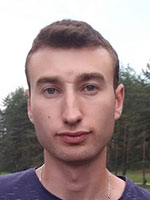
Lazar Krstic is an Assistant at the Institute of Mathematics and Informatics within the Faculty of Science and Mathematics at the University of Kragujevac. His research focuses on Artificial Intelligence and Machine Learning, operating in the Informatics field. He completed his Master's degree in 2017 and earned his Doctorate in 2019. His work integrates advanced computational techniques with applications in medical physics, education, and environmental modeling. Research Trends: Recent publications highlight expertise in radiation therapy optimization, physics-informed neural networks, and evolutionary algorithms. Articles demonstrate interdisciplinary applications spanning healthcare, education, and computational hydrology.
Jasna Glišović is a Full Professor at the Faculty of Engineering Sciences, University of Kragujevac, Serbia. Specializing in mechanical engineering with a focus on motor vehicles and engines, she has built a distinguished career in automotive research, particularly in brake systems, noise and vibration analysis, and wear particle emissions. Her work bridges theoretical and experimental approaches to solve practical engineering challenges in vehicle dynamics and environmental impact. Education: 1993: Diploma in Mechanical Engineering from Mechanical Faculty in Kragujevac with thesis on "Front Wheel Suspension of Passenger Vehicles - Transfer of Normal and Lateral Forces" 2001: Master's degree from Mechanical Faculty in Kragujevac with thesis on "Identification of Transfer Characteristics of Drum Brakes" 2012: PhD from Faculty of Engineering Sciences, University of Kragujevac with dissertation on "Theoretical and Experimental Research of High-Frequency Noise of Disc Brakes" Professor Glišović's research primarily focuses on automotive engineering, with particular emphasis on brake systems and their environmental impact. Her work spans theoretical modeling, experimental validation, and practical applications in vehicle dynamics. She has made significant contributions to understanding noise, vibration, and harshness (NVH) phenomena in brake systems, thermal analysis of braking processes, and the formation and measurement of wear particles from brake systems. Her research has important implications for vehicle safety, performance, and environmental sustainability, addressing critical issues related to non-exhaust emissions from road transportation. Analysis of Professor Glišović's recent publications reveals a strong trend toward environmental considerations in automotive engineering, particularly regarding particulate matter emissions from brake systems. Her work increasingly integrates advanced computational methods, including neural networks for emission prediction, while maintaining a strong experimental foundation. The research spans fundamental brake mechanics to applied solutions for reducing environmental impact, showing a clear evolution from component-level analysis to system-wide understanding of brake wear and its consequences. Throughout her career, Professor Glišović has participated in significant research projects including TEMPUS UM_JEP_17119-2002: "Education Network Based on Information Technology at the Faculty of Mechanical Engineering" and TEMPUS DIAUSS "Development And Improvement Of Automotive And Urban Engineering Studies In Serbia" (JP 516729-2011). She has collaborated extensively with researchers across Europe, including institutions in Greece, Lithuania, and Italy, demonstrating international recognition of her expertise in automotive engineering.
Doni Pracner serves as an Associate Professor in the Department of Computer Science at the University of Novi Sad, Serbia, operating under the Department of Mathematics and Informatics (DMI). His research spans core domains of computer science with emphasis on artificial intelligence methodologies. Key focus areas include: Machine Learning algorithm development Natural Language Processing systems Data Mining techniques Software Engineering frameworks Artificial Intelligence applications Computer Science theory Contact is facilitated through his institutional email and personal academic page.
Marija Đurković is a Full Professor at the University of Belgrade's Faculty of Forestry, Department of Wood Processing. Her career began in 2009 as an assistant professor, progressing to associate professor in 2020 and full professorship. She chairs the Wood Technologies Department Council and Serbia's M039-4 Woodworking Machines Standards Committee. Education: University of Belgrade - Faculty of Forestry (PhD in Wood Processing) Teaching: Undergraduate, master's, and doctoral courses in Woodworking Machines, CNC Technologies, and Vibrational Diagnostics Research Focus spans woodworking machinery, tool-workpiece interactions, and computer numerically controlled systems. Recent work explores cutting force modeling, acoustic emission monitoring, and sustainable energy practices in wood processing. Scientific Output includes SCI-indexed journals like BioResources and conference proceedings. Her 2021 studies on oak milling and beech sawing represent key contributions to CNC machining optimization. Professional Contributions include two Ministry-funded projects, 9 SCI articles, 2 technical solutions, and a co-authored textbook used in master's and doctoral programs. She also mentors over 70 diploma thesis students annually.
Dragana Stojanović is a Research Fellow at the Institute for Philosophy and Social Theory and an Associate Professor at the Faculty of Media and Communications in Belgrade. Her interdisciplinary work bridges Holocaust studies , memory studies , digital humanities , and education . Research Interests: Her work explores ethical dimensions of Holocaust memory, digital preservation of cultural heritage, and gamification in education. She also investigates the intersection of blockchain technology with art and informal learning. Scientific Awards: Miladin Životić Award Zagorka Golubović Award Education: She graduated from the Department of Ethnomusicology at the University of Arts in Belgrade and earned her PhD in 2014 through the Theory of Art and Media program at the same university.
Darjan Karabašević is currently serving as the Acting Dean and Full Professor at the Faculty of Applied Management, Economics and Finance, University of Economics Academy in Novi Sad. He was elected to the position of Acting Dean on April 29, 2023, and achieved the rank of Full Professor for the narrow scientific fields of General Management and Informatics on February 22, 2023. Prior to this, he served as Vice-Dean for Research since March 1, 2018, and held positions as Associate Professor (2020) and Assistant Professor (2017) at the same institution. His educational background includes a Doctorate in Computer Science from the University of Novi Pazar (2022), another Doctorate from the Faculty of Management Zaječar, John Nesbitt University Belgrade (2016), Specialist Academic Studies from Megatrend University Belgrade (2012), and undergraduate studies at the Faculty of Management Zaječar, Megatrend University Belgrade (2009). He completed his secondary education at the Zaječar School of Economics and Trade. Professor Karabašević's research primarily focuses on multi-criteria decision-making methods, neutrosophic logic, fuzzy systems, and their applications in management and computer science. His work demonstrates a strong integration of mathematical modeling with practical business applications, particularly in personnel selection, supplier evaluation, website quality assessment, and e-commerce strategy development. He has published extensively on extensions of methods like WISP, TOPSIS, MULTIMOORA, and SWARA, often incorporating neutrosophic and fuzzy logic to handle uncertainty in decision-making processes. His publication record shows a consistent output of high-quality research, with over 200 scientific and professional papers, including more than 60 papers indexed in SCI/SSCI databases. His research has accumulated 2432 citations on Google Scholar, 863 on Web of Science, and 8 on Scopus, indicating significant impact in his fields of study. Professor Karabašević serves as the Editor-in-Chief of the Journal of Process Management and New Technologies (category M52) and is an editor for the SCI-indexed journal "Axioms" (category M22). He is a member of the editorial boards of numerous international journals including Neutrosophic Sets and Systems, International Journal of Neutrosophic Science, and Journal of Fuzzy Extension and Applications, among others. He has reviewed over 200 scientific papers for prestigious journals such as Mathematics, Applied Mathematics and Computation, Journal of Cleaner Production, and Omega. He has held significant leadership roles including being elected as Co-President and Head of the Neutrosophic Science International Association for Serbia (2018), and later becoming President of the association for Serbia (2022). He serves on the scientific committees of multiple international conferences including the International Congress on Aviation Management and conferences on Sustainable Development based on Knowledge (ERAZ). His professional activities also include serving as a reviewer for the National Body for Accreditation and Quality Assurance in Higher Education (NAT) since 2018 and previously for the Commission for Accreditation and Quality Assurance (KAPK) from 2017-2018.