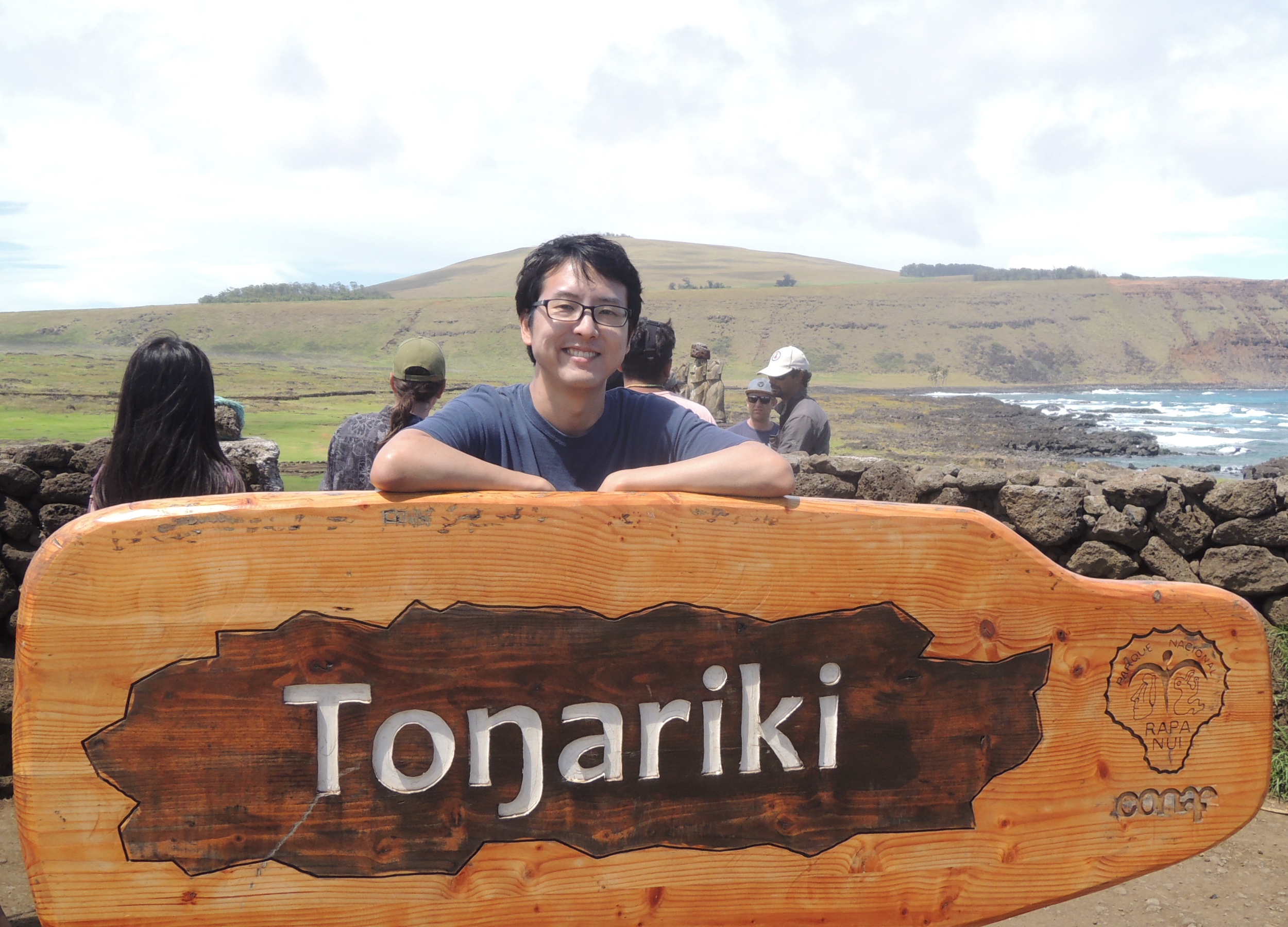
Kijung Shinمشاهده پروفایل
دانشیار
- Data Mining
- Graph Algorithms
- Network Science
- +۴ مورد دیگر
Kijung Shin is an Associate Professor at KAIST (Korea Advanced Institute of Science and Technology), holding dual appointments in the Kim Jaechul Graduate School of AI and the School of Electrical Engineering (Computer Division). He leads the Data Mining Lab and teaches multiple courses including Graph Mining and Social Network Analysis, Data Mining and Search, and other foundational courses in electrical engineering and AI. Education Ph.D. in Computer Science, Carnegie Mellon University (February 2019) M.S. in Computer Science, Carnegie Mellon University (December 2017) B.S. in Computer Science and Engineering, Seoul National University (August 2015) B.A. in Economics (Double Major), Seoul National University (August 2015) Research Interests Professor Shin's research primarily focuses on data mining, graph algorithms, and network science, with particular expertise in hypergraph analysis, tensor decomposition, and graph neural networks. His work bridges theoretical foundations with practical applications, developing algorithms that can efficiently analyze complex real-world networks. His recent research has expanded into multimodal learning, integration of large language models with graph neural networks, and applications in recommendation systems, satellite imagery analysis, and biological data analysis. His approach combines rigorous mathematical analysis with practical implementation, resulting in numerous open-source software tools that have been widely adopted in both academia and industry. His research has significant implications for social network analysis, fraud detection, recommendation systems, and scientific discovery in various domains. Research Trends Professor Shin's recent publications show a clear trajectory toward more complex network structures, particularly hypergraphs that capture higher-order interactions beyond simple pairwise relationships. His work increasingly integrates traditional graph algorithms with deep learning approaches, especially focusing on how graph neural networks can be improved and made more interpretable. There's also a growing emphasis on practical applications in areas like satellite imagery analysis, medical data, and recommendation systems that address real-world challenges. Scientific Awards Received the PAKDD Best Survey Paper Award for 'Multi-Behavior Recommender Systems: A Survey' (2025) Selected as one of the best short paper candidates of ACM RecSys 2024 (top 7) for 'Revisiting LightGCN' (2024) Selected for oral presentation (2.6% of accepted papers) at AAAI 2024 for 'VITA: 'Carefully Chosen and Weighted Less' Is Better in Medication Recommendation' (2024) Received the IEEE ICDM Best Student Paper Runner-up Award for 'TensorCodec: Compact Lossy Compression of Tensors without Strong Data Assumptions' (2023) Received the SIGKDD Best Research Paper Award and CogX Award for Best Student Paper in AI for 'FRAUDAR: Bounding Graph Fraud in the Face of Camouflage' (2016) Received the Best Senior Thesis Award from Seoul National University (2015) Received the Samsung Humantech Paper Award (1st in Computer Science) (2015) Teaching and Mentoring Professor Shin has taught multiple graduate and undergraduate courses at KAIST since 2019, including Graph Mining and Social Network Analysis, Data Mining and Search, and foundational courses in electrical engineering. He has also co-organized tutorials at major conferences including AAAI, KDD, ICDM, and CIKM on advanced topics in hypergraph neural networks and real-world hypergraph analysis. As the leader of the Data Mining Lab, he mentors numerous graduate students and postdoctoral researchers, fostering a collaborative research environment that has produced significant contributions to the field of data mining and network analysis. Research Leadership Professor Shin leads the Data Mining Lab at KAIST, which focuses on developing novel algorithms for analyzing complex networks and high-dimensional data. The lab has produced numerous influential software tools including D-Cube, M-Zoom, CoreScope, and DenseAlert, which are widely used in both academic research and industry applications. His research group maintains active collaborations with institutions worldwide and has received funding from various sources to support their innovative work in data mining and network analysis.