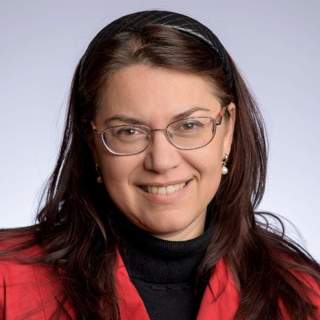
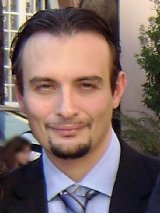
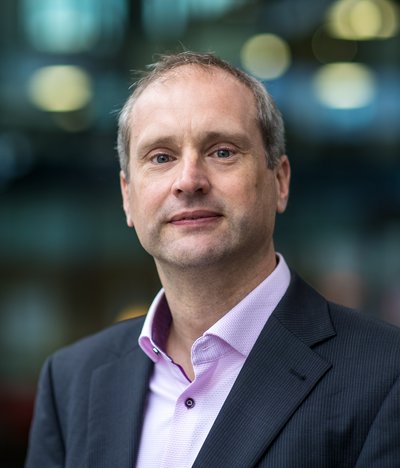
A. Asadi is an Assistant Professor at the Faculty of Electrical Engineering, Mathematics and Computer Science at TU Delft. He leads the Wireless Communication and Sensing (WISE) Lab within the Embedded Systems Group, focusing on the integration of wireless communication and sensing systems for Beyond-5G and 6G networks. His research leverages machine learning to develop practical solutions for next-generation wireless networks, with strong industrial collaborations from companies such as Nokia, NEC, and National Instruments. Research Themes : Wireless Sensing, 6G Networks, Physical Layer Security, Reconfigurable Intelligent Surfaces (RIS), mmWave Communication Key Collaborations : Industry partnerships with Nokia, National Instruments, and NEC Recent research outputs highlight his work on Reconfigurable Intelligent Surfaces (RIS) for 6G systems, including liquid crystal-based designs for fast beam switching and temperature compensation. His publications emphasize practical implementations in mmWave communication, security protocols, and experimental validation. Scientific Awards : Athene Young Investigator Prize (2017) Educational Fellowship (2025) Asadi contributes to the academic community through committee roles at major conferences like IEEE INFOCOM , IEEE ICNP , and ACM CoNEXT , and his work on D2D communication has been cited as an ESI highly cited paper.
Mila N. Koeva is a Vice Dean Research and senior Associate Professor at the University of Twente's Faculty of Geo-Information Science and Earth Observation (ITC), Department of Urban and Regional Planning and Geo-Information Management. Her research focuses on 3D modeling and Digital Twins for land management and urban planning, integrating geospatial technologies, UAV data, and AI/ML methods. PhD in architectural photogrammetry MSc in Engineering (Geodesy) Research Themes: Digital Twinning for urban ecosystems AI-driven cadastral boundary extraction 3D modeling with LiDAR and satellite data Global partnerships in Rwanda, Kenya, and Ethiopia Interoperability standards for local digital twins Scientific Contributions: Geospatial World Innovation Award 2021 Copernicus Masters Competition (3rd place 2016) Editorial roles in Photogrammetric Records and MDPI journals Keynote speaker at 3D GeoInfo, GI Forum, and FIG events Her educational impact includes developing courses, lecturing, and supervising students whose work has received top awards in The Netherlands and international competitions.
Prof. Dick den Hertog is a Full Professor at Tilburg University's Department of Econometrics and Operations Research, part of the Tilburg School of Economics and Management (TiSEM). His research focuses on operations research methodologies with applications in humanitarian logistics, supply chain optimization, and robust decision-making under uncertainty. He collaborates with organizations like the UN World Food Programme to enhance operational efficiency in complex environments. Key research areas include robust optimization techniques, supply chain management in developing regions, and the integration of satellite data with machine learning for infrastructure analysis. His work addresses challenges such as food aid distribution, disaster response logistics, and predictive modeling for transportation systems in data-scarce areas. Notable projects include developing analytical tools for the WFP's supply chain planning and creating algorithms for weather-informed road speed prediction. He is affiliated with the Tilburg Sustainability Center and the Operations Research research group, contributing to both academic advancements and real-world impact through optimization solutions.
Angelo Cervone is a Professor at Delft University of Technology's Department of Astrodynamics & Space Missions within the Faculty of Aerospace Engineering. His research focuses on advanced propulsion systems, CubeSat technology, additive manufacturing for space applications, and space systems design. He leads projects like LUMIO, a CubeSat mission to monitor lunar meteoroid impacts, and has contributed to the development of green propellants and smart composite structures with embedded sensors. His work integrates cutting-edge manufacturing techniques like laser powder directed energy deposition with propulsion system optimization, emphasizing sustainable and robust space technologies. Cervone has authored over 130 publications and edited the book Adaptive On- and Off-Earth Environments , reflecting his expertise in off-world infrastructure and robotic production systems. He received the Rhizome Award (2021) for advancing autarkic systems in off-Earth habitat development. Key Projects: LUMIO CubeSat mission, Rhizome habitat system development, smart propellant tank design Research Themes: CubeSat propulsion, lunar exploration, additive manufacturing for space, in-situ resource utilization His articles highlight advancements in micro-thrusters, structural health monitoring via fiber optics, and autonomous navigation systems for deep-space CubeSats. Cervone collaborates globally on missions requiring innovative propulsion architectures and materials science breakthroughs.
Dr. Ana Lucic is an Assistant Professor at the University of Amsterdam , holding a joint appointment between the Institute for Logic, Language, and Computation (ILLC) and the Informatics Institute . Her research focuses on interpretable machine learning for applications in science and society, with emphasis on Earth system modeling and AI for environmental forecasting . PhD in Explainable Machine Learning (University of Amsterdam, 2022) MSc/BSc in Mathematics (McMaster University, Canada) Former researcher at Microsoft Research AI for Science and Partnership on AI Her recent work includes Aurora , a foundation model for Earth system forecasting published in Nature , and Clifford-Steerable CNNs at ICML 2024. Ana actively mentors PhD students and leads projects in mechanistic interpretability and geospatial machine learning . Scientific awards include top placements in ML competitions. She contributes to open science through reproducibility initiatives and collaborates with AI for climate consortia.
Chen Zhou is a Full Professor of Mathematical Statistics and Risk Management at the Econometric Institute, Erasmus School of Economics, Erasmus University Rotterdam. He is a member of the Research Advisory Committee of Erasmus School of Economics and actively contributes to academic leadership and research governance. His research focuses on extreme value statistics and financial risk management , with significant contributions to the theoretical and applied understanding of extreme events in financial and statistical contexts. His work bridges mathematical rigor with practical applications in finance and econometrics. The recent publications highlight a strong trend in advancing methodologies for extreme value estimation, including bootstrapping techniques, tail copula modeling, dimension reduction for extremes, and semi-supervised frameworks. These works are published in high-impact journals such as the Journal of the American Statistical Association , Bernoulli , and the Journal of Finance , indicating broad disciplinary relevance across statistics, econometrics, and finance. Editorial work: Editor, Extremes (since 2015) He teaches in the Bachelor program of Econometrics and Management Science and the MSc program in Quantitative Finance, and is affiliated with the Tinbergen Institute. He has supervised multiple doctoral students, reflecting his active role in academic mentorship and research training. Chen Zhou leads a research network focused on extreme value theory, systemic risk, and statistical inference, collaborating with leading scholars in the field. His work continues to shape methodological developments in the analysis of rare and high-impact events.
Nicolas Cambier is a Visiting Professor at Vrije Universiteit Amsterdam, affiliated with the Faculty of Science's Artificial Intelligence department and the Network Institute. His research focuses on swarm robotics, collective behavior, and evolutionary systems. He explores topics like emergent communication, modular robotics, and prosociality in robotic swarms. Key areas include task-driven language evolution, adaptive decision-making, and environmental interaction in constrained environments. His work bridges theoretical models with practical implementations, emphasizing self-organization and cultural evolution in synthetic systems. Recent contributions address challenges in heterogeneous swarms, skill acquisition in modular robots, and decision-making without prior knowledge. He collaborates widely, with publications in IEEE Robotics and Automation Letters, Nature Communications, and top conferences like GECCO and Distributed Autonomous Robotic Systems. Research interests span robotics, artificial intelligence, and evolutionary computation, with applications to both theoretical frameworks and real-world robotic systems. His studies often involve agent-based simulations and embodied evolution approaches to understand complex collective phenomena.
Paris Avgeriou is a Professor of Software Engineering at the University of Groningen, affiliated with the Faculty of Science and Engineering and the Bernoulli Institute. He leads the Software Engineering and Architecture research group and serves as Editor-in-Chief of the Journal of Systems and Software . His expertise spans technical debt management, software architecture, self-adaptive systems, and embedded systems design. Avgeriou holds an office at Nijenborgh 9, Groningen, and actively advises academic institutions and funding bodies globally. Research Interests: Avgeriou's work focuses on advancing software architecture principles, technical debt lifecycle management, and the integration of AI in software engineering. His research emphasizes practical solutions for improving software quality, maintainability, and system dependability, particularly in embedded and self-adaptive contexts. Recent Contributions: Recent studies include frameworks for benefit-cost-risk decision-making in self-adaptive systems, automated technical debt management using ML, and tools for tracing architecture-related debt. He collaborates internationally, contributing to standards like the Copenhagen Manifesto for human-centered AI in software engineering. Grants & Awards: While no specific awards are listed, his editorial role and frequent conference contributions reflect recognition in the field. He chairs conference tracks and oversees workshops, fostering early-career researchers and artifact evaluation. Labs & Teams: His group is part of the Bernoulli Institute, working on platforms like SDK4ED for embedded systems and tools such as DebtViz for technical debt monitoring. The team explores intersections between systems engineering and software architecture in complex systems-of-systems.
André B.J. Kokkeler is a Full Professor at the Digital Society Institute and affiliated with the Radio Systems department at the University of Twente. His research focuses on wireless communication systems, signal processing, and mmWave technology, particularly in applications like beamforming, cognitive radio, and error-resilient algorithms. Recent research outputs highlight his work on: Hybrid beamforming techniques for full-duplex integrated sensing and communication (ISAC) systems Energy-efficient iterative algorithm implementations Single-bit angle-of-arrival (AoA) localization methods mmWave channel characterization in reverberation chambers Radar-driven human gait modeling His work contributes to advancements in wireless systems for IoT, automotive radar, and energy-constrained environments. Collaborations span multiple institutions and focus on propagation modeling, antenna characterization, and sensing applications.
Frank Willems is a Full Professor of Systems and Control Technology and Chair of Integrated Powertrain Control at Eindhoven University of Technology (TU/e), holding a part-time position realized with support from TNO. He is affiliated with the Control Systems Technology group within the Department of Mechanical Engineering, and also contributes to EIRES and EAISI research initiatives. Dr. Willems obtained his MSc (1995) and PhD (2000) in Mechanical Engineering from Eindhoven University of Technology (TU/e). His academic journey continued with a position at TNO Automotive, where he currently serves as a principal scientist in powertrain control. Professor Willems' research focuses on developing optimal and robust control methods for automotive powertrain systems. His work addresses the critical challenge of integrating energy and emission management strategies at the powertrain system level, which is essential as traditional methods become infeasible due to increasingly strict environmental regulations. Key research areas include control-oriented modeling of internal combustion engines, cylinder pressure-based combustion control, and integrated energy and emission management. His research aims to minimize development time and costs through model-based control methods, with the ultimate goal of achieving auto-calibration where powertrain energy efficiency is optimized online using smart sensors and route information. Dr. Willems serves as an Associate Editor for Control Engineering Practice and is an active member of the IFAC Technical Committee Automotive Control. He has participated in numerous international program committees for conferences including the IFAC Conference on 'Engine and Powertrain Control, Simulation and Modeling (E-CoSM)', IFAC Symposium 'Advances in Automotive Control (AAC)', and 'Symposium for Combustion Control (SCC)'. His research has been supported by organizations including the Dutch Technology Foundation (STW) and DENSO Japan. At TU/e, Professor Willems teaches courses on 'Optimal control and reinforcement learning' and 'Advanced control for future heavy-duty powertrains.' His research group, part of the Control Systems Technology group, focuses on developing self-learning powertrain control systems to address the complexity and diversity of future ultra-clean and efficient vehicles.
Joris M. Mooij is a Professor of Mathematical Statistics at the Korteweg-De Vries Institute of the University of Amsterdam, Netherlands. His research focuses on causality, spanning causal modeling, discovery, and inference with applications in biology, medicine, fairness, and business analytics. He combines mathematical modeling with statistical and algorithmic approaches in his work. Dr. Mooij received his PhD with honors from Radboud University Nijmegen in 2007, focusing on approximate inference in graphical models. After postdoctoral work at the Max Planck Institute for Biological Cybernetics in Tübingen, Germany, he obtained an NWO VENI grant in 2011 for further postdoctoral research at Radboud University. He became Assistant Professor at the University of Amsterdam's Informatics Institute in 2013, was promoted to Associate Professor in 2017, and became a full Professor of Mathematical Statistics in 2020. Dr. Mooij's research centers on causal inference, with particular expertise in structural causal models, cyclic causal systems, and causal discovery algorithms. His work addresses fundamental questions about when causal relationships can be identified from observational data and how to develop robust causal discovery methods that work in complex real-world settings with latent variables, cycles, and selection bias. He has made significant contributions to understanding the limitations of existing causal discovery approaches and developing new methods that overcome these limitations. His research group organizes the Amsterdam Causality Meeting series and develops theoretical frameworks for causal modeling that encompass both acyclic and cyclic systems. Dr. Mooij has collaborated extensively on applications of causal methods in biological systems, including protein signaling networks and gene expression data. The group's recent work explores performative predictions, causal domain adaptation, and robust causal discovery methods that account for selection bias and missing data. Dr. Mooij has received numerous awards for his research, including: Best paper award at UAI for "Establishing Markov equivalence in cyclic directed graphs" IEEE Geoscience and Remote Sensing Society 2011 Letters Prize Paper Award ICML Test of Time Honorable Mention Best student paper award at UAI 2010 He has secured competitive research funding through an NWO VENI grant, NWO VIDI grant, and an ERC Starting Grant, which supported the establishment of his research group consisting of 3 PhD students and 3 postdocs focused entirely on causality. Dr. Mooij has supervised several PhD students, including Tineke Blom, whose work on "Causality and Independence in Perfectly Adapted Dynamical Systems" significantly influenced his thinking about causality in complex systems. He has co-taught the MasterMath course on Causality and published lecture notes titled "A Mathematical Introduction to Causality." His research continues to push the boundaries of causal inference methodology and its applications across diverse scientific domains.
Tos T.J.M. Berendschot is a University Researcher in Biomedical Engineering at Eindhoven University of Technology , specializing in Medical Image Analysis . His work spans interdisciplinary domains linking diabetes, neurodegeneration, and ophthalmology. Email: t.t.j.m.berendschot@tue.nl Research Interests focus on diabetic complications, retinal neurodegeneration, and AI-driven medical imaging. Key areas include: Maturity Onset Diabetes of the Young (MODY) Microvascular dysfunction Advanced Glycation End-Products (AGEs) Retinal vascular tree analysis Keratoconus detection via AI Optical Coherence Tomography (OCT) Selected Publications highlight AI applications in ophthalmology, diabetic neurodegeneration, and vascular connectivity studies. Collaborations include Maastricht University Medical Center and international conferences in computer vision. Media Contributions feature expert commentary on cataract surgery, keratoconus, Alzheimer's disease biomarkers, and intraocular lens calculations.
Dr. Tarek Alskaif is an Associate Professor of Energy Informatics at Wageningen University & Research, specializing in the intersection of information technology and energy systems. He leads research on smart energy systems, focusing on electricity markets, distributed energy resources, and AI-driven solutions. His work integrates modeling, optimization, and big data analytics to advance the sustainable energy transition. Education: PhD in Energy Informatics (2012–2016, Cum Laude) from Universitat Politècnica de Catalunya, Spain. Postdoc at Utrecht University’s Copernicus Institute (2016–2020). Current roles include coordinating the BSc Data Science Minor and teaching Python and Big Data courses. Research interests emphasize leveraging digitalization for energy systems, including smart grids, electric mobility, and battery storage. Notable projects include HighLO Energy Markets (EU-funded, using particle physics and AI for market transparency) and MESSM (coordinated via TKI Urban Energy). He also leads the AI ELSA Lab (NWO-funded). Editorial roles include Associate Editor for IEEE Transactions on Smart Grid and IEEE Power Engineering Letters . Member of IEEE, the Netherlands Institute for Research on ICT (4TU.NIRICT), and the Technical Program Committee for IEEE SmartGridComm and PSCC 2026. Has supervised over 50 students (MSc/BSc) and 7 PhDs. Projects address challenges like grid congestion, EV charging optimization, and decentralized energy trading. His work bridges academic research with industry collaborations, including partnerships with CERN and ACER.
Prof. Sarthak Misra is a Full Professor in Medical Robotics at the University of Groningen’s Faculty of Medical Sciences, affiliated with the University Medical Center Groningen (UMCG). He leads research in the Robotics and image-guided minimally-invasive surgery (ROBOTICS) group and the Basic and Translational Research and Imaging Methodology Development in Groningen (BRIDGE) team. His work focuses on advancing medical robotics, microrobotics, and magnetic actuation technologies for surgical and biomedical applications. He holds an ORCID identifier and has published over 127 research outputs, including high-impact articles in journals like Advanced Materials Technologies and European Heart Journal . His research addresses challenges in minimally invasive surgery, soft robotics, and smart materials. Media engagements highlight his contributions to robotic surgery and addressing healthcare workforce shortages through automation. Research interests include: Microrobotics and fluidic systems Magnetic and acoustic actuation for medical devices Soft robotic systems for surgical applications Image-guided interventions 3D printing for biomedical robotics His recent articles emphasize innovations like MagNoFE3D printing and magnetic probes for endovascular interventions. Collaborations span global institutions, reflecting his interdisciplinary approach. No explicit awards are listed, but his extensive media coverage and 127+ publications underscore his impact. He is involved in grants, including OTP-funded projects, and mentors students in advanced robotics and medical engineering.
Joost Batenburg is a Professor at Leiden Institute of Advanced Computer Science (LIACS) , with a chair in Imaging and Visualization . He is affiliated with the Centrum Wiskunde & Informatica (CWI) and serves as Program Director for the interdisciplinary Society, Artificial Intelligence and Life Sciences (SAILS) initiative. His research focuses on tomographic image processing and reconstruction , where he has published over 80 journal articles and 60 conference papers. Current projects include Universal Three-dimensiOnal Passport for process Individualization in Agriculture (UTOPIA) and Center for Optimal, Real-Time Machine Studies of the Explosive Universe (CORTEX) , both funded by NWO grants. He leads the FleX-Ray Lab , a custom CT system integrated with advanced data processing algorithms. His research spans discrete tomography , real-time imaging pipelines , and AI-enhanced reconstruction methods , with applications in industrial inspection, agricultural analysis, and cultural heritage conservation. Recent articles demonstrate novel approaches to: Single-shot dynamic object tomography using level-set methods and motion modeling X-ray scattering quantification for defect detection in real-time systems Cross-modal image registration between CT scans and physical photographs Auto-differentiation in CT workflows combining classical and machine learning algorithms Scientific Awards: Dutch Award for ICT Research (2018) C.J. Kok Prize (2007) Philips Mathematics Prize (2006) He has supervised numerous PhD candidates including Mary Go, Eani Lachmansingh, and Zhichao Zhong, while maintaining editorial roles at IEEE Transactions on Computational Imaging and Journal of Mathematical Imaging and Vision . His work bridges theoretical mathematics with practical applications in agriculture, industry, and art conservation.