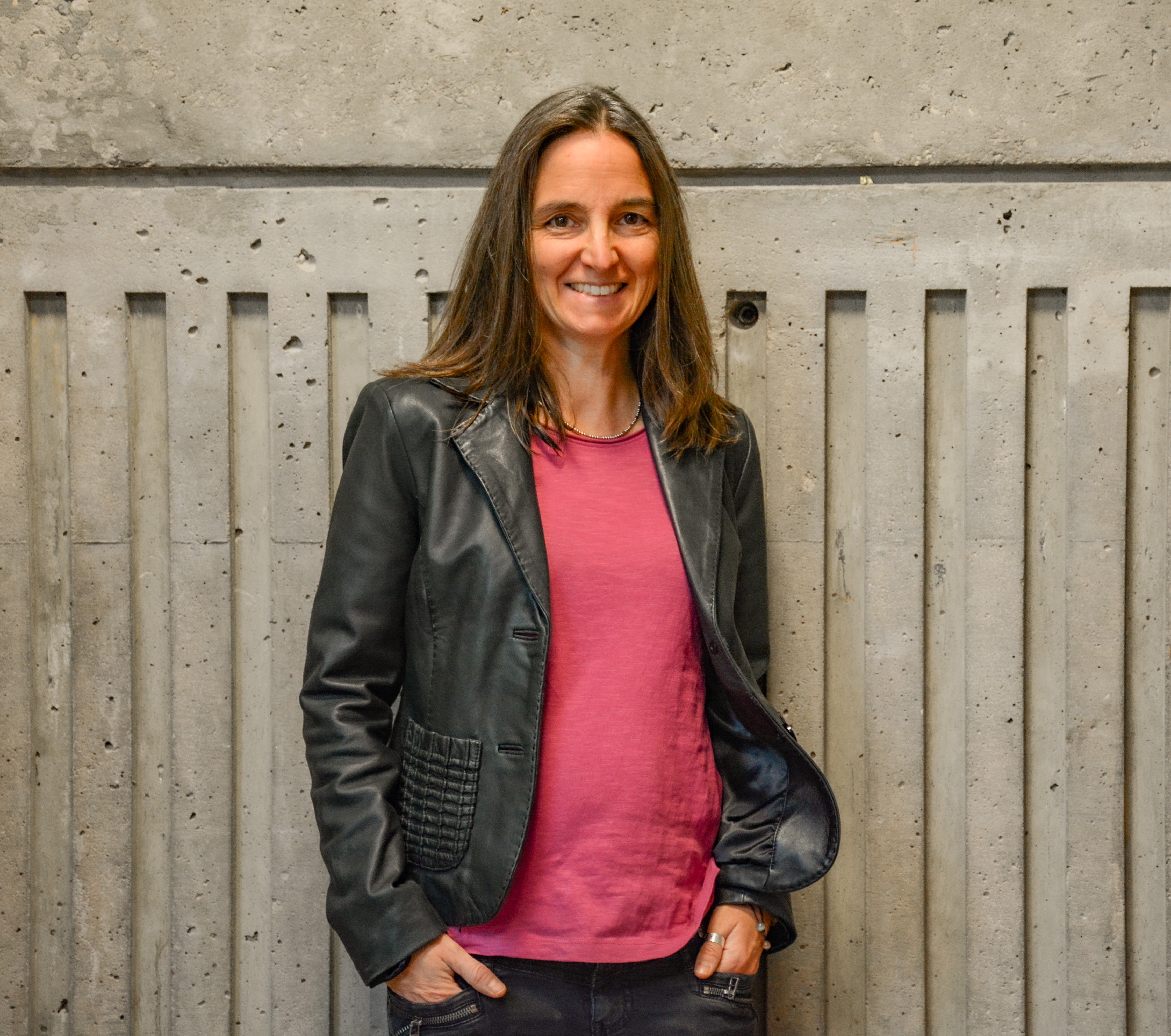
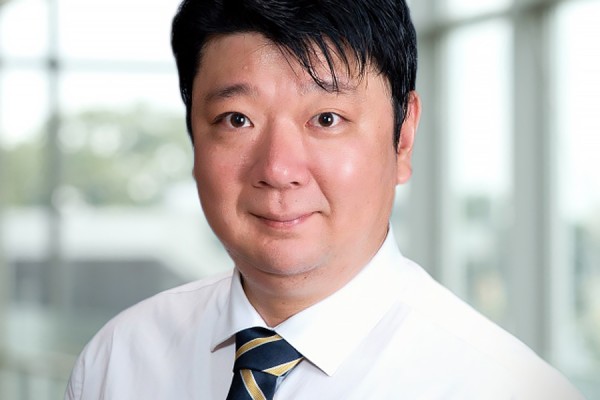
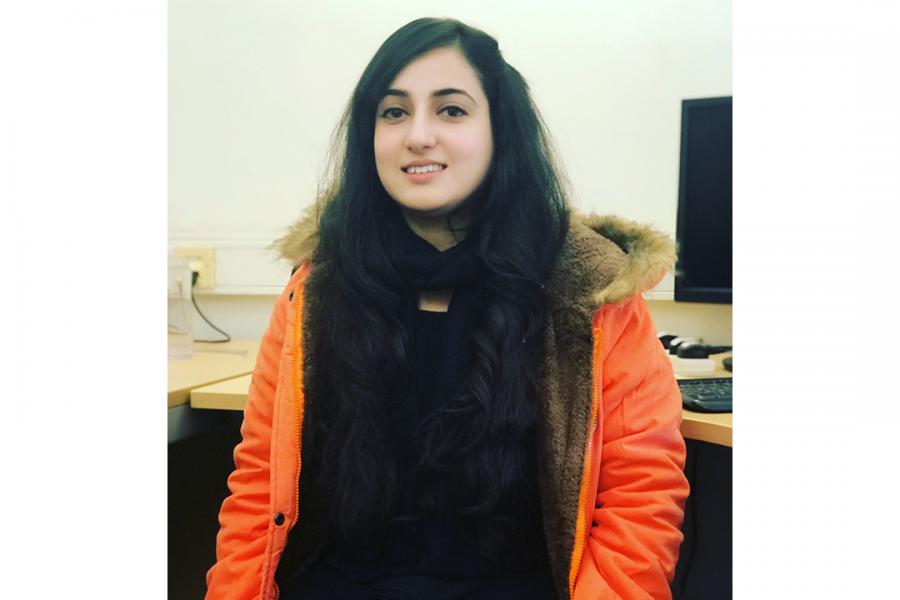
Sandra Zilles is a Professor and Canada Research Chair (Tier 1) in Computational Learning Theory at the University of Regina's Department of Computer Science. She holds adjunct appointments at the University of Waterloo and collaborates with the Alberta Machine Intelligence Institute (Amii). Her research focuses on theoretical computer science and artificial intelligence, particularly interactive learning models, formal language theory, and heuristic search algorithms. Her research integrates computational learning theory, formal language theory, and discrete artificial intelligence structures. Key interests include: Machine teaching with limited data Learnability of pattern languages and automata Graph-theoretic approaches in AI Her work bridges theoretical frameworks with applications in medical imaging, bioinformatics, and game theory. Zilles has received numerous honors including: NSERC Canada Research Chair (Tier 1, 2022-2029) Royal Society of Canada College membership Best Paper Awards (KI 2012, ALT 2003, COLT 2002) She mentors over 50 students and postdocs through her research group. Current projects explore symbolic automata, collaborative learning, and geometric teaching models. Her lab maintains international collaborations with institutions in Germany, Canada, and the US.
Dr. Lydia Bouzar-Benlabiod is an Assistant Professor at the Jodrey School of Computer Science, Acadia University, Nova Scotia, Canada. Her research focuses on hardware-based machine learning, privacy-preserving techniques, and explainable AI. She holds a Ph.D. in Computer Science from Université d’Artois, France, and an M.Eng from Ecole nationale Supérieure d’Information (ESI), Algiers, Algeria. Her work bridges theoretical advancements with practical applications in cybersecurity, medical imaging, and intelligent systems. Research interests include adversarial machine learning, neural architecture search, and AI-driven healthcare solutions. Her lab explores cost-effective hardware implementations for medical diagnostics and anomaly detection systems. Key projects involve NeuroMem® chip integration for breast cancer detection and RNN-VED models to reduce false positives in cybersecurity. Dr. Bouzar-Benlabiod’s publications span 2013–2024, emphasizing data-driven modeling, case-based reasoning, and AI ethics. She contributes to special issues on heuristic data science and reuse in intelligent systems. Her work is accessible via CILS Lab and personal page .
Dr. Zahra Motamed is an Associate Professor in the Department of Mechanical Engineering at McMaster University, holding associate faculty roles in Computing and Software, Biomedical Engineering, and Computational Science and Engineering. She directs the Cardiovascular Research Group and is a Joseph Ip Distinguished Engineering Fellow. Her research focuses on translational cardiovascular mechanics, developing patient-specific computational models and medical imaging tools to improve diagnostics, predictive analytics, and personalized interventions for cardiovascular diseases. Key projects include the Poiseuille framework for non-invasive diagnostics and intervention optimization, and collaborations with clinicians worldwide to advance cardiovascular device design and clinical practices. Education: Postdoctoral Fellow at MIT’s Institute for Medical Engineering & Science; PhD in Mechanical Engineering with over 25 years of industrial and academic engineering experience, including 9 years in automotive R&D and 17 years in cardiovascular research. Research interests span biomechanics, fluid-solid interactions, medical device innovation, and smart technologies for health monitoring in vehicles/homes. She leads international consortia and editorial boards, including Scientific Reports (Nature) and Frontiers journals. Her team develops AI-driven medical image segmentation and CFD methods for cardiovascular applications. Notable achievements include over 100 peer-reviewed publications, 6 patents, and awards like the Amelia Earhart Fellowship and Carolyn & Richard Renaud Teaching Award. She advises graduate students specializing in computational modeling, image processing, and experimental techniques.
Sheldon Andrews is an Associate Professor of Software Engineering and IT at École de technologie supérieure (ETS) in Montreal, Canada, with an adjunct appointment in Computer Science at McGill University. He is a member of the Multimedia Research Laboratory and has established himself as a leading researcher in physics-based computer animation and simulation. Andrews earned his Ph.D. in Computer Science from McGill University (2015), MASc in Electrical and Computer Engineering from the University of Ottawa (2007), and B.Eng. in Computer Engineering from Memorial University (2004). His academic journey reflects a strong foundation in both theoretical and applied aspects of computer engineering and graphics. His research focuses on real-time physics simulation, articulated mechanism simulation, 3D character animation, motion capture, computational contact mechanics, and virtual environment modeling. Andrews' work bridges the gap between theoretical physics and practical applications in computer graphics, with particular emphasis on creating physically plausible animations that can run in real-time. His research has significant implications for video games, virtual reality, and robotics applications. Analysis of his recent publications (2022-2025) reveals a strong trend toward increasingly sophisticated physics-based character animation techniques, with growing integration of machine learning approaches. His work spans multiple subfields including collision detection, deformable object simulation, vehicle physics, and reinforcement learning for character control, demonstrating both breadth and depth in his research program. VRIPHYS 2012 best paper award for 'Policies for goal directed multi-finger manipulation' Andrews has advised numerous graduate students through their PhD and Master's degrees, with many going on to positions at major companies like DNEG, CM Labs Simulations, and AMD. His professional service is extensive, having served as Program Chair for SCA 2025 and MIG 2024, Conference Chair for I3D 2019, and on program committees for major conferences including SIGGRAPH, SCA, and MIG for multiple years. He has also been active in the Montreal SIGGRAPH Chapter as Secretary from 2018-2021. As a core member of the Multimedia Research Laboratory, Andrews collaborates with researchers across multiple disciplines to advance the state of the art in physics-based simulation. His lab maintains strong industry connections, including a visiting researcher position at Roblox Research, ensuring that theoretical advances translate to practical applications in gaming and virtual environments.
Eunsik Kim is a Professor at the University of Windsor , holding a position in the Department of Mechanical, Automotive, and Materials Engineering within the Faculty of Engineering . His research focuses on ergonomics, occupational safety, and biomechanics, with applications in automotive design, workplace safety, and human-machine interaction. He leads the Occupational Safety and Ergonomics research lab , where students explore real-world solutions for challenges such as driver fatigue, musculoskeletal risks in manual labor, and automation in agriculture. Key research interests include: Ergonomics : Optimizing workstation designs, automotive seating, and anti-vibration tools Biomechanics : Analyzing human posture, musculoskeletal loading, and workplace ergonomics Machine Learning : Developing AI-driven systems for posture recognition, workload prediction, and task automation Autonomous Vehicles : Investigating human factors in driving automation and takeover scenarios Education Innovation : Gamification in engineering labs to enhance student motivation and learning Collaborations include projects with Ewha Womans University (South Korea) on autonomous vehicle comfort and a prototype robotic system for mushroom harvesting. His work often bridges theoretical research with practical applications, addressing both industry and academic challenges. Awards and Recognition: Students Ilfeoma Michael and Elnaz Akhavan Rezaee received accolades at the Association of Canadian Ergonomists conference for their lab research Advising and Grants: Professor Kim mentors students in interdisciplinary projects, focusing on ergonomics, robotics, and AI. His research has led to innovations in workplace safety and automated systems, supported by institutional and collaborative funding. Labs/Teams: The Occupational Safety and Ergonomics Lab and partnerships with South Korean institutions drive cutting-edge studies in automotive safety, robotics, and human factors engineering.
Hina Shaheen is an Assistant Professor in the Department of Statistics , Faculty of Science, University of Manitoba. Her research integrates statistical methods with computational neuroscience and neurodegenerative disease modeling. Email: Hina.Shaheen@umanitoba.ca Lab: NeuroStats Lab Research Interests: Shaheen specializes in neurodegenerative disorders like Alzheimer’s and Parkinson’s disease, with a focus on: Multiscale and network modeling of brain dynamics Bio-statistical and machine learning approaches BAYESIAN inference and STOCHASTIC processes Calcium signaling and PROTEIN dynamics in disease pathology Publication Trends: Recent work combines data-driven stochastic modeling with connectomic insights to study neurodegenerative mechanisms. Key themes include: Integration of machine learning and BAYESIAN frameworks in brain network analysis Applications to Alzheimer’s (amyloid-beta/calcium interactions, exosomal spread) and Parkinson’s (DBS treatment, neural dynamics) Development of multiscale co-simulation techniques for clinical data interpretation Academic Engagement: Shaheen actively mentors graduate students and collaborates across disciplines. She participated in the V AMMCS International Conference (2019) and maintains affiliations with computational neuroscience communities.
Aerambamoorthy Thavaneswaran is a Professor in the Department of Statistics at the University of Manitoba , specializing in inference for stochastic processes and dynamic data science applications. His research bridges financial economics, machine learning, and fuzzy logic to develop innovative volatility models and trading strategies. University: University of Manitoba Department: Statistics Email: Aerambamoorthy.Thavaneswaran@umanitoba.ca Research Interests: His work focuses on neuro volatility models, financial network analysis, and fuzzy logic applications in portfolio optimization. Recent projects include hybrid deep learning architectures for cryptocurrency prediction and dynamic covariance modeling. Publications (2023-2025): His articles highlight advancements in volatility forecasting, algorithmic trading strategies, and neuro-fuzzy systems. Key topics include transformer networks for stock markets, adaptive fuzzy adjacency matrices, and Kalman filter integration for cryptocurrency trading.
Faezeh Ensan is an Assistant Professor at Toronto Metropolitan University, specializing in Information Retrieval, knowledge engineering, and data science applications in software engineering. She holds a B.Sc. from the University of Tehran (2004), M.Sc. from Ferdowsi University of Mashhad (2006), and Ph.D. from the University of New Brunswick (2011). Her research focuses on semantic technologies, ad hoc retrieval systems, and ontology evaluation. B.Sc., University of Tehran, 2004 M.Sc., Ferdowsi University of Mashhad, 2006 Ph.D., University of New Brunswick, 2011 Her work bridges semantic web, machine learning, and information systems, with notable contributions to entity-based retrieval and modular ontology evaluation. She has been funded by NSERC, Mitacs, and ACOA, and has held prestigious fellowships including the NSERC Industrial Research Fellowship (2014-2016). Recipient of NeOn Student Prize for Best Paper at EKAW 2008 Editor of Canadian Semantic Web: Technologies and Applications (2010) Her advising and grants include collaborations with industrial partners through NSERC and Mitacs projects. She teaches courses like COE528 and COE848, emphasizing object-oriented engineering and data engineering fundamentals.
Owen Lyons is an Assistant Professor and Graduate Program Director of the Documentary Media MFA program in the School of Image Arts at Toronto Metropolitan University. His educational background includes: PhD in Cultural Mediations from Carleton University MA in Media and Culture from the University of Amsterdam BA Honours in Architecture and Cinema Studies from the University of Toronto His research focuses on Weimar cinema and culture, film history, media archaeology, and the visual culture of financial markets. He has published a book titled Finance and the World Economy in Weimar Cinema (2023) examining depictions of finance and capital in Weimar-era films, and has written on the fascist economic imaginary in post-Weimar cinema. Recent work explores digital media and generative machine-learning applications for moving image production. Lyons is also a filmmaker and musician currently producing a feature-length documentary about his family's history during the troubles in Ireland and their connections to 1950s-60s media events.
Rim Hariss is an Assistant Professor of Operations Management at the Desautels Faculty of Management, McGill University . She holds a PhD in Operations Research from MIT (2019), and degrees from École Polytechnique (MS in Applied Mathematics, 2014; BS in Mathematics & Engineering, 2013). Her research focuses on Big Data Analytics, Dynamic Pricing, Behavioral Operations, and Retail Optimization . Education : PhD in Operations Research, MIT, 2019 MS in Applied Mathematics, École Polytechnique, 2014 BS in Mathematics & Engineering, École Polytechnique, 2013 Research Themes : Combines machine learning with operational decision-making in retail and service systems. Key areas include data-driven pricing strategies, consumer behavior modeling, and optimization under uncertainty. Recent work addresses ticket reselling analytics and markdown pricing mechanisms. Grants & Roles : Principal Investigator: $5,000 SSHRC Grant (2021-2023) for promotional budget optimization in retail McGill Startup Grant ($45k) supporting foundational research Awards : 2022: INFORMS Data Mining Best Theoretical Paper 2019: MSOM Practice-Based Research Finalist Multiple fellowships from French government and MIT Labs/Teams : Actively involved in Data Science for Business Decisions initiatives within Desautels.
Christian Muise is an Assistant Professor at Queen's University's School of Computing, part of the Faculty of Arts and Science. He holds a PhD (2014) in Artificial Intelligence from the University of Toronto, where he was advised by Sheila McIlraith and J. Christopher Beck. His research focuses on automated planning under uncertainty, combining planning with learning for applications like goal-oriented dialogue systems and multi-agent coordination. He previously held postdoctoral roles at the University of Melbourne's Agentlab and MIT's CSAIL, and was a Research Staff Member at the MIT-IBM Watson AI Lab. Education: PhD in Artificial Intelligence, University of Toronto (2014) MSc in Computer Science, University of Toronto (2009) BSc in Computer Science, Carleton University (2007) Research Interests: His work bridges automated planning and machine learning, emphasizing robustness in uncertain environments. Key areas include non-deterministic planning, model acquisition with large language models (LLMs), and human-aware planning. He explores applications in healthcare (e.g., treatment response prediction), robotics (autonomous navigation), and dialogue systems for safety-critical domains. Current projects include developing explainable planning systems and mitigating bias in AI decision-making. Awards: Scotiabank Scholar (Scotiabank Centre for Customer Analytics) Advising & Labs: Leads the Mu Lab, supervising PhD and Master's students in topics like model acquisition, dialogue systems, and planning bias. Active in open-source tools (e.g., L2P, MACQ library) to democratize planning research. Collaborates on projects like PRP Rebooted and FixMyPlan to advance FOND planning and LLM integration. Labs/Teams: Mu Lab at Queen’s University, focusing on planning under uncertainty, AI safety, and neuro-symbolic systems.
Kai Salomaa is a Professor and Graduate Chair in the School of Computing at Queen’s University, Canada. He holds a Ph.D. from the University of Turku (1989). His research focuses on theoretical computer science, particularly automata theory, formal languages, and their applications. Key areas include descriptional complexity, cellular automata, and quantum computing innovations. Affiliations: Queen’s University, School of Computing. Education: Ph.D. in Computer Science from the University of Turku (1989). Research Interests: Prof. Salomaa explores foundational topics like automata state complexity, nondeterminism measures, and computational models. His work bridges classical theory with modern applications in quantum computing, vehicular networks, and algorithmic resource optimization. Notable contributions include studies on input-driven pushdown automata and the integration of quantum algorithms into practical systems. Publications: His recent work spans quantum-enhanced optimization (e.g., vehicle platooning), fair matching algorithms, and complexity analysis of automata. These studies emphasize innovative solutions for computational challenges in dynamic systems and distributed networks. Grants & Labs: Leads the Formal Languages and Automata Theory Research Group, actively organizing conferences like CIAA and DCFS. His work often addresses practical applications of theoretical computer science in areas like sensor networks and metaverse resource management.
Professor Vicki Friesen is a faculty member in the Department of Biology at Queen's University, part of the Faculty of Arts and Science. Her research focuses on evolutionary and conservation genetics, particularly in seabirds, aiming to understand mechanisms of biodiversity generation and conservation applications. She holds a cross-appointment in the School of Environmental Studies. Her research interests include evolutionary genetics, conservation genetics, biodiversity origins, and the impacts of climate change on seabird populations. She uses next-generation sequencing to study local adaptation and genetic diversity in species such as seabirds, passerines, and fish. Education: Though not explicitly detailed here, her academic roles suggest advanced training in biology or genetics. Labs/Teams: Leads the Friesen Lab, focusing on Arctic ecology and conservation genomics. Advising: Supervises numerous graduate and undergraduate students in topics like migratory mechanisms, conservation genomics, and immunology. Her work emphasizes the application of genetic tools to conservation challenges, such as delineating conservation units and understanding hybridization dynamics in threatened species.
Yousra Aafer is an Assistant Professor in the Department of Computer Science at the University of Waterloo. Her research focuses on mobile and smart device security, system security, and software security, particularly in the context of Android and cyber-physical systems. She holds a Ph.D. and M.Eng. from Syracuse University. Education: Ph.D., Syracuse University, United States (2016) M.Eng., Syracuse University, United States (2012) Her research interests include analyzing vulnerabilities in Android systems, binary analysis, IoT security, and fuzzing techniques. She explores methods to enhance security through formalized protocols, probabilistic protection recommendations, and leveraging large language models for vulnerability detection. Her work addresses critical areas such as cross-language buffer overflow detection, residual API audits in custom ROMs, and cyber-physical inconsistency in robotic vehicles. Her recent publications span topics like Android security, binary disassembly (e.g., D-ARM), and IoT security protocols (e.g., ProFactory). She has also contributed to frameworks like Poirot for probabilistic protection recommendations and StochFuzz for efficient binary fuzzing. While no awards are explicitly mentioned, her extensive publication record indicates active recognition in the security research community. She advises on multiple projects but no student names are listed here. Her work often involves collaboration on tools and frameworks for practical security applications.
Tahsin Reza is an Assistant Professor at the University of Waterloo, affiliated with the Faculty as a full-time member. His research focuses on high-performance computing, distributed systems, and large-scale graph processing. His work emphasizes algorithmic optimization for irregular parallelism, distributed approximation algorithms, and efficient handling of massive graphs with billions of edges. Key research interests include developing frameworks like YGM for HPC, HyGN for NUMA architectures, and tools such as PruneJuice for graph pruning. His contributions span graph algorithms for Steiner trees, temporal graphs, and metadata-driven pattern matching. He has extensively explored GPU and hybrid CPU-GPU systems to accelerate graph processing tasks in domains like InSAR data analysis and VANET tracking. No scientific awards or grants are explicitly mentioned in the provided materials. His work has been published in top venues, consistently addressing challenges in scalability, efficiency, and real-world applicability of graph-based solutions.