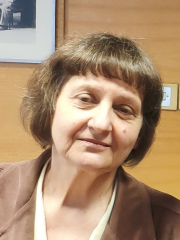
Stoyan Saev, PhD serves as an Assistant Professor in the Department of Didactics at Sofia University's Faculty of Education in Bulgaria. His academic role encompasses lecturing responsibilities with a focus on integrating technology into educational practices. His research expertise spans across E-Learning , Virtual Learning Environments , and Educational Technology , with particular emphasis on: Virtual social simulations in education Distance education methodologies for adult learners Implementation of virtual reality in educational contexts Electronic assessment systems Social media applications in higher education Virtual worlds as educational platforms His scholarly contributions demonstrate a consistent focus on innovative pedagogical approaches, particularly in the realm of technology-enhanced learning. His work bridges theoretical frameworks with practical applications, as evidenced by his research on Second Life implementations for social work education and gamification strategies during the pandemic. While no specific scientific awards are mentioned in the provided materials, his active research profile and recent publications indicate ongoing scholarly engagement in his field. Dr. Saev can be reached at s.suev@fp.uni-sofia.bg and is multilingual, communicating effectively in both English and Bulgarian.
Dr. Olga Mancheva-Аli serves as a Senior Lecturer in the Department of Tourism within the Faculty of Economics at St. Cyril and St. Methodius University of Veliko Turnovo. With a substantial publication record spanning nearly two decades, her academic work demonstrates consistent dedication to advancing knowledge in tourism and hospitality management. Her research interests encompass a broad spectrum of contemporary tourism issues including tourism management, hospitality management, digital transformation in tourism, sustainable tourism practices, tourist behavior analysis, event management, economic security in tourism, and workforce analysis in the HORECA sector. Dr. Mancheva-Аli's scholarly contributions reflect the evolving challenges and opportunities within the tourism industry, particularly addressing the impact of digital technologies, sustainability concerns, and crisis management in the post-pandemic landscape. Analysis of her recent publications reveals a strong focus on practical applications of tourism research, with particular attention to Bulgarian tourism contexts while maintaining relevance to broader European and international tourism trends. Her work often bridges theoretical frameworks with empirical data collected from Bulgarian tourism destinations and businesses, providing valuable insights for both academic and industry stakeholders. Dr. Mancheva-Аli actively participates in multiple research projects addressing critical tourism issues including technological innovation implementation in tourism destinations, university television initiatives, knowledge transfer for tourism potential development across Balkan countries, and career attitudes of future tourism specialists. These projects demonstrate her commitment to applying academic research to practical industry challenges and educational innovations. Her work with students focuses on preparing future tourism professionals through curriculum development that integrates digital transformation aspects with traditional tourism management knowledge. She has contributed significantly to understanding workforce dynamics in the Bulgarian tourism sector, particularly examining career attitudes of potential tourism specialists and workforce analysis of the HORECA sector.
Dr. Evgenia Dimitrova Velikova is an Associate Professor in the Algebra Department at the Faculty of Mathematics and Informatics, Sofia University "St. Kliment Ohridski". Her academic career spans several decades with significant contributions to both theoretical mathematics and educational research. Her research interests focus primarily on coding theory, particularly covering radius of linear codes, cyclic codes, and weight distributions. She has also made notable contributions to the field of educational assessment within mathematics education, analyzing student admissions processes and examination systems at her institution. Her work bridges theoretical mathematics with practical applications in both information theory and educational systems. Analysis of Dr. Velikova's publication history reveals a strong trajectory in coding theory research from the 1980s through the 2000s, with a notable shift toward educational research and interdisciplinary applications in digital humanities during the 2010s. Her later work demonstrates expertise in applying mathematical concepts to art image analysis and metadata extraction, showing versatility across multiple domains while maintaining her core mathematical foundation. Dr. Velikova has collaborated extensively with researchers including Ts. Baicheva, A. Bojilov, K. Ivanova, and P. Stanchev. Her work on covering radii of linear codes has been cited in numerous publications, including significant references in "Covering codes" by Cohen, Honkala, Litsyn, and Lobstein (1997), indicating substantial impact in her field. Her research has appeared in prestigious journals such as IEEE Transactions on Information Theory and SERDICA Journal of Computing. As an educator at Sofia University's Faculty of Mathematics and Informatics, Dr. Velikova has contributed significantly to curriculum development and educational assessment. Her office is located in room FMI-518, with office hours on Mondays from 13 to 15 at room 208 and Tuesdays from 13 to 14 at room 518, demonstrating her active engagement with students and academic community.
Dr. Cvetomir Aleksov is an Assistant Professor in the Department of National and International Security at New Bulgarian University. He holds a PhD focused on countering state-sponsored and independent hacker groups, a Master's in Organization and Management (2020), and a Bachelor's in National Security and Defense (2013, graduated with honors) from Vasil Levski National Military University. He is a certified ethical hacker with extensive industry experience in cybersecurity threat analysis, vulnerability assessment, and AI-driven security solutions. His research integrates national security with emerging technologies, emphasizing: Cybersecurity frameworks and threat mitigation AI/machine learning applications in cyber defense Geopolitical instability and disinformation analysis Critical infrastructure protection His publications analyze evolving cyber threats, including APT groups, pandemic-related attacks, and AI risks, with consistent focus on practical defense methodologies and policy implications. He teaches SECB602: Information Systems in Security and develops cybersecurity curricula. No awards or grants are documented.
Professor Temenoujka Bandrova is a distinguished academic at the University of Architecture, Civil Engineering and Geodesy (UASG), serving as Head of the Department of Photogrammetry and Cartography within the Geodetic Faculty since 2020. With a career spanning nearly three decades since joining UASG in 1995, she has established herself as a leading expert in cartography and geospatial technologies. Her academic leadership extends to roles including Chairman of the Academic Council of the Geodetic Faculty (2016-2020) and current member of UASG's Academic Council (2020-2024). Professor Bandrova's educational background includes: Ph.D. (1997-2001): "Symbol System for 3D Urban Settlements" at University of Architecture, Civil Engineering and Geodesy Specialization (1996): "Design of 3D Conventional Signs for Representation of Various Objects in 3D Urban Models" at Institute of Computer Graphics, Graz University of Technology, Austria Specialization (1988): "Large-scale Topographic Maps" at VIAS-Sofia Diploma Engineer in Geodesy, Photogrammetry and Cartography (1983-1988): Graduated as valedictorian from Higher Institute of Architecture and Civil Engineering (VIAS) Secondary Education (1980-1983): 8th Secondary Mathematical School, Sofia, graduated with gold medal Professor Bandrova's research spans multiple domains within cartography, with particular emphasis on 3D virtual cartography, map projections, and applications of cartography for early warning and crisis management. Her work bridges theoretical cartographic principles with practical applications in environmental monitoring, disaster response, and educational contexts. She has pioneered approaches to children's cartography and developed innovative methods for 3D map creation and visualization. Her recent research increasingly integrates artificial intelligence and big data analytics with traditional cartographic methods, exploring new frontiers in geospatial representation and analysis. Analysis of Professor Bandrova's recent publications reveals a strong focus on contemporary cartographic challenges including map projections, geospatial data infrastructure, risk mapping, and the integration of emerging technologies in cartography. Her work demonstrates consistent contributions to both theoretical advancements and practical applications, with particular attention to Bulgarian and European mapping standards. The interdisciplinary nature of her research connects cartography with environmental science, crisis management, cultural heritage preservation, and educational technology. Professor Bandrova holds significant leadership positions in the international cartographic community: Vice-President of the International Cartographic Association (2019-2023) Treasurer and Bureau Member of the International Society for Digital Earth (2019-present) Chair of the Young Scientists Committee, International Society for Digital Earth (2011-2019) Member of editorial boards for multiple international journals including "Geodesy and Cartography," "Eurasian Journal of Digital Earth," and "Geo-Spatial Information Science" As a dedicated educator and mentor, Professor Bandrova has supervised numerous doctoral students whose research focuses on thematic cartography for climate change impacts, early warning systems, disaster management, and educational applications. She has led multiple international research projects funded by EU programs including Erasmus+, Horizon 2020, and various national research initiatives. Her laboratory work includes the Cartography Laboratory at UASG (2008-2020) and contributions to the development of digital geodetic twins and 3D printed mountainous terrain with augmented reality.
Associate Professor Daniela Pavlova is a faculty member in the Computer Science Department at the Faculty of Information Sciences, University of Library Studies and Information Technologies (ULSIT) in Sofia, Bulgaria. She also serves as the Director of the Distance Learning Centre at the same institution. Dr. Pavlova holds a PhD in "Automated Information Processing and Management Systems" and has been with ULSIT since at least 2014, progressing from Assistant Professor to her current position as Associate Professor since 2023. Dr. Pavlova's educational background includes a Bachelor of Sciences in "Information technologies" (2006-2010), a Master of Science in "Electronic business (e-business) and electronic governance (e-governance)" (2010-2011), and a PhD in "Automated systems for information and management processing" (2012-2014), all from the University of Library Studies and Information Technologies. Her research interests span several interconnected domains in digital transformation and information systems. Dr. Pavlova focuses on e-Governance , examining how digital technologies transform government services and citizen engagement. She has extensive work in distance learning and educational digitalization , particularly highlighted during the pandemic period. Another significant area is the digitization of cultural heritage , where she explores technological approaches to preserving and presenting cultural assets. Her work also encompasses cloud technologies, information systems, and intelligent systems for knowledge and process management , often connecting these to broader themes of national security in the digital age . Analysis of Dr. Pavlova's recent publications reveals a consistent focus on the intersection of digital technologies with governance, education, and cultural preservation. Her work demonstrates a progression from technical aspects of information systems to their broader societal implications, particularly in the Bulgarian and European contexts. The publications show increasing attention to security considerations within digital governance frameworks and the practical implementation challenges of digital transformation initiatives. Analysis of the Risks and Challenges to National Security Arising from the Digitization of State Governance (2024) Digitization and Protection of Cultural Heritage in Crises and Conflicts (2024) Effectiveness of Electronic Governance in Crisis Management (2024) Cultural Heritage through the Lens of e-Governance (2023) The Impact of Cloud Technologies on Preserving and Promoting Cultural Identity (2023) Dr. Pavlova has been actively involved in educational innovation, particularly through her role as Director of the Distance Learning Centre. Her work suggests engagement with students and junior researchers, though specific advisees are not mentioned in the available materials. She has collaborated extensively with colleagues including Panayot Gindev, Atanas Nachev, and others on various research projects related to digital governance and information systems. Her work with the Distance Learning Centre indicates leadership in educational technology implementation at her institution, particularly during the pandemic period when digital learning became essential. The center likely serves as a hub for developing and supporting online educational resources and methodologies across the university.
Iglika Getova serves as an Associate Professor at the University of Library Studies and Information Technologies in Sofia, Bulgaria, within the Faculty of Information Science. With 21 publications and 43 citations recorded on ResearchGate, her academic profile demonstrates consistent scholarly productivity spanning from 2016 through upcoming 2025 research. Dr. Getova's research expertise encompasses multiple dimensions of educational technology: Online and hybrid learning methodologies Artificial intelligence applications in education Virtual and augmented reality implementations Knowledge assessment and evaluation systems Curriculum development for technical subjects Cybersecurity training frameworks Her publication trajectory reveals an evolving research focus from general e-learning topics toward increasingly specialized applications of emerging technologies. The most recent work (2023-2025) examines generative AI tools, VR for special education, and mixed reality in scientific visualization, while earlier publications (2018-2022) established foundational work in hybrid learning models and pandemic-era educational adaptations. Dr. Getova maintains an active collaborative network, primarily working with colleagues at her home institution including Iva Kostadinova (with whom she shares laboratory affiliation), Katia Rasheva-Yordanova, and Nikolay Ivanov Yanev. Her interdisciplinary approach connects education theory with practical technological implementations across various academic domains.
ЦВЕТЕЛИНА ПЕТРОВА ПЕТРОВА is a Senior Lecturer in the Department of Language and Specialized Training at Technical University - Gabrovo. With over 15 years of academic experience, she has established herself as a leading researcher in language education, intergenerational learning, and professional development for public sector employees. Her work bridges the gap between traditional academic research and practical applications in workforce development and aging populations. Her research interests focus on innovative approaches to language education, particularly business English and German for professionals. She has pioneered work in intergenerational learning models that connect seniors and youth, active aging initiatives, and e-learning solutions for workforce development. Her research spans educational technology, serious games for business training, and internationalization strategies for small and medium enterprises. Analysis of her 15 most recent publications reveals a consistent focus on practical educational solutions that address real-world workforce challenges. Her work demonstrates a progression from traditional language teaching toward innovative methodologies including game-based learning, mobile learning platforms, and intergenerational educational models. She has made significant contributions to understanding the educational needs of aging populations and developing training solutions for public sector employees and technical professionals. Throughout her career, she has successfully managed nine major international research projects focusing on active aging, language learning, and professional development. Her project leadership roles have included coordinator, contractor, and trainer positions in initiatives funded by European programs. These projects have directly impacted thousands of participants across multiple European countries, particularly in developing training solutions for seniors, public sector employees, and technical professionals. Her work environment includes collaboration with multiple European institutions through international projects. She has developed specialized learning environments that combine language education with professional skills development, particularly in technical fields. Her research has practical applications in both academic settings and industry contexts, creating bridges between educational institutions and workforce needs.
Maria Mihaylova Nisheva-Pavlova serves as a Professor Researcher (R4) at the Faculty of Mathematics and Informatics, Sofia University St. Kliment Ohridski, Bulgaria. Her office is located in room FMI-535 with Thursday office hours from 12:00-14:00, and she can be contacted via phone at +359 2 8161-729. Her research spans interdisciplinary computational domains with emphasis on: Theoretical systems including Computer Algebra and Knowledge-based Systems Semantic Technologies and Information Retrieval frameworks Machine Learning applications in Bioinformatics Digital Preservation methodologies for Scientific and Cultural Heritage Architectural design of Digital Libraries This portfolio demonstrates integration of advanced computational theory with practical solutions for data-intensive challenges in scientific and cultural domains. No scientific awards were documented in the provided materials. Academic advising activities and research grant management are not specified in available records. Similarly, dedicated laboratory facilities or research team structures remain unmentioned in the current documentation.
Professor Alia Tadjer is a distinguished Theoretical Chemist at the University of Sofia, Bulgaria, serving in the Faculty of Chemistry and Pharmacy, Department of Physical Chemistry. She has held the position of Professor in Theoretical Chemistry since 2011, following her promotion from Associate Professor (2000-2010). Her academic journey includes visiting professorships at South-Western University, Blagoevgrad, and research positions at prestigious institutions including University of Torino, University of Newcastle, Max-Planck Institute for Polymer Research, and University of Cambridge. Professor Tadjer's research spans multiple cutting-edge domains of theoretical and computational chemistry. Her primary interests include the structure and properties of extended organic p-electronic molecular systems, behavior of non-ionic surfactants at interfaces, organic and hybrid systems for molecular devices, design of bioactive agents, and modeling of electrode materials for metal-ion batteries. Her work has evolved from fundamental quantum chemistry studies to applied research in energy storage materials, particularly focusing on lithium- and post-lithium-ion battery technologies. Her extensive publication record demonstrates a clear progression from early work on polymethine dyes and molecular aggregates to contemporary research on singlet fission chromophores, battery materials, and machine learning applications in chemistry. The recent publications (2020-2024) predominantly focus on energy storage materials, particularly for lithium, sodium, and magnesium ion batteries, alongside continued work on singlet fission materials for photovoltaic applications and computational methods development. Member of editorial board for International Journal of Quantum Chemistry, ARKIVOC, and Advances in Quantum Chemistry Editor of Progress in Theoretical Chemistry and Physics, Volume 30 (Springer, 2017) Organizer of major scientific events including QSCP XX (2015) and Size-dependent Effects in Materials (2010) Professor Tadjer has led numerous significant research projects funded by the Bulgarian Ministry of Education and Science and international bodies including EU Framework Programs. Her current work focuses on molecular modeling of organic and bio-organic materials, singlet fission chromophores, and computational approaches to battery materials development. She maintains active collaborations across Europe through COST actions and Horizon 2020 projects.
Assoc. Prof. Boyan Dimitrov Karapenev serves as Deputy Dean at the Technical University of Gabrovo , within the Faculty of Electrical Engineering and Electronics and the Department of Communication Equipment and Technologies . He holds a Doctor of Technical Sciences degree and has led or participated in 12 university-funded research projects since 2005. His office is located in Room 2303, and he can be reached at bkarapenev@tugab.bg . Education: Dr. Karapenev earned his Doctor (scientific and educational) degree in Technical Sciences, specializing in telecommunications and electronic systems. Research Interests: His work spans telecommunications , digital signal processing , communication systems , analog and digital circuit design , harmonic oscillators , quadrature generators , modulation and demodulation techniques , broadband amplifiers , transmission line transformers , RF planning , IPv6 protocol , smart home systems , and IoT communications . Recent Publications Trend: His 2023–2024 publications focus on quadrature RC oscillator design , LoRaWAN energy efficiency , ICT prototypes for big data , and AI-based voice analysis , reflecting a shift toward energy-efficient IoT systems and AI applications in communications . Scientific Awards: No specific awards are mentioned in the provided materials. Doctoral Supervision & Research Leadership: Dr. Karapenev has supervised four PhD students: Ivaylo Rumenov Bobev – “Signal studies in automatic tuning of radio communication devices” Nikolay Petkov Manchev – “Development and research of a low-power wireless IoT communication platform” Radoslav Marinov Maznev – “Monitoring and control in optical-fiber cable TV networks” Ivailina Atanasova Dimitrova – “Research and adaptation of parameters in digital audio signal processing in communications” (withdrawn) He has led 12 university research projects since 2005, involving teams of 4–20 researchers, focusing on telecommunications, RF planning, digital modulation, IPv6, and IoT systems. Laboratory & Team: He operates from Cabinet 2303 , serving as Deputy Dean and project leader, overseeing research teams in communication technologies and electronics.
Ivelina Stefanova Balabanova is an Associate Professor at the Technical University of Gabrovo, Faculty of Electrical Engineering and Electronics, Department of Communication Equipment and Technologies. She holds a Doctor of Technical Sciences degree and leads research in AI-driven telecommunications and biometric systems. Research Focus: Her work integrates artificial intelligence, machine learning, and optimization techniques across domains including: Biometric security systems (voice/facial/fingerprint recognition) Network traffic analysis and prediction models Signal processing and noise identification in communication systems Telecommunication infrastructure optimization Publication Trends: Recent works (2022-2024) demonstrate strong emphasis on neural network applications for biometric authentication, network traffic forecasting, and signal processing optimization, with frequent use of FFNN, CFNN, and DWT methodologies in telecommunications contexts. Awards: Crystal Prize for Best Paper (2017) Crystal Prize for Best Paper (2015) Advising: Currently supervising three PhD students in telecommunications AI research: Teodora Valentinova Zhorova Kristina Maximova Sidorova Toni Ivanov Naydenov Projects: Leads teams of 12-19 researchers on institutional projects like 'Synthesis of intelligent object recognition systems' (2022) and participates in cross-disciplinary ICT initiatives including the national 'Digitalization of the economy in a Big Data environment' project.
Christina Svetoslavova Stoycheva is an Assistant Professor at the Communication Equipment and Technologies Department of Technical University - Gabrovo. Her research focuses on cryptography, chaos theory, and control systems engineering, with recent work on image encryption, 3D scene reconstruction, and IoT applications in agriculture. Her publications highlight integration of chaotic synchronization with artificial neural networks for enhanced security, segmentation algorithms for computer vision, and adaptive control systems in electrohydraulic engineering. She explores applications in beehive monitoring and Raspberry Pi-based platforms. Her work spans international conferences and Bulgarian journals, reflecting expertise in secure communication, signal processing, and multi-agent systems. No awards or additional affiliations are documented in the provided materials.
Professor Galia Madjarova is a faculty member at the Faculty of Chemistry and Pharmacy , Sofia University "St. Clement of Ohrid" , where she serves as Head of the Department of Physical Chemistry since 2024. Her academic career spans over two decades, including roles as Vice-dean for the M.Sc. Pharmacy program (2019-2023). Her research focuses on theoretical chemistry , particularly the electronic structure of polycyclic aromatic hydrocarbons , magnetic properties of Heusler alloys as rare-earth-free permanent magnet alternatives, and molecular-level studies of ligand-receptor interactions for drug delivery systems. She also explores machine learning applications in discovering new materials for OLEDs and rechargeable batteries . At the educational level, Prof. Madjarova teaches Structure of Matter , Quantum Chemistry , and Applied Computational Chemistry courses, contributing to both B.Sc. and M.Sc. programs. She has conducted post-doctoral research at institutions in Japan, France, and Germany, including the Max Planck Institute for Microstructure Physics . Her international collaborations include partnerships with researchers from the Max Planck Institute for Polymer Research , University of Tokyo , and institutions in Macedonia, Morocco, and Germany. Prof. Madjarova maintains active academic affiliations through her leadership role in the department and participation in research projects like COST action СА21101 (COSY) and "Molecular Modelling of HIV-inhibitors" .
Assoc. Prof. Dr. Nikolay Netov is the Head of the Department of Statistics and Econometrics at Sofia University's Faculty of Economics and Business Administration. He has extensive experience in international collaborative projects across academia and industry, focusing on interdisciplinary research. His leadership includes roles in the Faculty’s Alumni Association, which boasts over 7,000 members. Research interests span econometric modelling, financial risk assessment (e.g., Value at Risk), AI-driven public sentiment analysis, transportation optimization, and digitalization of public services. Notable achievements include awards for the 'Career in IT' project (2014, 2015), which bridges business and NGOs. His work integrates statistical methods with real-world applications in healthcare, education, and urban planning. Publications highlight contributions to financial engineering (Black-Scholes models), public transport systems (telecom data analytics), and AI applications in policy analysis. He actively promotes digital literacy and sustainable urban development through innovative research methodologies. Key Projects: Career in IT, Data-Driven Public Transport, E-Government Services Analysis Awards: 2014 Best Project Award, 2015 Responsible Business Award Professional Roles: Board Member of Alumni Association, Department Head His research bridges theoretical frameworks (e.g., game theory, intuitionistic fuzzy analysis) with practical societal challenges, emphasizing cross-sector collaboration and tech-driven solutions.