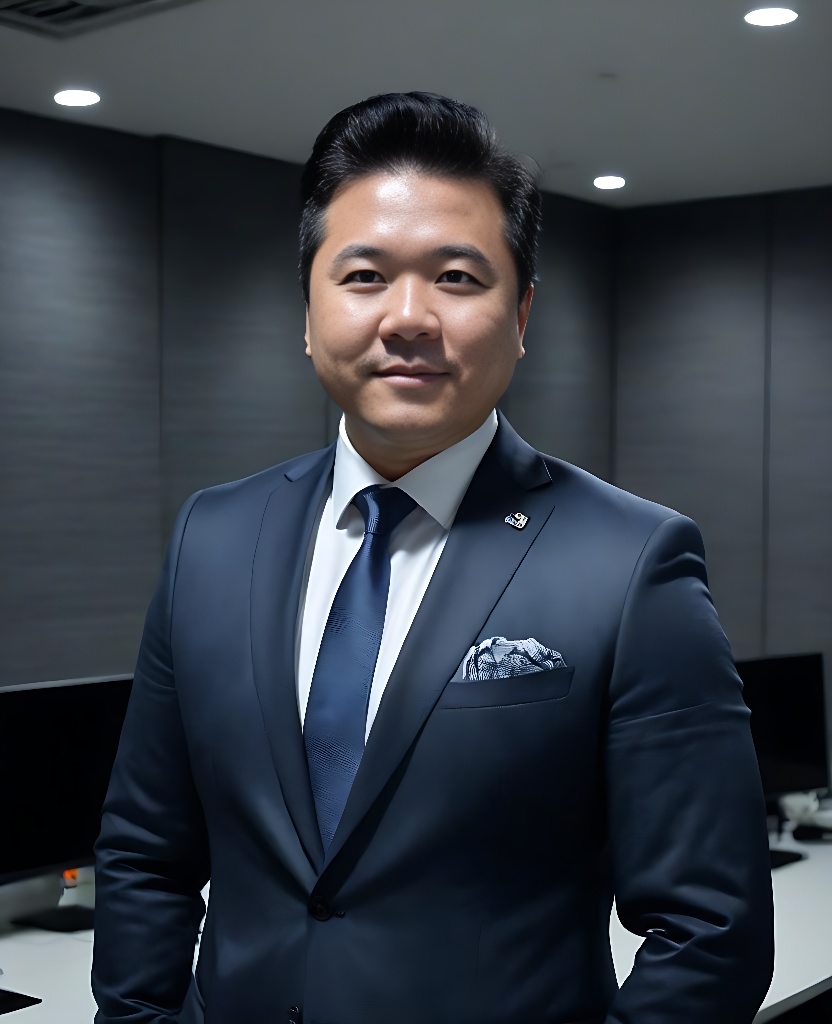
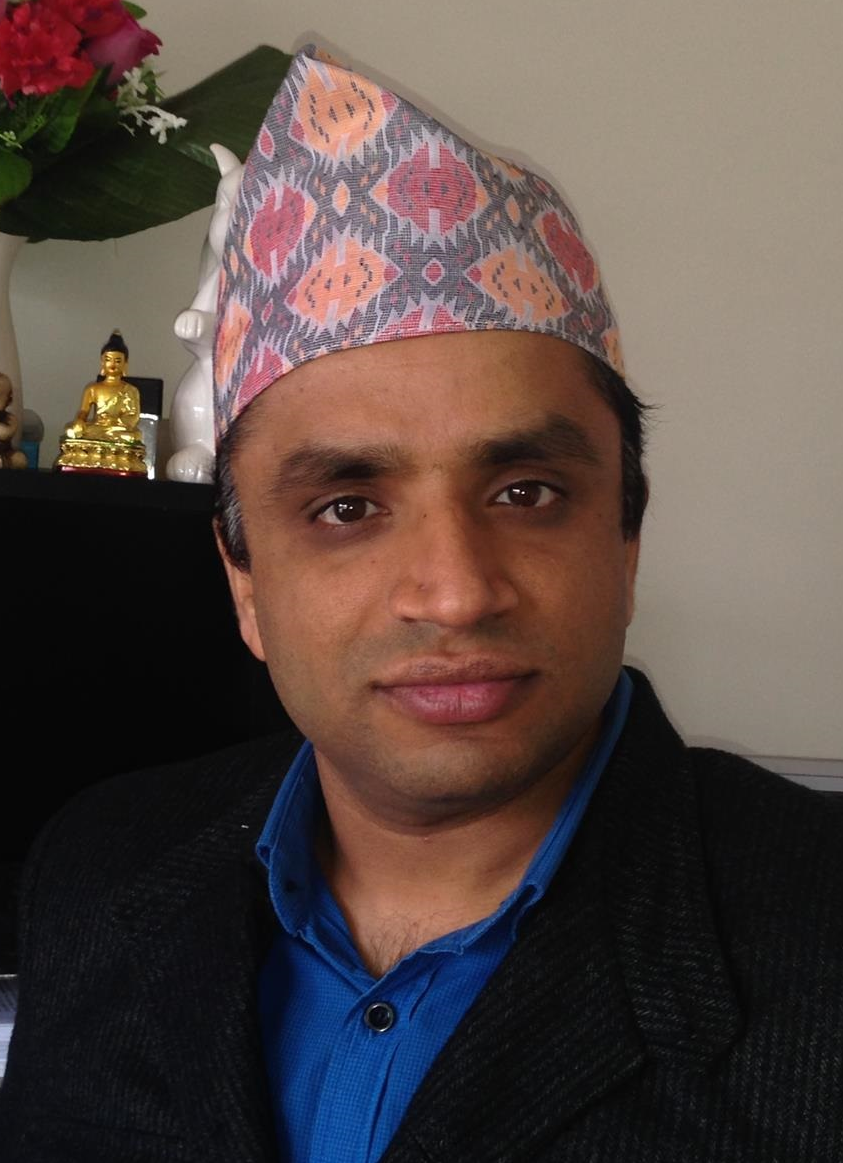
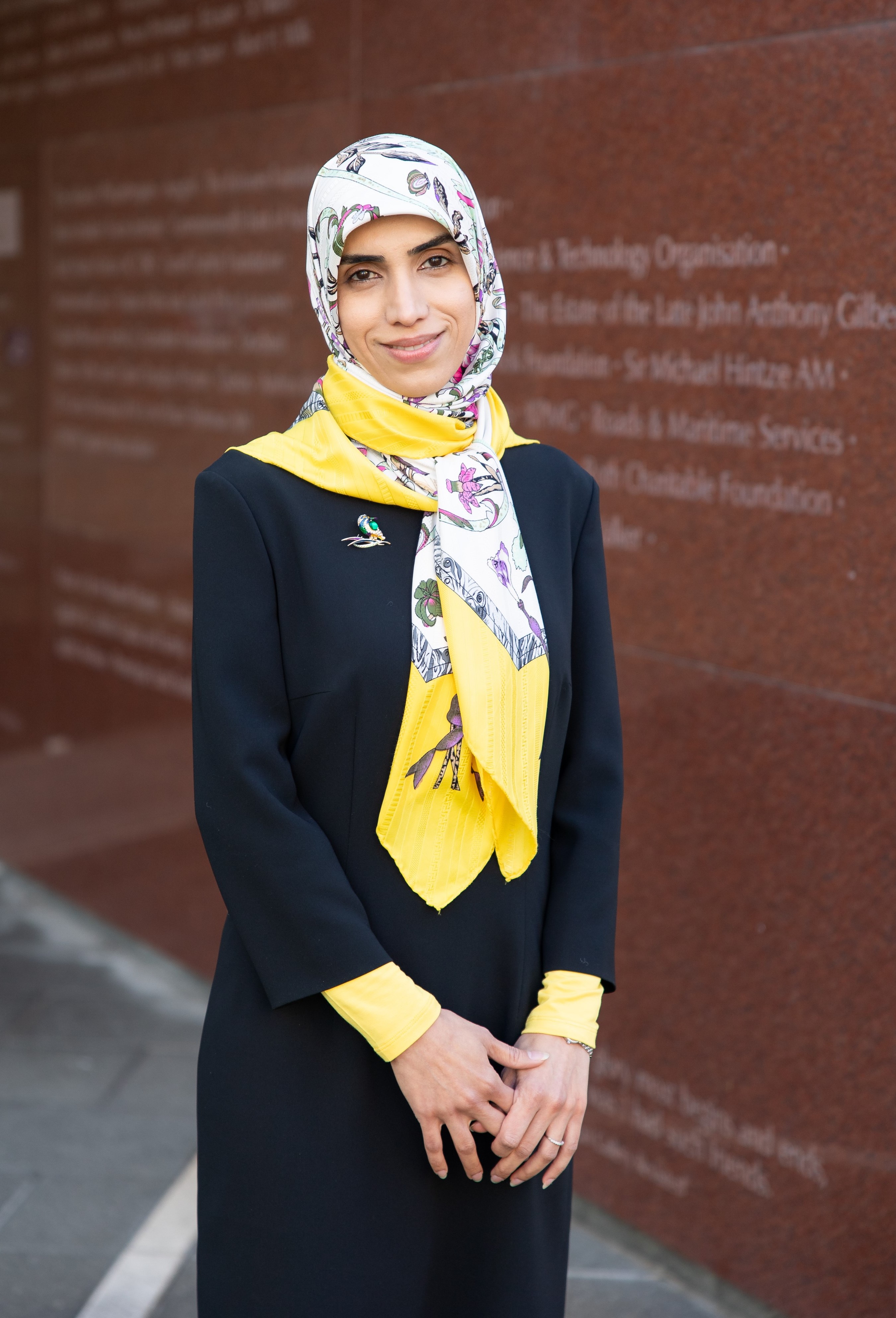
T M Indra Mahlia , a Distinguished Professor at the School of Civil and Environmental Engineering , University of Technology Sydney (UTS), leads cutting-edge research in sustainable energy systems and environmental engineering. As a core member of the Centre for Technology in Water and Wastewater and the Centre for Advanced Modelling and Geospatial Information Systems , he bridges engineering innovation with practical climate solutions. PhD from University of Malaya (Kuala Lumpur, Malaysia) Fluency in English, Indonesian, Malay, and Achinese for peer review His research spans Techno-Economic Analysis , Circular Economy , and Water-Energy Nexus challenges, supported by over $5 million in grants. His work focuses on: Hydrogen energy systems optimization Advanced materials for energy storage Low-cost water purification technologies Sustainable biodiesel production Thermal management innovations As a Highly Cited Researcher (Clarivate Analytics, 2017-2022) and The Australian 's 2019/2025 Sustainable Energy Leader , he mentors future researchers - notably guiding two Highly Cited PhD students ( H.C. Ong and A.S. Silitonga ). His publications across 2024-2026 demonstrate technical advancements in: Hydrogen carrier systems Microalgae-derived lubricants High-entropy alloy corrosion resistance Artificial neural network optimization Phase change material thermal sinks Biohydrogen production pathways
Dr. Yining Hu is a Lecturer at the School of Computer Science , University of Technology Sydney since January 2024. Her research and teaching focus on Artificial Intelligence , Blockchain , Cloud Computing , and Wearable Technology . She holds a PhD from the University of New South Wales and has collaborated with industry partners on blockchain applications for IoT security and sustainability. PhD: University of New South Wales Current role: Lecturer at UTS School of Computer Science Key research areas: Wearables, Blockchain, Cloud Computing Dr. Hu's publications demonstrate her technical expertise in blockchain-IoT integration, with notable works on secure transaction frameworks and carbon offset management. Her recent 2025 paper in Electronics explores blockchain-DNN synergy for IoT security. Earlier works cover wearables' security protocols and adaptive fitness tracking frameworks. She contributes to academic service as a member of the Editorial Board for the International Journal on Data Science and Technology (2024-2027). Her teaching portfolio includes advanced cloud computing and software development courses, with availability for Masters/PhD supervision . Current funded research includes blockchain for food traceability and a 2025-2028 LLM-driven text-to-SQL grant with Hampton Capital.
Queenie Huang is a current PhD student and Tutor at the School of Mathematics & Statistics , Faculty of Science , University of New South Wales (UNSW) . Under the supervision of Prof. Jeya Jeyakumar and Prof. Guoyin Li , her research focuses on Distributionally Robust Optimization , with applications in machine learning and mathematical modeling. Academic Background : Bachelor of Advanced Mathematics with First-Class Honours (2022), UNSW Bachelor of Actuarial Studies (2022), UNSW Her research combines theoretical advancements in robust optimization , polynomial systems , and machine learning , particularly in addressing data uncertainty through sum-of-squares-convex and second-order cone programming techniques. She has presented at prestigious conferences such as the International Symposium on Mathematical Programming in Montreal and workshops in Sydney and Auckland. Queenie has received multiple accolades including the 2024 Marguerite Frank award and several Women in Maths & Stats Prizes at UNSW. As an educator, she has tutored courses in optimization and actuarial studies, contributing to student engagement through events like Girls Do The Maths and UNSW Open Day Q&A panels.
Wei Liu is an Associate Professor in Machine Learning and Director of the Future Intelligence Research Lab at the University of Technology Sydney's School of Computer Science. He holds a PhD in Machine Learning from the University of Sydney and maintains active roles as a senior IEEE member and area chair for top AI conferences including KDD, AAAI, and ICDM. Education: PhD in Machine Learning, University of Sydney His research focuses on adversarial machine learning, generative AI, cybersecurity, and multimodal learning, with particular emphasis on AI security, robustness of algorithms, and model fairness. Liu's work addresses critical challenges in developing next-generation AI systems that can withstand cyber attacks while maintaining performance with multi-modal data and balanced outcomes despite data imbalances. Analysis of his recent publications reveals a strong trend toward securing large language models against novel attack vectors while advancing multimodal learning techniques. His work spans both theoretical contributions in adversarial frameworks and practical applications in cybersecurity, transportation, and industrial systems. Scientific Awards: 3 Best Paper Awards Most Influential Paper Award at PAKDD Nominee for NSW Premier's Prizes for Early Career Researcher (2017) Liu actively supervises numerous PhD students working on adversarial attacks, robust AI models, and agricultural applications. He has secured substantial funding including ARC Discovery Projects, government grants, and industry partnerships with organizations including Agriwebb, CSIRO Data61, and AVEVA. His Future Intelligence Research Lab specifically targets three emerging challenges: AI security against cyber attacks, robustness with multi-modal data, and model fairness with imbalanced datasets. The Future Intelligence Research Lab produces next-generation AI algorithms addressing AI security vulnerabilities, multi-modal robustness challenges, and fairness issues in real-world deployment scenarios, with multiple representative papers demonstrating practical applications in each domain.
Professor Luming Shen is a distinguished academic in the School of Civil Engineering at The University of Sydney. With over two decades of experience in mechanical behavior of materials research, he leads cutting-edge investigations at the intersection of civil engineering, materials science, and computational mechanics. His work spans multiple scales from nano to macro, focusing on fundamental understanding that can be applied to real-world engineering challenges in water purification, structural safety, and sustainable infrastructure. Professor Shen's educational background includes: Bachelor's degree in Building Engineering from Tongji University, China Master's degree in Structural Engineering from Tongji University, China PhD in Civil Engineering from the University of Missouri-Columbia, USA Professor Shen's research focuses on the mechanics and behaviors of materials across multiple scales. His primary interest lies in understanding both brittle materials (concrete, rock, glass) and ductile materials (aluminum, titanium, metals). Two major thrusts of his work include nano-mechanics and materials research, particularly developing carbon nanotube membranes for water purification, and studying novel composite materials under impact and extreme loading conditions for applications in blast-resistant structures and vehicle safety. He employs high-performance computing for molecular and macro-level analyses, complemented by physical laboratory testing. Professor Shen's extensive publication record demonstrates a consistent focus on multiscale modeling of materials behavior, with recent work emphasizing granular materials dynamics, carbon nanotube applications, 3D-printed concrete technology, and energy storage systems. His research shows a clear evolution toward increasingly complex multiphysics problems that integrate mechanical, thermal, and fluid dynamics phenomena at multiple scales. The interdisciplinary nature of his work bridges civil engineering, materials science, computational mechanics, and environmental engineering, with applications spanning from fundamental material science to practical civil infrastructure solutions. Professor Shen actively supervises multiple research students, including Yifang Cao working on 3D printing concrete, Jiangshuai Meng studying granular materials under impact loads, and Runda Wang applying machine learning to rock burst prediction. His research is supported by access to advanced computational resources and laboratory facilities at The University of Sydney, particularly through his membership in The University of Sydney Nano Institute. The university has provided specialized space and equipment necessary for conducting physical tests on materials under high-speed impact conditions. Professor Shen maintains active laboratory facilities for conducting physical tests on materials under various loading conditions, particularly high-speed impact testing. His work is supported by computational resources for molecular dynamics and multiscale modeling. As a member of The University of Sydney Nano Institute, he collaborates with interdisciplinary researchers working at the nanoscale, particularly in applications related to water purification technologies using carbon nanotube membranes.
Emran Ali is a Graduate Researcher (Ph.D. candidate) and Part-Time Lecturer at Deakin University's School of Information Technology within the Faculty of Science, Engineering and Built Environment. He holds concurrent faculty appointments at Hajee Mohammad Danesh Science & Technology University (HSTU) in Bangladesh where he teaches computer science courses while on study leave. His academic journey includes a Master of Science (Research) in Information Technology from Deakin University (2022) and a Bachelor of Science in Computer Science and Engineering from HSTU. Doctor of Philosophy (Ph.D.) in Information Technology, Deakin University (2023–present) Doctor of Philosophy (Ph.D.) in Machine Learning, Coventry University (Cotutelle program, 2023–present) Master of Science (Research) in Information Technology, Deakin University (2020–2022) Bachelor of Science in Computer Science and Engineering, HSTU Bangladesh (2007–2012) Ali's research focuses on algorithm development and applied machine learning in health informatics, specializing in biosignal processing for neurological and sleep disorder detection. His work integrates time-series data analysis with explainable AI techniques to develop clinical decision support systems. Current projects include ML/DL modeling of sleep-stage transitions in aging populations and causal relationship analysis in sleep disorders using EEG data. Analysis of his 10 recent publications reveals strong concentration in biomedical ML applications (60%), particularly EEG-based neurological disorder detection and mental health diagnostics. Secondary focus areas include environmental monitoring systems (20%) and foundational computer science (20%). His work consistently employs ensemble methods and feature optimization techniques across diverse datasets, with increasing emphasis on real-world clinical applicability in recent publications. Deakin University Post-graduate Research Scholarship (DUPRS) through Cotutelle program with Coventry University National Fellowship from Bangladesh Ministry of Science and Technology (2020) Best Presentation Award at Deakin School of IT Conference (2021) AWS AI/ML Scholarships (2023, 2024) Next Generation Tech Booster Scholarship (2024) Ali provides research supervision at HSTU while serving as a Graduate Research Teaching Fellow at Deakin University for Machine Learning and Data Analytics units. His industry collaborations include projects with Monash University, Alfred Health, and AETMOS Australia focused on health informatics applications. Current funding includes AWS-sponsored nanodegrees and Deakin University research scholarships supporting his sleep disorder research. His technical work integrates cloud-based AI/ML platforms (AWS, Azure) with biosignal processing pipelines, utilizing collaborations across Australian healthcare institutions to validate clinical applications. Recent projects emphasize explainability in deep learning models for medical diagnostics, particularly in resource-constrained environments relevant to Bangladesh healthcare contexts.
Dr. Chetan Arora is a Senior Lecturer in Software Engineering at Deakin University's School of Information Technology, part of the Faculty of Science Engineering and Built Environment. He holds a PhD from the University of Luxembourg where he received the best PhD thesis award in the ICT domain. His research focuses on applied Artificial Intelligence in Software Engineering, with particular emphasis on Empirical Software Engineering, Requirements Engineering, and Applied Natural Language Processing. PhD in Computer Science from University of Luxembourg Masters in Software Engineering from Technische Universitat Kaiserslautern (Germany) Bachelors in Engineering (CS) from Thapar University (India) Arora's research interests center on the intersection of AI and Software Engineering, particularly how machine learning and natural language processing can enhance software development processes. His work explores requirements engineering, test automation, software trustworthiness, and human-centric software development. He investigates how large language models can be effectively deployed for tasks like test case generation, requirements analysis, and traceability. His recent publications reveal a strong focus on practical applications of AI in software engineering, with numerous studies examining the real-world implementation challenges and benefits. His publication record shows significant activity in top software engineering venues, with a notable emphasis on AI applications in software engineering processes. His recent work demonstrates expertise in retrieval-augmented generation systems, requirements-driven testing, and human-centric software development approaches. The publications collectively highlight his focus on bridging theoretical AI advancements with practical software engineering challenges. Best Ph.D. thesis award in the ICT domain at University of Luxembourg Arora actively supervises doctoral students working on cutting-edge topics including satellite communication systems, extended reality applications, and human-centered AI requirements engineering. His industry collaborations include work with Department of Defence on projects like Contextually Situated Anomaly Detection and Planning and Optimisation of Resources in Defence Satellite Communication Systems. He previously worked at SES Satellites on applied AI for IoT and Satcom, and as an FNR-PPP research fellow at the University of Luxembourg in software quality assurance. His laboratory work focuses on developing practical AI solutions for software engineering challenges, particularly in requirements engineering and test automation. Current projects involve multi-orbit satellite constellation optimization, dynamic radio resource management, and extended reality enabled human-centric requirements engineering.
Sunil Aryal is an Associate Professor of Data Science at the School of Information Technology, Faculty of Science Engineering and Built Environment, Deakin University, Australia. He received his PhD and Master by Research degrees from Monash University Australia and has published over 70 papers in top-tier international venues in Artificial Intelligence, Machine Learning and Data Mining. Dr. Aryal's educational background includes: Graduate Certificate of Higher Education Learning and Teaching, Deakin University (2020) PhD in Computer Science, Monash University (2017) Master of Information Technology (Research), Monash University (2012) Master of Information Technology (Coursework), University of Southern Queensland (2008) Bachelor of Information Technology, Purbanchal University, Nepal (2005) His primary research interests focus on making Machine Learning and Data Mining algorithms robust and flexible to handle heterogeneous, noisy and uncertain data in real-world problems. His work spans across several specific areas including anomaly detection, clustering, kernel/similarity-based learning, ensemble methods, learning from limited data, reinforcement learning, natural language processing, and computer vision. Dr. Aryal is particularly interested in applying these techniques to solve challenges in Defence, National Intelligence, Engineering, Manufacturing, Healthcare and Education. Dr. Aryal co-leads the Machine Learning for Decision Support (MLDS) Research Group at Deakin University and has secured over AUD 4.5 million in external research funding. His research is supported by diverse organizations including US and Australia Defence Agencies, the Australian Office of National Intelligence, Worksafe Victoria, the Victorian State Department of Education and Training, the Technology Innovation Institute (TII) UAE, and Table Tennis Australia (TTA). His notable awards include multiple Deakin University research and teaching awards, the Australian Postgraduate Award for his PhD studies, and several student travel awards during his doctoral candidature. Dr. Aryal actively supervises numerous PhD and Master's students and has contributed significantly to teaching in various courses at Deakin University and previously at Federation University. He serves on several university committees and contributes to the research community as a reviewer, program committee member, and editor for various journals and conferences.
Professor Yuan Miao is a distinguished academic at Victoria University (VU), serving as Professor in the College of Arts, Business, Law, Education & IT and Head of the Information Technology Program. With a PhD from Tsinghua University's Automation Department, his academic journey spans prestigious institutions including the University of Melbourne and Nanyang Technological University in Singapore before settling at VU where he has been Professor since January 2010, following his Associate Professorship from August 2004 to December 2009. Education: BSc, Shandong University, China MEng, Tsinghua University, China PhD, Tsinghua University, Automation Department, China Professor Miao's research centers on Large Language Models (LLMs) and Generative AI, where he has identified critical barriers in practical applications including limited memory length in systems like ChatGPT and Gemini, contradictory explanations, lack of local knowledge integration, and significant errors in text-data hybrid reasoning (up to 38%). His innovative solutions involve cognitive map graphs and rational intelligence models to create customized AI systems. His work spans diverse application areas including human knowledge modeling, multimodal interaction, healthcare analytics (particularly dementia detection), cybersecurity, and robotics powered by rational intelligence. Analysis of Professor Miao's recent publications reveals a strong focus on integrating LLMs with specialized knowledge domains across healthcare, cybersecurity, and social media analysis. His research consistently addresses practical limitations of current AI systems while developing novel frameworks for more reliable and context-aware applications. The interdisciplinary nature of his work is evident in publications spanning medical informatics, cybersecurity analytics, and educational technology. Scientific Recognition: Two articles in fuzzy cognitive map modeling ranked among top 10 most cited works since 2000 (Google Scholar 2000-2016) Development of adversarial dataset based on SQuAD 2.0 that reduced BERT and ELECTRA accuracy from ~90% to ORCID identifier 0000-0002-6712-3465 with 138 peer-reviewed publications Professor Miao actively supervises PhD and Master's students across diverse research topics including access control systems, healthcare analytics, cybersecurity, and social behavior analysis. His research has secured substantial funding from both industry giants (Microsoft, Amazon, Oracle, Google) and government bodies (Australia Research Council, Data61, Singapore's NRF), with recent projects including Digital Transformation for Construction Industry ($1.258 million), Western Health SharePoint Development ($68,000), and Big Data Analysis for Domestic Violence Research (US$100,000). His current grant portfolio demonstrates strong industry-academia collaboration addressing real-world challenges. Professor Miao leads research teams focused on rational intelligence systems that overcome current LLM limitations, with particular emphasis on creating practical AI solutions for healthcare, cybersecurity, and smart city applications. His work with Maribyrnong City Council on the Smart City at Footscray Park project ($850,000) exemplifies his commitment to applying advanced AI research to community-level challenges.
Shui Yu is a Professor of the School of Computer Science in the Faculty of Engineering and Information Technology at the University of Technology Sydney (UTS), where he also serves as the Deputy Chair of the UTS Research Committee. His academic career spans over 20 years in Australia and 7 years in China, with additional teaching experience in Hong Kong and Indonesia. He has developed more than 10 units in cybersecurity, computer science, data analytics, and computer games, serving as the Course Director for Computer Science undergraduate programs. Professor Yu's research interests center on cybersecurity, privacy, networking aspects of Big Data, and applied mathematics for computer science. He pioneered the field of 'networking for big data' in 2013 and edited the seminal book 'Networking for Big Data' published in 2015. His work has practical applications in industry, including Amazon Cloud's auto-scale strategy against distributed denial-of-service attacks. Current research focuses include privacy and security concerns associated with big data, security issues in smart grids, anonymous transactions on Blockchain, and anonymous communication for web browsing privacy. Analysis of his recent publications reveals a strong research trajectory spanning cybersecurity, privacy-preserving technologies, networking for big data, and applied mathematics. His work shows increasing focus on quantum-resistant cryptography, federated learning security, and adversarial robustness in AI systems. The interdisciplinary nature of his research bridges theoretical foundations with practical applications in IoT, blockchain, and cloud environments. Fellow of IEEE (2023) Distinguished Lecturer of IEEE Communications Society (2018-2021) Distinguished Visitor of IEEE Computer Society (2022-2024) Professor Yu has secured numerous research grants from the Australian Research Council, including current projects on privacy and fairness in high intelligence models (DP240100955), improved security and privacy for online platforms (LP220200808), and secure blockchain for financial applications (LP220100453). He has served on editorial boards of multiple IEEE journals including IEEE Communications Surveys and Tutorials, IEEE Communications Magazine, and IEEE Internet of Things Journal. His service extends to organizing major conferences such as IEEE Globecom 2015 and IEEE INFOCOM 2016-2017.
Trung Le is a Lecturer in the Department of Data Science & AI at Monash University. His research focuses on deep generative models, kernel methods, optimization in machine learning, and Bayesian inference, with applications to supervised learning, adversarial learning, and cyber security. He holds a PhD in Computer Science from the University of Canberra (2013). Key projects include the Australian Research Council-funded initiatives such as 'Can Machines Unlearn? Toward Next-Generation Safe Artificial Intelligence' (2025–2029) and 'Trustworthy Generative AI: Towards Safe and Aligned Foundation Models' (2024–2026). His work contributes to UN SDG 4 (Quality Education) through advancements in AI ethics and safety. Education: PhD in Computer Science, University of Canberra (2013) Research Areas: Continual Learning, Diffusion Models, Domain Adaptation, Adversarial Machine Learning Awards: KDD 2023 Best Student Paper Award, Imagine Cup 2010 Australia First Prize Trung has published extensively in top-tier venues like NIPS, ICLR, and JMLR, with over 100 outputs since 2009. His recent work emphasizes robustness in AI systems, including projects on adversarial defense and ethical concept erasure in generative models.
Dr. Hamed Aboutorab is a Lecturer at the School of Business, UNSW Canberra, specializing in applying artificial intelligence (AI) to supply chain management, risk analysis, and organizational resilience. His work integrates data analytics, machine learning, and decision-support systems to enhance operational efficiency and stability in complex environments. He focuses on proactive risk identification, cyber security in smart farming, and AI-driven models for supply chain disruptions. Research Interests: AI applications in logistics and risk management Cyber threats in agricultural systems Reinforcement learning for supply chain optimization Transformer-based models for risk analytics Teaching: ZBUS3102 Project Management ZBUS8302 Logistics Management Publications: Over 15 peer-reviewed articles in journals like Expert Systems with Applications , Automation in Construction , and Computers and Security . Recent work includes systematic reviews on supply chain risks and cyber threat hunting techniques. Labs/Teams: Engaged in interdisciplinary projects combining AI, cyber security, and supply chain innovation at UNSW Canberra.
Professor Parisa A. Bahri is the Pro Vice Chancellor for the College of Science, Technology, Engineering and Mathematics at Murdoch University . She holds a PhD in Chemical Engineering from Sydney University and serves as a Professor of Engineering. Her research focuses on systems engineering, sustainability, and algal systems, with applications in energy, waste treatment, and techno-economic modeling. Research Interests : Microalgal bioremediation of industrial effluents Decarbonization strategies for energy and transport systems Techno-economic analysis of bioprocesses Integration of renewable energy with water systems Education : Doctor of Philosophy in Chemical Engineering, Sydney University Recent Publications highlight advancements in microalgal cultivation techniques, critical mineral supply chains, and sustainable energy-transport nexus. Key tools include computational fluid dynamics, scenario planning, and life cycle assessments.
Rebecca Rogers is a VET Lecturer at Charles Darwin University TAFE and a researcher at the North Australia Centre for Autonomous Systems (NACAS). She holds a PhD, M.Sc., and B.Sc., and is an Environment University Fellow in the Faculty of Science and Technology. Her research focuses on integrating drone technology into ecological and livelihood studies, with emphasis on wildlife surveillance and biosecurity. Education: Ph.D., M.Sc., B.Sc. in relevant fields. Research interests include drone-based ecological monitoring, feral pig population management, and leveraging meteorological radar for wildlife tracking. Key projects include assessing drone utility for feral pig surveillance, urban innovation monitoring in Darwin, and rock wallaby detection via radiography. She contributes to committees like the NT Drone Industry Committee and National Science Week NT Executive Committee. Publications span topics such as drone-telemetry integration, cost-effective waterbird surveys, and radar applications in Southern Hemisphere ecology. Her work aligns with UN Sustainable Development Goals related to environmental protection and innovation.
Associate Professor Fatemeh Vafaee is a leading researcher at the University of New South Wales (UNSW) , holding appointments as Associate Professor in the School of Biotechnology and Biomolecular Sciences (BABS) and Deputy Director (Science) of the UNSW AI Institute . She previously served as Deputy Director of the UNSW Data Science Hub (uDASH) and has held academic positions at the University of Toronto and the University of Sydney. PhD in Artificial Intelligence from University of Illinois at Chicago Postdoctoral Fellowships at University of Toronto and University of Sydney Founded the AI-Enhanced Biomedicine Laboratory in 2017 Her research focuses on deploying advanced AI techniques to address biomedical challenges through: Biomarker Discovery for cancer and neurodegenerative diseases Single-Cell Multi-Omics data integration and analysis Computational Drug Repositioning and network pharmacology Multi-Omics Data Fusion and temporal network modeling Recent publications demonstrate expertise in liquid biopsy development , single-cell imaging , and AI-driven cancer diagnostics . Her methodological contributions include novel deep learning architectures for omics data analysis and graph neural networks for drug synergy prediction. Scientific accolades include: Winner, Women in AI Asia-Pacific Health Award (2023) Runner-Up, WAI-APAC Innovator of the Year (2023) Top 10 Women in AI in Asia-Pacific (2023) Australian Bioinformatics and Computational Biology Society Research Excellence Award (2023) She supervises PhD candidates across computational biomedicine and AI in healthcare , with significant grant achievements exceeding $17M in competitive funding, including schemes from ARC Discovery , NHMRC , and Medical Research Future Fund .