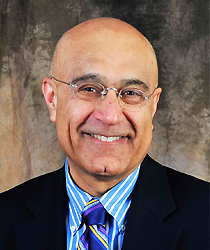
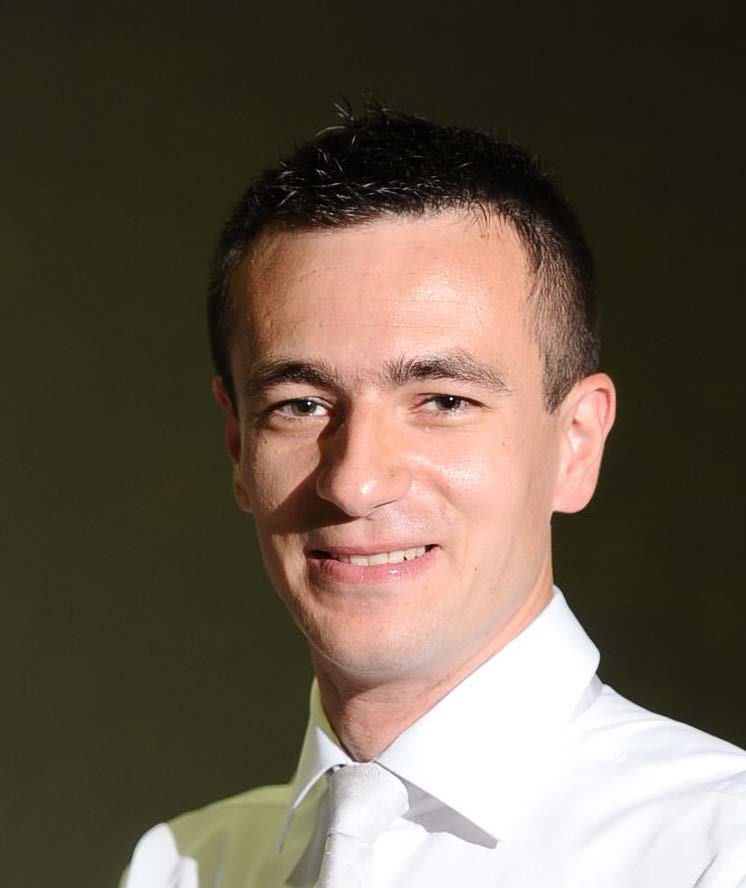
Youssef M. A. Hashash is the Grainger Distinguished Chair in Engineering and a Professor in the Department of Civil and Environmental Engineering at the University of Illinois at Urbana-Champaign (UIUC). He holds a B.S., M.S., and Ph.D. in Civil Engineering from MIT (1987–1992). His expertise spans geotechnical engineering, earthquake engineering, and computational geomechanics, with a focus on deep excavations, tunneling, and soil-structure interaction. He co-developed DEEPSOIL, widely used for seismic soil response analysis. Education: B.S. Civil Engineering, MIT (1987) M.S. Civil (Geotechnical) Engineering, MIT (1988) Ph.D. Civil (Geotechnical) Engineering, MIT (1992) Research Interests: Dr. Hashash's work integrates geotechnical engineering with advanced technologies like AI, visualization, and discrete element modeling. Key areas include: Seismic site response and amplification models for Central/Eastern North America Tunneling and underground infrastructure resilience Geotechnical applications of machine learning and augmented reality Soil-structure interaction and liquefaction analysis Professional Roles: Geotechnical co-leader, NIST investigation of the Champlain Towers South collapse (2022–present) Chair, National Academies' Committee on Geological and Geotechnical Engineering (2024–present) Past President, Geo-Institute of ASCE Awards: Presidential Early Career Award for Scientists and Engineers ASCE 2014 Peck Medal Elected to National Academy of Engineering (2022) Labs/Teams: Leads research groups at UIUC focused on computational geomechanics and geotechnical earthquake engineering. Collaborates with federal agencies like NIST and NSF on large-scale projects.
Mohammad Modarres is the Nicole J. Kim Eminent Professor at the University of Maryland within the A.J. Clark School of Engineering. He serves as Director of the Center for Risk and Reliability (CRR) and is a Professor of Nuclear Engineering in the Department of Mechanical Engineering. Dr. Modarres co-founded the world's first degree-granting graduate curriculum in reliability engineering at the University of Maryland and has established himself as an international expert in reliability and risk analysis. Dr. Modarres received his educational credentials from prestigious institutions: B.S. in Mechanical Engineering from Tehran Polytechnic M.S. in Mechanical Engineering from MIT M.S. and Ph.D. in Nuclear Engineering from MIT Dr. Modarres' research spans multiple critical areas in engineering risk and reliability. His primary interests include probabilistic risk assessment, uncertainty analysis, probabilistic physics of failure, and probabilistic fracture mechanics. His work encompasses both experimental investigations and sophisticated probabilistic model development. He has made significant contributions to materials degradation science, prognosis and health management systems, and nuclear safety analysis. His research bridges theoretical developments with practical applications in complex engineering systems, particularly in nuclear power and aerospace sectors. Analysis of Dr. Modarres' recent publications reveals a strong trend toward integrating advanced data science techniques with traditional reliability engineering. His work increasingly incorporates machine learning, deep learning, and entropy-based approaches to solve complex problems in prognostics and health management. There's a clear focus on multi-unit systems, particularly in nuclear power applications, and a growing emphasis on data-driven methodologies for remaining useful life estimation and failure prediction. His research maintains a strong foundation in probabilistic methods while embracing cutting-edge computational approaches. Dr. Modarres has received numerous prestigious honors and awards throughout his distinguished career: Nicole Y. Kim Eminent Professorship in Engineering Minta Martin Professorship in A.J. Clark School of Engineering University of Maryland Distinguished Scholar-Teacher (2019) Tommy Thompson Award for outstanding lifetime contributions to nuclear safety (American Nuclear Society) Fellow, American Nuclear Society Fellow, Institute of Electrical and Electronics Engineers (IEEE) Life Fellow of IEEE 1996 Maryland Inventor of the Year Award (in Information Sciences) FDA Commissioner Special Citation for Contributions to Risk Assessment Methods (2004) 2008 International Research Leadership Award (Society for Reliability Engineering, Quality and Operations Management) Honorary Doctorate from Universidad Da Vinci de Guatemala As the founding director of the Center for Risk and Reliability, Dr. Modarres has built a world-renowned program that has awarded over 500 Ph.D. and master's degrees. His research has been supported by significant grants from government agencies and industry partners, particularly in nuclear safety, aerospace reliability, and critical infrastructure protection. He has mentored numerous students who have gone on to become leaders in reliability engineering across various industries. His center collaborates extensively with the International Atomic Energy Agency (IAEA) and other international organizations on risk assessment methodologies. The Center for Risk and Reliability (CRR), which Dr. Modarres directs, serves as a hub for multidisciplinary research in risk and reliability engineering. The center has recently renovated its facilities to enhance collaboration among researchers from different engineering disciplines. CRR maintains strong partnerships with industry leaders including Amazon Lab126 (as evidenced by their collaboration on device durability research) and has been instrumental in advancing probabilistic risk assessment tools used in nuclear power plant safety analysis. The center hosts regular seminars, workshops, and international conferences, positioning itself at the forefront of risk and reliability research globally.
Professor Saskia Goes is a Professor of Geophysics at Imperial College London's Department of Earth Science & Engineering within the Faculty of Engineering. She specializes in geodynamics, subduction dynamics, and seismic hazard analysis using numerical modeling and geophysical data interpretation. Her affiliations include the Dynamic Earth and Hazards groups at the Imperial Centre for Geohazards Dynamics. Education: PhD in Geophysics from UC Santa Cruz (1995), Drs (BSc/MSc equivalent) from Utrecht University (1990). Prior roles include SNF Professor of Tectonophysics at ETH Zurich (2003-2005), Visiting Assistant Professor at the University of Michigan (1995-1996), and postdoctoral research at Utrecht University (1996-1999). Research focuses on mantle dynamics, lithosphere structure, and subduction zone processes. Her work integrates seismic imaging, machine learning, and numerical simulations to study phenomena like slab dynamics, mantle plumes, and fluid migration. Key themes include the interplay between tectonic forces and geochemical processes in continental and oceanic settings. Publications emphasize subduction zone processes, seismic tomography, and induced seismicity. She has led projects like the VoiLA initiative studying volatile recycling in the Lesser Antilles. Awards and recognition include invited lectures at leading conferences (AGU, EGU) and universities worldwide. Teaching includes undergraduate geodynamics, geohazards courses, and advanced MSc modeling modules. Active in promoting geohazard research through interdisciplinary collaboration and public engagement.
Professor Behzad Fatahi is a distinguished academic in Civil and Environmental Engineering at the University of Technology Sydney (UTS), specializing in geotechnical engineering, railway infrastructure, and sustainable construction technologies. With a career spanning over 16 years at UTS, he has served as Deputy Head of School - Teaching and Learning (2024-present), Head of Discipline (2020-2024), and School Research Coordinator (2012-2017). His research focuses on unsaturated soil mechanics , dynamic soil-structure interaction , and green infrastructure solutions . Academic Appointments : Professor (2024-present), Associate Professor (2017-2024), Senior Lecturer (2011-2017), Lecturer (2008-2011) Research Leadership : Supervised 21 PhD students to completion, developed groundbreaking techniques for landfill waste reuse and tyre-derived aggregates in railway construction His work on seismic resilience of LNG tanks and bioengineered soil stabilization has received international recognition, including the 2023 Best Research Paper Award at the Australasian Association for Engineering Education conference. Professor Fatahi's industry experience includes geotechnical engineering roles at Coffey International and SES Engineering prior to academia. Key Research Contributions : Developed green corridor models for railway lines using coupled flow-deformation equations Pioneered AI-integrated teaching frameworks for civil engineering education Advanced machine learning techniques for intelligent compaction and structural buckling analysis As a Category 1 supervisor , he mentors graduate researchers in Civil Engineering , Geomechanics , and Earthquake Engineering . His peer-reviewed work (>240 publications) demonstrates technical excellence and innovation across multiple geotechnical domains.
Carlos Torres-Verdín is a Professor and holds the Brian James Jennings Memorial Endowed Chair and Zarrow Centennial Professorship in Petroleum Engineering at The University of Texas at Austin's Hildebrand Department of Petroleum and Geosystems Engineering, within the Jackson School of Geosciences. He earned a B.S. in Geophysical Engineering from the National Polytechnic Institute of México (1983), an M.Sc. in Electrical Engineering from UT Austin (1985), and a Ph.D. in Engineering Geoscience from UC Berkeley (1991). His research focuses on petrophysical and geophysical characterization of subsurface regions using well logging, seismic, and multi-physics data. Key areas include borehole geophysics, rock physics, reservoir characterization, and hydraulic fracturing. He has received numerous accolades, including the 2020 Virgil Kauffman Gold Medal (SEG) and the 2017 Conrad Schlumberger Award (EAGE). His work integrates advanced numerical methods and machine learning to enhance reservoir evaluation and CO2 sequestration monitoring. Torres-Verdín teaches courses such as PGE 358 (Formation Evaluation) and directs the Formation Evaluation Joint Industry Research Consortium, fostering industry-academia collaboration. Awards & Honors 2020 Virgil Kauffman Gold Medal, SEG 2019 Anthony F. Lucas Gold Medal, SPE 2017 Conrad Schlumberger Award, EAGE 2017 Lockheed Martin Excellence in Engineering Teaching Award Research & Teaching His recent studies address challenges in unconventional reservoirs, fluid dynamics in nanoporous media, and real-time geosteering. He has published over 150 peer-reviewed articles, emphasizing innovation in inversion techniques, NMR applications, and reservoir simulation.
Prof. Matt Pritchard is a Professor in Earth & Atmospheric Sciences at Cornell University, based at Snee Hall. His research focuses on volcanology, geodesy, and remote sensing, with a particular emphasis on using satellite data to monitor volcanic activity, deformation, and glacial interactions. He leads studies on global volcanic systems, including Indonesia's Semeru and Raung volcanoes, Chile's Cordón Caulle, and Bolivia's Uturuncu, applying techniques like InSAR, SAR, and thermal imaging. Key research interests include volcanic eruption dynamics, magma-hydrothermal systems, and the integration of multi-sensor datasets. He has contributed to developing tools like Hotspotter for automated volcanic thermal feature detection and has explored planetary volcanism (e.g., Venus). His work bridges geophysics, glaciology, and computational methods, addressing both Earth and extraterrestrial systems. Prof. Pritchard has received recognition such as the William Bowie Lecture (2022, 2023). His projects often involve international collaborations, including the CEOS Volcano Demonstrator initiative and the EarthDEM/ArcitcDEM projects. He also engages in geothermal energy research and seismic monitoring in Ithaca, NY.
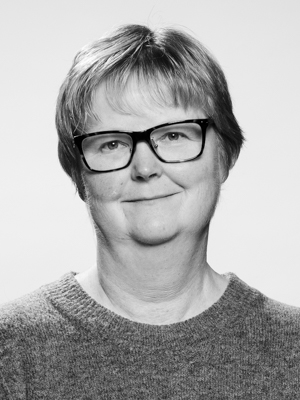
Anne H Schistad Solberg is a Professor in the Department of Informatics at the University of Oslo's Faculty of Mathematics and Natural Sciences. She leads research in digital signal processing and image analysis, with a focus on machine learning applications across multiple domains. As co-director of SFI Visual Intelligence, she oversees research on interpretable deep learning models, uncertainty quantification, contextual learning, and self-supervised learning approaches. Her research spans medical imaging (particularly cardiovascular ultrasound), environmental monitoring using satellite imagery, and seabed mapping with sonar technology. Professor Solberg's work demonstrates a consistent trajectory from foundational signal processing techniques to cutting-edge deep learning applications. Her recent publications show increasing specialization in medical image analysis, particularly in echocardiography enhancement and cardiac structure segmentation, while maintaining strong contributions to remote sensing and geophysical applications. She teaches several popular courses including IN2070, IN3310, and IN5400 (Machine Learning for Image Analysis), which is noted as the most popular master's/PhD course on deep learning at the University of Oslo. Professor Solberg serves as principal investigator for the Intelligent Cardiovascular Ultrasound Scanner (INCUS) project, collaborating with GE Vingmed Ultrasound to develop AI-enhanced cardiac imaging systems that improve diagnostic accuracy and productivity in echocardiography. Co-director of SFI Visual Intelligence research center Principal Investigator for the INCUS project (Intelligent Cardiovascular Ultrasound Scanner) Member of the Digital Signal Processing and Image Analysis (DSB) research group Member of the Strategic Research Initiative: Multimodal Medical Imaging and Image Analysis (MEDIMA) Her research group develops algorithms that address real-world challenges in medical diagnostics and environmental monitoring, with a particular emphasis on making deep learning models more interpretable and reliable for critical applications. The INCUS project, funded through User-driven Research-based Innovation (BIA), aims to reduce the time wasted during cardiac ultrasound examinations by implementing intelligent algorithms that learn from expert users and historical data.
Scott McDougall is an Associate Professor in the Department of Earth, Ocean & Atmospheric Sciences at the University of British Columbia (UBC). He specializes in geohazards, particularly landslides and related risks, with a focus on improving risk assessment and mitigation strategies. His work integrates field data, statistical analysis, numerical modeling, and laboratory experiments to understand landslide dynamics. Education: PhD in Geological Engineering, UBC (2006) BASc in Civil Engineering, University of Toronto (1998) Research Interests: Landslide mobility and runout modeling Tailings dam breaches and their impacts Risk evaluation frameworks for geohazards Shoreline erosion and landslide-generated waves Applications of machine learning in hazard prediction Key Contributions: Development of the UBC Geohazards Research Team to advance landslide risk reduction Leadership in the CanBreach project to improve tailings dam breach analysis Pioneering probabilistic runout prediction models for rock avalanches and debris flows Awards: Engineering Geology Best Paper Award 2024 CDA Published Paper Award Advising & Grants: Supervised over 15 graduate students and postdoctoral fellows Active industry collaborations with mining and engineering firms Funded by NSERC, Mitacs, and industry partnerships Labs & Teams: UBC Geohazards Research Team CanBreach Collaborative Research and Development Project
Matej Varga is a Scientific Assistant and Postdoctoral Researcher at ETH Zurich's Department of Civil, Environmental and Geomatic Engineering, working in the Geosensors and Engineering Geodesy group under Prof. Andreas Wieser since 2021. His research spans geometrical geodesy, physical geodesy, and satellite geodesy, with applications in both theoretical and practical domains. Dr. Varga's research interests focus on spatial, temporal and spectral analysis of geodetic data, with particular expertise in geodetic reference systems and frames, gravity and geomagnetic field modeling at all temporal and spatial scales, and multi-GNSS multi-frequency positioning and monitoring. His work integrates geometrical and physical aspects of geodesy to address complex Earth observation challenges, particularly in infrastructure monitoring and geophysical applications. His recent publications demonstrate a strong trend toward high-precision geodetic applications for major scientific infrastructure, most notably the Future Circular Collider project, alongside important contributions to earthquake impact analysis, geomagnetic network development, and gravity field modeling. His research bridges traditional geodetic methods with modern computational approaches, including machine learning applications for point cloud registration. Dr. Varga is actively involved in the GSEG research group at ETH Zurich, contributing to the development of geodetic infrastructure and reference systems. His work has practical applications in infrastructure monitoring, earthquake analysis, and scientific projects requiring extreme geodetic precision.
Xiaozhuo Wei is a Postdoctoral Scholar Research Associate in Geophysics at the California Institute of Technology (Caltech), affiliated with the Division of Geological and Planetary Sciences and the Department of Geophysics. His research focuses on geophysical monitoring of volcanic and tectonic processes, employing advanced techniques like fiber-optic geodesy, seismic tomography, and machine learning. He specializes in studying seismicity associated with volcanic eruptions, magma dynamics, and slow slip events in subduction zones, with significant contributions to understanding the 2018 Kīlauea eruption and Iceland's Reykjanes Peninsula eruptions. Key affiliations: Caltech’s Geophysics Department, Division of Geological and Planetary Sciences Research tools: Distributed Acoustic Sensing (DAS), ambient noise tomography, and offshore seismic arrays Field areas: Kīlauea Volcano (Hawaii), Iceland’s Reykjanes Peninsula, and Alaska’s subduction zones Wei’s work integrates multidisciplinary approaches to investigate crustal deformation, magma storage, and seismic hazard assessment. He has contributed to improving earthquake catalogs using offshore data and analyzing post-eruption seismicity patterns. His recent studies explore the spatial-temporal evolution of volcanic systems and the mechanics of dike intrusions using high-resolution geophysical methods. His research emphasizes real-time monitoring of volcanic processes and has advanced understanding of how seismic velocity changes reflect magma movement. Collaborations involve deploying ocean-bottom seismometers and machine learning algorithms to detect slow slip events in subduction zones, enhancing earthquake prediction capabilities. Notable projects include the 2023–2024 Reykjanes eruptions study and the analysis of the 2018 Kīlauea eruption’s seismic aftermath. His work bridges observational seismology with theoretical models of volcanic and tectonic systems, contributing to both fundamental science and practical hazard mitigation strategies.
Allen Husker is a Research Professor of Geophysics at the California Institute of Technology (Caltech), affiliated with the Seismological Laboratory. He manages the Southern California Seismic Network (SCSN) and the Southern California Earthquake Data Center. Previously, he was a professor at the National Autonomous University of Mexico (UNAM), chairing the Seismology Department, and served as Station Manager for the Comprehensive Nuclear-Test-Ban Treaty Organization (CTBTO) seismic stations in Mexico. His academic journey includes a B.S. from the University of Washington (1998), an M.S. from UCLA (2003), and a Ph.D. from Caltech (2008). Research Interests : Husker focuses on geophysical observations of crustal structure, slow-slip events, and seismic network analysis. His work bridges subduction zones (e.g., Mexico) and transform boundaries (e.g., Southern California). He explores planetary seismology, comparing Earth with the Moon and Mars. Recent studies include DAS technology for moonquake detection and seismic monitoring in the Guerrero seismic gap. Publications Trends : His 2024 work emphasizes DAS applications, Mexico’s San Andreas Fault dynamics, and socio-technical aspects of earthquake early warning (EEW) in Mexico. Earlier research (2020s) delves into slow-slip mechanisms, crustal anisotropy, and fault system dynamics in Mexico. He also investigates moonquake behavior and lunar regolith effects. Awards : No explicit scientific awards listed. Advising & Grants : Advises graduate students like Guillermo González (UNAM) and Yuri Tamama (Caltech). Former students include Francesco Civilini (Research Space Scientist) and Jiuxun Yin (Research Geophysicist). Collaborates widely, including with Jennifer Jackson on lunar seismology. Labs/Teams : Leads the SCSN and collaborates with UNAM’s Seismology Department. Engaged with the CTBTO and international seismological networks.
Biondo Biondi is the Barney and Estelle Morris Professor of Geophysics at Stanford University, affiliated with the School of Earth Sciences. He leads the Stanford Exploration Project and holds roles such as Chair of the Geophysics Department (2019–2022) and Director of the Stanford Earth Imaging Project (1998–Present). His research focuses on seismic imaging algorithms, computational geophysics, and fiber-optic sensing technologies. He earned his Ph.D. (1990), M.S. (1987) in Geophysics from Stanford, and M.Sc. in Electrical Engineering from Politecnico di Milano (1984). Dr. Biondi's research emphasizes improving seismic data imaging through advanced computational methods. He pioneered urban seismic monitoring using preexisting telecommunication fibers, enabling cost-effective subsurface analysis. His work integrates machine learning and high-performance computing to address challenges in reservoir imaging, CO2 monitoring, and infrastructure health. Key research areas include distributed acoustic sensing (DAS), ambient noise tomography, and inverse theory applications. He has authored over 180 publications and received awards like the SEG Honorable Mention (2019, 2016, 2009) and the Distinguished Instructor Short Course (2007). His teaching includes courses like 3-D Seismic Imaging and Reflection Seismology, and he advises graduate students in geophysics and computational science. Collaborations span industry (e.g., Schlumberger, Saudi Aramco) and global institutions. Biondi’s administrative contributions include co-directing the Stanford Earth Sciences Algorithms and Architectures Initiative and serving on editorial boards like the SIAM Journal on Imaging Sciences. His lab’s innovations bridge geophysics with emerging technologies, advancing both academia and industry applications in energy, environment, and urban infrastructure.
Dr. Moritz Ziegler is a geomechanics researcher affiliated with the Technical University of Munich (TUM) and the Assistant Professorship of Geothermal Technologies . He previously worked at GFZ Potsdam (2017–2023) and earned his PhD in Geophysics from the University of Potsdam (2014–2017). His research focuses on geomechanical numerical modeling , uncertainty quantification , and 3D stress field analysis , with applications to geothermal energy, seismic hazard, and rock mechanics. Education: Bachelor of Science in Geosciences (2008–2011), Freie Universität Berlin Master of Science in Geophysics (2011–2014), University of Potsdam PhD in Geophysics (2014–2017), University of Potsdam & GFZ Potsdam His work integrates advanced computational methods ( Altair Hypermesh , Dassault Systèmes Abaqus , Python , Matlab ) to address complex geomechanical problems. Recent publications analyze stress gradients in the North Alpine Foreland Basin, fault-stress interactions, and physics-based machine learning in geomechanics. He has contributed to software development (DOuGLAS v1.0) and calibration tools (FAST Calibration v2.4). Scientific awards or honors are not explicitly mentioned in the provided text. However, his research has been published in leading journals such as Geophysical Journal International , Solid Earth , and Pure and Applied Geophysics .
Daniel Kifer is a Professor in the Computer Science and Engineering department at Pennsylvania State University, with affiliations to the Huck Institutes of the Life Sciences. His work bridges computer science, privacy-preserving machine learning, and geoscience applications. With over 10,000 citations and a high h-index, he focuses on methods to unify theoretical and applied research. Research Interests: Differential Privacy, Privacy-Preserving Machine Learning, Physics-Informed Neural Networks, Landslide Prediction, and Formal Verification of Privacy Systems. Recent projects include grants from the National Science Foundation: SaTC: CORE: Small (2024): privacy-preserving user data embedding in machine learning pipelines. SaTC: CORE: Medium (2017-2023): formal methods for differential privacy and accuracy optimization. His research outputs span domains like geoscience, database systems, and policy analysis, emphasizing precision and scalability of privacy-preserving algorithms.
John S. McCartney is a Professor and Hal Sorenson Endowed Chair in the Department of Structural Engineering at the University of California San Diego (UCSD). He directs the Englekirk Structural Engineering Center and holds editorial roles at journals such as ASCE Journal of Geotechnical and Geoenvironmental Engineering and Computers and Geotechnics. His research focuses on unsaturated soil mechanics, energy geotechnics, and geosynthetics engineering, with applications in thermal energy systems, landfill covers, and seismic response analysis. Education: B.S. and M.S. in Civil Engineering from University of Colorado Boulder (2002), Ph.D. in Civil Engineering from University of Texas at Austin (2007). Research interests include thermo-hydro-mechanical behavior of soils, geothermal energy piles, tire-derived aggregates, and seismic performance of geotechnical systems. His work combines laboratory testing, centrifuge modeling, and numerical simulations to address challenges in sustainable infrastructure and energy systems. Key awards include the Walter L. Huber Research Prize (2016), NSF CAREER Award (2011), and multiple teaching and service recognitions. He actively contributes to ASTM standards and serves as President of the IGS-NA chapter. Lab facilities are located in the Structural and Materials Engineering Building (SME 409). Courses taught include advanced soil mechanics, energy geotechnics, and geotechnical earthquake engineering.