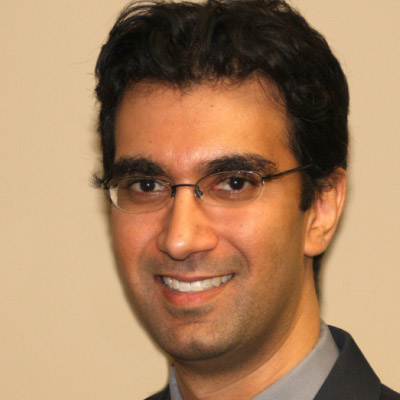
Aaron Sandel is an Associate Professor in the Department of Anthropology at the University of Texas at Austin , where he has been affiliated since at least 2012. He co-directs the Ngogo Chimpanzee Project and leads the Primate Ethology & Endocrinology (PEE) Lab . His research focuses on primate social bonds, emotions, and physiological metrics, with fieldwork based in Kibale National Park, Uganda . He teaches courses on biological anthropology, primate conservation, and the origins of friendship. Research Interests : Social bond formation across species Primate emotion quantification Life history and physiology Machine learning behavior analysis Comparative endocrinology Conservation biology Article Trends : Recent publications emphasize chimpanzee social dynamics, emotional/physiological metrics (via urine and breathing rate), and comparative evolutionary analysis. His work spans primatology , evolutionary anthropology , and machine learning applications , with increasing focus on gorilla sociality and human evolution in recent years.
Luka Radic is a Researcher in the Machine Learning Section at the Department of Computer Science, University of Copenhagen. His work bridges theoretical and applied research in machine learning, with a focus on quantum machine learning , large language models , and fairness in AI systems.
Professor Allan Rennie serves as Professor in Manufacturing Engineering at Lancaster University's School of Engineering and holds the administrative position of Associate Dean for Engagement within the Faculty of Science and Technology. With a career spanning over 30 years since initiating work in additive manufacturing during the mid-1990s, he has established himself as a leading figure in industrial applications of advanced manufacturing technologies across diverse sectors. His research expertise centers on Additive Manufacturing , Engineering Design , and Manufacturing Process Optimization , with current specializations including design for additive manufacturing (as co-leader of the UK's EPSRC DfAM Network), industrial digitalisation of manufacturing processes, and innovative tooling development using metallic and hybrid approaches. Rennie has significantly contributed to Engineering Education , particularly examining the integration of business and management principles into engineering curricula and analyzing the impacts of online/hybrid delivery modes on student engagement and graduate employability following the COVID-19 pandemic. Recent publication trends reveal Rennie's dual focus on practical manufacturing applications and scholarly analysis of technological evolution. His 2025 bibliometric study maps a decade of Design for Additive Manufacturing research, while his structural analysis of musical instruments demonstrates cross-disciplinary applications of manufacturing techniques. These works reflect his commitment to both advancing manufacturing technology and documenting its academic trajectory through rigorous analysis. Professor Rennie actively supervises PhD candidates including Jenny Roberts, Eunike Sembiring, and Joe Taylor while leading substantial research projects such as the EPSRC DfAM Network (2020-2023), Automating Design for Additive Manufacture with AI (2023-2024), and multiple Engineers in Business Competitions. His extensive grant portfolio spans industrial digitalization, sustainable manufacturing, and educational innovation, with notable projects including RENDER (powder recycling), TecHnology and EntrepreneUrship Education, and Production Capable Additive Manufacturing of Polymers. Rennie contributes to Lancaster's research ecosystem through affiliations with the Centre for Global Eco-innovation, Energy Lancaster initiative, and the Lancaster Product Development Unit. These platforms enable him to bridge academic research with industrial applications across multiple sectors, particularly supporting his work on sustainable manufacturing practices, technology commercialization, and industry engagement strategies that translate research into real-world impact.
Professor Michael Berk is a NHMRC Level 3 Research Fellow and Alfred Deakin Professor of Psychiatry at Deakin University and Barwon Health. He serves as Director of the Institute for Mental and Physical Health and Clinical Translation (IMPACT) and holds Honorary Professorial Research Fellow positions at the Florey Institute for Neuroscience and Mental Health, Orygen Youth Health, and Monash University's School of Public Health and Preventive Medicine. Education: Bachelor of Medicine & Bachelor of Surgery (University of Witwatersrand) Research Interests focus on novel therapy development for psychiatric disorders, particularly mood disorders , schizophrenia , and chronic fatigue syndrome . His work spans biomarker research , drug safety , internet-based therapies , and early intervention strategies. Recent publications highlight advances in machine learning applications for depression management, genomic risk prediction , and pharmacoepigenomic studies of ketamine. Scientific Awards: NHMRC Level 3 Research Fellow Thompson Reuters ISI Highly Cited Researcher (2015-2023) Alfred Deakin Chair of Psychiatry As a supervisor , he guides doctoral research in areas including bipolar disorder treatment , biomarker analysis , machine learning in ECT , and novel neurostimulation techniques . His grants cover projects like: MRFF Survivorship Care Grant (2025-2028) NHMRC Synergy Grants for schizophrenia research (2025-2029) US Department of Defense PTSD treatment trial (2023-2027) MRFF Innovative Therapies for Mental Illness Grant (2022-2027) He leads the IMPACT Institute and collaborates with institutions including the Florey Institute , Monash University , and Melbourne University . His professional activities include editorial roles at Australian & New Zealand Journal of Psychiatry and The Lancet Psychiatry , along with leadership positions in the International Society for Bipolar Disorders .
Gioele La Manno is an Assistant Professor (tenure track) at the École Polytechnique Fédérale de Lausanne (EPFL), affiliated with the School of Life Sciences (SV) and the Department of Life Sciences Engineering. He leads the Unité du Prof. La Manno (UPLAMANNO) and holds roles in teaching and doctoral education within the SSV-ENS and Programme doctoral Biologie computationnelle et quantitative . His research focuses on single-cell genomics, cellular heterogeneity, and systems biology approaches to study developmental and neural systems. La Manno’s educational background includes a strong foundation in computational and quantitative biology, reflected in his teaching of courses like Biological data science I: statistical learning and Scientific literature analysis in neuroscience . His lab explores interdisciplinary methods combining genomics, epigenomics, and machine learning to dissect cell fate decisions and tissue organization. He actively contributes to doctoral programs, supervising over a dozen PhD students and advising theses on topics ranging from nervous system development to drug sensitivity profiling. His work bridges basic research with translational applications, such as clinically compliant cell cryopreservation for regenerative medicine. La Manno collaborates across EPFL’s Life Sciences Engineering ecosystem, leveraging state-of-the-art technologies like mass spectrometry imaging and single-cell RNA velocity modeling. His lab’s recent studies address lipidome dynamics, glial diversity in the CNS, and the molecular regulation of midbrain dopaminergic neurons.
Dr. Pedro Mediano is a Lecturer in Computing at Imperial College London's Department of Computing (Faculty of Engineering). His research focuses on complex systems, information theory, and their applications in neuroscience, artificial intelligence, and cognitive science. He is affiliated with the Artificial Intelligence Network and leads interdisciplinary projects exploring synergistic interactions in brain dynamics, psychedelic neurodynamics, and causal emergence. Key research areas include quantifying high-order interactions in complex systems, developing information-theoretic tools for analyzing neural data, and modeling consciousness through integrated information theory. Mediano has pioneered frameworks like the Shannon invariants for scalable information decomposition and developed software tools such as THOI for analyzing higher-order interactions. Recent work examines how psychedelics alter brain entropy, the role of metastability in cognitive processes, and the computational principles underlying causal emergence in machine learning models. His studies integrate mathematical rigor with empirical neuroscience, bridging theoretical and applied domains. Mediano has collaborated on whole-brain models of psychedelic-induced neural complexity and explored the interplay between oxygen metabolism and brain evolution. He holds affiliations with Imperial's AI Network and regularly publishes in top journals across computational neuroscience and complexity science. Current projects include developing open-source tools for information decomposition and investigating the neural correlates of consciousness under altered states.
Rosemarie Nagel is an ICREA Research Professor in the Department of Economics at Universitat Pompeu Fabra (UPF). She holds a PhD from the University of Bonn (1994) under Reinhard Selten. Her research bridges economic theory with behavioral insights, focusing on experimental economics, neuroeconomics, and game theory. She has pioneered the level-k reasoning model in Keynesian beauty-contest experiments and explored bounded rationality through lab and neuroscientific methods. Her work spans macroeconomic experiments, industrial organization, and strategic behavior analysis. She has been a full professor at UPF since 2006 and joined ICREA in 2007. Education: PhD in Economics, University of Bonn, 1994 (Advisor: Reinhard Selten) Postdoctoral work with Al Roth at University of Pittsburgh, 1994-1995 Research Interests: Experimental Economics (macro and micro), Neuro-Economics, Geno-Economics, Game Theory, Industrial Organization, Negotiation. Her methods integrate cognitive models, laboratory experiments, and neuroscience tools to study human decision-making. Key Contributions: Her work on strategic uncertainty in coordination games and neural correlates of strategic thinking has been published in top journals like American Economic Review , Econometrica , and Review of Economic Studies . She co-organizes macroeconomics and computational economics workshops. Professional Activities: Editor for Games and Economic Behavior , frequent speaker at international conferences, and advisor to policy institutions. Her lab focuses on experimental design and neuroeconomic applications.
David Jensen is a Professor in the College of Information and Computer Sciences (CICS) at the University of Massachusetts Amherst. He directs the Knowledge Discovery Laboratory and the Computational Social Science Institute. His research focuses on machine learning, causal modeling, and analyzing large social, technological, and computational systems. Jensen's work is supported by organizations like the National Science Foundation and DARPA. Education: DSc in Engineering and Policy, Washington University in St. Louis (1992) MS in Engineering and Policy, Washington University in St. Louis (1988) BS in Mechanical Engineering, University of Nebraska (1986) Research Interests: Causal inference in relational and dynamic systems Machine learning applications in security and privacy Computational social science Large-scale network analysis Achievements: Recipient of teaching awards from UMass College of Natural Sciences (2011) and CICS (2022) 2017 IEEE INFOCOM Test of Time Paper Award Leadership roles in conferences and journals, including action editor for the Journal of Machine Learning Research Labs and Affiliations: Founder of the Knowledge Discovery Laboratory (2000) Director of the Computational Social Science Institute (2018-2022) Member of the Computing Community Consortium (CCC) Council
Dr. Jing Zhang is an Assistant Professor in the Department of Computer Science at the University of California, Irvine (UCI), affiliated with the Donald Bren School of Information and Computer Sciences. She holds a Ph.D. in Electrical Engineering and Molecular/Computational Biology from the University of Southern California (2012) and completed postdoctoral training in Computational Biology at Yale University. Her research focuses on developing computational methods to unravel gene regulation mechanisms and link genetic variations to diseases, particularly in noncoding regions of the genome. She has contributed extensively to the ENCODE project, co-authoring pivotal studies in Nature and producing over 5,900 experimental datasets. Dr. Zhang’s work bridges engineering, mathematics, and biology, with applications in precision medicine for cancers and psychiatric disorders. She emphasizes the importance of noncoding DNA in disease causation and has pioneered tools like EN-TEx and scENCORE to analyze epigenomes and regulatory elements. Her lab actively seeks to recruit Ph.D. students, postdocs, and interns to advance genomic technologies. Key research areas include single-cell and spatial transcriptomics, gene regulatory networks, and computational methods for multi-omics data integration. Despite pandemic-related challenges, she maintains strong collaborations and teaches courses in bioinformatics. Her future goals include expanding lab interactions and applying computational models to predict disease susceptibility and treatment responses.
Raymond H. Cuijpers is an Associate Professor at Eindhoven University of Technology in the Human Technology Interaction group. His research focuses on Cognitive Robotics , Human-Robot Interaction , and Artificial Intelligence for cognitive agents, with applications in healthcare robotics and aging population support. PhD in Physics of Man from Utrecht University (2000) Postdoctoral research at Erasmus MC Rotterdam and Radboud University Nijmegen Key research areas include: Developing socially intelligent robots with proper social cue interpretation Hybrid AI approaches for real-world complexity handling Visual-haptic perception integration in human motor control Service robots for COPD patient assistance (KSERA project) Rescue robotics and tele-operation applications Recent research output (2025) includes studies on: Personalization in human-robot communication Optimal lighting for elderly visual perception Human-robot bonding mechanisms Interactive sensorized platforms for homecare (GUARDIAN) Audiovisual temporal integration in virtual environments He coordinates large-scale European projects like GUARDIAN and previously KSERA, contributes to sustainable development goals through healthcare robotics, and serves on editorial boards of leading journals including International Journal of Social Robotics . His work spans both technical robotics development and human-centric interaction studies.
Minoru Koyama is an Assistant Professor in the Department of Cell & Systems Biology at the University of Toronto Scarborough (UTSC). His research focuses on understanding the neural circuit mechanisms underlying behavioral development, particularly in zebrafish models. He employs advanced techniques such as optogenetics, voltage imaging, and CRISPR-based methods to study circuit maturation in the hindbrain and spinal cord. Education: Koyama holds a Ph.D. (2006), M.Sc. (2002), and B.Sc. (2000) in Biological Sciences from the University of Tokyo. Research Interests: His work investigates how neural circuits mature post-birth and contribute to complex behaviors, with applications to developmental brain disorders. His lab uses zebrafish as a model system, combining optics, genetics, and machine learning for behavioral analysis. Key projects include studying motor coordination development and refining imaging techniques like multi-plane microscopy and voltage indicators. Publications Highlight: Koyama’s recent work includes innovations in microscopy (e.g., HiLo speckle illumination) and genetic tools (e.g., TEMPO lineage tracing). These advancements enable precise observation of neural circuits and cellular dynamics. Lab & Recruitment: The Koyama Lab actively recruits graduate students and postdoctoral researchers. No specific grants are detailed, but his work reflects broad interdisciplinary collaborations in neuroscience and biotechnology. Labs/Teams: His lab focuses on developmental neurobiology, leveraging cutting-edge imaging and genetic engineering to explore neural circuit function across vertebrate development.
Dr. Avniel Singh Ghuman is an Associate Professor in the Department of Neurological Surgery at the University of Pittsburgh School of Medicine. He serves as Director of the Cognitive Neurodynamics Lab and plays a key role in advancing MEG (Magnetoencephalography) Research at the university. His work bridges clinical neurosurgery with fundamental neuroscience research to understand visual perception mechanisms. Dr. Ghuman's educational background includes: BA in Math and Physics from The Johns Hopkins University (1998) PhD in Biophysics from Harvard University (2007) Postdoctoral training at the National Institute of Mental Health Dr. Ghuman's research focuses on how the brain transforms visual input into meaningful perception of objects, faces, words, and social images in real-world contexts. His laboratory employs both invasive (intracranial EEG) and non-invasive (MEG) techniques to examine the spatiotemporal dynamics of neural activity during visual processing. The lab integrates multivariate machine learning methods, network analysis, and direct neural stimulation to investigate information processing at both local brain regions and distributed network levels. Recent work has pioneered methods for studying brain activity during authentic social interactions and natural behavior. His publication record demonstrates significant contributions to understanding real-world face perception, neural dynamics during natural behavior, and the application of advanced analytical techniques to brain imaging data. His research has revealed how brain network dynamics form a 'punctuated equilibrium' of stable states with transitory bursts between them, coinciding with behavioral shifts in everyday activities. Dr. Ghuman has received notable recognition for his work: Young Investigator Award from NARSAD (2012) Award for Innovative New Scientists from the National Institute of Mental Health (2015) His research has been featured in prominent media outlets including MIT Technology Review, The Wall Street Journal, and Carnegie Mellon University publications. As Director of the Cognitive Neurodynamics Lab, Dr. Ghuman leads a research program that has advanced our understanding of how the brain processes visual information in real-world environments, with implications for both fundamental neuroscience and clinical applications.
Qiongshi Lu is an Associate Professor at the University of Wisconsin–Madison, affiliated with the Department of Biostatistics and Medical Informatics within the School of Medicine and Public Health. He also holds affiliate faculty positions in the Department of Statistics, Computer, Data & Information Sciences at the College of Letters and Science. His research focuses on developing statistical methods for human genetics, including genome-wide association studies (GWAS), gene-environment interactions, and genetic risk prediction. Lu’s work bridges computational biology, epidemiology, and clinical genetics, with a particular emphasis on understanding complex trait variability and resilience mechanisms in neurodegenerative diseases like Alzheimer’s. His lab (qlu-lab.org) explores innovative statistical frameworks such as PIGEON for gene-environment interaction analysis and has contributed to tools like the R package 'ipd' for predictive data inference. Recent studies highlight his interdisciplinary approach, addressing topics from congenital heart disease genetics to socioeconomic health gradients using large-scale genomic datasets. While no formal advisees are listed, his research collaborations span multiple institutions and disciplines.
Mandana Arbab is the Lodish Family Assistant Professor of Neurology at Harvard Medical School and faculty member of the Rosamund Stone Zander Translational Neuroscience Center at Boston Children's Hospital. Her research program focuses on developing precision gene editing therapies for neurodegenerative disorders. Current work employs CRISPR-based technologies to correct genetic mutations underlying conditions like spinal muscular atrophy and telomere biology disorders. Recent publications demonstrate innovations in base editing systems, including engineering novel editors with reduced off-target effects. Her 2023 Science paper established preclinical proof-of-concept for base editing in spinal muscular atrophy. Dr. Arbab's lab combines high-throughput screening, machine learning, and molecular biology to optimize therapeutic genome editing. She was awarded the NIH Pathway to Independence Award for her work advancing neurological gene therapies.
Dr. Jeroan Allison is Chair and Professor at UMass Chan Medical School's Department of Population and Quantitative Health Sciences. Trained as a primary care physician and epidemiologist (Harvard SPH), he leads research in narrative interventions for health behavior change, with continuous funding from NIH, AHRQ, and RWJF. His work spans hypertension control in Vietnam, AI-driven health communication, and implementation science for non-communicable diseases. Harvard School of Public Health: Master of Science in Epidemiology University of Alabama at Birmingham: MD Samford University: BS in Chemistry Research interests include narrative medicine , health disparities , mHealth , and health services research . He has published extensively on hypertension interventions in Vietnam, digital health tools, and tobacco cessation strategies using peer engagement. Recent publications focus on AI applications , global implementation science , and social determinants of health . His team has developed culturally adapted interventions for HPV vaccination and hypertension management using community storytelling methods. Scientific contributions include: Co-Editor-in-Chief of Medical Care Developing simulation-based training for research assistants Designing peer recruitment models for smoking cessation Dr. Allison holds multiple grants and leads the UMMS-Vietnam research collaboration , focusing on late-stage translation research in low-resource settings.