Prof Noel O'Connor is a Full Professor at Dublin City University's School of Electronic Engineering, specializing in cutting-edge research at the intersection of artificial intelligence (AI), medical imaging, robotics, and smart city technologies. His work spans applications such as cardiac MRI reconstruction, robotic manipulation using reinforcement learning, and the development of the Smart DCU Digital Twin for autism-friendly university environments. Research interests include AI-driven medical diagnostics, multimodal data fusion, and adaptive systems. His contributions to cardiac MRI reconstruction and transformer-based medical imaging analysis reflect a strong focus on healthcare innovation. He also explores ethical AI practices to reduce social bias in foundation models. Recent work emphasizes smart infrastructure projects, such as optimizing parking recommendations for electric vehicles and enhancing accessibility through digital twin frameworks. His research often integrates real-time sensor data and multi-agent systems to address complex urban challenges. No scientific awards are listed. Collaborations include the ASU-DCU International Research Program on Sensors and Machine Learning. Advising details and grant information are not explicitly provided.
Professor Guy Brown is Chair of Computer Science at the University of Sheffield's School of Computer Science. He holds a BSc in Applied Science (1984), PhD in Computer Science (1992), and MEd in Teaching and Learning (1997). His research focuses on Computational Auditory Scene Analysis (CASA), noise-robust speech recognition, auditory modeling, and binaural processing. Research interests include: Machine hearing systems for sound source separation Reverberation-robust speech processing Auditory scene analysis models for normal/impaired hearing Applications in robotics and healthcare technologies Publication trends show recent focus on deep learning approaches for biomedical applications including sleep apnea detection, respiratory sound analysis, and multimodal health monitoring systems using neural networks. Honors include: University Senate Award for Excellence in Teaching (2014) Microsoft Software Engineering Innovation Award (2013) He leads doctoral supervision for 15+ students and has secured research funding from EPSRC, Innovate UK, EU FP7, and AHRC. Manages the Speech and Hearing research group and has held visiting positions at international institutions including LIMSI-CNRS and ATR Japan.
Tønnes Nygaard is an Associate Professor at the Department of Technology Systems, University of Oslo, affiliated with the Faculty of Mathematics and Natural Sciences. His research focuses on evolutionary robotics, morphological adaptation, and embodied artificial intelligence. He leads projects like COCOMO (Co-evolution of Control and Morphologies) and works extensively with the DyRET (Dynamic Robot for Embodied Testing) platform. Key research interests include robot control systems, adaptive morphology design, and real-world implementation of evolutionary algorithms. His work bridges theoretical computer science with practical robotics applications, emphasizing hardware-software co-evolution and embodied cognition principles. Publications span topics like morphological adaptation in quadruped robots, semi-supervised learning for terrain classification, and overcoming convergence issues in multi-objective evolutionary algorithms. Nygaard collaborates internationally and contributes to both academic journals and conferences in robotics and AI. No scientific awards are explicitly listed, though his impactful contributions to real-world evolutionary robotics suggest potential recognition pending explicit mentions. Advising and grant activities are central to his role, though specific student names or grant amounts are not detailed in the provided texts. Labs/Teams: Core contributor to the DyRET project and affiliated with the Section for Autonomous Systems and Sensor Technologies at UiO.
Paul Nuyujukian serves as an Assistant Professor of Bioengineering and Neurosurgery, with courtesy appointment in Electrical Engineering at Stanford University. He is a Faculty Scholar of the Wu Tsai Neurosciences Institute, directing the Brain Interfacing Laboratory where his team develops neural interface technologies for clinical applications in stroke and epilepsy. Education: MD, Stanford University (2014) PhD in Bioengineering, Stanford University (2012) BS, UCLA (2006) Dr. Nuyujukian's research integrates motor systems neuroscience with neuroengineering to decode brain activity during movement and recovery from injury. His laboratory pioneers brain-machine interface (BMI) platforms that translate neural signals into communication and control systems, with particular emphasis on intracranial EEG recording and real-time neural decoding. Current work focuses on developing clinically viable BMI solutions for neurological conditions through both preclinical models and human trials, advancing our understanding of neural population dynamics in health and disease. Recent publications reveal strong trends in intracranial EEG acquisition systems, seizure detection algorithms using information theory, and closed-loop BMI applications for ambulatory neuroscience. His work bridges fundamental neuroscience with clinical translation, particularly in epilepsy monitoring, chronic pain management, and neural prosthetics for paralysis. A notable emphasis exists on creating scalable, minimally invasive recording platforms that reduce clinical burden while maintaining high-fidelity neural data. Scientific Awards: No specific awards listed in provided materials As director of the Brain Interfacing Laboratory, Dr. Nuyujukian mentors students and collaborators in neural engineering research while securing grant funding for BMI development. His group maintains active collaborations with Stanford's Department of Neurosurgery and Neurology for clinical translation, with current projects including real-time decision-state decoding and personalized network mapping for pain management. The laboratory operates advanced facilities for both animal and human neural recording, emphasizing seamless integration of engineering innovation with clinical neuroscience. The Brain Interfacing Laboratory comprises multidisciplinary scientists and engineers developing next-generation neural interfaces. Current initiatives include the LiCoRICE platform for ambulatory neuroscience, seizure detection systems using compression-enabled entropy estimation, and ketamine's effects on hippocampal connectivity. The team actively participates in clinical trials for BMI applications in stroke rehabilitation and epilepsy, with strong partnerships across Stanford's medical and engineering schools to accelerate technology translation.
Rosario B. Jaime-Lara is an Assistant Professor at the University of California, Los Angeles (UCLA) School of Nursing. She holds advanced degrees including a PhD in Nursing from the University of Pennsylvania, MSN from Columbia University, and dual BS degrees in Nursing and Biological Sciences from University of Pennsylvania and UC Davis. Her research focuses on neurophysiological mechanisms of eating behavior, nutritional disparities in Mexican-American communities, and chemosensory science. Key themes include obesity research, sensory neuroscience, and translational clinical studies. She employs rodent models and clinical research methodologies to explore taste/smell physiology and metabolic health. Jaime-Lara has received over 17 honors including the 2022 Hommer Memorial Award and multiple diversity fellowships. Her work spans interdisciplinary collaborations in genomics, microbiome research, and health IT interventions for chronic disease management. Recent publications emphasize olfactory dysfunction in coronaviruses, fat taste mediators, and metabolic profiling. Her research bridges basic science and clinical practice, with particular attention to underserved populations.
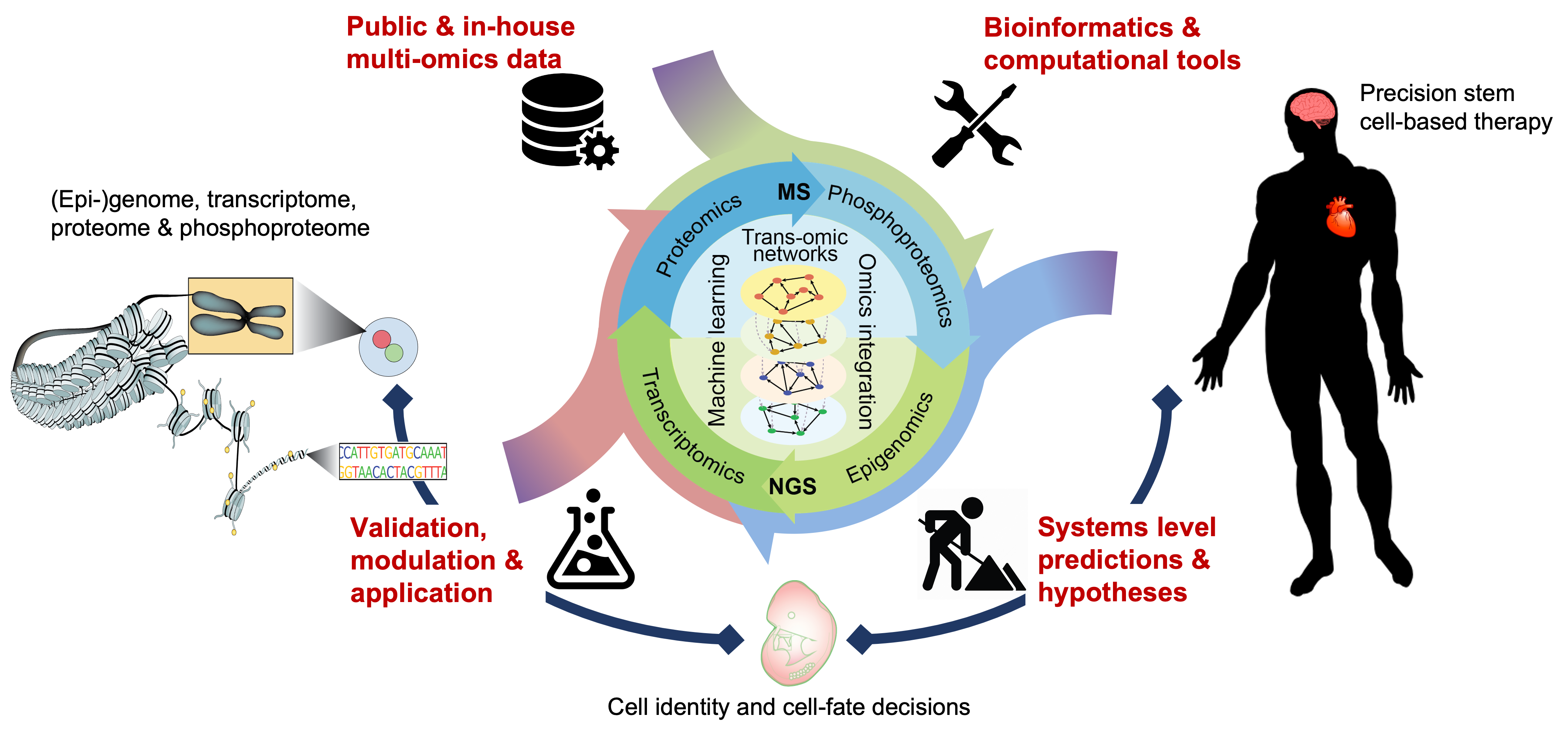
Pengyi Yang is an Associate Professor and University of Sydney Robinson Fellow at the School of Mathematics & Statistics, University of Sydney. He leads the Computational Systems Biology group at the Charles Perkins Centre and holds a conjoint appointment as Unit Head of Computational Systems Biology at the Children's Medical Research Institute (CMRI). His research focuses on computational approaches to understand trans-regulatory networks in stem cells and their applications in regenerative medicine. Yang holds a Ph.D. and has been recognized with awards such as the National Stem Cell Foundation Metcalf Prize (2021). His research spans computational systems biology, machine learning for bioinformatics, and spatial/single-cell omics analysis. Key projects include modeling pluripotency transitions, developing stem cell-derived organoids, and creating computational tools for phosphoproteomics and multi-omics integration. Collaborations include international initiatives like the Laboratory of Data Discovery for Health (InnoHK). Yang advises multiple PhD students and leads grants on topics like stem cell-derived brain organoids and embryonic development modeling. His lab develops tools like Cepo, PhosR, and CiteFuse for omics data analysis. He teaches data science and molecular systems biology at the University of Sydney.
Douglas H Fisher is an Associate Professor of Computer Science and Computer Engineering at Vanderbilt University's School of Engineering. His research focuses on artificial intelligence, particularly machine learning, and computational sustainability. He holds a Ph.D., M.S., and B.S. in Computer Science from the University of California - Irvine. His work bridges AI with societal challenges, emphasizing sustainability, education technology, and cognitive modeling. Notable areas include integrating sustainability into computing curricula, leveraging AI for peer review systems (pReview), and exploring bias mitigation in neural networks. He has contributed to foundational machine learning techniques, such as rule induction for medical data analysis and decision tree optimization. Fisher's research spans interdisciplinary applications: from geospatial water resource modeling to MOOCs' social incentives. His educational contributions include blended learning frameworks and open educational resources advocacy. He has authored over 100 publications across AI, sustainability, and education, reflecting a commitment to both technical innovation and societal impact.
David J. Reinkensmeyer is a Professor at the University of California, Irvine (UCI), holding appointments in the Department of Mechanical & Aerospace Engineering (The Henry Samueli School of Engineering), Anatomy & Neurobiology (School of Medicine), and Biomedical Engineering. His research focuses on neurorehabilitation engineering, developing robotic and sensor-based technologies to enhance motor recovery after neurological injuries such as stroke and spinal cord injury. He leads interdisciplinary efforts in robotic therapy, sensor design for movement assessment, and computational models of motor learning. Key areas include: Design of robotic devices for upper/lower extremity rehabilitation Development of wearable sensors to monitor home exercise programs Studying motor adaptation and proprioception in clinical populations Optimizing neurorehabilitation interventions through computational modeling His work integrates biomechanics, machine learning, and clinical neuroscience to create practical solutions for disabling movement disorders. Recent projects explore scalable mRehab systems, data-driven diagnostics, and real-time feedback technologies. Funding sources include NIH grants (e.g., R01 HD062744) and industry collaborations. Over 200 peer-reviewed publications and numerous patents reflect his impact in translating engineering innovations into clinical practice.
Christoph T. Koch is a Professor of Physics at Humboldt-Universität zu Berlin, where he has held the W3 Chair since 2015. Previously, he held a similar position at Ulm University (2011–2015), supported by the Carl Zeiss Foundation. His research focuses on advanced electron microscopy techniques, including quantitative transmission electron microscopy (TEM), electron holography, and strain mapping. He leads the AG Strukturforschung/Elektronenmikroskopie group, advancing materials science through innovations in imaging and spectroscopy. Education: B.Sc./M.Sc. in Physics at Heidelberg University (1996–1998), followed by an exchange at Arizona State University (1997–1998). PhD in Physics from Arizona State University (2002, advisor: Prof. John C.H. Spence). Postdoctoral research at the Max Planck Institute for Metals Research, Stuttgart (2002–2011). Research interests include: Electron diffraction and phase retrieval Nanometer-scale strain and defect analysis Electron energy-loss spectroscopy (EELS) for plasmonics and bandgap mapping Development of FAIR data infrastructure for materials science Leadership: Managed the Department of Physics at Humboldt University (2020–2024). Collaborates widely, with key co-authors including P.A. van Aken, W. Sigle, and C. Felser. His work bridges experimental microscopy and computational modeling, addressing challenges in semiconductors, ceramics, and 2D materials. Notable contributions include pioneering methods for 3D reconstruction via electron ptychography, dynamic electron diffraction analysis, and strain mapping in advanced CMOS technologies. Current efforts emphasize real-time imaging and AI-driven data analysis in materials research.
Sharmistha Guha is an Assistant Professor in the Department of Statistics at Texas A&M University, part of the College of Arts & Sciences. Her research focuses on Bayesian methods for analyzing complex, high-dimensional data, with applications in neuroscience, network security, and social sciences. She develops techniques for supervised network data analysis, causal inference, and data privacy preservation. Education: Ph.D. in Statistical Science (Duke University, implied by dissertation recognition). Research Interests: Bayesian high-dimensional regression, object-oriented regression, causal inference in randomized trials, probabilistic record linkage, Bayesian nonparametric mixture models, and integration of heterogeneous data types like networks and functional data. Her work addresses challenges in neuroimaging (dMRI/fMRI) and big data analytics. Recent Contributions: Her articles span Bayesian methodologies for network analysis, differential privacy in treatment effect estimation, and applications in environmental health (e.g., PM2.5 exposure studies). Notable trends include leveraging Bayesian hierarchical models for complex data structures and advancing causal inference frameworks. Awards: 2022 Blackwell-Rosenbluth Award (ISBA) 2021 Savage Award Honorable Mention 2024 NSF-DMS Grant 2413721 Grants & Advising: Secured NSF funding for heterogeneous data integration research. Mentored students like Jose Rodriguez-Acosta (NSF GRFP Fellow) and Jacob Pagel (NIH-funded CoSIBS participant). Lab/Team: Leads a research group integrating statistical method development with domain collaborations in neuroscience and network security. Active in organizing workshops and serving on panels to foster academic engagement.
Marina Vannucci is the Noah Harding Professor of Statistics at Rice University, with an adjunct appointment at the UT MD Anderson Cancer Center. She holds a Ph.D. and Laurea in Mathematics from the University of Florence, Italy. Her research focuses on Bayesian statistical methods for complex problems in genomics, neuroimaging, and engineering. She has supervised 31 Ph.D. students and 13 postdocs, published over 185 papers, and received prestigious awards including the Mitchell Prize, Zellner Medal, and Don Owen Award. She has served as Editor-in-Chief of Bayesian Analysis and co-Editor of the Journal of the American Statistical Association. Education: Ph.D. in Statistics (University of Florence, 1996), Laurea in Mathematics (University of Florence, 1992). Research Interests: Bayesian statistics, variable selection, graphical models, statistical computing, applications in genomics, neuroscience, and engineering. Awards: Includes Fellowships from ASA, IMS, AAAS, ISBA, and the 2020 Zellner Medal. Recent recognitions include the 2025 Don Owen Award for excellence in research and contributions to the statistical community. Grants/Advising: Over 30 Ph.D. students and 13 postdocs trained. Key roles include Department Chair (2014–2019) and President of the International Society for Bayesian Analysis (2018). Labs/Teams: Affiliated with Rice Neuroengineering, Ken Kennedy Institute, and the W.M. Keck Center for Interdisciplinary Bioscience Research.
Professor Peter Chin is a Professor of Engineering at Dartmouth College and Director of the Learning, Intelligence + Signal Processing (LISP) Lab. He holds affiliations with the Thayer School of Engineering and serves as Associate Editor of IEEE Transactions on Computational Social Systems. His research bridges signal processing, machine learning, game theory, and differential geometry, with applications in cybersecurity, healthcare, and network analysis. Education: Bachelor of Science in Electrical Engineering, Computer Science, and Mathematics from Duke University (1993) Doctor of Philosophy in Mathematics from MIT (1998) Research Interests: Chin’s work focuses on fundamental questions at the intersection of machine learning, game theory, and signal processing. His lab explores topics like adversarial defense mechanisms, topological machine learning, and computational neuroscience. Recent projects include cybersecurity resilience modeling, medical imaging enhancements via GANs, and multi-agent reinforcement learning frameworks. Publications Trends: His most recent articles address cutting-edge challenges in cybersecurity (e.g., autonomous defense systems), medical AI (e.g., Alzheimer’s classification), and adversarial robustness. A notable 2025 focus is on quantitative resilience modeling for cyber defense, reflecting growing demand for AI-driven security solutions. Awards: Faculty Scholar Award, Duke University George Sherred III Award, Duke University Julia Dale Memorial Award, Duke University Grants & Leadership: Recipient of DARPA cybersecurity research grants Co-chair for SPIE/DSS Cyber Sensing Conference (2013–2020) Developed novel compressive sensing microscope for biological imaging LISP Lab: This interdisciplinary lab pioneers projects like nFlip (multiplayer security game models) and topological machine learning frameworks, emphasizing practical applications of theoretical advancements.
Dr. Yonatan Hutabarat is a Professor at Universität Bonn, holding the Hertz-Chair for Artificial Intelligence and Neuroscience. He is affiliated with the Center for Artificial Intelligence and Neuroscience (CAIAN) and focuses on interdisciplinary research at the intersection of AI, neuroscience, and biomechanics. His work emphasizes wearable sensor technology and machine learning applications in gait analysis, posture coordination, and human movement modeling. Research interests include neural network-based gait phase estimation, biomechanical modeling under cognitive loads, and sensor integration for healthcare applications. His research has explored temporal convolutional networks, LSTM architectures, and reinforcement learning for prosthetic control. He has published extensively on quantitative gait assessment using minimal IMU sensors, virtual reality experiments, and multimodal data fusion techniques. Affiliations include CAIAN's interdisciplinary team and active participation in collaborative projects involving neuroscience and clinical applications. His laboratory work involves developing AI-driven solutions for movement disorders and wearable sensor systems. No formal awards or grants are explicitly listed, though his research indicates substantial collaborative activity. Current address: Raum 4.06, Am Propsthof 49, 53121 Bonn. Contact: y.hutabarat@uni-bonn.de
Emanuele (Manuel) Trucco is a Professor of Computing and holds the NRP Chair of Computational Vision in the School of Science and Engineering at the University of Dundee. He is also an Honorary Clinical Researcher at NHS Tayside and previously served as an Adjunct Professor at the Chinese Academy of Sciences (2018–2021). His research is centered on computational vision and medical image analysis, particularly in retinal imaging and its applications in systemic disease detection. PhD, Electronic Engineering, University of Genoa (1990) MSc, Electronic Engineering, University of Genoa (1984) Manuel Trucco's research focuses on computer vision and medical image analysis , with a strong emphasis on retinal image analysis for early detection of diseases such as diabetes, cardiovascular conditions, stroke, dementia, and neurodegenerative disorders. He co-directs the VAMPIRE (Vessel Assessment and Measurement Platform for Images of the Retina) initiative, a collaborative effort between the Universities of Dundee and Edinburgh. This platform enables automated, multi-modal analysis of retinal images and has been used in biomarker studies across the UK and internationally. His work integrates deep learning , artificial intelligence , and biomedical engineering to develop non-invasive, scalable diagnostic tools. Industrial collaborations include Canon Medical, OPTOS plc, NIDEK, and Epipole plc, while institutional partners include the Royal College of Ophthalmologists and the UK Biobank Eye and Vision Consortium. Recent publications highlight a strong trend in using AI and deep learning to extract clinical insights from retinal images, including predicting cardiovascular outcomes in diabetic patients, estimating biological age, and analyzing retinal vasculature changes under physiological stress. His work bridges computer science, ophthalmology, and public health, contributing to precision medicine and health equity. His scientific contributions have been recognized through fellowships: FRSA (Fellow of the Royal Society of Arts) FIAPR (Fellow of the International Association for Pattern Recognition) Trucco has led or co-led major research projects, including a £7M NIHR grant on precision medicine for diabetes (Dundee-Chennai), a £1.1M EPSRC grant on vascular dementia biomarkers (PI), the 3M-Euro ITN "REVAMMAD", and several PhD studentships sponsored by OPTOS, NIDEK, SINAPSE, and Toshiba. He has served on the organizing and program committees of major international conferences such as MICCAI and the European Conference on Computer Vision. He is a key member of the VAMPIRE research team and the UK Biobank Eye and Vision Consortium , contributing to large-scale data analysis efforts in vision and systemic disease. His work is at the forefront of AI-driven healthcare innovation, with real-world applications in early disease detection and personalized medicine.
Eleonora D'Arnese is a Lecturer in Biomedical Artificial Intelligence at the School of Informatics, The University of Edinburgh. She is affiliated with the Institute of Perception, Action and Behaviour, contributing to research at the intersection of artificial intelligence and biomedical applications. Her research focuses on advancing intelligent systems that model human perception, action, and behaviour, with particular emphasis on biomedical use cases. This includes applying machine learning and AI techniques to interpret complex physiological and behavioural data for health monitoring, diagnosis, and human-in-the-loop systems. The trends in her research, although not supported by listed publications here, are centered on Biomedical AI, Perception-Action loops, and cognitive modeling, drawing from disciplines such as computer science, neuroscience, and biomedical engineering. She has not been listed as receiving any scientific awards at this time. There is no available information regarding student supervision, grants, or leadership in research projects at this time. She is associated with the Institute of Perception, Action and Behaviour, a research institute within the School of Informatics dedicated to understanding and modeling intelligent behaviour through computational methods.


/tonnesfn/t.jpg)