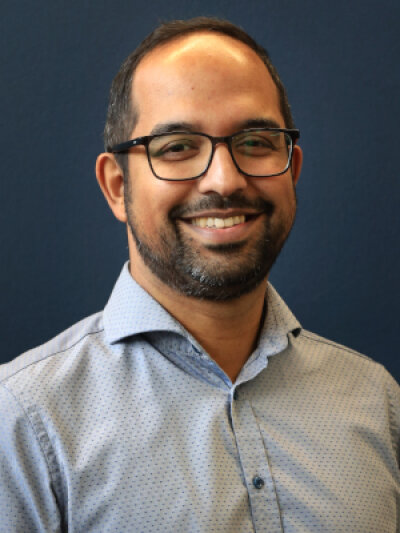
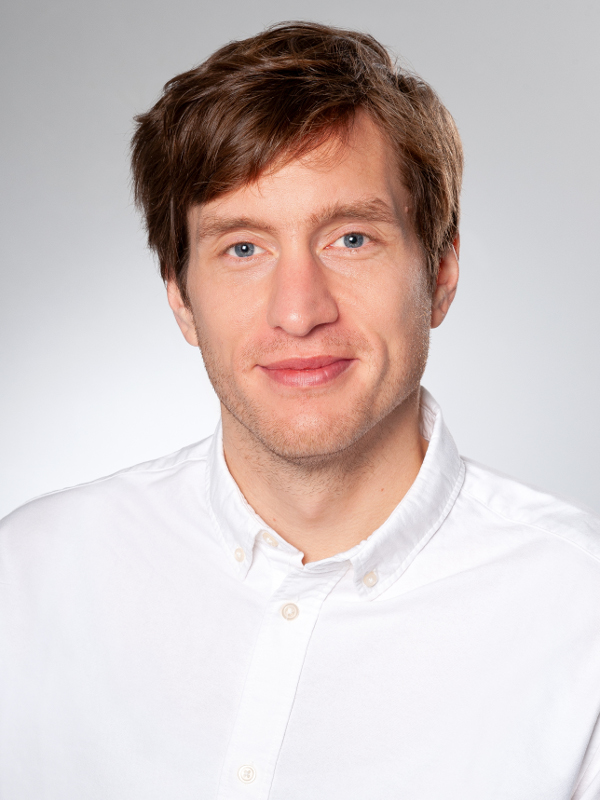
Dr. Vooi Yap is a Visiting Professor in the Department of Computer Science at Aberystwyth University, UK. His research focuses on interdisciplinary areas combining computer science, neuroscience, and biomedical engineering. Key interests include EEG-based biometrics, neurofeedback training, deep learning applications in object detection, and computational methods for cognitive performance analysis. His work contributes to UN Sustainable Development Goals, particularly in advancing technologies for health and innovation. Collaborations span global institutions, with a strong emphasis on cross-disciplinary projects. Recent studies explore the effects of neurofeedback on working memory, license plate detection using deep learning, and EEG analysis for emotion recognition. Publications span peer-reviewed journals and conferences, demonstrating expertise in signal processing, machine learning, and neural networks. Yap’s research bridges theoretical advancements with practical applications in healthcare, surveillance, and smart systems.
Joseph Malloch is an Assistant Professor in the Faculty of Computer Science at Dalhousie University. He leads research in human-computer interaction, digital musical instruments, and interactive media systems, and is affiliated with the GEM Lab and the Human-Computer Interaction, Visualization & Graphics research cluster. Research Interests: His work focuses on designing novel input devices such as the T-Stick, developing software frameworks like libmapper for flexible signal routing, and exploring machine learning applications in sound synthesis. He investigates how sensor-rich interfaces can enhance musical expression and audience engagement. The recent publications highlight a strong trend in smart musical instruments, runtime mapping complexity, and the use of AI for synthesizer patch generation. His research bridges computer science, music, and design, emphasizing real-time interaction, modularity, and performer control. No scientific awards were mentioned in the provided text. Joseph Malloch advises students and collaborates with performers and researchers globally. His projects often involve interdisciplinary teams and have been demonstrated internationally. He is actively involved in workshops, music hackathons, and the development of open-source tools for interactive media. He leads the GEM Lab, where research focuses on the intersection of graphics, engineering, and music. The lab develops new interfaces for performance, including wearable and wireless sensor systems, and explores creative applications of embedded computing and sensor fusion.
Dr Anastasios Bakaoukas is a Senior Lecturer in Games Programming at the University of Northampton, Faculty of Arts, Science and Technology. He serves as Programme Leader for the HND/BSc Games Programming course and leads the Computer Games research arm at the university, focusing on Virtual Reality and Augmented Reality. He teaches core game development technologies including C++, C#, Java, Python, Unity3D, Unreal Engine, and Godot, as well as AI and Machine Learning for games. His primary research interests include: Unconventional Computing (particularly optical soliton-based computation) Digital Signal and Image Processing Brain-Computer Interfaces Serious Games and educational game applications Scientific Computing and Virtual Reality in cultural heritage His research has been applied in academic, industrial, and school settings, including a Royal Society-funded VR project in secondary education. He has contributed to curriculum development at multiple institutions and supervised undergraduate and postgraduate research in interdisciplinary domains. Notable recognition includes: Second Prize in the Royal Society's 2017 Virtual Reality Research Project competition Successful funding acquisition under the Royal Society's Partnerships Grants scheme He has previously held academic and research positions at Coventry University's Serious Games Institute and Birmingham City University. He has led multiple European and EPSRC research projects and contributed to software engineering, game design, and signal processing education. He also played a key role in establishing the BSc Music Technology program at Birmingham City University in collaboration with the Royal Birmingham Conservatoire. His research output spans journals and conferences in computing, games, and signal processing, with a focus on innovative computational paradigms and applied game technologies.
Dr Charalampos Psarros is a Lecturer at Teesside University's School of Arts and Creative Industries (SACI), specializing in the intersection of Art, Science, and Emerging Technologies. He serves as SACI's representative on the University Academic Board (UAB), UAB representative for the Research and Knowledge Exchange Committee, and a member of the Honorary Degree Committee. His research spans multiple domains including: 3D Stereoscopy and Computational Photography XR and Immersive Media applications Music Technology and Digital Synthesis Engineering R&D with focus on drone-based surveying Enterprise and Knowledge Exchange activities Notable projects include: Digitizing 20+ million-year-old fossils using ML-driven 3D imaging Leading drone-based surveying for EU Horizon2020 eDream project Pioneering glasses-free 3D display applications since 2001 His publications focus on: Immersive media development Green system networking Enterprise resource planning transitions AI thermography applications
Nicolas Franco is a Lecturer in Mathematics at the University of Namur (2022–present) and scientific collaborator at Hasselt University's Data Science Institute. His expertise spans mathematical modeling of COVID-19, noncommutative geometry applications in physics, and quantum computing. Previously, he held postdoctoral positions at Hasselt University (2020–2022), University of Namur (2015–2022), Jagiellonian University (2014–2015), and Copernicus Center for Interdisciplinary Studies (2012–2014). Education Doctor of Science: Lorentzian approach to noncommutative geometry (University of Namur, 2011) Master's in Mathematics (University of Namur, 2006) Bachelor of Music: Piano & Chamber Music (Royal Conservatory of Mons, 2003) Research Focus Franco's research integrates mathematical physics with practical applications. His primary domains include: Epidemiological Modeling : Long-term COVID-19 forecasting for the European CDC and Belgian government Quantum Structures : Causality in noncommutative geometries, κ-Minkowski spacetime constraints Quantum Computing : Robust quantum machine learning, qubit-efficient optimization Publication Trends Recent works demonstrate a shift toward quantum computing applications (2021–2024), focusing on optimization robustness and security in quantum neural networks. Earlier foundational contributions (2011–2017) established frameworks for Lorentzian distance formulas and causal structures in noncommutative geometry. Awards & Recognition Namur Resident of the Year - Science Category (2020) Multiple Belgian Mathematical Olympiad prizes (1996–2001) International math competition awards (FFJM) Professional Activities Member: European COVID-19 Scenario Hub (ECDC), RESTORE Consortium Consultant: Belgian federal government pandemic response Reviewer: Physical Review Letters, PLOS Computational Biology, etc.
Dr. Linh H. Nghiem is a Lecturer in Statistics at the School of Mathematics and Statistics, University of Sydney. He specializes in methodological and applied statistics, with a focus on measurement error modeling, dimension reduction, and graphical models. His applied research includes collaborations on the psychology of music and its role in enhancing social empathy. Linh’s methodological work addresses challenges in high-dimensional data analysis, longitudinal modeling, and privacy-preserving statistical techniques. His publications reflect interdisciplinary research, including crossmodal interactions between auditory and visual perception, and applications in behavioral studies. Recent trends in his work include advancements in heteroscedastic measurement error models and their applications in biomedical statistics, computational methods, and music psychology. He is also affiliated with the Sydney Southeast Asia Centre, contributing to collaborative research initiatives. Dr. Nghiem supervises research students such as Nia, who is exploring financial risk through semi-metric machine learning. He was awarded the 2023 Faculty Startup Scheme grant for Methodologies for complex datasets, supporting his dual focus on statistical innovation and applied behavioral research.
Nikolai Olavi Czajkowski is an Associate Professor at the Department of Method, Work, Cultural and Social Psychology, University of Oslo, affiliated with PROMENTA. His research focuses on personality psychology, behavioral genetics, and mental health interventions. Department of Method, Work, Cultural and Social Psychology, University of Oslo PROMENTA Research Center Research Interests: Personality and psychological resilience Genetic and environmental influences on mental health Machine learning applications in psychiatric research Wellbeing interventions and network analysis Twin studies and behavioral genetics Personality disorder etiology Scientific Contributions: Recent publications examine genetic architecture of political attitudes, longitudinal schizophrenia recovery, digital wellbeing interventions, and machine learning approaches to suicide risk prediction. His work frequently combines population-based samples with advanced statistical modeling. Collaborative Projects: Involved in multi-year initiatives including "Five Ways to Wellbeing at School," "The Oslo Longitudinal Recovery Study," and "Treatment of Traumatized Children and Young People."
Dr. Eng. Marek Krok is a Lecturer at the Department of Automation within the Faculty of Electrical Engineering, Automation and Computer Science at Opole University of Technology. His academic focus lies in control systems, neural networks, and energy-efficient algorithm design, with significant contributions to perfect control theory and FPGA-based implementations. Role: Lecturer Department: Automation Contact: Room P3-414, m.krok@po.edu.pl His research emphasizes perfect control systems , including energy-optimal algorithms for LTI systems, inverse model control, and pole-free control strategies. He has explored practical applications in servomechanism systems and CNC machining, leveraging neural networks and FPGA hardware for improved performance. The most recent 15 publications highlight trends in control theory , neural network integration , energy optimization , and hardware implementations . Key subfields include model-based control, recurrent neural networks, FPGA acceleration, multivariable systems, Moore–Penrose inverse alternatives, and real-time control validation. In teaching, Krok supervises consultations and maintains a personal website: m.krok.po.opole.pl . His work bridges theoretical control system design with industrial applications in automation and robotics.
Dr Damon Daylamani-Zad serves as a Senior Lecturer in Creative Computing (AI and Games) within the Digital Media Department at Brunel Design School, part of Brunel University London's College of Engineering, Design and Physical Sciences. He holds a PhD in Multimedia Computing from Brunel University and is a Fellow of both the British Computer Society (FBCS) and Higher Education Academy (FHEA). His research spans Applications of AI in Games and Digital Media , focusing on Machine Learning for automated music generation, Serious Games for accessibility and health interventions, and Extended Reality applications in cultural heritage and education. Key research themes include: Swarm intelligence for strategic game development Gamification for accessibility design Immersive training systems for behavioral change User modeling and personalization in digital environments His recent publications demonstrate strong trends in pedagogical AI agents (2025), immersive cycling safety training (2025), and intelligent game asset generation (2024), reflecting his dual focus on educational technology and practical health/safety applications through gaming frameworks. As Joint Director of the Laboratory of Immersive Virtual Environments (LIVE) and PG Courses Director, he leads significant research initiatives including EPSRC/AHRC-funded projects on heritage site decolonization through mixed reality and Bikeability Trust interventions for child cycling safety. His editorial roles include Springer-Nature's Scientific Reports and MDPI Multimedia. He actively supervises PhD candidates in AI applications for games, machine learning algorithms, accessibility design, and immersive technologies, maintaining strong industry connections through the London Unity User Group (3,000+ members) and Serious Games Association.
Dr. Takebumi Itagaki serves as a Senior Lecturer in Communications and Computer Technologies within the Electronic and Electrical Engineering Department at Brunel University London's College of Engineering, Design and Physical Sciences. He holds the position of Programme Manager for the Brunel-CQUPT Transnational Education program and serves as TNE-CQUPT Manager. His international research leadership is exemplified by his role as coordinator of the ITU-T Focus Group on Audio Visual Accessibility – Working Group D. Dr. Itagaki earned his academic credentials through a BEng from Waseda University (Japan), a Postgraduate Diploma from City University London, and a PhD in Engineering/Music from Durham University (UK) in 1998. His professional affiliations include membership in IEEE, IET, and the Audio Engineering Society. His research program spans digital television systems (DVB, ISDB), digital signal processing, parallel processing architectures, computer music, and computer architecture. Recent work demonstrates significant expansion into IoT applications for disaster management and healthcare analytics. His research methodology consistently bridges theoretical signal processing with practical implementation in broadcast and communication systems. Analysis of his publication record reveals an evolution from foundational work on transputer networks and granular synthesis in the 1990s to contemporary applications in digital television accessibility, mobile broadcast technologies, and IoT systems. His work maintains consistent focus on multimedia systems while adapting to emerging technological landscapes and societal needs. Dr. Itagaki has secured significant research funding through multiple EU projects including SAVANT (as prime contractor and administrative coordinator), INSTINCT (as project manager), and DTV4All (as coordinator). His current research portfolio includes ICT collaboration between China and Europe, with particular emphasis on IoT techniques for disaster prediction and climate change mitigation. His research group IEHS (Integrated Electronic Health Systems) works at the intersection of communication technologies and healthcare applications, developing systems for emergency response and medical diagnostics. The group's work on the Emergency TeleOrthoPaedics m-health system demonstrates practical implementation of wireless communication links for specialized medical care.
Professor Asoke Nandi serves as Professor of Electronic & Computer Engineering at Brunel University of London, where he has been Head of Electronic and Computer Engineering since April 2013. Previously, he held the David Jardine Chair of Signal Processing at the University of Liverpool, where he established and led the Signal Processing and Communications Research Group. His academic journey began with a PhD from the University of Cambridge, followed by positions at prestigious institutions including Rutherford Appleton Laboratory, CERN, Queen Mary University of London, the University of Oxford, Imperial College London, and the University of Strathclyde. Professor Nandi's research spans theoretical developments in signal processing and machine learning, with applied contributions across multiple domains. His work encompasses wireless communications (including automatic modulation recognition and equalization), biomedical signal processing (breast cancer detection, electrocardiogram extraction, retinal image processing), machine condition monitoring, image forensics, time series predictions, genomic signal processing (gene clustering), brain signal processing (music, EEG, and fMRI data processing), and Big Data analytics. These diverse research interests demonstrate his interdisciplinary approach to information engineering problems. His recent publications reveal a strong focus on deep learning applications across multiple domains, with emphasis on medical imaging (particularly cancer diagnosis and segmentation), remote sensing change detection, fault diagnosis in mechanical systems, and innovative approaches to image processing. The research shows a clear trajectory toward more sophisticated neural network architectures including attention mechanisms, diffusion models, and multimodal fusion techniques applied to real-world engineering and medical challenges. IEEE Transactions on Radiation and Plasma Medical Sciences Best Paper Award (2025) Foreign Member of Chinese Society for Vibration Engineering (2025) Member of Academia Scientiarum et Artium Europaea (2023) Member of Academia Europaea (2023) Fellow of Royal Academy of Engineering, U.K. (2014) IEEE Distinguished Lecturer (EMBS, 2018-2019) Finland Distinguished Professor Award (2010-2014) Co-discoverer of W+, W-, and Z0 particles (1983) Professor Nandi has supervised numerous PhD students and research projects across his career, though specific student names aren't listed in the provided materials. His work has been supported by various research grants that have enabled his prolific output of over 650 technical papers, including more than 320 in quality international journals, with an impressive h-index of 92 according to Google Scholar. His research group IEHS at Brunel focuses on information engineering and health systems, reflecting his interdisciplinary approach. Professor Nandi maintains active collaborations through his visiting professorships at institutions including Xi'an Jiatong University (China), Universite d'Orleans (France), and Tongji University (China), as well as his previous adjunct professorship at the University of Calgary (Canada). These international connections enrich his research environment and provide opportunities for cross-cultural scientific exchange.
Anil Nagathil is a Senior Research Scientist at the Institute of Communication Acoustics (Ruhr University Bochum), currently on leave while holding a Marie Skłodowska-Curie Global Fellowship at McMaster University (2025-2027). He holds a Dr.-Ing. degree from RUB (2016) following Dipl.-Ing. (2009), with prior academic experience at University of Birmingham (UK). Education: Dr.-Ing. (2016) and Dipl.-Ing. (2009) in Electrical Engineering, RUB Professional roles: Postdoc at RUB (2016-2023), Senior Research Scientist (2023-present), Visiting Scholar at McMaster University (2025-2027) His research focuses on statistical and machine learning-based speech/audio signal processing , with specific interests in auditory modeling , neural modeling , and EEG analysis for hearing instrument applications. Recent work includes WaveNet-based cochlear modeling , machine learning for spectral complexity reduction , and interactive music preprocessing for cochlear implant users. Publications span deep neural network approximation , music signal enhancement , and acoustic signal classification with 15+ peer-reviewed contributions since 2007. Current projects include neural network modeling of auditory transduction and individualized music remixing for hearing-impaired listeners.
Shaundra Daily is the Cue Family Professor of the Practice in Electrical and Computer Engineering at Duke University's Pratt School of Engineering. She serves as Education and Workforce Director for the Athena AI Institute and leads initiatives like the Cultural Competence in Computing (3C) Fellows program and the Alliance for Identity-Inclusive Computing Education (AiiCE), which received a $10M NSF grant. Her career spans faculty roles at the University of Florida and Clemson University, with over $40M in research funding. Ph.D., MIT Media Lab (2010) M.S., Florida Agricultural and Mechanical University–Florida State University College of Engineering B.S., Florida Agricultural and Mechanical University–Florida State University College of Engineering Her research centers on identity-inclusive computing and human-centered design, focusing on sociotechnical systems that enable equitable STEM participation. She integrates artificial intelligence, affective computing, and embodied interaction to address justice-centered STEM education, particularly for underrepresented communities. Her work connects computational thinking with creative arts like dance and virtual environments. Recent publications highlight trends in using embodied interaction and virtual reality to enhance computational thinking, with subfields spanning dance-based learning, affective computing, and equity-focused educational technology. Her awards include the 2023 ACM Karl V. Karlstrom Outstanding Educator Award, 2022 ACHI Educator of the Year, and 2021 Pratt School of Engineering mentoring award. ACM Karl V. Karlstrom Outstanding Educator Award (2023) Achievement in Educational Technology, Black Data Processing Association (2013) Stanford University LIFE Center Fellow (2007) MIT Graduate Community Fellow (2006) At Duke, she directs the Duke Technology Scholars program and co-founded the national AiiCE alliance. Her courses include human-centered computing and specialized programs in engineering education. Media outlets like Nature Magazine and NPR have featured her work on STEM equity and sociotechnical system design.
Gerhard Widmer is a Full Professor at the Institute of Computational Perception within the Faculty of Engineering and Natural Sciences at Johannes Kepler University Linz (JKU). He leads research at the LIT Artificial Intelligence Lab and serves as principal investigator for major projects including the FWF-funded Cluster of Excellence "Bilateral Artificial Intelligence" (2024-2029) and the EU project "Whither Music?" (2022-2026), focusing on AI applications in music cognition and performance analysis. His research spans Music Information Retrieval (MIR) with emphasis on computational modeling of musical expressivity, audio processing, and machine learning applications. Key areas include sound event detection, music transcription, language-based audio retrieval, and modeling of expressive musical performances using deep learning techniques. His work bridges artificial intelligence with musicology to develop systems capable of understanding and generating human-like musical expressions. Analysis of recent publications (2024-2025) reveals a strong trend toward diffusion models for audio generation/manipulation, robustness studies in music emotion recognition, and efficient architectures for sound event detection. There is significant focus on multimodal approaches integrating audio with textual descriptions, knowledge distillation for model compression, and real-time processing solutions for symbolic music analysis and score following. No specific scientific awards are documented in the provided materials. Professor Widmer has supervised 8 research works and manages multiple funded projects: Cluster of Excellence "Bilateral Artificial Intelligence" (FWF, 2024-2029): Investigating human-AI collaborative intelligence "Whither Music?" (EU, 2022-2026): Exploring AI's impact on musical creativity CoMIRVA: Developing music information retrieval visualization tools Sony-CSL project (2021-2024): Industry collaboration on music cognition He directs the Institute of Computational Perception at JKU and is central to the LIT Artificial Intelligence Lab, maintaining active collaborations with the International Society for Music Information Retrieval (ISMIR) community through conferences, shared datasets, and open-source tools like Partitura for symbolic music processing.
Reemt Hinrichs is a researcher at the Institute for Information Processing (TNT) at Leibniz University Hannover, where he focuses on signal processing applications across biomedical engineering, audio technology, and structural health monitoring. He completed his Dr.-Ing. (PhD) at TNT in 2023 after working as a research assistant since January 2018. Dr. Hinrichs earned his Master's Degree in Mechatronics from Leibniz University Hannover in May 2017, completing his thesis on "System-theoretical modeling of a structural sound signal path" at the Institute for Information Processing. His academic journey reflects a consistent focus on signal processing theory applied to practical engineering challenges. His primary research interests center around Signal Coding , particularly for Cochlear Implants , along with broader expertise in Digital Signal Processing and Nonlinear System Theory . His work spans multiple application domains including biomedical engineering (cochlear implants), audio processing (guitar effects modeling), and structural health monitoring (acoustic emissions analysis for infrastructure). Dr. Hinrichs' publication record demonstrates a strong focus on compression algorithms for cochlear implants, with numerous papers on neural network-based approaches for zero-delay compression of electrical stimulation patterns. He has also made significant contributions to guitar effects modeling using convolutional neural networks and structural health monitoring through acoustic emission analysis. His research bridges theoretical signal processing with practical applications across diverse domains, showing particular strength in applying deep learning techniques to specialized signal processing challenges. With approximately 60 theses supervised, Dr. Hinrichs has been actively involved in mentoring students across various research topics including cochlear implant technology, structural modeling, and audio signal processing. His supervision portfolio includes work on nonlinear prediction of electrode excitation patterns, geometry-dependent modeling of transfer functions, and automatic extraction of guitar effects. His current research focuses on "deep learning models for the compression of electrode excitation patterns of cochlear implants," continuing his long-standing expertise in this specialized area of biomedical signal processing while expanding into new applications of neural network architectures for real-time signal compression.