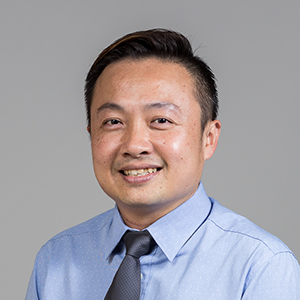
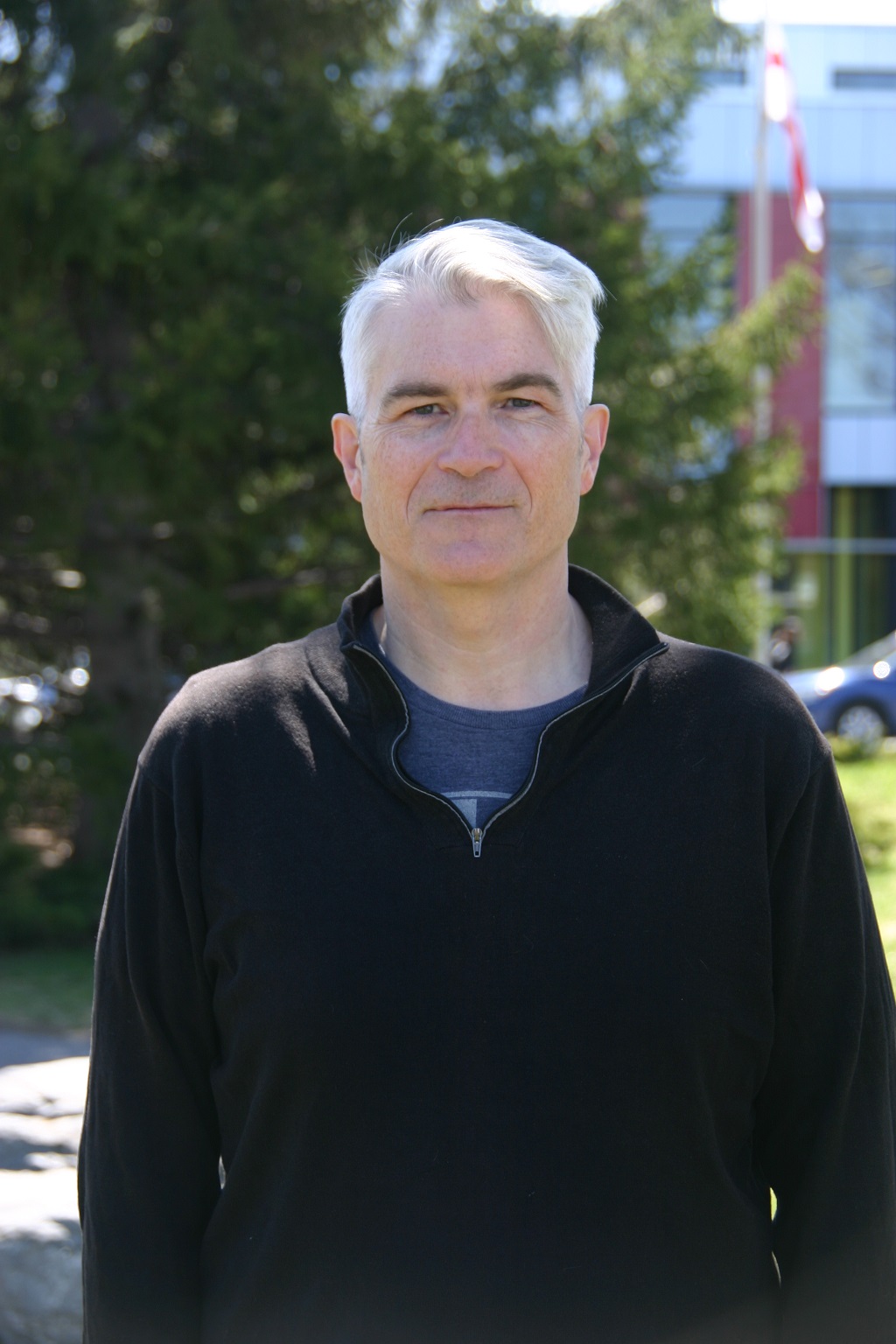
Dr. Gary Glover is a Professor of Radiology (Radiological Sciences Lab) at Stanford University , with courtesy appointments in Psychology and Electrical Engineering. His work focuses on the physics and mathematics of MRI, particularly rapid scanning methods using spiral k-space trajectories for functional brain imaging and multimodal neuroimaging (fMRI/EEG/fPET/fNIRS) combined with neuromodulation techniques like TMS and transcranial ultrasound. Academic Appointments: Radiology, Psychology, Electrical Engineering Professional Affiliations: Bio-X, Stanford Cancer Institute, Wu Tsai Neurosciences Institute Research Interests include: Development of blood oxygen level-dependent (BOLD) and viscoelastic contrast in MRI Functional MR Elastography for brain activation mapping Optimization of MR-ARFI for transcranial ultrasound guidance Automated spinal cord segmentation (EPISeg) using machine learning Scientific Awards : National Academy of Engineering (2013) Gold Medal, ISMRM (2000) Steinmetz Award, General Electric (1985) Lauterbur Lecture, ISMRM (2018) Recent Publications analyze: Fast fMRI sampling and spurious signal correction Dissociated patterns in default mode network anti-correlations Neural correlates of collaborative behavior in triadic fMRI Salience network contributions to depression pathophysiology
Xiaoning Qian is a Professor in the Department of Electrical and Computer Engineering at Texas A&M University, where he also serves on the Faculty Advisory Committee for the Texas A&M Institute of Data Science (TAMIDS) and the Executive Committee for the Texas A&M TRIPODS Research Institute for Foundations of Interdisciplinary Data Science (FIDS). He holds a joint appointment in the Applied Math group within the Computational Science Initiative at Brookhaven National Laboratory (BNL). Previously, he was an Associate Professor (2018-2022) and Assistant Professor (2013-2018) at Texas A&M, and an Assistant Professor in the Department of Computer Science and Engineering at the University of South Florida (2009-2013). Dr. Qian received his B.S.E. and M.S.E. degrees from Shanghai Jiaotong University, China, and his M.Ph. and Ph.D. degrees in Electrical Engineering from Yale University. Dr. Qian's research focuses on developing mathematical models and computational algorithms in signal processing, machine learning, and Bayesian methods, particularly in learning, uncertainty quantification, and experimental design. His work spans multiple disciplines, with applications in life sciences and materials science. His research group, the Biomedical Imaging, Sensing, and Genomic Signal Processing Group, actively applies probabilistic models and optimization algorithms to solve complex problems in interdisciplinary domains. His research has evolved from foundational work in bioinformatics and biomedical image processing to more recent applications in materials science and broader AI for science initiatives. Dr. Qian has received numerous scientific awards and recognitions including: National Science Foundation (NSF) CAREER Award Segers Family Dean's Excellence Professorship II in the College of Engineering TEES (Texas A&M Engineering Experiment Station) Senior Faculty Fellow Montague-Center for Teaching Excellence Scholar J. T. Oden Faculty Fellow at the University of Texas, Austin Finalist of the 2023 INFORMS QSR Best Paper Faculty Impact Fellow from the Department of Electrical & Computer Engineering As an advisor , Dr. Qian has mentored numerous graduate students through their PhD and MS programs, with many of his alumni securing positions at prestigious institutions and companies including NIH/NCBI, Microsoft, Baidu Research Lab, and Qualcomm. His research has been supported by multiple grants, including an NSF CAREER award and collaborative research funding from the Information Integration and Informatics program. He is actively recruiting postdoc and graduate student research assistants for projects in machine learning and optimization methods with applications in bioinformatics and materials science. Dr. Qian is involved with several research initiatives including the Objective-Based Uncertainty Quantification (ObjectiveUQ) project, which provides a mathematical framework for integrating prior knowledge and data while enabling effective operational and experimental design under uncertainty. He also co-organizes the Bio-Seminar series for the Biomedical Imaging, Sensing & Genomic Signal Processing group at Texas A&M.
Dr. Nyteisha Bookert serves as an Assistant Professor of Cybersecurity in the Department of Computer Science & Mathematics at South Carolina State University, where she advances research in emerging technology security. Her academic foundation includes a Ph.D. from North Carolina A&T State University and undergraduate training at South Carolina State University. Education B.S. in Computer Science, South Carolina State University M.S. in Computer Science, North Carolina A&T State University Ph.D. in Computer Science, North Carolina A&T State University Research Focus Her work targets critical vulnerabilities in Internet of Things ecosystems, particularly medical devices (IoMT), employing machine learning to dissect privacy policies and mitigate consumer risks. This research bridges theoretical security frameworks with real-world applications in connected healthcare technologies. Professional Engagement Dr. Bookert contributes to national cybersecurity through prior government agency collaborations while leading community initiatives that introduce underrepresented K-12 students to cybersecurity fundamentals, building pipeline diversity in STEM fields.
Stefano Gogioso is a Departmental Lecturer at the University of Oxford , specializing in quantum theory and quantum software. He holds a DPhil in Computer Science from Oxford (2013–2017) and advanced degrees from Cambridge (MASt, BA) and the University of Genova (MSc, BSc). As a Fellow at Kellogg College and co-founder of Hashberg Ltd , he develops quantum programming tools and focuses on quantum causal structures, quantum field theory, and natural language processing applications. His research bridges foundational quantum theory with practical applications, including near-term quantum computing and educational outreach through visual methods like Quantum in Pictures . Research Interests: Quantum foundations, quantum software, categorical quantum mechanics, quantum field theory, and quantum causality. His work emphasizes pictorial formalisms and compositional methods, with contributions to indefinite causality, quantum cellular automata, and quantum natural language processing (QNLP). Key Contributions: Published over 25 papers, including works on causal polytopes, categorical Feynman diagrams, and QNLP pipelines. Co-developed Hashberg 's quantum programming tools and serves as a mentor for AI initiatives at CDL-Oxford. His thesis introduced dynamics in categorical quantum mechanics, addressing symmetry and quantum clocks. Teaching: Teaches quantum computing courses for MSc/MFoCS students, professionals, and continued education. Courses include Quantum Software , Quantum Computing for Software Engineers , and bespoke corporate training. Labs/Teams: Part of the Oxford Quantum Group and involved in collaborative projects with industry and academia. Advising: Supervised students like Nicola Pinzani (causal orders) and Maria Stasinou (quantum field theory). Grants/Awards: Not explicitly listed, but recognized for contributions to quantum foundations and education.
Ruoqing Zhu is an Associate Professor in the Department of Statistics at the University of Illinois at Urbana-Champaign, with a primary appointment in the College of Liberal Arts & Sciences. He also serves as an inaugural member of the Carle Illinois College of Medicine, a Faculty Fellow at the National Center for Supercomputing Applications, and an affiliated researcher with the Carl R. Woese Institute for Genomic Biology and the Center for Genomic Diagnostics. His roles include PhD Program Director and Advisory Board member of Prenosis Inc. Dr. Zhu holds a Ph.D. in Biostatistics from the University of North Carolina at Chapel Hill (2013), an MA in Statistics from Bowling Green State University (2008), and dual B.S. degrees in Mathematics and Financial Engineering from Nanjing University (2006, 2005). His postdoctoral training was at Yale University’s Department of Biostatistics (2013–2015). His research focuses on developing statistical methods for decision-making in personalized medicine and reinforcement learning, addressing challenges such as model interpretability, high-dimensional data, and distributional shifts. Key areas include uncertainty quantification, causal inference, and applications in bioinformatics, nutrition, and infectious diseases. He co-teaches courses at Carle Illinois, including Data Science Project and Foundations: Molecules to Populations , and contributes to interdisciplinary initiatives like the Personalized Nutrition Initiative. His recent work emphasizes trustworthy AI in healthcare, including sepsis prediction tools, metabolomic analysis, and biomarker discovery. He is actively involved in translational research, bridging computational methods with clinical and public health applications.
Youssef M. Marzouk is the Breene M. Kerr (1951) Professor of Aeronautics and Astronautics at MIT and co-director of the MIT Center for Computational Science and Engineering (CCSE). He is affiliated with the MIT Schwarzman College of Computing, the Statistics and Data Science Center, and the Aerospace Computational Design Laboratory. His research focuses on computational science and engineering, with an emphasis on uncertainty quantification, Bayesian modeling, data assimilation, and machine learning applied to physical systems. He holds a Ph.D. in Mechanical Engineering from MIT (2004), preceded by S.M. (1999) and S.B. (1997) degrees in Aeronautics and Astronautics from the same institution. Marzouk’s work bridges computational mathematics, statistical inference, and fluid dynamics, addressing challenges in energy systems and environmental modeling. He has received numerous awards, including the 2018 AIAA Associate Fellowship and the 2012 MIT Class of 1942 Career Development Chair. His teaching spans computational mathematics, fluid dynamics, and uncertainty quantification. Key collaborations involve the MIT CCSE and external institutions, with funding from DOE and NSF. He advises students on topics like stochastic modeling and inverse problems, and his research lab explores advanced computational methods for high-dimensional systems.
Dr. Debraj Roy is a Visiting Professor at the University of Amsterdam (UvA), affiliated with the Faculty of Science, Mathematics and Computer Science and the Informatics Institute. His research focuses on agent-based modeling, socio-economic dynamics, environmental resilience, and blockchain technology. He investigates complex systems such as urban slums, disaster recovery, and climate adaptation using computational methods like remote sensing and machine learning. His work bridges theory and practice, offering insights into policy design for sustainable development and social equity. Key research interests include slum dynamics, poverty traps, and the application of blockchain oracles for decentralized systems. He employs advanced techniques such as global sensitivity analysis and manifold learning to explore multi-scale socio-environmental challenges. His recent articles highlight trends in carbon pricing, flood risk valuation, and multi-agent systems. Earlier work concentrated on urban inequality in cities like Bangalore and Mexico City, leveraging geospatial and statistical tools. No scientific awards or grants are explicitly listed. His advising and team collaborations are unspecified in the provided text.
Dr. Jingyun Wang is an Assistant Professor in the Department of Computer Science at Durham University. Previously, she held an Assistant Professor position at Kyushu University, Japan. Her primary affiliations include the Centre for Neurodiversity & Development and the Artificial Intelligence and Human Systems Group (AIHS), as well as the Pedagogical Innovation in Computer Science Group (PICS). She is a Fellow of the Higher Education Academy and has led or contributed to research projects funded by JSPS, JST, NICT, Innovate UK, and industry partners. Her research focuses on AI-driven educational technologies, including AI-based feedback systems, computational thinking education, game-based learning, and ontology techniques. She actively contributes to editorial boards (e.g., Computers & Education: Artificial Intelligence ) and serves as a conference chair for AIED, ICCE, and LTLE. Current research includes adaptive learning systems for mathematics education, serious games for cybersecurity training, and visualization tools for e-learning. Her scientific contributions span over 50 peer-reviewed publications, with recent work emphasizing learning analytics, multimodal systems, and digital health interventions. She advises multiple PhD students and mentors in professional recognition pathways. Key projects include developing the BETTER speech training system, the MEMORABLE cybersecurity game framework, and ontology-based language learning platforms.
Dr. Victoria C. P. Chen is a Professor in the Industrial, Manufacturing, and Systems Engineering (IMSE) department at The University of Texas at Arlington (UTA), where she has served since 2002. She previously held positions at the Georgia Institute of Technology from 1993-2001. Dr. Chen has held several leadership roles at UTA, including Interim Department Chair (2012-2014), Director of the Center on Stochastic Modeling, Optimization, & Statistics (COSMOS) (2008-2012, and again from 2017-present), and Director of Doctoral Studies (2019-present). She was also the George & Elizabeth Pickett Professor from 2015-2017 and was inducted into the UT Arlington Academy of Distinguished Teachers in 2019. Dr. Chen is actively involved with INFORMS (Institute for Operations Research and the Management Science), where she currently serves as Secretary on the Executive Board. Dr. Chen earned her B.S. in Mathematical Sciences from The Johns Hopkins University, and her M.S. and Ph.D. in Operations Research and Industrial Engineering from Cornell University. Her academic journey includes visiting professorships at the University of Genoa, Italy, and Iowa State University. Dr. Chen's research utilizes statistical perspectives to create new methodologies for operations research problems appearing in engineering and science. Her expertise includes the design of experiments, statistical modeling, and data mining, particularly for computer experiments and stochastic optimization. Through her statistics-based approach, she has developed computationally-tractable decision-making methods for many high-dimensional complex systems. Her work spans multiple domains including sustainability, energy, water management, healthcare, and law enforcement. Specific application areas include inventory forecasting, airline optimization, water reservoir networks, wastewater treatment, air quality monitoring, green building design, nurse assignment systems, and pain management programs. Her recent publications demonstrate continued innovation in mixed integer programming for electric vehicle charging stations, vacuum ultraviolet spectroscopy prediction, and sustainable building education. Senior Member, Institute for Operations Research and the Management Sciences (INFORMS) (2024) Data Mining Prize (Lifetime Achievement Award), INFORMS Society on Data Mining (2023) College of Engineering Teaching Award, UT Arlington (2021) Third Place Award, C3.ai COVID-19 Grand Challenge (2020) Academy of Distinguished Teachers, University of Texas at Arlington (2019) George & Elizabeth Pickett Professorship (2015-2017) As an educator and mentor, Dr. Chen has advised over 25 doctoral students across diverse research topics in operations research and systems engineering. She has secured substantial research funding from multiple sources including the National Science Foundation (over $1.5 million in active projects), Environmental Protection Agency, National Institute of Justice, and industry partners like Luminant and Dallas-Fort Worth International Airport. Her current research projects focus on decision analytics for sustainable urban environments, optimization for Texas water management, and statistical methods for pain management programs. She has served as Principal Investigator or Co-PI on more than 20 externally funded research projects totaling over $3 million in funding. Dr. Chen co-founded the Center on Stochastic Modeling, Optimization, & Statistics (COSMOS) at UTA with Dr. H. W. Corley. This research center brings together faculty and students from multiple disciplines to address complex problems through advanced statistical and optimization methods. She also leads interdisciplinary research teams working on projects related to sustainable infrastructure, energy systems, and healthcare optimization, frequently collaborating with researchers from civil engineering, environmental science, and medical fields.
Yolanda Vidal Segui is an Associate Professor in the Department of Mathematics at the Universitat Politècnica de Catalunya (UPC), affiliated with the Escola d'Enginyeria de Barcelona Est (EEBE). Her research focuses on wind energy systems, predictive maintenance, and structural health monitoring of wind turbines. She leads projects in the CoDAlab and WinTurCoM research groups, specializing in data-driven models, condition monitoring, and failure prognosis. Her work integrates machine learning, mathematical modeling, and sensor technology to enhance turbine reliability and energy efficiency. Dr. Vidal holds a PhD in Applied Mathematics and has authored over 350 publications. Her contributions include advancements in SCADA data analysis, vibration-based diagnostics, and AI-driven condition monitoring systems. She has received several accolades, including the WindEurope Technology Workshop recognition and the IFIT Distinction in Mechanism and Machine Science. Her research bridges academia and industry, addressing challenges in offshore wind turbine integrity and maintenance strategies. Active in professional service, she serves on conference committees and editorial boards (e.g., Mechanical Systems and Signal Processing, Wind Energy). Her work emphasizes sustainable energy solutions and has been applied in real-world scenarios like the Alpha Ventus wind farm. She also contributes to educational initiatives, developing innovative teaching materials for engineering students.
Mustafa Bilgic is a Professor and Chair of the Computer Science Department at Illinois Institute of Technology, where he also directs the Master of Artificial Intelligence program and the Machine Learning Laboratory. His research focuses on machine learning, active learning, explainable AI, and probabilistic graphical models, with applications in healthcare, social media analysis, and biomedical engineering. He has received funding from NSF, NIH, and Samsung, among others. Education: PhD in Computer Science, University of Maryland at College Park (2010) M.S. in Computer Science, University of Maryland at College Park (2006) B.S. in Computer Science, University of Texas at Austin (2004, with High Honors and Special Honors) Research Highlights: Dr. Bilgic's work emphasizes AI ethics, algorithm transparency, and interactive machine learning systems. Notable projects include analyzing political news engagement dynamics and developing frameworks for eliminating explanation noise in AI models. His lab explores tools like OrganoID for tracking organoid growth and IDGI for improving model interpretability. Awards: NSF CAREER Award (2014) ACM SIGKDD Best Student Paper Award (2008) Illinois Tech College of Computing Teaching Excellence Award (2021) Teaching and Leadership: Bilgic teaches advanced courses in AI, machine learning, and data mining. He leads initiatives to bridge AI theory and practical applications, emphasizing interdisciplinary collaboration. His administrative roles include overseeing the AI master’s program and fostering innovation in computing education.
Jann Spiess is an Associate Professor of Operations, Information & Technology at Stanford University's Graduate School of Business and holds a courtesy appointment as Associate Professor of Economics in the School of Humanities and Sciences. He is also a Center Fellow at the Stanford Institute for Economic Policy Research and a Faculty Affiliate of the Golub Capital Social Impact Lab. PhD in Economics (Harvard University, 2018) AM in Economics (Harvard University, 2015) MPP in Public Policy (Harvard University, 2013) MASt in Mathematics (University of Cambridge, 2011) BSc in Mathematics (Technical University of Munich, 2010) Jann's research integrates machine learning with econometric methods to advance causal inference and data-driven decision-making . He explores high-dimensional and robust causal inference, synthetic control methods, and algorithmic fairness, while addressing challenges in human-AI collaboration and policy design. His publications span econometrics, behavioral economics, and data science, focusing on experimental design, robust statistical techniques, and applications of machine learning to public policy. Key themes include replicable inferences from big data, human-AI interaction, and ethical algorithmic design. Philip F. Maritz Faculty Scholar, 2021–22 David A. Wells Prize for best dissertation, Harvard Economics, 2018 Restud Tour, 2018 Jann's work bridges microeconometric methods , statistical decision theory , and mechanism design to enhance analytical frameworks for data-driven policy. He has contributed to robust inference in panel data and synthetic control methods, alongside studies on nudges for vaccination and financial aid renewals. As Faculty Affiliate at the Golub Capital Social Impact Lab, Jann collaborates on projects applying data science to social policy challenges, merging technical rigor with societal impact.
Bryan Kian Hsiang Low serves as Associate Professor in the Department of Computer Science at the National University of Singapore's School of Computing, while simultaneously holding leadership positions as Director of AI Research at AI Singapore and Deputy Director of the NUS AI Institute. His academic journey includes a B.Sc. (2001) and M.Sc. (2002) in Computer Science from NUS, followed by a Ph.D. in Electrical & Computer Engineering from Carnegie Mellon University (2009). His research spans probabilistic machine learning, multi-agent systems, and trustworthy AI, with particular focus on Bayesian optimization , federated learning , and data-efficient methodologies . The Low Lab develops frameworks for collaborative AI, automated machine learning, and AI applications in scientific domains through the Group of Learning and Optimization Working in AI (GLOW.AI), which maintains a multi-disciplinary approach bridging computer science, mathematics, and engineering disciplines. Analysis of his recent publications reveals a consistent emphasis on data valuation , privacy-preserving collaborative learning , and robust optimization techniques , with increasing integration of large language models into his research framework. His work demonstrates strong theoretical foundations coupled with practical applications in computational sustainability and robotics. Andrew P. Sage Best Transactions Paper Award (2006) NUS Overseas Graduate Scholarship (2004-2009) Faculty Teaching Excellence Award (2017-2018) IEEE RAS Distinguished Lecturer (2019) World Economic Forum Global Future Councils Fellow (2016-2018) Dr. Low actively mentors PhD students including Rachael Sim, Quoc Phong Nguyen, and Zhongxiang Dai, while leading major initiatives like the AI Phenome Platform for plant breeding optimization. His research group GLOW.AI operates at the intersection of theory and practice, with strong industry engagement through AI Singapore. Current projects focus on scalable AI systems for scientific discovery and developing frameworks for equitable collaborative machine learning with robust privacy guarantees.
David A. Stephens is a Professor in the Department of Mathematics and Statistics at McGill University, Montreal. He served as Chair of the Department from 2015 to 2019 and as Vice-Dean in the Faculty of Science from 2019 to 2025. His research focuses on Bayesian inference, biostatistics, causal inference, bioinformatics, and statistical genetics. He holds prestigious fellowships: International Statistical Institute (2015), American Statistical Association (2019), and Royal Society of Canada (2024). His work addresses challenges in epidemiology, HIV transmission dynamics, and clinical trial design. Key research themes include: Bayesian hierarchical modeling for infectious diseases (e.g., SARS-CoV-2, HIV) Causal inference in dynamic treatment regimes Survival analysis and censored data methods Statistical genomics and epigenetics His publications analyze public health trends, such as HIV transmission clusters in Quebec and SARS-CoV-2 seroprevalence in Canada. Methodologically, he develops novel techniques for time-series analysis, recruitment forecasting in clinical trials, and computational statistics. Notable contributions include: Advancing phylogenetic cluster inference in HIV studies Optimizing warfarin dosing strategies via SMART trials Modeling gut microbiota impacts on growth faltering in infants His academic leadership includes roles at McGill and prior experience at Imperial College London. His work bridges statistical theory and practical healthcare applications, emphasizing interdisciplinary collaboration.
Dr. Laura B. Balzer is an Associate Professor of Biostatistics at the University of California, Berkeley. Her work focuses on causal inference, machine learning, and addressing methodological challenges in both randomized trials and observational studies, particularly in global health contexts. She leads collaborations in East Africa, focusing on HIV elimination and community health in rural regions. Her research emphasizes translating academic findings into real-world impact. Education: PhD in Biostatistics, UC Berkeley (2015) MPhil in Computational Biology, University of Cambridge (2009) BS in Applied Mathematics, University of Vermont (2008) Research Interests: Dr. Balzer’s work addresses causal inference in complex settings, including semi-parametric methods, measurement challenges, and dependence structures. Her global health projects target HIV prevention, tuberculosis transmission, and hypertension management in sub-Saharan Africa. She designs interventions like the SEARCH Dynamic Choice model, which offers flexible HIV prevention options, and evaluates community health worker programs. Publications highlight her contributions to HIV/AIDS research, including studies on PrEP uptake, viral suppression in adolescents, and tuberculosis-HIV co-infection. Methodologically, she advances causal inference frameworks to handle missing data and clustered designs. Awards: While no specific awards are listed, her work has been funded by initiatives like the SEARCH trials, reflecting its scientific and public health significance. Advising & Grants: Balzer collaborates with multidisciplinary teams in Uganda and Kenya, focusing on translational research. Her grants support interventions linking statistical innovation to healthcare delivery improvements in resource-limited settings. Labs/Teams: Her research is embedded within global health partnerships, particularly within the SEARCH trials network, which integrates biostatistics with clinical and community-based implementation.