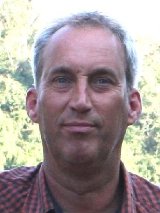
E.C. Slob is a Professor at the Department of Applied Geophysics and Petrophysics , School of Civil Engineering and Geosciences , Delft University of Technology. His research focuses on electromagnetic induction, ground-penetrating radar, and subsurface modeling, with applications in geothermal energy, environmental monitoring, and civil infrastructure diagnostics. Active in electromagnetic subsurface characterization Pioneer in data assimilation for geothermal systems Develops advanced radar and machine learning methodologies Recent research trends emphasize: Integration of multi-physics geophysical methods Optimization of sensor placement in borehole systems Deep learning applications for tunnel inspection Monitoring of groundwater dynamics in polder systems Scientific recognition includes: Reginald Fessenden Award (2020) for electromagnetic geoscience contributions Professional engagement: Chair of 81st EAGE Annual Conference (2019) Program committee member, Near Surface Geoscience Conference (2019) Editorial board member, Geophysics (Journal) (2018) Keynote speaker, Virtual ground-penetrating radar technology (2017-2018)
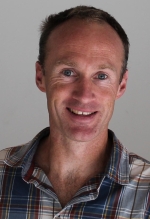
Thomas Vikhamar Schuler is a Professor at the Section for Geography and Hydrology (GeoHyd) within the Department of Geosciences at the University of Oslo, Norway. He also holds an Adjunct Professor position at the Arctic Geophysics program of UNIS since 2017. His research focuses on glacier mass balance, hydrology, and dynamics, with strong emphasis on cryosphere modeling and climate change impacts. Education: PhD in Glaciology (2002) from University of Oslo, with a thesis on subglacial water drainage in alpine glaciers. Research Themes: Cryospheric modeling, glacier hydrology, climate-glacier interactions, permafrost dynamics, and machine learning applications in glaciology. Teaching: Courses include GEO9440 – Cryosphere Modelling , GEO4432 – Surface Energy Balance in Cold Environments , GEO4420 – Glaciology , and GEO2300 – Physical Processes in Geoscience . His recent publications (2025-2019) span topics like Antarctic supraglacial lakes, Svalbard glacier mass balance, subglacial friction dynamics, and machine learning frameworks for glacial classification. Articles frequently involve interdisciplinary approaches combining glaciology, hydrology, and climate science, often using field measurements and computational models. Scientific Awards: ERC Starting Grant 'DYNAMICE' (2020) Projects: Leads initiatives like COLOSSAL, EMERALD, ESCYMO, MAMMAMIA, JOSTICE, and SatPerm Collaborations: Active in EarthFlows, Climate Cryosphere, LATICE, and Perma-Nordnet research groups
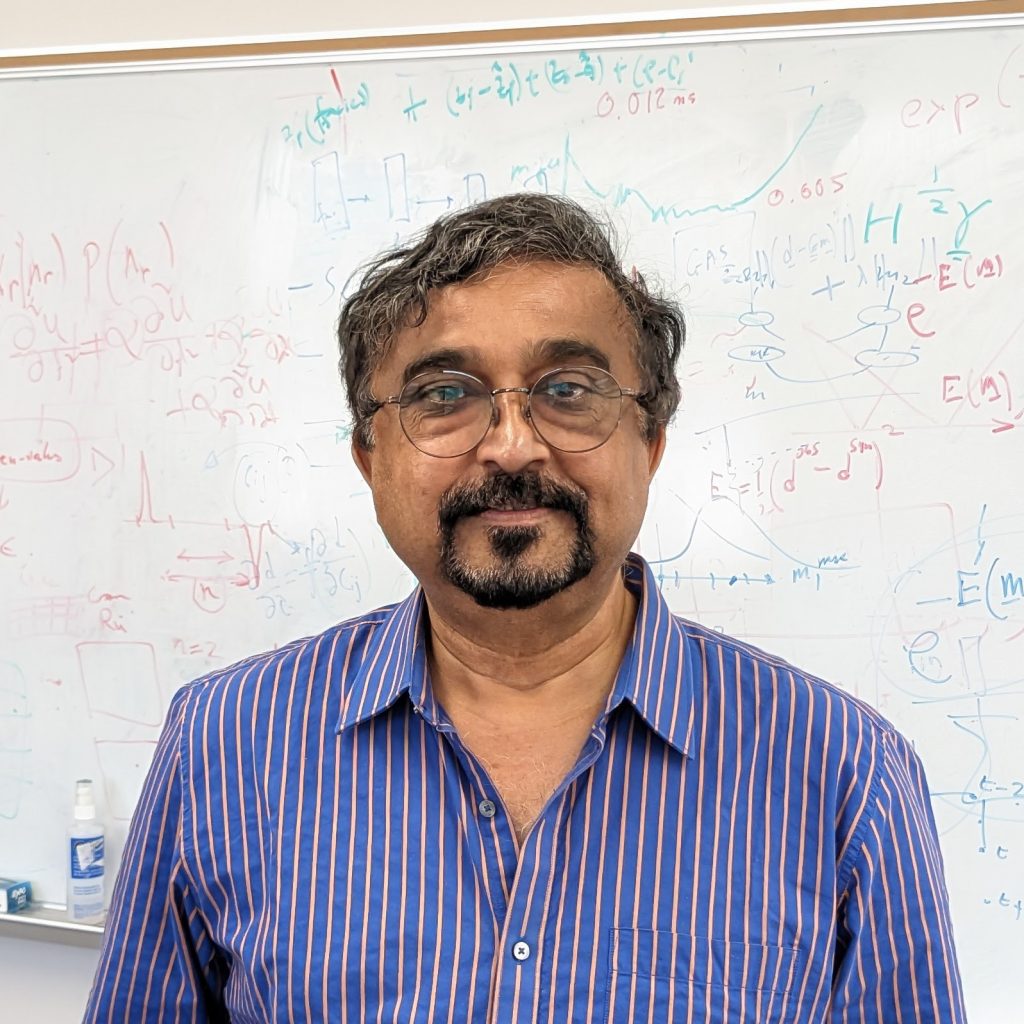
Mrinal K. Sen is a Professor and the Jackson Chair in Applied Seismology at the University of Texas at Austin. He is affiliated with the University of Texas Institute for Geophysics (UTIG), where he has served as Interim Director (2017–2018) and Associate Director (2016–2020). His research focuses on seismic wave propagation, full waveform inversion (FWI), uncertainty quantification, and physics-assisted machine learning for geophysical applications. Ph.D., University of Hawaii at Manoa M.S., Indian Institute of Technology B.S., Indian Institute of Technology Sen's work spans seismic inversion algorithms, finite difference methods, and trans-dimensional MCMC for FWI. He applies machine learning to unconventional reservoir characterization and seismic data analysis, integrating high-performance computing and physics-based constraints. His recent publications highlight hybrid quantum neural networks, Bayesian frameworks, and deep learning for FWI and noise reduction. Scientific awards include the Virgil Kauffman Gold Medal and Honorary Membership in SEG . His research is supported by collaborations with the Bureau of Economic Geology, Department of Earth and Planetary Sciences, and Center for Planetary Systems Habitability.
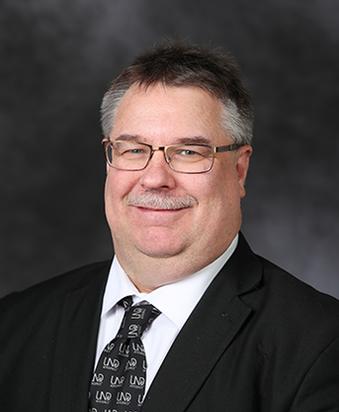
David James Delene is a Research Professor in the Department of Atmospheric Sciences at the University of North Dakota , with a secondary appointment as Aerospace Research Fellow at the John D. Odegard School of Aerospace Sciences. His expertise spans Cloud Physics , Atmospheric Aerosols , and Airborne Measurements , with a focus on Scientific Programming and Open Source Software development. He has taught advanced courses in Atmospheric Chemistry and Measurement Systems since 2006 and led significant research initiatives including the IMPACTS and FATIMA field campaigns. Education : Ph.D. in Atmospheric Science (University of Wyoming), MS in Geophysics (Michigan Tech), BS in Applied Physics (Michigan Tech) Research Interests center on airborne measurement systems, cloud microphysics, aerosol dynamics, and machine learning applications in meteorology. He develops open-source tools like ADTAE and adpaa_readplot_ccncdata for atmospheric data analysis. His work bridges Remote Sensing with Statistical Analysis to improve weather modification techniques. Scientific Awards include: UND's Spirit Faculty Achievement Award (2014) Golden Remer Awards (2007, 2013) Biggest Techie Award (2009) Delene advises both undergraduate capstone projects and graduate students in Atmospheric Sciences, with recent master's advisees including Kendra Sand (2024) and Joseph O'Brien (2023). He manages the Ballooning Laboratory and maintains the department's Atmospheric Sciences Wiki , contributing to UNIDATA and NASA EPSCoR programs.
HAFSI Meriem is a researcher at CESI Lyon , focusing on Computer Science and Information and Communication Sciences and Technology (STIC) . Her work bridges research and education, contributing to both academic and industrial advancements. Education: Doctoral thesis in STIC (Computer Science) from Savoie Mont Blanc University (2018) Master's in Web Intelligence from Jean Monnet University of Saint-Etienne (2014) Master's in IT project management from Mouloud Mammeri University of Tizi-Ouzou (2013) Research interests span Industry 4.0 , Predictive maintenance , Data analysis , Knowledge representation , and Machine learning . Recent work emphasizes hybrid predictive maintenance frameworks, battery state estimation, and security in cyber-physical systems. Selected publications (2014–2023) highlight applications in aerospace, energy systems, and industrial networks. Common themes include data fusion, ontological modeling, and adaptive processing techniques. Labs/teams: Member of the Engineering and Digital Tools research team at CESI Lyon.
Michael Coughlin is an Assistant Professor of Physics at the University of Minnesota , affiliated with the School of Physics and Astronomy . He specializes in multi-messenger astronomy , combining gravitational wave and electromagnetic observations to study cosmic events like neutron star and black hole mergers. His work involves collaborations with major projects including LIGO , Zwicky Transient Facility (ZTF) , and LSST . Education PhD in Physics, Harvard University (2016) AM in Physics, Harvard University (2015) MPhil in Astronomy, Cambridge University (2013) BA in Physics, Astronomy & Math, Carleton College (2012) His research focuses on gravitational wave detection , seismic noise mitigation , and machine learning applications in astronomy . He has developed novel algorithms for LIGO data analysis and contributed to global telescope networks like GRANDMA and GROWTH to optimize transient event follow-up. His work also explores the stochastic gravitational-wave background and kilonova detection limits using optical telescopes. Michael actively participates in public outreach , including the Galtier Elementary Outreach Program through the Accelerated AI Algorithms Institute (a3ai3). He has presented at international conferences on topics ranging from seismic noise effects to LISA mission planning . His recent publications analyze gravitational wave detection challenges and calibration strategies for next-generation observatories.
Prof. Dr. Marco Bohnhoff is Head of Section 4.2 (Geomechanics and Scientific Drilling) at the GFZ Potsdam German Research Center for Geosciences and Professor of Experimental and Borehole Seismology at Freie Universität Berlin. Since 2019, he has served as Executive Director of the International Continental Scientific Drilling Program (ICDP). His research focuses on earthquake physical processes at both reservoir and plate-tectonic scales, with particular emphasis on the North Anatolian Fault in Turkey and induced seismicity from human activities. Bohnhoff's research interests span seismology, seismomechanics, geomechanics, borehole geophysics, and seismic monitoring of induced seismicity. His work investigates earthquake physics, seismotectonics, the seismic cycle at the North Anatolian Fault Zone, shear-wave anisotropy, and wide aperture seismics. He leads the ICDP-driven Geophysical Observatory at the North Anatolian Fault (GONAF) near Istanbul and similar projects in Koyna/India and STAR observatory in Italy. His recent publications reveal trends in fault mechanics, earthquake prediction, and seismic hazard assessment, particularly for the Istanbul region which faces significant risk from a potential M7+ earthquake. His laboratory work combines with field observations to understand the relationship between fault properties, stress states, and earthquake occurrence across different scales. Elected member of the Leibniz-Sozietät der Wissenschaften zu Berlin e.V. (2018) Heisenberg-Fellowship awarded by Deutschen ForschungsGemeinschaft (DFG) (2007) Bohnhoff has supervised more than 10 PhD students to completion and raised approximately 16 million euros in third-party funding. He leads major research projects including the GONAF observatory and participates in international collaborations studying seismic hazards. His work bridges fundamental earthquake physics with practical applications for seismic hazard mitigation, particularly in densely populated regions like Istanbul that face significant seismic risk.
Florence Tupin is a Professor at Télécom Paris (Institut Polytechnique de Paris) and head of the Image, Data, Signal department. She leads the IMAGES research team at LTCI Laboratory, focusing on advanced SAR image processing, deep learning applications in remote sensing, and 3D reconstruction for earth observation. Her work bridges theoretical models and large-scale geospatial data exploitation. Her research integrates statistical modeling , non-local filtering , and deep neural networks to address challenges in SAR despeckling, tomographic imaging, and multi-temporal analysis. She directs projects like ANR ASTRAL (2022-2025) and ALYS (2015-2021), developing open-source tools such as MuLoG and MERLIN for the remote sensing community. Publication analysis reveals dominant themes: deep learning-driven SAR restoration (45%), 3D reconstruction (25%), multi-temporal change detection (20%), and polarimetric analysis (10%). Her group consistently pioneers self-supervised methods for resource-efficient remote sensing. Awards & Recognition: IEEE Geoscience and Remote Sensing Society Distinguished Achievement (2025) Advising & Grants: Directs 9 PhD students and 4 postdocs; secured €2M+ funding (ANR, CNES, CEA). Recent PhDs focus on deep learning for SAR tomography, multi-modal fusion, and Arctic monitoring. Leads Futur & Rupture initiatives on forest biomass estimation. Labs & Teams: Heads the IMAGES team (20 researchers) at LTCI Laboratory. Collaborates with CNES, CEA, and international partners (Wuhan University, Arctic University of Norway) on satellite data exploitation.
Gökhan Kılıç is a Professor in the Department of Civil Engineering at İzmir University of Economics. His career spans academic and industrial roles, including research positions at Yıldız Technical University and industry experience with Black and Veatch in London. BSc in Civil Engineering, Yıldız Technical University BSc in Computer Education and Instructional Technologies, Yıldız Technical University MSc in Geotechnology, Yıldız Technical University MSc in Structure and Mechanics, University of Portsmouth PhD in Civil Engineering, University of Greenwich His research focuses on non-destructive testing (NDT), ground-penetrating radar (GPR), and structural health monitoring for bridges and historic buildings. Recent work includes seismic behavior of RC frames, moisture detection in infrastructure, and wavelet analysis for bridge diagnostics. His publications demonstrate expertise in NDT integration, machine learning for structural diagnostics, and disaster resilience strategies. Collaborations include researchers like Amir M. Alani and Mehmet S. Ünlütürk.
Denis Vida serves as an Adjunct Research Professor in the Department of Physics & Astronomy within the Faculty of Science at Western University. Additionally, he holds the position of Research Scientist and is internationally recognized as a leading expert in meteor physics, with significant contributions to planetary science, atmospheric phenomena, and space situational awareness through interdisciplinary research bridging astronomy, geophysics, and computer science. Educational Background: Degree in Computer Science PhD in Geophysics Postdoctoral training in Astrophysics Dr. Vida's research focuses on the study of Solar System small bodies (micrometeorites to asteroids), atmospheric physics, and planetary defence applications. He leverages advanced machine learning and scientific computing methodologies to analyze global observational data, with particular emphasis on real-time monitoring systems for meteor events and space debris. His work demonstrates strong integration of computational techniques with observational astronomy for societal impact in space situational awareness. Scientific Awards: No awards mentioned in source material. Advising and Grants: Source material contains no information regarding student supervision, research grants, or funding sources. Labs and Teams: Dr. Vida founded and coordinates the Global Meteor Network, a pioneering international collaboration deploying over 1,000 low-cost cameras worldwide for continuous meteor detection, satellite tracking, aircraft contrail surveying, and atmospheric phenomenon research, establishing a critical infrastructure for planetary science and space domain awareness.
Heather Bedle is the Lissa and Cy Wagner Professor at the School of Geosciences, University of Oklahoma. Her research integrates geosciences, data science, and environmental sciences to advance understanding of Earth's crust and human-environment interactions. She leads the AASPI and SPEER research groups, focusing on seismic analysis, reservoir characterization, and socio-environmental dynamics related to climate challenges. Ph.D., Earth and Planetary Sciences – Northwestern University (2008) M.S., Geological Sciences – Northwestern University (2005) B.S., Physics – Wake Forest University (1999) Dr. Bedle specializes in applying machine learning and data science workflows to geoscience challenges, including multi-attribute seismic analysis, geothermal energy, carbon capture, and Archean tectonics. Her work addresses: Optimization of seismic workflows for subsurface imaging Reservoir characterization at sub-seismic scales Interdisciplinary studies on societal responses to climate change Integration of physics-derived synthetic models in energy exploration Recent publications highlight her pioneering use of unsupervised and probabilistic neural networks for seismic facies classification in the Gulf of Mexico and Taranaki Basin, alongside explainable AI frameworks for improving fault detection in basement rocks. Her research also examines methane hydrate identification and Quaternary depositional sequences. Scientific awards include: University of Oklahoma Presidential Professorship She has mentored numerous graduate students, including: PhD graduates: Marcus Maas, Karelia La Marca, Alexandro Vera Arroyo, April Moreno Ward MS graduates: Evan Jowers, Hy Tran, Jacob Maag, Pamela Blanco Dufau, Diana Salazar Dr. Bedle co-develops AASPI software tools for seismic attribute analysis and leads SPEER's transdisciplinary initiatives combining geoscience with social psychology and policy research. Her lab teams focus on energy transition technologies, 4D seismic monitoring, and web-based application development for upstream optimization.
Gilad Lerman is a Professor at the School of Mathematics, University of Minnesota, and serves as Director of the Data Science Lab at both the Minnesota Center for Industrial Mathematics (MCIM) and Institute for Mathematics and its Applications (IMA). His office is located at 533 Vincent Hall, 206 Church Street SE, Minneapolis, MN 55455. Research Focus: Dr. Lerman specializes in computational harmonic analysis, high-dimensional data analysis, statistical learning, and machine learning. His work includes robust optimization techniques, non-convex modeling, and applications in computer vision and bioinformatics. Key methodologies involve geometric data analysis, variational methods, and spectral techniques for large-scale datasets. Publications: His recent works demonstrate consistent focus on robust machine learning, including subspace recovery, Riemannian data assimilation, graph neural networks, and applications in geophysics/computer vision. Theoretical rigor combines with practical implementations across domains. Student Advising & Grants: He has supervised 16+ PhD dissertations and 3 MSc theses, with graduates now in academia and industry (Google, NVIDIA, Mayo Clinic). Current research is supported by NSF and NGA funding. Laboratory Leadership: Directs the IMA Data Science Lab, focusing on industrial mathematics collaborations and developing algorithms for real-world data challenges.
Jacob Clement Yde is a Professor at the Institute of Built Environment, Natural Sciences and Technology within Western Norway University of Applied Sciences . His research focuses on glaciology , glacial geology , glacier biogeochemistry and microbiology , and climate change impacts . He has held academic positions since 2004, including roles at Sogn og Fjordane University College and the University of Aarhus. 2017–present: Professor, Western Norway University of Applied Sciences 2011–2016: Associate Professor, Sogn og Fjordane University College 2004–2007: PhD in glaciology, University of Aarhus His research interests center on glacier dynamics, biogeochemical processes in glacial environments, and paleoclimatic reconstructions from Arctic and sub-Arctic glaciers. He investigates surge-type glaciers' behavior and their role in global climate systems, with recent studies on glacier retreat impacts , glacial lake evolution , and microbial communities in cryoconite ecosystems. Key publication trends include analyses of glacier meltwater chemistry, machine learning applications in glacial monitoring, and environmental impacts of radionuclide accumulation in Arctic glaciers. His work spans interdisciplinary collaborations in hydrology, ecology, and climate science. Editorial roles include: 2018–present: Review Editor for Frontiers in Chemistry and Earth Science 2012–present: Associate Editor for Arctic, Antarctic, and Alpine Research 2016–2018: Guest Editor for special issue on West Greenland environmental change His scientific contributions involve extensive studies on: Arctic climate change effects on glacier systems Hydrochemistry of glacial meltwaters Ice-dammed lake dynamics and outburst floods Microbial processes in subglacial environments Glacier mass balance and velocity changes Current projects focus on glacial lake evolution , machine learning in remote sensing , and environmental impacts of glacier retreat across Norway, Svalbard, and Greenland.
Dr. Tiago Alves is a Senior Lecturer at Cardiff University's School of Earth and Environmental Sciences, where he leads the 3D Seismic Laboratory. His work focuses on marine geology, petroleum systems, and sustainable geoscience approaches, with extensive international collaboration across continents. He maintains strong connections with academic institutions and industry partners worldwide, contributing significantly to research on continental margins and geohazard assessment. Dr. Alves specializes in marine geology and geophysics, with research spanning petroleum geology, carbon capture and storage, environmental studies of continental shelves, sequence stratigraphy, and basin analysis. His work addresses critical UN Sustainable Development Goals including Affordable and Clean Energy (7), Decent Work and Economic Growth (8), Industry, Innovation and Infrastructure (9), Climate Action (13), and Life Below Water (14). He combines theoretical and applied approaches to develop sustainable geoenergy solutions that include carbon sequestration, hydrogen, and geothermal energy. His recent publications demonstrate a strong focus on continental margin evolution, submarine landslides, salt tectonics, and basin analysis across diverse regions including the South China Sea, Brazilian margins, Mediterranean, North Sea, and African continental margins. The research employs advanced 3D seismic analysis, machine learning approaches, and integrates field studies with laboratory work to address fundamental questions in sedimentary basin evolution and geohazard assessment. Ranked as the most prolific author worldwide (2001-2020) on submarine landslides Named among Stanford University's top 2% scientists worldwide Recipient of the 2022 Outstanding Editor Award at Marine and Petroleum Geology Lifetime Member of the Society of Exploration Geophysicists (SEG) Vice-treasurer of the Energy Group at the Geological Society of London Member of UKRI's Marine Facilities Advisory Board Dr. Alves has supervised 18 PhD projects, 22 MESci theses, and 2 MSc dissertations to completion, with 6 PhD projects currently in progress. His research is supported by industry partnerships and research councils globally, focusing on environmental impact assessment of hydrocarbon exploration, sustainable geoenergy solutions, and continental margin evolution. He has participated in numerous research expeditions worldwide, including IODP Expedition 333 to the Nankai Trough. As leader of the 3D Seismic Laboratory, Dr. Alves oversees research analyzing sedimentary basin evolution from early rifting to passive and subduction phases. His work spans key study areas including Canada, Brazil, Argentina, Africa, Gulf of Mexico, South China Sea, North Sea, Norway, Japan, and Australia, making significant contributions to understanding continental margin processes and their implications for resource exploration and environmental management.
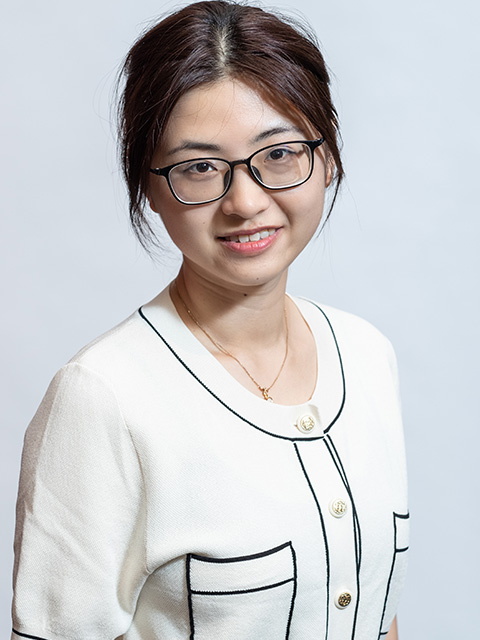
Dr. Jinghua Jiang is a Vice-Chancellor Independent Research Fellow specializing in flood risk management and hydrodynamic modelling. Her research focuses on developing GPU-accelerated computational tools and nature-based solutions to address climate resilience challenges in data-scarce regions. She leads the DECLARE Project, aiming to create automated tools for nature-based solutions (NbS) design against compound flood risks. Her work bridges academic research with practical implementation through international collaborations, including partnerships with the UK Met Office. Her expertise spans high-performance environmental modelling, machine learning applications, and stakeholder-engaged research. Completed projects include the Living Deltas Hub (GCRF WCSSP India), ValBGI, and ENACT initiatives, all supported by major UK research councils. She has pioneered pollutant transport models to enhance urban flood resilience and developed fluvial process models for rivers like the Mekong. Key contributions include advancing stormwater management techniques and integrating computational efficiency with real-world urban challenges. Her research emphasizes both technical innovation and community-focused solutions, with publications addressing urban flood modeling, nature-based interventions, and particle-tracking methodologies.