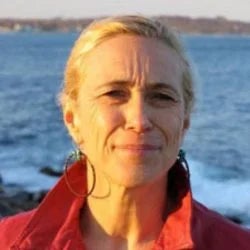
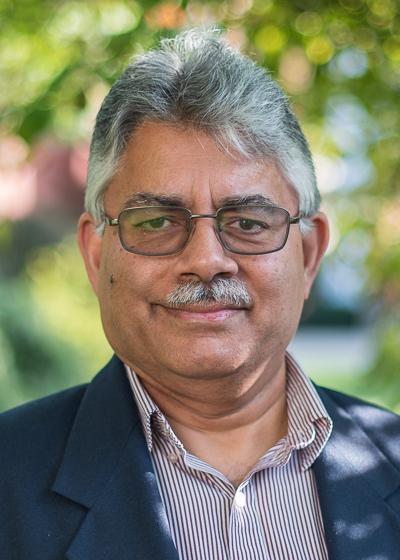
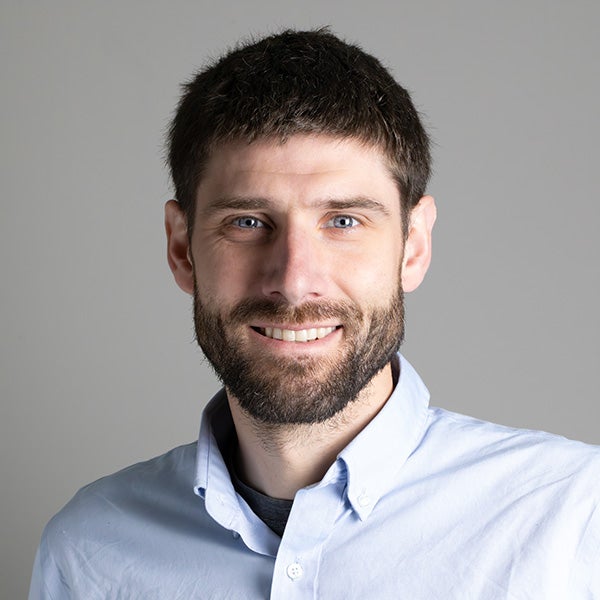
Pengfei Wang is an Assistant Professor in the Department of Civil & Environmental Engineering at Old Dominion University (ODU). He holds a Ph.D. in Geotechnical Engineering and an M.S. in Statistics from UCLA, alongside a B.S. in Transportation Engineering from Tongji University. Prior to ODU, he conducted postdoctoral research at UCLA. His expertise focuses on Geotechnical Engineering , Engineering Seismology , and Applied Statistics , with emphasis on regional geo-hazard modeling, multi-hazards risk assessment, and statistical learning applications. Key research interests include seismic site response analysis, liquefaction susceptibility, and probabilistic risk frameworks for infrastructure resilience. Dr. Wang’s work integrates geospatial analysis and statistical methodologies to address challenges in earthquake engineering. He has developed frameworks for regional landslide and liquefaction risk assessments, particularly in vulnerable regions like California’s Sacramento-San Joaquin Delta. His contributions include advancing HVSR (Horizontal-to-Vertical Spectral Ratio) methodologies and ergodic site response modeling. He maintains active collaborations with institutions globally and contributes to open-source databases for seismic data, promoting transparency and reproducibility in geotechnical research. His educational background in transportation engineering enriches interdisciplinary approaches to civil infrastructure resilience.
Professor Atilla Ansal is a distinguished academic in Civil Engineering at Özyeğin University's School of Engineering, where he has served as a full-time professor since March 2012 and previously as the Founding Chair of the Civil Engineering Department from 2012-2019. With an extensive career spanning over five decades, Professor Ansal has held prominent positions at Istanbul Technical University, Bogaziçi University's Kandilli Observatory and Earthquake Research Institute, and has served as a visiting professor at numerous international institutions including Northwestern University, University of California, and Tokyo University. Northwestern University, 1978 (Doctorate) Civil Engineering, Istanbul Technical University, 1969 (Master's) Civil Engineering, Istanbul Technical University, 1969 (Bachelor's) Professor Ansal's research focuses on Earthquake Geotechnical Engineering, Soil Dynamics, Seismic Hazard Analysis, Landslide hazard analysis, Seismic Microzonation, and Laboratory and In-Situ Testing of Soil Properties. His work has significantly advanced our understanding of soil behavior under seismic loading, site response analysis, and seismic microzonation methodologies. His research has direct applications in urban planning, earthquake risk mitigation, and performance-based seismic design. Professor Ansal has pioneered approaches to site-specific earthquake characterization and developed methodologies for seismic microzonation that have been implemented in numerous Turkish cities and adopted internationally. His extensive publication record demonstrates consistent contributions to earthquake engineering, with recent work focusing on probabilistic seismic microzonation, 2D basin effects, site-specific response analysis, and performance-based design approaches. His research shows a clear evolution from fundamental soil behavior studies to practical applications in urban risk assessment and mitigation. 7th Prof.N.Ambraseys Lecturer (2024), European Association for Earthquake Engineering 15th Nonveiller Lecturer (2017), Croatian Geotechnical Society Third Prof.Dr. Rıfat Yarar Lecturer (2015), Turkish Civil Engineers Association Third Ord.Prof.Dr. Hamdi Peynircioglu Lecturer (1988) Professor Ansal has advised 15 PhD students and 27 Master's students, shaping the next generation of earthquake engineers. His leadership extends to editorial roles as Editor-in-Chief of the Springer journal 'Bulletin of Earthquake Engineering' since 2002 and Editor-in-Chief for the Springer book series on 'Geotechnical, Geological and Earthquake Engineering'. He served as Secretary General (1994-2014), President (2014-2018), and Vice President (2018-2022) of the European Association for Earthquake Engineering, significantly influencing the field internationally. His work has been supported by numerous grants from Turkish government agencies, international organizations including UNESCO, and collaborative research projects across Europe. Professor Ansal has been instrumental in establishing geotechnical monitoring systems in Istanbul, including vertical arrays for site response analysis. His leadership in the 'Earthquake Master Plan for Istanbul' and 'Seismic Microzonation for Municipalities' projects has created critical infrastructure for earthquake risk management in Turkey's most populous city. His work with GeoIst, Geotechnical Earthquake Engineering and Consultancy Inc. has translated academic research into practical engineering solutions for seismic risk mitigation.
David Eaton is a Professor and former NSERC/Chevron Industrial Research Chair in Microseismic System Dynamics at the University of Calgary's Department of Geoscience. He holds a PhD in Geophysics from the University of Calgary (1992) and has published the textbook 'Passive Seismic Monitoring of Induced Seismicity'. Educational Background: PhD Geophysics, University of Calgary, 1992 MSc Geophysics, University of Calgary, 1988 BSc Geology and Physics, Queen's University, 1984 His research focuses on induced seismicity characterization, microseismic monitoring technology development, distributed acoustic sensing applications, physics-informed machine learning approaches, and lithospheric structure analysis. Current projects investigate earthquake triggering mechanisms during hydraulic fracturing and geothermal energy development. Publications show consistent focus on induced seismicity source characterization, monitoring methodologies, and geophysical applications for energy resource development. Recent work integrates machine learning with seismic monitoring to understand geological controls on induced seismicity. Scientific Awards: NSERC Synergy Award for Innovation (2020) J. Tuzo Wilson Medal, Canadian Geophysical Union (2020) CSEG Distinguished Lecturer (2019) Schulich School of Engineering Distinguished Collaborator (2019) University of Calgary Great Supervisor Award (2016) He leads the CREATE-REDEVELOP program training future leaders in responsible resource development and directs the microseismic research laboratory.
Behzad Alaei serves as an Associate Professor in the Section for Study of Sedimentary Basins within the Department of Geosciences at the University of Oslo's Faculty of Mathematics and Natural Sciences. His office is located in room K38 of the Geology Building at Sem Sælands vei 1, 0371 Oslo, with a professional email contact at behzad.alaei@geo.uio.no. Dr. Alaei maintains an active research profile with publications spanning from 2005 to the present, demonstrating his ongoing contributions to geological sciences. Dr. Alaei's research spans multiple critical areas within structural geology and sedimentary basin analysis, with particular expertise in fault zone architecture, seismic interpretation techniques, and CO2 storage site assessment. His work bridges theoretical geological concepts with practical applications in petroleum geology and carbon sequestration. A significant portion of his research focuses on the Norwegian Barents Sea region, where he has conducted extensive studies on normal fault systems and their geometric characteristics. His recent work increasingly integrates machine learning and deep learning approaches with traditional geological analysis, reflecting the evolving nature of geoscience research methodology. The analysis of Dr. Alaei's publication record from 2018-2024 reveals a strong thematic continuity in fault characterization research, with progressive incorporation of advanced computational methods. Early publications focused primarily on traditional structural analysis of fault systems in sedimentary basins, while more recent work demonstrates increasing integration of machine learning techniques for fault detection and characterization. A notable trend is the application of these geological insights to practical challenges in carbon capture and storage, particularly regarding fault risk assessment for CO2 storage sites in the North Sea region. His collaborative work with Anita Torabi appears consistently throughout this period, suggesting a strong research partnership. Dr. Alaei maintains an active research program with multiple ongoing projects related to sedimentary basin analysis and fault characterization. His work appears to involve significant collaboration with both academic and industry partners, particularly in the context of CO2 storage research. While specific grant details aren't provided in the available information, his consistent publication record across multiple high-impact journals suggests successful funding of his research activities over the past two decades.
Professor Yanghua Wang is a leading academic in Geophysics at Imperial College London's Faculty of Engineering. He serves as Principal of the Resource Geophysics Academy and Director of the Centre for Reservoir Geophysics. His career spans over four decades, with roles including Research Manager at Robertson Research and a PhD from Imperial College London (1995–1997). He holds prestigious awards such as Fellow of the Royal Academy of Engineering (2021) and membership in the Chinese Academy of Engineering (2023). Education highlights include a BSc (1983) and MSc (1994) in Geophysics, followed by a PhD in Geophysics (1997). His research focuses on seismic inversion, reservoir geophysics, and time-frequency analysis, with notable monographs on seismic inversion and signal processing. He leads interdisciplinary projects combining machine learning with geophysical modeling, addressing challenges in reservoir characterization and seismic data processing. Research interests emphasize geophysical inversion techniques, anisotropic media analysis, and applications in energy exploration. He has pioneered methods like the W transform for seismic signal analysis and contributed to advancements in physics-informed neural networks. His work bridges theoretical geophysics with practical reservoir engineering solutions. Prof. Wang’s lab, the Resource Geophysics Academy, focuses on innovative geophysical methodologies for subsurface characterization. His recent projects include AI-driven data assimilation for large-scale systems and high-resolution seismic imaging techniques. Collaborations span academia and industry, addressing global energy and resource challenges.
Prof. Harald Sternberg is a distinguished academic at HafenCity University Hamburg, holding the position of University Professor for Hydrography and Geodesy. His affiliations include the Department of Geodesy and Geoinformatics, where he leads research in hydrographic education and advanced geomatics technologies. He previously served as Vice President for Teaching and Studies (2009-2022) and Acting President (2010) of HCU. Education: Ph.D. in Geodesy from University of the Bundeswehr Munich (1999), specializing in trajectory determination of land vehicles using hybrid systems. Early career included roles as scientist at Bundeswehr University (1991-2001) and academic leadership at HAW Hamburg (2005-2009). Research focuses on underwater mapping, navigation systems, and sensor integration. Key projects include: Level 5 Indoor Navigation (5G-based positioning), hydrothermal vent exploration using deep-towed multibeam systems, and low-cost mobile mapping solutions. He also investigates smartphone-based inertial navigation and autonomous underwater vehicles for infrastructure monitoring. Publications span underwater vision systems, satellite-derived bathymetry, and 3D point cloud analysis. Over 200 peer-reviewed articles and book chapters reflect expertise in geomatics applications. Current research emphasizes 5G-enabled indoor navigation and environmental sensor networks. Grants include BMWK-funded autonomous deep-sea monitoring and BGR exploration projects in the Indian Ocean. His lab develops innovative tools like the HOMESIDE sled for seafloor surveys. Supervises Ph.D. research on hydrothermal vent analysis and data-driven inertial localization.
Roger Flage is a Professor of Risk Management at the University of Stavanger, affiliated with the Faculty of Science and Technology and the Department of Security, Economics and Planning. His research focuses on foundational and applied aspects of risk analysis, uncertainty quantification, and decision-making under uncertainty, with applications in critical infrastructure, environmental systems, and offshore energy. Roger Flage's research interests lie at the intersection of risk science, safety engineering, and decision theory. He investigates how uncertainty—especially epistemic uncertainty and assumptions—affects risk assessments, and advocates for more transparent and robust frameworks. His work spans theoretical advances, such as the treatment of 'black swan' events and the concept of 'real risk', as well as practical applications in offshore safety, power systems, and geohazards. He emphasizes the integration of data-driven methods, AI, and digital twins while critically assessing their limitations and associated security risks. His recent publications show a strong trend toward integrating dynamic, data-rich, and interdisciplinary approaches to risk analysis. Themes include the role of time in risk, AI applications, infrastructure interdependencies, and environmental risk in the oil and gas sector. He frequently publishes in top-tier journals like Risk Analysis , Reliability Engineering & System Safety , and Safety Science , often in collaboration with leading scholars such as Terje Aven and Seth Guikema. No scientific awards are mentioned in the provided text. Roger Flage has supervised or collaborated with several researchers, though no formal list of advisees is provided. His work is supported through academic collaborations and institutional affiliations rather than explicit grant mentions. He is actively involved in advancing risk science methodology, particularly in the treatment of assumptions and uncertainty, and contributes to both theoretical foundations and real-world applications in safety-critical domains. He is associated with research groups and collaborative networks at the University of Stavanger, particularly within the Department of Security, Economics and Planning. His work often involves interdisciplinary teams focusing on risk in complex engineered systems, including energy, transportation, and environmental systems.
Annette R. Grilli is a Research Professor in the Department of Ocean Engineering at the University of Rhode Island , focusing on ocean renewable energy and coastal hazard assessment. Her work integrates numerical modeling and statistical analysis to study extreme events like tsunamis and storms. Ph.D. in Climatology, University of Delaware (2000) M.S. in Oceanography, University of Liege (1984) B.S. in Geography & Education, University of Liege (1983) Her research spans offshore wind farm siting optimization , tsunami propagation modeling , and coastal erosion dynamics . Recent publications highlight applications of phase-resolving wave models and machine learning to coastal resilience and marine renewable energy systems. Grants include collaborations with NOAA , Department of Energy , and NSF , focusing on coastal hazard visualization , tsunami detection algorithms , and design elevation mapping under climate change scenarios. She contributes to digitalCommons@URI with over 100 publications in Ocean Engineering and Civil Engineering domains.
Ziming Zhang is an Assistant Professor in the Department of Electrical and Computer Engineering at Worcester Polytechnic Institute (WPI) , with additional affiliations in Data Science and Robotics Engineering. He previously held research roles at Mitsubishi Electric Research Laboratories (MERL) and Boston University. PhD in Computing (2013) from Oxford Brookes University , UK MS in Computing Science (2010) from Simon Fraser University , CA BS in Computer Science and Technology (2005) from Northeastern University , China Research interests span computer vision , machine learning , and their applications in point cloud processing , medical imaging , autonomous driving , and IoT . He leads the Vision, Intelligence, and System Laboratory (VISLab) at WPI. Recent publications focus on 3D reconstruction , hyperbolic learning , and robust classifiers . Awards include the R&D100 Award 2018 and NSF funding for data-efficient deep learning. PhD Students: Yecheng Lyu (co-supervised), Guojun Wu (co-supervised), Hangrui Zhang, Xuechu Yu Master's Students: Yun Yue, Yuping Shao Visiting Scholars: Fangzhou Lin His lab partners with industry and academic institutions, focusing on autonomous systems , robotics , and scientific imaging projects.
Sergey Fomel is a Professor of Geophysics at the University of Texas at Austin, holding the Wallace E. Pratt Professorship and serving as Director of the Texas Consortium for Computational Seismology (TCCS). He is affiliated with the Jackson School of Geosciences, Bureau of Economic Geology, and the Oden Institute for Computational Engineering and Sciences. His research focuses on seismic data analysis, computational seismology, and machine learning applications in geophysics. He leads the Madagascar software project for open-source geophysical data analysis. Dr. Fomel earned his Ph.D. in Geophysics from Stanford University in 2001. He has held leadership roles in the Society of Exploration Geophysicists (SEG), including Vice President, Publications (2017–2019) and Distinguished Lecturer (2020). His awards include honorary memberships in SEG and the Geophysical Society of Houston (GSH). Recent research emphasizes deep learning for seismic inversion, noise reduction, and fault segmentation. His work addresses challenges in geophysical data processing, including adaptive algorithms, wave propagation modeling, and CO2 monitoring. Fomel's contributions span both theoretical and applied domains, bridging computational methods with practical geoscience applications. Education: Ph.D. in Geophysics, Stanford University (2001) Affiliations: Jackson School of Geosciences, Bureau of Economic Geology, Oden Institute Labs/Teams: Texas Consortium for Computational Seismology (TCCS), Madagascar Project
Sanjana Mudduluru is an Assistant Professor in the School of Computer Science at the University of Oklahoma (OU). She holds a BS from Jawaharlal Nehru Technological University (India), an MS in Data Science & Analytics, and a PhD in Computer Science, all from OU. Her research focuses on applying computer vision and machine learning to biomedical imaging, particularly in cancer research and medical diagnostics. She has extensive experience in software development and programming. Education: Ph.D., Computer Science, University of Oklahoma M.S., Data Science & Analytics, University of Oklahoma B.Tech, Computer Science, Jawaharlal Nehru Technological University Her research interests span machine learning, medical image processing, data analytics, and computer science education. She explores innovative deep learning models for medical image segmentation, classification, and synthetic data generation to enhance AI efficacy in healthcare. Recent work includes hybrid models for computer-aided diagnosis and self-supervised learning for rock image analysis. Awards: Dissertation Excellence Award (2023) Tomorrows Engineer Scholarship (2021–2022) CS Alumni Graduate Fellowship (2021–2022) Dr. Mudduluru has no listed advisees but has contributed to grants related to biomedical imaging research. She is affiliated with OU’s Devon Energy Hall and actively publishes in interdisciplinary fields blending computer science with healthcare applications.
Sanjay Srinivasan is a Professor of Petroleum and Natural Gas Engineering and the John and Willie Leone Family Chair in the Department of Energy and Mineral Engineering at Penn State University. He serves as Director of the EMS Energy Institute and leads the Penn State Initiative for Geostatistics and GeoModeling Applications. His research focuses on petroleum reservoir characterization, CO2 sequestration, and integration of seismic data in reservoir models through advanced geostatistical and machine learning methods. Ph.D., Petroleum Engineering, Stanford University M.S., Petroleum Engineering, University of Southern California B. Tech, Petroleum Engineering, Indian School of Mines Srinivasan’s work addresses reservoir recovery processes, unconventional reservoirs, and subsurface energy security. His methodologies include probabilistic modeling, data assimilation, and AI-driven workflows for fracture network mapping and porous media generation. Key applications span Gulf of Mexico deepwater plays and geological carbon storage. Recent publications highlight trends in: Reinforcement learning for geostatistical workflows and well optimization Physics-informed GANs for 3D porous media modeling Probabilistic integration of geomechanical and geostatistical inferences Machine learning approaches for seismic fracture identification CO2 sequestration in heterogeneous reservoirs Scientific awards include Distinguished Member (SPE, 2022), SPE Faculty Pipeline Award (2012), Cox Visiting Fellowship (Stanford, 2010), and SPE Southwest Region Reservoir Description Award (2009).
Dr. Raimon Tolosana Delgado is a Research Fellow at the Helmholtz-Zentrum Dresden-Rossendorf (HZDR), affiliated with the Helmholtz Institute Freiberg for Resource Technology. He leads research in predictive geometallurgy and statistical analysis of mineral resources, focusing on translating geological data into processing insights. His research integrates geostatistics , compositional data analysis (CoDa) , and machine learning to model ore behavior and resource potential. Key areas include: Predictive geometallurgy for forecasting ore/waste behavior Bayesian statistics for parameter estimation and uncertainty analysis Development of R-based tools (e.g., compositions and gmGeostats packages) for mineral data analysis Particle-based process modelling for mineral separation optimization Recent publications emphasize machine learning integration (e.g., neural networks for geophysical tensor fields), tailings reprocessing (3D geostatistical assessment of resource potential), and advanced statistical methods for compositional data. A consistent trend involves enhancing predictive accuracy in mineral processing through multi-source data fusion. Dr. Tolosana Delgado coordinates the development of technology platforms for geometallurgical data analysis, including databases and interfaces for industrial applications. His work bridges ore geology, mineral processing, and metallurgy to optimize resource efficiency.
Brandon Schmandt is a Professor in the Department of Earth, Environmental and Planetary Sciences at Rice University, where he leads research using seismology to investigate Earth systems. His work integrates interdisciplinary approaches, data science, and numerical modeling to study tectonic processes, magmatic systems, and environmental interactions. His educational background includes a PhD in Geological Sciences from the University of Oregon (2011) and a BA in Environmental Studies from Warren Wilson College (2006). Dr. Schmandt's research focuses on seismology, tectonics, volcanology, and surface processes , with emphasis on seismic imaging of subsurface structures. His group employs innovative time-series analysis and field projects to resolve geologic history and contemporary Earth dynamics, particularly examining fault zones, magmatic reservoirs, and deep convective processes. Key methodologies include dense seismic arrays and machine learning applications. Analysis of his recent publications (2023-2025) reveals dominant trends in seismic event discrimination (earthquakes vs. explosions), magmatic system imaging (Yellowstone, Cascades), and global mantle structure studies. There is strong emphasis on induced seismicity, machine learning applications, and high-resolution imaging of Earth's discontinuities using dense arrays. His distinguished honors include: Aki Award of the AGU Seismology Section GSA Donath Medal AGU Macelwane Medal Body Dr. Schmandt directs an active research group conducting field projects across diverse settings including the Raton Basin, Yellowstone, Antarctica, and the Caribbean. While specific student advisees and grant details aren't provided in available materials, his group's work involves collaborative data collection, advanced computational modeling, and development of novel seismic analysis techniques applicable to both natural and anthropogenic seismic sources. The research program maintains focus on magmatic systems beneath volcanic regions, induced seismicity mechanisms, and global mantle structure using dense node arrays and interdisciplinary approaches to address fundamental questions in Earth dynamics.
Andrew Zammit Mangion is an Associate Professor at the University of Wollongong , affiliated with the School of Mathematics and Applied Statistics . His research focuses on spatio-temporal statistics, computational methods, and environmental informatics, with applications in climate science and geospatial data analysis. Education : PhD in Statistics (University of Sheffield, 2012), B.Eng. (University of Malta, 2007) Research Themes : Spatio-temporal modeling, Bayesian inversion frameworks (e.g., WOMBAT v2.S), deep learning integration, and statistical software development (e.g., FRK package) Grants & Projects : ARC DECRA Fellow (2018), Chief Investigator on ARC Discovery Project (greenhouse gases), ARC Special Research Initiative (Securing Antarctica's Environmental Future), and ARC Industrial Transformation Hub (TIDE). Collaborations : University of Bristol, University of Edinburgh, ESA CCI, NASA OCO-2 data projects Scientific Awards include the prestigious Australian Research Council Discovery Early Career Researcher Award (DECRA). His work spans Antarctic ice sheet analysis, CO2 flux inversion, and scalable spatial statistical models for environmental monitoring.