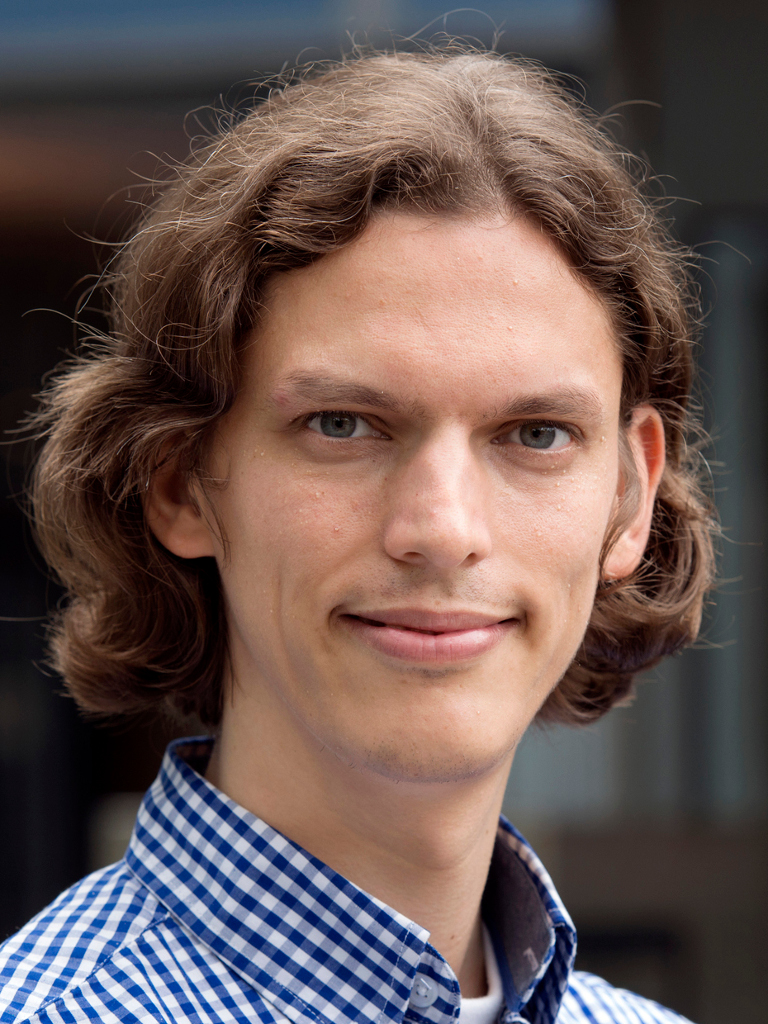
Xia Liu, PhD, is an Assistant Professor in the Department of Toxicology and Cancer Biology at the University of Kentucky. Her research focuses on understanding mechanisms of breast cancer metastasis, particularly the roles of neutrophils, tumor-associated inflammation, and liquid biomarker discovery. She co-leads projects on immune checkpoint inhibitors in triple-negative breast cancer (TNBC) and tumor-induced granulopoiesis. Dr. Liu earned her PhD in Cancer Biology from Peking Union Medical College & Chinese Academy of Medical Sciences, China. Her lab's work integrates molecular biology, immunology, and translational approaches to identify therapeutic targets and improve cancer treatment efficacy. Key research areas include: Neutrophil biology in cancer progression CD44-mediated tumor cell clustering ICAM1-suPAR-CD11b axis as a therapeutic target Machine learning applications in cancer biomarker discovery Her lab has published in high-impact journals like Molecular Cancer , Nature Communications , and Cancer Discovery . She collaborates with institutions globally to advance metastasis research and clinical translation. Dr. Liu's lab is located at Research Building 2, Room 424, and maintains an active research website at xialiulab.com .
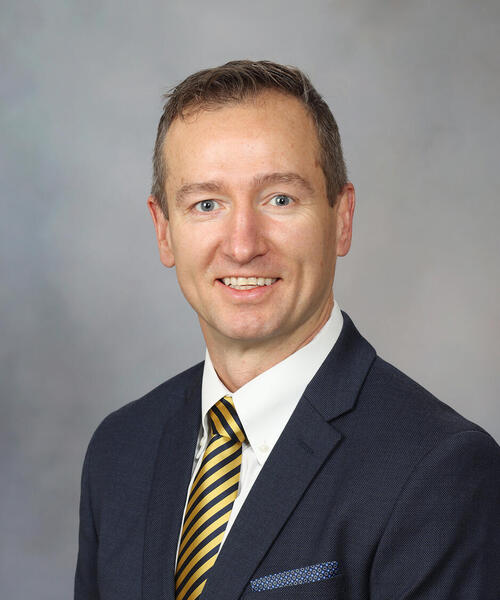
Bradley J. Erickson, M.D., Ph.D. Bradley J. Erickson is a Professor of Radiology and Consultant at the Mayo Clinic in Rochester, Minnesota. He holds a joint appointment in the Division of Biomedical Statistics and Informatics. His research focuses on quantitative imaging, computer-aided diagnosis, and deep learning applications in medical imaging. He has pioneered systems for team science integration across imaging, genomics, and clinical data. Education MD/PhD in Biophysics/Biomedical Engineering, Mayo Graduate School Residency in Diagnostic Radiology, Mayo Clinic Research Interests Erickson's work emphasizes extracting diagnostic and prognostic information from medical images using machine learning and AI. Key areas include: Polycystic Kidney Disease (PKD) progression analysis via imaging Development of explainable AI models for cancer diagnosis (e.g., hepatocellular carcinoma) Privacy-preserving LLMs for echocardiography reports Awards & Recognition Team Science Award, Mayo Clinic (2020) Samuel J. Dwyer III, Ph.D., FSIIM Memorial Lectureship (2013) Chair, American Board of Imaging Informatics (2013–2018) Grants & Projects Principal Investigator for NIH-funded projects on synthetic medical images in AI fairness (2024–2025) Mayo Translational PKD Center (2010–2020) Objective decision support for clinical trials (2012–2015) Labs & Affiliations He leads the Imaging and Analysis Core within the Mayo Clinic Pirnie Translational PKD Center. Collaborates with teams in computational biology, radiology informatics, and clinical trials.
Eric W. Klee, Ph.D., is a Professor of Biomedical Informatics at Mayo Clinic, leading translational research in omics data integration and precision medicine. He holds key roles including Scientific Director of Research Data and Digital Innovation, Enterprise Co-Leader of Cancer Informatics & Data Science at the Mayo Clinic Comprehensive Cancer Center, and Director of Digital Omics in the Center for Individualized Medicine. His work focuses on rare disease diagnosis, genomic data infrastructure, and machine learning applications in healthcare. Education: Ph.D. in Health Informatics, University of Minnesota MS in Health Informatics, University of Minnesota BS in Electrical Engineering, Iowa State University Research Interests: Dr. Klee’s research integrates multi-omics profiling, AI-driven analytics, and cloud-based platforms to advance diagnostics and treatment for rare genetic disorders. He leads initiatives like RADIaNT (RNA sequencing for rare diseases), SAVI (automated variant interpretation), and RENEW (continuous genomic data reanalysis). His work bridges lab discoveries with clinical practice, emphasizing precision medicine and scalable genomic solutions. Publications Trends: His recent work highlights RNA-based diagnostics, AI in variant prioritization, and infrastructure for population-level genomic screening. Key areas include drug repositioning for tobacco dependence and molecular mechanisms of Mendelian diseases. Awards: Research Award from the Minnesota Partnership for Biotechnology and Medical Genomics (2023) Advising & Grants: Leads the Mayo Clinic’s Digital Omics initiative and co-leads cancer informatics efforts. His lab collaborates on NIH-funded studies and industry partnerships to translate genomic insights into clinical tools. Labs/Teams: Directs the Advanced Diagnostics Laboratory’s bioinformatics team and chairs the Undiagnosed Diseases Network International board, fostering global rare disease research collaboration.
Professor Stefano Romeo leads the Human Translational Genetics group at Karolinska Institutet's Department of Medicine, Huddinge, where his research bridges genetics, metabolism, and clinical medicine to address metabolic diseases. His work focuses on uncovering genetic and molecular mechanisms underlying liver diseases, diabetes, and cardiovascular conditions through innovative translational approaches. Professor Romeo's research has significantly advanced our understanding of metabolic dysfunction-associated steatotic liver disease (MASLD), identifying key genetic variants including PNPLA3 and MBOAT7 genes. He pioneered the development of multilineage 3D in vitro models for fatty liver disease and discovered a protective genetic variant in the PSD3 gene. His landmark achievement is the identification of two distinct MASLD types with different cardiometabolic risk profiles using compartmentalized polygenic risk scores, which has major implications for targeted treatment approaches. In cardiovascular research, Professor Romeo has developed machine learning algorithms for diagnosing familial hypercholesterolemia and elucidated the role of lipoprotein(a) as an independent cardiovascular risk factor. His integrated approach combines genomics, bioinformatics, molecular biology, and clinical investigations to translate discoveries into practical applications. Research Focus Areas: Genetic basis of metabolic liver diseases Cardiometabolic risk stratification 3D disease modeling and therapeutic testing Polygenic risk scoring for precision medicine Molecular pathways in lipid metabolism Professor Romeo's work has resulted in numerous high-impact publications in journals including Nature Medicine and Journal of Hepatology, demonstrating his leadership in translating genetic insights into improved disease prediction, prevention, and therapeutic outcomes for patients with metabolic disorders.
Achim Kramer serves as Professor of Chronobiology (W2, tenured) at Charité - Universitätsmedizin Berlin, where he chairs the independent Research Unit for Chronobiology within the Institute of Medical Immunology. His academic career spans molecular chronobiology research and teaching since 2002, with significant contributions to understanding circadian clock mechanisms in mammals. His educational background includes a Biochemistry degree from Freie Universität Berlin (1988-1993), a Ph.D. in Biochemistry (summa cum laude, 1996) from Humboldt Universität zu Berlin, and piano training at Berlin's Hochschule der Künste (1990-1994). Postdoctoral work included research at Harvard Medical School (1999-2001) under Charles Weitz and positions at IRBM Rome and Charité. Dr. Kramer's research centers on molecular mechanisms of circadian clocks, with expertise in protein interactions (CRY1-PER2), post-translational modifications, peripheral tissue clocks (macrophages, skin), and translational applications like circadian blood biomarkers. His work bridges structural biology, immunology, and sleep medicine to address how biological timing affects health and disease. Analysis of his publications reveals consistent focus on circadian molecular machinery across diverse biological contexts, with increasing translational emphasis in recent years on diagnostic applications and tissue-specific clock functions. His structural work on cryptochromes and phosphorylation mechanisms underpins fundamental understanding of clock regulation. Key honors include the Heinz-Maier-Leibnitz Award (DFG, 2002), Brooks Fellowship (Harvard, 2001), multiple Teaching Awards for Medical Neurosciences (2010-2015), and a Young Researcher's Award from Charité (1998). He leads the Chronobiology Research Unit within Charité's Institute of Medical Immunology, participating in the SFB/TRR186 consortium on molecular switches. His service includes chairing the 2015 Gordon Research Conference on Chronobiology, editorial roles at PLoS Genetics and Journal of Biological Rhythms, and leadership positions in the Society for Research on Biological Rhythms and European Biological Rhythms Society.
Fahad Mostafa is an Assistant Professor of Statistics and Health Data Science at Arizona State University , specializing in biomedical data science, machine learning, and statistical modeling. His work focuses on high-dimensional biomedical data analysis for disease diagnosis and drug design. M.S. and Ph.D. in Statistics from Texas Tech University B.S. in Mathematics and M.S. in Applied Mathematics from Dhaka University Research Interests: Development of machine learning/AI models for biomedical applications Statistical uncertainty quantification (UQ) in cancer genomics and infrared tomography Computational biology and epidemiology using EHR and medical imaging data High-dimensional data-driven modeling for disease prediction and treatment monitoring Scientific Appointments: Postdoctoral Research Scientist in Biostatistics at University of Colorado School of Medicine (CU Anschutz) Biostatistical Consultant at TTUHSC and NEM Research Institute (Rutgers NJMS) Honors: ORISE Fellow in Machine Learning at NCTR, FDA
Line Katrine Harder Clemmensen is a Professor at the Department of Mathematical Sciences, University of Copenhagen. She specializes in statistical modeling, machine learning, and AI, with emphasis on low resource domains, explainability, and fairness in health/life science applications. She co-founded Interhuman AI as Chief Scientific Officer and maintains an active research program across multiple disciplines. Statistical Modeling Machine Learning Explainable AI Fairness in AI Health/Life Science Applications Her recent publications (2024-2025) span computational biology, neuroscience, environmental science, and emotion recognition. Notable collaborations include interdisciplinary work in pediatric OCD analysis, fungal microbiome prediction, and facial emotion recognition systems. She actively explores fairness and scalability in AI models. Dr. Clemmensen holds 60 publications with significant impact across computational biology (40+ citations), neuroscience (68+ readers), and machine learning (20+ Scopus citations). She has been referenced in news outlets, blogged, and discussed across multiple social platforms.
Miquel Moreto Planas is a Senior Lecturer in the Department of Computer Architecture at the Barcelona School of Informatics, Universitat Politècnica de Catalunya (UPC). He is also affiliated with the Barcelona Supercomputing Center (BSC-CNS), a leading institution in high-performance computing. His academic profile is deeply rooted in computer architecture and high-performance computing, with a strong emphasis on practical and theoretical advancements in multicore systems, memory management, and hardware acceleration. His research interests span a wide range of topics including computer architecture, high-performance computing, multicore and manycore systems, cache and memory management, hardware acceleration for genomics and AI, RISC-V processor design, processing-in-memory, interconnection networks, and real-time systems. These interests are reflected in his extensive publication record and collaborative projects. The most recent articles highlight a significant trend toward interdisciplinary research, particularly the application of advanced computer architecture techniques to bioinformatics and healthcare. Key themes include the acceleration of genomic sequence alignment using novel hardware such as processing-in-memory, the development of benchmarks for ARM-based HPC systems in genomics, and the creation of AI-based 3D decision support tools for neurosurgical applications. His work also continues to advance core computer architecture topics like cache management, power-aware resource allocation in heterogeneous systems, and the design of secure, post-quantum cryptographic hardware based on RISC-V. Fulbright Award 2011 HiPEAC Paper Award HiPEAC Paper Award 2024 HiPEAC Paper Award Moreto has been a principal investigator or key contributor to multiple competitive R&D+i projects, such as the STRATUM project for neurosurgical tools, REDIOH for open hardware, and the Laboratorio Zettaescala de Barcelona. He has advised several doctoral students, including López, G., Kostalampros, I., and Haghi, A., and is a core member of the CAP (High Performance Computing) research group at UPC. His work is characterized by strong collaborations with leading researchers like Mateo Valero, Eduard Ayguadé, and Jesús Labarta, often bridging the gap between UPC and BSC-CNS. His laboratory and team affiliations are centered around the CAP group and the Barcelona Supercomputing Center, where he contributes to cutting-edge research in high-performance and embedded computer architectures. His recent work on the BIMSA accelerator and the STRATUM project demonstrates a clear future direction toward applying high-performance computing solutions to critical problems in genomics and medicine.
Prof. Mile Šikić is a Full Professor at the Department of Electronic Systems and Information Processing, Faculty of Electrical Engineering and Computing (University of Zagreb). His research spans computational biology, genomics, and machine learning applications in sequencing technologies. Focus on nanopore sequencing analysis, genome assembly, and protein interaction prediction Developed tools like GraphMap , RiNALMo , and Orthobalancer Active in metagenomics, RNA structure prediction, and CUDA-based algorithm acceleration Scientific contributions include: Advances in de novo genome assembly for error-prone long reads Deep learning models for base modification detection Efficient algorithms for sequence alignment and similarity searches Technical implementations cover: GPU-accelerated sequence alignment libraries (e.g., SW# ) Web platforms for comparative protein analysis Simulation tools for epidemic spread on complex networks
Donald E. Brown is the W.S. Calcott Professor in the Systems and Information Engineering Department at the University of Virginia, serving as Founding Director of the Data Science Institute and Co-Director of the Translational Health Institute of Virginia. He holds a B.S. from the United States Military Academy (1973), M.S. and M.E. from UC Berkeley (1979), and a Ph.D. from the University of Michigan (1985). His research focuses on data fusion, knowledge discovery, and predictive modeling with applications in healthcare, security, and safety. Dr. Brown leads over 90 federal/state/private research projects, publishes extensively (120+ papers, 2 books), and is a Fellow of the IEEE. He has received prestigious awards including the Norbert Wiener Award and IEEE Millennium Medal. His work bridges academia and industry through Commonwealth Computer Research, Inc., providing data analysis services. He advises on national committees including the National Research Council and the NRC Committee on Transportation Security. His teaching excellence was recognized by students three times as 'best undergraduate teacher' (2001–2003). Research Interests: Data Fusion, Knowledge Discovery, Simulation Optimization, Machine Learning, Predictive Analytics Publications: Focus on healthcare analytics (e.g., Long COVID, tuberculosis, histopathology), AI-driven medical imaging (capsule endoscopy, eosinophil segmentation), and cybersecurity applications. Awards: IEEE Joseph Wohl Career Achievement Award (2017), Governor's Technology Award (1999), Norbert Wiener Award (2002). Grants/Projects: Over 90 funded projects on data science, healthcare tech, and security systems. He leads interdisciplinary initiatives like the iTHRIV Commons for health data sharing and develops AI tools for medical diagnostics at UVA. Current work includes AI in cardiovascular disease prediction, perioperative data digitization for LMICs, and real-time anomaly detection in healthcare systems.
Prof. Kenneth Guang-Lih Huang is the Dean's Chair and Full Professor at National University of Singapore (NUS), holding dual appointments in the Department of Industrial Systems Engineering and Management (ISEM) and the Department of Strategy and Policy (NUS Business School). He is the Academic Director of the Master of Science in Management of Technology and Innovation (MOTI) program. His research focuses on innovation management, AI strategy, intellectual property, and institutional change in emerging economies like China and ASEAN. He has published in top journals such as Science, Strategic Management Journal, and Management and Organization Review, and his work has been featured in global media including Reuters and MIT Technology Review. Education: Ph.D. (Technology Management and Policy, MIT), M.S. (Technology and Policy, MIT), B.S. (Biomedical Engineering & Electrical Engineering, Johns Hopkins University). Research Interests: Innovation strategy, AI/ML applications, intellectual property management, entrepreneurship, global strategy, science policy, and institutional analysis in transitional economies. Teaching: Designs courses on IP Management, Technology Strategy, and Entrepreneurship for graduate and executive programs. Recognized with prestigious awards including the NUS Annual Teaching Excellence Award (2024) and multiple teaching honors from NUS and Singapore Management University. Awards: AOM Best Paper Awards, SMS Fellowships, DRUID grants, and INFORMS recognition for contributions to innovation research. Serves on editorial boards of top journals and advises firms like IBM, Singtel, and the Singapore Intellectual Property Office. Professional Roles: Deputy Editor of Management and Organization Review , advisor to the Economist Intelligence Unit, and frequent keynote speaker at global conferences.
Ross Waller is a researcher at the Department of Biochemistry , University of Cambridge, focusing on the molecular evolution and cell biology of protists, particularly within the Alveolata infrakingdom. His work spans apicomplexan parasites (Plasmodium, Toxoplasma), dinoflagellate symbionts, and ciliates, investigating their subcellular organization, endosymbiotic partnerships, and genomic adaptations. His research provides critical insights into eukaryotic evolution and parasitism. Key research areas include: Adaptations in apicomplexan parasites for host exploitation Molecular processes of endosymbiont establishment Chromatin management in dinoflagellates without histones Cell biological innovations in coral-associated dinoflagellates Recent publications highlight advancements in understanding plastid evolution, secretory organelle dynamics, and metabolic adaptations across parasitic and symbiotic protists. The Waller Group is actively recruiting interns and researchers interested in experimental cell biology of marine protists.
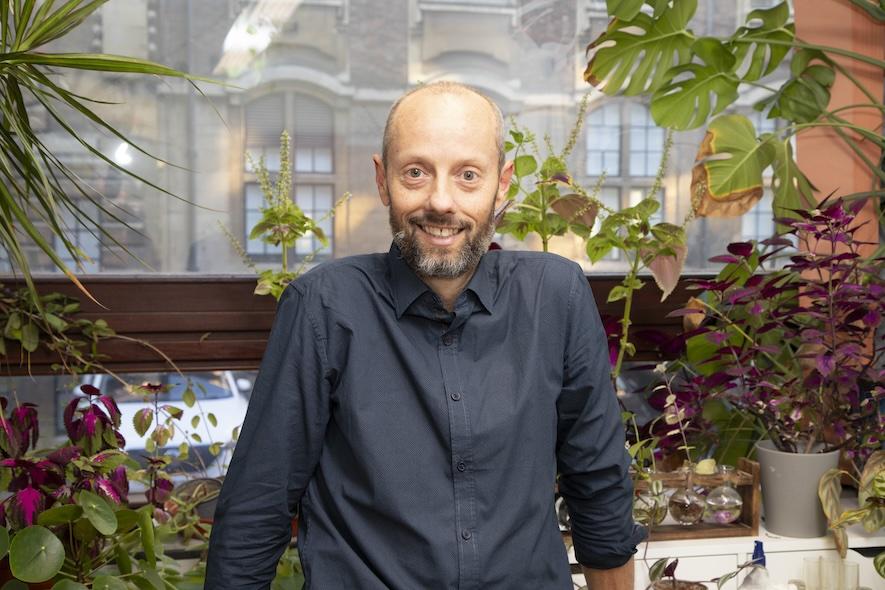
Siegfried Nijssen is an Assistant Professor of Data Mining and Artificial Intelligence at the Catholic University of Louvain (UCLouvain) in Belgium, working within the ICTEAM research institute's Artificial Intelligence and Algorithms group. He has been at UCLouvain since 2016, previously serving as an Assistant Professor at University Leiden (2012-2016) and completing postdoctoral work at KU Leuven (2006-2015). He earned his PhD in Computer Science from University Leiden in 2006. His research focuses on making data analysis simpler through intersections between pattern mining, exploratory data analysis, and programming paradigms in Artificial Intelligence, particularly constraint programming and probabilistic programming. He has developed techniques for analyzing diverse data types including graphs, networks, and multi-relational data. His work bridges theoretical foundations with practical applications in decision tree learning, probabilistic networks, and source code analysis. Nijssen's recent publications demonstrate a strong focus on optimal decision trees, constraint-based pattern mining, and applications in bioinformatics and education. His research shows consistent evolution from foundational graph mining work (including the Gaston algorithm developed in 2004) to current work integrating machine learning with constraint programming for interpretable AI solutions. As an educator, he teaches courses including Mining Patterns in Data, Databases, and Artificial Intelligence and Machine Learning seminars at UCLouvain. He has advised numerous PhD students and postdocs, primarily in collaboration with Pierre Schaus, with former students like Tias Guns now holding professorships.
Tade Souaiaia serves as Assistant Professor of Cell Biology at SUNY Downstate Health Sciences University's School of Graduate Studies. His research integrates computational biology with mental health investigations, focusing on gene expression dynamics in development and psychiatric disorders. He teaches graduate-level statistics and algorithm analysis courses delivered virtually via YouTube. Dr. Souaiaia's primary research centers on computational method development for multi-omics integration (gene expression, isoform-level data, microRNA, ChIP-Seq) to unravel schizophrenia etiology. His secondary research applies kinematic modeling to athletic performance (sprint/long jump), connecting cellular mechanisms with environmental training models. This dual focus bridges molecular neuroscience with practical biomechanics applications. Analysis of his 2020-2025 publications reveals three dominant research trajectories: (1) Psychiatric genetics through multi-ancestry studies of autism/schizophrenia, (2) Polygenic risk score innovation (notably BridgePRS for cross-ancestry portability), and (3) Primate neurogenomics investigating anxious temperament via orbitofrontal cortex and amygdala transcriptomics. His work consistently emphasizes translational applications of computational genomics to mental health. No scientific awards were documented in the provided materials. Dr. Souaiaia teaches Scientific Computing in Python (GRSC 6974) and Graduate Statistics (GRSC 0120), with virtual instruction accessible on YouTube. While specific grant details and student advising records are unreported, his laboratory actively develops computational frameworks for psychiatric genomics. His research program demonstrates strong interdisciplinary collaboration between neuroscience, psychiatry, and bioinformatics teams. He leads a research laboratory specializing in computational analysis of multi-omics datasets, with particular emphasis on primate brain tissue studies. The lab develops novel algorithms for integrating genomic, transcriptomic, and epigenomic data to model mental health disorders, maintaining active partnerships with neuroscience and clinical psychiatry research groups.
Huanhuan CUI is a Research Associate Professor in the Department of Biology within the School of Life Sciences at Southern University of Science and Technology (SUSTech) in Shenzhen, China. She joined SUSTech in December 2018 and serves as a master's supervisor, contributing to both research and graduate education in molecular biology and genetics. Educational Background: PhD in Biology, Free University of Berlin (2011.09-2016.04) MS in Animal Genetics, Northwest A&F University (2008.09-2010.06) BE in Bioengineering, Northwest A&F University (2004.09-2008.06) Dr. CUI's research focuses on the mechanisms and method development of gene transcription and epigenetic regulation, with particular emphasis on RNA translation control. Her work spans multiple biological systems including cancer biology, developmental biology, and cardiovascular research, demonstrating a strong interdisciplinary approach that integrates molecular biology, genomics, and bioinformatics techniques. She has made significant contributions to understanding chromatin remodeling, transcriptional regulation, and RNA processing mechanisms. Dr. CUI's publication record shows a consistent trajectory of high-impact research, with publications in prestigious journals including Nature Communications, Nucleic Acids Research, and Cellular & Molecular Immunology. Her work demonstrates expertise in CRISPR-based technologies, epigenetic regulation, and multi-omics approaches to studying complex biological processes. Before joining SUSTech, Dr. CUI held positions as a Clinical Research Manager at BGI Genomics (2017.09-2018.11), a PostDoc at Charite Universitaetsmedizin Berlin (2016.05-2017.06), and a Research Assistant at Humboldt University of Berlin (2010.09-2011.08), building a diverse research background that bridges basic science and clinical applications.