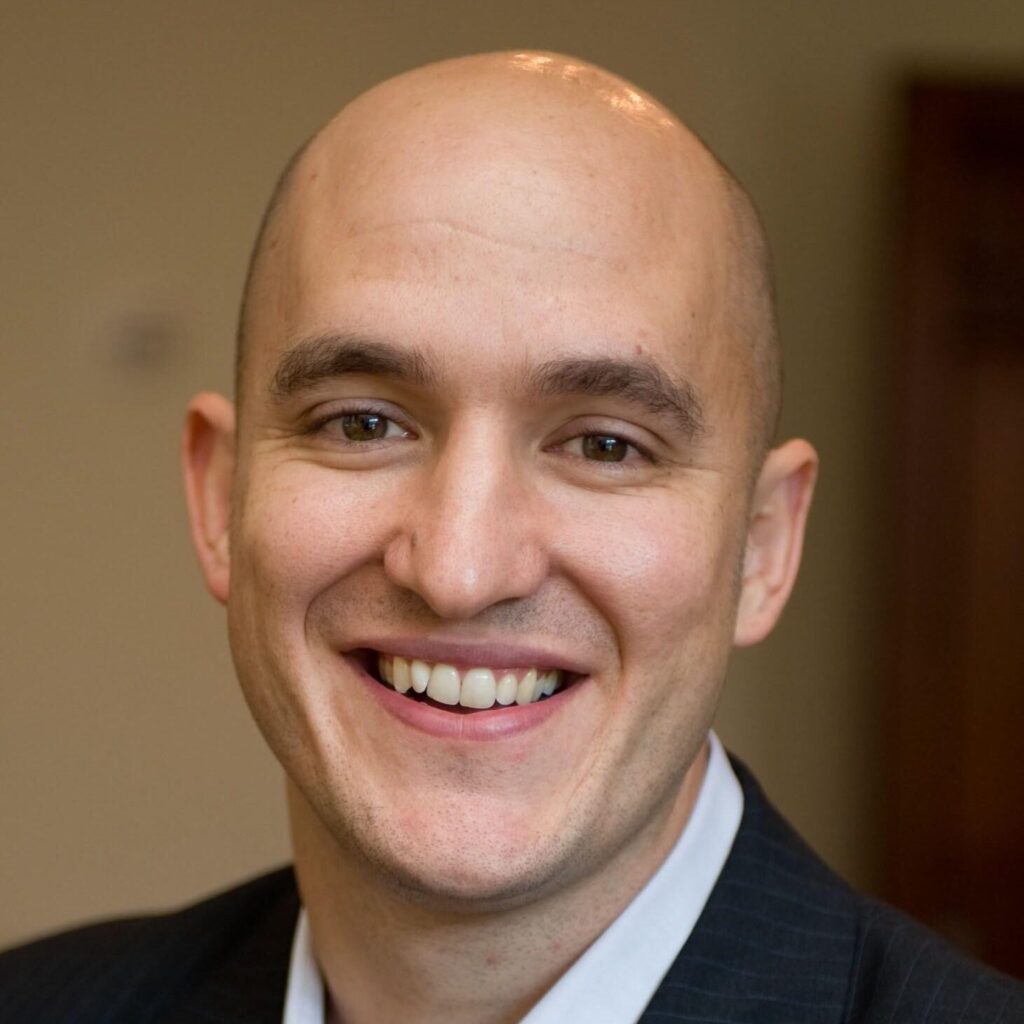
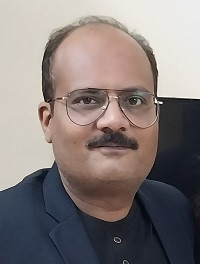
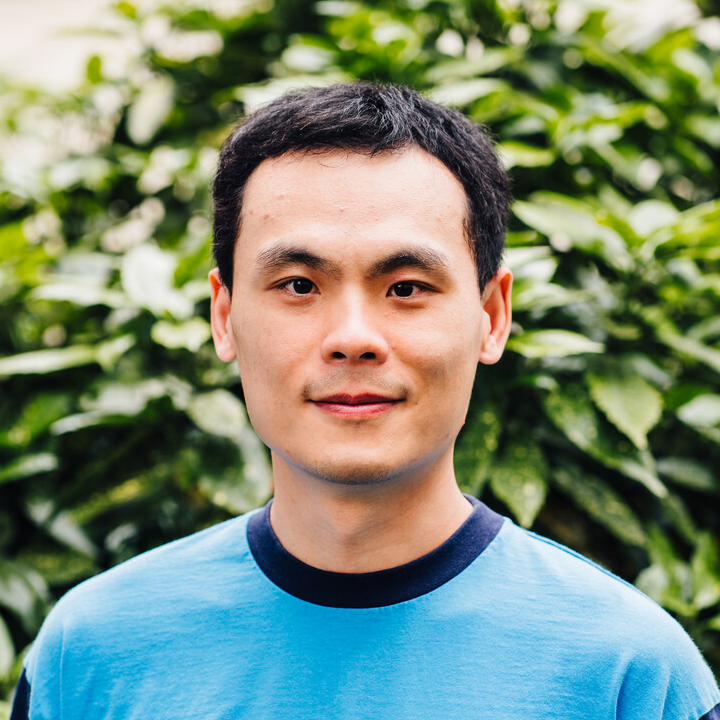
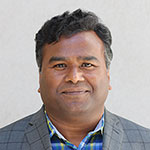
Todd Rogers is the Weatherhead Professor of Public Policy at the Harvard Kennedy School of Government , with dual appointments at Harvard University. He co-founded the social enterprises Analyst Institute (serving on its board) and EveryDay Labs (as Chief Scientist). At Harvard, he directs the Behavioral Insights Group and chairs the executive education program Behavioral Insights and Public Policy . He also holds affiliations as Senior Scientist at ideas42 and Academic Advisor at the Behavioural Insights Team . His education includes a joint Ph.D. from Harvard’s Psychology Department and Harvard Business School, and a B.A. in Religion and Psychology from Williams College. Education: Ph.D. in Psychology & Harvard Business School B.A. in Religion & Psychology, Williams College Todd Rogers specializes in behavioral science with applications to student attendance , democracy strengthening , and communication optimization . His research bridges behavioral economics, public policy, and education, focusing on scalable interventions like automated reminders and communication redesign. His work addresses truancy reduction , voter behavior , health compliance , and decision-making biases . Todd’s recent publications emphasize behavioral interventions in education and health, communication simplification , and technology-driven nudges . Key themes include student absenteeism , vaccination compliance , AI-assisted writing , and behavioral barriers in policy implementation . His studies often leverage randomized controlled trials and large-scale field experiments to evaluate the effectiveness of behavioral tools like SMS reminders, commitment devices, and normative feedback. Leadership Roles: Co-founder & Equity Holder, Analyst Institute Co-founder, Chief Scientist (unpaid), EveryDay Labs Faculty Director, Behavioral Insights Group Senior Scientist, ideas42 Academic Advisor, Behavioural Insights Team
Ozgur S. Oguz is an Assistant Professor at Bilkent University , Faculty of Computer Engineering, and the lead of the Learning for Intelligent Robotic Agents (LiRA) Lab . His research focuses on enhancing autonomous agents' capabilities in learning, reasoning, and planning, particularly for robotics applications. Education : PhD in Computer Science from TU Munich , studies at University of British Columbia (UBC) and Koç University , postdoctoral work at University of Stuttgart and Max Planck Institute for Intelligent Systems . His research explores algorithms for autonomous decision-making, with emphasis on deep learning , reinforcement learning , and robotics . Recent work includes diffusion-based reinforcement learning , hindsight experience prioritization , and hybrid manipulation planning , often addressing challenges in sequential task execution and tactile-based control. Key trends in his publications revolve around robotic manipulation , motion planning , and human-robot interaction . He has contributed to conferences like NeurIPS , ICRA , IROS , and journals such as IEEE TRO and Scientific Reports .
Martin Ringbauer is an Associate Professor at the Department of Experimental Physics , University of Innsbruck . His research focuses on advancing quantum computing and quantum simulation through innovative applications of trapped ion qudits and high-dimensional quantum systems . Affiliation: Department of Experimental Physics, University of Innsbruck Research Areas: Lattice gauge theories, symmetry-protected topological phases, quantum verification protocols, and fidelity estimation Key Contributions: Development of qudit-based quantum processors for simulating complex physics, experimental demonstrations of quantum error correction and joint measurements His recent publications highlight advancements in quantum simulation (lattice gauge theories, Haldane phases), quantum verification (fidelity estimation, classical validation), and qudit engineering (mixed-dimensional frameworks, entanglement optimization). These works leverage trapped ion technology as a platform for scalable and precise quantum operations.
Dr. Manav R. Bhatnagar serves as a Professor and Brigadier Bhopinder Singh Chair Professor in the Department of Electrical Engineering at Indian Institute of Technology Delhi. He ranks #517 globally in Networking & Telecommunications among the top 2% scientists worldwide according to Stanford University and is a Fellow of INAE, NASI, IET(UK), IETE, and OSI. His academic credentials include a Ph.D. in Signal Processing for Communications from University of Oslo (2008), M.Tech. in Communications Engineering from IIT Delhi (2005), and B.E. in Electronics from North Maharashtra University (1997). He has held visiting appointments at prestigious institutions including Aalto University (Finland), University of Rennes (France), University of Oslo, Indian Institute of Science Bangalore, and University of Minnesota. Dr. Bhatnagar's research spans cutting-edge domains including 5G/6G communication, optical wireless communication, quantum communication, molecular communication, power line communication, and machine learning applications. His work demonstrates significant interdisciplinary connections between communication theory, signal processing, and emerging technologies. His publication record shows a strong focus on wireless and optical communication systems, with recent work addressing challenges in jamming detection, quantum relay systems, IRS-assisted communication, and game-theoretic approaches to resource allocation. His research consistently bridges theoretical foundations with practical applications in next-generation communication systems. NASI-Scopus Young Scientist Award Shri Om Prakash Bhasin Award (2016) Dr. Vikram Sarabhai Research Award (2017) BASIC RESEARCH AWARD of IIT Delhi (2023) Sir Visvesvaraya Young Faculty Research Fellowship (2016) Senior Member of IEEE As an academic advisor, Dr. Bhatnagar has mentored numerous PhD students who have gone on to successful careers at institutions including IIT Jodhpur, IIT Roorkee, Aalto University, and IIT Kanpur. His editorial roles include current Editor of IEEE Transactions on Communications and former Editor of IEEE Transactions on Wireless Communications (2011-2014). His textbook "Telecommunication Switching Systems and Networks" has become a standard reference in the field.
Dikai Liu is a Distinguished Professor and Strategic Research Director at the University of Technology Sydney (UTS), Australia, within the School of Mechanical and Mechatronic Engineering . His work spans field robotics and human-robot collaboration (HRC) , focusing on autonomous systems for infrastructure maintenance, construction automation, and underwater operations. Key research areas: Robotics, Human-Robot Interaction, Bio-Inspired Design, Infrastructure Maintenance Recent publications highlight innovations in trust modeling for HRC, stiffness control in continuum robots, and sociotechnical frameworks for AI-driven robotic systems. His 15 most recent articles emphasize applications in bridge maintenance, construction automation, and ethical AI integration. Awards include the 2019 UTS Medal for Research Impact, ASME DED Leonardo da Vinci Award (USA), and multiple engineering excellence recognitions. His research has generated over $22M in external funding, including 13 ARC grants and industry partnerships.
Adilson Motter is the Charles E. and Emma H. Morrison Professor of Physics and Astronomy and (by courtesy) Engineering Sciences and Applied Mathematics at Northwestern University. He serves as Director of the Center for Network Dynamics (CND) and has been a faculty member since March 2006. His academic appointments include affiliations with the Chemistry of Life Processes Institute (CLP), Molecular Biophysics Program, NSF-Simons National Institute for Theory and Mathematics in Biology (NITMB), Paula M. Trienens Institute for Sustainability and Energy, Graduate Program in Applied Physics, Center for Interdisciplinary Exploration and Research in Astrophysics (CIERA), Institute for Quantum Information Research and Engineering (INQUIRE), and Northwestern Institute on Complex Systems (NICO). Professor Motter received his Ph.D. in 2002 from UNICAMP (University of Campinas), Brazil, where he worked with Professor Patricio S. Letelier. Prior to joining Northwestern, he held positions as Guest Scientist at the Max Planck Institute for the Physics of Complex Systems in Germany and as Director's Funded Postdoctoral Fellow at the Center for Nonlinear Studies at Los Alamos National Laboratory. Professor Motter's research focuses on the dynamical behavior and control of complex systems and networks. His work spans theoretical and computational approaches to understanding phenomena in physical, biological, and engineered systems. Key research areas include: Cascading dynamics and network resilience Spontaneous synchronization and symmetry phenomena Network control theory and applications Quantum networks and information transfer Machine learning applications to network science Data-driven discovery in complex systems Applications to quantitative biology, biomedical research, renewable energy, smart power grids, microfluidics, and metamaterials Analysis of Professor Motter's recent publications reveals a strong interdisciplinary focus spanning physics, engineering, biology, and computer science. His work demonstrates consistent innovation in network science, with recent contributions advancing quantum networking architectures, understanding power grid limitations for electric vehicle integration, developing machine learning approaches for genetic analysis, and exploring fundamental synchronization phenomena. A notable trend is the increasing application of his theoretical frameworks to real-world challenges in energy systems, biomedical research, and quantum information technology. Professor Motter has received numerous prestigious awards and honors: Alfred P. Sloan Research Fellowship (2009) Weinberg Award for Excellence in Mentoring Undergraduate Research (2009) Northwestern-Argonne Early Career Investigator Award for Energy Research (2010) NSF Faculty Early Career Development (CAREER) Award (2011) Erdös-Rényi Prize in Network Science (2013) Fellow of the American Physical Society (2013) Simons Foundation Fellowship in Theoretical Physics (2015) Fellow of the American Association for the Advancement of Science (2015) Scialog Fellow (2015) Outstanding Referee, American Physical Society (2016) Fellow of the Network Science Society (2020) Senior Scientific Award, Complex Systems Society (2022) Professor Motter has demonstrated exceptional commitment to mentoring, as evidenced by the Weinberg Award for Excellence in Mentoring Undergraduate Research. His research group has received significant funding through multiple NSF grants, including his CAREER award, and collaborations with Argonne National Laboratory. Current research directions include mechanical metamaterial networks, quantum network science, and other areas of complex systems. The group has been actively recruiting postdoctoral researchers and has seen students recognized with awards and research grants. As Director of the Center for Network Dynamics (established September 2023), Professor Motter leads a multidisciplinary team exploring network phenomena across various domains. The Center has hosted significant events including the 'Brain Architecture and Computing 2024' workshop and is organizing the 2025 CDC Workshop on Neurocomputation and Dynamics in Rio de Janeiro. The Motter Group maintains active collaborations with experimentalists and researchers from diverse disciplines, facilitating the translation of theoretical insights into practical applications.
Edgar Weippl is a Professor at the Faculty of Computer Science, University of Vienna, where he serves as Vice Dean and Head of the Research Group Security and Privacy. His work spans cybersecurity, blockchain, and machine learning, with teaching roles in information security and software security courses. Current Positions: Vice Dean (Faculty of Computer Science), Head (Security and Privacy Research Group), Deputy Head (Neuroinformatics & Knowledge Engineering Groups) Research Interests: Cybersecurity, blockchain, IoT security, code obfuscation, privacy technologies, reinforcement learning, and socio-technical systems security Selected Publications: Focus on blockchain privacy, VoWiFi security, code obfuscation, and reinforcement learning applications
Hongkai Wen is a Professor (Chair in Machine Learning Systems) in the Department of Computer Science at the University of Warwick, UK. He holds dual appointments as a Fellow of the Alan Turing Institute (serving as Independent Scientific Advisor for BridgeAI and member of Turing Research Ethics team) and previously worked as Senior Research Scientist at Samsung AI Centre Cambridge and postdoctoral researcher at Oxford University. Education: Computer Science, Keble College, University of Oxford Research Focus: Develops intelligent multi-modal perception systems for real-world deployment with extreme computational efficiency. Core expertise spans ML systems optimization, neural architecture search, and cross-disciplinary applications in robotics, urban mobility, and wearable/IoT security. Pioneered event-based vision techniques and training-free NAS frameworks. Publication Trends: Recent work (2023-2025) demonstrates accelerating innovation in diffusion model efficiency, on-device AI deployment, and sensor fusion techniques. Dominant themes include computational resource optimization for edge devices, multi-modal temporal modeling, and privacy-preserving spatial analytics, with significant contributions to NeurIPS, ICML, and CVPR venues. Scientific Recognition: Best Paper Award, AutoML Conf 2023 (T-CET) Best Paper Runner-up, SenSys 2024 (AdaFlow) Best Paper Awards: IPSN 2014 & EWSN 2013 1st/2nd Place, Zero Cost NAS Competition (AutoML'22) Mentorship & Funding: Actively supervises PhD candidates through thesis committees at Warwick, Ulster, and Queensland universities. Secured National AI Strategy Fund for Macro Neural Architecture Search research. Recruits annually for PhD positions with scholarships from UKRI, Turing Institute, and industry partnerships. Research Leadership: Heads the AI/ML Systems (AMS) Division at Warwick, directing a 15+ member team developing deployable ML frameworks for mobile/robotic platforms. Maintains active collaborations with Samsung AI Centre and Turing Institute's BridgeAI programme on ethical AI deployment.
Sebastien Nicolas Gros is a Professor at the Department of Engineering Cybernetics, Norwegian University of Science and Technology (NTNU). His research focuses on safe reinforcement learning (RL) and data-driven model predictive control (MPC), with applications in energy systems, biomedical engineering, and autonomous vehicles. Institution: Norwegian University of Science and Technology Department: Engineering Cybernetics His work emphasizes AI-driven optimization for domestic energy storage, battery integration, and smart building management. Collaborations include Equinor, DNV, Kongsberg, Volvo, and CorPower Ocean. Key themes in his publications include: Control theory for renewable energy systems (wave energy converters, buildings) Biomedical applications (artificial pancreas, glucose monitoring) Transportation systems (electric vehicles, autonomous ships) Machine learning integration with physical models He supervises 6 PhD students and co-supervises projects on multi-rotor wind turbines and industrial PhD collaborations. The articles demonstrate a convergence of RL, MPC, and uncertainty quantification across energy, biomedical, and transportation domains.
Xiaobo Li is a Professor in the Department of Bio-Medical Engineering at New Jersey Institute of Technology. Holding a Ph.D. in Computer Aided Geometric Design from the University of Birmingham and a B.S. in Automation from Nanjing University of Aeronautics, their research bridges computational methods with neuroimaging and psychiatric disorder analysis. Ph.D., University of Birmingham (Computer Aided Geometric Design, 2004) B.S., Nanjing University of Aeronautics (Automation, 1999) Dr. Li’s work focuses on applying machine learning and graph theory to understand brain network abnormalities in conditions like ADHD , schizophrenia , and traumatic brain injury . Their studies analyze structural-functional connectivity , reward processing , and gut-brain axis interactions using fMRI , fNIRS , and diffusion tensor imaging . Recent publications highlight their development of tools like the GAT-FD MATLAB toolbox for brain network analysis and their exploration of multimodal MRI in schizophrenia diagnosis. They also investigate the neurobiological effects of photobiomodulation and vision therapy interventions.
Prof. Dr. Jens Eisert is a Professor at the Free University of Berlin, where he leads the Quantum Many-Body Theory, Quantum Information Theory, and Quantum Optics research group (Eisert AG) within the Institute of Theoretical Physics at the Dahlem Center for Complex Quantum Systems. His office is located at Arnimallee 14, Room 1.3.06 in Berlin-Dahlem. His research focuses on the intersection of quantum information theory and condensed matter physics, specifically exploring what information processing tasks are possible using individual quantum systems as information carriers. His group develops mathematical-theoretical foundations of quantum information, particularly in entanglement theory and tomography, while also investigating quantum optical implementations using light modes or cold atoms in optical lattices. A major emphasis of their work is on quantum many-body systems, including static properties, efficient numerical simulation methods like tensor networks, and non-equilibrium quantum dynamics. Recent publications highlight significant contributions in thermalization of quantum systems (Communications Physics 2025), quantum thermodynamics (Nature Physics 2025), and quantum error correction (PRX Quantum 2025). The group's work is characterized by combining the rigor of mathematical physics with physically motivated applicability, frequently leading to direct collaborations with experimental groups. Quantum Information Theory Quantum Many-Body Theory Quantum Optics Entanglement Theory Tensor Networks Quantum Error Correction Prof. Eisert maintains active supervision of numerous PhD students and postdoctoral researchers, with research positions regularly available in areas including quantum error correction, quantum information theory, tensor networks, and quantum simulation. His group has published extensively in top journals including Nature Physics, PRX Quantum, and Physical Review series.
Dr. Shakhawat Hossain is a Professor of Statistics at the University of Winnipeg, serving as Chair starting July 2025. He holds adjunct positions at the University of Manitoba and University of Regina. His academic journey includes a PhD from the University of Windsor (2008), postdoctoral training at the University of Alberta's School of Public Health (2008–2010), and prior faculty roles at Alabama A & M University. He specializes in advanced statistical methodologies with applications in health sciences and epidemiology. Dr. Hossain's education includes: Ph.D. in Statistics, University of Windsor M.Sc. in Statistics, University of Alberta M.Sc. in Mathematics, Jahangirnagar University, Bangladesh B.Sc. (Hons.) in Mathematics, Jahangirnagar University, Bangladesh His research focuses on shrinkage estimation techniques , longitudinal data analysis , survival analysis , and health services research . He actively applies these methods to study dengue transmission dynamics, neuroimaging correlates of developmental disorders, and clinical outcomes in pediatric populations. His work bridges theoretical statistical innovation with real-world public health challenges. Dr. Hossain currently holds an NSERC Discovery Grant supporting student research. His 2023-2024 publications emphasize spatial epidemiology, advanced survival models, and dengue fever dynamics. He serves as Associate Editor of the Journal of Statistical Computation and Simulation . His advisory and grant activities include mentoring students in statistical modeling and securing funding for interdisciplinary health projects. While specific lab affiliations are not explicitly stated, his collaborations span departments in statistics, public health, and biomedical sciences.
Hans Tompits is an Associate Professor in the Department of Knowledge-Based Systems at Technische Universität Wien (Vienna University of Technology). His research focuses on computational logic, declarative logic programming, and formal methods, with a particular emphasis on Answer-Set Programming (ASP). He coordinates the Master's program in Logic and Computation and leads projects in areas such as formal methods for optimization, fault-tolerant autonomous systems, and algorithmic composition. His work bridges theoretical advancements with practical applications, including tools like SeaLion (an ASP IDE with debugging support) and dlvhex (an ASP-based semantic web reasoner). He has contributed to foundational topics like program equivalence, debugging techniques, and integration of ASP with external systems. His recent projects address challenges in autonomous vehicle architectures, music composition algorithms, and safety-critical system design. Tompits has published extensively on topics ranging from nonmonotonic reasoning and modal logics to the development of declarative programming tools. His interdisciplinary approach spans computer science, mathematics, and AI, with applications in both academic and industrial contexts.
Andrea Passerini is a Full Professor in the Department of Information Engineering and Computer Science at the University of Trento, Italy, where he also serves as Coordinator of the PhD programme in Information Engineering and Computer Science (Ministerial Decree 45/2013). His academic footprint spans multiple departments including Mathematics, Sociology, Cellular Biology, and Industrial Engineering, reflecting deep interdisciplinary engagement across computational sciences and life sciences. His research centers on Machine Learning and Data Mining with specialized expertise in Neuro-Symbolic AI , Probabilistic Reasoning , and Statistical Relational Learning . He pioneers methods for graph-based learning, medical AI applications, and explainable systems, with significant contributions to bioinformatics (particularly RNA-protein interactions) and healthcare diagnostics. His work bridges theoretical rigor with practical implementations in critical domains. Analysis of his 2025 publications reveals dominant trends in neuro-symbolic integration for graph data, human-AI collaboration in medical decision-making, and robust recommender systems. His research increasingly focuses on interpretable AI for high-stakes applications like surgical planning and physician support, while advancing foundational techniques in graph neural networks and concept-based modeling. As PhD programme Coordinator, Professor Passerini mentors doctoral candidates across AI and computer science disciplines. His collaborative network extends to medical researchers at CIBIO (Cellular, Computational and Integrative Biology department) and industrial partners, though specific lab structures aren't documented in available materials. Current projects emphasize medical AI validation, temporal network modeling, and LLM integration with structured reasoning frameworks.
Dr. Chen Wang is an Assistant Professor in the Department of Computer Science and Engineering at the University at Buffalo. He holds a PhD from Nanyang Technological University and a B.Eng from the Beijing Institute of Technology. His research focuses on robotic perception, vision, and learning, emphasizing algorithm development for autonomous systems. He is affiliated with the Spatial AI and Robotics Lab (SAIR Lab) and serves as an Associate Editor for The International Journal of Robotics Research (IJRR) and IEEE Robotics and Automation Letters (RA-L) . His work spans neuro-symbolic AI, SLAM systems, and reinforcement learning for robotics. Dr. Wang's research interests include creating efficient algorithms with theoretical guarantees, open-source distribution, and real-world validation. He has contributed to areas like visual navigation, few-shot detection, and robot autonomy frameworks. His educational background in electrical engineering and robotics underscores his expertise in bridging theory and practical applications. Notable contributions include the iWalker framework for humanoid robots, AirSLAM for visual SLAM, and SuperPC for 3D point cloud processing. His editorial roles and conference service (e.g., CVPR Area Chair) reflect his leadership in the field. The SAIR Lab under his direction advances spatial AI, robotics, and autonomous systems through interdisciplinary collaboration.