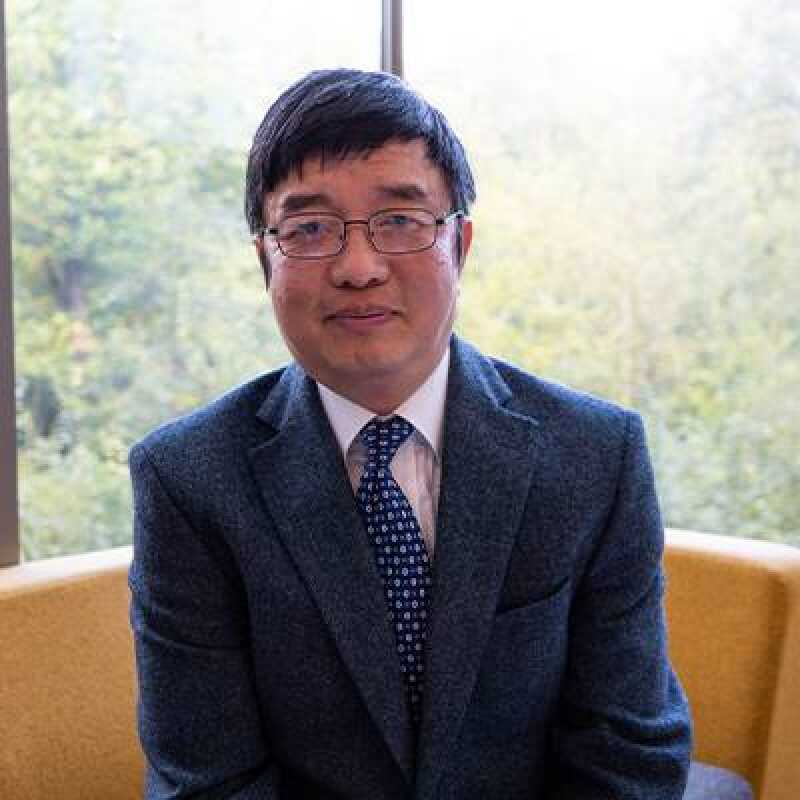
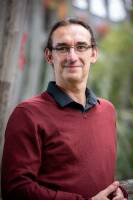
Professor Shaomin Wu is a faculty member at the University of Kent's Kent Business School, where he holds the academic rank of Professor of Business/Applied Statistics. He earned an MSc and PhD in applied statistics and has extensive industry experience, including a five-and-a-half-year stint at a global manufacturer in Shanghai before moving to the UK in 2001. He has held roles as a postdoctoral researcher and lecturer before joining Cranfield University and later the University of Kent. His research focuses on recurrent event data analysis, machine learning, and reliability mathematics, with funding from the EPSRC and ESRC. His research projects include managing risk in warranty servicing policies, smart data analytics for local government, and sustainable supply chain demand forecasting. He teaches modules such as risk analysis, reliability engineering, and machine learning. Currently supervising PhD students in time series forecasting, explainable AI, and recurrent event data analysis, he also serves as a co-chair of international conferences, editorial board member, and external examiner for doctoral degrees. Notably, he ranks among the top 2% of global scientists by Stanford University. His work integrates machine learning with business analytics, resilience engineering, and environmental sustainability. Key contributions include IoT-driven resilience methodologies for smart grids and unmanned systems, as well as frameworks for corporate carbon disclosure and maintenance optimization under uncertainty.
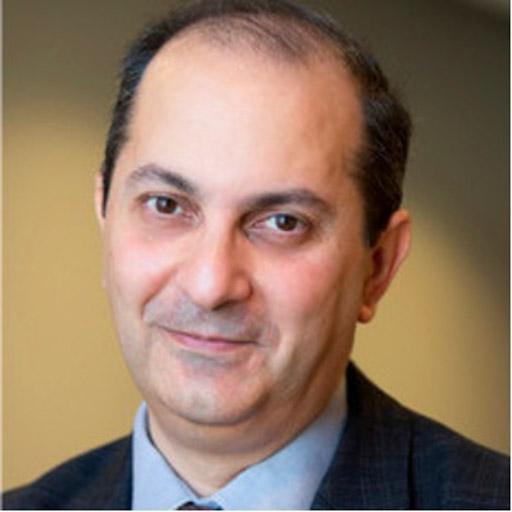
Amin Hammad is a Professor at the Concordia Institute for Information Systems Engineering, with an additional appointment as Affiliate Professor in Building, Civil, and Environmental Engineering at Concordia University. His research focuses on advancing construction technology through digital transformation, automation, and AI integration. He leads work in BIM applications, 4D simulation, robotic systems, and sustainable infrastructure management. His interdisciplinary approach bridges civil engineering with computer science and data analytics. Key research areas include: Automation and robotics in construction (Construction 4.0) BIM and digital twin lifecycle management AI-driven defect detection and inspection systems Occupational safety through exoskeleton performance evaluation Multi-purpose utility tunnel optimization Energy-efficient building systems Recent work emphasizes applying machine learning to construction equipment activity recognition, UAV path optimization for infrastructure inspection, and ontology development for integrated systems. His research addresses industry challenges in productivity, safety, and sustainability through data-driven solutions.
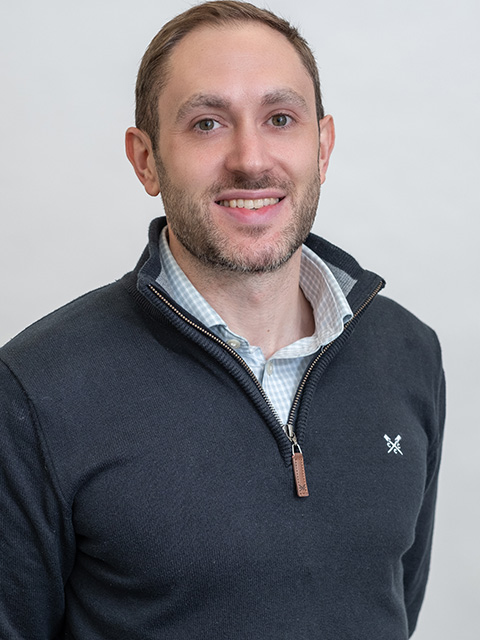
Dr. Alister Smith is a Reader (Associate Professor) in Geotechnics at Loughborough University, where he directs the £1M National Engineered Slope Simulator (NESS) – the world’s first climate-controlled facility testing clay slope deterioration. His £6.7M research portfolio addresses geotechnical infrastructure resilience under climate change. Innovations include acoustic emission (AE) landslide early warning systems deployed across five continents, with the Community Slope SAFE project recognized in REF2021. Current work includes the RAINDROP doctoral training cluster on infrastructure prognosis and the £4.9M EPSRC ACHILLES programme on climate impacts. Awards: Philip Leverhulme Prize, ICE Thomas Telford Premium (twice), and Hawley Award for Engineering Innovation. He serves on the Lilly Fellows Program Board and edits for the International Journal of Christianity and Education.
Ahmed Hammad is an Associate Professor in the Department of Civil and Environmental Engineering at the University of Alberta's Faculty of Engineering, where he also serves as Director of Academic Integrity, ENG WIL, Co-op and Career Connections. With 25 years of industry experience as a Project Planning & Control Manager on global mega-projects (including Oil Sands, LNG, and Infrastructure across Canada, UAE, Australia, and Egypt), he brings extensive practical expertise to academia. Education: Doctorate of Philosophy, Construction Engineering & Management, University of Alberta (2009) Master of Science, Construction Engineering & Management, University of Alberta (1999) Master of Engineering, Construction Engineering and Management, Cairo University (1996) Bachelor of Science, Civil Engineering, Mansoura University (1989) Research Focus: Dr. Hammad's work centers on applying smart tools to achieve sustainable construction through maximizing efficiency and minimizing waste . His research employs Machine Learning , Multi-Criteria Decision Making , Knowledge-Based Decision Support Systems , and digital twin technologies to optimize project planning, resource allocation, and sustainable material selection. He investigates the integration of BIM and Augmented Reality to enhance construction processes while reducing environmental impact. Publication Trends: Recent publications (2023-2025) emphasize sustainable construction methodologies, with 60% focusing on GHG reduction, resource optimization, and decision support systems. Key themes include machine learning for labor estimation, TOPSIS/MCDM for sustainable material selection, and digital twins for production planning, reflecting his NSERC-funded projects on KBDSS and construction-oriented digital twins. Scientific Recognition: Best Paper Award at 8th International Conference on Industrial Engineering and Operations Management (2018) Best Paper Award at HBRC Green Smart Sustainable Buildings Conference (2024) Research Leadership: Dr. Hammad secures major industry-academic partnerships, including NSERC Mission Alliance Grants ($1.2M+) with 16 industry partners for GHG reduction projects and NSERC Alliance Grants with 9 partners for digital twin development. His completed projects include collaborations with the City of Edmonton and Alberta Ministry of Infrastructure on resource allocation models. Research Ecosystem: As leader of the Sustainable Construction Research Group (SCRG), he fosters industry-academia collaboration through regular workshops with construction firms and government agencies, focusing on translating research into practical tools for sustainable project delivery.
Michael Lepech is a Professor of Civil and Environmental Engineering and Senior Fellow at the Woods Institute for the Environment at Stanford University. His research focuses on integrating sustainability into civil engineering through quantitative assessment and multi-scale modeling, particularly via the Sustainable Integrated Materials, Structures, Systems (SIMSS) framework. He also leads the Stanford Center at the Incheon Global Campus (SCIGC) in South Korea, exploring smart city technologies for urban sustainability. Education : PhD in Civil and Environmental Engineering (2006), MBA in Finance and Strategy (2008) from the University of Michigan. Research Areas : Sustainable infrastructure design, biopolymer composites, life cycle assessment, digital twinning, smart city technologies, and multi-physics deterioration modeling. Leadership : Director of SCIGC, advancing research on smart and sustainable urban environments in Songdo, South Korea. His recent publications focus on biopolymer-bound composites, traffic signal optimization, and life cycle sustainability analysis. He has received recognition as a Senior Fellow at Stanford’s Woods Institute for environmental research.
Konstantinos Karapiperis is a Tenure Track Assistant Professor at EPFL's Laboratory of Multiscale Modeling of Materials (LMD), within the School of Architecture, Civil and Environmental Engineering (ENAC). His research integrates mechanics , multiscale modeling , and data science to study geomaterials and structural materials. PhD in Applied Mechanics (minor in Applied Mathematics), Caltech Postdoctoral Researcher & Lecturer, ETH Zürich (Marie Skłodowska-Curie Fellowship) Research focuses on granular materials , architected materials , and nonlocal modeling using techniques like Level-Set Discrete Element Method (LS-DEM) and machine learning . Recent work explores fracture control via graph neural networks and thermodynamics-informed models. Selected scientific award: Marie Skłodowska-Curie Fellowship Teaches courses in Soil Mechanics and Multiscale Modeling . PhD students include Thomas Henzel and Hrishikesh Gopakumar Menon. His Data-Driven Mechanics Laboratory (LMD) develops predictive tools for granular and structured material behavior.
Professor Behzad Fatahi is a distinguished academic in Civil and Environmental Engineering at the University of Technology Sydney (UTS), specializing in geotechnical engineering, railway infrastructure, and sustainable construction technologies. With a career spanning over 16 years at UTS, he has served as Deputy Head of School - Teaching and Learning (2024-present), Head of Discipline (2020-2024), and School Research Coordinator (2012-2017). His research focuses on unsaturated soil mechanics , dynamic soil-structure interaction , and green infrastructure solutions . Academic Appointments : Professor (2024-present), Associate Professor (2017-2024), Senior Lecturer (2011-2017), Lecturer (2008-2011) Research Leadership : Supervised 21 PhD students to completion, developed groundbreaking techniques for landfill waste reuse and tyre-derived aggregates in railway construction His work on seismic resilience of LNG tanks and bioengineered soil stabilization has received international recognition, including the 2023 Best Research Paper Award at the Australasian Association for Engineering Education conference. Professor Fatahi's industry experience includes geotechnical engineering roles at Coffey International and SES Engineering prior to academia. Key Research Contributions : Developed green corridor models for railway lines using coupled flow-deformation equations Pioneered AI-integrated teaching frameworks for civil engineering education Advanced machine learning techniques for intelligent compaction and structural buckling analysis As a Category 1 supervisor , he mentors graduate researchers in Civil Engineering , Geomechanics , and Earthquake Engineering . His peer-reviewed work (>240 publications) demonstrates technical excellence and innovation across multiple geotechnical domains.
Patrick Willems is a full Professor at KU Leuven's Faculty of Engineering Sciences, Department of Civil Engineering. He serves as the head of the Hydraulics Subdivision within the Hydraulics and Geotechnics unit. Professor Willems holds multiple significant roles including chairman of the ADS Bureau, member of the Faculty Council of Engineering Sciences, and participant in the Leuven One Health Institute and KU Leuven Institute for Urban Studies (LUSI). His work addresses critical global water management challenges through advanced hydrological modeling and climate change adaptation strategies. Professor Willems' research spans several critical areas in water resources engineering. His primary expertise includes urban hydrology and river engineering, statistical hydrology with focus on flood prediction and risk analysis, integrated river basin management, precipitation analysis, and climate change impacts on hydrological extremes. He employs both traditional hydrological modeling approaches and innovative machine learning techniques to develop practical solutions for flood warning systems, urban water management, and climate adaptation planning. His research integrates statistical methods, numerical modeling, and data science to address complex water management problems across multiple geographical contexts. Professor Willems leads multiple major international research projects examining hydrological extremes in transboundary river basins, natural climate adaptation measures, hydrological modeling of peatland areas, and deep learning-based prediction of hydrological extremes. His work spans various geographical contexts including Belgium, Vietnam, Bolivia, Tanzania, and the Congo Basin, demonstrating both local relevance and global applicability of his research. Within KU Leuven, Professor Willems teaches diverse courses including Environmental Problems and Techniques, Statistics and Data Science, Stochastic Hydrology, Urban and River Hydrology and Hydraulics, River Modeling, and Probability and Statistics. He also leads the Hydraulic Engineering Project course and an Artificial Intelligence Project course, reflecting his commitment to integrating traditional engineering knowledge with modern computational approaches. As head of the Hydraulics Subdivision, he oversees research activities focused on developing advanced water engineering tools and methodologies that bridge theoretical advancements with practical applications for water management authorities.
Eric Green is an Adjunct Assistant Professor in the Department of Civil Engineering at the University of Kentucky , affiliated with the Kentucky Transportation Center . He holds a Ph.D., M.S., and B.S. in Civil Engineering from the same institution. Ph.D., Department of Civil Engineering, University of Kentucky M.S., Department of Civil Engineering, University of Kentucky B.S., Department of Civil Engineering, University of Kentucky His research focuses on highway safety , spatial analysis (GIS) , crash modeling , and software development for traffic safety . Recent work includes text mining for secondary crash detection and GPS-based horizontal curve analysis. Publications highlight trends in crash analysis , Highway Safety Manual methodologies , and data integration for asset management . Key subfields include GIS applications, safety modeling, and automated regression techniques.
Dr. Karim El-Basyouny is a Killam Laureate Professor and City of Edmonton Urban Traffic Safety Research Chair at the University of Alberta's Faculty of Engineering, where he serves as Associate Dean (Research Infrastructure and Innovation) in the Civil and Environmental Engineering Department. A licensed Professional Engineer in Alberta, he holds advanced degrees in Transportation Engineering from the University of British Columbia and has dedicated his career to advancing road safety through data-driven management frameworks. His academic credentials include: Doctor of Philosophy, Civil Engineering, University of British Columbia, 2011 Engineering Management Sub-specialization, Civil Engineering, University of British Columbia, 2010 Master of Applied Science, Civil Engineering, University of British Columbia, 2006 Bachelor's degree (ABET Equivalent), Civil & Environmental Engineering, United Arab Emirates University, 2003 El-Basyouny's research pioneers the integration of remote sensing, machine learning, and statistical modeling to enhance transportation safety. His work develops automated tools for infrastructure digitization, collision prediction, and speed management, treating safety as a systemic product requiring management frameworks. Key contributions include LiDAR-based road feature extraction, network-level safety evaluations, and frameworks for vision-zero outcomes that address both human-driven and autonomous vehicle contexts. His recent publications demonstrate a cohesive research trajectory centered on leveraging point cloud data and computational intelligence for safety management. Over 15 major publications since 2021 focus on automated infrastructure assessment (light pole detection, clear zone mapping, vertical clearance evaluation), weather-impact modeling, and enforcement resource optimization. This body of work bridges transportation engineering with computer vision and operations research to create scalable safety solutions. His scientific contributions have been recognized with prestigious honors including: 2024 Killam Annual Professorship Award 2024 Road Safety Achievement Award from TAC 2023 Donald Stanley Award for environmental engineering 2022 Faculty of Engineering Graduate Teaching Award 2021 Daniel B. Fambro Student Paper Award As an academic leader, El-Basyouny actively mentors graduate students and secures significant research funding through his endowed chair position. He currently recruits fully-funded PhD and postdoctoral candidates specializing in remote sensing applications, machine learning, and geomatics for road digitization projects. His research group collaborates with national safety committees and municipal agencies to translate findings into policy, while he serves on editorial boards for Transportation Research Record and Analytic Methods in Accident Research. The research group operates at the intersection of transportation engineering and computational science, developing automated frameworks that merge sensor technologies with data processing tools. Current projects focus on semantic segmentation of 3D point clouds, safety implications of infrastructure digitization, and machine learning applications for road feature extraction in both urban and rural environments.
Dr. Chenming Zhang is an Advanced Queensland Industry Research Fellow at the School of Civil Engineering, The University of Queensland. His research focuses on hydrological processes in coastal and terrestrial groundwater systems, with particular emphasis on evaporation-driven mass and heat transport in soils and tailings, and hydrogeochemical dynamics in aquifers and mine waste systems. Specializes in IoT-based environmental monitoring Develops numerical models for coastal aquifer dynamics Conducts field and laboratory experiments on tailings behavior Research interests span coastal hydrology, groundwater modeling, mine waste management, and environmental monitoring. He works on contamination transport, aquifer protection, and climate impacts on water systems. Recent publications analyze: Iron curtain formation in subterranean estuaries Sea water intrusion mechanisms Salinity dynamics in tidal wetlands Smart sewer monitoring systems Scientific awards include the prestigious Advanced Queensland Industry Research Fellowship. He supervises multiple PhD projects on mine waste hydrology and coastal aquifer management, with notable collaboration on: Evolution Mining's gold tailings projects ARC Discovery Projects on coastal processes Grange Resources' PAF cell instrumentation His work combines field measurements, laboratory testing, and computational modeling to address critical environmental challenges in mining and coastal zones.
Stefano Galelli is a tenured Associate Professor in the School of Civil and Environmental Engineering at Cornell University, where he leads the Critical Infrastructure Systems Lab. He also holds an adjunct position as a Research Scientist at the Lamont-Doherty Earth Observatory, Columbia University. His career spans roles in Singapore, including a Postdoctoral Research Fellow at NUS (2011–2013) and faculty at the Singapore University of Technology and Design (2013–2023). Dr. Galelli earned his B.Sc. (2004), M.Sc. (2007), and Ph.D. (2011) in Environmental and Land Planning Engineering and Information Technology from Politecnico di Milano, Italy. His research focuses on the interactions between critical infrastructure systems and natural environments, emphasizing adaptive management solutions for water-energy systems. Techniques include process-based modeling, climatology, statistical learning, control theory, and optimization. He explores topics like hydro-climatic variability impacts, dam re-operation for environmental flows, and cyber-physical security in infrastructure. His contributions to journals such as Nature Sustainability, Earth’s Future, and Environmental Modelling & Software have earned him multiple awards, including the Early Career Research Excellence Award (2014) and SUTD Excellence in Research Award (2017). He has served as an editor for several journals and is recognized for advancing interdisciplinary approaches to water-energy nexus challenges. Teaching highlights include foundational mathematics courses and advanced topics in data analytics, optimization, and water-energy management. He is developing new courses on data-driven control of coupled human-natural systems and risk management for interconnected systems.
Saurabh Amin is a Professor in the Department of Civil and Environmental Engineering at the Massachusetts Institute of Technology (MIT), where he also serves as the Edmund K. Turner Professor and Undergraduate Officer. He is a Principal Investigator at the Laboratory of Information and Decision Systems and holds affiliations with the Operations Research Center and the Center for Computational Science and Engineering. His educational background includes: B.Tech. 2002, Indian Institute of Technology (IIT) Roorkee M.S. 2004, University of Texas (UT) Austin Ph.D. 2011, University of California (UC) Berkeley Saurabh Amin's research focuses on the design and control of infrastructure systems using game theory and optimization in networks. His work spans three main areas: resilient network control, information systems and incentive design, and optimal resource allocation in large-scale infrastructure systems. By concentrating on critical infrastructure domains including highway transportation, electric power distribution, and urban water networks, his research develops innovative theory and tools to enhance system performance against both stochastic and adversarial disruptions. His approach involves modeling cyber-physical interactions in infrastructures to assess vulnerabilities, developing detection and response tools for failures at various scales, and designing economic incentive schemes that improve aggregate public good while accounting for dependencies and private information among strategic entities. Amin's work bridges mathematical systems theory with practical civil engineering applications, creating a rigorous theoretical foundation for infrastructure resilience that addresses diverse failure mechanisms from natural disasters to deliberate malicious actions. His recent publications demonstrate a strong focus on decarbonization of energy systems, resilient infrastructure planning under climate uncertainty, optimization methods for complex networked systems, and game-theoretic approaches to sustainable infrastructure management. His work increasingly integrates artificial intelligence and machine learning techniques with traditional control theory to address contemporary challenges in infrastructure resilience and sustainability. The research shows a clear trajectory toward addressing climate change impacts on infrastructure systems while maintaining economic efficiency and operational reliability. Professor Amin has received numerous prestigious awards and honors: Common Ground Excellence in Teaching Award, 2025 HSCC Test-of-Time Award, 2024 MIT CEE, Distinguished Service and Leadership Award, 2023 Samuel M. Seegal Prize (SoE) – inspiring students in pursuing and achieving excellence, 2022 Earll M. Murman for Excellence in Undergraduate Advising, 2022 C3.ai Digital Transformation Institute Research Award, 2020 MIT, Ole Madsen Mentoring Award, 2020 MIT, Energy Initiative Research Award, 2020 National Academy of Engineering, China-America Frontiers of Engineering Symposium speaker, 2019 MIT, Robert N. Noyce Career Development Professor, 2015-2018 Google Faculty Research Award, 2015 National Science Foundation CAREER Award, 2015 Siebel Energy Institute Research Award, 2015 MIT, Solomon Buchsbaum AT&T Research Fund Award, 2012 Professor Amin has been actively involved in significant research projects including the C3.ai DTI project on Causal Reasoning for Real-Time Attack Identification in Cyber-Physical Systems and another on Learning in Routing Games for Sustainable Electromobility. He serves as the chief scientist on multi-institutional NSF grants, including the $9 million Foundations of Resilient Cyber-Physical Systems (CPS) project. His teaching portfolio includes courses such as 1.008 Engineering for a Sustainable World, 1.104 Sensing and Intelligent Systems, 1.020 Engineering Sustainability: Analysis and Design, and 1.208 Resilient Networks. As Undergraduate Officer, he plays a key role in shaping the educational experience for civil and environmental engineering students at MIT. Professor Amin leads the Resilient Infrastructure Networks Lab at MIT, where his team develops theoretical foundations and practical tools for infrastructure resilience. The lab focuses on the intersection of control theory, game theory, and optimization applied to cyber-physical infrastructure systems. Current research directions include pandemic-resilient urban mobility and hurricane-resilient smart grid operations, reflecting the lab's commitment to addressing pressing societal challenges through rigorous systems engineering approaches.
Christophe Viavattene is an Associate Professor of Environmental Sustainability at Middlesex University , specializing in flood risk management and urban resilience. He has spent 17 years at the Flood Hazard Research Centre , leading interdisciplinary research across economic and physical sciences in water and flood risk. Research Focus: Flood vulnerability (coastal, urban, fluvial), GIS tools (INDRA model), Multi-Coloured Manual (MCM) methodology, mental health impacts of flooding, groundwater flood risk in arid regions, and air quality risk assessment. Teaching: Programme Leader for the MSc Sustainability and Environmental Management , teaching problem-based sustainability, GIS, and environmental monitoring. Key Collaborations: EU FP7 RISC-KIT, EU CONHAZ, Environment Agency UK projects. Recent Publications: Bayesian flood models, coastal hotspots analysis, and groundwater flood damage methodologies. His work bridges academic research with practical applications, including flood storage compensation frameworks and vulnerability indicator libraries.
Scott McDougall is an Associate Professor in the Department of Earth, Ocean & Atmospheric Sciences at the University of British Columbia (UBC). He specializes in geohazards, particularly landslides and related risks, with a focus on improving risk assessment and mitigation strategies. His work integrates field data, statistical analysis, numerical modeling, and laboratory experiments to understand landslide dynamics. Education: PhD in Geological Engineering, UBC (2006) BASc in Civil Engineering, University of Toronto (1998) Research Interests: Landslide mobility and runout modeling Tailings dam breaches and their impacts Risk evaluation frameworks for geohazards Shoreline erosion and landslide-generated waves Applications of machine learning in hazard prediction Key Contributions: Development of the UBC Geohazards Research Team to advance landslide risk reduction Leadership in the CanBreach project to improve tailings dam breach analysis Pioneering probabilistic runout prediction models for rock avalanches and debris flows Awards: Engineering Geology Best Paper Award 2024 CDA Published Paper Award Advising & Grants: Supervised over 15 graduate students and postdoctoral fellows Active industry collaborations with mining and engineering firms Funded by NSERC, Mitacs, and industry partnerships Labs & Teams: UBC Geohazards Research Team CanBreach Collaborative Research and Development Project