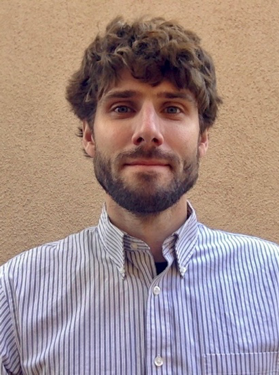
Dr. John W. McClory is a Professor of Nuclear Engineering at the Air Force Institute of Technology (AFIT) , where he has been affiliated since 2008. He serves as the Director of Nuclear Expertise for the Advancing Technology (NEAT) Center, Director of the Nuclear Weapons Effects Graduate Certificate Program, and holds the AFTAC Endowed Term Chair for Materials. His academic career spans military service as a former Army officer and teaching at the United States Military Academy. Education : Ph.D. in Nuclear Engineering (AFIT, 2008), M.S. in Physics (Texas A&M, 1993), B.S. in Physics (Rensselaer Polytechnic Institute, 1984) Dr. McClory’s research focuses on radiation effects on military electronics , nuclear forensics , and nuclear weapon proliferation . His work includes neutron detection , scintillator development , and radiation transport modeling , with applications in nuclear security and materials science . His recent publications emphasize radiation-hardened materials , computational modeling of nuclear effects , and machine learning applications in nuclear forensics . Collaborative projects span neutron spectroscopy , high-power microwave detection , and radiation-induced defect analysis in semiconductors. Scientific Awards : MOAA AFIT Outstanding Military Professor (2010) Dr. Leslie M. Thornton Teaching Excellence Award (2011) Military Legion of Merit (2012) Dean's Distinguished Teaching Professor Award (2019) Ohio Magazine Excellence in Education Honoree (2013) Dr. McClory has advised 22 PhD and 41 MS students and secured 25 research grants . He leads the NEAT Center and contributes to nuclear weapons effects curriculum and AFTAC materials research .
Dr. Miguel Rico-Ramirez serves as Associate Professor of Radar Hydrology and Hydroinformatics at the University of Bristol's School of Civil, Aerospace and Design Engineering. His research integrates advanced radar technology with hydrological modeling to address critical water resource challenges including flood forecasting, drought management, and precipitation measurement across diverse global contexts from South Korea to Mexico City. Education: Bachelor of Engineering (Eng.) Master of Engineering (M.Eng.) Ph.D. in Engineering, University of Bristol His research program focuses on radar-based precipitation estimation, hydroinformatics, and flood prediction systems. He pioneers deep learning applications for rainfall nowcasting and develops innovative methods for uncertainty quantification in hydrological modeling. Current work emphasizes cosmic-ray neutron sensor validation, satellite-based flood mapping, and seasonal forecast applications for reservoir operations, with strong emphasis on translating research into operational water management solutions. Recent publications (2023-2025) reveal three dominant research thrusts: (1) deep learning frameworks for spatiotemporal rainfall prediction, (2) global validation of precipitation and soil moisture datasets using novel sensor networks, and (3) operational implementation of seasonal forecasts for drought mitigation in South Korea. His work consistently bridges radar meteorology with practical hydrological applications across urban and data-scarce environments. Scientific Awards: No specific awards documented in source materials Dr. Rico-Ramirez supervises postgraduate researchers in radar hydrology and hydroinformatics, with projects spanning flood early warning systems, precipitation nowcasting, and climate adaptation strategies. His research receives funding for international collaborations focused on water security challenges, particularly in drought-prone regions and data-scarce basins like the Nile Delta. Current grants support development of integrated forecasting systems combining global datasets with machine learning for extreme event management. He leads the Radar Hydrology research group within Bristol's Water and Environmental Engineering division, collaborating closely with Professor Dawei Han on hydroinformatics and Dr. Rafael Rosolem on water-climate interactions. The team maintains active partnerships with meteorological agencies and water authorities globally, particularly in flood forecasting system implementation across South Korea and Mexico.
Chuanfei Dong is an Assistant Professor of Astronomy at Boston University's College of Arts & Sciences and of Electrical and Computer Engineering at the College of Engineering. His research focuses on understanding plasma physics and its applications to space science, planetary atmospheres, and fusion energy. Dong joined BU in January 2023 after working as a staff scientist at the Princeton Plasma Physics Laboratory. Education: B.S. in Space Science from University of Science and Technology of China M.S. in Earth and Atmospheric Sciences from Georgia Institute of Technology M.S.E. in Nuclear Engineering and Radiological Sciences from University of Michigan M.S. in Planetary and Space Sciences from University of Michigan Ph.D. in Scientific Computing from University of Michigan Research Interests: Dr. Dong's research spans multiple disciplines within space physics and plasma science. His primary interests include Star-Terrestrial Planet Interactions in our Solar System and beyond, magnetic reconnection and turbulence phenomena, wave-particle interactions in space plasmas, and applications of physics-informed machine learning to plasma problems. He also investigates high-intensity laser-plasma interactions with applications to fusion energy research. His work bridges the gap between theoretical plasma physics and observational space science, with particular focus on planetary atmospheres, solar wind interactions, and exoplanet habitability. Dong's interdisciplinary approach combines computational modeling, observational data analysis, and theoretical frameworks to address fundamental questions in space physics. Research Trends: Dong's recent publications demonstrate a strong focus on applying advanced computational techniques to space plasma physics problems. His work spans solar system bodies including Earth, Mars, Mercury, and the Moon, with increasing attention to exoplanet systems. A notable trend is the integration of machine learning approaches with traditional plasma physics modeling, particularly for complex phenomena like Landau damping and magnetic reconnection. His research has significant implications for understanding atmospheric evolution, space weather, and potential habitability of planetary bodies. Scientific Awards: DOE Early Career Research Award (2023) - $875,000 grant for plasma turbulence research Alfred P. Sloan Research Fellow (2024) Metcalf Travel Award Advising and Grants: Dr. Dong mentors undergraduate research assistants and plans to expand his research group with the support of his DOE Early Career Award, which will fund a graduate student and postdoctoral researcher. His research is supported by the Department of Energy and has connections to NASA missions including MAVEN (Mars) and BepiColombo (Mercury). Dong is also involved with the Mauve telescope project as BU institutional PI. His work has been featured in numerous media outlets including Phys.org, Science Daily, and German TV program zdf/3sat. Labs and Teams: Dr. Dong leads a research group focused on computational plasma physics at Boston University. He collaborates with researchers at Princeton Plasma Physics Laboratory and is involved with multiple NASA missions. His team develops advanced computational models to simulate space plasma phenomena, with particular expertise in magnetohydrodynamics (MHD), particle-in-cell methods, and physics-informed machine learning approaches. Dong is also affiliated with BU's Hariri Institute for Computing.
David Bastviken is a Professor at the Environmental Change Theme (TEMAM), Linköping University , specializing in environmental science and biogeochemical cycles. His research focuses on greenhouse gas emissions, particularly methane and carbon dioxide, from freshwater systems and human activities, with implications for climate policy and pollution management. Research Pillars : Aquatic greenhouse gas dynamics, chlorine cycling in soils, drinking water disinfection by-products, landscape-scale carbon budgets Methodologies : Drone-based sensing, hyperspectral imaging, sensor networks, cross-disciplinary ecosystem experiments Notable findings include the discovery of underestimated methane emissions from lakes and rivers, the role of trees in methane uptake , and natural chlorine production in boreal forests. His work has been funded by ERC , Formas , VINNOVA , and The Swedish Research Council . Recent publications highlight climate sensitivity of methane emissions, day-night emission patterns , and global methane budget modeling. He leads international collaborations across Amazonas , Arctic , and Boreal regions.
Johannes Brandstetter is an Associate Professor at the Institute for Machine Learning at Johannes Kepler University Linz (JKU) where he leads the "AI for data-driven simulations" research group. He is also Co-founder and Chief Scientist at Emmi AI, bridging academic research with industrial applications in AI-driven physics simulation. Brandstetter earned his PhD after working at CERN's CMS experiment on Higgs boson physics. In 2018, he transitioned to machine learning, joining Sepp Hochreiter's research group in Linz. From 2021-2023, he worked at the Amsterdam Machine Learning Lab under Max Welling and Microsoft Research, developing expertise in Geometric Deep Learning and neural surrogates for partial differential equations. He returned to JKU in October 2023 to establish his own research group. His research spans Machine Learning, Deep Learning, and Physics-Informed Machine Learning with focus areas including Neural PDE solvers, Computational Fluid Dynamics, and Climate Modeling. Brandstetter believes AI is poised to revolutionize industrial-scale simulations, potentially saving thousands of compute hours across engineering domains. His work integrates computer vision, numerical simulation, and engineering components to advance data-driven approaches. Recent publications reveal a strong trend toward foundation models for scientific applications, particularly in atmospheric modeling (Aurora), geometric deep learning, and neural surrogates for complex physical systems. His interdisciplinary work spans computer vision, climate science, computational physics, and engineering, demonstrating the versatility of his research approach. Principal Investigator for "AlKa-DL: Alpine karst spring discharge prediction" (FWF-funded, 2024-2027) Principal Investigator for Cluster of Excellence "Bilateral Artificial Intelligence" (FWF-funded, 2024-2029) Co-PI for "Fast, efficient and flexible CFD simulation through generative AI" (FFG-funded, 2025-2026) As an educator and researcher, Brandstetter actively engages with the scientific community through invited talks at major conferences including presentations on "Closing the Gap Between Scientific Foundation Models and Real-World Applications" (March 2025) and "Scientific Machine Learning for Science and Engineering" (February 2025).
Dr. Keng-Te Lin is a Research Fellow at RMIT University's School of Science, specializing in advanced materials for energy, photonics, and biomedical applications. His work focuses on metamaterials, radiative cooling, graphene-based technologies, and nanophotonic devices. He supervises research projects on topics like spectral selective radiative cooling, electro-optically tunable waveguides, and machine learning for thermal-photovoltaic systems. Key research interests include developing high-performance materials for thermal management, energy conversion, and biomedical therapies. His recent publications highlight innovations in flexible radiative cooling films, ultrafast heat transfer mechanisms, and scalable manufacturing methods for sustainable cooling solutions. Dr. Lin collaborates on projects involving structured metamaterials for solar thermal energy, plasmonic nanostructures for photodetection, and nanocomposite materials for enhanced catalytic activity. He actively supervises students exploring topics such as photonic topological insulators, perovskite solar cells, and AI-driven material optimization. His research bridges fundamental materials science with applied engineering solutions, targeting applications in renewable energy, environmental sustainability, and healthcare technologies.
Ruth Reef is an Associate Professor at the School of Earth Atmosphere and Environment, Monash University. She leads the Coastal Research Group, focusing on coastal dynamics, climate change impacts, and environmental DNA applications. Her research emphasizes mangrove and coral reef ecosystems' resilience to sea level rise and human activity. She coordinates courses such as EAE3311 (Oceans and Coasts) and teaches EAE1022 (Earth, Atmosphere and Environment 2). Expertise: Coastal processes, sediment transport, climate adaptation, and ecosystem management. Projects: Includes studies on mangrove restoration in Vietnam, coastal wetland carbon fluxes, and bathymetry innovations via CoastBAT. Her work addresses UN Sustainable Development Goals related to climate action and sustainable ecosystems. Notably, she received the 2021 Award for Exceptional Educational Service to the Faculty of Science.
John Taylor is a Professor of Mathematical Physics at the Department of Applied Mathematics and Theoretical Physics (DAMTP), University of Cambridge. His career includes roles as Reader in Theoretical Physics at Oxford University and earlier positions as Lecturer at Cambridge and Imperial College. His research focuses on Gauge Field Theory, Thermal Field Theory, and fluid dynamics with applications to oceanography and climate science. He leads the High Energy Physics research group at DAMTP and contributes to interdisciplinary projects on carbon sequestration and ocean biogeochemical modeling. Key research interests include turbulence in stratified flows, submesoscale ocean dynamics, and climate-related processes such as ice shelf-ocean interactions. His work integrates theoretical physics, computational modeling, and machine learning to address challenges in environmental science. Taylor has authored influential publications, including Hidden Unity in Nature's Laws (2001) and edited volumes on gauge theories. Recent studies explore carbon dioxide removal via macroalgae cultivation and the impact of fluid dynamics on kelp forests. His collaborative projects include developing the OceanBioME framework for coupled biogeochemical and physical ocean modeling.
Tom Beucler is a Conditional Pre-Tenure Assistant Professor in Geo-Environmental Data Science at the University of Lausanne’s Institute for Earth Surface Dynamics (IDYST). He holds a Master’s degree in Science and Mechanics from École Polytechnique (2014) and a PhD in Atmospheric Science from MIT (2019). Postdoctoral research at Columbia University and UC Irvine focused on machine learning applications in climate science under Professors Pierre Gentine and Michael Pritchard. Research Interests: Climate informatics, atmospheric physics, fluid dynamics, tropical meteorology, and integrating machine learning into climate models for extreme weather prediction and hydrological cycle modeling. Collaborations: Works with environmental scientists and computer engineers to improve climate models using neural networks and causal discovery methods. Initiatives: Organizes weekly brainstorming sessions to promote machine learning adoption in environmental sciences. Publications span climate-invariant machine learning, data-driven parameterizations, and hybrid AI-climate modeling frameworks like ClimSim. His work emphasizes causal consistency and generalizability across climate conditions.
Brandon Schmandt is a Professor in the Department of Earth and Planetary Sciences at the University of New Mexico. His research focuses on geophysics, seismology, tectonics, structural geology, and volcanology. He holds a Ph.D. from the University of Oregon (2011). His research group specializes in seismic imaging methods to study subsurface structures related to tectonic and magmatic processes. They analyze seismic data from both fieldwork and public archives, with applications to earthquake mechanics, magma storage, and explosion discrimination. Recent work emphasizes continental magmatic systems, induced seismicity in the Raton Basin, and Yellowstone's magmatic architecture. Collaborative projects include seismic array deployments and machine learning applications for signal analysis. No scientific awards are explicitly listed in the provided texts. His advising includes undergraduate and graduate students such as Wilgus, Stairs, and Maguire. No specific grants or labs are mentioned beyond his departmental affiliation.
Bryan Webler is a Professor in the Department of Materials Science and Engineering at Carnegie Mellon University (CMU) since 2013, with a courtesy appointment in the Department of Mechanical Engineering. He serves as Co-Director of the Center for Iron and Steelmaking Research (CISR), an industry-supported consortium, and is affiliated with the NextManufacturing Center and Mill 19 digital backbone initiative. His expertise spans process metallurgy, additive manufacturing, and steelmaking technologies. Education: B.S. in Engineering Physics (2005) from the University of Pittsburgh; M.S. (2007) and Ph.D. (2008) in Materials Science and Engineering from CMU. Prior to academia, he worked as a Senior Engineer at the Bettis Atomic Laboratory's Materials Technology department. Research focuses on four core areas: chemical reactions during liquid steel refining, non-metallic inclusion control, continuous casting of steel, and additive manufacturing (laser powder bed fusion, directed energy deposition). His group integrates high-temperature experiments, computational thermodynamics, and kinetic modeling. Notable contributions include developing oxide dispersion strengthening methods and advancing digital twin applications in manufacturing. Key awards include the Kent D. Peaslee Junior Faculty Award (AIST Foundation) and the AIST Foundation Steel Professor title. He serves on editorial boards for Metallurgical and Materials Transactions B and Metallurgical Research and Technology , and actively contributes to industry partnerships. Beyond technical work, Webler explores the history of metallurgy, particularly Pittsburgh's steel industry legacy. His lab's innovations address carbon management, energy production, and advanced materials processing for extreme environments.
Yulia Gel is a Professor in the Department of Statistics at Virginia Tech and serves as a Part-Time Program Director-Expert at the National Science Foundation (NSF). She holds a MSc (summa cum laude) and PhD in Mathematics from Saint Petersburg State University (Russia) and completed a postdoc in Statistics at the University of Washington. Her research focuses on uncertainty quantification in AI, statistical foundations of data science, spatio-temporal processes, and applications in climate science, healthcare, and blockchain analytics. She has received prestigious awards including the NSF Director’s Award (2023), ASA Distinguished Achievement Medal (2018), and TIES Abdel El-Shaarawi Award (2014). Gel has led grants on wildfire prediction, climate informatics, and blockchain data science. She serves on editorial boards of Statistica Sinica, Electronic Journal of Statistics, and Technometrics, and organizes workshops on AI for climate sustainability and fragile Earth systems. Her research group develops topological and geometric methods for graph neural networks, with applications to digital twins, environmental justice, and public health. Education: MSc (1997), PhD (2000) in Mathematics from Saint Petersburg State University; Postdoc in Statistics at University of Washington (2001–2003). Past roles include Professor at University of Texas at Dallas (2015–2024) and Associate Professor at University of Waterloo (2004–2014). Selected visiting positions include NASA Jet Propulsion Lab (2016–2017) and Isaac Newton Institute (2016–2017). She has pioneered statistical software packages like snowboot and funtimes for network inference and time-series analysis. Awards highlight her contributions to environmetrics and statistical methodologies. Current projects include NSF-funded research on AI-driven wildfire prediction and blockchain analytics for climate resilience. Her lab’s recent work emphasizes topological methods (e.g., zigzag persistence) for graph-based forecasting and adversarial robustness.
Jack Baker is the William Alden Campbell and Martha Campbell Professor of Engineering and Associate Dean for Faculty Affairs in the Stanford Doerr School of Sustainability at Stanford University. He is a Professor of Civil & Environmental Engineering with expertise in probabilistic and statistical tools for quantifying and managing disaster risk and resilience. His work has significantly influenced building codes, performance-based engineering guidelines, and catastrophe risk models. Dr. Baker's educational background includes: Ph.D. in Civil & Environmental Engineering from Stanford University (2005) M.A. in Statistics from Stanford University (2004) M.S. in Civil & Environmental Engineering from Stanford University (2002) B.A. in Mathematics/Physics from Whitman College (2000) His research focuses on disaster risk and resilience, particularly in earthquake engineering and seismic hazard analysis. Baker uses probabilistic and statistical approaches to analyze risk in spatially distributed systems, characterize earthquake ground motions, and simulate post-disaster recovery processes. His work bridges theoretical frameworks with practical applications in building codes and risk management strategies. He has made significant contributions to understanding the relationship between ground motion characteristics and structural response, while also expanding into climate-related hazards like atmospheric rivers and their compound effects. His recent publications demonstrate a growing focus on interdisciplinary research that connects engineering with socioeconomic factors in disaster contexts. There's a clear trend toward integrating machine learning techniques with traditional engineering approaches, particularly in modeling household displacement, economic recovery, and flood damage prediction. His work increasingly addresses the human dimension of disasters, examining how physical damage translates to social impacts and recovery timelines. Dr. Baker has received numerous prestigious awards recognizing his contributions to the field: William B. Joyner Lecture Award from the Seismological Society of America and Earthquake Engineering Research Institute (2023) PROSE Awards finalist for Seismic Hazard and Risk Analysis textbook (2022) Thorpe Medal from the European Council on Computing in Construction (2022) Walter L. Huber Civil Engineering Research Prize from the American Society of Civil Engineers (2018) CAREER Award from the National Science Foundation (2010) As an educator and mentor, Baker advises numerous doctoral and master's students while serving as Associate Dean for Faculty Affairs. His research group has secured significant funding for projects related to seismic risk, disaster recovery modeling, and infrastructure resilience. He has directed major initiatives like the Stanford Urban Resilience Initiative and co-founded the Haselton Baker Risk Group, demonstrating strong leadership in translating research into practical applications. Dr. Baker leads the Baker Research Group, which focuses on probabilistic approaches to disaster risk assessment and management. The group maintains active collaborations with government agencies, industry partners, and international research institutions to advance the state of knowledge in earthquake engineering and broader disaster resilience fields. Their work often involves developing innovative computational tools and frameworks that are made publicly available through GitHub repositories.
Jonathan Weare is a Professor of Mathematics at the Courant Institute of Mathematical Sciences, New York University. He holds affiliations with the Faculty of Arts and Science and the Graduate School of Arts and Science. His academic journey includes roles as an Associate Professor at the University of Chicago (2014–2019) and Assistant Professor (2011–2014), following postdoctoral work as a Courant Instructor at NYU. He earned his Ph.D. in Mathematics from UC Berkeley in 2007. His research focuses on stochastic algorithms and models, with applications in astrophysics, biophysics, computational chemistry, and climate science. Key areas include Monte Carlo methods, rare event simulation, and machine learning-driven scientific analysis. Collaborations with domain experts ensure his work addresses real-world challenges in diverse fields. Recent publications emphasize advancements in trajectory stratification, rare event prediction using machine learning, and efficient algorithms for high-dimensional problems. Notable contributions include the BAD-NEUS framework and AI-based solar system instability predictions. His group’s interdisciplinary approach bridges computational methods with scientific inquiry. Weare has advised numerous students and mentored postdocs, fostering talent in applied mathematics and computational science. His work on Mercury’s orbital dynamics and extreme weather prediction showcases the societal impact of his research. Current projects explore AI applications in weather modeling and rare event analysis, leveraging cutting-edge machine learning techniques. Labs/Teams: His research group at Courant develops stochastic algorithms and collaborates with interdisciplinary teams in computational chemistry, climate science, and astrophysics. Key collaborations include the University of Chicago and Columbia University.
Lidia Morawska is a Distinguished Professor and Australian Laureate Fellow at Queensland University of Technology (QUT), leading the International Laboratory for Air Quality and Health (ILAQH), a WHO Collaborating Centre. She specializes in air quality science and its health impacts, particularly particulate matter research. Her roles include Director of ILAQH, Co-Director of the Australia-China Centre for Air Quality Science and Management, and Adjunct Professorships at Jinan University and the University of Surrey. Education: PhD (Physics) and MSc from Jagiellonian University, Kraków, Poland. Early career included research in Canada and Poland before joining QUT in 1991, where she was promoted to Professor in 2003. Established the Environmental Aerosol Laboratory (now ILAQH) in 1992. Research interests focus on aerosol science, air pollution, and policy guidance for WHO guidelines since 1990. Awards include the 2023 L'Oréal-UNESCO International Award, 2022 AAAR Susanne V. Herring Award, and 2021 TIME100 recognition. She is a Fellow of the Australian Academy of Science and Queensland Academy of Arts and Sciences. Grants and projects include leadership of the ARC Training Centre for Advanced Building Systems Against Airborne Infection Transmission (THRIVE). Collaborates globally on clean air initiatives and indoor/outdoor exposure risks. Active in policy advising, including co-chairing WHO guideline development.