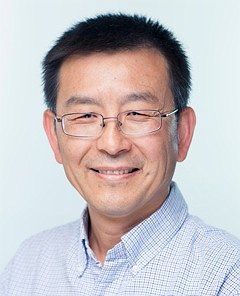
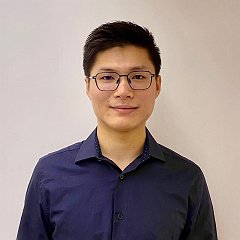
Christoph Tholen is a Professor at the German Research Center for Artificial Intelligence (DFKI) , leading the Marine Perception unit. His work focuses on applying AI to maritime challenges, with expertise in remote sensing, environmental monitoring, and machine learning for aquatic systems. Research Interests Development of AI-driven solutions for marine pollution detection Multi-platform/multi-sensor remote sensing integration Modeling photosynthetically active radiation in aquatic environments Location-independent neural network architectures Long-term monitoring of waterway pollutants Environmental data fusion techniques Projects XAI4SFAS : Intelligent assistance systems for semi-autonomous ship navigation APLASTIC-Q-Canada : Machine Learning identification of pollutants in Canadian waterways PlasticObs_plus : Airborne multi-sensor monitoring for oceanic plastic detection MATE : Maritime traffic emissions monitoring network Collaborations Works with mariNom GmbH and Jade Hochschule Wilhelmshaven/Oldenburg/Elsfleth on aquatic imaging data, plastic pollution analysis, and maritime emissions research.
Renáta Pavlová, PhD is a Lecturer for Slovak language at the Institute of Slavic Linguistics and Cultural Studies, Faculty of Humanities, University of Regensburg since September 2020. Previously, she served as a Scientific Assistant at Constantine the Philosopher University in Nitra (2017-2020) and as a Slovak Language Lecturer at the Slavic Institute, University of Cologne (2016-2013). Her academic journey includes completing her PhD at Constantine the Philosopher University in Nitra in 2011 with a dissertation on 'Slovak as a Foreign Language.' Dr. Pavlová's educational background includes: Studies in Slovak Language and Literature – German Language and Literature at Constantine the Philosopher University, Nitra (1998-2003) PhD in Slovak as a Foreign Language from Constantine the Philosopher University, Nitra (2011) Dr. Pavlová's research focuses on three interconnected areas: Slovak as a foreign language with emphasis on linguodidactic aspects, machine translation between German and Slovak, and the development of reading comprehension in foreign language learning. Her work in linguodidactics examines effective teaching methodologies for Slovak language acquisition, while her machine translation research analyzes error patterns and quality assessment. The reading comprehension strand investigates intervention programs for developing literacy skills in both native and foreign language contexts, with applications across primary and secondary education levels. Her recent publications demonstrate a consistent focus on the intersection of language learning, technology, and literacy development. The trend shows increasing attention to machine translation quality assessment, particularly examining morphosyntactic and lexical errors in German-Slovak translation. Her work also reveals a strong commitment to practical applications, with numerous publications on language testing, certification (particularly ECL exams), and intervention programs for reading comprehension. The collaborative nature of her research is evident through multiple co-authored works with colleagues across various institutions. Dr. Pavlová has been involved in several significant research projects including VEGA projects on reading comprehension development (2019, 2017), APVV projects on machine translation error classification (2018), and KEGA projects on language preparation (2019). She also contributed to international initiatives like EUROPODIANS (2009) for developing online Slovak courses and EURONOUNCE (2009) analyzing Slovak pronunciation by German speakers. As an educator, Dr. Pavlová teaches various Slovak language courses at University of Regensburg, including Slovak I, Slovak III (general and translation-specific), Slovak Conversation, and specialized seminars on Machine Translation. She actively participates in cultural outreach, having recently attended events with the Slovak Ambassador and the President of the Slovak Republic, demonstrating her role in promoting Slovak language and culture internationally.
Martin Schmidt is a Full Professor (W3) for Nonlinear Optimization at the Department of Mathematics, Trier University, since 2019. He has held leadership roles in research training groups and international committees, focusing on mathematical modeling and optimization of energy systems, gas networks, and market equilibria. His work bridges mixed-integer nonlinear optimization , bilevel optimization , and robust methods with applications to real-world energy challenges. Education: PhD in Mathematics (2013), Diplom in Mathematics (2008), both from Leibniz University Hannover. Editorial Roles: Editorial Board member of Journal of Optimization Theory and Applications and Optimization Letters , Associate Editor for OR Spectrum and EURO Journal on Computational Optimization . His research integrates complex physical systems (e.g., gas transmission networks) with game-theoretic models to analyze energy markets. Recent publications emphasize robust optimization , decomposition techniques , and machine learning integration in bilevel frameworks. Awards highlight his contributions to gas market feasibility , linear bilevel optimization , and practical applications in energy systems. Collaborations span institutions like Universidad Zaragoza, Sapienza University, and Forschungszentrum Jülich.
Andreas Lemmer serves as a Privatdozent (equivalent to Associate Professor) at the University of Hohenheim, where he holds a scientific staff position at the State Institute for Agricultural Engineering and Bioenergy. He actively teaches core courses including Fundamentals of Agricultural Engineering, Process Technology of Biogas Production and Utilization, and Project Design of Plants for Renewable Resources for the upcoming Winter Semester 2025/26. His research centers on advancing bioenergy systems through biogas optimization and renewable fuel production. Key focus areas include enhancing methane yield from challenging feedstocks like horse manure using mechanical pretreatment, developing machine learning models for anaerobic digestion stability prediction, and creating resource-efficient bio-LNG production chains. His work bridges agricultural engineering, environmental technology, and sustainable resource management with strong practical implementation in full-scale biogas facilities. Lemmer's recent publications demonstrate a clear trajectory toward industrial-scale bioenergy solutions, particularly in integrating agricultural residues into circular economy models and optimizing process economics for grassland biomass utilization. His work consistently addresses real-world implementation challenges in biogas technology and renewable fuel production chains. He leads significant research initiatives including the Hohenheimer Biogasforum 2023 and industrial research projects on bio-LNG/CNG production chains for bus operations using manure and organic residues. Current projects focus on resource-efficient bio-LNG production processes developed in collaboration with the State Institute for Agricultural Engineering and Bioenergy and the Field of Agricultural Engineering in the Tropics and Subtropics.
Dr. Yun Qian is a distinguished Earth Scientist and Lab Fellow at Pacific Northwest National Laboratory (PNNL), where he leads the Earth System Modeling Group with over 80 scientists and staff within the Atmospheric, Climate, and Earth Sciences (ACES) Division. He joined PNNL in 2000 and has established himself as a renowned expert in climate modeling, particularly in regional climate systems, aerosol-climate interactions, and urban climate effects. Dr. Qian is also an AMS Fellow with significant contributions to understanding human influences on the Earth system. Dr. Qian received his academic training in China: Ph.D. in Atmospheric Science from Nanjing University, Nanjing, China B.S. in Atmospheric Science from Nanjing University, Nanjing, China Dr. Qian's research focuses on advancing our understanding of climate systems through sophisticated modeling approaches. His work spans regional and global climate modeling, aerosol-climate interactions, snow and glacier impurities and their climatic impacts, land-atmosphere-water interactions, urban and coastal environment modeling, and uncertainty quantification in climate modeling. His pioneering work on Asian aerosols revealed their dominant role in shaping climatic trends in East Asia, while his research on snow and ice impurities provided new insights into changes in snowpacks in the western United States and the Himalayas. Dr. Qian has also made significant contributions to understanding how atmosphere-land-water interactions modulate the influence of human activities on the environment. Analysis of Dr. Qian's recent publications shows a strong focus on urban climate effects, regional climate modeling, and the impacts of human activities on climate systems. His work increasingly incorporates advanced computational methods including machine learning for weather pattern identification. There's a clear trend toward studying the interactions between urban environments and climate systems, with particular attention to heat stress, precipitation patterns, and regional warming effects. His research also shows growing interest in extreme weather events and their changing patterns under climate change scenarios. Dr. Qian has received numerous prestigious awards and recognitions: Fellow of American Meteorological Society Chair of AMS Coastal Environment Committee Program Chair for Annual AMS Coastal Environment Symposium Editor of JGR-Atmospheres, Atmospheric Chemistry and Physics, and Advances in Atmospheric Sciences Director of international workshop on Uncertainty Quantification in Climate Modeling and Projection Member of Scientific Steering Committee for IPCC CMIP6 Global Monsoons Modeling Inter-comparison Project NSR 2020 Best Paper AAS Esteemed Review Paper Award PNNL Exceptional Contribution Program Award PNNL EBSD Mentor of the Year Editors' Citation for Excellence in Refereeing at AGU (2015, 2019) Contributing Author of IPCC Assessment Report Fellowship Award of International Council for Science (ICSU), 1997 Xue-Du-Feng-Zheng Award in Chinese Academy of Sciences, 1998 With over 200 peer-reviewed articles and 20,000 citations (h-index of 74), Dr. Qian has made substantial contributions to climate science. His work has garnered significant media attention, with features in top-tier scientific publications like Nature and Science, as well as major news outlets including the Associated Press, New York Times, Washington Post, BBC, NBC, and NPR. He has served as chair of the AMS Coastal Environment Committee, Program Chair for the Annual AMS Coastal Environment Symposium, and as a member of the Scientific Steering Committee for the IPCC CMIP6 Global Monsoons Modeling Inter-comparison Project. Dr. Qian has also directed international workshops on uncertainty quantification in climate modeling and served as an editor for three prestigious journals. Dr. Qian leads the Earth System Modeling Group at PNNL, which comprises over 80 scientists and staff. His team focuses on developing and applying atmospheric and land surface models to advance understanding of human influence on the Earth system. The group's work spans regional climate modeling, aerosol-climate interactions, snow and glacier impurities, land-atmosphere-water interactions, urban and coastal environment modeling, and uncertainty quantification. Their research has significant implications for understanding climate change impacts and developing adaptation strategies.
Matthias Meier is a Full Professor at the Institute of Biochemistry, University of Leipzig, and Principal Investigator at Helmholtz Pioneer Campus, Helmholtz Zentrum München. His research focuses on advancing microfluidic organ-on-chip technology for single-cell and whole-organ disease modeling. Education: PhD in Biophysics (University of Basel, 2006) Research Interests: Dr. Meier's work bridges bioengineering and metabolic disorders, using organ-on-chip platforms to study stem cell differentiation, pancreatic/adipose tissue interactions, and dynamic microenvironmental signals. His lab integrates microfluidics with hiPSC-derived organoids for obesity and diabetes research. Publication Trends: Recent studies emphasize organ-on-chip systems, single-cell analysis , and stem cell engineering , with applications in cardiovascular disease modeling, spatial transcriptomics, and bioelectronic monitoring. Scientific Awards: Feodor-Lynen Postdoctoral Fellowship (2008) Emmy-Noether Fellowship (2012-2018) ERC Consolidator Grant (2017) Advising & Grants: He has led independent research groups with major grants, focusing on energy imbalance mechanisms and patient-specific organoid models for metabolic disease therapies. Labs & Teams: The Matthias Meier Lab develops microfluidic platforms to control chemical, architectural, and mechanical cues for hiPSC differentiation, emphasizing spatial protein profiling and organoid assembly.
Dr. Yuriy Nesterko serves as a Research Associate on third-party funded projects within the Department of Clinical-Psychological Intervention at Freie Universität Berlin's Department of Education and Psychology. His work focuses on refugee mental health, trauma, and migration-related psychological challenges with significant contributions to digital mental health interventions for displaced populations. His research spans refugee mental health , particularly among Arabic-speaking populations and LGBTQ+ refugees, examining trauma exposure, sexual violence, and culturally adapted interventions. Nesterko investigates intergenerational trauma in Holocaust survivor descendants and racism in therapeutic contexts , addressing critical gaps in culturally sensitive care. His methodological expertise includes digital mental health interventions , psychometric validation of trauma measures across cultures, and epidemiological studies of refugee populations. Nesterko's publication analysis reveals strong emphasis on cross-cultural adaptation of mental health services , with significant focus on Arabic-speaking regions and German refugee populations. His work demonstrates consistent integration of digital interventions with traditional therapeutic approaches, particularly for PTSD and depression in displaced communities. Recent publications show growing attention to vulnerable subgroups including male sexual violence survivors, LGBTQ+ refugees, and second-generation trauma effects. Nesterko collaborates extensively with Prof. Christine Knaevelsrud's team and H. Glaesmer on multiple projects including I-REACH (Internet-based Refugee Mental Health Care) and STRENGTHS (Scaling up psychological interventions with Syrian refugees). His work appears in leading journals such as Epidemiology and Psychiatric Sciences , Journal of Affective Disorders , and European Journal of Psychotraumatology . His research portfolio includes substantial work on mental health assessment in migration contexts, culturally adapted diagnostics , and barriers to care for refugees. Current projects focus on digital phenotyping, wearables, and machine learning applications in refugee mental health through the PREACT-digital initiative.
Yuhong Nan is an Associate Professor in the School of Software Engineering at Sun Yat-sen University, China, specializing in software security and privacy leakage analysis for emerging platforms including IoT, mobile systems, and blockchain. Previously a Post-doctoral Research Associate at Purdue University under Prof. Dongyan Xu, she builds practical security tools to detect and mitigate vulnerabilities in real-world systems. Dr. Nan earned her PhD from Fudan University in 2018 supervised by Prof. Min Yang. Her academic journey spans rigorous research in security engineering with emphasis on empirical validation and tool development for complex platform ecosystems. Her research program focuses on uncovering systemic security flaws through innovative analysis techniques. Key contributions include vulnerability detection in smart contracts (e.g., state dependencies, reentrancy), privacy leakage analysis in mobile/IoT ecosystems, and countermeasures against deceptive UI patterns. She employs hybrid approaches combining static/dynamic analysis, machine learning, and large-scale empirical studies to develop deployable security solutions. Analysis of her 15 most recent publications (2023-2025) reveals dominant themes in blockchain security (60%), particularly smart contract/DApp vulnerabilities, with significant work in mobile privacy (30%) and cross-platform threats (10%). Her methodology consistently leverages fine-grained static analysis, semantic enrichment, and feedback-driven fuzzing, yielding tools like SmartAxe and Midas that have influenced industry practices. Dr. Nan actively mentors graduate researchers with 17 advisees including Tencent-employed graduates, and serves as a trusted reviewer for premier journals (IEEE TDSC, TMC, TOPS) and conference committees (ASIACCS, ICICS). Her leadership in security communities bridges academic research with practical defense mechanisms. At Sun Yat-sen University, she directs a high-output research group that collaborates with industry partners to address evolving threats in decentralized systems, maintaining her position among top publishing authors in USENIX Security, CCS, and NDSS venues through rigorous technical innovation.
Claire Le Goues is a Professor of Computer Science at Carnegie Mellon University, primarily affiliated with the Software and Societal Systems Department (S3D) within the School of Computer Science (SCS). She serves as the Associate Department Head for Faculty within S3D and leads the squaresLab research group. Le Goues also co-directs the REUSE@CMU summer program and teaches software engineering and program analysis at undergraduate, master's, and PhD levels. Her research spans software engineering and programming languages, with a particular focus on how to construct, maintain, evolve, improve/debug, and assure high-quality software systems. Le Goues has made significant contributions to automated program repair, program analysis, and defect detection. Her work often bridges theoretical foundations with practical applications, addressing real-world challenges in software development and maintenance. Le Goues' recent publications demonstrate a clear trend toward integrating large language models and generative AI with traditional software engineering techniques. Her research examines how these technologies can enhance program repair (BatFix, AdverIntent-Agent), vulnerability detection (Interpretable Vulnerability Detection Reports), and testing (LWDIFF for WebAssembly). This represents an evolution from her earlier foundational work in program repair (GenProg) toward leveraging contemporary AI advancements. She has mentored numerous students through her squaresLab research group and has been instrumental in developing educational programs that prepare the next generation of software engineers. Le Goues is also known for her advocacy for double-blind review processes in academic conferences, having implemented this approach when co-chairing the Symposium for Search-Based Software Engineering in 2014.
Jinqiu Yang is an Associate Professor in the Department of Computer Science and Software Engineering at Concordia University in Montreal, Canada. Her research focuses on improving software reliability and quality assurance, particularly in the context of machine learning systems and autonomous vehicles. She leads active research projects in software testing, automated program repair, and mining software repositories, with strong connections to both academic and industrial applications. Her research interests span software reliability, quality assurance of machine learning systems including autonomous vehicles, software testing, automated program repair, text analytics of software artifacts, and mining software repositories. She has developed novel approaches for testing deep learning libraries, evaluating robustness in autonomous driving systems, and tracking the evolution of static code warnings. Her work bridges traditional software engineering with emerging challenges in AI systems, addressing critical issues of reliability and safety in complex software environments. Yang's recent publications (2021-2025) demonstrate a clear trajectory toward AI/ML system reliability, with increasing focus on autonomous vehicles, concept drift detection, and security aspects of large language models. Her work spans both theoretical foundations and practical applications, often involving empirical studies of real-world systems and development of practical tools to address identified challenges. ACM SIGSOFT Distinguished Paper Award Dr. Yang actively mentors graduate students and is currently recruiting Master's and PhD candidates. She has secured significant research funding including NSERC Discovery Grants (2019-2025), Gina Cody Research and Innovation Fellowship (2024-2026), and participation in the NSERC CREATE Program SE4AI (2021-2026). Her research is supported by multiple grants including NOVA – FRQNT-NSERC PROGRAM (2024-2027) and Volt-Age Seed Grant (2024-2026). She leads research in the O-RISA Lab at Concordia University, focusing on reliability and security aspects of intelligent software systems. Her team collaborates with industry partners including IBM, where she previously worked at IBM Watson Research Lab and IBM CAS, bringing practical experience to her academic research.
Baishakhi Ray is an Associate Professor of Computer Science at Columbia University, working at the intersection of AI, Software Engineering, and Security. She received her Ph.D. from the University of Texas, Austin, and has established herself as a leading researcher in applying artificial intelligence to software engineering challenges. Her educational background includes a Ph.D. from the University of Texas, Austin, which provided the foundation for her research career at the forefront of AI and software engineering. Dr. Ray's research focuses on leveraging artificial intelligence to solve fundamental challenges in software engineering and security. Her work spans multiple areas including code generation with large language models, vulnerability detection, software testing, and program analysis. She has pioneered approaches that combine deep learning with traditional software engineering techniques to create more robust, secure, and efficient software development processes. Her research has practical implications for improving code quality, enhancing software security, and accelerating development cycles through AI assistance. Her recent work demonstrates a strong emphasis on semantic-aware code generation, execution reasoning, and addressing hallucinations in code language models. She has also made significant contributions to evaluating the functionality and security of AI-generated code, identifying critical challenges in the practical adoption of AI for software development. Dr. Ray has received numerous prestigious awards recognizing her contributions to the field: IEEE TCSE Rising Star NSF CAREER award IBM faculty award VMware Faculty award Distinguished Paper awards at FSE'17, ASE'22, and ISSTA'23 ICSME Most Influential Paper award Publications featured in CACM Research Highlights As an Amazon Visiting Academic and active participant in major software engineering conferences, Dr. Ray has established herself as a thought leader in AI for software engineering. Her research has been widely covered in trade media, indicating its relevance and impact on industry practices. She has mentored numerous students through their research and has been instrumental in shaping the next generation of researchers in this interdisciplinary field. Her work demonstrates a consistent focus on bridging theoretical advances with practical applications, ensuring that her research has tangible benefits for the software development community. The trajectory of her publications shows an evolving research agenda that has successfully adapted to the rapidly changing landscape of AI and its applications to software engineering.
Dongdong She is an Assistant Professor in the Department of Computer Science and Engineering at The Hong Kong University of Science and Technology (HKUST). His research focuses on the intersection of security and machine learning, applying data-driven approaches to solve security problems. He has established himself as a prominent researcher in software security and fuzzing techniques with publications in top conferences including IEEE S&P, CCS, and USENIX Security. Dr. She received his Ph.D. from Columbia University's Department of Computer Science, where he worked with Professors Suman Jana and Baishakhi Ray. Prior to Columbia, he conducted research with Zhiyun Qian on Android Security at the University of California, Riverside. He completed his undergraduate studies at Huazhong University of Science and Technology. His research spans two main areas: LLM Security, which investigates the security of large language models and LLM-powered systems, and LLM for Traditional Security, which leverages LLMs to solve traditional security problems such as program analysis and vulnerability discovery. His work often combines machine learning techniques with traditional security approaches to develop innovative solutions for software security challenges. Dr. She's publication record shows a consistent evolution from foundational work in neural network-assisted fuzzing (NEUZZ) toward more advanced applications in LLM security and program analysis, demonstrating both theoretical rigor and practical impact with techniques adopted by the security community. Among his notable achievements: Distinguished Paper Award at ISSTA 2025 Distinguished Paper Award at IEEE S&P 2025 Best Paper Award Runner-Up at CCS 2022 Second Place in SBFT 2024 Fuzzing Competition Finalist in 2019 NYU CSAW Applied Research Competition Dr. She currently advises several Ph.D. students including Yuchong Xie, Shuangjie Yao, and Qiao Zhang, who began their studies in Fall 2024. He serves on program committees for major conferences including ASE 2025, where he is a PC Member for the Research Papers track. His research is supported by grants enabling his team to pursue innovative approaches at the intersection of machine learning and security. His research group maintains active collaborations with institutions worldwide and contributes to open-source security tools that are widely used in both academia and industry, with a particular focus on developing advanced techniques for software security analysis through the application of machine learning.
Jingling Xue is a Scientia Professor at the School of Computer Science and Engineering at the University of New South Wales (UNSW) in Sydney, Australia. As an IEEE Fellow of the Computer Society, he leads the Programming Languages and Compilers research group, focusing on practical applications of compiler optimization and program analysis techniques. His work bridges theoretical foundations with real-world software systems, particularly in developing open-source tools for large-scale program analysis. Professor Xue received his B.Eng and M.Eng degrees from Tsinghua University in 1984 and 1987, respectively, followed by a PhD from the University of Edinburgh in 1992. His academic journey has established him as a leading figure in programming languages and compiler technology. Xue's research spans programming languages, compiler technology, and program analysis with emphasis on practical relevance. His current projects include compiler techniques for improving parallelism and locality, pointer/alias analysis for million-line-scale programs, and static/dynamic analysis for detecting bugs and security vulnerabilities in real-world applications like web browsers and Android apps. His group actively develops open-source tools to support scientific replicability and reproducibility in these areas. His recent publications demonstrate a strong focus on applying program analysis techniques to modern challenges including AI compilers, homomorphic encryption, security vulnerability detection, and graph processing systems. The work shows evolution from traditional compiler optimization to addressing emerging domains like privacy-preserving computation and deep learning systems while maintaining rigorous theoretical foundations. Scientific Awards: Best Paper Award at CGO'13 Best Paper Award at CGO'16 Distinguished Paper Award at ECOOP'16 Distinguished Paper Award at ICSE'18 Distinguished Paper Award at ISSTA'19 Distinguished Paper Award at ASE'19 Distinguished Artifact Award at ISSTA'23 Best Artifact Award at FSE'23 Distinguished Paper Award at ASE'23 Test-of-Time Award at CGO'21 Professor Xue has successfully supervised 30 PhD students to completion, many of whom now work as professors or researchers in academia and industry. He has served as Program Chair for major conferences including LCTES'13, CC'18, CGO'20, and General Chair for LCTES'20. His group currently focuses on memory safety in Rust, smart contract analysis, AI compilers, compilation for privacy-preserving computation, and adversarial attacks in deep learning. The Programming Languages and Compilers group maintains strong connections with industry partners, translating theoretical advances into practical tools for real-world software development challenges. Their work on pointer analysis, memory safety, and compiler optimizations continues to influence both academic research and industrial practice.
Shaohua Li is an Assistant Professor at The Chinese University of Hong Kong (CUHK), specializing in the correctness and security of critical software systems with emphasis on compilers. His research spans Software Engineering , Programming Languages , and Security , focusing on innovative compiler testing methodologies. Key areas include leveraging large language models for test generation, optimizing fuzzing techniques through prefix-guided execution, and decoupling sanitization mechanisms to reduce overhead in vulnerability detection. His work addresses fundamental challenges in ensuring reliability of systems programming infrastructure. Recent publications demonstrate a cohesive trajectory toward practical compiler validation: from empirical rustc bug analysis to SAND's low-overhead sanitization framework. The research consistently bridges theoretical formal methods with real-world implementation challenges in security-critical systems, showing particular strength in adapting AI techniques for traditional software testing problems.
Daye Nam is an Assistant Professor in the Department of Informatics at the University of California, Irvine, where they design, build, and evaluate AI tools for developers using natural language processing techniques. Their work sits at the intersection of software engineering, artificial intelligence, and human-computer interaction, with a strong focus on creating useful and usable tools that make software development more accessible, efficient, and enjoyable. Education PhD in Software Engineering, Carnegie Mellon University (2018-2024) MS in Computer Science, University of Southern California (2016-2018) BS in Computer Science, Yonsei University (2012-2016) Research Interests Dr. Nam's research focuses on designing, building, and evaluating AI tools for programmers at all levels, with an emphasis on making these tools both useful and usable. Their work spans several key areas including machine learning for software engineering (ML4SE), developer experience, and human-AI interaction. They employ a user-centered approach that involves conducting empirical studies to understand programmers' needs, building and training machine learning models based on those insights, creating tools for programmers, and evaluating them using human-computer interaction methods. Their research has particular relevance to AI-powered developer tools, API documentation and discovery, and educational applications of AI for programming students. Publications and Research Trends Dr. Nam's recent publications demonstrate a clear trajectory toward understanding and improving how developers interact with AI systems. Their work increasingly focuses on empirical studies of developer-AI interaction, particularly with large language models for code generation and understanding. There's a strong emphasis on understanding trust in AI systems among developers, measuring the actual impact of AI on development speed, and designing tools that balance automation with user control. Their research methodology often combines log analysis, user studies, and the development of novel AI-powered tools that address specific developer pain points. Scientific Awards and Honors Best Tool Paper Award at ASE ACM Student Research Competition 2nd Place SIGSOFT CAPS Student Travel Award for FSE ACM SIGSOFT NSF Travel Award NSF Travel Award for ICSE SIGSOFT Best Research Award from University of Southern California Teaching and Service Dr. Nam teaches SWE 233: Intelligent User Interfaces at UC Irvine, guiding students through the design and evaluation of AI-powered interfaces for software development. They have previously served as a Teaching Assistant and Co-Instructor for Foundations of Software Engineering at Carnegie Mellon University. In terms of service, they've been on program committees for major software engineering conferences including ICSE, ASE, and FSE, and have reviewed papers for journals like TOSEM and Empirical Software Engineering. They've also been active in student support programs, organizing and mentoring for graduate applicant support initiatives.