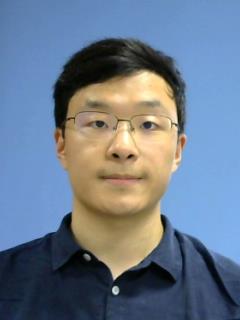
Dr. Pavle Zagorscak is a Researcher at the Division of Clinical Psychological Intervention , Freie Universität Berlin, focusing on Internet-based interventions , depression , and cyberbullying prevention . He has extensive experience in digital mental health , psychopathology , and psychotherapy research . Doctorate in Psychology (2019), Freie Universität Berlin Master of Science in Psychology (Clinical & Health Psychology) (2013) Bachelor of Science in Psychologie (2010) His research spans personalization of online therapy components , symptom dynamics , and social factors in mental health . Recent work includes digital phenotyping and non-response prediction in CBT. He contributes to transdiagnostic models and symptom-oriented psychopathology through advanced statistical approaches like bifactor-(S-1) modeling. Publications highlight trends in online intervention efficacy , personalized treatment , and human support mechanisms . Key collaborations include projects with University Hospital Ulm and international teams in Greece (University of Crete, Aristoteles University Thessaloniki) through DAAD initiatives. Scientific Awards : Ernst-Reuter-Preis (2020, 5000€) for doctoral work Performance bonuses from BMFSFJ (2021: 1000€, 2020: 600€) Multiple teaching awards (2015, 2016) European Crime Prevention Award (2015) He also contributes to workshops on digital psychotherapy and has developed international collaborations, including a visiting researcher role in Peru (2025). His work integrates scientific rigor with practical applications in real-world mental health settings.
Jana Gonnermann-Müller is a research assistant at the Chair of Business Information Systems, Processes and Systems at the University of Potsdam . Holding an M.Sc. in Psychology from Humboldt University of Berlin, her work focuses on human-machine interaction, particularly examining learning, decision-making, and trust in technological collaborations. Degree: Master of Science (M.Sc.) in Psychology Alumni: Humboldt University of Berlin Current Role: Scientific Associate at University of Potsdam Research explores cognitive factors in augmented reality and AI assistance systems , employing experimental designs and eye tracking methodologies. Key projects include investigating visual guidance in AR, comparing AR display types, and developing frameworks for generative AI in education. Publications (2023-2025) demonstrate expertise in digital education , cognitive load optimization , and technology-enhanced learning . Collaborations span institutions like Hong Kong Polytechnic University , University of California, Davis , and Weizenbaum Institute , with corporate consulting on learning technology implementation. Technical focus areas include: Human-System Design Optimization Eye Tracking & Usability Studies AI Recommender Systems Industry 4.0 Implementation Research applications extend to: Secondary Education Technology Assembly Line AR Integration Change Management Systems Maintenance AR Visualization
Johannes Maly is an Assistant Professor at the Bavarian AI Chair for Mathematical Foundations of Artificial Intelligence at LMU Munich. He previously held postdoctoral positions at Catholic University of Eichstaett-Ingolstadt and RWTH Aachen University, and completed his PhD at TUM Munich under Prof. Massimo Fornasier. PhD in Mathematics (2019, TUM Munich) M.Sc. in Mathematics (2015, TUM Munich) B.Sc. in Mathematics (2013, TUM Munich) His research focuses on mathematical data science and machine learning, specifically addressing: Robust covariance estimation under quantization Neural network approximation properties Implicit bias in gradient descent training Multi-structured signal recovery Quantization effects in deep learning and compressed sensing His recent publications analyze dithered quantization in covariance estimation, implicit regularization in overparameterized models, and multi-structured data recovery. He applies mathematical rigor to practical challenges in wireless communications (e.g., MIMO systems) and neural network training. Scientific recognition includes: relAI Fellow MCML Associate He supervises code/toolbox development for reproducibility and teaches graduate courses in convex optimization, high-dimensional probability, and mathematical data science. His work bridges theoretical mathematics and applied signal processing.
Martin Henze is a tenure-track Assistant Professor at RWTH Aachen University's Department of Computer Science, where he leads the Security and Privacy in Industrial Cooperation (SPICe) research group. Additionally, he co-leads the Secure Production & Energy Networks research group at the Fraunhofer Institute for Communication, Information Processing and Ergonomics FKIE in Bonn, Germany. His work bridges academic research with practical industrial security applications, focusing on critical infrastructure protection. Dr. Henze's research interests center on technical security and privacy aspects of industrial networks and data sharing, with special emphasis on energy and production sectors. His work spans industrial intrusion detection, 5G security for industrial applications, IoT security in constrained environments, and blockchain security. He develops practical security solutions that balance protection needs with the resource constraints and operational requirements of industrial systems, particularly focusing on making security both effective and comprehensible for operators. His recent publications demonstrate a strong focus on industrial security challenges, with particular emphasis on intrusion detection systems that maintain operator control, TLS optimization for resource-constrained industrial IoT, 5G security for production systems, and novel approaches to securing legacy industrial protocols. His work consistently addresses the tension between security requirements and operational constraints in industrial settings. Nachwuchsförderpreis Verbraucherforschung NRW Borchers-Plakette ICT Young Researcher Award Dr. Henze actively contributes to the academic community through service on numerous prestigious program committees including ACM CCS, IEEE S&P, NDSS, and USENIX Security. His teaching portfolio includes graduate courses on Industrial Data Security, Industrial Network Security, and specialized seminars on 5G/6G Security and IoT Security. His research is highly collaborative, frequently involving partnerships across institutions and with industry to address real-world security challenges in critical infrastructure. He heads the SPICe research group at RWTH Aachen, which focuses on developing practical security and privacy solutions for industrial cooperation scenarios. The group's work emphasizes creating security mechanisms that are not only technically sound but also comprehensible and usable by industrial operators, recognizing that the human element is critical in maintaining security in complex industrial environments.
Hannah Spitzer is a Research Group Leader at the Institute for Stroke and Dementia Research (ISD) at Ludwig Maximilian University of Munich and an associated Research Group Leader at Helmholtz Munich's Computational Health Center. She leads the Spitzer Lab, focusing on computational analysis of multimodal brain datasets to advance understanding of neurovascular and neurodegenerative diseases. Her educational background includes: PhD in Computer Science from Heinrich-Heine University Düsseldorf and Research Center Jülich (2015-2020) Master's in Computer Science from RWTH Aachen (2013-2015) Bachelor's in Computer Science from RWTH Aachen (2009-2013) Dr. Spitzer's research integrates computational biology and machine learning to decode brain complexity, with emphasis on spatial omics analysis , interpretable image representation learning , and cross-modal data integration . Her group develops tools like squidpy and campa for spatial omics while applying graph neural networks to epilepsy lesion detection through the international MELD project, prioritizing biological interpretability in AI models. Recent publications reveal strong trends in leveraging graph neural networks for subtle brain lesion detection and creating computational frameworks for spatial omics integration. Her work consistently bridges advanced machine learning with clinical neuroscience to uncover disease mechanisms in neurodegeneration and vascular disorders. Dr. Spitzer actively mentors students including current PhD candidate Beatrice Guastella and alumni Deniz Fettahoglu (MSc) and Katia Berr (PhD). Her lab operates through major collaborations including the MELD epilepsy consortium and Helmholtz Imaging Project, with funding supporting computational pipeline development for small-vessel disease prediction and multimodal brain atlasing. The Spitzer Lab comprises postdoc Wasim Aftab and PhD student Beatrice Guastella, working on computational pipelines that integrate histology, spatial omics, and neuroimaging data to decode brain disease mechanisms through interpretable AI approaches.
David Bermbach is a Full Professor at Technische Universität Berlin , leading the Scalable Software Systems group since 2023. His research focuses on distributed systems, serverless computing, and benchmarking, with significant work on edge and fog computing architectures. He is affiliated with the Einstein Center Digital Future and co-chairs interdisciplinary projects like SimRa for bicycle traffic safety. Full Professor, Scalable Software Systems (2023–present) ECDF-Professor, Mobile Cloud Computing (2017–2023) Postdoctoral Researcher (2014–2017) Education : Diploma in Business Engineering (2010) – Karlsruhe Institute of Technology (KIT) PhD in Computer Science (2014, summa cum laude) – KIT Research Interests span distributed systems with emphasis on cloud, edge, and fog computing, serverless architectures, IoT platforms, and benchmarking frameworks. His work addresses consistency-performance trade-offs, resource placement, and interdisciplinary applications in urban mobility and satellite edge computing. Article Trends show a focus on serverless computing (12/15), edge-cloud integration (9/15), and benchmarking methodologies (7/15). Key themes include optimizing function placement, federated learning architectures, and low-earth orbit computing systems. Scientific Awards Best Paper Award – ShutPub (2024) Best Workshop Paper – A Research Perspective on Fog Computing (2017) Best Paper Runner Up – Benchmarking Eventual Consistency (2014) Summa Cum Laude PhD Thesis (2014) Advising & Grants include mentoring students like Tobias Pfandzelter and Trever Schirmer, leading funded projects through the Einstein Center Digital Future, and contributing to 6G network research. His team works on cloud federation, serverless optimization, and real-world IoT applications.
Dr. Amon Göppert serves as Professor and Chair of the Intelligence in Quality Sensing group at RWTH Aachen University's Laboratory for Machine Tools and Production Engineering (WZL). His work integrates artificial intelligence into manufacturing processes to enhance quality control, production efficiency, and sustainable practices. Göppert's research spans intelligent manufacturing systems with core expertise in AI-driven production engineering, circular economy applications, and advanced assembly systems. He investigates how machine learning optimizes production ramp-up, disassembly processes, and flexible manufacturing while developing sensor-based quality control solutions for industrial applications. His recent publications reveal strong trends toward AI implementation in production planning, with emphasis on worker assistance systems for disassembly, digital twin applications for real-time control, and mobile robotics in line-less assembly environments. Key focus areas include sustainable manufacturing, metrology innovation, and adaptive scheduling systems. Göppert leads multiple high-impact research initiatives: AI-driven Product Development: Machine learning for smart measurement strategies in metrology MetaVision Consortium: Industrial metaverse applications for AI-supported vision systems Generative AI for Non-Destructive Testing optimization Cluster of Excellence Internet of Production participation As Chief Engineer at WZL, he oversees technical implementation of research projects and collaborates with industry partners to translate innovations into practical manufacturing solutions, particularly in adaptive assembly systems and quality sensing technologies.
Prof. Dr.-Ing. Katharina Schmitz serves as Institute Director and Vice Dean at the Institute for Fluid Power Drives and Systems, RWTH Aachen University. Her leadership within the Production Technology Cluster and extensive contributions to fluid power engineering establish her as a leading authority in mechanical engineering research and education. Her research spans fluid power systems, hydraulic component design, tribology, and physics-informed machine learning applications. She pioneers sustainable propulsion solutions through bio-hybrid fuels research while addressing fundamental challenges in polymer material behavior under hydraulic stresses. Current work focuses on carbon-neutral heavy-duty transportation, physics-based neural networks for lubrication modeling, and advanced control systems for electro-hydraulic actuators. Analysis of her 15 most recent publications reveals a dominant trend toward integrating physics-based modeling with deep learning to solve complex engineering problems. Her team consistently develops novel frameworks for cavitation prediction, flow rate determination, and material compatibility assessment - significantly advancing fluid power system reliability, efficiency, and digitalization. Scientific recognition includes: GfT Förderpreis 2023 for experimental and simulative investigation of partially hydrostatic relieved contacts in variable speed axial piston machines As head of the Institute for Fluid Power Drives and Systems, she leads cutting-edge research in sustainable fluid power technologies. The institute maintains strong industry partnerships while driving innovation in hydraulic component design, digital twins for condition monitoring, and next-generation propulsion systems through its position within RWTH Aachen's Production Technology Cluster.
PD Dr. phil. Evangelia Kordoni is a research assistant at Humboldt University of Berlin's Faculty of Linguistics and Literary Studies, specifically within the Institute for English and American Studies. Her office is located at Dorotheenstraße 28, Room 3.04, and she can be contacted via email for appointments. She is an active researcher in computational linguistics with a focus on grammar engineering and natural language processing. Kordoni's research primarily explores: Computational linguistics frameworks including HPSG grammar implementation Multiword expression processing and machine translation systems Treebank development for languages including English, German and Bulgarian Lexical acquisition methods for large-scale grammars Semantic parsing and disambiguation techniques Her work bridges theoretical linguistics with practical NLP applications. Kordoni's publication record shows consistent focus on deep linguistic processing, with recent emphasis on: Multiword expression analysis in machine translation systems Parallel treebank development for multilingual applications Verb subcategorization and compound noun disambiguation Dynamic annotation methodologies for Wall Street Journal texts Cross-linguistic studies of Germanic syntax
Johannes Schöning is a Professor of Human-Computer Interaction at the University of St. Gallen, where he leads a research group focused on developing novel user interfaces that empower individuals and communities with data-driven decision capabilities. His work bridges rapidly advancing technologies with human needs across diverse contexts including geographic information science, public health, medical applications, and extreme environments such as space missions. He publishes extensively at premier HCI venues including ACM CHI, MobileHCI, and DIS, as well as in interdisciplinary journals like NATURE and PLOS ONE. Professor Schöning's research interests center on understanding the interplay between technology and human activities through rigorous methods from AI, computer graphics, and cognitive psychology. His work emphasizes user-centered design methodologies and mixed methods approaches to create interfaces that fit both technological possibilities and human requirements. Key focus areas include virtual and augmented reality applications, accessibility solutions, navigation technologies, and the social implications of digital interfaces in everyday life. His research mission prioritizes theoretical and practice-based inquiry to develop disruptive solutions for real-world problems. Analysis of his recent publications reveals strong trends in virtual reality applications for emotional regulation and accessibility, with increasing emphasis on generative AI integration, environmental awareness, and space-related HCI challenges. His work consistently demonstrates interdisciplinary collaboration across computer science, psychology, geography, and medical fields, with publications showing growing interest in social implications of technology, particularly regarding navigation systems and their externalities. His scientific contributions have been recognized with numerous awards including: Best Presentation Award at IEEE VR 2023 Best Paper Award & Accessibility Award at Interact 2019 10 Year Impact Award 2021 Multiple Honorable Mention Awards at top conferences Professor Schöning actively mentors students across bachelor, master, and PhD levels, with his lab seeking candidates interested in the intersection of HCI, geoinformatics, and ubiquitous computing technologies. He emphasizes creating a 'detox-free academic environment' that focuses on meaningful teaching and research outcomes rather than academic pressures. His group frequently collaborates with international researchers and institutions on projects spanning medical applications, space exploration interfaces, and public health technologies. The research laboratory led by Professor Schöning maintains strong interdisciplinary connections across multiple domains. Current projects include developing AI-powered wearables for blind and low vision users, exploring VR applications for emotional regulation, investigating navigation technologies' social impacts, and creating interfaces for space mission contexts. The lab's work on CubeSat control software and plant visualization for space greenhouses demonstrates their unique focus on extreme environment applications, while their research on citizen participation through generative AI shows engagement with contemporary societal challenges.
Anja Tuschke holds the W3 Professorship for Business Administration, especially Corporate Management / Strategic Management, at the Ludwig Maximilian University of Munich within the Faculty of Business Administration . Her work bridges strategic decision-making, organizational dynamics, and corporate governance, with a focus on leadership, boardroom practices, and institutional influences. Teaching: Courses include Strategic Management: Concepts and Cases , Organizational Theory , and Strategy and Leadership . Research: Explores strategic change, corporate misconduct, board networks, executive compensation, and institutional legitimacy. Publications highlight trends in governance, organizational behavior, and strategic adaptation, with recent focus on digital transformation, CEO accountability, and network-driven practices.
Tina Dorosti is a researcher at the Technical University of Munich , affiliated with the TUM Faculty of Medicine and the Department of Physics . Her work focuses on applying artificial intelligence to medical imaging, particularly in CT and X-ray technologies. Research Interests: Tina specializes in AI-driven medical imaging solutions, with emphasis on machine learning for disease detection, dark-field X-ray imaging, and spectral X-ray imaging. Her projects address challenges in low-dose imaging, artifact reduction, and lung volume quantification. Publications: Her recent work (2025) includes optimizing CNNs for COPD detection in CT scans, enhancing lung tumor imaging with sparse sampling, and developing deep learning methods for lung volume estimation from chest radiographs. Earlier studies (2024-2021) explore hemorrhage detection, artifact correction, and bone segmentation in clinical imaging. Awards: Cover image of the Radiology: Artificial Intelligence July 2025 issue Collaborations: Tina collaborates with Prof. Franz Pfeiffer and colleagues at the Chair of Biomedical Physics, contributing to interdisciplinary projects in radiology, oncology, and respiratory disease diagnostics.
Andrés Bruhn is a Professor for Intelligent Systems and Dean of Computer Science Studies at the University of Stuttgart, where he leads research in the Institute for Visualization and Interactive Systems (VIS). His academic career spans over a decade with significant contributions to computer vision, particularly in optical flow, scene flow, and motion estimation. As Dean of Studies, he oversees academic programs while maintaining an active research agenda focused on cutting-edge computer vision problems. Bruhn's research interests center around computer vision with emphasis on optical flow estimation, scene flow, motion analysis, and adversarial machine learning. His work bridges theoretical foundations with practical applications, developing algorithms that address real-world challenges in motion estimation, image processing, and visual understanding. His research group has pioneered approaches that combine variational methods with deep learning, creating robust systems for motion analysis that can withstand adversarial attacks and challenging environmental conditions. The publication record demonstrates a strong focus on advancing the state-of-the-art in motion estimation, with recent work exploring adversarial attacks on optical flow systems, high-resolution datasets for benchmarking, and multi-frame fusion techniques. His research shows consistent innovation, moving from traditional variational methods to modern deep learning approaches while maintaining mathematical rigor. The work spans both theoretical contributions and practical implementations with real-world applicability. Bruhn has mentored numerous researchers who appear as first authors on publications, including Jenny Schmalfuss, Lukas Mehl, and Azin Jahedi, indicating his commitment to developing the next generation of computer vision researchers. His leadership role as Dean of Studies demonstrates institutional recognition of his expertise and administrative capabilities.
Holger Schwarz is an Associate Professor (Apl. Professor) at the Institute for Parallel and Distributed Systems (IPVS) within the Faculty of Computer Science, Electrical Engineering and Information Technology at the University of Stuttgart. He serves as Head of the Infrastructure Department and is actively involved in research and teaching in the areas of data management, database systems, and data analytics. Professor Schwarz earned his doctorate (Dr. rer. nat.) from the University of Stuttgart in 2003 with a dissertation on "Integration of Data Mining and Online Analytical Processing." He later completed his habilitation (Dr. rer. nat. habil.), qualifying him as a university professor in Germany. His primary research interests focus on data management systems , particularly in the domains of data lakes, lakehouses, enterprise data platforms, and metadata management. Professor Schwarz investigates how to design efficient and scalable data architectures that support modern analytical workloads while addressing challenges in data integration, governance, and democratization. His work bridges theoretical database concepts with practical industrial applications, as evidenced by numerous collaborations with industry partners. Professor Schwarz's recent publications demonstrate a clear trend toward enterprise data management solutions, particularly focusing on data lakehouse architectures, enterprise data marketplaces, and advanced clustering techniques. His research shows a consistent pattern of addressing real-world data management challenges through innovative architectural patterns and algorithmic improvements, with strong emphasis on practical industrial implementation. Professor Schwarz supervises numerous research projects including MetaMan (metadata management in complex data landscapes), DLArchitecture (design of comprehensive data lake architecture), INTERACT (interactive rapid analytic concepts), and VALID-Partition (improving prediction quality using domain knowledge). He also coordinates the University of Stuttgart's projects within the Software Campus initiative and serves as Managing Director of the Technology Partnership Lab and as a Member of the Board of Directors of the Industrial Data Lab. His teaching portfolio includes courses on Advanced Information Management, Database Systems, and Data Science projects across multiple semesters, demonstrating his commitment to educating the next generation of data management professionals.
Zhongxin Liu is an Assistant Professor at the College of Computer Science and Technology , Zhejiang University , China. He earned his Ph.D. from the same institution in 2021. His research focuses on Intelligent Software Engineering (AI4SE) , leveraging software "big data" to improve code understanding, generation, and security through machine learning techniques. Published in top-tier venues: TSE, TOSEM, ICSE, FSE, ASE, ISSTA Active in academic service: Reviewer for TSE, TOSEM, ASEJ, etc. Visiting Professor at University of Stuttgart (2024-2025) His recent work explores Large Language Models (LLMs) for code intelligence, security hardening, and vulnerability detection. Papers emphasize cross-domain applications, zero-shot learning, and API/code dependency analysis. Scientific awards include: ACM SIGSOFT Distinguished Paper Awards (ASE 2018, 2019, 2020; ISSTA 2025) Zhejiang University Qizhen Scholar (2021) CCF TCSE Doctoral Dissertation Award (2023) Recruiting undergraduate interns, graduate students (MS/Ph.D.), and postdocs for code intelligence research. Contact: liu_zx@zju.edu.cn .