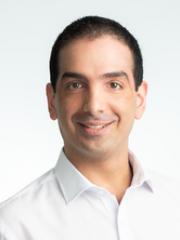
Murat Tahtaliمشاهده پروفایل
مدرس ارشد
Dr. Murat Tahtali is a Senior Lecturer at UNSW Canberra within the School of Engineering and Information Technology at the University of New South Wales. His academic career spans multiple engineering disciplines with a strong focus on interdisciplinary research connecting engineering principles with medical applications. Dr. Tahtali's research interests span several interconnected fields including Medical Imaging , particularly Light Field CT and SPECT (L-SPECT), Adaptive Optics , Computer-Aided Design , Finite Element Analysis , Vibration Analysis , and Image Processing . His work bridges theoretical engineering concepts with practical medical applications, developing novel imaging techniques that can operate through challenging environments and media. His research has significant implications for both defense applications and medical diagnostics. An analysis of Dr. Tahtali's recent publications reveals a strong trend toward integrating machine learning techniques with traditional engineering approaches. His work spans medical imaging innovations, structural health monitoring using vibration analysis, computer vision for challenging environments, and deep learning applications. The interdisciplinary nature of his research connects mechanical engineering principles with computational methods and medical applications, demonstrating consistent innovation across multiple domains. Dr. Tahtali actively supervises research students and offers PhD scholarships ($35,000 per year) for high-achieving students in Computer Science, Electrical Engineering, or Mechanical Engineering. His research group works on cutting-edge problems at the intersection of engineering disciplines, with particular emphasis on medical imaging technologies and computational methods for challenging environments. His laboratory work focuses on developing novel imaging systems, particularly Light Field SPECT technology, as well as computational methods for image restoration through turbulent media. The research team combines experimental work with sophisticated computational modeling to advance imaging capabilities in both medical and defense contexts.