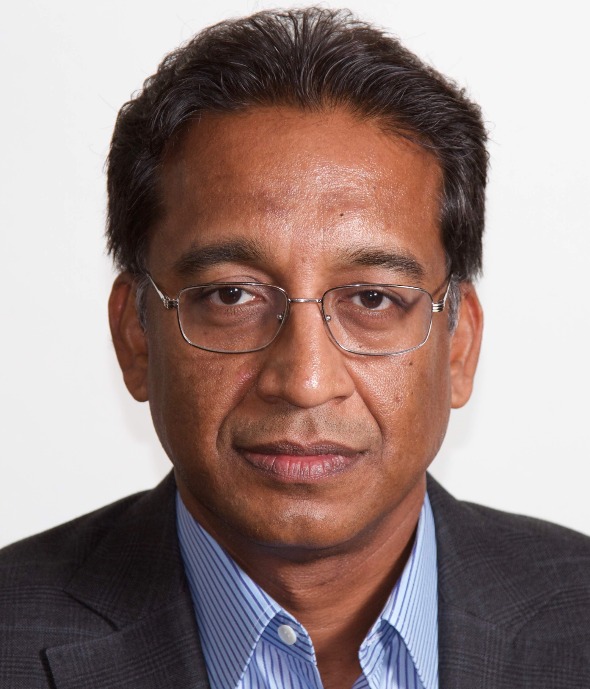
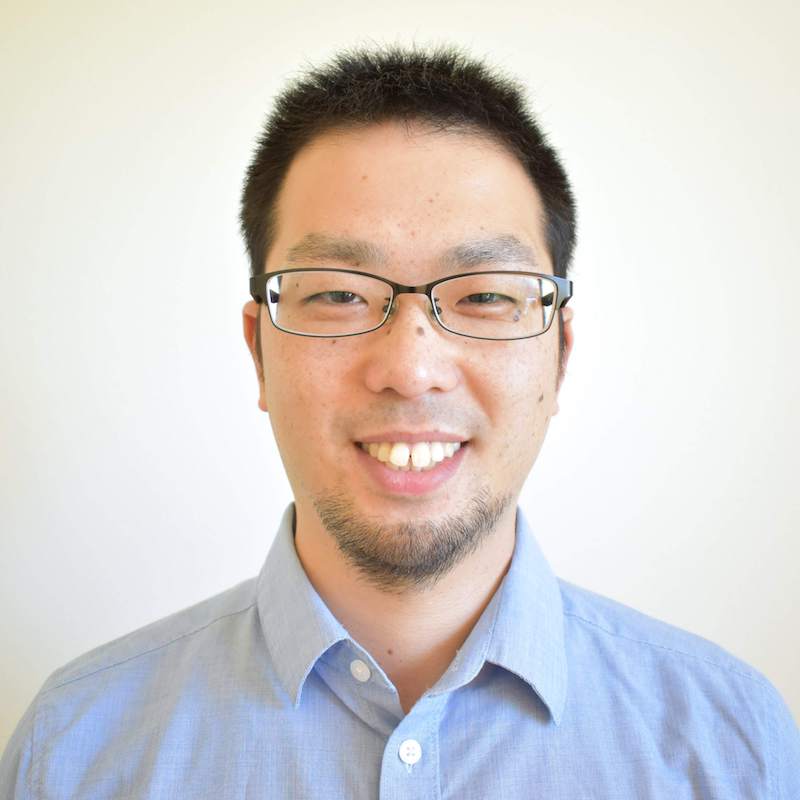
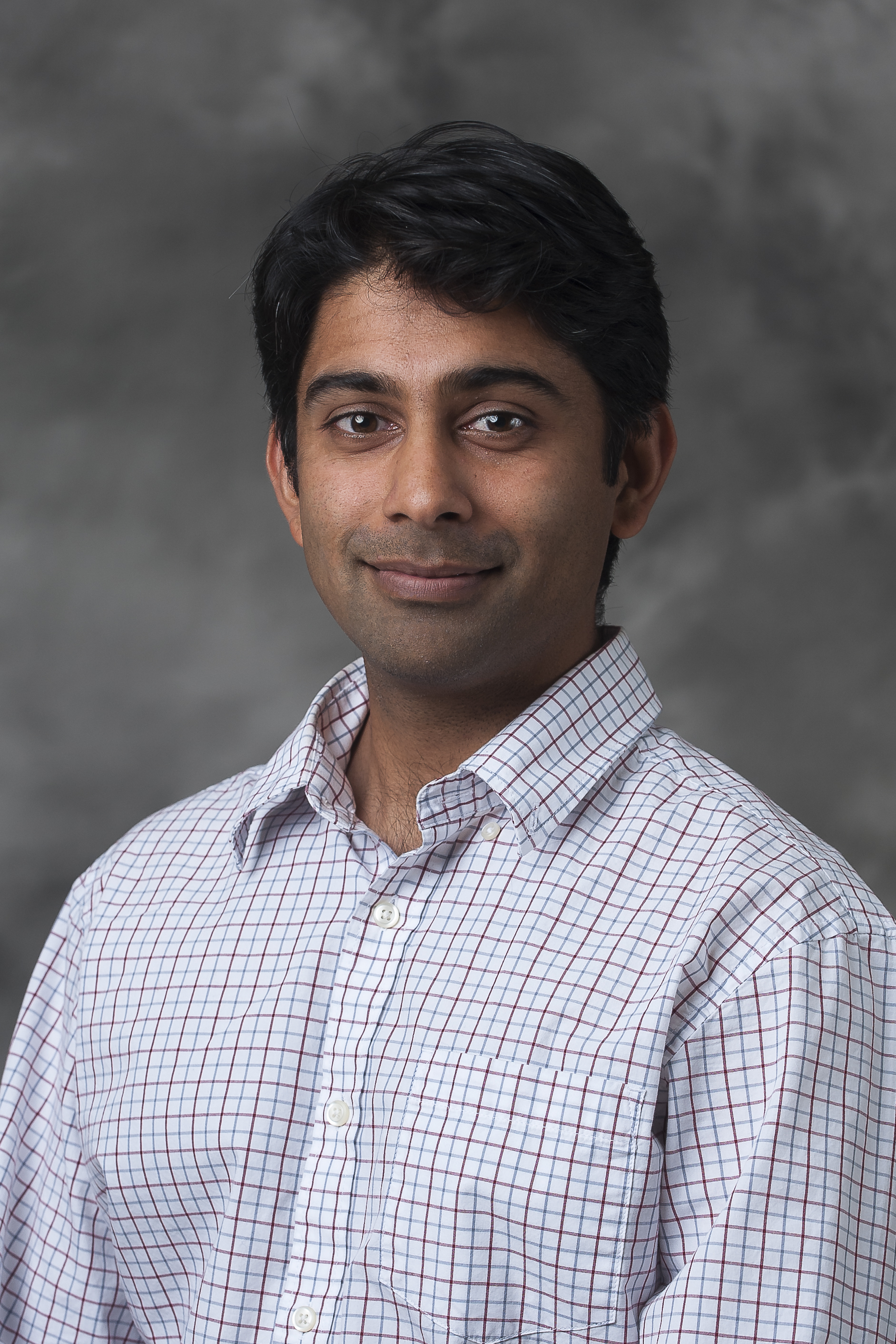
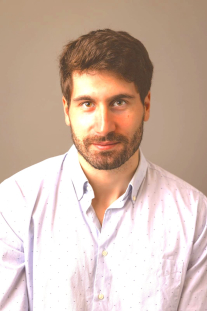
Michael Oberst is an Assistant Professor of Computer Science at Johns Hopkins University's Whiting School of Engineering, affiliated with the Malone Center for Engineering in Healthcare and the Data Science and AI Institute. His research focuses on developing reliable machine learning systems for healthcare decision-making, emphasizing causal inference and robust performance across diverse clinical settings. Key research themes include: Ensuring ML system reliability comparable to FDA-approved medical tools Causal reasoning in observational healthcare data Robustness to dataset shifts across hospitals Algorithmic fairness under unobserved confounding Medical adaptation of large language models Recent publications (2025-2024) demonstrate trends in prediction-powered inference, clinical validation frameworks, and robustness evaluation methods. His work appears in top ML venues (NeurIPS, ICML, UAI, EMNLP) and translational medicine journals. Michael holds a BS in Statistics from Harvard University and a PhD in Computer Science from MIT, with postdoctoral training at Carnegie Mellon University's Machine Learning Department. His group actively seeks PhD students and postdocs for developing trustworthy AI solutions in healthcare.
Dr Moe Mojtahedi is a Senior Lecturer at the School of Built Environment, University of New South Wales (UNSW). He earned his PhD in 2014 from the School of Civil Engineering at the University of Sydney. As a certified Project Management Professional (PMP) and Professional Engineer (PEng) accredited by Engineers Australia, Dr Mojtahedi bridges academic research with practical application in construction management and disaster risk reduction. PhD (University of Sydney, 2014) MEngSc (University of New South Wales) B.E. (Industrial), Professional Engineer (Australia) His research focuses on the intersection of construction management , urban resilience , and disaster risk reduction , particularly examining: Climate change adaptation in infrastructure Post-disaster recovery frameworks Lean construction methodologies Decision support systems for risk management Evacuation planning optimization Resilient hospital infrastructure Recent publications analyze trends in disaster science using computational modeling, prefabricated construction for industrial buildings, and AI/ML applications in aged care facility evacuation. His 2025 ChemistryOpen article explores sustainable reaction media for chemoselective processes, demonstrating interdisciplinary reach. Scientific recognition includes: Research Excellence Awards (Engineers Australia, 2012 & 2013) Best Conference Paper (ICES, Salford, 2017) Elsevier Outstanding Contribution Award (International Journal of Project Management, 2017) Learning and Teaching Excellence (UNSW, 2017) As a supervisor, he guides 7 PhD candidates and has mentored 4 graduates, including Mahmoud Ershadi (project management office effectiveness) and Kamyar Kabirifar (construction waste management). He contributes to policy discussions on aligning National Construction Code with UN Sendai Framework and advocates for disaster science integration in built environment practices. His media contributions examine hospital flood risks and climate change adaptation in Australia.
Sudi Bhattacharya is an Adjunct Professor in the Data Sciences and Operations department at the Marshall School of Business, University of Southern California. Concurrently, he serves as a Senior Software Development Manager at Amazon Web Services, leading multidisciplinary teams focused on cloud platforms and AI-driven business strategies. Education: MBA from University of Chicago Booth School of Business Dr. Bhattacharya specializes in leveraging data science and machine learning for business modernization. His research interests include: Generative AI applications in enterprise systems Large Language Model (LLM) integration with cloud infrastructure Data-driven decision-making frameworks Digital transformation economics AI automation in supply chain optimization He has taught advanced courses at USC since 2023, including: DSO-575: Driving Business Transformation with GenAI and ML DSO-599: Generative AI and Automation: Business and Societal Implications DSO-599: Special Topics in Data Sciences and Operations
Dr. Georgiana Ifrim is an Associate Professor at the School of Computer Science, University College Dublin , where she serves as Director of Graduate Research and Co-Lead of the SFI Centre for Research Training in Machine Learning (ML-Labs). She holds concurrent appointments as an SFI Funded Investigator at the Insight Centre for Data Analytics and VistaMilk SFI Research Centre . Her academic journey includes postdoctoral research at Insight Centre, Cork Constraint Computation Centre (4C), and Aarhus University's Bioinformatics Research Centre (BiRC). Education: BSc in Computer Science, University of Bucharest, Romania MSc and PhD in Informatics, Max-Planck Institute for Informatics, Germany Dr. Ifrim specializes in scalable predictive modeling for diverse applications including: Sequence learning (DNA analysis, time series) Real-time prediction for streaming data (news/social media, energy) Interpretable machine learning models Knowledge graph exploitation (WordNet/Yago, Naga) Wearable sensor data analysis (sports science, health monitoring) Energy price forecasting for sustainable systems Her recent publications focus on time series explainability (TSHAP, tsCaptum), multivariate analysis (scalable channel selection), and healthcare applications (fall detection, walking speed estimation). Key contributions include open-source tools like SEQL (sequence learner) and Twitter-Topics (event detection). Scientific Awards: Winner of SNOW@WWW14 Data Challenge As Director of Graduate Research, she oversees advanced academic training while leading funded projects at the intersection of machine learning , real-time analytics , and domain-specific applications in agriculture, healthcare, and digital journalism. Her research group maintains active GitHub repositories with open-source implementations.
Genya Ishigaki is an Assistant Professor in the Department of Computer Science at San José State University's College of Science. His research focuses on network slicing, combinatorial optimization, and reinforcement learning, addressing resource allocation challenges in next-generation telecommunications networks. Ph.D. in Computer Science, The University of Texas at Dallas, 2021 M.S. in Computer Science, The University of Texas at Dallas, 2021 M.S. in Engineering, Soka University, Japan, 2016 B.S. in Engineering, Soka University, Japan, 2014 Dr. Ishigaki's work explores adaptive network control through machine learning and combinatorial optimization, including elastic network slices , explainable AI , and federated learning . His research addresses critical tradeoffs in resource utilization versus capacity reservation for future demands. Recent publications demonstrate his focus on network automation (2025), information diffusion (2025), federated learning platforms (2024), and DDoS attack detection (2024). Articles span network security , AI-driven optimization , and social network dynamics . NSF Student Travel Grant (2019) Shigeta Education Foundation Ph.D. Scholarship (2019-2021) Outstanding TA Award (2019) JASSO Ph.D. Scholarship (2016-2019) NEC C&C Foundation Travel Grant (2015) He leads the Interconnect Lab, which investigates accountability in autonomous network operations and edge computing-oriented federated learning. His grants include SJSU's RSCA Seed Grant (2022-2023) and University Grant Academy Award (2022).
Satyajit Ambike is an Associate Professor in the Department of Health and Kinesiology at Purdue University , with courtesy appointments in the Department of Speech, Language, and Hearing Sciences. His research focuses on biomechanics , human motor control , and dynamical systems . PhD in Mechanical Engineering from The Ohio State University MS in Mechanical Engineering from The Ohio State University BE in Mechanical Engineering from University of Pune Dr. Ambike investigates human locomotion and prehension across the adult lifespan, analyzing how aging affects movement stability and the stability-agility tradeoff in daily activities. His work uses synergistic control frameworks to develop biomarkers for neuromuscular pathologies like Parkinson’s Disease. Recent publications emphasize adaptive gait analysis , prehensile control , and sensor-based mobility assessment using IMUs. Themes include aging, neuromuscular disorders, and movement optimization. Scientific Awards: Outstanding Graduate Faculty Teacher (2018) Presidential Fellowship (2009) Professional Affiliations: Advisory Board Member, International Society of Motor Control Advisory Committee Member, Center for Research on Brain, Behavior, and NeuroRehabilitation (CEREBBRAL) Faculty Associate, Center on Aging and the Life Course (CALC) Dr. Ambike’s lab, the Human Motor Behavior Group , trains PhD and MS students in biomechanical research, with graduates pursuing academic and clinical roles in physical therapy, neuroscience, and biomedical engineering.
Alper Yilmaz is Professor with appointments in Civil Environmental and Geodetic Engineering and Computer Science and Engineering (courtesy) Departments at The Ohio State University. He serves as Director of PCVLab and is currently interim president for the ISPRS Technical Commission II. Dr. Yilmaz has been inducted to the U.S. National Academy of Inventors in 2020 and is a Fellow of the American Society for Photogrammetry and Remote Sensing (ASPRS) and senior member of IEEE. Dr. Yilmaz's research focuses on biomimetic navigation systems for unmanned systems, mining anomalies in multi-physics and multi-dimensional data for surveillance, and learning geospatial information for scene understanding. His expertise spans Deep Learning, Reinforcement Learning, Computer Vision, Photogrammetry, Data-centric Surveillance, Collaborative Swarm Navigation, and Indoor Positioning Systems. His recent work on biomimetic navigation systems has resulted in UbiHere Inc., an Ohio State University spin-off founded in 2018. Dr. Yilmaz has served as Editor-In-Chief for the Photogrammetric Engineering and Remote Sensing Journal (PE&RS) between 2016-2024, during which the journal's impact factor increased to its highest since 1934. He previously served as Associate Editor for Computer Vision and Image Understanding Journal (2014-2016) and Machine Vision and Applications Journal (2006-2011). Outstanding Service Award (2022, ASPRS) Innovator of Year (2020, OSU) Presidential citation (2019, ASPRS) Masao Horiba Award honorable mention (2016, Japan) Lumley Interdisciplinary Research Award (2015, OSU) Lumley Research Award (2012, OSU) Top 1% most cited researcher in Artificial Intelligence & Image Processing and Geological & Geomatics Engineering (2024) Dr. Yilmaz has advised 29 Ph.D. and 15 M.Sc. students to completion on topics ranging from photogrammetry, machine learning, and computer vision. His research has received over $13M in extramural funding from NASA, NSF, DOD, DOE, NIH, and industry partners including Ford Motor Company, Trimble Inc., and UbiHere Inc. PCVLab, located in Bolz Hall Suite 233, features a sensor calibration room, state-of-the-art workstations with GPUs for deep learning studies, and small robotic systems including ground and aerial units.
Prof. Dr. Chunyang Chen is a Full Professor at the Department of Computer Science, Technical University of Munich (TUM), Heilbronn, Germany. He holds the Chair of Software Engineering & AI, serves as a core member of the Munich Data Science Institute, board member of the Heilbronn Data Science Center, and Fellow at Fortiss. He also maintains an Adjunct Professor role at Monash University, Australia. Research Focus: His work bridges Software Engineering, Deep Learning, and Human-Computer Interaction (HCI), specializing in AI/ML, NLP, and program analysis for mobile app development, testing, and security. Key areas include LLM-assisted app development, robustness of deep learning models, and accessibility testing. Scientific Awards: Best Paper Honorable Mention in CHI 2024 Discovery Early Career Researcher Award (DECRA), Australian Research Council ACM SIGSOFT Early Career Researcher Award Facebook Research Award in Probability and Programming Dean's Award for Research Impact at Monash University Academic Leadership: He actively mentors PhD students, supervises postdocs, and leads research teams focusing on software security, automated testing, and LLM applications. His recent work explores the intersection of software security and large language models, with a special issue call for EMSE journal.
Shin Yoo is a tenured Full Professor in the School of Computing at Korea Advanced Institute of Science and Technology (KAIST), where he leads the Computational Intelligence for Software Engineering (COINSE) research group. He received his PhD from King's College London in 2009 under the supervision of Prof. Mark Harman. Currently, he serves as the General Chair for ASE 2025, which will be held in Seoul, Korea. Professor Yoo earned his PhD in Computer Science from King's College London (2009), following an MSc in Software Engineering with Distinction from the same institution (2006). His academic journey includes positions as Tenured Associate Professor (2021-2025), Associate Professor (2018-2021), and Assistant Professor (2015-2018) at KAIST, as well as Lecturer and Research Associate positions at University College London and King's College London. His research focuses on the intersection of software engineering and artificial intelligence, particularly in search-based software engineering, software testing, automated debugging, SE4AI (Software Engineering for AI), and AI4SE (AI for Software Engineering). Professor Yoo's work bridges theoretical foundations with practical applications, developing innovative techniques for fault localization, test case generation, and debugging using machine learning and genetic programming approaches. His research has significant implications for improving software reliability and development efficiency in both traditional software systems and AI-powered applications. Professor Yoo's recent publications demonstrate a clear trend toward leveraging large language models and deep learning techniques for software engineering tasks. His work spans fault localization, automated debugging, GUI testing, and program analysis, with increasing focus on the challenges and opportunities presented by AI systems. His research shows a consistent evolution from traditional search-based software engineering to AI/ML-enhanced approaches, reflecting the broader trends in the field. ACM SIGEVO HUMIES Silver Medal (2017) for human competitive application of genetic programming to fault localization research IEEE TCSE Most Influential Paper Award (ICST 2024) for work on mutation-based fault localization Professor Yoo has supervised five PhD students to completion, with his former students now holding positions as assistant professors, post-doctoral researchers, and software engineers at institutions including Kyoungpook National University, Max-Planck Institute Security & Privacy, Università della Svizzera Italiana, Roku Korea, and NUS. He currently serves as an associate editor for the Journal of Empirical Software Engineering and ACM Transactions on Software Engineering and Methodology, and has held significant leadership roles in major software engineering conferences including Program Co-chair for SSBSE (2014), ICST (2018), and ICSE NIER track (2020), General Chair for SSBSE (2022), and Testing & Analysis Area Chair for ICSE (2024). As leader of the Computational Intelligence for Software Engineering (COINSE) group at KAIST, Professor Yoo directs research that combines computational intelligence techniques with software engineering challenges. The group focuses on developing novel approaches to software testing, debugging, and analysis using search-based and AI-driven methods. Their work spans both theoretical foundations and practical implementations, with strong connections to industry challenges and applications.
Federico Nutarelli is an Assistant Professor of Economics at the IMT School for Advanced Studies Lucca, Italy. His research focuses on the intersection of machine learning and economic analysis, particularly in international trade, health economics, and industrial organization. He holds a Ph.D. in Economics from IMT Lucca, and previously conducted postdoctoral research at Bocconi University. In 2024, he was a Visiting Scholar at MIT Sloan School of Management. Key research interests include causal machine learning methods to analyze heterogeneous firm responses to economic shocks, pharmaceutical market pricing strategies, and structural demand models. His work bridges methodological rigor with applied relevance, contributing to health economics, trade dynamics, and innovation policy. Recent publications (2020–2025) explore topics such as matrix completion for world trade analysis, machine learning applications in economic complexity, and modeling innovation ecosystems. His work often employs advanced statistical techniques like Shapley values and reinforced Bernoulli processes. No scientific awards were explicitly mentioned in the provided texts. Federico collaborates with institutions like Bocconi University and MIT Sloan, reflecting his interdisciplinary network in economics and data science.
Hari Subramonyam is an Assistant Professor (Research) at Stanford University's Graduate School of Education with a courtesy appointment in Computer Science. He serves as the Ram and Vijay Shriram Faculty Fellow at Stanford's Institute for Human-Centered AI (HAI) and is a core faculty member of Stanford HCI. Subramonyam earned his PhD in Information from the University of Michigan under advisor Eytan Adar. His research focuses on the intersection of Human-Computer Interaction (HCI) and Learning Sciences, specifically developing AI systems to augment human learning through cognitively informed design, co-design with educators, and transformative learning experiences. His work prioritizes ethical AI, responsible design practices, and human values in technology creation. Research spans generative AI for education, human-AI interaction paradigms, and accessible learning technologies. Subramonyam's publications demonstrate strong focus on human-centered AI systems for education, visualization, and creative applications. His recent work (2023-2025) concentrates on generative AI interfaces for writing assistance, educational tools, and collaborative systems, while maintaining consistent exploration of visualization techniques and AI transparency frameworks. Awards & Honors: Best Paper Award at CHI (2025, 2020, 2019) Honorable Mention Award at CHI (2025) Best Paper Award at IUI (2021) Ram and Vijay Shriram Faculty Fellow HAI Hoffman Yee Grant (2024) Cover Story in Interactions Magazine (2024) Advising & Grants: Leads 27 students including PhD advisee Neha Rajagopalan (co-advised) and diverse MS/BS researchers. Received HAI Hoffman Yee Grant (2024) for "Integrating Intelligence: Building Shared Conceptual Grounding for Interacting with Generative AI" as co-investigator. Teaches courses on data visualization (CS 448B) and educational technology design (EDUC 432). Labs & Leadership: Core faculty at Stanford HCI group, directing research on human-centered AI systems. Organizes workshops including "Tools for Thought" (CHI 2025) and "Human–AI Coevolution" (ICLR 2025). Maintains collaborations with National University of Singapore and University of Michigan.
Baris Coskunuzer is a Professor in the Department of Mathematical Sciences at the University of Texas at Dallas (UT Dallas), part of the School of Natural Sciences and Mathematics. He holds a PhD from Princeton University (2004) and has held academic positions at institutions including Yale University, MIT, Boston College, and Koç University. His research focuses on Geometric Topology, Topological Data Analysis (TDA), and Machine Learning, with applications in medical imaging, drug discovery, and blockchain analysis. He has led multiple NSF-funded research grants and collaborates internationally. Education: PhD in Mathematics, Princeton University, 2004 M.S. in Mathematics, Caltech, 2001 B.S. in Mathematics, Bogazici University, 1999 Research Interests: Geometric Topology Topological Data Analysis Machine Learning Medical Imaging Blockchain Analysis Data Science Grants & Awards: NSF-DMS ATD Research Grant (2023–2026) NSF-DMS AMPS Research Grant (2022–2025) Young Scientist Award, Turkish Science Academy (2016) Fulbright Scholar Award (2014) Over 60 peer-reviewed publications in journals such as Communications on Pure and Applied Mathematics and NeurIPS Advising & Labs: Supervises a research group focused on Topological Machine Learning (TML) Collaborates on projects like Topo-ML for medical diagnostics and GraphPulse for temporal graph analysis
Christophe Mues is a Professor of Data Science and Information Systems at the University of Southampton's School of Management, within the Department of Decision Analytics and Risk. His research focuses on credit scoring, consumer credit risk modeling, and applications of predictive analytics, including machine learning techniques for credit risk assessment. He leads the Information Systems & Business Analytics section and supervises multiple PhD students in Business Studies and Management. His work spans advanced statistical methods for predicting Probability of Default (PD), Loss Given Default (LGD), and loan profitability. He is actively involved in the academic community, serving on the organizing committee for the Credit Scoring and Credit Control conference. His teaching includes topics in information systems and business analytics. Contact: C.Mues@soton.ac.uk. Research Interests: Credit Scoring and Consumer Credit Risk Modelling Predictive Analytics in Finance Machine Learning Applications (Deep Learning, Graph Neural Networks) Non-Traditional Data Integration Credit Model Transparency and Fairness Debt Collection Optimization PhD Supervision: Currently guiding four students in Business Studies & Mngt: Kameswara Rao Korangi, Sarthak Gurnani, Pablo Casas, and Nora Agyei-Ababio. Professional Activities: Leads research groups and contributes to international conferences. His work bridges academic research with practical financial risk solutions, emphasizing ethical AI and regulatory compliance in credit modeling. Biography: Holds a PhD in Applied Economics from KU Leuven (Belgium). Joined the University of Southampton in 2004, advancing from researcher to his current leadership role in Decision Analytics and Risk.
Prof. Akash Kumar is a Professor at the Chair of Embedded Systems at Ruhr University Bochum, Germany. He previously held professorships at TU Dresden (2015–2024) and the National University of Singapore (NUS; 2011–2015). His research focuses on design automation of embedded systems, reliability optimization, and approximate computing, with a strong emphasis on FPGA and emerging technologies. He leads projects such as Lean-MICS (DFG-funded) and SecuREFET-II, addressing cross-layer reliability and secure circuits. Education: PhD in Multimedia Multiprocessor Systems from Eindhoven University of Technology (TUe) and NUS (2005–2009), Master of Technological Design (Embedded Systems) from NUS (2003–2004), and B.Eng (Computer Engineering) from NUS (1999–2002, First Class Honours). Research interests span embedded systems, reconfigurable architectures, and hardware-software co-design. His work includes optimizing energy efficiency, fault tolerance, and cross-layer approximation techniques. Recent publications highlight advancements in FPGA-based accelerators, machine learning optimizations, and mixed-criticality systems. Active in grants and leadership, Kumar is Principal Investigator on multiple DFG and industry-funded projects, emphasizing collaborative research in distributed computing and approximate architectures. His contributions bridge theory and practice, with applications in edge AI, IoT, and cybersecurity.
Lin Ma is an Assistant Professor in the Department of Electrical Engineering and Computer Science at the University of Michigan, Ann Arbor, since August 2023. His research focuses on advancing database systems through machine learning integration, with a particular emphasis on self-driving DBMS, query optimization, and GPU acceleration. He holds a PhD from Carnegie Mellon University, where he also served as a postdoctoral researcher, and previously worked as a Software Engineer at Databricks. Research Interests: Lin’s work bridges database management systems and machine learning, aiming to create autonomous systems capable of self-optimization. Key areas include workload forecasting, behavior modeling for self-driving DBMS, and leveraging GPU capabilities for large-scale analytics. His contributions have been recognized through publications in top venues like VLDB, SIGMOD, and CIDR. Service: He actively serves on program committees for major conferences including SIGMOD, VLDB, and CIDR, and has held roles such as Web/Information Chair for SIGMOD (2023). His contributions extend to academic service, including admissions and faculty search committees at CMU and UMich. Labs & Projects: Lin leads research initiatives in database systems, including the QueryBot5000 framework for workload forecasting, and collaborates on projects like Vortex and Database Gyms to advance GPU-accelerated analytics and self-driving system design.