Prof. Angelika Steger is a Full Professor in the Department of Computer Science at ETH Zurich, leading research in theoretical computer science since 2003. She holds a Master's in Applied Mathematics from Stony Brook University (1985) and a PhD from the University of Bonn (1990). Her career includes roles at Kiel, Duisburg, and TU München before joining ETH. She is a Leopoldina member (2007), ICM speaker (2014), and Collegium Helveticum Fellow (2009+). Research focuses on probabilistic methods, randomized algorithms, graph theory, and combinatorial optimization. She has contributed to understanding discrete structures, neural networks, and algorithmic resilience. Awards include recognition in both computer science and mathematics circles. Her work bridges theoretical foundations with applications in AI, neuroscience, and distributed systems.
Florian Tramèr is an Assistant Professor of Computer Science at ETH Zurich, leading the SPY Lab. His research focuses on computer security, privacy, and adversarial machine learning, particularly studying vulnerabilities in deep learning systems. He holds a PhD from Stanford University and previously worked at Google Brain. Education: Bachelor's and Master's from EPFL (Switzerland), PhD from Stanford University. Research Interests: Adversarial machine learning, privacy-preserving technologies, cryptography, and evaluating AI safety through frameworks like AgentDojo. His work addresses societal impacts of rapidly deployed machine learning systems. Awards: Two Best Paper Awards at ICML 2024, CAIS SafeBench competition win, Google/Amazon Research Awards. His research has been featured in Nature , Science , and The Economist . Labs/Teams: SPY Lab (ETH Zurich), part of the Information Security Institute and ZISC. Associated with ETHZ AI Center. Advises PhD students on AI safety and security topics.
Dominik André Strebel is a Lecturer at the Department of Mechanical and Process Engineering at ETH Zürich, affiliated with the Chair of Building Physics. His research focuses on urban climate modeling, mesoscale meteorology, and machine learning applications in environmental systems. He holds a MSc in Engineering (Energy and Environment) from HSR Rapperswil (now OST), where his studies emphasized climate models for renewable energy forecasting and Smart Grids. His Master’s thesis involved developing a coupled climate and multiphysics model for overhead power lines in collaboration with Swissgrid, alongside improving weather forecasts using UAV data integration in WRF models. Research Interests: Urban Heat Island simulation and mitigation Mesoscale meteorological modeling (WRF, COSMO) Machine learning for urban climate analysis High-Performance Computing (HPC) and Data Science GIS and mathematical modeling for urban environments Key Contributions: Developed frameworks coupling WRF-UCM-SOLWEIG for thermal comfort mapping at city scale Advanced methods for quantifying urban climate drivers (e.g., LCZ analysis) Improved mesoscale predictions using hybrid ML and sensor data Explored intra-urban warming patterns in heatwaves across multiple cities Current Projects: Hybrid machine learning-mesoscale modeling for urban climate prediction Mapping heat exposure indices in mid-latitude cities Urban morphology clustering for identifying heat-vulnerable neighborhoods
Zahno Silvan is a Professor at HES-SO Valais-Wallis - Haute Ecole d'Ingénierie, affiliated with the School of Engineering and IT and the Department of Industrial Systems. His work focuses on advancing Industry 4.0, Data Science, and embedded technologies. He leads and collaborates on innovative projects addressing challenges in manufacturing automation, predictive maintenance, and teleoperation. Research interests include FPGA-based systems, machine learning integration for quality control, and IoT-driven industrial solutions. Key projects include the PmPm framework for interactive ML in manufacturing, AT-Com for teleoperated construction machinery, and collaborations with companies like Constellium and Eversys to reduce production costs and improve efficiency. He has secured significant funding, including Innosuisse grants and industry partnerships, totaling over CHF 3 million across ongoing and completed projects. His contributions span academic-industry collaborations, emphasizing digital transformation and sustainable manufacturing practices.
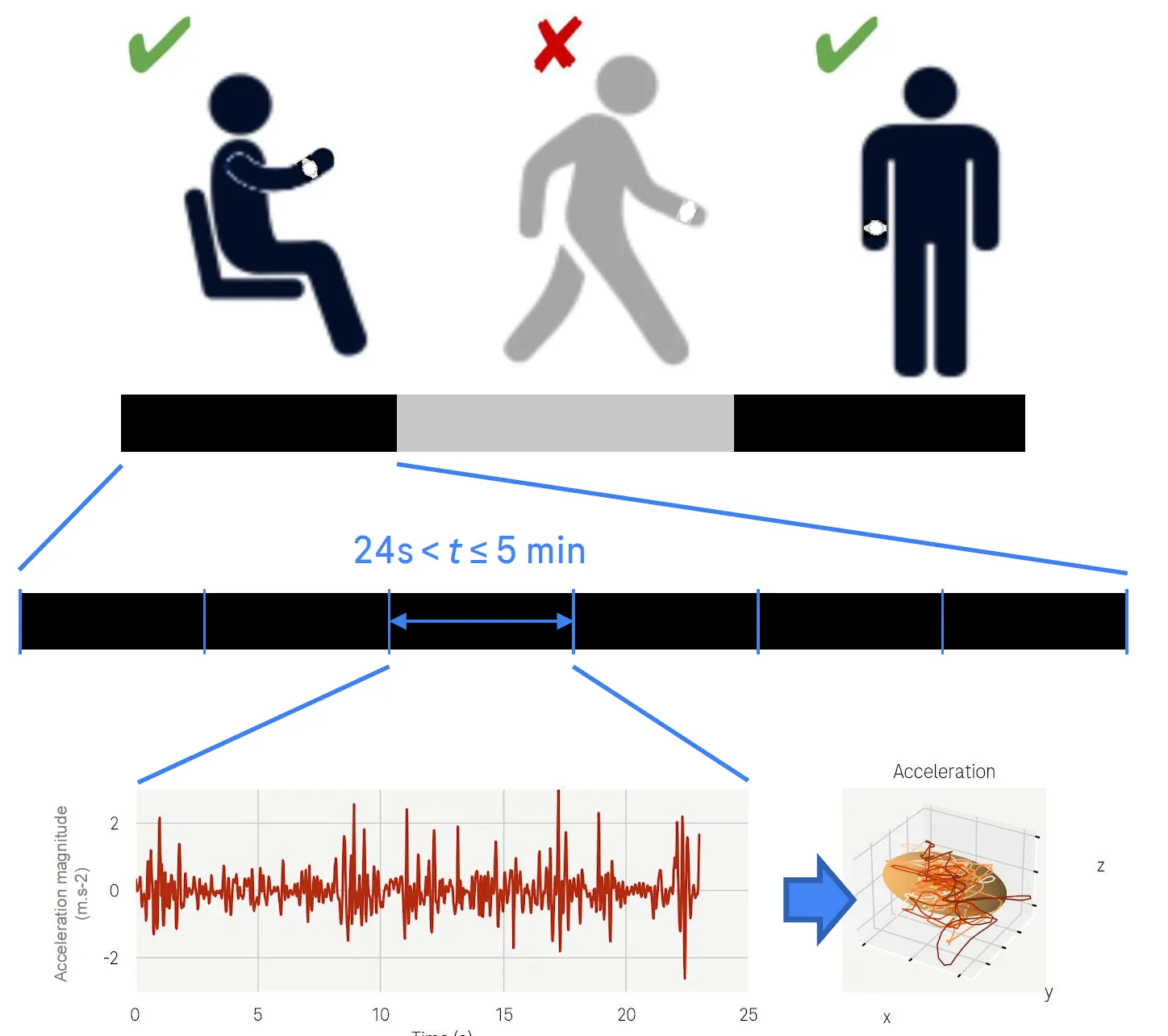
Lidia Alecci is a Ph.D. student at the Faculty of Informatics, Università della Svizzera italiana (USI) since October 2021. She holds a double Master’s degree in Informatics from USI and the University of Milano-Bicocca (2021), with a thesis focused on robust sleep behavior recognition using wearable sensors. Her research combines wearable computing, affective computing, and machine learning to address interpersonal variability in physiological and behavioral patterns. Education: Master in Informatics - Double Degree (2019-2021), USI and UniMiB Bachelor in Computer Science (2015-2018), University of Padova Research Interests: Wearable Computing Affective Computing Machine Learning for Healthcare Data Science Awards: Italian finals of international championships in mathematical games (2014, 2015) Experience: Roche Internship (2022-2022): Developed ML pipelines for Huntington's disease symptom prediction Wintech Internship (2018): Built web applications for contact management and campaign analysis Labs/Teams: Silvia Santini’s research group at USI
Federica Lanza is a Lecturer at the Department of Earth and Planetary Sciences at ETH Zurich, affiliated with the Schweiz. Erdbebendienst (SED), the Swiss Seismological Service. Her work focuses on seismology, geophysics, and geothermal systems, with expertise in induced seismicity, fault dynamics, and advanced monitoring technologies like Distributed Acoustic Sensing (DAS). She teaches courses such as Seismic Waves II in the Autumn Semester 2025. Her research integrates field experiments, computational modeling, and machine learning to address challenges in seismic hazard assessment, geothermal energy development, and tectonic processes. Key areas include forecasting induced earthquakes at geothermal sites, analyzing fault interactions in fold-and-thrust belts, and developing innovative sensor systems for subsurface monitoring. Dr. Lanza collaborates on large-scale projects like the Utah FORGE initiative, advancing techniques for real-time seismic monitoring and fracture network characterization. Her contributions bridge fundamental geophysical research with practical applications in energy systems and risk mitigation.
Prof. Gunnar Rätsch is a Full Professor in the Department of Computer Science at ETH Zürich and Deputy Head of the Institute for Machine Learning. His research focuses on developing machine learning methods for biomedical applications, including genomics, medical imaging, and clinical decision support systems. He specializes in integrating multi-omics data, spatial transcriptomics, and time-series analysis to address challenges in precision medicine and critical care. His work emphasizes ethical AI frameworks, algorithmic fairness, and robust clinical prediction models. Key research areas include: Deep learning for medical imaging and histopathology Single-cell analysis and tumor profiling Reinforcement learning for treatment optimization in ICUs Multimodal data integration for clinical applications Recent work highlights advancements in: Standardizing single-cell cytometry readouts for clinical use Developing foundation models for critical care time-series analysis Creating interpretable survival models for ICU patients His contributions span foundational machine learning theory and applied healthcare technologies, with a focus on translational research to improve clinical outcomes. Current projects include the Tumor Profiler Study for multi-omic tumor analysis and ethical frameworks for clinical AI systems.
Daniele Zambon is a postdoctoral researcher at the Dalle Molle Institute for Artificial Intelligence (IDSIA), affiliated with Università della Svizzera italiana (USI) in Lugano, Switzerland. He is a member of the Faculty of Computer Science and the Graph Machine Learning Group, as well as the IEEE Task Force on Learning for Graphs. PhD : Informatics, Università della Svizzera italiana (USI), 2022 Master’s & Bachelor’s : Mathematics, University of Milan, Italy Visiting Researcher : University of Florida, University of Exeter Internship : STMicroelectronics, Italy His research lies at the intersection of machine learning and graph-structured data, with a strong emphasis on graph representation learning , learning in non-stationary environments , and time series analysis . He explores how to model dynamic graphs, detect anomalies and changes over time, and develop deep learning methods for spatiotemporal forecasting. His work integrates statistical testing, geometric deep learning, and neural architectures like Graph Neural Networks (GNNs) and Neural ODEs. The recent publications highlight a clear trend toward temporal and dynamic graph modeling , especially for time series forecasting and irregularly sampled data . There is a growing focus on generative and foundation models for graphs , uncertainty-aware learning , and the creation of benchmark datasets like PeakWeather. His work bridges theoretical contributions (e.g., statistical tests, Kalman filters on graphs) with practical applications in sensing, environmental modeling, and system monitoring. Co-author of patent: Method for the Detecting Electrocardiogram Anomalies and Corresponding System (US10610162B2) PhD thesis featured in D22 Excellent Computer Science Dissertations (2022) Associate Editor, IEEE Transactions on Neural Networks and Learning Systems (IEEE TNNLS) Organizer of tutorials and special sessions at ICML, LoG, KDD, and ESANN Daniele actively contributes to the academic community through advising and teaching at USI’s Bachelor’s and Master’s programs. He has co-supervised research projects and co-organized educational initiatives such as tutorials on graph deep learning. His collaborative work involves grants and partnerships with institutions like MeteoSwiss, leading to impactful datasets and applied research. He is deeply involved in building research capacity through workshops and community engagement in the graph learning field. He is a core member of the Graph Machine Learning Group at IDSIA and contributes to the IEEE Task Force on Learning for Graphs , fostering international collaboration and setting research agendas in the domain of graph-based AI.
Frédéric Montet is a Researcher and Doctoral Student at the Fribourg School of Engineering and Architecture (HES-SO), part of the iCoSys Institute for Complex Systems. His primary role involves leading and contributing to projects focused on smart building technologies, energy efficiency, and machine learning applications. He is the Principal Applicant of the ongoing FACILITY 4.0 project (2019-2021), which develops data-driven solutions for building management and facility optimization using AI and IoT technologies. Research interests include: Machine Learning for energy systems, predictive modeling in smart buildings, radon gas monitoring infrastructure, and integration of large language models into control systems. His work bridges theoretical data science with practical applications in renewable energy management and industrial automation. Key contributions include the BBData 2.0 platform for smart building data integration, predictive domestic hot water temperature modeling in district heating systems, and benchmarking zero-shot time series forecasting models. His projects often involve collaboration with industry partners to co-create scalable ICT solutions. Current focus areas: Optimizing PV installations at grid level, predictive maintenance systems, and ethical challenges in LLM-based control systems for shared appliances.
Markus Schmidiger is a Lecturer at the Lucerne School of Business, part of the Lucerne University of Applied Sciences and Arts. He is affiliated with the Institute of Financial Services Zug (IFZ) and the Competence Center Real Estate (CC Real Estate). His academic work focuses on real estate management, digital transformation in construction, and sustainable urban development. Schmidiger also leads the MAS Real Estate Management program and contributes to industry research through projects like the Digitalisierungsbarometer for real estate. Education: PhD in Economics (HSG), Master in NLP (Society of NLP), Corporate Real Estate Manager (ebs) Research Areas: Real estate digitalization, circular economy in construction, machine learning for property valuation Projects: NISMO (Spatial ML for real estate), Digitalisierungsbarometer, sustainable development in Uri canton, smart city initiatives His industry mandates include roles on the boards of Utilita Foundation (non-profit housing investments) and Seraina Investment Foundation's Investment Committee, alongside serving on AST Migros Pension Fund's real estate committee. Schmidiger actively engages in media commentary and professional networking through his Immobilienblog and LinkedIn profile.
Vincent Jung is a PhD Student at EPFL (LTS4) and IDIAP, with a visiting researcher role at the University of Italian Switzerland (USI). He is affiliated with the Faculty of Communication, Culture and Society and the Institute of Argumentation, Linguistics and Semiotics (IALS). His research focuses on RNA Language Models (RNA-LMs), bridging methodologies from natural language processing and computational biology to address challenges in RNA sequence analysis, structure prediction, and interaction modeling. Supervised by Prof. Lonneke van der Plas, Prof. Pascal Frossard, and Prof. Raphaëlle Luisier Vincent's work emphasizes adapting and developing AI/ML techniques for biological applications, particularly in understanding RNA functionalities. He is based at USI's Lugano campus.
Prof. Dr. Kurt Stockinger is a Professor of Computer Science at ZHAW School of Engineering and holds a doctorate at the University of Zurich . He serves as Head of the MAS Data Science program and co-leads the ZHAW Datalab . His research focuses on Intelligent Information Systems , bridging information systems, natural language processing, and machine learning. Affiliated with the University of Zurich, he contributes to Quantum Machine Learning and Open Data Exploration initiatives. Stockinger's educational background includes a PhD in Computer Science (University of Vienna & CERN), a Master in Business Informatics (University of Vienna), and a CAS in Didactics & Methodology (ZHAW). He has taught courses in Quantum Computing , Big Data for Natural Sciences , and Data Science programs at ZHAW and University of Zurich. His research spans Data Science , Big Data , Natural Language Query Processing , Knowledge Graphs , and Quantum Machine Learning . Recent publications focus on quantum autoencoders , hybrid quantum neural networks , and prompt engineering for knowledge graph question answering. He has developed frameworks like ScienceBenchmark for real-world NL-to-SQL evaluation and NQuest for natural language query exploration. Scientific awards include the Best Paper Award at 7th Swiss Conference on Data Science (2020) He leads major projects such as DataGEMS (Data Discovery Platform, Horizon Europe) Digital Health Zurich (Clinical Innovation Lab) INODE4StatBot.swiss (NL-to-SQL Translation) GraphQueryML (Graph Database Optimization) ScienceBenchmark (NL-to-SQL Evaluation) Stockinger's work intersects with computer vision , biomedical data , and industrial applications , demonstrated through collaborations with institutions like Lawrence Berkeley National Laboratory, CERN, and University of Washington. He has contributed to establishing QuantumBasel and ZHAW Datalab as research hubs.