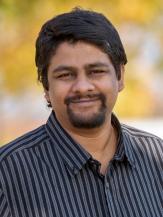
Mohammad Islam is a full-time faculty member in the Department of Computer Science at Southern Connecticut State University. He specializes in machine learning, computer vision, deep learning, and bioinformatics, with a focus on applying these technologies to smartphone security and image processing. Ph.D. in Computer Science (August 2016), The University of Kentucky Master's in Computer Science (May 2014), The University of Kentucky His research interests include: Computer Vision Big Data Machine Learning Deep Learning Bioinformatics Recent work applies deep learning to smartphone user authentication. Dr. Islam has secured grants from NASA and Southern Connecticut State University for projects including automatic video content rating, image geo-localization, and point spread function modeling.
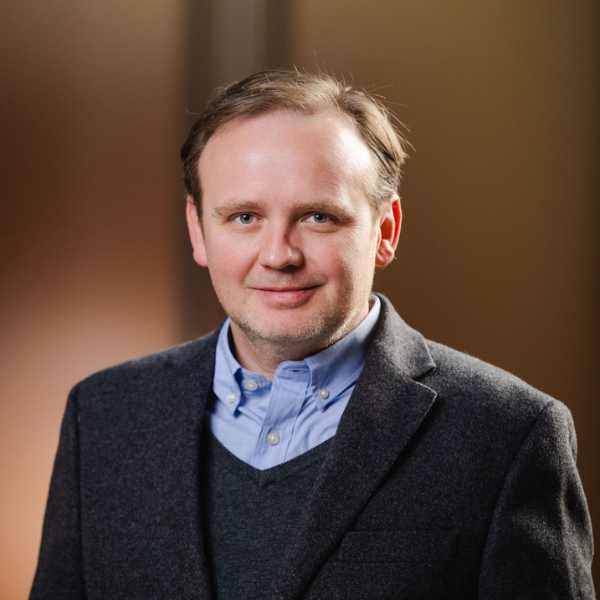
Jozef Madzo, Ph.D., serves as an Assistant Professor in the Genome Regulation and Cell Signaling Program at The Wistar Institute's Ellen and Ronald Caplan Cancer Center. He also holds the position of Scientific Director of the Bioinformatics Facility, which he began leading in July 2024. Dr. Madzo joined The Wistar Institute faculty as part of their strategic expansion of bioinformatics capabilities across advanced biomedical research programs. Dr. Madzo's research focuses on computational biology approaches to cancer research, with particular emphasis on DNA methylation drift during normal aging, disease-driven inflammation, and neoplastic transformation. His lab investigates how epigenetic changes, particularly in DNA methylation patterns, influence cancer development and progression. Notably, his work has shown that cells exhibit changes in DNA methylation patterns during aging, and that diet and calorie restriction can slow down age- or inflammation-related DNA methylation drift. His research suggests cancer cells display similar DNA methylation drift, indicating cancer may represent accelerated aging. Analysis of Dr. Madzo's publication record reveals a strong focus on the intersection of epigenetics, aging, and cancer. His work spans DNA methylation analysis, gut microbiome interactions with host epigenetics, and the role of epigenetic modifications in cancer development. Recent publications demonstrate increasing sophistication in multi-omics approaches, integrating RNAseq, ATACseq, and scRNA-seq data to uncover mechanisms of genetic and epigenetic regulation. Dr. Madzo's laboratory utilizes advanced computational methods including permutation tests, multivariate analysis, and machine learning techniques such as random forest, XGBoost, and stochastic gradient descent. They work extensively with high-dimensional data from public repositories like TCGA, ENCODE, and GEO, applying both existing open-source bioinformatics tools and custom Python and R scripts.
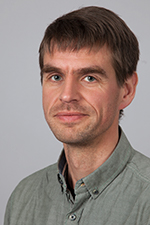
Klaus Böhm serves as a Professor at Mainz University of Applied Sciences within the School of Engineering, affiliated with the i3mainz institute (Institute for Spatial Information and Surveying Technology). His research bridges geospatial technologies with artificial intelligence, focusing on practical applications in urban planning, healthcare, and educational environments through projects like BAM (Big Data Analytics) and TOPML (Machine Learning). His primary research domains include geospatial explainable AI (GeoXAI), mixed reality decision support systems, and health informatics applications. He pioneers methods for visualizing uncertainty in AI models, developing geoparsing techniques using LLMs, and creating spatial navigation frameworks for VR environments. His work consistently addresses real-world challenges in elderly mobility, smart city infrastructure, and medical education through spatial analytics. Analysis of his 2022-2025 publications reveals three dominant trends: (1) Integration of XAI with geospatial data for transparent decision-making in urban planning, (2) Development of mixed reality tools for STEM education and dermatology training, and (3) Spatio-temporal correlation analysis for smart city applications like parking optimization and public transport accessibility. His methodology emphasizes interactive visualization of complex spatial relationships and uncertainty quantification. Dr. Böhm leads multiple funded research initiatives including AIMR (AI-based decision support in mixed reality), RAFVINIERT (spatial intelligence for senior care), and FlexGeo (geo-service integration). These projects demonstrate sustained grant acquisition capability across EU and national funding programs, typically involving interdisciplinary teams from computer science, urban planning, and healthcare sectors. As a core member of the i3mainz research institute, he contributes to Germany's geospatial technology ecosystem through collaborative projects with municipal authorities and healthcare providers. The institute's work focuses on translating academic research into operational tools for spatial data infrastructure, particularly in environmental monitoring and public service optimization contexts.
Eufemia Tarantino is Full Professor of Geomatics at the Polytechnic University of Bari, working within the Department of Civil, Environmental, Land, Building Engineering and Chemistry (DICATECh). She has held academic positions at the university since 2002, progressing from Assistant Professor to Associate Professor and achieving Full Professor status in 2019. Professor Tarantino serves as Coordinator of the MSc Course of Environmental and Territorial Engineering, is a Member of the Executive Council, and oversees the student career fair. Her research expertise spans cartography, GIS, remote sensing, and geomatics, with particular focus on: Analysis of metric characteristics and extraction of 2D/3D geometric primitives from satellite/aerial/UAV data Multi-temporal analysis and change detection for environmental and cultural heritage monitoring Development of web-based GIS for interactive geospatial analysis Professor Tarantino's publication record includes over 180 scientific contributions in international databases. Her recent work (2023-2026) demonstrates continued productivity with numerous book chapters and journal articles focused on soil sealing dynamics, precision viticulture, marine pollution monitoring, urban growth analysis, and advanced remote sensing techniques. Her research shows strong application to environmental monitoring, cultural heritage preservation, and sustainable spatial planning. As an active member of the international geospatial community, she serves on the editorial boards of 'Remote Sensing' and 'ISPRS International Journal of Geo-Information' and reviews for approximately 18 international journals. Her teaching responsibilities include Cartography, GIS, and Remote Sensing courses at undergraduate and graduate levels, as well as Advances in Geomatic Engineering at the PhD level. Professor Tarantino's work demonstrates strong international collaboration and application to real-world environmental challenges, with recent projects addressing soil sealing, marine plastic pollution, precision agriculture, and climate-related phenomena using advanced geospatial technologies.
Dr. Anai N. Kothari is an Assistant Professor in the Department of Surgery, Division of Surgical Oncology at the Medical College of Wisconsin. She holds joint appointments as Assistant Professor in the Clinical and Translational Science Institute (CTSI) of SE Wisconsin and the Data Science Institute. Dr. Kothari is an active member of the Medical College of Wisconsin Cancer Center, the Center for Advancing Population Science (CAPS), and serves as Co-Director of the Geospatial, Epidemiology, and Outcomes (GEO) Shared Resource within the Cancer Center. Dr. Kothari's research program focuses on the innovative application of artificial intelligence and data science to surgical oncology. Her work bridges the gap between cutting-edge AI technologies and practical clinical applications in cancer surgery. She has developed novel approaches for surgical case length prediction using large language models, created the PRISM system for patient records interpretation and clinical trial matching, and pioneered methods for personalized federated learning in healthcare settings. Her research also addresses critical issues of health equity and disparities in cancer care, with a particular focus on how social determinants of health impact surgical outcomes. Dr. Kothari's publication record demonstrates consistent productivity with over 125 publications spanning surgical outcomes research, AI applications in surgery, cancer disparities, and surgical education. Her recent work (2023-2025) shows a clear trajectory toward increasingly sophisticated AI applications in surgical oncology, with multiple high-impact publications in JAMA Surgery, Annals of Surgical Oncology, and other leading journals. She has successfully secured funding from diverse sources including the American Cancer Society, Advancing a Healthier Wisconsin Endowment, and industry partnerships. 2021 ACGME David C. Leach Award 2022-2023 MCW T. Michael Bolger Standing Ovation Award 2023 SAAS Visiting Professorship 2024 MCP Lee Biblo MD Excellence in Professionalism Multiple MCW Outstanding Medical Student Teacher awards As Associate Program Director for the Complex General Surgical Oncology Fellowship, Dr. Kothari plays a pivotal role in surgical education and mentorship. Her leadership extends to national organizations including the Society of Asian Academic Surgeons, American Medical Informatics Association, and Association for Academic Surgery, where she contributes to shaping the future of surgical education and AI implementation in clinical practice. Her GEO Shared Resource serves as a hub for data-driven approaches to understanding and addressing disparities in cancer care across Wisconsin and beyond.
Professor Jeff Hartnell is a distinguished physicist at the University of Sussex, where he serves in the School of Mathematical and Physical Sciences within the Physics and Astronomy department. He joined Sussex in 2007 as an STFC Research Fellow, was appointed Lecturer in 2008, promoted to Reader in 2013, and achieved full Professorship in 2017. Prior to Sussex, he worked at the Rutherford Appleton Laboratory (2005-2007) and earned his DPhil from the University of Oxford. His research centers on two major areas: understanding neutrinos to address fundamental questions about the universe (particularly why matter dominates over antimatter), and developing innovative opaque scintillator radiation detectors (LiquidO technology) for both neutrino physics and industrial applications. He serves as co-spokesperson for the CLOUD neutrino experiment and has held significant leadership roles in the NOvA experiment, including physics analysis co-coordinator (2019-2022) and Chair of the Institutional Board (2016-2021). Professor Hartnell's research group has demonstrated that LiquidO technology can surpass traditional segmented detectors, with their 'Cube' detector recognized as the world's most precise LiquidO detector. His publication record includes 88 peer-reviewed papers with approximately 11,000 citations and an h-index of 49, reflecting substantial impact in the field of neutrino physics. Institute of Physics HEPP Group Prize (2013) Fellow of the Institute of Physics (2017) Multiple teaching awards from Sussex students Royal Society Leverhulme Trust Fellowship (2023-2024) ERC grant 'AntineutrinoNOvA' (2012-2018) Professor Hartnell actively supervises PhD students and postdocs, with recent additions including Max de Carlos Generowicz, Adam Wong, Jessica Lock, and postdoc Nicolo Tuccori. His lab receives substantial funding from STFC, Royal Society, European Innovation Council, and UKRI, supporting both fundamental research and technology development with industrial applications. The group maintains strong international collaborations with Fermilab, CERN, and other institutions worldwide, providing students with opportunities for international research experiences.
Olav Skarpaas is a Professor at the Natural History Museum, University of Oslo, where he leads the Geo-ecological research group (GEco) since 2019. With a Dr. scient. from the University of Oslo in 2003, his career includes postdoctoral work at Penn State University and CEES, UiO, followed by research positions at the Norwegian Institute for Nature Research (NINA) before joining UiO as Professor in 2017. Professor Skarpaas' research focuses on ecological processes controlling biodiversity distribution and dynamics, with particular expertise in spatial modeling, climatic ecology, and experimental approaches to understanding species-environment relationships. His work spans theoretical ecology and applied conservation, addressing pressing issues like climate change impacts, land use effects, and invasive species management. His extensive publication record shows a consistent focus on biodiversity assessment methods, species distribution modeling, and ecosystem dynamics. Recent work increasingly incorporates machine learning techniques and addresses climate-biodiversity interactions at multiple scales, from local vegetation studies to global climate threshold analyses. Professor Skarpaas actively contributes to environmental policy through projects like the Nature Index for Norway and scientific opinions for the Norwegian Scientific Committee for Food and Environment. His collaborative approach is evident in numerous national and international research projects including SeedClim, INCLINE, LATICE, and NiN. As an educator, he teaches specialized courses in distribution modeling, Norwegian natural variation, botanical diversity, and ecological climatology, training the next generation of ecologists in both theoretical frameworks and practical analytical skills. The Geo-ecological Research Group under his leadership serves as a hub for innovative ecological research that bridges theoretical understanding with practical conservation applications, making significant contributions to both scientific knowledge and environmental management in Norway and beyond.
Professor John P. Makris is a distinguished academic at the Hellenic Mediterranean University where he serves in the Department of Electronics Engineering. With over 25 years of experience in geophysics and seismology, Professor Makris has established himself as a leading researcher in earthquake prediction and seismic monitoring, particularly in the seismically active Hellenic Arc region of Greece. His academic journey began with a BSc in Physics (1992) followed by a PhD in Applied Geo-Electromagnetism (1997), both from the National and Kapodistrian University of Athens (NKUA). Professor Makris has held significant leadership roles including Head of the Department of Electronics Engineering (2008-2012) and Head of the Institute of Natural Resources and Natural Hazards (2005-2015). Professor Makris's research spans several interconnected domains: Seismoelectromagnetic phenomena and earthquake prediction through VAN method Magnetotelluric studies of the Hellenic subduction zone Development of seismic monitoring networks (HC-SNC) Structural health monitoring systems for earthquake zones Integration of machine learning and IoT technologies with seismic monitoring His recent publications (2024) demonstrate a strategic evolution toward incorporating modern computational methods with traditional geophysical approaches. This work focuses on laboratory studies of rock fracturing, smart sensor networks, and analysis of recent seismic sequences in Central Crete. Professor Makris has secured significant research funding throughout his career, with '25+ research projects (funding ~4.5M€)'. His work has resulted in '60+ articles in refereed journals and conference proceedings, 7 monographs' with 815 citations according to ResearchGate metrics. As supervisor of HC-SNC (2002-2024), Professor Makris has led the development of critical seismic monitoring infrastructure in Crete. His laboratory work bridges theoretical modeling and practical instrumentation development, creating comprehensive research opportunities for students and collaborators.
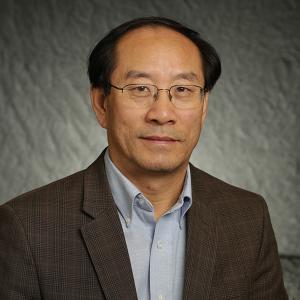
Dr. Boyun Guo is a Professor and Graduate Coordinator in Petroleum Engineering at the University of Louisiana at Lafayette's College of Engineering. He serves as the Director of the Center for Optimization of Petroleum Systems (COPS) at the Energy Institute of Louisiana (EIL). His educational background includes: Ph.D. in Petroleum Engineering, 1992 from New Mexico Institute of Mining and Technology M.S. in Petroleum Engineering, 1989 from Montana College of Mineral Science and Technology B.S. in Engineering, 1982 from Daqing Petroleum Institute Dr. Guo's research focuses on the development and utilization of geo-energy resources , with particular expertise in unconventional oil and gas reservoirs, gas hydrate reservoirs, and geothermal resources. His work integrates petroleum engineering principles with environmental sustainability considerations, emphasizing innovative approaches to energy resource extraction. His recent publications demonstrate a strong focus on CO 2 -CH 4 swapping processes in gas hydrates, optimization of geothermal energy extraction, and machine learning applications in reservoir characterization. His extensive publication record of over 140 peer-reviewed journal papers and 70+ conference presentations reflects his significant contributions to petroleum engineering. The research trends show increasing emphasis on sustainable energy practices, carbon management, and advanced computational techniques applied to complex reservoir systems. Dr. Guo's scientific recognition includes: Distinguished Achievement Award for Petroleum Engineering Faculty from SPE (2012) Distinguished Professor at UL Lafayette (2017) Multiple Outstanding Doctoral Student Mentor Awards (2018-2021) Teacher of the Year Award from UL Lafayette College of Engineering (2008) Researcher of the Year Award from UL Lafayette College of Engineering (2016) With 9 years of industry experience, 5 years at a U.S. research center, and over 20 years in academia, Dr. Guo has supervised 15 Ph.D. students and over 40 master's students. His research has been supported by high-level projects including those sponsored by NASA and the Department of Energy. He has authored 11 books and numerous invention patents in petroleum engineering. Dr. Guo leads the Center for Optimization of Petroleum Systems (COPS) at the Energy Institute of Louisiana, where his team conducts laboratory testing and computer simulation of CO 2 -CH 4 swapping processes in gas hydrate reservoirs for natural gas production and CO 2 storage.
Pradeep Kurup is a Distinguished University Professor in the Department of Civil and Environmental Engineering at the Francis College of Engineering, University of Massachusetts Lowell. With over 25 years of academic experience, he has established himself as a leading researcher in geotechnical engineering with particular expertise in site characterization, novel sensing technologies, and computational modeling approaches for geoenvironmental applications. Education: Ph.D. in Civil and Environmental Engineering (1993), Louisiana State University M.Tech. in Civil Engineering (1987), Indian Institute of Technology - Madras, India B.Tech. in Civil Engineering (1985), University of Kerala, India Professor Kurup's research spans multiple domains within geotechnical engineering, with particular emphasis on multi-sensor data fusion, site characterization & monitoring, application of novel sensing technology to geotechnical & geo-environmental engineering. His work integrates advanced experimental techniques with computational approaches including finite element modeling and artificial neural networks. His research has evolved from traditional geotechnical methods toward innovative sensing technologies for environmental monitoring and hazard detection. Analysis of his recent publications reveals a strong trend toward interdisciplinary research combining geotechnical engineering with chemical sensing, machine learning, and nanotechnology. His work increasingly focuses on developing electronic nose and tongue technologies for environmental monitoring, explosives detection, and heavy metal characterization, while maintaining strong connections to traditional geotechnical applications. Selected Awards: University Professor (2014) - University of Massachusetts Lowell Diplomat Geotechnical Engineering (D.GE) (2012) - Academy of Geo-Professionals CAREER Award (1999) - National Science Foundation Departmental Teaching Award (2002) - UMass Lowell Member - Chi Epsilon Civil Engineering Honor Society Professor Kurup has secured substantial research funding from the National Science Foundation, Federal Highway Administration, Environmental Protection Agency, and other agencies, totaling millions of dollars over his career. His grant portfolio includes multiple NSF CAREER awards and REU (Research Experience for Undergraduates) supplements, demonstrating his commitment to both research and education. He has mentored numerous undergraduate and graduate students through these research programs, fostering the next generation of engineers. His laboratory work focuses on developing innovative sensing technologies including the Electronic Nose Cone Penetrometer (ENCPT) for geoenvironmental site characterization, modular integrated cone penetrometers, and portable air samplers for detecting toxic chemicals and explosives. His research group collaborates extensively with industry partners and international institutions to translate laboratory innovations into field applications.