

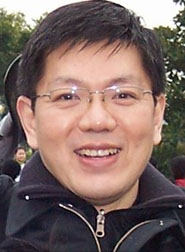
Dr. Mingjun Zhong is a Lecturer in the School of Natural and Computing Sciences at the University of Aberdeen. His research focuses on machine learning and computational statistics with applications in healthcare, energy systems, and medical imaging. He is actively engaged in teaching and academic service, including editorial roles in prominent journals. Position: Lecturer Institution: University of Aberdeen School: School of Natural and Computing Sciences Email: mingjun.zhong@abdn.ac.uk Dr. Zhong's research interests center on probabilistic and statistical machine learning methodologies applied to real-world data. He works on healthcare data analysis, non-intrusive load monitoring (NILM), spectroscopy, EEG/fMRI, and energy disaggregation. His methodological expertise includes variational inference, Markov chain Monte Carlo, Bayesian matrix factorization, and deep learning. He has developed lightweight and efficient neural network models for applications in medical imaging and smart grids. The most recent publications reflect a strong trend in applying advanced machine learning techniques—particularly deep learning, self-supervised learning, and capsule networks—to diverse domains such as medical diagnostics, energy disaggregation, and clinical decision support. There is a clear emphasis on developing efficient, interpretable, and robust models for real-world deployment, often addressing challenges like class imbalance, domain adaptation, and data scarcity. Scientific recognition includes: Fellow of the Higher Education Academy (FHEA) Associate Editor, Neural Processing Letters Review Editor, Frontiers in Applied Mathematics and Statistics Regular reviewer for top-tier journals and conferences in AI and machine learning Grant reviewer for multiple funding bodies Dr. Zhong advises a number of students, as evidenced by co-authorships on numerous publications. His research is supported by academic collaborations and likely external grants, though specific funding details are not mentioned. He teaches courses in Robotics, Machine Learning, and Knowledge Representation and Reasoning, contributing significantly to the curriculum in computing sciences. He is involved in interdisciplinary research, particularly through projects like ARCHERY (Artificial intelligence to Revolutionise the patient Care pathway in Hip and knEe aRthroplastY), which integrates AI into orthopaedic care. His work bridges computer science, statistics, and domain-specific applications, demonstrating a strong commitment to impactful, application-driven research.



.jpg)


.jpeg)