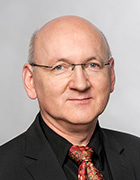
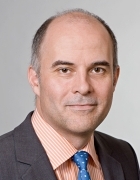
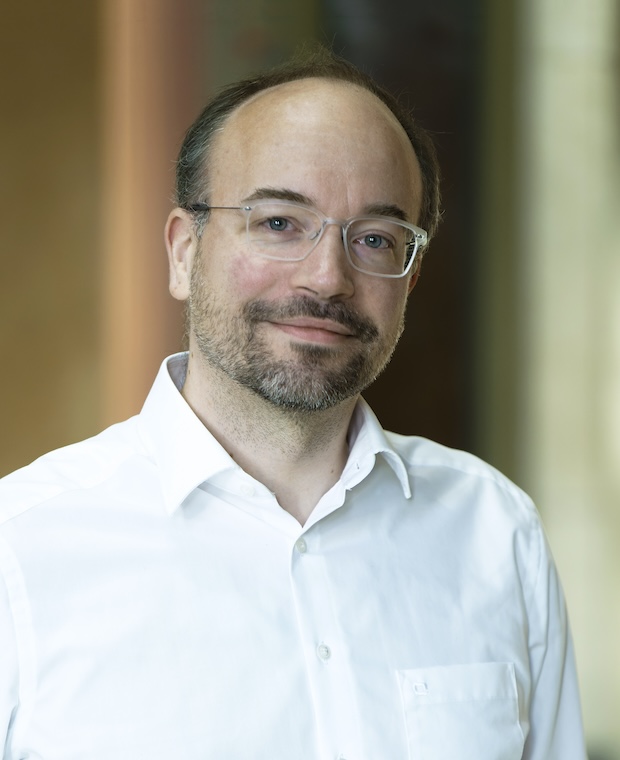
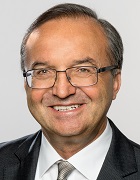
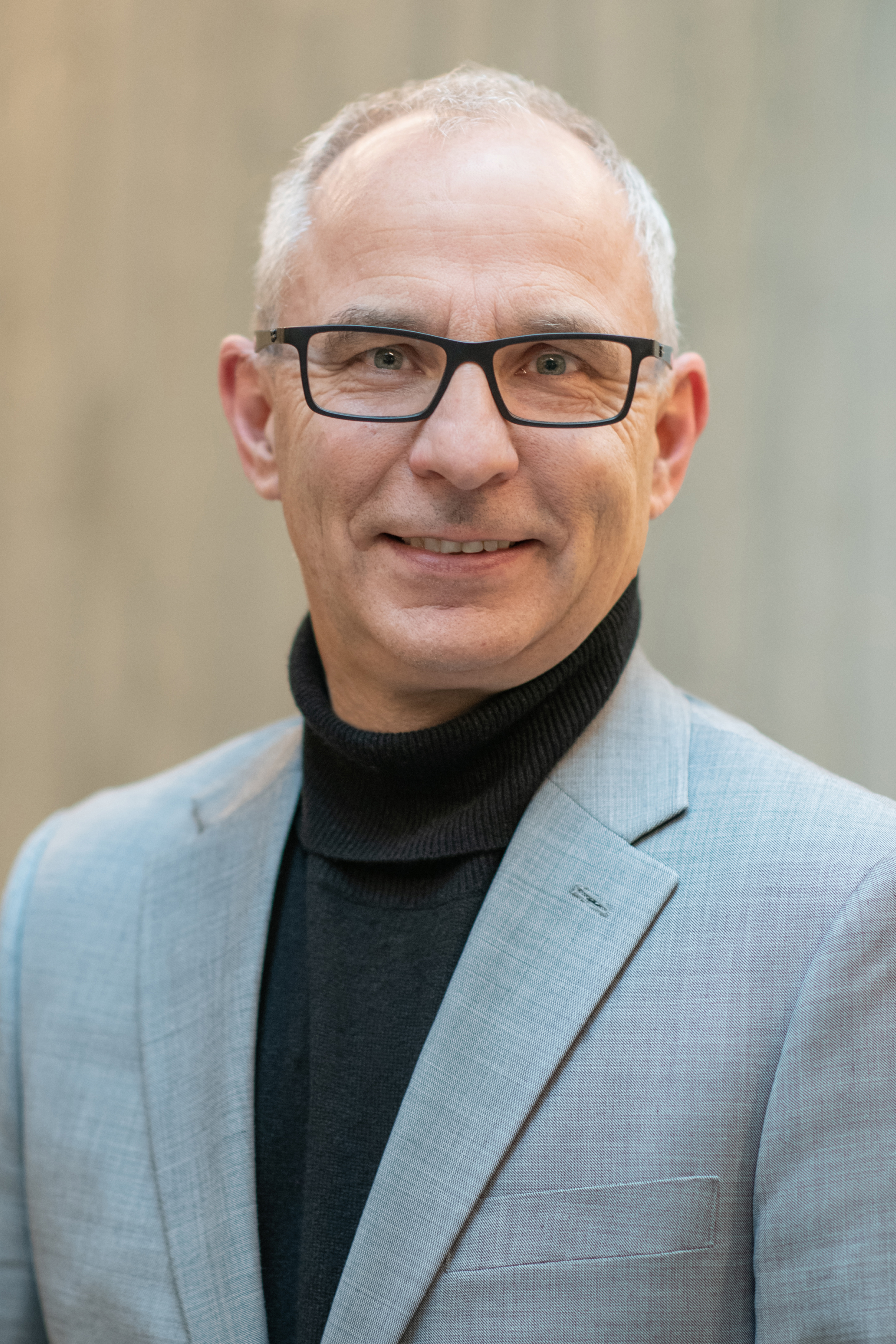
Prof. Dr. Steffen Marburg is a Full Professor at the Chair of Acoustics of Mobile Systems within the TUM School of Engineering and Design at the Technical University of Munich. His research focuses on numerical methods in vibroacoustics, structural optimization, and acoustic modeling for applications in automotive, maritime, and musical instrument domains. Education: PhD from Technical University of Dresden (1998). Academic Career: Junior Professor at TU Dresden (2004), Chair of Technical Dynamics at University of the Federal Armed Forces Munich (2010), Full Professor at TUM (2015–present). Editorial Roles: Co-Editor-in-Chief of Journal of Theoretical and Computational Acoustics, Associate Editor of Journal of the Acoustical Society of America, Editor of Acoustics Australia and Mechanical Systems and Signal Processing. His research integrates computational acoustics, boundary element methods, and machine learning to address noise control and structural optimization challenges. Recent work explores acoustic metamaterials, viscothermal losses, and data-driven modeling. He has co-authored over 150 publications and led advancements in multifrequency solution methods and noise-insulating structures. Scientific awards include the Innovation Award of the Industrieclub Sachsen e.V. (1999). His editorial contributions and leadership in journals highlight his influence in computational acoustics and structural dynamics.
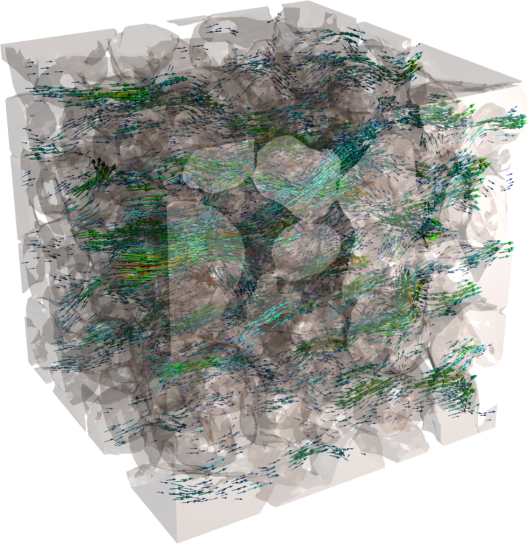
Professor David C. Dunand is a faculty member in the Department of Materials Science and Engineering at Northwestern University , where he leads the Dunand Research Group . His work focuses on mechanical metallurgy of advanced metallic materials, including alloys, composites, and foams, with applications in energy-efficient transportation and biomaterials. He also investigates additive manufacturing techniques like laser powder-bed fusion and 3D ink extrusion. Research Interests: Physical and mechanical metallurgy of multiphase metals Additive manufacturing (ink extrusion, selective laser melting) Green/sustainable metal production In situ X-ray tomography for microstructure analysis Metallic foams and scaffolds Thermoelectric materials Recent Publications show expertise in redox cycling stability, precipitation strengthening, and hierarchical microstructures, with applications in batteries, shape-memory alloys, and high-entropy systems. Awards: TMS Fellow (2012) Structural Materials Division Distinguished Scientist/Engineering Award (2008) Fellow, ASM International (2007) Department Teacher of the Year (1998) He has held leadership roles including Co-Director of the Initiative for Sustainability and Energy at Northwestern (2008-2015) and Visiting Professor at École Polytechnique Fédérale de Lausanne (2000). The group operates a SISMA MYSINT 100 laser powder bed fusion machine and collaborates extensively.
Prof. Dr. Michael Ulbrich is a full professor and Chair of Mathematical Optimization at the Technical University of Munich (TUM), within the School of Computation, Information and Technology. He has held this position since 2006 and previously served as Dean of Studies (2007–2010) and Vice Dean of the Faculty of Mathematics (2012–2015). His research focuses on nonlinear optimization, optimal control, and numerical analysis, with applications in fluid dynamics, shape optimization, and PDE-constrained systems. He leads projects in the DFG SPP 1962 and IGDK 1754, and has received prestigious awards including the Howard Rosenbrock Prize (2015) and the Doctoral Award from the TUM Association of Friends (1996). Ulbrich is Editor-in-Chief of Optimization and Engineering and contributes to multiple journals. His work bridges theoretical foundations and practical applications, including CO2 sequestration, fluid-structure interaction, and distributed optimization algorithms. Education: PhD (1996), Habilitation (2002) in Mathematics at TUM. Research stays at Rice University (USA) under DFG funding. Research Areas: Semismooth Newton methods, PDE-constrained optimization, optimal control of Navier-Stokes equations, and distributed parameter systems. Awards: Rosenbrock Prize, Teaching Excellence Awards, and recognition for doctoral work. Leadership Roles: Department Head of Mathematics (2022–), Member of TUM Senate (2019–2022), and Co-Chair of GAMM 2018. Ulbrich has authored influential textbooks like Semismooth Newton Methods for Variational Inequalities and Nichtlineare Optimierung . His recent projects include OptiGeoS (2024–2026) and collaborations on nonsmooth optimization and stochastic algorithms. His academic contributions span over 100 publications, emphasizing both algorithmic innovation and rigorous mathematical analysis.
Prof. Dr. Andrea Stocco is a Professor at the Technische Universität München (TUM), affiliated with the TUM School of Computation, Information and Technology. His research focuses on the intersection of software engineering and deep learning, particularly addressing the robustness and reliability of data-intensive systems. Key areas include autonomous vehicles, web application testing, and automated functional oracles for deep learning systems. He leads initiatives such as the Lehrstuhl für Software und Systems Engineering , collaborating on projects like CrESt and SUPPRA – Algorand Center of Excellence . Research interests encompass monitoring techniques for AI-driven systems, test suite maintainability, and scenario-based testing of cyber-physical systems (CPS). His work emphasizes practical applications, such as improving testing frameworks for evolving web applications and enhancing interoperability in autonomous driving systems (ADS). Recent efforts include leveraging large language models (LLMs) for secure code assessment and benchmarking generative AI for test input generation. No scientific awards are explicitly mentioned in the provided texts. His publications reflect a strong focus on testing methodologies, with over 40 articles since 2013, covering domains like web test automation, dependency-aware testing, and safety-critical failure prediction in autonomous systems. Advising and grants details are not detailed in the current data, but his lab contributes to TUM's broader efforts in software engineering and systems reliability.
Prof. Dr. Markus Bachmayr is a full professor at the Institute for Geometry and Practical Mathematics, RWTH Aachen University, holding the chair for Applied Mathematics. His research focuses on nonlinear approximation, high-dimensional partial differential equations (PDEs), uncertainty quantification, and numerical methods in quantum chemistry. He leads the ERC Consolidator Grant project Computational Complexity of Highly Nonlinear Approximations (COCOA) and contributes to CRC 1481 Sparsity and Singular Structures, and RTG 2326 Energy, Entropy, and Dissipative Dynamics. His recent work emphasizes adaptive low-rank and sparse approximation techniques for parametric and stochastic PDEs, including applications in radiative transfer and poroviscoelastic flow modeling. He serves as Editor-in-Chief of Foundations of Computational Mathematics and Associate Editor for multiple journals. Scientific Awards: John Todd Award 2013 Borchers Plakette 2014 Erwin Wenzl Preis 2007 He has taught courses such as Numerische Analysis I/II, Numerische Mathematik für Elektrotechniker, and seminars on numerical methods and approximation theory.
Prof. Dr.-Ing. Gerhard Müller is a Full Professor at the Chair of Structural Mechanics within the TUM School of Engineering and Design at Technical University of Munich (TUM). Since 2004, he has held this distinguished position, and since 2014, he has served as Executive Vice President for Academic and Student Affairs at TUM. His research focuses on structural dynamics and vibroacoustics, with specific expertise in dynamic soil-structure interaction, sound radiation analysis, and seismic risk assessment. Professorship: Structural Mechanics University: Technical University of Munich School: TUM School of Engineering and Design Department: Chair of Structural Mechanics in Civil Engineering Prof. Müller's research spans multiple domains, including: Structural Dynamics : Examining building and vehicle vibrations, seismic soil-structure interaction, and advanced model order reduction techniques Vibroacoustics : Investigating sound radiation from vibrating structures and developing acoustic metamaterials for noise control Computational Methods : Pioneering hybrid deterministic-statistical approaches, Wave Based Methods (WBM) for saturated elastodynamic structures, and parametric model order reduction His recent publications demonstrate expertise in: Wave propagation analysis in poroelastic media Bayesian parameter updating for structural models Acoustic metamaterials for vibration control Advanced numerical methods for seismic risk assessment Hybrid ITM-FEM approaches for soil-structure interaction Energy flow analysis in timber structures Awarded the Spindler Prize in 1984 , Prof. Müller also holds significant academic leadership roles: President of European Association for Structural Dynamics (EASD) Chairman of Bavarian-French University Center (BayFrance) Active member of ASIIN accreditation agency and Bavarian Chamber of Engineers Previously served as Dean of Civil Engineering and Surveying at TUM (2010-2014) He leads the Structural Dynamic Lab (formerly Vibroacoustics Lab) and has developed interactive web apps for engineering education. His work bridges theoretical advancements with practical applications in construction acoustics, transportation noise control, and geothermal energy infrastructure analysis.
Linda Onnasch is an Assistant Professor at Humboldt Universität zu Berlin in the Department of Engineering Psychology since 2017. She specializes in human-automation and human-robot interaction, focusing on function allocation, automation reliability, anthropomorphism, and RoboEthics. She holds a PhD in Psychology from Technische Universität Berlin (2014) and a Diplom in Psychology from the same institution (2009). PhD in Psychology (2009-2014), Technische Universität Berlin Diplom in Psychology (2002-2009), Technische Universität Berlin Her research explores the impact of anthropomorphic robot design on trust and attention, flexible automation concepts, and ethical implications of human-robot collaboration. Recent work examines social loafing with robots, taxonomy development for interaction models, and the role of system transparency in trust recovery. Linda’s publications emphasize automation bias, human error identification, and empirical validation of human-robot interaction paradigms. She has contributed to journals like ACM Transactions on Human-Robot Interaction and Science Robotics , with a 2021 meta-analysis on anthropomorphism in robotics. HFES Europe Chapter Best Paper Award She has served as an ad-hoc reviewer for journals like IEEE Transactions on Human-Machine Systems and is a member of organizations including the Human Factors and Ergonomics Society Europe Chapter and the German Association of University Professors and Lecturers (DHV).
Dr. Burkhard Maess is a Research Professor and Group Leader at the Max Planck Institute for Human Cognitive and Brain Sciences, leading the Methods and Development Group Brain Networks. His research focuses on auditory and language processing, signal analysis, and dynamic modeling of neuronal networks. He holds a Diploma in Physics (University of Leipzig, 1987) and a PhD in Physics (University of Leipzig, 1990). His career includes postdoctoral positions at the Academy of Sciences of the GDR and the Free University of Berlin before joining the MPI in 1995. Since 2000, he has led research groups on MEG/EEG signal analysis and cortical network dynamics. His work integrates advanced neuroimaging techniques like MEG and EEG to study sensory processing, neural network dynamics, and the effects of aging on auditory attention. Key contributions include developing high-resolution BEM-FMM methods for source localization and analyzing cross-frequency coupling in neuroscience data. His group also explores spinal cord electrophysiology and the neural underpinnings of perceptual decision-making. Dr. Maess’ research spans cognitive neuroscience, biomedical engineering, and computational modeling, with a focus on bridging empirical findings with theoretical frameworks in neuroscience.
Prof. Karsten Urban is a Full Professor of Numerical Mathematics at the University of Ulm, leading the Institute for Numerical Mathematics. He holds roles such as Dean of Studies in Computational Science and Engineering (CSE) and Deputy Spokesman for the Research Association for Scientific Computing in Baden-Württemberg. He is an active member of prestigious societies including the Deutsche Mathematikervereinigung (DMV) and SIAM. His academic journey includes a PhD from RWTH Aachen (1995), Habilitation (2001), and a full professorship at Ulm since 2005. Research focuses on numerical methods for PDEs, reduced basis techniques, multiscale simulations in fluid mechanics, biomechanics, quantum sciences, and financial mathematics. He has pioneered wavelet-based methods and collaborated with industries on ship propulsion and energy trading models. His work integrates mathematical rigor with real-world applications, emphasizing model reduction and computational efficiency. Editorial Roles: Managing Editor of Advances in Computational Mathematics , Editor of SN Partial Differential Equations and Applications . Awards: Teaching award of Baden-Württemberg (2005), Science-Economy Cooperation Awards (2004, 2008). Administrative Roles: Member of the University Council and ASIIN expert committee. Supervises doctoral students in numerical analysis, quantum simulations, and biomechanics. Active in interdisciplinary projects, including quantum systems (IQST) and fracture healing modeling in collaboration with biomechanics experts. His contributions bridge academia and industry, driving innovation in computational methods.
Prof. Robert Güttel is the Director of the Institute for Chemical Engineering at the University of Ulm. He is a member of the Ulm Center for Thermal and Environmental Technology (UZWR) since 2016 and serves on its executive board. His work focuses on catalytic reaction engineering, particularly in CO2 utilization, methanation, Fischer-Tropsch synthesis, and process intensification. Research emphasizes catalyst design, reaction kinetics, and reactor modeling under dynamic conditions. Educations : Not explicitly stated in the provided text. His academic career is highlighted through his leadership roles and publications. Research Interests : Güttel’s research spans heterogeneous catalysis for CO/CO2 hydrogenation, transient kinetic analysis, polymeric reactors for extraterrestrial applications, and AI-driven reactor design. His team develops advanced catalysts (e.g., Ru/TiO2, cobalt@silica core-shell structures) and investigates novel reactor concepts like fibrous structured catalysts and sorption-enhanced processes. Recent work explores in-situ methanation on Mars and the impact of light on catalytic selectivity. Publications Trends : His 2024–2025 articles focus on low-temperature methanation beyond Earth, AI-based residence time analysis, and deactivation mechanisms. Studies highlight both experimental and computational approaches to optimize catalytic systems for sustainability and industrial relevance. Awards : No specific scientific awards mentioned in the text. Grants/Labs : Leads the Institute for Chemical Engineering at Ulm, collaborating on EU-funded projects related to power-to-X technologies and extraterrestrial chemistry. Active in developing lab-scale reactor systems and industrial partnerships for catalyst testing. Labs/Teams : Directs research groups focused on catalytic reactor design, transient kinetic methods, and sustainable process engineering. Collaborates with institutions on Mars habitat resource utilization and green hydrogen production systems.
Ahmed Elbeltagi is an Assistant Professor in the Agricultural Engineering Department at Mansoura University's Faculty of Agriculture. His work focuses on hydrology, agricultural water management, and climate change adaptation. Specializes in data-driven modeling for water resource optimization Integrates machine learning with traditional hydrological models Active in climate change impact assessments on agricultural systems Recent research trends include: Developing open-source tools like Aqua-MC for irrigation simulation Applying hybrid deep learning models for evaporation prediction Advancing water quality assessment through multivariate analysis Exploring economic applications of wetlands in arid regions He collaborates with institutions across Egypt, India, China, and Saudi Arabia, with a focus on sustainable water management solutions.
Christian Engwer is a full Professor at the University of Muenster in the Institute for Applied Mathematics, specializing in Analysis and Numerics. He leads the Engwer Group focused on Applications of Partial Differential Equations and is actively involved in the Cells in Motion initiative as a supervisor in the CiM-IMPRS Graduate Programme. His research centers on developing numerical methods for partial differential equations, particularly addressing challenges in complex geometries and multi-physics applications. He specializes in Unfitted Discontinuous Galerkin methods, which allow simulations on complex geometries without requiring domain-fitted meshes. His work spans porous media modeling, biological systems, and bioelectromagnetism applications, with significant contributions to EEG/MEG forward modeling in neuroscience. Analysis of his recent publications reveals a strong focus on model order reduction techniques, stabilized numerical schemes for cut-cell meshes, and applications in bioelectromagnetism. His work demonstrates a consistent trajectory toward developing robust, efficient numerical methods applicable to real-world problems in medical imaging and biological modeling, with increasing emphasis on high-performance computing implementations. Professor Engwer actively supervises doctoral students, with recent completions including Lukas Renelt (2025), Michael Wenske (2021), and Maria Carla Piastra (2019), among others working on topics related to numerical methods and biomedical applications. He leads several major research projects including BrainStorm: Highly Extensible Software for Advanced Electrophysiology and MEG/EEG Imaging (NIH-funded since 2019), multiple EXC 2044 Cluster of Excellence projects through 2025, and the InterKI interdisciplinary teaching program on machine learning and artificial intelligence. His group develops several important software packages including DUNE (Distributed and Unified Numerics Environment), duneuro (for bioelectromagnetism applications), and TPMC (Topology Preserving Marching Cubes). These tools support research in numerical methods and their applications to complex scientific problems.
Prof. Julia Hearts is a Professor at the Technical University of Munich (TUM) , affiliated with the School of Natural Sciences . Her research focuses on biomedical imaging , particularly advancing X-ray computed tomography through phase-contrast and dark-field radiography for clinical and biological applications. Developing spectral detection techniques to enhance diagnostic accuracy Quantitative imaging for element-specific parameter extraction Utilizing synchrotron radiation and standard X-ray tubes Her recent publications demonstrate expertise in dark-field radiography for lung and breast imaging, phase-contrast tomography for tissue characterization, and multi-spectral X-ray analysis for material decomposition. Collaborative work spans oncology , pulmonology , and materials science . Contact: julia.herzen@tum.de
Rainald Loehner is a Distinguished Professor of Fluid Dynamics at George Mason University's Center for Computational Fluid Dynamics. Since 2003, he has led the Center for Computational Fluid Dynamics at George Mason University. He is currently a Hans Fischer Senior Fellow at the Technical University of Munich's Institute for Advanced Study (TUM-IAS) for 2023, hosted by Professors Kai-Uwe Bletzinger and Roland Wüchner in the 'Adjoint-Based System Identification of Large-Scale Structures' Focus Group. Loehner received his Diplom Ingenieur (Maschinenbau) degree from the Technical University of Braunschweig, and his PhD and a DSc in civil engineering from the University College of Swansea, Wales. After teaching at Swansea for a year, he worked at the Naval Research Laboratory in Washington, DC, followed by a research professorship at George Washington University. He joined George Mason University as an associate professor and was promoted to full professor in 1995 and distinguished professor in 2004. With over 35 years of experience, Professor Loehner's research spans the complete pipeline of numerical solvers and simulation tools. His expertise includes pre-processing, grid generation, numerical methods, field solvers, parallel computing, adaptive mesh refinement, fluid-structure interaction, shape optimization, system identification, and computational crowd dynamics. His current work focuses on developing advanced field solvers for compressible and incompressible flows, acoustics, electromagnetic wave propagation, heat and mass transfer, structural mechanics, and fluid-structure interaction. Key application areas include blast mitigation, ship hydrodynamics, blood flow, contaminant transport, and pedestrian safety. Loehner's recent research output (2020-2024) shows a strong trend toward digital twin technology and adjoint-based methods for structural analysis and optimization. His publications focus on high-fidelity digital twins for detecting structural weaknesses, risk assessment in engineering systems, and optimization of sensor placement. His work bridges computational mechanics with machine learning approaches, particularly in system identification and inverse problems, demonstrating how computational methods can solve complex real-world engineering challenges. 2020: Ranked #15119 in the Stanford List of Most Influential Scientists of the World; #8 in Aerospace and Aeronautics 2010: Distinguished International Career Award, Argentine Association of Computational Mechanics 2008: Fellow, International Association for Computational Mechanics 2006: Associate Fellow, AIAA 2005: Honorary Professor, University of Wales Swansea 2005: Advisory Professor, Shanghai Jiao Tong University 2004: Distinguished Professor of Fluid Dynamics, George Mason University 1999: Computational Mechanics Achievements Award, Japan Society of Mechanical Engineering 1993: Doctor of Science in Civil Engineering, University College of Swansea 1979-1983: Studienstiftung des Deutschen Volkes (Top 1% of German Students) Professor Loehner has mentored numerous students through his work at George Mason University and has supervised research in computational fluid dynamics, structural mechanics, and related fields. His research has been supported by various grants from government agencies and industry partners, enabling the development of advanced simulation tools applied in aerodynamics, hydrodynamics, shock-structure interaction, and medical applications. His codes and methods have been widely adopted in industry and academia for applications ranging from aircraft and ship design to medical simulations and urban pathogen transmission modeling. Loehner leads the Center for Computational Fluid Dynamics at George Mason University, which focuses on developing cutting-edge computational methods for fluid dynamics and related multiphysics problems. The center works on strategic application areas including blast mitigation, ship hydrodynamics, blood flow simulation, and pedestrian movement modeling. As a TUM-IAS Fellow, he collaborates with the Chair of Computational Modeling and Simulation at TUM on adjoint-based system identification of large-scale structures, bringing together expertise in computational mechanics and digital twin technology to address complex engineering challenges.
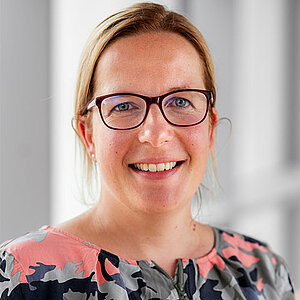
Prof. Dr.-Ing. Anke Müller is a Professor of Manufacturing Processes in Mechanical Engineering at the Faculty of Engineering, Hof University of Applied Sciences. She serves as Dean of the Faculty of Engineering and leads the MakerSpace and various laboratories including CNC Technology and Central Workshop. Current roles: Faculty Dean, Professor, MakerSpace Director Academic focus: Manufacturing engineering, hybrid materials, precision machining Key projects: Startuplab@FH, I²P² international partnership Education Diploma in Precision Engineering/Medical Technology from Wilhelmshaven University of Applied Sciences PhD (Dr.-Ing.) from Leibniz University Hannover on "Polishing ceramic knee implants with resilient diamond tools" Research interests center on advanced manufacturing technologies, particularly: Hybrid material systems (polymer-metal, fiber-metal composites) Precision machining and flexible tooling Lightweight die casting and thermal behavior analysis Innovative process development for intrinsic hybrid components Integration of data analysis in manufacturing education Scientific awards include: 2014 Förderpreis der Stiftung NiedersachsenMetall 2013 CIRP-BioM Best Paper Award 2011 ASPE Best Posterpaper Award 2010 IFW-Kooperationspreis