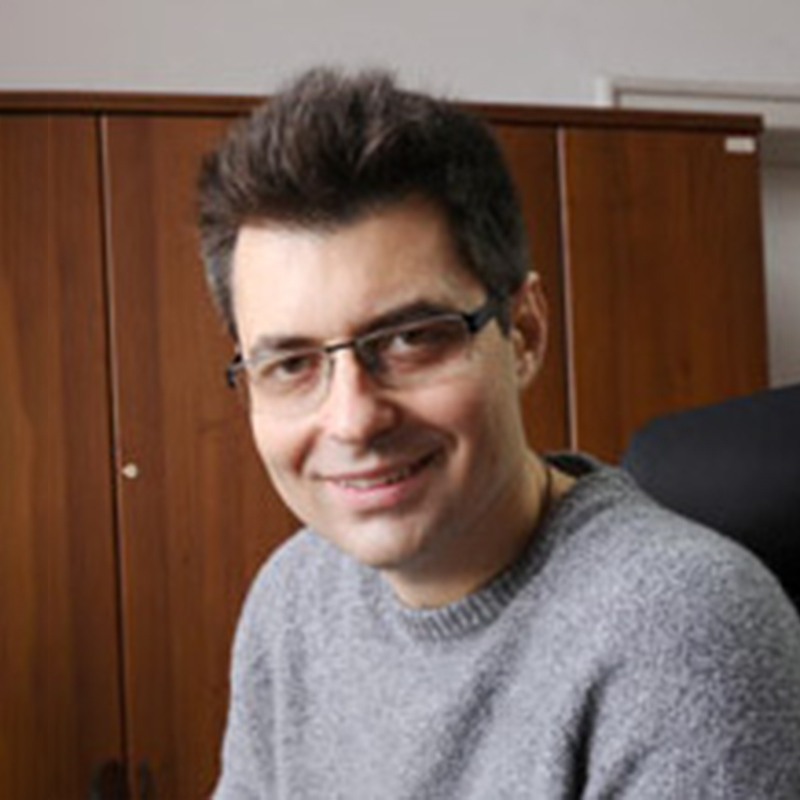
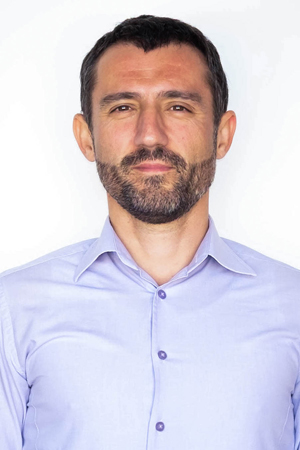
Miloš Matejić serves as an Associate Professor at the University of Kragujevac's Faculty of Engineering Sciences, within the Department of Mechanical Constructions and Mechanization. His academic position involves active research and teaching in mechanical systems design. Research interests center on advanced mechanical engineering topics including: Cycloid drive efficiency optimization and stress analysis Tribological testing methodologies and material interactions Computational modeling of gear systems using FEM Parametric design automation for mechanical components Composite materials performance in dynamic applications Recent publications demonstrate strong focus on experimental validation of cycloid reducers, novel tribometers, and material optimization. No awards, student advisories, or grant activities are documented in available sources. Institutional collaboration occurs through the Faculty of Engineering Sciences' laboratories and research centers.
Vuk Gajić is an Assistant Professor at the Faculty of Applied Ecology, Singidunum University, where he has held academic roles since 2016. His career progression includes positions as a teaching associate (2016), assistant (2019), and current role (2023). He earned a Ph.D. in Environment and Sustainable Development from Singidunum University (2019–2022), following prior studies in environmental protection and risk management at the same institution. Research interests span environmental science, sustainable development, GIS applications, and radiation technology for waste and food treatment. He has contributed to interdisciplinary studies, including soil contamination analysis in Libya, microbial decontamination via ionizing radiation, and machine learning applications for software defect prediction and agricultural weed detection. His work bridges environmental engineering with technological innovation, emphasizing sustainability and ecological conservation. Publications reflect a focus on environmental monitoring, pollution assessment, and eco-technologies. Key themes include GIS-based environmental databases, forest fire prevention through sensor networks, and agricultural waste reuse. His research often integrates quantitative methods with geospatial tools, addressing both local and global environmental challenges. Teaching responsibilities include courses on geodiversity, sustainable development, and natural hazards. He actively participates in academic conferences, contributing to peer-reviewed journals and presenting at events like Sinteza and SETI. Current projects likely explore emerging technologies in environmental management and sustainable practices.
Marko Djordjevic is an Associate Professor at the Faculty of Biology, University of Belgrade. His research spans computational biology of infectious diseases, bacterial immune systems (CRISPR/Cas and restriction-modification systems), and quantitative understanding of infection progression with applications to SARS-CoV-2 and computational physics of quark-gluon plasma. Diploma in Physics, Faculty of Physics, University of Belgrade, Serbia. PhD in Biophysics and Bioinformatics, Department of Physics, Columbia University, USA. Postdoctoral training at the Mathematical Biosciences Institute, Ohio State University, USA. Djordjevic's research focuses on nonlinear regulatory dynamics of bacterial immune systems, their role in horizontal gene transfer, and modeling infection progression under social mitigation measures. His secondary interest in computational physics examines quark-gluon plasma dynamics via high-p⊥ observables and tomography. His recent publications address CRISPR/Cas regulation, restriction-modification systems, and SARS-CoV-2 transmissibility drivers. Grants from the Serbian Ministry of Science, Science Fund of Serbia, EU Marie Curie IRG, and Swiss National Science Foundation support his work.
Dr. Anđelija Mitrović is an Assistant Professor at the Department of Mechatronics, Faculty of Technical Sciences in Čačak, University of Kragujevac. She holds a PhD in Technical Sciences (Mechanical Engineering) from 2016 and Master of Science in Information Technology from 2010. Her academic career spans multiple institutions including College of Technical Vocational Studies Čačak (2006-2011) and Faculty of Technical Sciences Čačak (2020-present). BSc in Hydropower Engineering, Mechanical Engineering Faculty Belgrade (1996) Profesor in Engineering and Informatics, Technology Faculty Čačak (2006) MSc in Information Technology, Technology Faculty Čačak (2010) PhD in Technical Sciences, Faculty of Technical Sciences Novi Sad (2016) Her research focuses on Production Technologies with emphasis on metal cutting thermal analysis, CAD/CAM systems, and educational technology innovations. Key research trends include: Thermal modeling in conventional and unconventional machining 3D virtual environment applications for engineering education Finite element analysis of milling processes Software-based cutting parameter optimization Integration of immersive learning platforms Publications demonstrate expertise in Thermal Analysis , Manufacturing Simulation , and Virtual Learning Environments . While no formal awards are listed, her work appears in reputable journals and international conference proceedings.
Srđan Divac is a Teaching Assistant at the Department of General Electrical Engineering and Electronics within the Faculty of Technical Sciences, University of Kragujevac . He earned his PhD in 2025 (average grade: 9.88) after completing his master's (2018, grade: 10) and bachelor's (2017, grade: 9.67) studies at the same institution. His research focuses on: Numerical methods in electromagnetics Measurement uncertainty analysis for electrical machines Dynamic hysteresis modeling in ferromagnetic materials Harmonic interpolation techniques for nonlinear circuits Instantaneous magnetisation power analysis Equivalent circuit parameter estimation Key article trends include simulation of magnetic hysteresis loops, electromagnetic computation for power systems, and advanced modeling of ferromagnetic and permalloy materials under varying excitation frequencies. His work appears in journals like Applied Sciences and Energies , as well as conferences such as IcETRAN and PES .
Milan Marjanović is an Assistant Professor at the Department of Mechanical Engineering, Faculty of Technical Sciences in Čačak, University of Kragujevac. Holding an M.Sc. in Mechanical Engineering, he teaches Thermodynamics, Applied Thermodynamics, Renewable Energy Sources, and Machine Elements. His research focuses on Thermal Engineering, Thermoenergetics, and Renewable Energy systems. Born 1990 in Užice Completed primary/secondary education in Požega Faculty of Mechanical Engineering and Civil Engineering, Kraljevo (2012) Master's in Energy Engineering (2014) Research spans biomass combustion optimization, solar energy systems, and hydraulic simulation tools. Active in academic projects like the national PRIZMA 2023 initiative for Active Condensation Hybrid Systems. Key publications include work on: Biomass-fired district heating efficiency AI-driven solar energy prediction models Hybrid photovoltaic-thermal collector testing Industry 4.0 curriculum development for Mechatronics Scientific contributions appear in journals like Case Studies in Thermal Engineering and conferences including COAST 2024. Awards include Ministry scholarships and 'Mašinijada' competition victories. Collaborates with industry partners on mechanical testing equipment development.
Ivan Miletić is an Associate Professor at the Faculty of Engineering Sciences, University of Kragujevac, specializing in Machine Structures and Mechanization. His academic career at the university includes significant contributions to mechanical engineering research and education within the Department of mechanical structures and mechanization. His research interests span across several key areas in mechanical engineering, with a strong focus on machine design, structural analysis, and materials science. Professor Miletić has made substantial contributions to the understanding of cycloid reducers, gear design, and the mechanical properties of advanced materials. His work bridges theoretical analysis with practical applications in automotive, aerospace, and industrial machinery sectors. Professor Miletić's publication record demonstrates a strong focus on mechanical design optimization and structural analysis. His recent work has particularly emphasized the development and analysis of cycloid reducers, gear systems, and advanced composites. He has also contributed significantly to design automation methodologies and structural optimization techniques, applying advanced computational approaches to solve complex engineering problems across multiple disciplines. His scholarly contributions have practical applications in diverse fields including automotive engineering, aerospace technology, and industrial machinery design. Professor Miletić maintains an active research profile with publications spanning from 2020 to 2025, indicating ongoing scholarly productivity in mechanical engineering disciplines. As an educator, Professor Miletić has been instrumental in developing curriculum and mentoring students in mechanical engineering disciplines. His election to the position of Associate Professor in 2021 reflects his significant contributions to both research and teaching at the Faculty of Engineering Sciences.
Dragan Adamović is a Professor at the Department of Production Engineering, Faculty of Engineering, University of Kragujevac. His work focuses on manufacturing processes, materials science, tribology, and biomaterials. He has extensive experience in numerical modeling of metal forming processes like ironing and deep drawing, with a strong emphasis on optimizing mechanical properties through thermal treatments and surface treatments such as shot peening. His research integrates computational methods (e.g., FEA) with experimental validation, addressing challenges in automotive engineering, biomedical applications, and industrial safety. Notable contributions include studies on friction coefficient determination in forming processes, wear behavior of alloyed steels, and the development of biodegradable metallic implants. He also investigates occupational safety in industries like concrete production and bakery environments. Adamović has authored over 50 peer-reviewed articles since 2003, covering topics from welding technologies to additive manufacturing applications. His work bridges theoretical material science with practical industrial solutions, emphasizing sustainability and process efficiency in modern production systems.
Aleksandar Živković is a Full Professor at the Chair of Computer Aided Technological Systems and Design, Faculty of Technical Sciences, University of Novi Sad. He joined the institution in 2004 and has held progressive academic positions: Assistant (2007), Assistant Professor (2013), Associate Professor (2018), and Full Professor (2023). His academic focus is on Machine Tools, Technological Systems, and Automation of Design Procedures . Education PhD in Mechanical Engineering (2013) – Faculty of Technical Sciences. Thesis: Computer and experimental analysis of the behaviour of ball bearings for special purposes . Master's in Mechanical Engineering (2007) – Faculty of Technical Sciences. Thesis: Experimental and computational analysis of the thermal-elastic behaviour of high-speed main spindles . Bachelor's in Production Engineering (2003) – Faculty of Technical Sciences. Thesis: Analysis of static behaviour of the main spindle . Research Focus Živković's research integrates computational and experimental methods to solve industrial challenges. Key areas include: Thermal and dynamic behavior of high-speed machine tool spindles Design and analysis of bearings for specialized applications Finite element modeling of mechanical and biomechanical systems 3D printing and virtual prototyping for medical devices (e.g., hip/knee prostheses) Optimization of machining processes using AI and fuzzy logic Publications His 15 most recent articles (2012–2022) demonstrate a strong focus on thermal modeling of spindles, bearing technology, biomechanics, and machining optimization. Methodologies frequently employ neural networks, FEM, experimental validation, and parametric design. Administrative Roles Secretary of the Chair of Computer Aided Technological Systems and Design (2015–2021)
Igor Budak is a Full Professor at the Faculty of Technical Sciences, University of Novi Sad, where he leads the Chair of Metrology, Quality, Equipment, Tools, and Ecological-Engineering Aspects. He has held progressive academic positions since 2004, advancing from Assistant to Full Professor by 2020, and served as Head of Chair from 2009–2012 and 2012 onward. His educational background includes a Bachelor's (1998), Magister (2004), and PhD (2009) in Mechanical Engineering from the Faculty of Technical Sciences and Faculty of Mechanical Engineering at the University of Novi Sad. Professor Budak's research integrates environmental engineering, precision manufacturing, and sustainable design. Key focus areas include: Life cycle assessment methodologies for industrial and energy systems Advanced 3D digitization techniques for medical and manufacturing applications Optimization of fixtures, tooling, and clamping systems in mechanical engineering Multi-criteria decision frameworks for environmental impact reduction His work frequently intersects metrology with sustainability challenges. His publications demonstrate strong emphasis on environmental impact modeling (35% of articles), manufacturing precision (30%), and biomedical applications (20%), with consistent output in high-impact journals. Research collaborations frequently address industrial case studies, from cement mill failures to dental prosthetic digitization. Professor Budak has authored several academic books including Koordinatne merne mašine i CAD inspekcija (2009) and Ekodizajn i održivi razvoj u mašinskom inženjerstvu (2009), establishing expertise in eco-design and measurement systems. His laboratory work involves industrial collaborations on topics like burnishing tools, particle analysis, and alloy biocompatibility.
Miroslav Bjekić is a Full Professor at the Department of Electrical Power Engineering, Faculty of Technical Sciences, University of Kragujevac (Čačak, Serbia). His academic journey includes a PhD (2006) and Master's (1995) from Serbian institutions, with undergraduate studies completed at the Technical Faculty in Čačak (1991). He received academic excellence awards during his studies. His research spans electrical machines, energy efficiency, electromechanical simulation, and renewable energy systems . Key focus areas include: Design and optimization of electric motors/drives Energy-efficient industrial systems Educational technology for engineering Smart grid and distributed generation His publications emphasize experimental validation, simulation tools (GeoGebra, MATLAB), and applied solutions for energy challenges , with consistent themes in motor control efficiency, educational innovation, and sustainable energy integration. Awards/Honors: University of Kragujevac & Technical Faculty Čačak Study Excellence Awards Second Prize, International PhD Seminar (Ohrid, 2005) Leadership & Projects: He modernized laboratories for Electrical Machines/Drives and led national projects like TR33016 on energy efficiency in motor drives. International collaborations include TEMPUS initiatives and DAAD-funded programs. He chaired the Rotating Electrical Machines Standards Committee (Serbian Institute of Standardization, 2012–2017). Educational Development: Created original educational software for electrical engineering and accredited teacher training programs. Supervised laboratory development for remote experiments and industrial collaborations.
Predrag Petrović is a Full Professor at the Department of General Electrical Engineering and Electronics at the Faculty of Technical Sciences, University of Kragujevac, Serbia. He has been a faculty member since 1991, progressing from trainee assistant to full professor in 2011. His work focuses on power electronics, digital electronics, and signal processing. Dr. Petrović's educational background includes: Bachelor's degree in Electrical Engineering from Faculty of Electrical Engineering in Belgrade (1991) Master's degree with thesis "Realization of digital data encryptors" (1994) PhD with dissertation "Measurement of electrical power with slow A/D conversion" (2004) His primary research interests span power electronics, digital signal processing, cryptology, and real-time system management. Dr. Petrović has made significant contributions to the field of electrical measurement systems, particularly in developing methods for processing AC signals, power measurement techniques, and circuit design for signal processing. His work often bridges theoretical mathematics with practical electronic circuit implementation, resulting in numerous patented technologies. Analysis of his recent publications reveals a strong focus on advanced circuit design, particularly in the areas of memristor and memelement emulation, rectifier circuits, and power system analysis. His work demonstrates a consistent progression from fundamental signal processing techniques to more complex circuit implementations, with increasing emphasis on novel electronic components and their applications in power systems. Dr. Petrović has received several prestigious awards: Ministry of Science, Development and Technology award for best young scientist (2002) Ministry of Science of Republic of Srpska award for best published scientific paper (2006) IETE-S K MITRA MEMORIAL AWARD for best research oriented paper (2011) Throughout his career, Dr. Petrović has secured funding for multiple research projects, including four projects funded by the Ministry of Science of the Republic of Serbia and one EU-funded project. He has mentored numerous students in their diploma theses and has been instrumental in developing curriculum and educational materials in his field. His work is closely associated with the Laboratory for Electrical Machines, Electromotor Drives and Automation at the Faculty of Technical Sciences in Čačak, where he conducts both theoretical research and practical circuit implementation. His collaborations extend to researchers across Serbia and internationally, as evidenced by his co-authorship on numerous publications.
Dr. Dragan Brajović is a Professor at the Department of Power Engineering, Faculty of Technical Sciences Čačak, University of Kragujevac, Serbia. He has been employed at this institution since 2020, following a significant career at the Higher School of Technical Vocational Studies in Čačak from 1991-2020 where he progressed from assistant to professor of vocational studies. Dr. Brajović was born on December 12, 1963, in Čačak, Serbia. He completed his elementary education and secondary technical education with mathematics-technical focus in Čačak. He graduated from the Power Engineering Department at the Faculty of Electrical Engineering in Belgrade, earned his Master's degree from the Technical Faculty in Čačak, and completed his PhD at the Faculty of Electrical Engineering in Belgrade. He holds professional licenses as "Responsible Designer" and "Responsible Executor" for low and medium voltage electrical installations. His research focuses on power engineering, particularly high voltage equipment and systems, quality of electrical energy, electrothermal processes, and smart electrical installations. His work addresses critical challenges in electrical energy systems including insulation systems of high voltage machines, measurement techniques for fast voltage pulses, SF6 gas applications and alternatives, and reliability engineering for electrical equipment. Recent publications demonstrate particular emphasis on improving the insulation systems of high voltage asynchronous machines and developing more environmentally friendly alternatives to traditional SF6-based equipment. Dr. Brajović has published extensively in reputable journals including IEEE Transactions on Dielectrics and Electrical Insulation, Nuclear Technology and Radiation Protection, and Radiation Effects and Defects in Solids. His research shows strong interdisciplinary connections between electrical engineering, measurement technology, and nuclear engineering, particularly in radiation effects on electrical systems. As an educator, Dr. Brajović teaches a comprehensive range of courses covering power plants and distribution facilities, electrical installations and lighting, electrothermy, elements of electrical energy systems, fundamentals of electrical energy engineering, high voltage equipment and systems, project management in engineering, electrothermal processes, modern lighting systems and smart electrical installations, and quality of electrical energy. His teaching integrates practical applications with theoretical foundations, reflecting his professional experience in the field. His laboratory work involves research on electrical machines, high voltage systems, and measurement techniques, contributing to both academic knowledge and practical applications in the power engineering field. His research has direct implications for improving the reliability and efficiency of electrical power systems while addressing environmental concerns related to traditional high-voltage equipment.
Dragan Rakić is an Associate Professor at the Department of Applied Mechanics and Automatic Control, Faculty of Engineering, University of Kragujevac, Serbia. His research focuses on structural safety assessment, material modeling, and computational mechanics. He specializes in dam safety analysis, finite element method applications, and tribomechanical systems. His work integrates machine learning and artificial intelligence for predictive modeling in engineering systems. Key research areas include structural integrity assessment, geotechnical modeling of embankment dams, and failure analysis of civil infrastructure. He contributes to national guidelines for dam safety in Serbia and develops user interfaces for constitutive model parameter identification. His projects address resilience of water resource systems under hazardous events, combining system dynamics and neural networks. Academically, he is affiliated with the Department for Applied Mechanics and Automatic Control, collaborating on interdisciplinary projects involving mechanical, civil, and environmental engineering. His publications span dam stability analysis, material behavior modeling, and failure assessment methodologies.
Saša Veličković is a Professor at the Faculty of Physical Culture and Management in Sports at the University of Singidunum. He earned his Doctoral degree in Sport and Physical Education from the Faculty of Sport and Physical Education, University of Novi Sad (2003-2006). His research focuses on biomechanics, gymnastics training, motor skill development, and injury prevention in artistic gymnastics. His publications analyze technical elements in gymnastics (e.g., vault, parallel bars, rings), gender-specific performance predictors, and the impact of acrobatic programs on youth fitness. Recent work (2025) explores kinetic energy dynamics, coach decision-making frameworks, and biomechanical modeling in gymnastics training. He has contributed to journals like Frontiers in Psychology , Science of Gymnastics Journal , and Facta Universitatis , often collaborating with researchers like M. Paunović, D. Đorđević, and E. Petković. His work bridges theoretical models with practical applications in sports education and performance optimization.