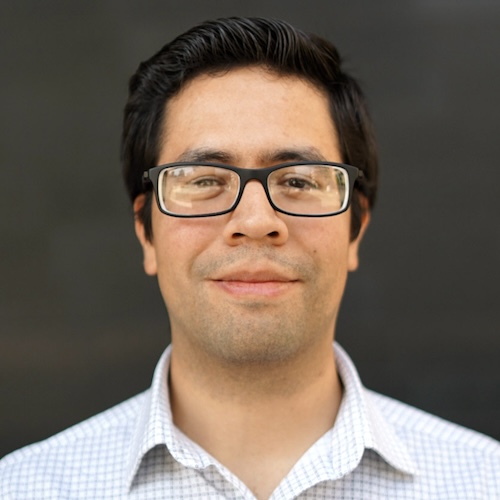
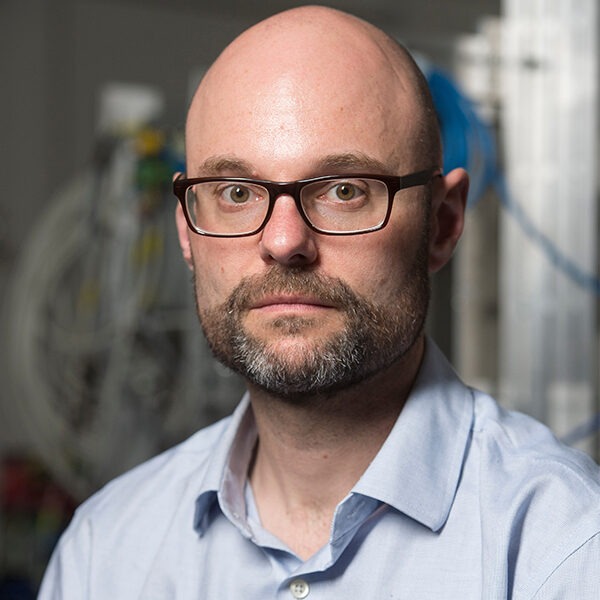
Prof. Paul Jutte is a Full Professor and Chair of the Department of Orthopaedics at the University Medical Center Groningen (UMCG), part of the University of Groningen. Specializing in orthopaedic oncology and infections, he leads clinical and research initiatives focused on minimizing tissue damage and improving surgical efficacy. He completed his MD at the Free University Medical Center in Amsterdam and his PhD on spinal tuberculosis in 2006. His expertise spans bone tumors, prosthetic infections, and innovative biomaterials. Education: MD, Free University Medical Center (2004) PhD, University of Groningen (2006) Research Interests: Orthopaedic oncology, surgical infection management, biomaterials, and clinical networks for osteoarthritis care. He co-directs the Man, Biomaterials, and Microbes (MBM) research program and chairs the Orthopaedic Department at UMCG. Leadership & Awards: Over 200 peer-reviewed publications (H-index >40), department head since 2020, and member of international societies including the European Musculo-Skeletal Oncology Society (EMSOS). Founded the Northern Infection Network (NINJA) and holds leadership roles in guideline committees. Labs & Teams: Active in the Precision Institute’s MBM program and the BRIDGE translational research group, focusing on precision medicine in orthopaedics.
Weili Lin is the Dixie Lee Boney Soo Professor of Biomedical Engineering and Radiology at the University of North Carolina. Her research focuses on advancing neuroimaging techniques and understanding developmental brain processes, particularly in pediatrics. She leads projects integrating machine learning with medical imaging to study neurocognitive development, prenatal exposures, and functional connectivity. Key research interests include MRI technology innovations, longitudinal brain mapping, and AI-driven analysis of neurodevelopmental data. She collaborates on large-scale initiatives like the UNC/UMN Baby Connectome Project, investigating infant brain maturation and environmental impacts. Her work spans clinical and computational domains, addressing challenges in fetal imaging, motion correction, and harmonization of multi-site datasets. Recent studies explore the effects of phthalates and opioids on infant neurodevelopment, leveraging GANs, transformers, and federated learning for predictive modeling. Lin’s contributions include developing pipelines like iBEAT V2.0 for infant cortical surface reconstruction and frameworks for functional parcellation. She emphasizes translational research bridging imaging technology and clinical insights.
Cristian Tudorel Badea is a Professor in Radiology and Biomedical Engineering at Duke University. He is a member of the Duke Cancer Institute and leads the Quantitative Imaging and Analysis Lab. His research focuses on micro-CT , photon-counting CT , and quantitative imaging biomarkers for preclinical studies. Education: Ph.D. in Electrical Engineering, University of Patras (Greece), 2001 Research Interests: Dr. Badea specializes in advanced imaging technologies, including deep learning-enabled CT reconstruction , nanoparticle contrast agents , and cardiac imaging in murine models. His work bridges preclinical research and clinical translation , particularly in cancer and cardiovascular diseases. Article Trends: His recent publications emphasize photon-counting micro-CT for cardiac perfusion , deep learning denoising algorithms , 5D imaging , and hybrid spectral CT techniques. Key subfields include tumor vasculature analysis , multi-contrast imaging , and neural network applications in preclinical settings. Labs & Collaborations: He collaborates extensively with the Duke Cancer Institute and leads the Quantitative Imaging and Analysis Lab. His work integrates multimodal imaging (CT, MRI, SPECT) and computational tools for co-clinical trials.
Armin Schwartzman is a Professor at the Halıcıoğlu Data Science Institute and Department of Biostatistics at the University of California, San Diego (UCSD). He holds a PhD in Statistics from Stanford University, an MSc in Electrical Engineering from the California Institute of Technology, and a BSc in Electrical Engineering from Technion-Israel Institute of Technology. His research focuses on statistical methods for signal and image analysis with applications in biomedical and environmental domains, including spatial inference, high-dimensional data analysis, and random field theory. Education : PhD in Statistics, Stanford University, 2006 MSc in Electrical Engineering, California Institute of Technology, 1996 BSc in Electrical Engineering, Technion-Israel Institute of Technology, 1995 Research Interests : Dr. Schwartzman develops statistical methodologies for analyzing complex data, particularly in neuroimaging, climate science, and genomics. Key areas include spatial inference for image analysis, multiple testing in high-dimensional data, and applications of random field theory. His work bridges theoretical statistics and practical challenges in biomedical and environmental research. Grants & Funding : NIH R01EB026859 (2019–2023): Spatial inference methods for image analysis NIH R21EB013795 (2012–2015): Voxelwise analysis of imaging response in neuro-oncology NIH R01CA157528 (2012–2019): Multiple testing methods for random fields Advising : Current advisees include Sam Davenport, Anubhav Singh-Sachan, and others. Former students have transitioned to roles at institutions like Moderna, University of Florida, and Cruiser. Labs & Collaborations : His research group works on projects such as: Random field theory for noise modeling in images Spatial inference in neuroimaging and climate data Machine learning for medical imaging (e.g., glaucoma diagnosis) Mountain glacier monitoring via satellite imagery
Professor Charles Marshall is a Professor of Clinical Neurology at Queen Mary University of London and leads dementia research at the Wolfson Institute of Population Health. He is a Consultant Neurologist at Barts Health NHS Trust and Clinical Director for the NHS London Dementia Clinical Network. His work focuses on early detection of dementia through biomarkers (digital, blood, neuroimaging), health inequalities in neurodegenerative diseases, and epidemiological studies of dementia and Parkinson’s disease. His research integrates clinical practice with population-level analysis, emphasizing culturally diverse cohorts in East London. He collaborates with the Medical College of Saint Bartholomew’s Hospital Trust and leads initiatives like the London-Dhaka Parkinson’s Cognition Study. His projects include developing AI-driven diagnostic tools (e.g., SLaM Image Bank) and investigating the societal impact of neurodegenerative conditions. Prof. Marshall supervises four doctoral students exploring topics such as biomarker validity in ethnic minorities, cognitive impairment in Parkinson’s, and dementia risk prediction. He actively engages in public health advocacy, including studies on dementia diagnosis equity and the ethical use of AI in healthcare. His research has addressed critical issues like the bidirectional relationship between depression and dementia, genetic risk correlations between neurological disorders, and the role of social determinants in disease progression. He is also involved in translational medicine, preparing for future disease-modifying therapies and optimizing NHS dementia service delivery.
Octavio Marin-Pardo is a Research Fellow at the University of Southern California (USC) Chan Division of Occupational Science and Occupational Therapy, affiliated with the Neural Plasticity and Neurorehabilitation (NPNL) Lab. His primary mentor is Dr. Sook-Lei Liew. He holds a PhD in Biomedical Engineering from USC (2023), an MS in Biomedical Engineering from USC (2019), and a BS in Mechatronics Engineering from the National Autonomous University of Mexico (2017). Marin-Pardo’s research focuses on non-invasive neuroimaging (e.g., MRI, EEG) and rehabilitation technologies (e.g., biofeedback, VR) to improve motor recovery after stroke. His work emphasizes telehealth systems, low-cost medical devices, and personalized neurorehabilitation. Key projects include the Tele-REINVENT system for at-home stroke rehabilitation, which integrates EMG biofeedback and VR. His recent publications highlight advancements in telerehabilitation usability, stroke neuroimaging biomarkers, and neurofeedback efficacy. Marin-Pardo’s studies often bridge clinical needs with engineering innovation, aiming to enhance accessibility to occupational therapy for neurologically impaired populations. Education: PhD Biomedical Engineering (USC 2023), MS Biomedical Engineering (USC 2019), BS Mechatronics Engineering (UNAM 2017) Labs: Neural Plasticity and Neurorehabilitation Lab (NPNL) Focus Areas: Stroke recovery, telehealth systems, EMG biofeedback, neuroimaging, and VR-based rehabilitation
Grace C. Kung, MD, is a Clinical Professor of Pediatrics at the Keck School of Medicine of USC, affiliated with Children’s Hospital Los Angeles (CHLA) since 2003. She completed her medical training at Johns Hopkins University (BA 1989, MD 1993) and pediatric cardiology fellowship at UCSF (1999). Dr. Kung specializes in clinical care for congenital heart disease, non-invasive imaging (transthoracic/transesophageal echocardiography), and quality improvement for single ventricle patients. Education: B.A. in Biology, Johns Hopkins University (1989) M.D., Johns Hopkins School of Medicine (1993) Her leadership roles include Fellowship Program Director (2014–present), CHLA Promotions Committee member (2019–present), and former president (2019–2024) of the KSOM Faculty Council. She co-leads the Gender Equity in Medicine and Science (GEMS) Leadership Working Group and contributes to guidelines through the National Pediatric Cardiology QI Collaborative. Research focuses on congenital heart defects (HLHS, Ebstein anomaly), imaging innovations, and mentorship in pediatric cardiology. Scientific Trends: The 15 articles highlight expertise in congenital heart disease, imaging technologies (3D echocardiography, MRI), surgical outcomes, and quality improvement for single ventricle patients. Subfields include rare anomalies (cor triatriatum, anomalous coronary arteries), transcatheter interventions, and health equity initiatives. Mentorship: Dr. Kung leads CHLA’s junior faculty mentoring program, emphasizing professional development and clinical excellence.
J Gordon Mc Comb, MD is a Professor of Neurological Surgery at the Keck School of Medicine, University of Southern California. His research focuses on pediatric neurosurgery, hydrocephalus management, neural tube defects, and CSF dynamics. He has authored numerous studies on surgical techniques, medical devices, and outcomes in pediatric neurological conditions. His work spans spinal disorders, diaphragm pacing, and innovative approaches to hydrocephalus monitoring using MRI and AI. He served as President of the International Society for Pediatric Neurosurgery (ISPN) from 2013–2014, highlighting his leadership in global neurosurgical advancements.
Dr. Jason Ye is an Associate Professor of Clinical Radiation Oncology at the Keck School of Medicine of USC and Director of Clinical Operations at USC Norris Comprehensive Cancer Center. He specializes in advanced radiation treatments including stereotactic body radiotherapy (SBRT), intensity modulated radiation therapy (IMRT), and CNS stereotactic radiosurgery (SRS). His clinical expertise focuses on breast cancer, lung cancer, and central nervous system tumors. Dr. Ye leads research in radiation oncology techniques and has published on topics ranging from technical innovations in radiotherapy to clinical outcomes in cancer treatment. His recent work demonstrates a focus on improving precision in radiation therapy and developing standardized protocols for cancer imaging.
Dr. Martin Dresler is an Associate Professor at Radboud University, Netherlands, leading the Donders Sleep & Memory Lab at the Donders Institute for Brain, Cognition and Behaviour. His research focuses on the functions of sleep, lucid dreaming, and brain plasticity. He investigates how sleep impacts memory consolidation, cognitive processes, and neurological conditions like nightmare disorder. Dresler’s work combines neuroimaging (EEG/fMRI), wearable technologies, and citizen neuroscience to study sleep dynamics and dream mechanisms. His lab develops open-source tools for sleep research and explores applications of lucid dreaming in clinical settings. Research interests include sleep neurophysiology, dream engineering, and the neural basis of exceptional memory. He collaborates internationally on large-scale studies, such as multi-center lucid dreaming induction trials. His contributions bridge basic science and translational research, emphasizing open science practices and accessible neurotechnology. Key achievements include pioneering real-time dream communication during REM sleep and advancing methodologies for sleep stage classification using wearable EEG devices. Dresler actively advocates for reform in research funding structures and promotes interdisciplinary approaches to understanding human cognition.
Maureen Groot Koerkamp is an Assistant Professor at the TechMed Centre's Multi-Modality Medical Imaging department. Her research focuses on advancing adaptive radiotherapy techniques, with particular emphasis on breast cancer treatment using advanced imaging modalities like MRI and cone-beam CT. She specializes in integrating real-time imaging data to optimize radiation therapy plans, aiming to improve patient outcomes while minimizing side effects. Her work contributes to UN Sustainable Development Goals related to quality healthcare. Collaborations include developing online adaptive radiotherapy protocols for standard C-arm linacs and exploring MR-Linac technologies for precise breast radiotherapy. Key contributions include automated dose evaluation systems and clinical implementation strategies for adaptive therapies. No formal student advising or grants are explicitly listed in the profile. Her research network spans international collaborators in radiation oncology and medical physics, reflecting a strong focus on translational research between imaging and clinical practice.
Professor Karen Birch is the Executive Dean and Professor of Exercise Science at the University of Leeds, affiliated with the School of Biomedical Sciences. Her academic journey includes a BSc (Hons) in Movement Science from Liverpool University (1990) and a PhD in Exercise Physiology from Liverpool John Moores University (1995). She has held academic roles at Manchester Metropolitan University and the University of Leeds, advancing to her current position in 2017. Her research focuses on endothelial function, female reproductive hormones, and exercise interventions targeting cardiovascular health and menopause-related risks. Collaborations include institutions like the Leeds Institute of Cardiovascular Medicine and the University of Sheffield. Her research employs advanced techniques such as MRI, echocardiography, and flow cytometry to study vascular health, exercise-induced shear stress, and hormone-cardiovascular interactions. Notable projects include investigating interval training’s impact on postmenopausal women and exploring omega-3 fatty acids’ effects on diabetes. Funded by organizations like the British Heart Foundation and Heart Research UK, her work highlights exercise as a therapeutic tool for chronic diseases. Her scientific contributions include over 150 peer-reviewed articles, with recent studies emphasizing vascular health interventions, chronic disease management, and aging populations. Awards include Fellow of the American College of Sports Medicine. She teaches across exercise physiology programs and leads interdisciplinary research initiatives, including the REACH programme for care home residents’ physical activity.
Wojciech B. Zbijewski is an Associate Professor in the Department of Biomedical Engineering at Johns Hopkins University, affiliated with the Whiting School of Engineering . As the Co-Director of the Biomedical Engineering PhD Program, his research focuses on improving quantitative diagnostic imaging techniques, particularly using x-ray modalities such as radiography, tomosynthesis, CT, and cone-beam CT. His Quantis Lab develops advanced computational models and experimental methods to optimize imaging systems for musculoskeletal and pulmonary applications, emphasizing radiomics, shape analysis, and bone health biomarkers. Education : PhD in Medical Imaging from the University of Utrecht (2006), MS in Medical Physics from the University of Warsaw (2001). Research Interests : His work spans quantitative imaging system optimization, bone and joint health biomarkers, and AI-driven image reconstruction. Key areas include photon-counting CT, dual-energy imaging for bone marrow edema detection, and robotic-assisted surgical navigation using real-time 3D-2D registration. His lab collaborates with the Carnegie Center for Surgical Innovation to advance clinical imaging solutions. Notable Contributions : Led a groundbreaking program on bone health imaging (2017), pioneered motion compensation algorithms for interventional CT, and developed ultra-high-resolution CT techniques for trabecular bone analysis. His research bridges computational methods (e.g., generative AI models) with clinical applications, aiming to improve diagnostic accuracy and surgical outcomes. Labs/Teams : Quantis Lab (focusing on advanced imaging and AI).
Amit Agarwal, MBBS, MD is an Associate Professor in the Department of Pediatrics at the University of Arkansas for Medical Sciences (UAMS) and the Medical Director of the Chronic Ventilator Program at Arkansas Children’s Hospital/UAMS College of Medicine. His work focuses on pediatric pulmonary and sleep medicine, particularly in tracheostomy care protocols, ventilator-dependent children, and high-fidelity simulation training for caregivers. He is affiliated with the Division of Pediatric Pulmonary and Sleep Medicine. His research interests span neuroimaging applications, respiratory pathologies, and the integration of advanced technologies like AI and radiomics into clinical diagnostics. Notable projects include standardized tracheostomy care methods and the use of deep learning for medical imaging improvements. Dr. Agarwal’s publications reflect a multidisciplinary approach, with contributions to radiology, oncology, and pediatric critical care. Recent work explores opportunities and challenges of large language models in radiology, molecular landscapes of CNS tumors, and ventilation strategies in infants with bronchopulmonary dysplasia. His clinical expertise includes managing complex respiratory cases, bone health in ventilator-dependent children, and noninvasive ventilation techniques. He actively participates in translational research and medical education initiatives, emphasizing hands-on training for nonsurgical staff through simulation-based learning.
Idan Blank is an Assistant Professor with dual appointments in the Psychology Department and the Linguistics Department at the University of California, Los Angeles, within the College of Letters and Science. His research bridges cognitive neuroscience, linguistics, and artificial intelligence to investigate how humans understand language—a universal phenomenon across human cultures yet unique to our species that enables thought transfer between minds. Dr. Blank earned his PhD in Cognitive Science from the Massachusetts Institute of Technology in 2016 and his MA in Psychobiology from Tel Aviv University in 2011. His academic journey reflects a strong foundation in both cognitive science and biological approaches to understanding the mind. Dr. Blank's research program focuses on the neural mechanisms underlying language comprehension, examining which aspects of comprehension have dedicated neural circuitry versus those that rely on more general cognitive systems. His work employs functional MRI, behavioral experiments, and computational modeling to investigate how language "happens" in our minds and brains. The BlankLangLab, which he leads, studies the component processes of comprehension, the mental structures that allow us to "know the meaning" of utterances, and the mental operations used to manipulate them. His research increasingly explores connections between artificial intelligence language models and human cognitive processing. Analysis of Dr. Blank's recent publications reveals a strong emphasis on precision mapping of language networks, investigations of language processing across diverse populations (including polyglots and older adults), and examinations of how language processing relates to other cognitive systems like theory of mind. His work demonstrates a clear trajectory toward integrating neuroimaging data with computational approaches to better understand the architecture of human language processing. While specific awards aren't detailed in the provided information, Dr. Blank's research has garnered significant scholarly attention, with numerous publications in high-impact journals including Proceedings of the National Academy of Sciences, Trends in Cognitive Sciences, and Journal of Neuroscience. Several of his papers have accumulated substantial citation counts, reflecting the importance of his contributions to cognitive neuroscience and language processing research. Dr. Blank leads the BlankLangLab at UCLA, which investigates language, understanding, and thought through neuroimaging, behavioral, and machine learning approaches. His lab maintains strong collaborative ties with other research groups, particularly in the area of language network mapping. The lab's research program integrates precision mapping techniques with naturalistic paradigms to characterize functional brain regions engaged during language processing, with recent work increasingly incorporating large language models to bridge AI and human cognition.