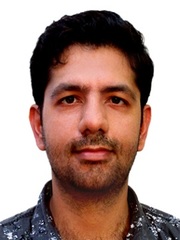
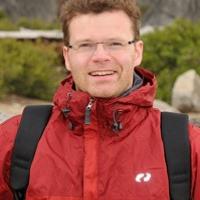
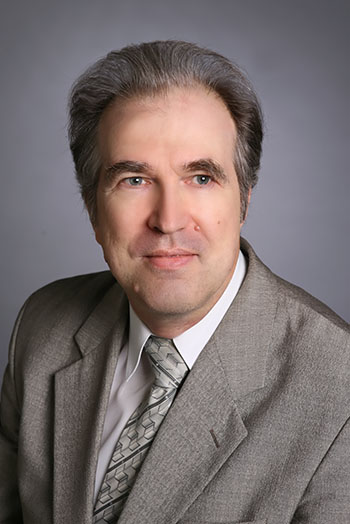
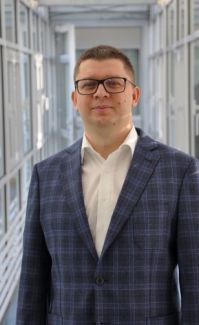
Khushraj Madnani is a postdoctoral researcher at the Max Planck Institute for Software Systems (MPI-SWS), Kaiserslautern, Germany, under Prof. Rupak Majumdar and Prof. Georg Zetzsche. His research focuses on formal logics, infinite-state models, and their applications in formal methods and verification. Previously, he was a postdoctoral researcher at Delft University of Technology (2020–2021) and a visiting fellow at the Tata Institute of Fundamental Research (2019–2020). He holds a PhD in Computer Science from the Indian Institute of Technology Bombay (2013–2019). Research Interests : Specification and Verification of Timed Systems Scheduler Synthesis for Networked Control Cyber-Physical Systems Formal Logics and Models of Computation Recent Contributions : His work spans decidability of timed logics, formal verification of real-time systems, and control theory. Key themes include metric temporal logic extensions, decidability boundaries, and applications in cyber-physical systems. Recent articles explore quantifier elimination in Presburger arithmetic and decidability of timed temporal logics with advanced quantifiers. Professional Roles : He collaborates with leading research institutes and has contributed to international conferences such as CONCUR, MFCS, and CDC. His work bridges theoretical foundations with practical verification challenges in real-time systems and networked control.
Debasmita Lohar is a Postdoctoral Researcher at Karlsruhe Institute of Technology (KIT), working with Bernhard Beckert in the Application-oriented Formal Verification group at KASTEL — Institute of Information Security and Dependability. She is set to join the IT University of Copenhagen as an Assistant Professor starting December 2024. Her educational background includes: PhD from Saarland University in collaboration with the Max Planck Institute for Software Systems (MPI-SWS), Saarbrücken, advised by Eva Darulova Graduate studies at the Indian Institute of Technology (IIT) Kharagpur, advised by Soumyajit Dey Dr. Lohar's research focuses on the intersection of program analysis, approximate computing, and probabilistic analysis, with applications spanning embedded systems, scientific computing, and machine learning. Her work addresses critical challenges in numerical error analysis, particularly in the context of finite-precision arithmetic and its implications for system reliability and safety. She has made significant contributions to sound static program analysis techniques for neural networks and cyber-physical systems, developing novel approaches for mixed-precision tuning and quantization that balance computational efficiency with numerical accuracy guarantees. Her recent publications demonstrate a strong trajectory in formal methods for numerical programs, with increasing focus on neural networks and cyber-physical systems. The research shows a clear progression from fundamental numerical error analysis to practical applications in machine learning systems, reflecting the growing importance of formal verification in AI safety-critical domains. Her scientific recognition includes: Selected to participate in the 10th Heidelberg Laureate Forum, 2023 Best Presentation Award (iFM PhD Symposium), 2019 Dr. Lohar has extensive teaching experience across multiple institutions, having taught courses on Floating-Point Analysis, LLMs in Formal Verification, Neural Networks in Formal Verification at KIT, Advanced Program Analysis and Program Analysis at Saarland University, and Fault Tolerant Systems, Theory of Computation, and Computer Organization and Architecture Lab at IIT Kharagpur. Her research is supported through her position at KASTEL and likely through competitive research grants given her publication record in top-tier venues. She leads research in the Application-oriented Formal Verification group at KASTEL, collaborating with researchers like Bernhard Beckert, Eva Darulova, and others. Her work on the Aster project demonstrates her leadership in developing practical tools for sound mixed fixed-point quantization of neural networks.
Florina M. Ciorba is a Professor in the field of High-Performance Computing (HPC), affiliated with the University of Basel. Her research focuses on parallel algorithms, fault-tolerant systems, dynamic load balancing, and energy-efficient computing. She has contributed extensively to HPC workflows, scheduling techniques, and resilient numerical methods for extreme-scale simulations. Key research areas include: Parallel and distributed systems Load balancing and scheduling algorithms Fault tolerance mechanisms GPU and heterogeneous computing Energy-aware HPC applications Recent work emphasizes scalable particle simulations, application classification using ML, and optimizing astrophysics workflows. She collaborates with international teams on standards like SPEChpc 2021 benchmarks and HPC operational autonomy loops. Publications span top venues including IEEE Transactions on Parallel and Distributed Systems, Euro-Par, and Cluster conferences. Her work addresses both algorithmic innovations and software implementations for next-generation HPC platforms.
George Bosilca is a Professor at the University of Tennessee, Knoxville, specializing in high-performance computing and parallel systems. With over two decades of research contributions, he has established himself as a leading expert in task-based runtime systems, distributed computing, and MPI implementations. His research focuses on developing and optimizing task-based runtime systems for extreme-scale computing environments, with particular emphasis on fault tolerance, performance optimization, and scalability. Bosilca's work spans multiple domains including scientific computing, climate modeling, and deep learning applications. He has made significant contributions to the PaRSEC runtime system and has extensively researched MPI optimization techniques for modern HPC architectures. The trend in Bosilca's recent publications demonstrates a strong focus on addressing challenges in exascale computing, including fault tolerance in distributed systems, GPU acceleration for scientific workloads, and energy-efficient computing techniques. His work bridges theoretical computer science with practical implementations for real-world scientific applications across various domains. Bosilca maintains extensive collaborations with leading researchers in the HPC community, most notably with Jack J. Dongarra (103 co-publications), Aurelien Bouteiller (60 co-publications), and Thomas Hérault (54 co-publications). These collaborations have resulted in numerous publications at top-tier conferences including SC, IPDPS, and EuroMPI, as well as in prestigious journals such as IEEE Transactions on Parallel and Distributed Systems and the International Journal of High Performance Computing Applications.
Thomas J. Naughton is a researcher affiliated with the University of Reading and Oak Ridge National Laboratory. He specializes in High Performance Computing (HPC), focusing on fault tolerance, quantum computing integration, and distributed systems. Research Interests: His work bridges HPC and quantum computing, develops fault-tolerant systems, and explores computational models through optical computing. Recent Publications: His 2026-2024 papers address quantum-HPC convergence software stacks, virtualization performance, and fault injection frameworks. Educational Contributions: He co-developed Bebras-inspired computational thinking resources for K-12 education, emphasizing task-based learning.
Ananta Tiwari is a researcher specializing in High-Performance Computing (HPC), energy efficiency, and parallel system optimization. His work focuses on optimizing HPC applications, workload management, and resource allocation strategies to enhance both performance and energy efficiency. Tiwari has collaborated extensively with institutions like the University of Maryland, UC San Diego, and Lawrence Livermore National Laboratory through his research activities. Education: PhD in Computer Science, University of Maryland, College Park (2011) Research Interests: Energy-efficient HPC systems Parallel application auto-tuning frameworks Workload characterization and extrapolation Node-sharing and resource pricing models ARM architecture optimization for HPC Key Contributions: Tiwari's research spans energy optimization techniques for large-scale MPI applications, colocation strategies for HPC workloads, and binary instrumentation tools for program analysis. His work on auto-tuning frameworks and multi-objective modeling with machine learning addresses critical challenges in balancing performance, power consumption, and scalability in modern HPC environments.
Henry M. Tufo is a Researcher affiliated with the University of Colorado, USA . His work spans High-Performance Computing (HPC) , Cloud Computing , and Computational Fluid Dynamics , with a focus on climate modeling, grid systems, and scalable algorithms. Tufo has collaborated extensively with institutions like IBM, Argonne National Laboratory, and researchers such as Paul Fischer, Kate Keahey, and Paul Marshall. His research interests include: Developing scalable HPC systems for climate and astrophysical simulations Integrating cloud computing with scientific workflows Optimizing spectral element methods for atmospheric models Trends in his publications highlight expertise in parallel computing , secure execution environments , and numerical methods for fluid dynamics. Tufo has contributed to frameworks like the FLASH code and GraphBLAS for large-scale simulations.
Tim Huege is a Professor of Astrophysics at the Inter-University Institute for High Energies (Vrije Universiteit Brussel) and group leader of the Cosmic Ray Simulations group at the Karlsruhe Institute of Technology . His research focuses on radio detection of cosmic ray air showers, development of simulation frameworks (CoREAS, CORSIKA8), and applications of Information Field Theory in astroparticle physics. He serves as task leader in the Pierre Auger Collaboration and as co-task leader for radio detection activities. Research Interests include: Radio emission from extensive air showers Cosmic ray energy estimation via geosynchrotron Neutrino detection using radio arrays Interferometric reconstruction techniques Atmospheric effects on particle cascade simulations Scientific Leadership involves: Lead developer of CoREAS simulation code Coordinator for CORSIKA8 project Member of SKA High-Energy Cosmic Particles Working Group Former contributor to LOPES, Tunka-Rex, and KASCADE-Grande collaborations His work spans detector calibration, shower parameter reconstruction, and multi-messenger astrophysics with key publications in Astroparticle Physics , Physical Review D/Letters , and JCAP . Current projects address noise compensation in radio detection, inclined shower simulations, and neutrino astronomy.
Nadine Herzog is a Doctoral Researcher in the Department of Neurology at the Max Planck Institute for Human Cognitive and Brain Sciences, affiliated with the International Max Planck Research School NeuroCom. Her research focuses on neurocognitive mechanisms underlying obesity, decision-making processes, and neural network dynamics. She utilizes advanced methods such as fMRI, EEG, and computational modeling to explore topics like reward signaling, dopaminergic pathways, and working memory modulation. Her work bridges clinical neuroscience, neuroimaging, and developmental psychology. Key research interests include obesity-related neurobiology, reinforcement learning deficits, and the interplay between cognitive control and neurodevelopmental changes. Recent studies examine how striatal dopaminergic systems influence decision-making in obesity and how neural network configurations predict working memory performance. She has published extensively on topics such as neurocomputational models of reward learning, decision noise reduction across development, and fMRI-EEG fusion techniques for reward signaling prediction. No scientific awards or grants are explicitly listed in the provided materials. She collaborates within the Department of Neurology and the NeuroCom research school, contributing to interdisciplinary projects at the MPI-CBG in Leipzig, Germany.
Prof. Ralf Jung is an Assistant Professor at ETH Zürich's Department of Computer Science, leading the Programming Language Foundations Lab under the Institute for Programming Languages and Systems. His work focuses on formal verification of programming languages, particularly Rust and Iris. Previously, he earned his PhD at Saarland University and MPI-SWS, advised by Derek Dreyer, followed by a postdoc at MIT CSAIL's PDOS group. Research Interests: Formal foundations of Rust, including tools like Miri for detecting undefined behavior and MiniRust for precise specification. Iris logical framework for modular verification of programming languages at scale. Concurrent and distributed systems verification using separation logic. Advising & Labs: He leads the Programming Language Foundations Lab and is hiring postdocs. His work integrates theoretical rigor with practical tooling for real-world language verification challenges. Labs/Teams: Programming Language Foundations Lab at ETH Zürich, collaborating with the Rust language team and global research community.
Yuri Matiyasevich is a Russian mathematician and computer scientist affiliated with the Steklov Institute of Mathematics (Leningrad/St.Petersburg Branch) since 1980, where he serves as head of the Laboratory of Mathematical Logic. He also holds part-time professorships at Leningrad/St.Petersburg State University (since 2003) and previously at Polytechnical Institute (1980-1981). His research focuses on Diophantine equations, Computability theory, Algorithms, and Decidability problems. Full member, Russian Academy of Sciences (2008) Corresponding member, Bavarian Academy of Sciences (2007) Docteur Honoris Causa, Université Pierre et Marie Curie (2003) Humboldt Research Award (1997) Markov Prize, Academy of Sciences of the USSR (1980) His recent work involves computational approaches to Riemann's zeta function, probabilistic reformulations of graph theory problems, and algorithmic analysis of Diophantine representations. He has published extensively on connections between number theory and computational models, including studies on exponential Diophantine equations and their applications. Notable contributions include definitive solutions to Hilbert's Tenth Problem through Diophantine representations of recursively enumerable sets, and computational experiments supporting the Riemann Hypothesis. His publications span multiple languages and cover intersections between mathematical logic, number theory, and theoretical computer science.
Megha Amrith is a Professor at Maastricht University, holding a professorship since 2025. She was previously the leader of the Max Planck Research Group 'Ageing in a Time of Mobility' from 2018 to 2024 and was a guest at MPI-MMG in 2025. Her academic journey includes a postdoctoral fellowship at the Centre for Metropolitan Studies, University of São Paulo (2012–2013), and a research fellowship at the United Nations University Institute for Globalization, Culture and Mobility, Barcelona (2014–2017). Ph.D. in Social Anthropology, University of Cambridge (Gates Cambridge Scholar) Her research centers on migrant labor, care, ageing, inequalities, belonging, and citizenship, with a focus on Southeast Asia and comparative ethnographic perspectives. She has conducted extensive fieldwork in Singapore, Hong Kong, and São Paulo, examining the lives of long-term migrant domestic and medical workers. Her work critically engages with the temporalities of migration, the ethics of care, and the structural precarity faced by non-citizen workers. The 15 most recent publications reflect a strong trajectory in migration and ageing studies, with a focus on transnational care, emotional labour, and the lived experiences of ageing migrants. Her work appears in leading journals such as Global Networks , American Anthropologist , and Urban Studies , and she has contributed to influential edited volumes and special issues. Megha Amrith has no listed scientific awards in the provided text. She has led significant research projects, including 'Retiring from temporary lives: ageing migrant labor in Asia' and 'Ageing in a Time of Mobility'. She has advised and collaborated with numerous scholars and co-edited key volumes on gender, work, and migration. Her research is deeply engaged with policy and social justice, especially in the context of migrant rights and social protection. She is actively involved in public scholarship, contributing to online platforms like Somatosphere and the Cambridge Encyclopedia of Anthropology, and participating in exhibitions and documentaries that highlight migrant experiences.
Dr. Swetlana Torno is a postdoctoral research fellow at the Max Planck Research Group 'Ageing in a Time of Mobility' at the Max Planck Institute for the Study of Multicultural Societies (MPI-MMG) in Göttingen, Germany. She earned her doctoral degree in Social Anthropology from Heidelberg University after studying Anthropology, Geography and Biology at the Universities of Tübingen and McGill. Prior to her current position, she was an associated member of the Heidelberg Centre for Transcultural Studies and held a doctoral scholarship at the Cluster of Excellence 'Asia and Europe in Global Context'. Dr. Torno's research focuses on ageing, mobility, intergenerational relations, care, and gender in Central Asia, with extensive ethnographic fieldwork in Tajikistan. Her work reveals how care norms shape women's life courses and mobility patterns across different life stages in Tajik society, where conservative gender roles significantly influence freedom of movement. Her current postdoctoral project investigates how mass labor migration to Russia impacts elderly mobility and care arrangements, documenting gendered differences in how older men struggle with retirement transitions while older women often experience increased freedom as caregiving responsibilities evolve. Analysis of her publications shows consistent focus on Central Asian ageing contexts with particular attention to Tajikistan's family-based care systems. Her work demonstrates how remittances from labor migration shape household economies and care practices, while new technologies like smartphones help maintain family connections across distances. Despite limited state support systems (only eight nursing homes serving approximately 1,020 people nationwide in 2016), her research reveals the resilience of extended family structures in providing care while adapting to migration pressures. Dr. Torno's scholarly contributions include significant publications in Historical Social Research, Journal of Eurasian Studies, and Problems of Post-Communism, with her forthcoming book manuscript 'Aspirations, Obligations, Linked Lives: Care and Women's Life Courses in Tajikistan' representing a major contribution to the field. Her research combines long-term ethnography with attention to how Soviet legacies continue to shape contemporary social practices, particularly regarding political discourse on women that she characterizes as 'Tajik in Content—Soviet in Form'. As an engaged scholar, Dr. Torno contributes to public discourse through interviews like her 2025 NAR seminar participation and blog posts reflecting on ageing in rural Tajikistan. Her work challenges simplistic narratives about family breakdown under migration pressures, instead documenting how families creatively adapt care practices while maintaining core values of respect for elders—a principle reinforced by both social pressure and religious obligations in Tajik society.
Tore Brox-Larsen is an Associate Professor in the Department of Informatics at UiT The Arctic University of Norway. His work centers on distributed computing, high-performance systems, and large-scale visualization technologies. He is actively engaged in research involving sensor networks, Arctic observatories, and remote visualization of scientific data. His research interests span distributed shared memory systems, MPI performance, tiled display walls, and networked visualization. He has made significant contributions to improving communication efficiency in cluster computing and enabling scalable interactive visualization environments. His work bridges computer systems engineering with applications in genomics and environmental monitoring. The most recent publications reflect a strong trend toward real-world deployment of large-scale systems, particularly in Arctic observation and healthcare informatics. His work emphasizes practical system design, latency optimization, and cross-platform interoperability in distributed environments. Tore Brox-Larsen has collaborated extensively with researchers such as Otto Anshus, John Markus Bjørndalen, and Brian Vinter. While no formal advising or grant history is listed, his sustained publication record indicates active research leadership and team-based scientific inquiry. He has contributed to major projects including the development of a large-scale Arctic observatory sensor system and interactive tiled display walls. His work supports both academic research and societal applications in health and environmental science.
Dr. inż. Tomasz Marszałek is an Assistant Professor in the Department of Molecular Physics at Lodz University of Technology, with a multidisciplinary academic background spanning physics, engineering, and chemistry. He also leads a research team at the Max Planck Institute for Polymer Research in Germany, reflecting his strong international research profile. His educational foundation includes degrees from three faculties at Lodz University of Technology: Faculty of Technical Physics, Information Technology and Applied Mathematics; Faculty of Mechanical Engineering; and Faculty of Chemistry. He completed his doctoral studies in 2012 and pursued extensive postdoctoral research in Germany, including positions at MPI-P and Heidelberg University. Tomasz Marszałek's research centers on the fundamental processes governing charge transport in organic and hybrid semiconductors, particularly through crystallization and self-assembly in thin films for field-effect transistors. His work bridges materials chemistry, device physics, and nanoscale engineering to advance organic electronics. Key focus: Crystallization dynamics Core interest: Self-assembly of functional materials Application: Thin-film transistor optimization Materials: Organic & hybrid semiconductors Techniques: Thin-film deposition, interfacial engineering Goal: High-performance, stable, solution-processable devices His publication record includes over 90 JCR-listed articles in elite journals such as Nature Materials , Nature Communications , Advanced Materials , and Advanced Functional Materials . The 15 most recent representative articles reflect a consistent trajectory in organic electronics, emphasizing molecular design, film morphology control, interfacial engineering, and device performance enhancement. Key trends include the use of green solvents, air-stable semiconductors, low-voltage operation, and multiscale modeling—highlighting both experimental and theoretical dimensions of his research. His scientific excellence has been recognized through several prestigious awards: START Scholarship, Foundation for Polish Science (2012) Minister of Science and Higher Education Scholarship for Young Scientists (2017) Award for Outstanding Achievements in Science, PAN Łódź (2019) Project award: 'Organic field effect transistor with insulated gate' from the Minister of Science and Higher Education Dr. Marszałek mentors early-career researchers and contributes to advancing the field through collaborative projects between Poland and Germany. While specific grant details are not listed, his leadership role at MPI-P and sustained publication output suggest active funding support. His dual affiliation enables strong integration of academic teaching and cutting-edge research. He is actively involved in a research team at the Max Planck Institute for Polymer Research, where he leads investigations into advanced organic materials. This group likely includes postdoctoral researchers, PhD candidates, and technical staff focused on synthesizing, characterizing, and implementing novel semiconductors for next-generation electronic devices.